SAN FRANCISCO (AP) — Lashing out at Apple's plans to make most of its U.S. iPhones in India, President Donald Trump on Friday threatened to slap a 25% tariff on the popular device unless the tech giant starts building the product in its home country — a move that still seems unlikely to happen any time soon, if ever.
Apple for decades has been building most of its devices in China, where it has invested tens of billions of dollars on massive factories that rely on a vast network of local suppliers. The company's reliance on a crucial pipeline outside the U.S. thrust the technology trendsetter into the crosshairs of Trump’s trade war.
In response to Trump's tussle with China, Apple CEO Tim Cook said earlier this month that most iPhones sold in the U.S. during the March-June period would come from India. Although Trump in late April decided to temporarily exempt the iPhone and other electronics from most of his initial tariffs, Cook said the trade war would end up costing Apple an additional $900 million during the March-June period.
After Trump initially unveiled his sweeping tariffs in early April, industry analysts estimated the fees would drive up the cost of a $1,200 iPhone made in China to $1,500. That might sound steep, but most analysts believe if Apple somehow could suddenly start making iPhones in the U.S., prices for the devices would soar to at least $2,000 and possibly might rise as high as $3,500.
The disincentives for Apple shifting its production domestically include a complex supply chain that Cook began to engineer during the 1990s while he was working for his predecessor, company co-founder Steve Jobs, who died in 2011. It would take several years and cost billions of dollars to build new plants in the U.S. Combined with current economic forces, the price of an iPhone could triple, threatening to torpedo sales of Apple's marquee product, which generated revenue of $201 billion during the company's last fiscal year.
“The concept of making iPhones in the U.S. is a nonstarter,” asserted Wedbush Securities analyst Dan Ives, reflecting a widely held view in the investment community that tracks Apple's every move. He estimated that the current $1,000 price tag for an iPhone made in China, or India, would soar to more than $3,000 if production shifted to the U.S. And he believes that moving production domestically likely couldn't be done until, at the earliest, 2028. “Price points would move so dramatically, it's hard to comprehend.”
In a Friday research note, Ives predicted Cook would engage in a “game of negotiations” with Trump that would spare the iPhone from the 25% tariffs.
Planning for the future is also becoming more difficult for Apple and other technology companies amid the upheaval being caused by the rapid rise of artificial intelligence. As AI becomes more sophisticated, the technology may spawn a forthcoming wave of hands-free and screen-free devices that diminish the demand for smartphones.
“You may not need an iPhone 10 years from now, as crazy as it sounds," Apple executive Eddy Cue said earlier this month during a trial about the U.S. Justice Department's proposed breakup of Google for running an illegal monopoly in search.
Apple didn't immediately respond to a request for comment Friday. On a quarterly earnings call earlier in May, Cook told investors that tariffs had a “limited impact” on the company in the March quarter because it was able to optimize its supply chain. But Cook warned that it is “very difficult” to predict beyond June “because I’m not sure what will happen with tariffs.”
The big question is how long Apple might be willing to hold the line on its current prices if Trump's threatened tolls become too much to bear and consumers are asked to shoulder some of the burden. Even without an escalation in tariffs, many analysts are predicting Apple will raise iPhone prices this autumn when the latest models are typically released — a prospect that could prod consumers to splurge on an upgrade this summer.
One of the main reasons that Apple has had wiggle room to hold the line on its current iPhone pricing is because the company continues to reap huge profit margins from the revenue generated by subscriptions and other services tied to its product, said Forrester Research analyst Dipanjan Chatterjee. That division, which collected $96 billion in revenue during Apple’s last fiscal year, remains untouched by Trump’s tariffs.
“Apple can absorb some of the tariff-induced cost increases without significant financial impact, at least in the short term,” Chatterjee said.
But now Apple is facing a significant decline in its service revenue after a federal judge recently issued an order prohibiting it from collecting commissions on transactions within iPhone apps that are processed on other payment systems other than its own. Unless Apple prevails in an appeal, the decision could cost the company billions of dollars annually.
Apple tried to appease Trump in February by announcing plans to spend $500 billion and hire 20,000 people in the U.S. through 2028, but none of it was tied to making an iPhone domestically. Instead, Apple pledged to fund a Houston data center for computer servers powering artificial intelligence — a technology the company is expanding into as part of an industrywide craze.
U.S. Commerce Secretary Howard Lutnick also predicted tariffs would force a manufacturing shift during an April 6 appearance on a CBS News program. “The army of millions and millions of human beings screwing in little screws to make iPhones, that kind of thing is going to come to America,” Lutnick said.
But during a 2017 appearance at a conference in China, Cook expressed doubt about whether the U.S. labor pool had enough workers with the vocational skills required to do the painstaking and tedious work that Lutnick was discussing.
“In the U.S. you could have a meeting of tooling engineers and I’m not sure we could fill the room,” Cook said. “In China, you could fill multiple football fields.”
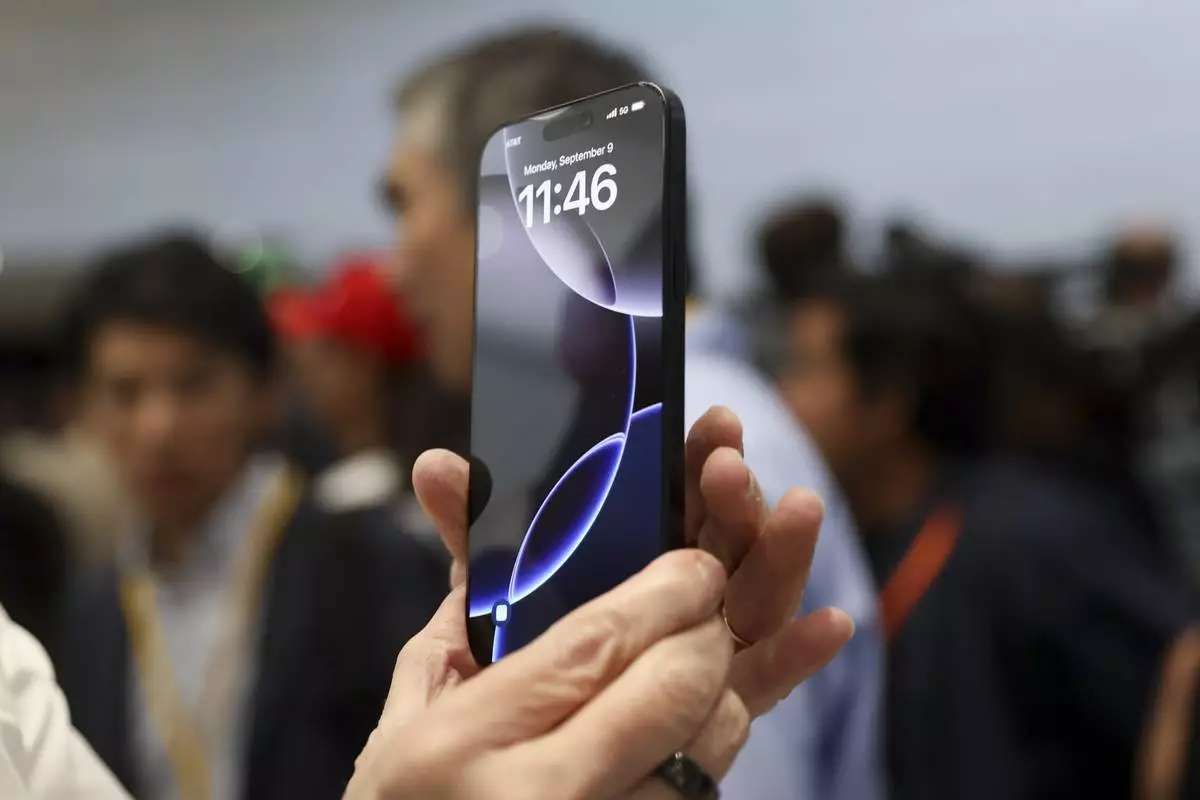
FILE - The new iPhone 16 is displayed during an announcement of new products at Apple headquarters Monday, Sept. 9, 2024, in Cupertino, Calif. (AP Photo/Juliana Yamada, File)
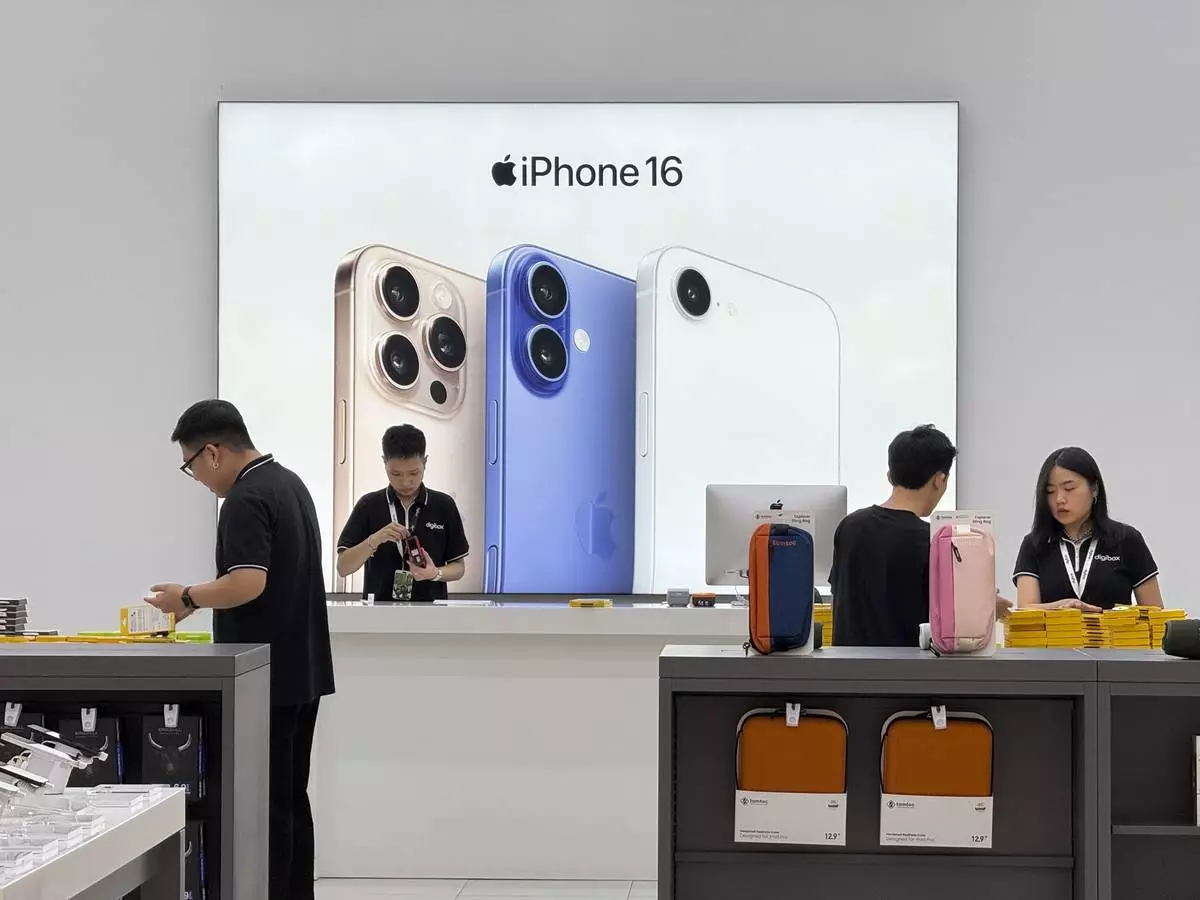
FILE - Sales staffs work at an Apple shop in Hanoi, Vietnam Thursday, April 10, 2025. (AP Photo/Hau Dinh, File)
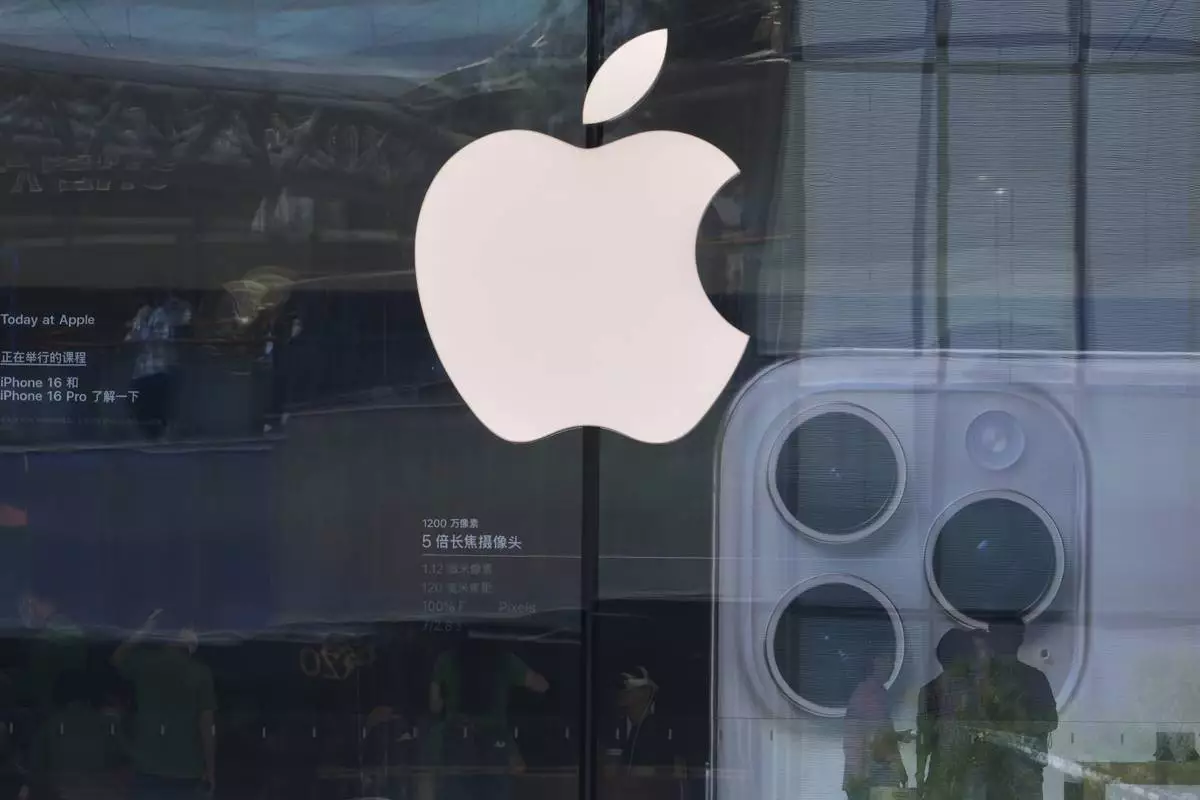
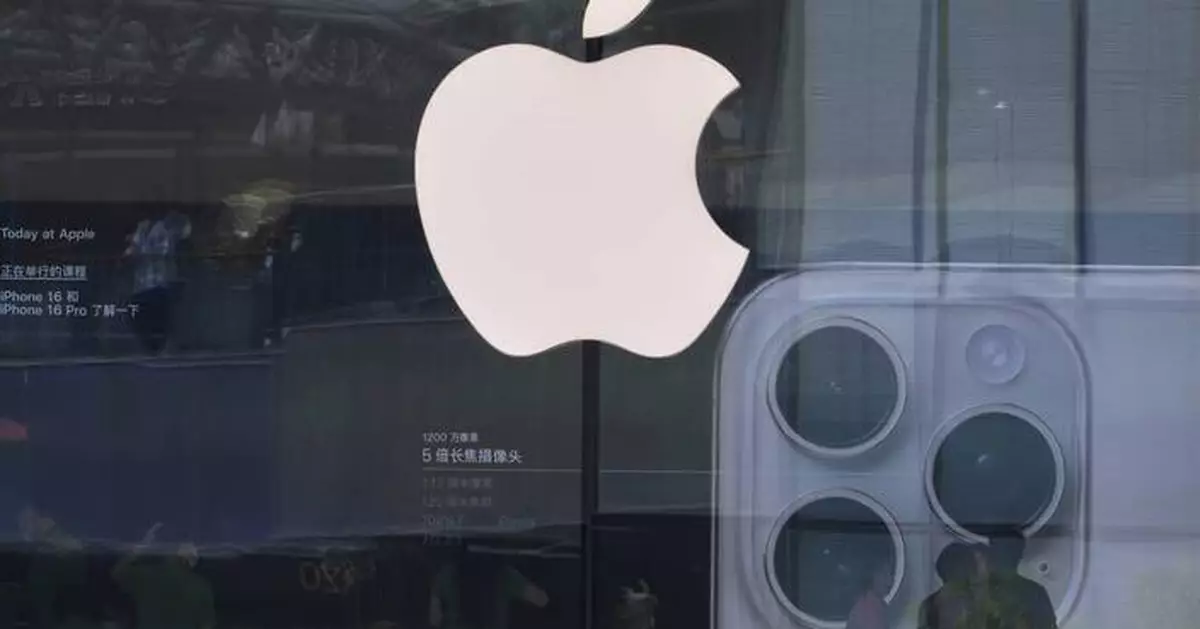
People visit an Apple store promoting its iPhone 16 at an outdoor shopping mall in Beijing, Sunday, May 11, 2025. (AP Photo/Andy Wong)
WASHINGTON (AP) — A day after the audacious U.S. military operation in Venezuela, President Donald Trump on Sunday renewed his calls for an American takeover of the Danish territory of Greenland for the sake of U.S. security interests, while his top diplomat declared the communist government in Cuba is “in a lot of trouble.”
The comments from Trump and Secretary of State Marco Rubio after the ouster of Venezuela's Nicolás Maduro underscore that the U.S. administration is serious about taking a more expansive role in the Western Hemisphere.
With thinly veiled threats, Trump is rattling hemispheric friends and foes alike, spurring a pointed question around the globe: Who's next?
“It’s so strategic right now. Greenland is covered with Russian and Chinese ships all over the place," Trump told reporters as he flew back to Washington from his home in Florida. "We need Greenland from the standpoint of national security, and Denmark is not going to be able to do it.”
Asked during an interview with The Atlantic earlier on Sunday what the U.S.-military action in Venezuela could portend for Greenland, Trump replied: “They are going to have to view it themselves. I really don’t know.”
Trump, in his administration's National Security Strategy published last month, laid out restoring “American preeminence in the Western Hemisphere” as a central guidepost for his second go-around in the White House.
Trump has also pointed to the 19th century Monroe Doctrine, which rejects European colonialism, as well as the Roosevelt Corollary — a justification invoked by the U.S. in supporting Panama’s secession from Colombia, which helped secure the Panama Canal Zone for the U.S. — as he's made his case for an assertive approach to American neighbors and beyond.
Trump has even quipped that some now refer to the fifth U.S. president's foundational document as the “Don-roe Doctrine.”
Saturday's dead-of-night operation by U.S. forces in Caracas and Trump’s comments on Sunday heightened concerns in Denmark, which has jurisdiction over the vast mineral-rich island of Greenland.
Danish Prime Minister Mette Frederiksen in a statement that Trump has "no right to annex" the territory. She also reminded Trump that Denmark already provides the United States, a fellow member of NATO, broad access to Greenland through existing security agreements.
“I would therefore strongly urge the U.S. to stop threatening a historically close ally and another country and people who have made it very clear that they are not for sale,” Frederiksen said.
Denmark on Sunday also signed onto a European Union statement underscoring that “the right of the Venezuelan people to determine their future must be respected” as Trump has vowed to “run” Venezuela and pressed the acting president, Delcy Rodriguez, to get in line.
Trump on Sunday mocked Denmark’s efforts at boosting Greenland’s national security posture, saying the Danes have added “one more dog sled” to the Arctic territory’s arsenal.
Greenlanders and Danes were further rankled by a social media post following the raid by a former Trump administration official turned podcaster, Katie Miller. The post shows an illustrated map of Greenland in the colors of the Stars and Stripes accompanied by the caption: “SOON."
“And yes, we expect full respect for the territorial integrity of the Kingdom of Denmark,” Amb. Jesper Møller Sørensen, Denmark's chief envoy to Washington, said in a post responding to Miller, who is married to Trump's influential deputy chief of staff Stephen Miller.
During his presidential transition and in the early months of his return to the White House, Trump repeatedly called for U.S. jurisdiction over Greenland, and has pointedly not ruled out military force to take control of the mineral-rich, strategically located Arctic island that belongs to an ally.
The issue had largely drifted out of the headlines in recent months. Then Trump put the spotlight back on Greenland less than two weeks ago when he said he would appoint Republican Gov. Jeff Landry as his special envoy to Greenland.
The Louisiana governor said in his volunteer position he would help Trump “make Greenland a part of the U.S.”
Meanwhile, concern simmered in Cuba, one of Venezuela’s most important allies and trading partners, as Rubio issued a new stern warning to the Cuban government. U.S.-Cuba relations have been hostile since the 1959 Cuban revolution.
Rubio, in an appearance on NBC's “Meet the Press,” said Cuban officials were with Maduro in Venezuela ahead of his capture.
“It was Cubans that guarded Maduro,” Rubio said. “He was not guarded by Venezuelan bodyguards. He had Cuban bodyguards.” The secretary of state added that Cuban bodyguards were also in charge of “internal intelligence” in Maduro’s government, including “who spies on who inside, to make sure there are no traitors.”
Trump said that “a lot” of Cuban guards tasked with protecting Maduro were killed in the operation. The Cuban government said in a statement read on state television on Sunday evening that 32 officers were killed in the U.S. military operation.
Trump also said that the Cuban economy, battered by years of a U.S. embargo, is in tatters and will slide further now with the ouster of Maduro, who provided the Caribbean island subsidized oil.
“It's going down,” Trump said of Cuba. “It's going down for the count.”
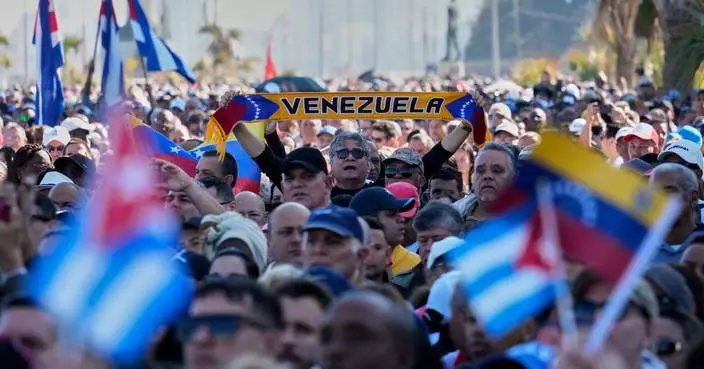
Cuban authorities called a rally in support of Venezuela’s government and railed against the U.S. military operation, writing in a statement: “All the nations of the region must remain alert, because the threat hangs over all of us.”
Rubio, a former Florida senator and son of Cuban immigrants, has long maintained Cuba is a dictatorship repressing its people.
“This is the Western Hemisphere. This is where we live — and we’re not going to allow the Western Hemisphere to be a base of operation for adversaries, competitors, and rivals of the United States," Rubio said.
Cubans like 55-year-old biochemical laboratory worker Bárbara Rodríguez were following developments in Venezuela. She said she worried about what she described as an “aggression against a sovereign state.”
“It can happen in any country, it can happen right here. We have always been in the crosshairs,” Rodríguez said.
AP writers Andrea Rodriguez in Havana, Cuba, and Darlene Superville traveling aboard Air Force One contributed reporting.
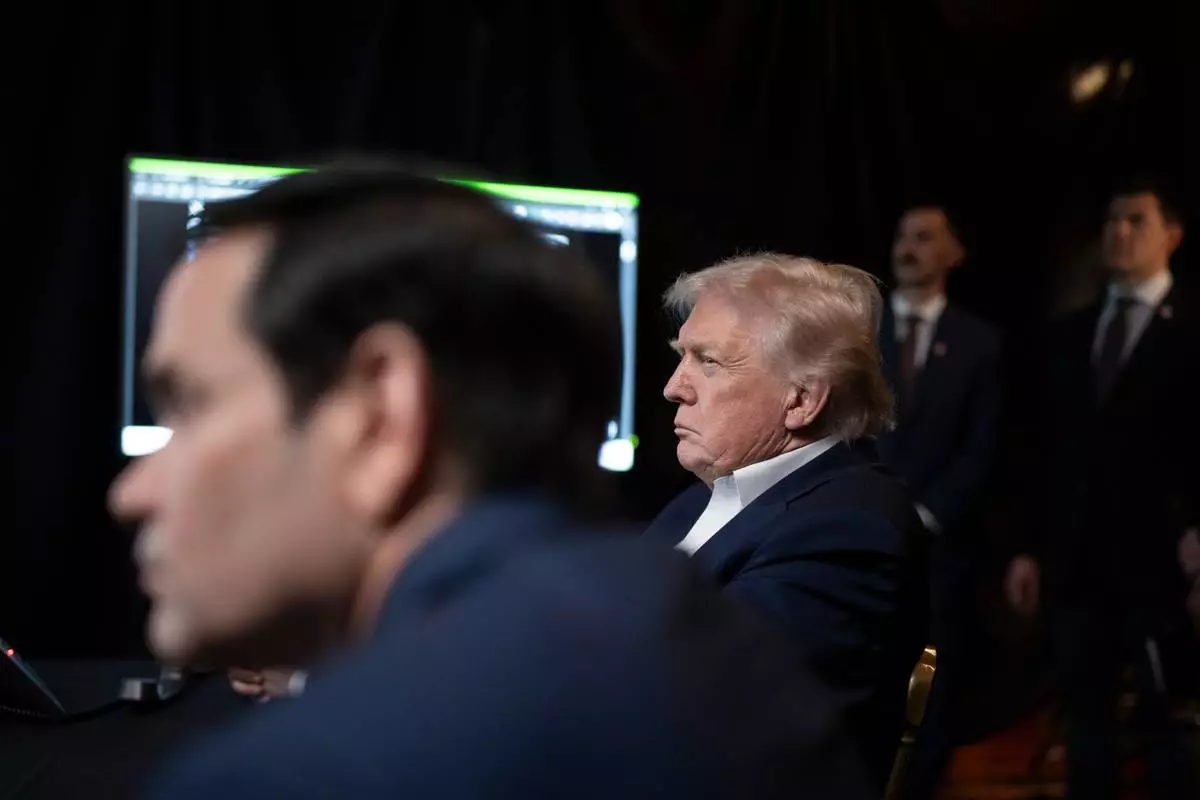
In this photo released by the White House, President Donald Trump monitors U.S. military operations in Venezuela, with Secretary of State Marco Rubio at Mar-a-Lago in Palm Beach, Fla., Saturday, Jan. 3, 2026. (Molly Riley/The White House via AP)