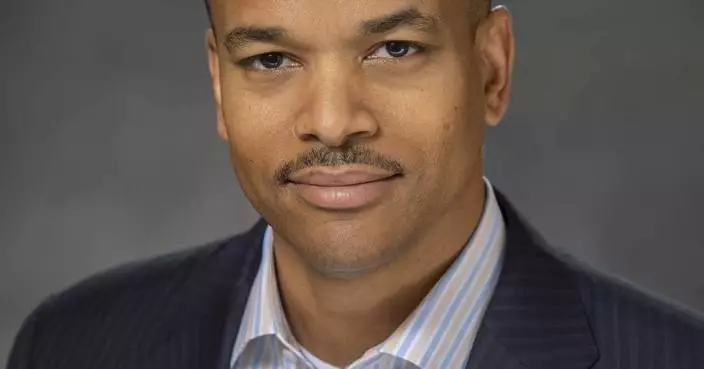
JOHANNESBURG (AP) — South Africa’s top law enforcement official said Friday that U.S. President Donald Trump wrongly claimed that a video he showed in the Oval Office was of burial sites for more than 1,000 white farmers and he “twisted” the facts to push a false narrative about mass killings of white people in his country.
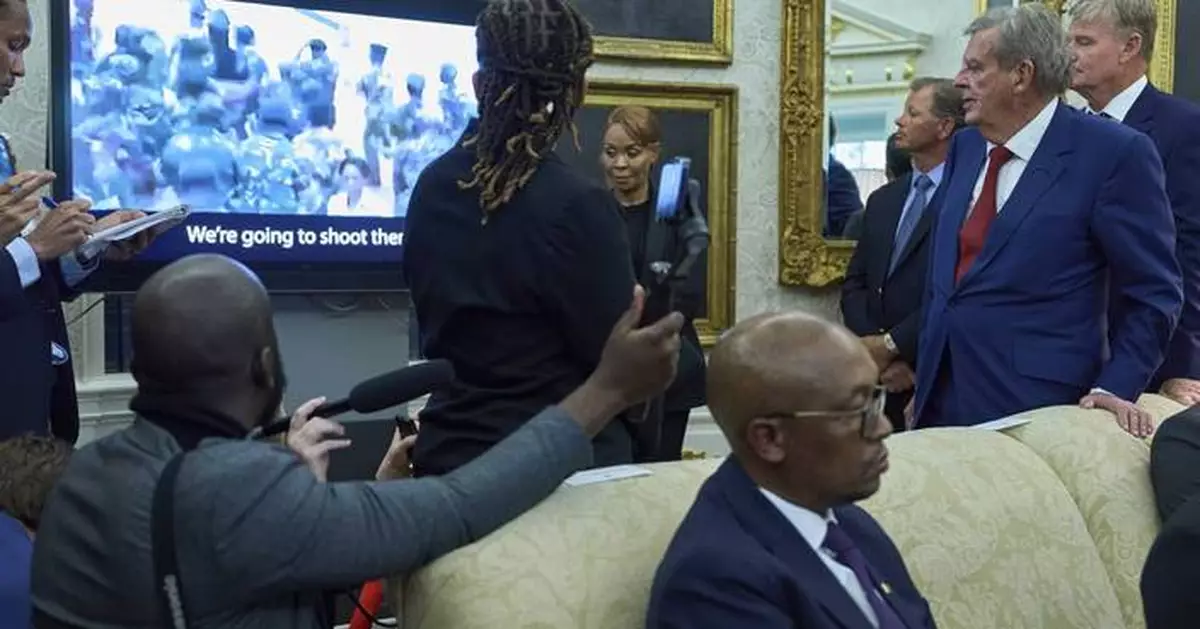
Police Minister Senzo Mchunu was talking about a video clip that was played during the meeting between Trump and South African President Cyril Ramaphosa at the White House on Wednesday that showed an aerial view of a rural road with lines of white crosses erected on either side.
“Now this is very bad,” Trump said as he referred to the clip that was part of a longer video that was played in the meeting. “These are burial sites, right here. Burial sites, over a thousand, of white farmers, and those cars are lined up to pay love on a Sunday morning."
Mchunu said the crosses did not mark graves or burial sites, but were a temporary memorial put up in 2020 to protest the killings of all farmers across South Africa. They were put up during a funeral procession for a white couple who were killed in a robbery on their farm, Mchunu said.
A son of the couple who were killed and a local community member who took part in the procession also said the crosses do not represent burial sites and were taken down after the protest.
South Africa struggles with extremely high levels of violent crime, although farm killings make up a small percentage of the country's overall homicides. Both white and Black farmers are attacked, and sometimes killed, and the government has condemned the violence against both groups.
Whites make up around 7% of South Africa's 62 million people but generally still have a much better standard of living than the Black majority more than 30 years after the end of the apartheid system of racial segregation. Whites make up the majority of the country's wealthier commercial farmers.
Mchunu said Trump's false claims that the crosses represented more than 1,000 burial sites was part of his “genocide story” — referring to the U.S. president’s baseless allegations in recent weeks that there is a widespread campaign in South Africa to kill white farmers and take their land that he has said amounts to a genocide.
“They are not graves. They don’t represent graves,” Mchunu said regarding the video that has become prominent on social media since it was shown in the White House. “And it was unfortunate that those facts got twisted to fit a false narrative about crime in South Africa.”
“We have respect for the president of the United States,” Mchunu added. “But we have no respect for his genocide story whatsoever.”
The White House, when asked about Mchunu's remarks, pointed back to press secretary Karoline Leavitt's comments a day earlier at her briefing, when she said that "the video showed crosses that represent the dead bodies of people who were racially persecuted by their government.”
Of the more than 5,700 homicides in South Africa from January through March, six occurred on farms and, of those, one victim was white, said Mchunu. “In principle, we do not categorize people by race, but in the context of claims of genocide of white people, we need to unpack the killings in this category,” he said.
Lourens Bosman, who is a former lawmaker in the national Parliament, said he took part in the procession shown in the video the Trump administration played. It happened near the town of Newcastle in the eastern province of KwaZulu-Natal in September 2020. The crosses were symbols to white and Black farmers and farmworkers who had been killed across South Africa over the previous 26 years, Bosman said.
Trump's falsehoods that South Africa's government is fueling the persecution and killing of its minority white farmers has been strongly denied by the country, which says the allegations are rooted in misinformation.
Ramaphosa pushed for this week's meeting with Trump in what he said was an attempt to change Trump's mind over South Africa and correct misconceptions about the country to rebuild ties.
Trump issued an executive order on Feb. 7 that cut all U.S. financial assistance to South Africa and accused it of mistreating white Afrikaner farmers and seizing their land. The order accused Ramaphosa's government of "fueling disproportionate violence against racially disfavored landowners."
Trump's executive order also accused South Africa of pursuing an anti-American foreign policy and specifically criticized its decision to launch a case at the International Court of Justice accusing U.S. ally Israel of genocide against Palestinians in Gaza. The order accused South Africa of supporting the Palestinian militant group Hamas through that case.
AP Africa news: https://apnews.com/hub/africa
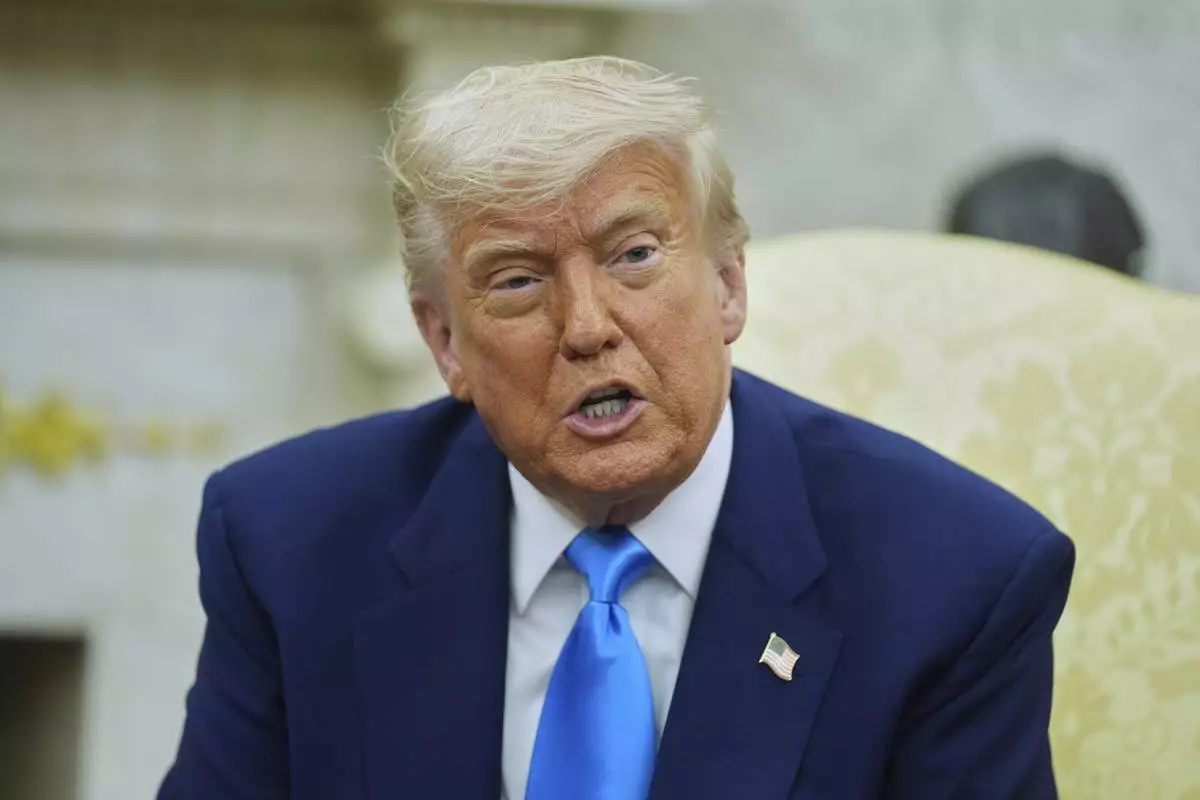
President Donald Trump speaks as he meets with South African President Cyril Ramaphosa in the Oval Office of the White House, Wednesday, May 21, 2025, in Washington. (AP Photo/Evan Vucci)
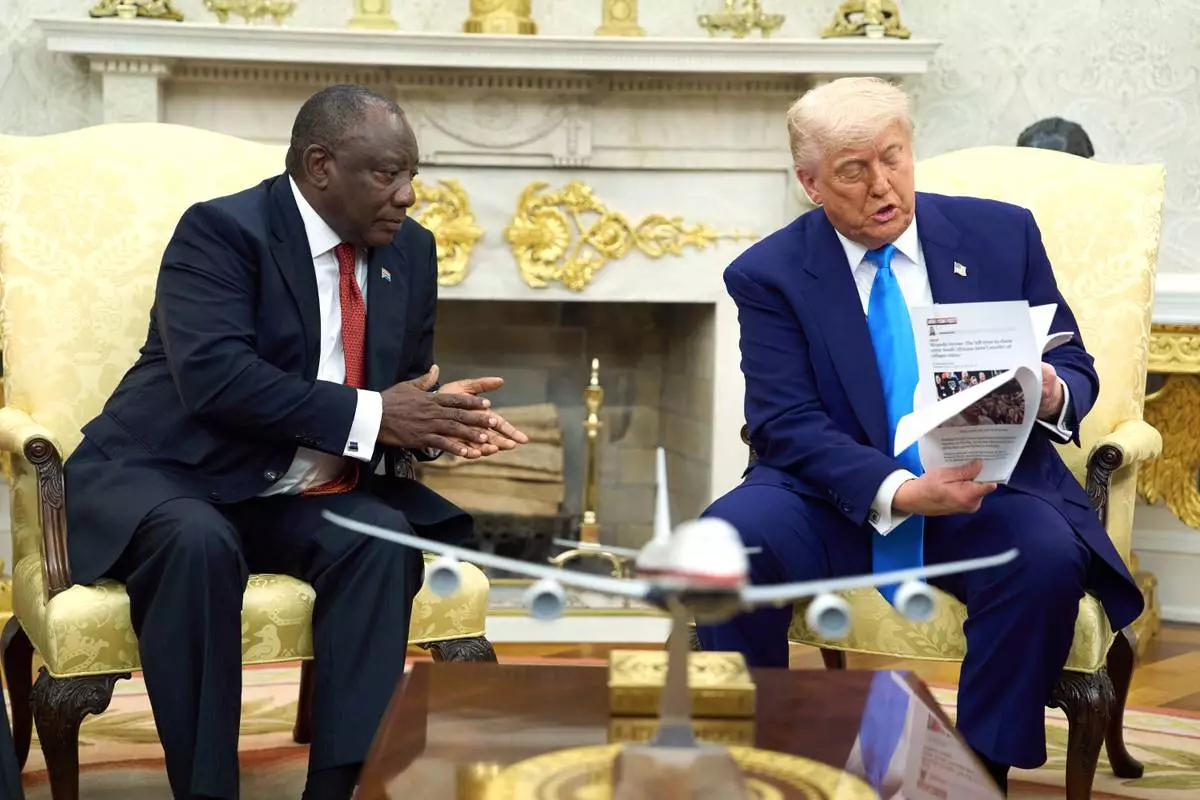
President Donald Trump meets South Africa's President Cyril Ramaphosa in the Oval Office of the White House, Wednesday, May 21, 2025, in Washington. (AP Photo/Evan Vucci)
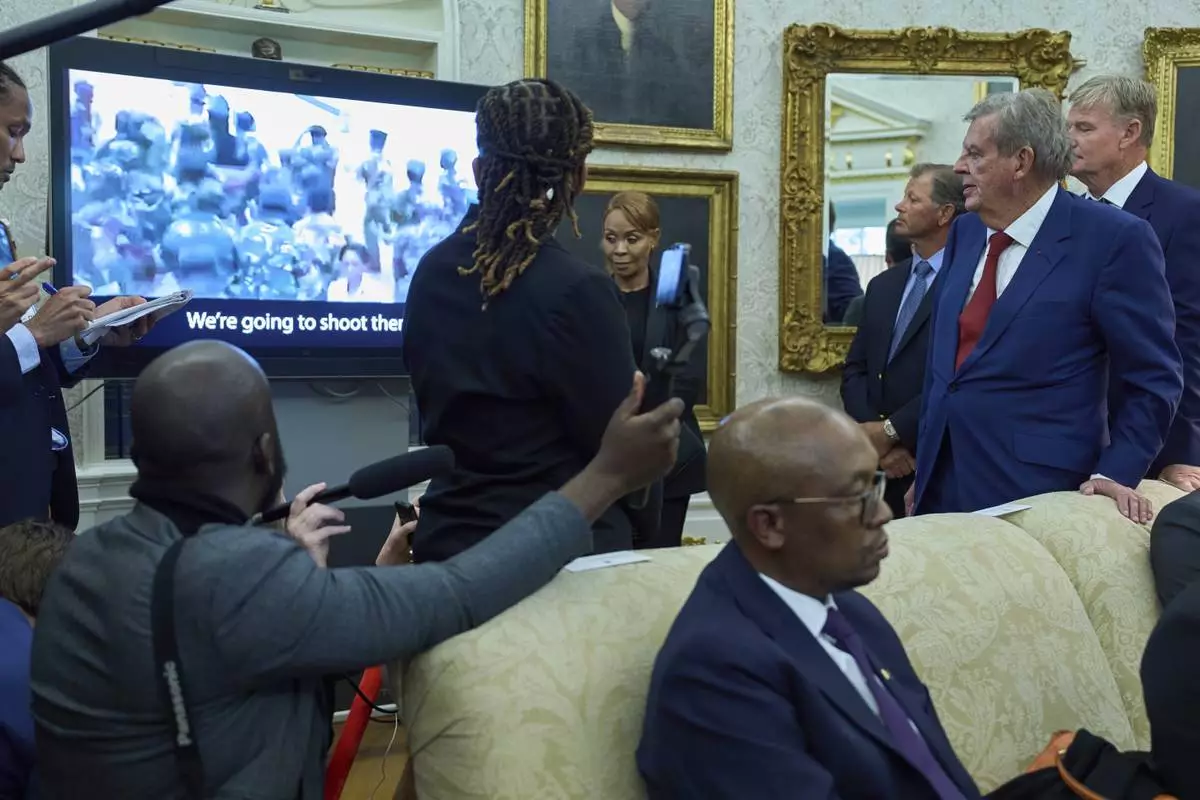
South African businessman Johann Rupert, standing right, watches a video during a meeting between President Donald Trump and South African President Cyril Ramaphosa in the Oval Office of the White House, Wednesday, May 21, 2025, in Washington. (AP Photo/Evan Vucci)
NEW YORK (AP) — Thousands of nurses in three hospital systems in New York City went on strike Monday after negotiations through the weekend failed to yield breakthroughs in their contract disputes.
The strike was taking place at The Mount Sinai Hospital and two of its satellite campuses, with picket lines forming. The other affected hospitals are NewYork-Presbyterian and Montefiore Medical Center in the Bronx.
About 15,000 nurses are involved in the strike, according to New York State Nurses Association.
“After months of bargaining, management refused to make meaningful progress on core issues that nurses have been fighting for: safe staffing for patients, healthcare benefits for nurses, and workplace violence protections,” the union said in a statement issued Monday. “Management at the richest hospitals in New York City are threatening to discontinue or radically cut nurses’ health benefits.”
The strike, which comes during a severe flu season, could potentially force the hospitals to transfer patients, cancel procedures or divert ambulances. It could also put a strain on city hospitals not involved in the contract dispute, as patients avoid the medical centers hit by the strike.
The hospitals involved have been hiring temporary nurses to try and fill the labor gap during the walkout, and said in a statement during negotiations that they would “do whatever is necessary to minimize disruptions.” Montefiore posted a message assuring patients that appointments would be kept.
“NYSNA’s leaders continue to double down on their $3.6 billion in reckless demands, including nearly 40% wage increases, and their troubling proposals like demanding that a nurse not be terminated if found to be compromised by drugs or alcohol while on the job," Montefiore spokesperson Joe Solmonese said Monday after the strike had started. "We remain resolute in our commitment to providing safe and seamless care, regardless of how long the strike may last.”
New York-Presbyterian accused the union of staging a strike to “create disruption,” but said in a statement that it has taken steps to ensure patients receive the care they need.
"We’re ready to keep negotiating a fair and reasonable contract that reflects our respect for our nurses and the critical role they play, and also recognizes the challenging realities of today’s healthcare environment,” the statement said.
The work stoppage is occurring at multiple hospitals simultaneously, but each medical center is negotiating with the union independently. Several other hospitals across the city and in its suburbs reached deals in recent days to avert a possible strike.
The nurses’ demands vary by hospital, but the major issues include staffing levels and workplace safety. The union says hospitals have given nurses unmanageable workloads.
Nurses also want better security measures in the workplace, citing incidents like a an incident last week, when a man with a sharp object barricaded himself in a Brooklyn hospital room and was then killed by police.
The union also wants limitations on hospitals’ use of artificial intelligence.
The nonprofit hospitals involved in the negotiations say they’ve been working to improve staffing levels, but say the union’s demands overall are too costly.
Nurses voted to authorize the strike last month.
Both New York Gov. Kathy Hochul and Mayor Zohran Mamdani had expressed concern about the possibility of the strike. As the strike deadline neared, Mamdani urged both sides to keep negotiating and reach a deal that “both honors our nurses and keeps our hospitals open.”
“Our nurses kept this city alive through its hardest moments. Their value is not negotiable,” Mamdani said.
State Attorney General Letitia James voiced similar support, saying "nurses put their lives on the line every day to keep New Yorkers healthy. They should never be forced to choose between their own safety, their patients’ well-being, and a fair contract.”
The last major nursing strike in the city was only three years ago, in 2023. That work stoppage, at Mount Sinai and Montefiore, was short, lasting three days. It resulted in a deal raising pay 19% over three years at those hospitals.
It also led to promised staffing improvements, though the union and hospitals now disagree about how much progress has been made, or whether the hospitals are retreating from staffing guarantees.
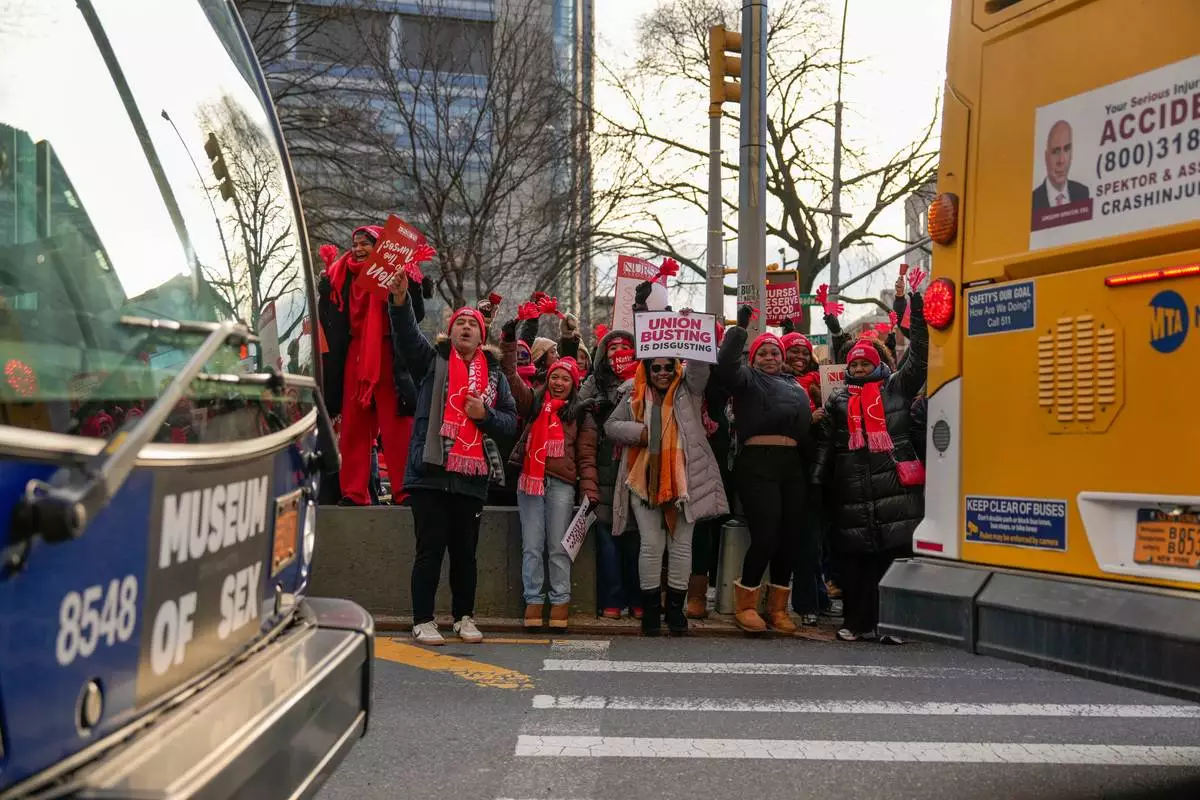
Nurses strike outside New York-Presbyterian Hospital, Monday, Jan. 12, 2026, in New York. (AP Photo/Yuki Iwamura)
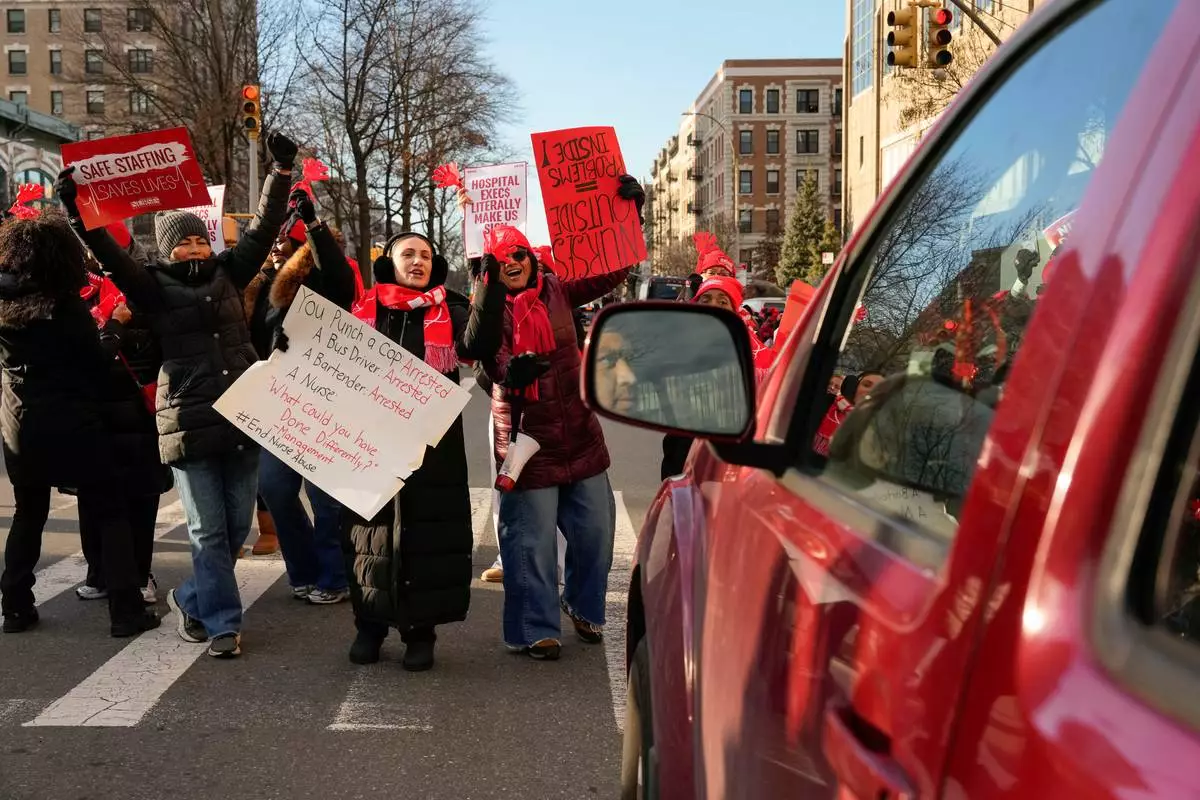
Nurses strike outside New York-Presbyterian Hospital, Monday, Jan. 12, 2026, in New York. (AP Photo/Yuki Iwamura)
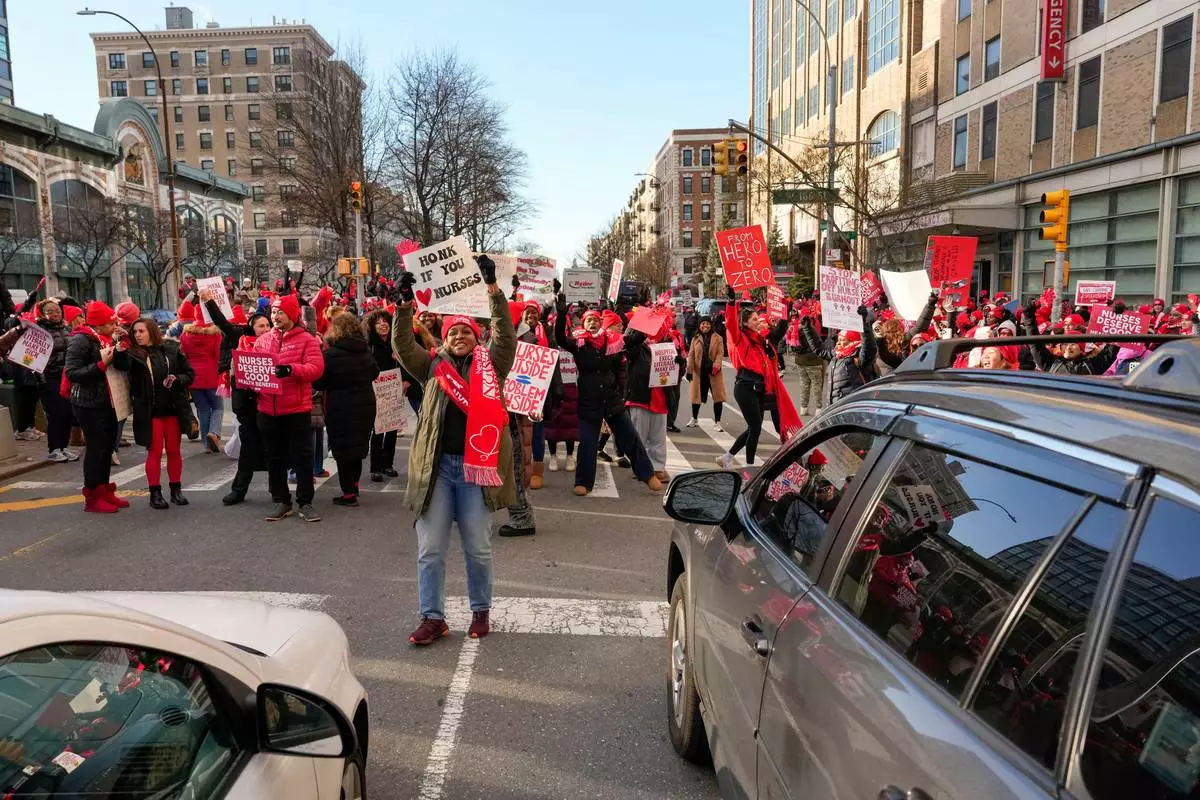
Nurses strike outside New York-Presbyterian Hospital, Monday, Jan. 12, 2026, in New York. (AP Photo/Yuki Iwamura)
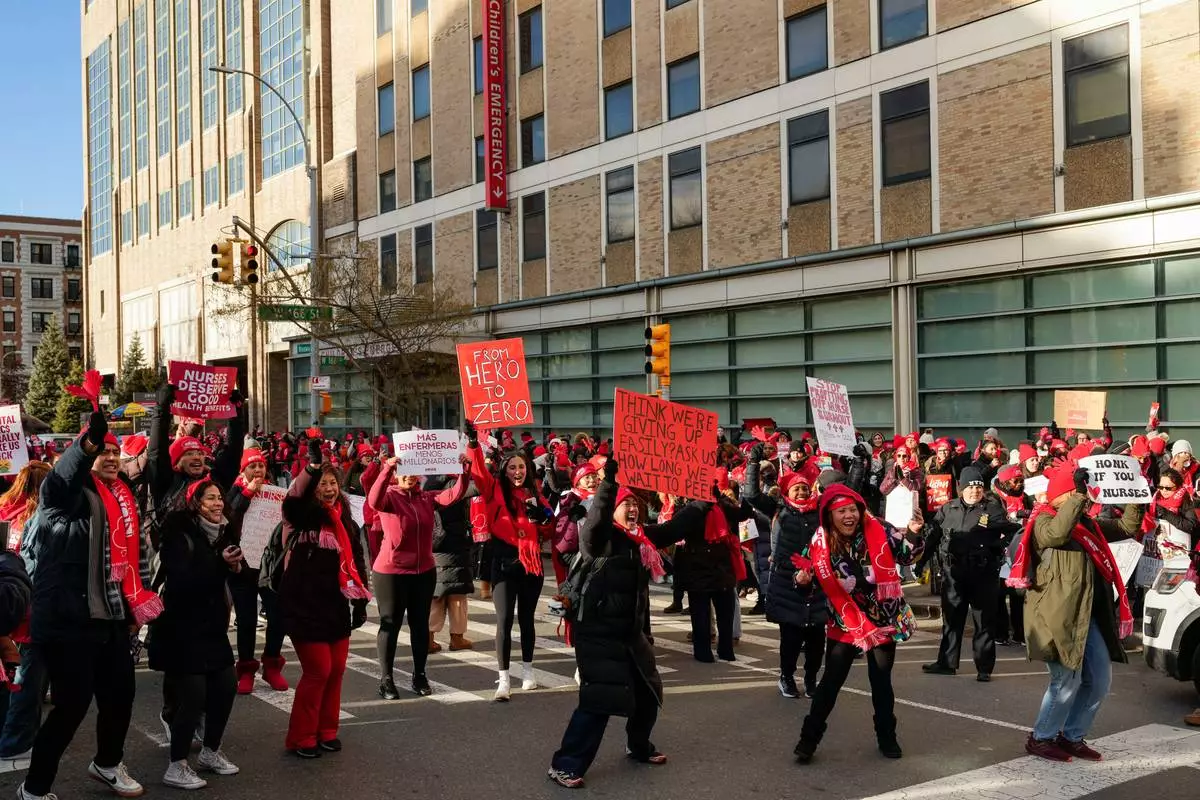
Nurses strike outside New York-Presbyterian Hospital, Monday, Jan. 12, 2026, in New York. (AP Photo/Yuki Iwamura)
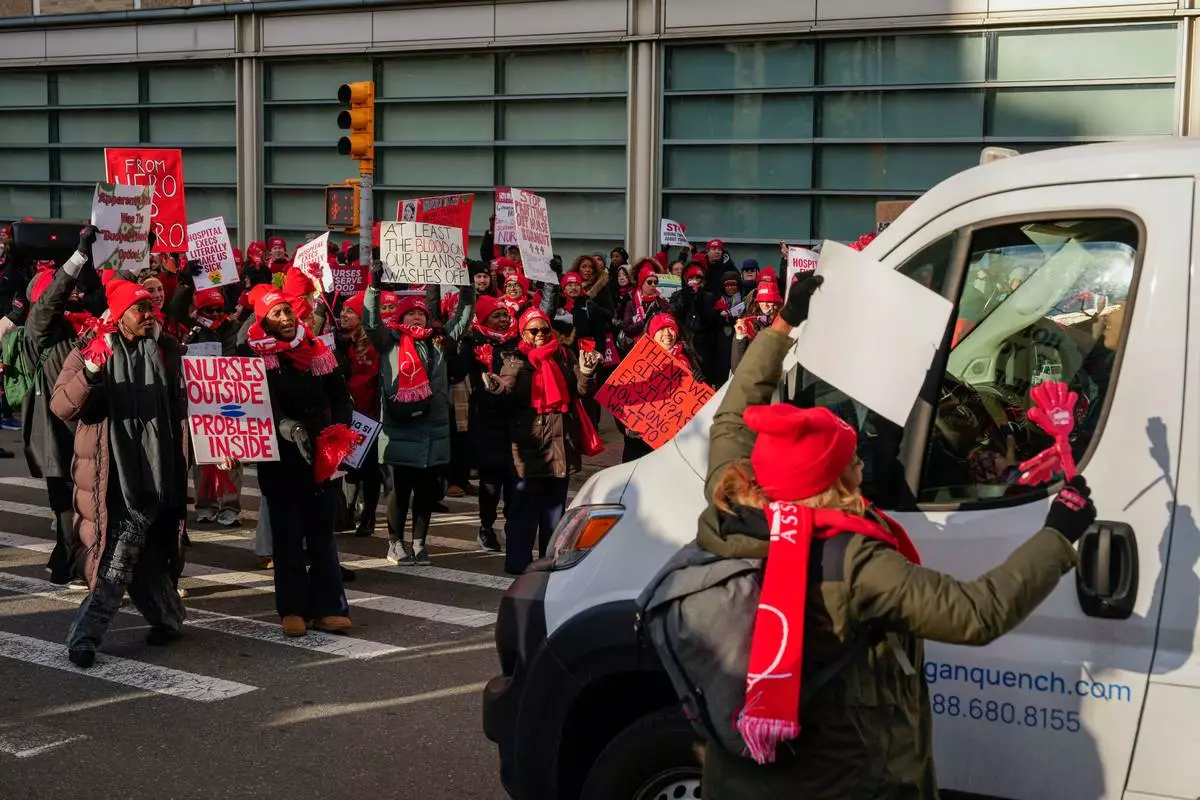
Nurses strike outside New York-Presbyterian Hospital, Monday, Jan. 12, 2026, in New York. (AP Photo/Yuki Iwamura)
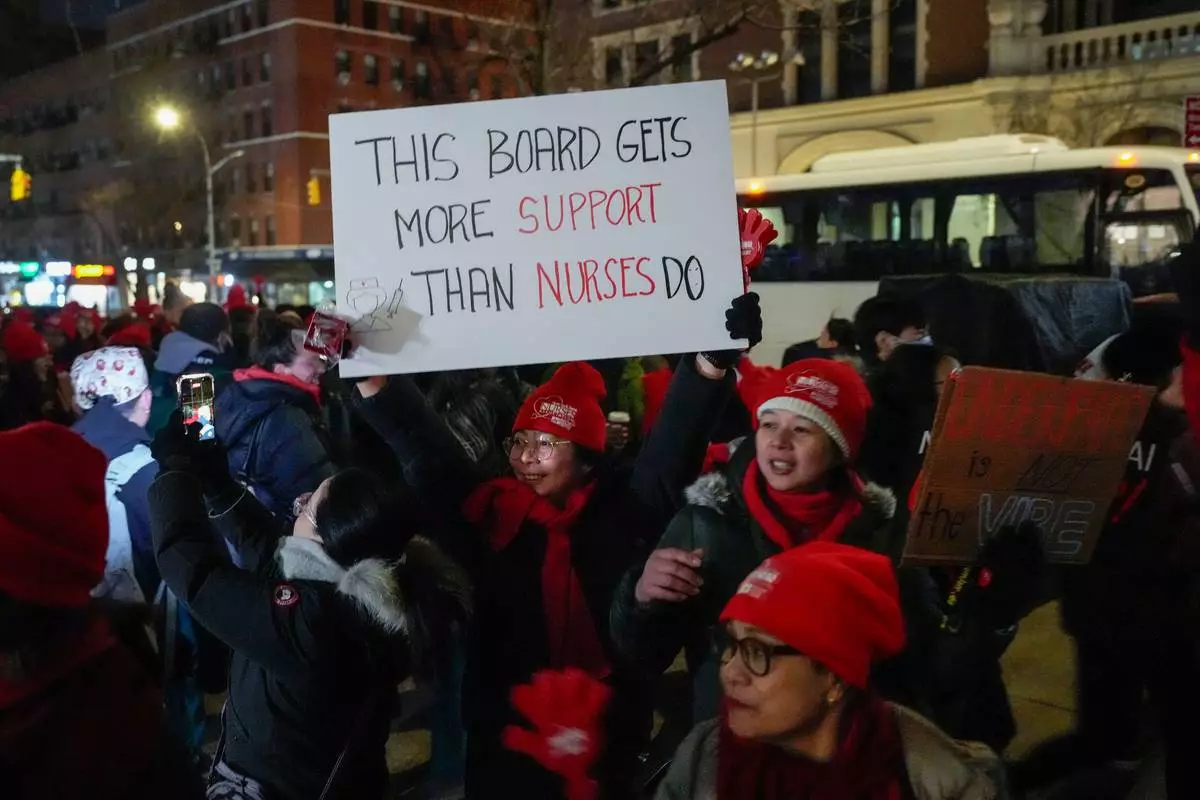
Nurses strike outside Mount Sinai West Hospital, Monday, Jan. 12, 2026, in New York. (AP Photo/Yuki Iwamura)
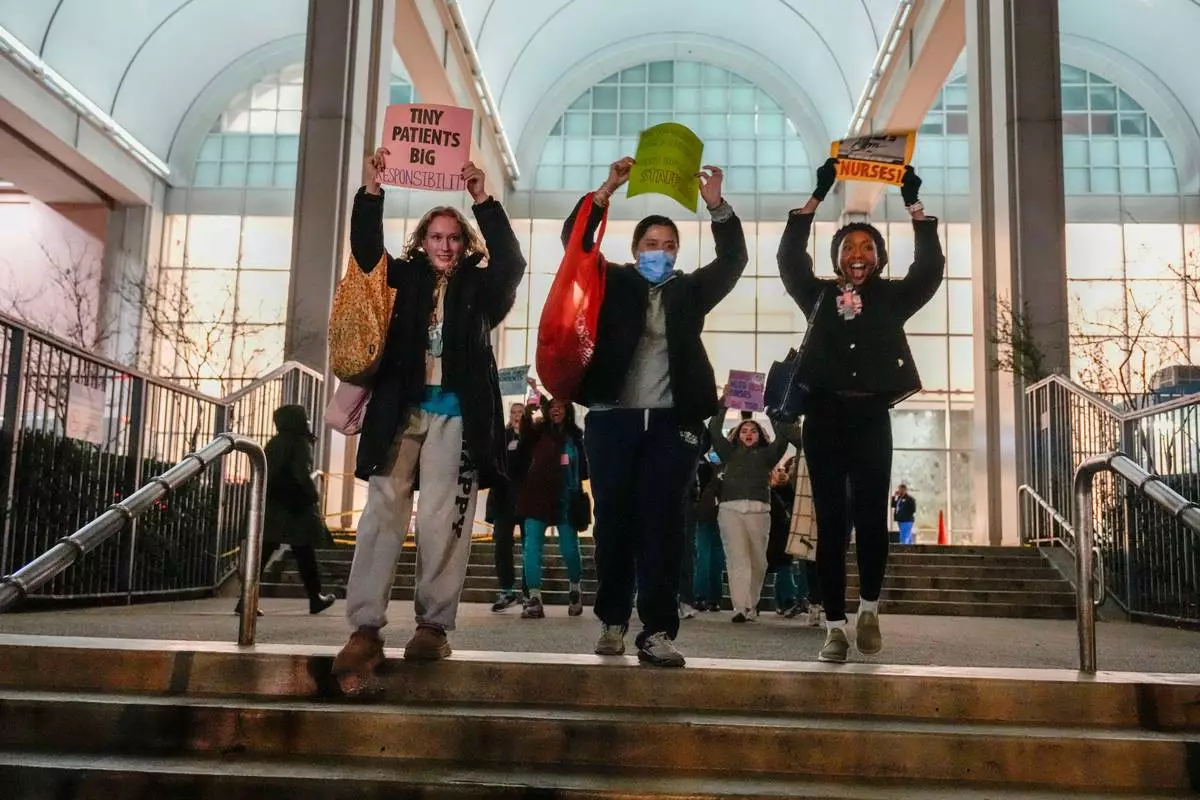
Nurses strike outside Mount Sinai West Hospital, Monday, Jan. 12, 2026, in New York. (AP Photo/Yuki Iwamura)
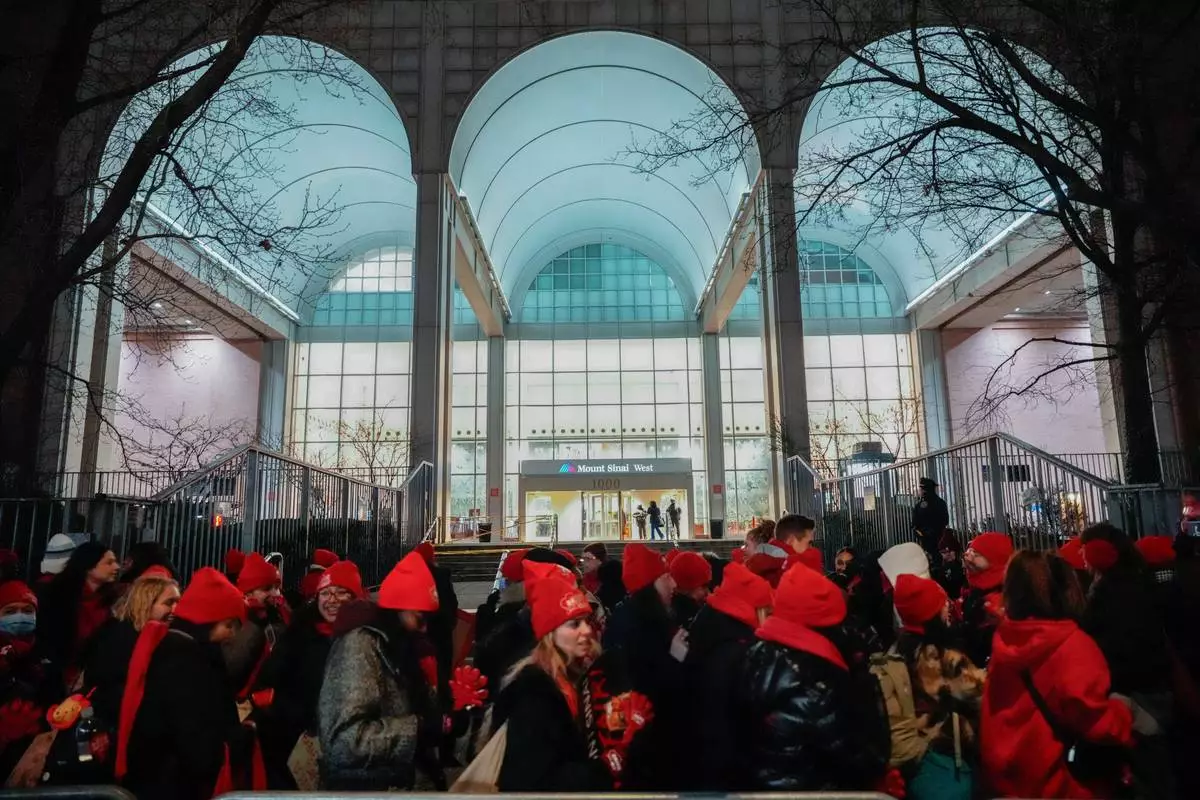
Nurses strike outside Mount Sinai West Hospital, Monday, Jan. 12, 2026, in New York. (AP Photo/Yuki Iwamura)
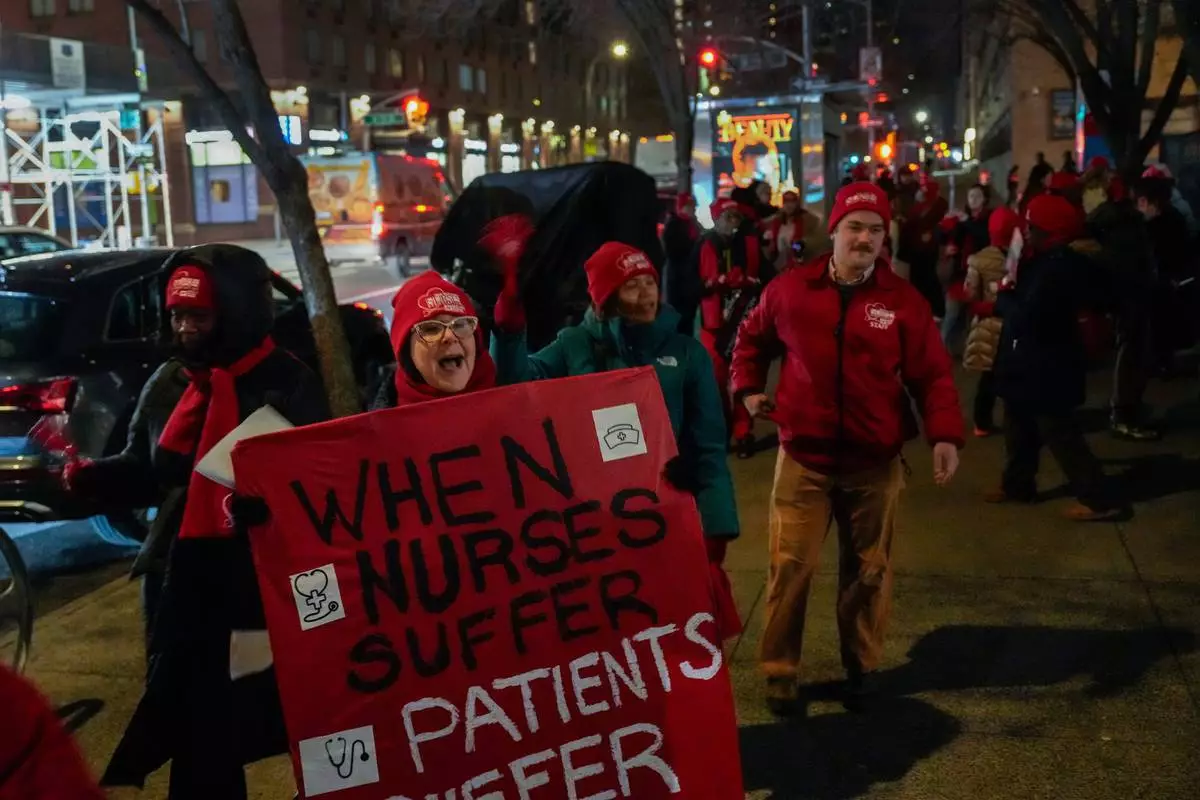
Nurses strike outside Mount Sinai West Hospital, Monday, Jan. 12, 2026, in New York. (AP Photo/Yuki Iwamura)

FILE - A medical worker transports a patient at Mount Sinai Hospital, April 1, 2020, in New York. (AP Photo/Mary Altaffer, File)