Skip to Content Facebook Feature Image

Blind tennis champion Naqi Rizvi lobbies for sport's awareness and Paralympic inclusion

ENT

Blind tennis champion Naqi Rizvi lobbies for sport's awareness and Paralympic inclusion
ENT

ENT

Blind tennis champion Naqi Rizvi lobbies for sport's awareness and Paralympic inclusion

2025-05-24 13:02 Last Updated At:13:21

LONDON (AP) — Naqi Rizvi loves the “absolute freedom” he feels on the tennis court.

Winning titles is fun, too.

More Images
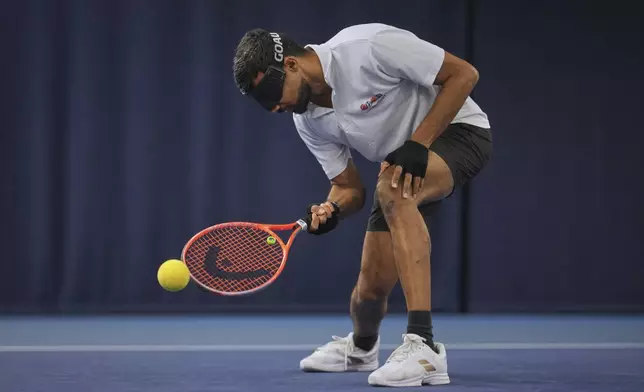
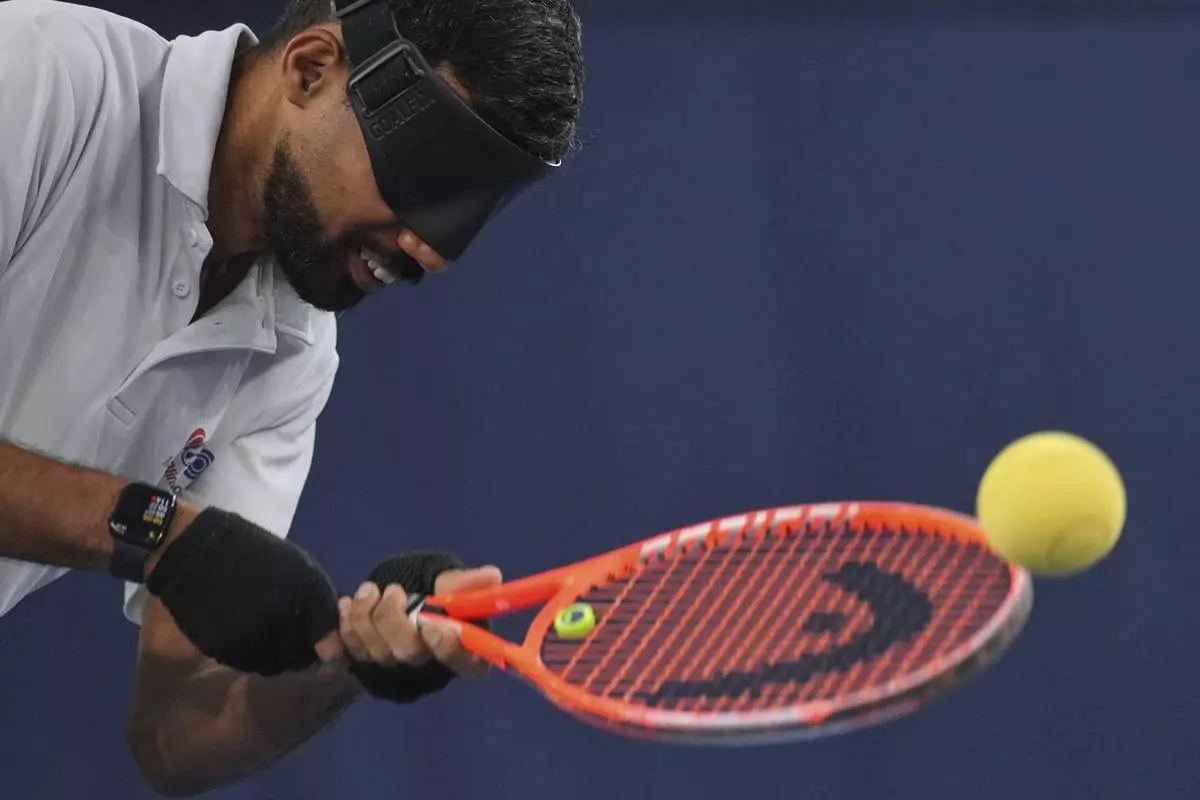
Blind tennis champion Naqi Rizvi plays a shot during a visually impaired tennis training session in London, Tuesday, May 20, 2025. (AP Photo/Kin Cheung)
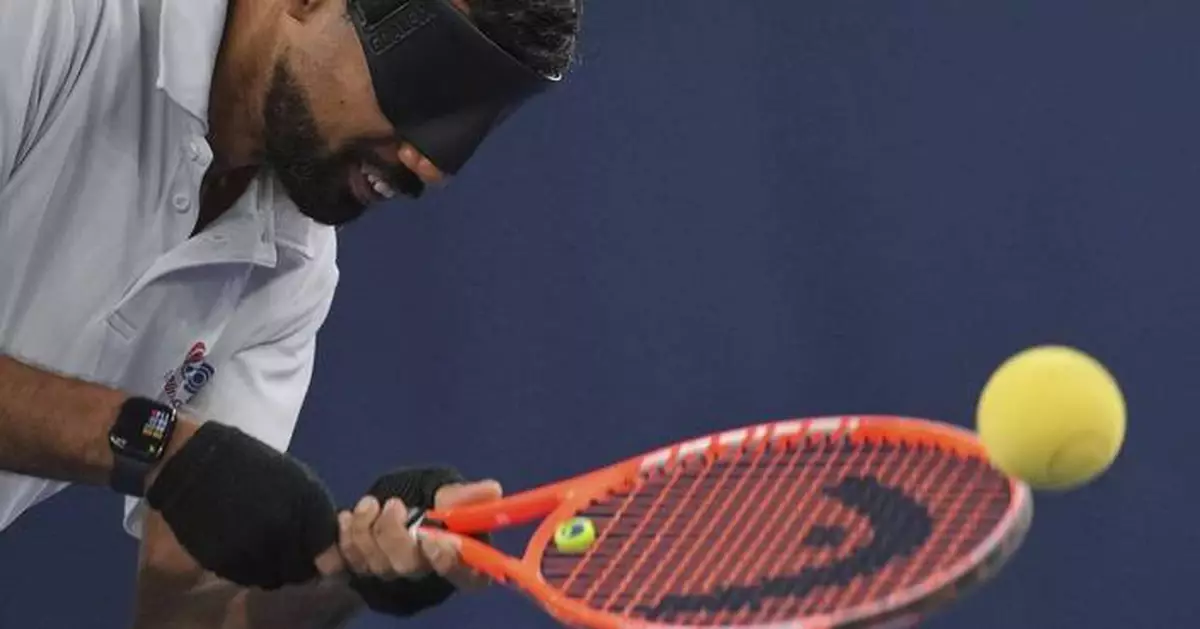
Blind tennis champion Naqi Rizvi plays a shot during a visually impaired tennis training session in London, Tuesday, May 20, 2025. (AP Photo/Kin Cheung)

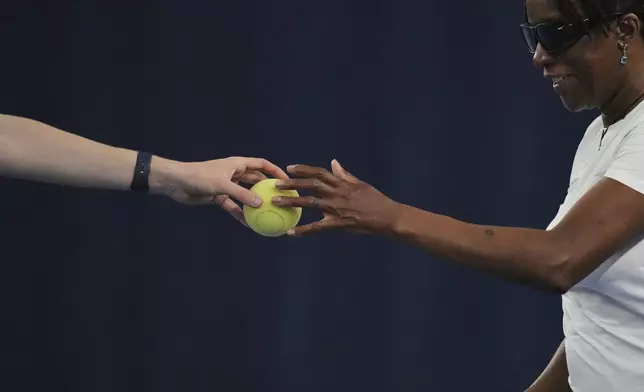
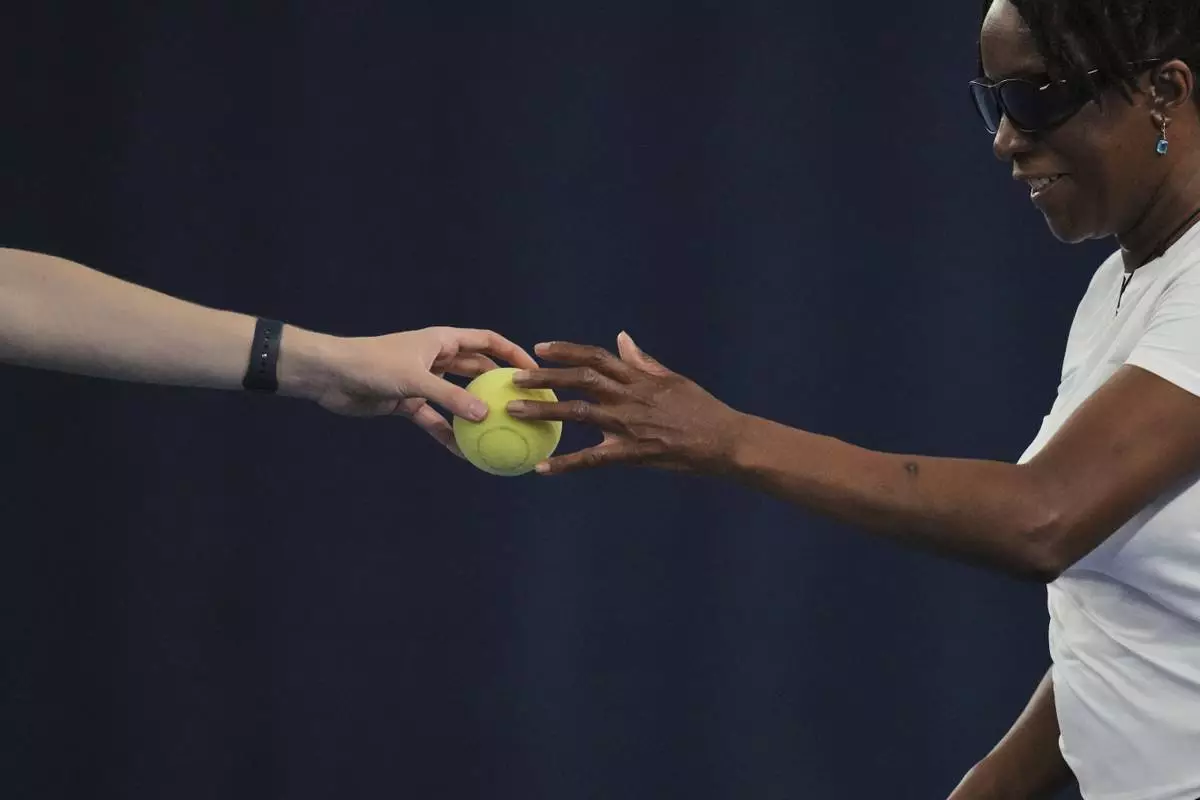
Marvel Opara, who is partially sighted, reaches out to take a ball as she attends a visually impaired tennis training session in London, Wednesday, May 14, 2025. (AP Photo/Kin Cheung)
Marvel Opara, who is partially sighted, reaches out to take a ball as she attends a visually impaired tennis training session in London, Wednesday, May 14, 2025. (AP Photo/Kin Cheung)

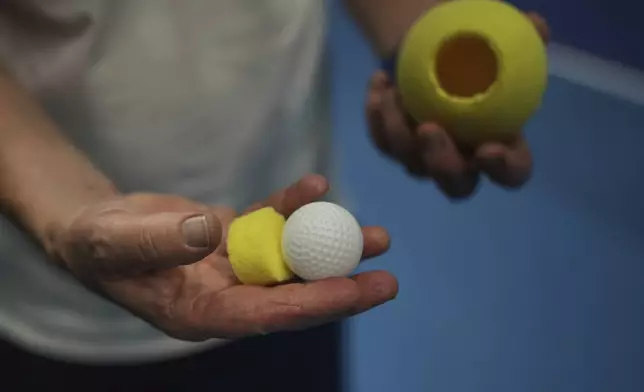
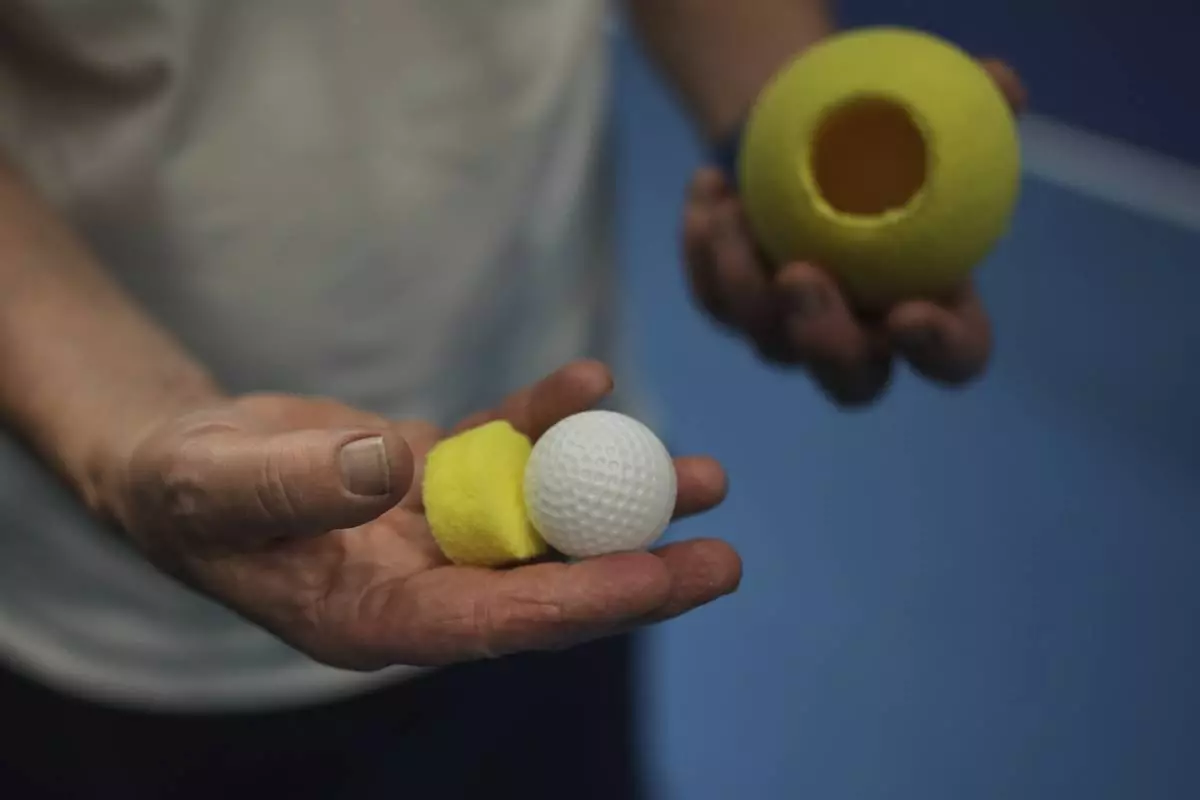
Tennis coach, Lee Neale, shows a ball used for visually impaired tennis during a training session in London, Wednesday, May 14, 2025. (AP Photo/Kin Cheung)
Tennis coach, Lee Neale, shows a ball used for visually impaired tennis during a training session in London, Wednesday, May 14, 2025. (AP Photo/Kin Cheung)

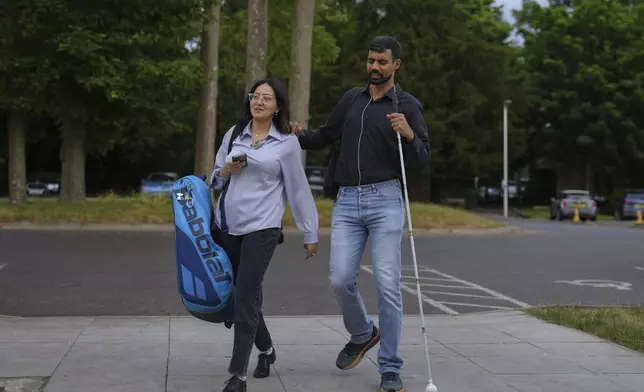
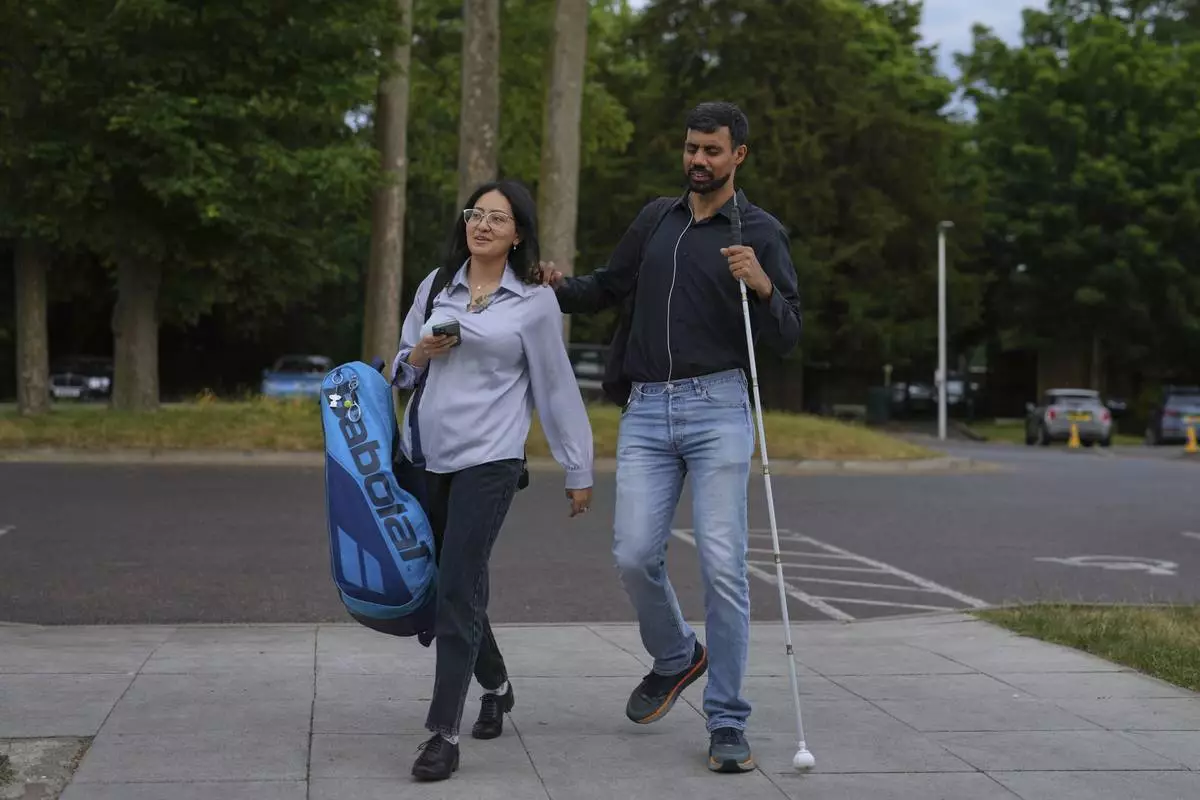
Blind tennis champion Naqi Rizvi and his wife Zara attend a visually impaired tennis training session in London, Tuesday, May 20, 2025. (AP Photo/Kin Cheung)
Blind tennis champion Naqi Rizvi and his wife Zara attend a visually impaired tennis training session in London, Tuesday, May 20, 2025. (AP Photo/Kin Cheung)

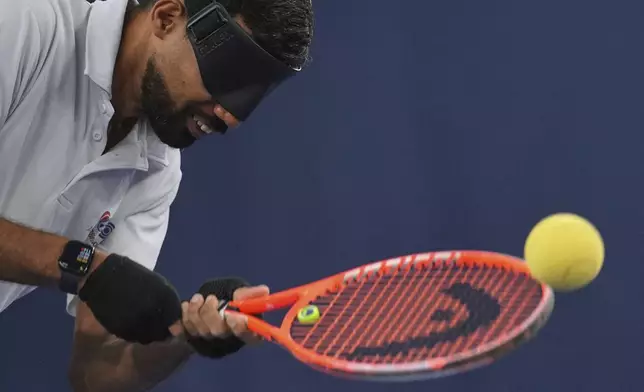
Blind tennis champion Naqi Rizvi plays a shot during a visually impaired tennis training session in London, Tuesday, May 20, 2025. (AP Photo/Kin Cheung)

Blind tennis champion Naqi Rizvi plays a shot during a visually impaired tennis training session in London, Tuesday, May 20, 2025. (AP Photo/Kin Cheung)

The 34-year-old blind tennis champion is on a mission to not only raise awareness but also elevate the sport into the Paralympics.

"That would be the dream, and I’d love to be the first Paralympic champion if I can,” Rizvi said.

The London resident, fully blind from the age of 7 because of congenital glaucoma, only took up the sport a decade ago and is now the No. 1-ranked men's player in the world for his category.

Also an avid runner, Rizvi has completed two marathons and although jogging with a guide is great, tennis offers more.

“On a tennis court, I have absolute freedom because I know where the boundaries are, no one needs to tell me which way to turn, I don’t need to have a cane or anything of this sort," he told The Associated Press during a practice session at the National Tennis Center in southwest London.

"It’s just the absolute sense of freedom to know that I can run comfortably, make my own decisions, and then be able to play points or rallies. It’s just incredible.”

The rules are basically the same as mainstream tennis just with smaller dimensions and slightly lower net. Tactile lines are taped onto the court so players like Rizvi can feel the boundaries. Depending on the level of visual impairment, you are allowed up to three bounces of the ball. The foam ball contains a bell so players can audibly track it.

“What I find interesting about blind tennis is it’s incredibly technical,” said Rizvi, who also possesses a big serve.

The problem-solving aspect of the sport is something Rizvi enjoys — no surprise given that he studied engineering at University College London.

“You really need to anticipate after you’ve heard the first bounce where the second and third will be,” he said. "You obviously can’t see how your opponent has hit the ball, so it’s a lot of anticipation and a lot of practice and getting used to different trajectories that the ball can take.

Rizvi didn't even know that tennis was an option until he visited Metro Blind Sport in London a decade ago. He was hooked right away.

“I can almost assure you that if you did a survey of blind and partially sighted people," he said, "the majority of them wouldn’t have any idea because it’s not televised, it’s not in any other mainstream events, so how are people supposed to find out?”

The Lawn Tennis Association supports a visually impaired program that includes practice sessions at the governing body's National Tennis Center. That's where Jack Draper, the world No. 5 player, tried out the different levels. The LTA also runs tournaments each year and sends “Team GB” to an international competition.

Rizvi noted that there's not much financial backing in the sport. There's no prize money at tournaments and players often fund their own travel.

“Unless you obviously have the visibility and the money behind it, it’s really hard,” he said. “Governing bodies need to take a more active role and try and give parity to all forms of disability tennis not just the ones that have made it big like wheelchair tennis, for example.”

Rizvi, who is married and works in finance, originally represented his native Pakistan but for the past year has been part of England's program since gaining British citizenship. He discussed his childhood — his father is Pakistani and his mother is Indian — in a TEDx Talk he gave as a student at UCL.

Invented in Japan by Takei Miyoshi in 1984, blind tennis is played around the world. Last year's world championships in Italy were the largest to date with 117 players from 20 countries, the International Blind Tennis Association said.

Rizvi has won several national titles, a European championship, the world championship in 2023 — as well as gold that year at the ISBA World Games. He is also the two-time defending champion of the Play Your Way to Wimbledon tournament.

The International Paralympic Committee handbook spells out that the sport or discipline must be “widely and regularly practiced” in at least 32 countries and three continents.

“I really want it to be in the Paralympics,” Rizvi said, "but I also want this to be a mainstream sport which can be part of the ATP Tour, part of Grand Slam tournaments, just like wheelchair tennis has made such amazing leaps forward. I’d love for blind tennis to be there as well because it’s definitely got the potential.

“It’s got the countries, the continents, the people, the passion behind it."
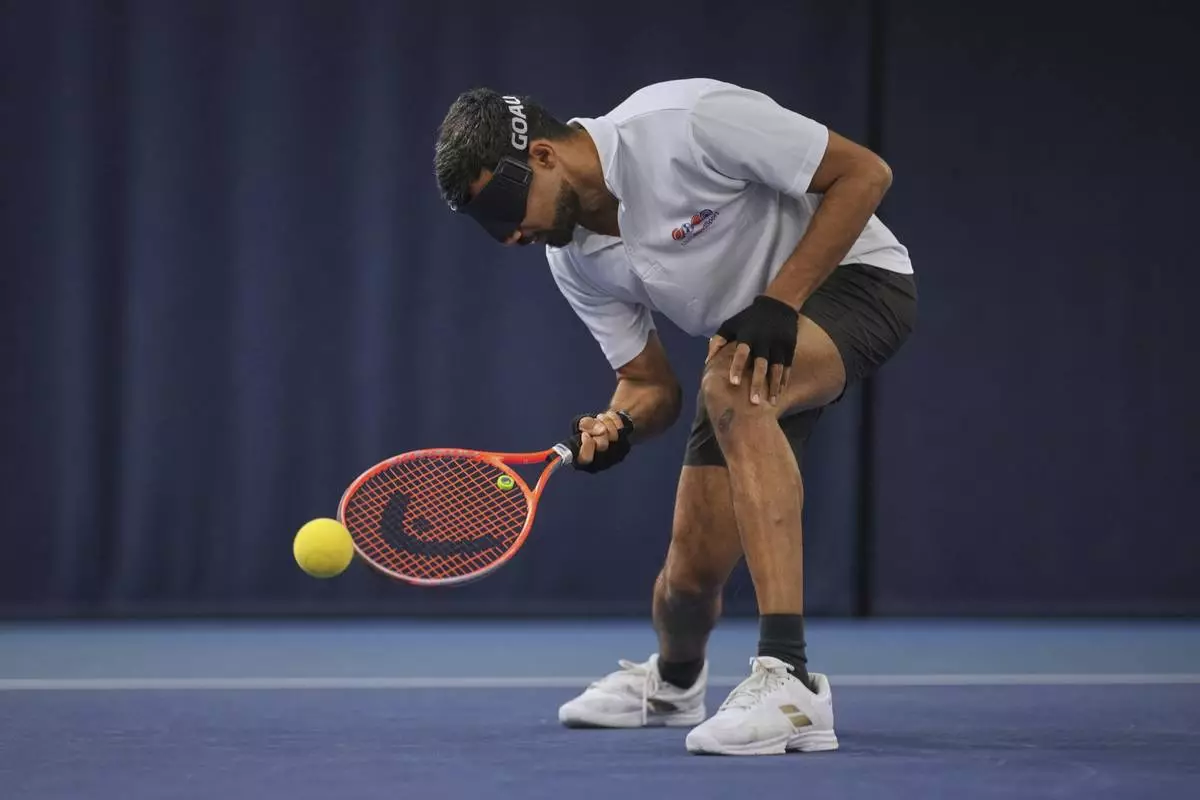
Blind tennis champion Naqi Rizvi plays a shot during a visually impaired tennis training session in London, Tuesday, May 20, 2025. (AP Photo/Kin Cheung)
Blind tennis champion Naqi Rizvi plays a shot during a visually impaired tennis training session in London, Tuesday, May 20, 2025. (AP Photo/Kin Cheung)

Marvel Opara, who is partially sighted, reaches out to take a ball as she attends a visually impaired tennis training session in London, Wednesday, May 14, 2025. (AP Photo/Kin Cheung)
Marvel Opara, who is partially sighted, reaches out to take a ball as she attends a visually impaired tennis training session in London, Wednesday, May 14, 2025. (AP Photo/Kin Cheung)

Tennis coach, Lee Neale, shows a ball used for visually impaired tennis during a training session in London, Wednesday, May 14, 2025. (AP Photo/Kin Cheung)
Tennis coach, Lee Neale, shows a ball used for visually impaired tennis during a training session in London, Wednesday, May 14, 2025. (AP Photo/Kin Cheung)

Blind tennis champion Naqi Rizvi and his wife Zara attend a visually impaired tennis training session in London, Tuesday, May 20, 2025. (AP Photo/Kin Cheung)
Blind tennis champion Naqi Rizvi and his wife Zara attend a visually impaired tennis training session in London, Tuesday, May 20, 2025. (AP Photo/Kin Cheung)

Blind tennis champion Naqi Rizvi plays a shot during a visually impaired tennis training session in London, Tuesday, May 20, 2025. (AP Photo/Kin Cheung)
Blind tennis champion Naqi Rizvi plays a shot during a visually impaired tennis training session in London, Tuesday, May 20, 2025. (AP Photo/Kin Cheung)

RHO, Italy (AP) — No ice is colder and harder than speedskating ice. The precision it takes has meant that Olympic speedskaters have never competed for gold on a temporary indoor rink – until the 2026 Milan Cortina Winter Games.

In the pursuit of maximum glide and minimum friction, Olympic officials brought on ice master Mark Messer, a veteran of six previous Olympic speedskating tracks and the ice technician in charge of the Olympic Oval in Calgary, Canada — one of the fastest tracks in the world with over 300 records.

Messer has been putting that experience to work one thin layer of ice at a time since the end of October at the new Speed Skating Stadium, built inside adjacent trade fair halls in the city of Rho just north of Milan.

“It’s one of the biggest challenges I’ve had in icemaking,’’ Messer said during an interview less than two weeks into the process.

If Goldilocks were a speedskater, hockey ice would be medium hard, for fast puck movement and sharp turns. Figure skating ice would be softer, allowing push off for jumps and so the ice doesn’t shatter on landing. Curling ice is the softest and warmest of all, for controlled sliding.

For speedskating ice to be just right, it must be hard, cold and clean. And very, very smooth.

“The blades are so sharp, that if there is some dirt, the blade will lose the edge,’’ Messer said, and the skater will lose speed.

Speedskater Enrico Fabris, who won two Olympic golds in Turin in 2006, has traded in his skates to be deputy sports manager at the speedskating venue in Rho. For him, perfect ice means the conditions are the same for all skaters — and then if it's fast ice, so much the better.

"It's more of a pleasure to skate on this ice,'' he said.

Messer’s first Olympics were in Calgary in 1988 — the first time speedskating was held indoors. “That gave us some advantages because we didn’t have to worry about the weather, wind blowing or rain,’’ he said. Now he is upping the challenge by becoming the first ice master to build a temporary rink for the Olympics.

Before Messer arrived in Italy, workers spent weeks setting up insulation to level the floor and then a network of pipes and rubber tubes that carry glycol — an antifreeze — that is brought down to minus 7 or minus 8 degrees Celsius (17.6 to 19.4 degrees Fahrenheit) to make the ice.

Water is run through a purification system — but it can’t be too pure, or the ice that forms will be too brittle. Just the right amount of impurities “holds the ice together,’’ Messer said.

The first layers of water are applied slowly, with a spray nozzle; after the ice reaches a few centimeters it is painted white — a full day’s work — and the stripes are added to make lanes.

“The first one takes about 45 minutes. And then as soon as it freezes, we go back and do it again, and again and again. So we do it hundreds of times,’’ Messer said.

As the ice gets thicker, and is more stable, workers apply subsequent layers of water with hoses. Messer attaches his hose to hockey sticks for easier spreading.

What must absolutely be avoided is dirt, dust or frost — all of which can cause friction for the skaters, slowing them down. The goal is that when the skaters push “they can go as far as possible with the least amount of effort,’’ Messer said.

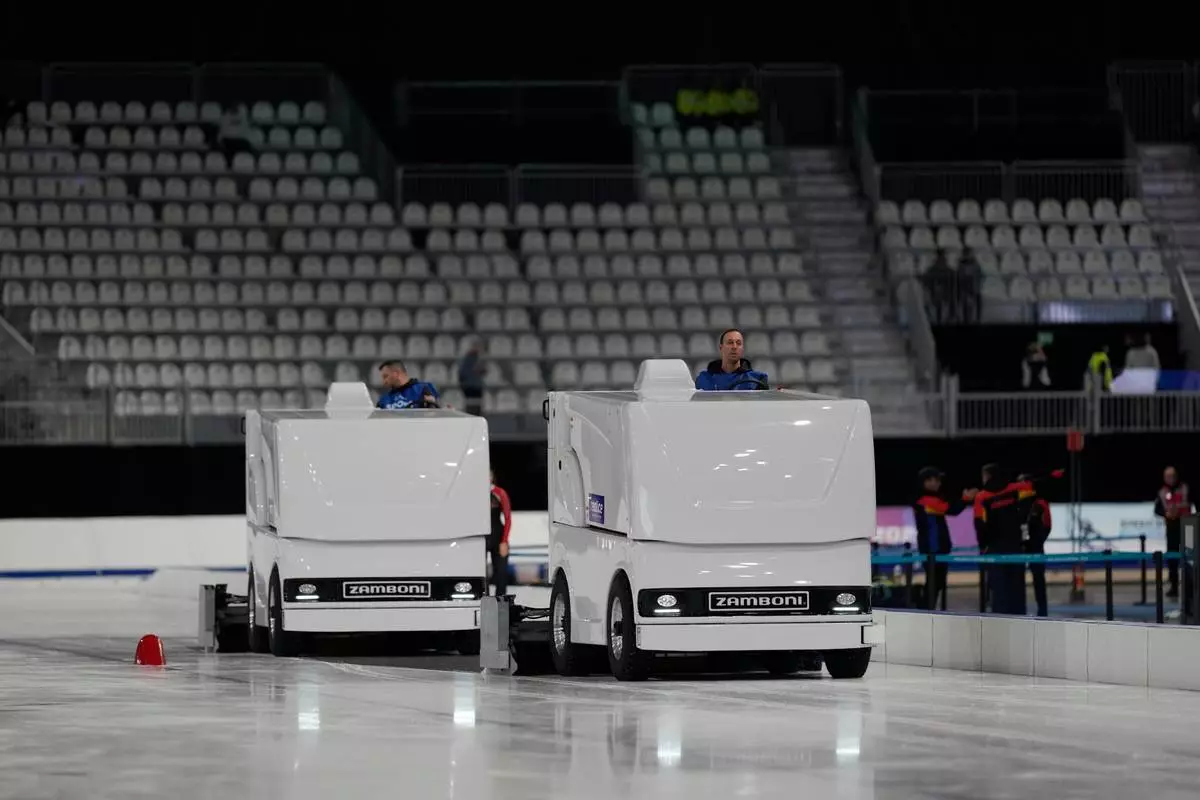
The Zamboni ice resurfacing machine plays a key role in keeping the track clean, cutting off a layer and spraying water to make a new surface.

One challenge is gauging how quickly the water from the resurfacing machine freezes in the temporary rink.

Another is getting the ice to the right thickness so that the Zamboni, weighing in at six tons, doesn’t shift the insulation, rubber tubing or ice itself.

“When you drive that out, if there’s anything moving it will move. We don’t want that,’’ Messer said.

The rink got its first big test on Nov. 29-30 during a Junior World Cup event. In a permanent rink, test events are usually held a year before the Olympics, leaving more time for adjustments. “We have a very small window to learn,’’ Messer acknowledged.

Dutch speedskater Kayo Vos, who won the men’s neo-senior 1,000 meters, said the ice was a little soft — but Messer didn’t seem too concerned.

“We went very modest to start, now we can start to change the temperatures and try to make it faster and still maintain it as a safe ice,’’ he said.

Fine-tuning the air temperature and humidity and ice temperature must be done methodically — taking into account that there will be 6,000 spectators in the venue for each event. The next real test will be on Jan. 31, when the Olympians take to the ice for their first training session.

“Eighty percent of the work is done but the hardest part is the last 20 percent, where we have to try to find the values and the way of running the equipment so all the skaters get the same conditions and all the skaters get the best conditions,’’ Messer said.

AP Winter Olympics: https://apnews.com/hub/milan-cortina-2026-winter-olympics

Serpentines are set on the ice of the stadium where speed skating discipline of the Milan Cortina 2026 Winter Olympics will take place, in Rho, outskirt of Milan, Tuesday, Nov. 11, 2025. (AP Photo/Luca Bruno)

Serpentines are set on the ice of the stadium where speed skating discipline of the Milan Cortina 2026 Winter Olympics will take place, in Rho, outskirt of Milan, Tuesday, Nov. 11, 2025. (AP Photo/Luca Bruno)

Ice Master Mark Messer poses in the stadium where speed skating discipline of the Milan Cortina 2026 Winter Olympics will take place, in Rho, outskirt of Milan, Tuesday, Nov. 11, 2025. (AP Photo/Luca Bruno)

Ice Master Mark Messer poses in the stadium where speed skating discipline of the Milan Cortina 2026 Winter Olympics will take place, in Rho, outskirt of Milan, Tuesday, Nov. 11, 2025. (AP Photo/Luca Bruno)

Workers clean the ice surface during a peed skating Junior World Cup and Olympic test event, in Rho, near Milan, Italy, Saturday, Nov. 29, 2025. (AP Photo/Luca Bruno)

Workers clean the ice surface during a peed skating Junior World Cup and Olympic test event, in Rho, near Milan, Italy, Saturday, Nov. 29, 2025. (AP Photo/Luca Bruno)

Ice Master Mark Messer poses in the stadium where speed skating discipline of the Milan Cortina 2026 Winter Olympics will take place, in Rho, outskirt of Milan, Tuesday, Nov. 11, 2025. (AP Photo/Luca Bruno)

Ice Master Mark Messer poses in the stadium where speed skating discipline of the Milan Cortina 2026 Winter Olympics will take place, in Rho, outskirt of Milan, Tuesday, Nov. 11, 2025. (AP Photo/Luca Bruno)

Ice Master Mark Messer poses in the stadium where speed skating discipline of the Milan Cortina 2026 Winter Olympics will take place, in Rho, outskirt of Milan, Tuesday, Nov. 11, 2025. (AP Photo/Luca Bruno)

Ice Master Mark Messer poses in the stadium where speed skating discipline of the Milan Cortina 2026 Winter Olympics will take place, in Rho, outskirt of Milan, Tuesday, Nov. 11, 2025. (AP Photo/Luca Bruno)

Recommended Articles