VATICAN CITY (AP) — Pope Leo XIV made plenty of enemies helping dismantle a powerful Catholic movement whose leaders physically, sexually, spiritually and psychologically abused members. As Leo's past record of handling clergy sexual abuse cases comes under scrutiny, victims of the now-disgraced group are stepping up to defend him.
These survivors say that starting in 2018, when Robert Prevost was a bishop in Peru, he met with them. He took their claims seriously when others did not. He got the Vatican involved and worked concretely to provide financial reparations for the harm they had endured.
Click to Gallery

Peruvian investigative journalist Paola Margot Ugaz Cruz talks with the Associated Press near St. Peter's Square at the Vatican, Monday, May 19, 2025. (AP Photo/Gregorio Borgia)

Peruvian investigative journalist Paola Margot Ugaz Cruz talks with the Associated Press near St. Peter's Square at the Vatican, Monday, May 19, 2025. (AP Photo/Gregorio Borgia)

Peruvian investigative journalist Paola Margot Ugaz Cruz talks with the Associated Press near St. Peter's Square at the Vatican, Monday, May 19, 2025. (AP Photo/Gregorio Borgia)

Jose Rey de Castro, a former member of the Sodalitium, speaks during an interview with the Associated Press in Lima, Peru, Wednesday, May 21, 2025. (AP Photo/Guadalupe Pardo)

Peruvian investigative journalist Paola Margot Ugaz Cruz talks with the Associated Press near St. Peter's Square at the Vatican, Monday, May 19, 2025. (AP Photo/Gregorio Borgia)

Jose Rey de Castro, a former member of the Sodalitium, speaks during an interview with the Associated Press in Lima, Peru, Wednesday, May 21, 2025. (AP Photo/Guadalupe Pardo)
They credit him with helping arrange the key 2022 meeting with Pope Francis that triggered a Vatican investigation into the group, known as the Sodalitium Christianae Vitae, that resulted in its suppression earlier this year.
“What can I say about him? That he listened to me,” said José Rey de Castro, a teacher who spent 18 years in the Sodalitium as the personal cook for its leader, Luis Fernando Figari. “It seems obvious for a priest. But that’s not the case, because the Sodalitium was very powerful.”
Figari founded the Sodalitium in Peru in 1971 as a lay community to recruit “soldiers for God.” It was one of several Catholic societies born as a conservative reaction to the left-leaning liberation theology movement that swept through Latin America starting in the 1960s. At its height, the group counted about 1,000 core members and several times that in three other branches across South America and the United States. It was enormously influential in Peru and has its U.S. base in Denver.
Starting in 2000, stories about Figari’s twisted practices began to filter out in Peru when a former member wrote a series of articles in the magazine Gente. A formal accusation was lodged with the Lima archdiocese in 2011 but neither the local church nor the Holy See took concrete action until former member Pedro Salinas and journalist Paola Ugaz exposed the practices of Sodalitium in their 2015 book “Half Monks, Half Soldiers.”
In 2017, a report commissioned by the group’s new leadership determined that the charismatic Figari was “narcissistic, paranoid, demeaning, vulgar, vindictive, manipulative, racist, sexist, elitist and obsessed with sexual issues and the sexual orientation of SCV members.” The report found that Figari sodomized his recruits and forced them to fondle him and one another, that he liked to watch them “experience pain, discomfort and fear,” and humiliated them in front of others to enhance his control over them.
Yet when members found the courage to escape and denounce the abuses they suffered, they say they often met a wall of silence and inaction from the Peruvian Catholic hierarchy and the Holy See. Both were slow to act against a movement that had been formally approved by St. John Paul II's Vatican, which had looked fondly on conservative, wealthy movements in Latin America, like the similarly-disgraced Mexican-based Legion of Christ.
But not Prevost, whom Francis made bishop of Chiclayo, Peru in 2014 and later was elected vice president of the Peruvian bishops conference. He headed the bishops’ commission created to listen to victims of abuse, and became a critical “bridge” between victims and Sodalitium, the victims say.
Rey de Castro, the former Figari cook who got out in 2014 and now teaches public policy to Peruvian police, turned to Prevost in 2021. He had been critical of a 2016 Sodalitium reparations program that, according to the group, provided some $6.5 million in academic, therapeutic and financial support to nearly 100 Sodalitium victims over the years.
He and Prevost met in the offices of the Peruvian bishops conference and stayed in touch via text message up until Prevost's election as pope.
From the start, Rey de Castro said, “Prevost was very clear in saying ‘For me, Sodalitium doesn’t have a charism,’” the church term for the fundamental inspiration and reason for a religious movement to exist. After their 2021 meeting, Prevost helped arrange a confidential settlement with Sodalitium, he said.
“For Prevost to get the Sodalitium to do something just was exceptional, which was more or less what happened,” he said in an interview in Lima.
Salinas and Ugaz, for their part, say Prevost also stepped in when the Sodalitium started retaliating against them with legal action for their continued investigative reporting on the group. After the Sodalitium’s archbishop of Piura, José Eguren, sued Salinas in 2018 for defamation, Prevost and the Vatican’s ambassador to Peru helped craft a statement from the Peruvian bishops conference backing the journalists.
“It was the first time that anyone had done anything against the Sodalitium publicly,” Ugaz said. “And not only did they make this declaration, but they communicated with Francis, told him what was happening and Francis got mad.”
Ugaz and Salinas provided years of emails, text messages and anecdotes dating back to 2018 to demonstrate how committed Prevost was to the cause of the Sodalitium victims. While not all his initiatives succeeded, Prevost stepped in at critical junctions.
“I assure you I share your concern and we are looking for the best way to get the letter directly to the pope,” Prevost wrote one victim Dec. 11, 2018, about getting a letter from Sodalitium victims to Francis.
“I will continue working so that there is justice for all those who suffered at the hands of Sodalitium,” Prevost wrote another victim on Dec. 23, 2018. “I ask forgiveness for the errors of the church.”
After the Sodalitium criticism accelerated against Ugaz and Salinas, Prevost helped arrange for Ugaz to meet with Francis at the Vatican on Nov. 10, 2022, during which she laid out her findings and convinced Francis to send his top sex crimes investigators to Peru.
Their 2023 investigation uncovered physical abuses “including with sadism and violence, ” sect-like abuses of conscience, spiritual abuse, abuses of authority including the hacking of Ugaz’s communications and economic abuses in administering church money. The probe also identified a publicity campaign some Sodalitium members had mounted against critics.
The investigation resulted in Francis taking a series of initiatives, starting with the April 2024 resignation of Eguren which Prevost handled. It continued with the expulsion of Figari, Eguren and nine others, and finally the formal dissolution of the Sodalitium in April this year, just before Francis died.
The Sodalitium has accepted its dissolution, asked forgiveness for “the mistreatment and abuse committed within our community” and for the pain caused the entire church.
“With sorrow and obedience, we accept this decision, specifically approved by Pope Francis, which brings our society to an end,” the group said in an April statement after the decree of dissolution was signed.
There was no reply to an email sent to the group with specific questions about Prevost's role.
Leo’s record of handling sex abuse cases while he was an Augustinian superior and bishop in Peru has come under renewed scrutiny since his election May 8. And overall, one of the biggest challenges facing history’s first American pope will be how he addresses the clergy abuse scandal, which has traumatized thousands of people around the world and devastated the Catholic hierarchy’s credibility.
The idea Prevost might have enemies as a result of his tough line against the Sodalitium was crystalized in a recent podcast hosted by Salinas on Peru’s La Mula streaming platform. Salinas dedicated most of the hourlong episode to reading aloud seven years of glowing correspondence between Sodalitium victims and Prevost.
But he also said Prevost had become the target of a defamation campaign asserting he covered up for abusers. Salinas blamed the campaign on Sodalitium's supporters trying to discredit the new pope.
One of the cases in question is Prevost’s handling of abuse allegations made in 2022 by three sisters against one of his priests in Chiclayo. The diocese and Vatican say Prevost did everything he was supposed to do, including restricting the priest's ministry, sending a preliminary investigation to the Vatican’s sex crimes office, offering psychological help to the victims and suggesting they go to Peruvian authorities, who archived the case because it happened too long ago.
Nine days after Peruvian authorities closed the case, Prevost was named to head the Vatican's office for bishops and left the diocese.
The Vatican archived the case for lack of evidence, but it was reopened in 2023 after it gained traction in the media. Victims’ groups are demanding an accounting from Leo.
Salinas, Ugaz and even some in the Vatican believe Sodalitium supporters fueled publicity about the case and its reopening to discredit Prevost. They note that the victims’ lawyer is a former Augustinian antagonist of Prevost who has since been defrocked and barred from presenting himself as a canon lawyer in Peru.
“So, when I read about Prevost’s ‘alleged cover-ups,’ something doesn’t add up,” Salinas told AP.
Rocío Figueroa, another Sodalitium victim who now works as a researcher and theologian in New Zealand, concurred.
“It is very strange if someone is so strong and honest to do like that with victims of Sodalitium and not do it with other victims,” she said.
Anne Barrett-Doyle, of the online abuse database BishopAccountability.org, said even if the Chiclayo case is being exploited by Sodalitium supporters, “it doesn’t mean that he handled the case correctly.”
“Both things could be true: that then-Bishop Prevost acted valiantly on behalf of the victims of the Sodalitium and that he didn’t do nearly enough to investigate the allegations in Chiclayo,” she said.
Signing off his podcast, Salinas read aloud a WhatsApp message he had exchanged with Prevost on Oct. 16, 2024, when he warned him to beware of retaliation from the group.
“I have it very much on my mind,” Prevost wrote back.
Briceno reported from Lima, Peru.
Associated Press religion coverage receives support through the AP’s collaboration with The Conversation US, with funding from Lilly Endowment Inc. The AP is solely responsible for this content.
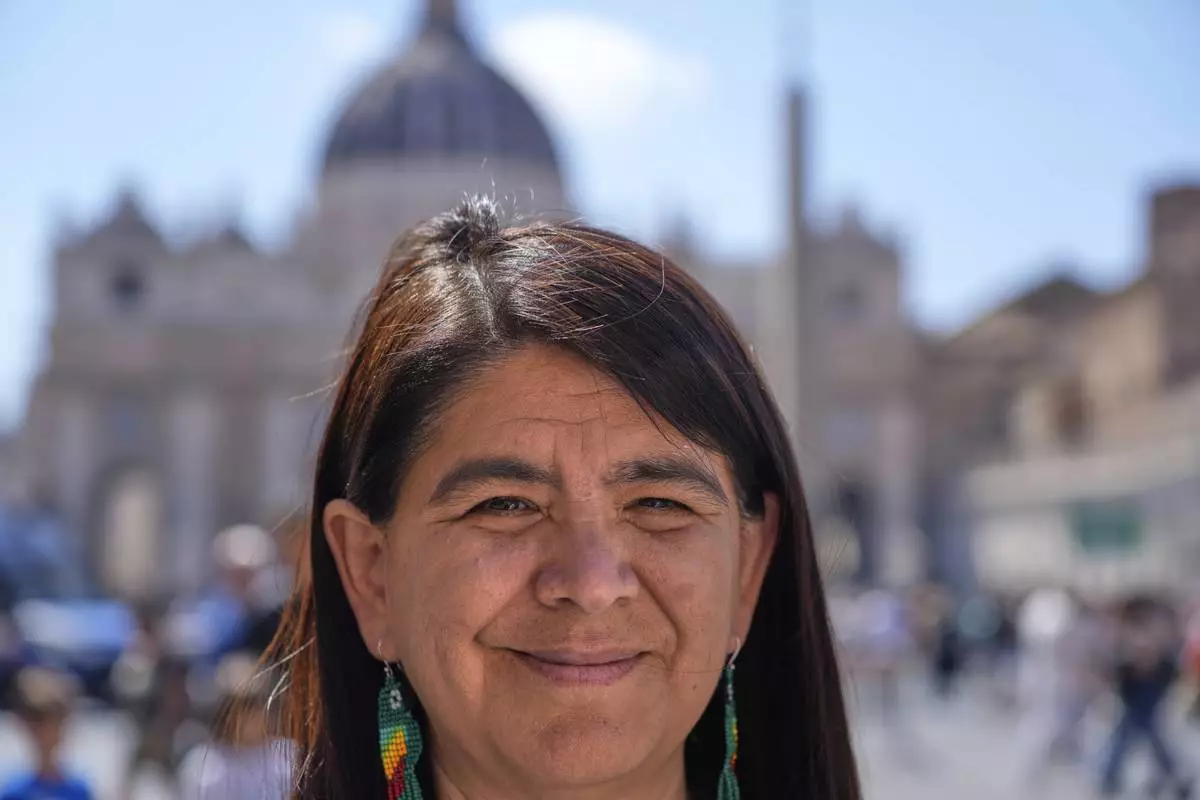
Peruvian investigative journalist Paola Margot Ugaz Cruz talks with the Associated Press near St. Peter's Square at the Vatican, Monday, May 19, 2025. (AP Photo/Gregorio Borgia)
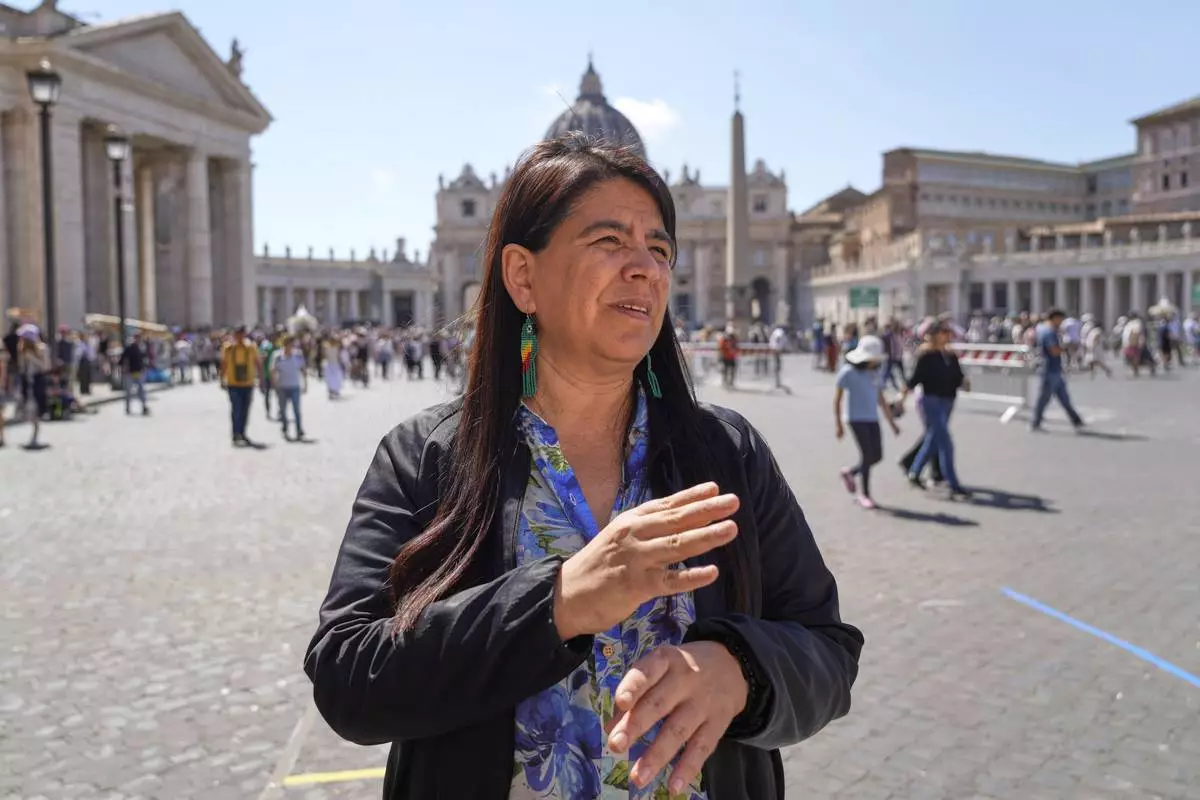
Peruvian investigative journalist Paola Margot Ugaz Cruz talks with the Associated Press near St. Peter's Square at the Vatican, Monday, May 19, 2025. (AP Photo/Gregorio Borgia)

Peruvian investigative journalist Paola Margot Ugaz Cruz talks with the Associated Press near St. Peter's Square at the Vatican, Monday, May 19, 2025. (AP Photo/Gregorio Borgia)

Jose Rey de Castro, a former member of the Sodalitium, speaks during an interview with the Associated Press in Lima, Peru, Wednesday, May 21, 2025. (AP Photo/Guadalupe Pardo)
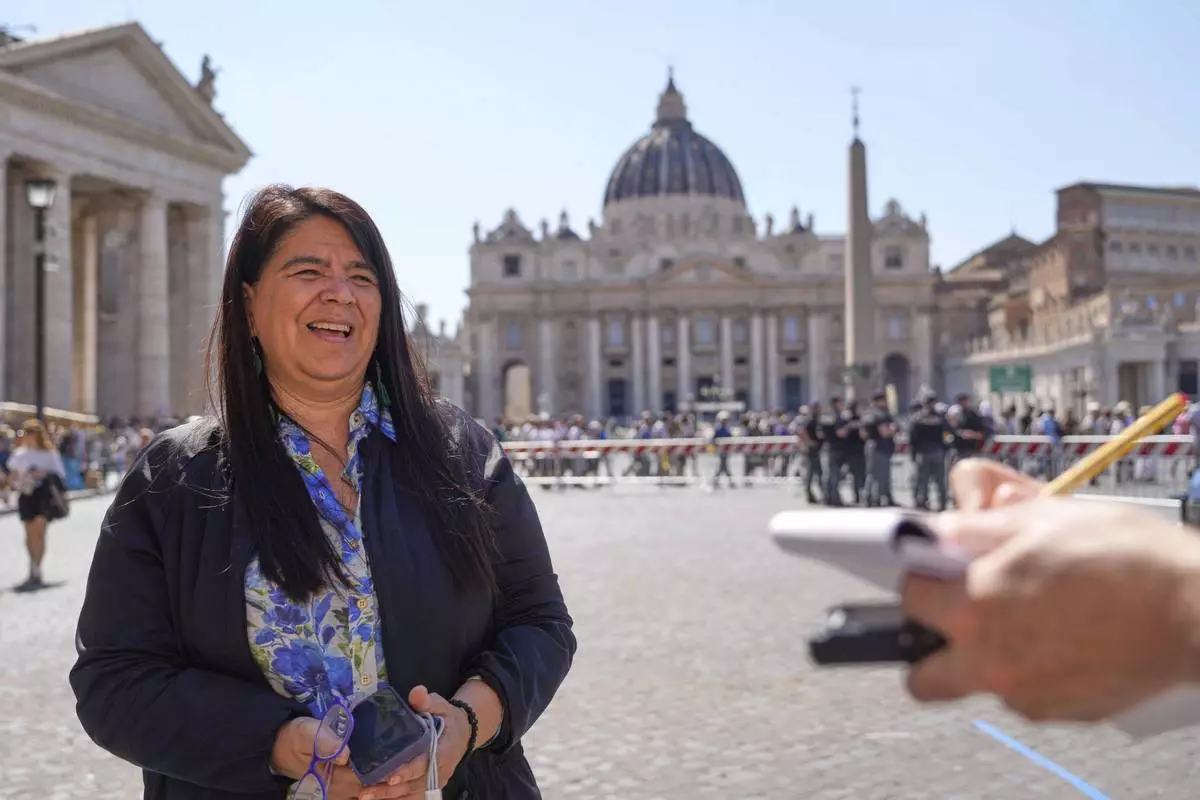
Peruvian investigative journalist Paola Margot Ugaz Cruz talks with the Associated Press near St. Peter's Square at the Vatican, Monday, May 19, 2025. (AP Photo/Gregorio Borgia)

Jose Rey de Castro, a former member of the Sodalitium, speaks during an interview with the Associated Press in Lima, Peru, Wednesday, May 21, 2025. (AP Photo/Guadalupe Pardo)