The Trump administration's move to block Harvard University from enrolling international students will cause further insecurity among foreign students and scholars at the university and worsen a crisis of confidence in American higher education, according to Josef Gregory Mahoney, a professor of politics at East China Normal University in Shanghai.
Mahoney shared his insight into the Trump administration's escalating standoff with America's oldest university during an interview with China Global Television Network (CGTN). He believed that fear and uncertainty could mount across Harvard campuses, where university data showed that international students made up over 27 percent of the student body as of the 2023 fall semester.
Homeland Security Secretary Kristi Noem on Thursday said the administration had revoked Harvard's "Student and Exchange Visitor Program certification as a result of their failure to adhere to the law," acting on the Trump administration's claim that Harvard has not done enough to fight antisemitism and change its hiring and admissions practices -- allegations that the university has strongly denied.
Harvard sued the Trump administration one day later.
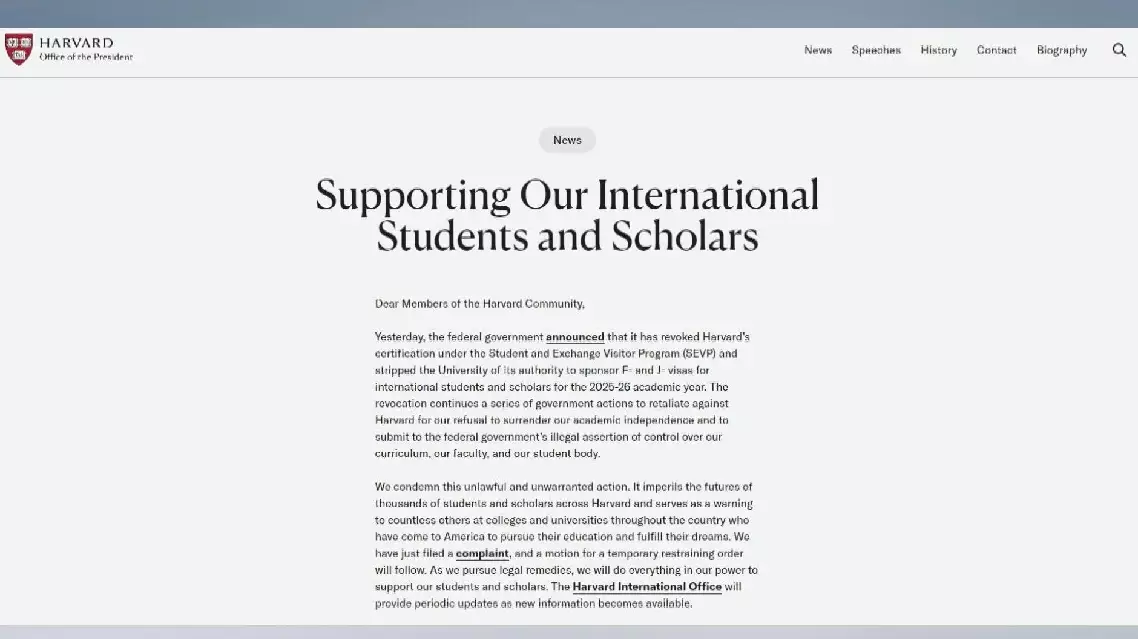
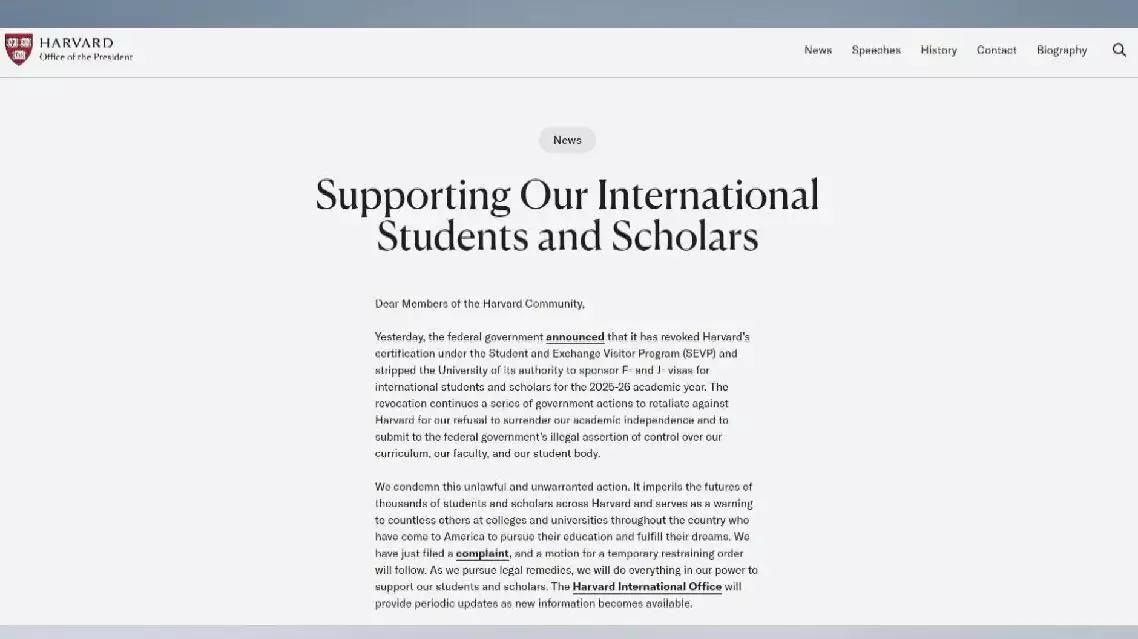
"We condemn this unlawful and unwarranted action. It imperils the futures of thousands of students and scholars across Harvard and serves as a warning to countless others at colleges and universities throughout the country who have come to America to pursue their education and fulfill their dreams," Harvard University President Alan Garber wrote in a letter to members of the Harvard community.
It was the second lawsuit Harvard filed against the administration in less than a month, following an earlier one in April that targeted the administration's decision to freeze billions of dollars in federal grants.
Speaking with CGTN, Mahoney noted several reasons behind the U.S. government's targeting of the country's most prestigious institutions, including Harvard's determination to push back and the fundamental question of "populism versus elitism" pitting America's leading universities against Trump's voter base.
"There are several issues here that need to be discussed that are the core issues. First, the White House asserts that this is a matter of national security. Trump officials have said that Harvard must provide data on its foreign students, so the government can evaluate whether any pose threats to U.S. security. And we know that the government alleges that Harvard has become a hotbed of international antisemitic ideology and activism. Second, there's another ongoing dispute between the White House and Harvard, with Harvard strongly resisting Trump's policies that have terminated hundreds of millions, and potentially with billions in play of federal extramural funding. And as that fight advances in court, some view this as the White House opening a second front expanding the battle at the risk for Harvard. Third, there's this question of populism versus elitism. Harvard, by some accounts, as I've noticed, is the strongest and most powerful of the universities in the world and many look up to it. But it's also the case that many resent it, including many in Trumps' populist base," he said.
The scholar said the administration's move would affect foreign students and scholars at Harvard, whom Garber called "vital members of our community" in his letter on Friday.
"The bottom line, either way, is that foreign students and scholars will feel insecure, not knowing whether Harvard or other schools will provide information the government could exploit against them or whether schools like Harvard will litigate with various uncertainties arising, given the Supreme Court that may ultimately favor Trump. And it puts incredible burdens on those who are already at Harvard as well as those thinking about coming. And in turn, [it] creates a tremendous institutional problem for the university, given the fact that again, more than a quarter of the students are foreigners at Harvard," he said.
Mahoney said the Trump administration's aggressive policy stance against international personnel exchanges and immigration, which started during his first term, has long eroded global trust in the country's higher educational system.
"We saw Trump targeting Chinese scholars and students during his first term, and then still [there's] a whiff of that here with the current attacks on Harvard. He's taken an aggressive approach towards international people and immigration in general. Add to this [is] the fact that U.S.-centered higher education, broadly speaking, was already in a period of crisis, if not absolute decline, with many scholars already thinking about leaving the U.S. because of the government but also unhappy with what they perceive as institutional degeneration," said the scholar.
A federal judge in Boston, home to one of Harvard's three main campuses, issued a Temporary Restraining Order on Friday, blocking the Trump administration's policy on Harvard, saying that such an order is "justified" to preserve the status quo pending a hearing.
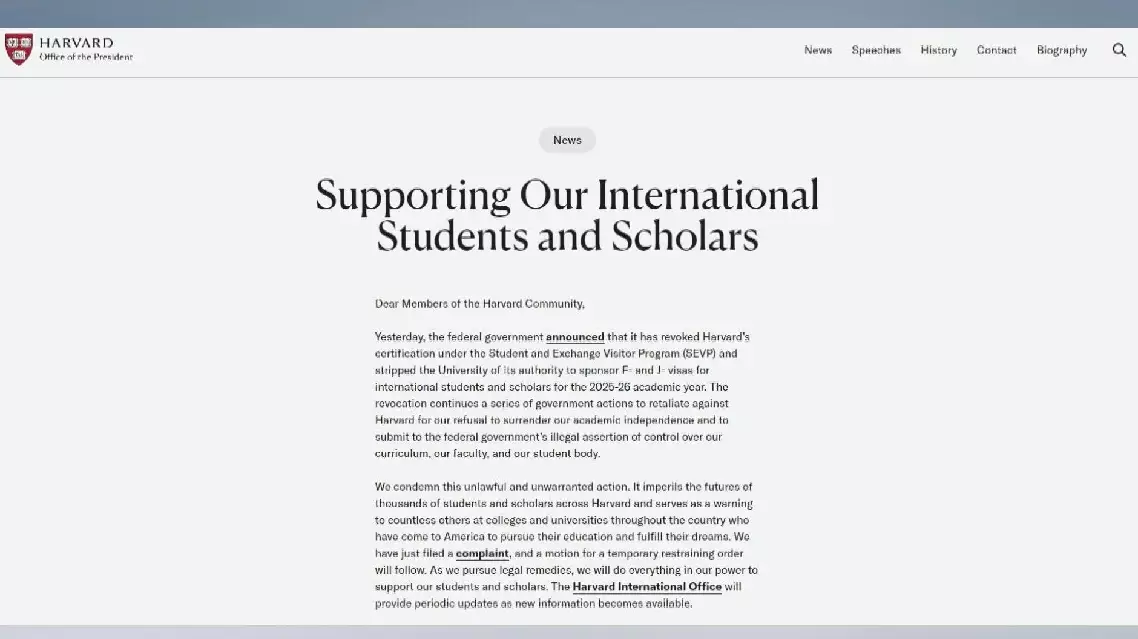
Trump admin's Harvard policies may worse crisis of confidence in U.S. higher education: US scholar
Trump admin's Harvard policies may worse crisis of confidence in U.S. higher education: US scholar
Trump admin's Harvard policies may worse crisis of confidence in U.S. higher education: US scholar