DAMASCUS, Syria (AP) — Syria considers the move by the Trump administration to ease sanctions imposed on the war-torn country as a “positive step” to ease humanitarian and economic suffering, its foreign ministry said Saturday.
In a statement, the ministry said Syria “extends its hand” to anyone that wants to cooperate with Damascus, on the condition that there is no intervention in the country’s internal affairs.
The statement came after the Trump administration granted Syria sweeping exemptions from sanctions on Friday in a major first step toward fulfilling the president’s pledge to lift a half-century of penalties on a country shattered by 14 years of civil war.
Thomas Barrack , the U.S. ambassador to Turkey who has also been appointed as special envoy for Syria, met with Syria's president and foreign minister during their visit to Turkey on Saturday, adding the President Ahmad al-Sharaa welcomed Washington's “fast action on lifting sanctions.”
“President Trump’s goal is to enable the new government to create the conditions for the Syrian people to not only survive but thrive,” Barrack said in a statement.
Barrack said he stressed that the cessation of sanctions against Syria will preserve the integrity “of our primary objective — the enduring defeat of” the Islamic State group, also known as IS or ISIS. He added that it will give Syrians a chance for a better future.
“I also commended President al-Sharaa on taking meaningful steps towards enacting President Trump’s points on foreign terrorist fighters, counter-ISIS measures, relations with Israel, and camps and detention centers in Northeast Syria,” Barrack said. He was referring to detention centers where thousands of IS members are held and two camps where their families stay in areas currently controlled by the U.S.-backed and Kurdish-led Syrian Democratic Forces.
A measure by the State Department waived for six months a tough set of sanctions imposed by Congress in 2019. A Treasury Department action suspended enforcement of sanctions against anyone doing business with a range of Syrian individuals and entities, including Syria’s central bank.
The congressional sanctions, known as the Caesar Syria Civilian Protection Act, had aimed to isolate Syria’s previous rulers by effectively expelling those doing business with them from the global financial system. They specifically block postwar reconstruction, so while they can be waived for 180 days by executive order, investors are likely to be wary of reconstruction projects when sanctions could be reinstated after six months.
The Trump administration said Friday’s actions were “just one part of a broader U.S. government effort to remove the full architecture of sanctions.” Those penalties had been imposed on the Assad family for their support of Iranian-backed militias, their chemical weapons program and abuses of civilians.
Trump said during a visit to the region earlier this month that the U.S. would roll back the heavy financial penalties in a bid to give the interim government a better chance of survival.
Damascus resident Nael Kaddah said now that the sanctions are being eased, the country will flourish again. He said Syrians will be able to transfer money freely, unlike in the past when there were several companies that monopolized the business and took large commissions on transfers.
“Now any citizen can receive a transfer from anywhere in the world,” he said.
Syria’s foreign ministry said dialogue and diplomacy are the best way to build “balanced relations that achieve the interest of the people and strengthen security and stability in the region.”
It added that the coming period in Syria will be reconstruction and restoring “Syria’s natural status” in the region and around the world.
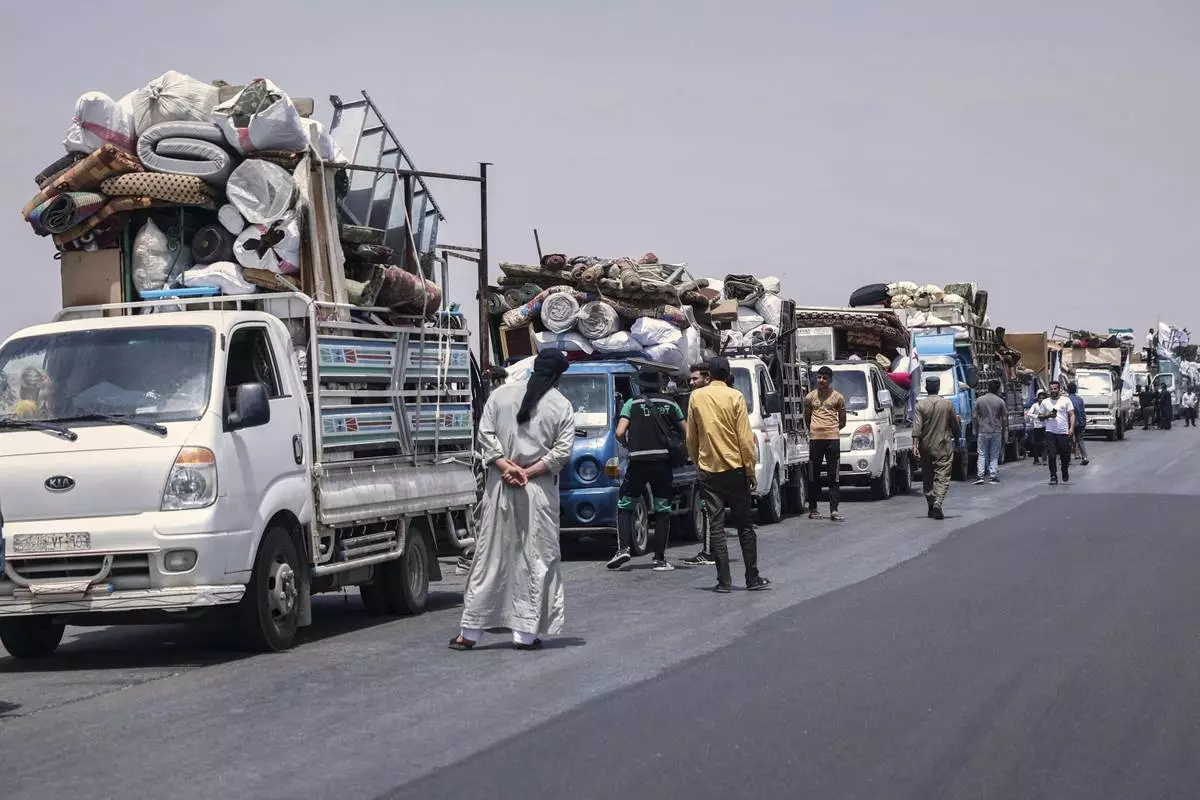
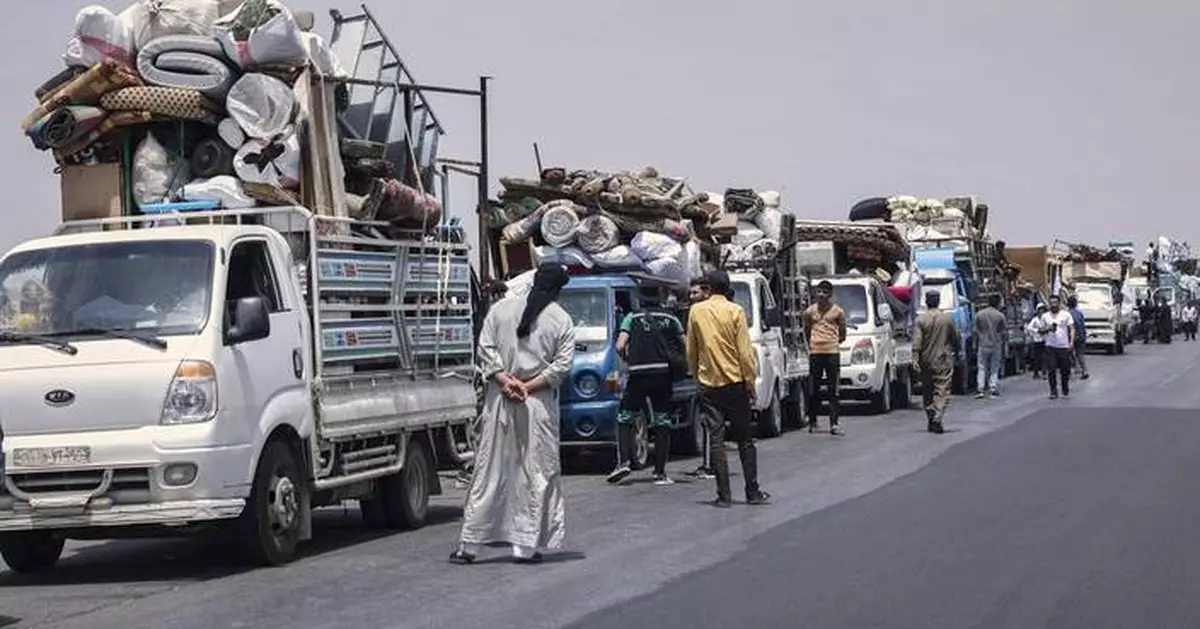
Trucks carrying around 60 displaced families gather on the highway as they head to their village, Kafr Sijna, after more than five years in the Atmeh camps near the Syrian-Turkish border, on a highway north of Kafr Sijna, Syria, Sunday, May 18, 2025. (AP Photo/Ghaith Alsayed)
WASHINGTON (AP) — President Donald Trump is meeting with oil executives at the White House on Friday in hopes of securing $100 billion in investments to revive Venezuela’s ability to fully tap into its expansive reserves of petroleum — a plan that rides on their comfort in making commitments in a country plagued by instability, inflation and uncertainty.
Since the U.S. military raid to capture former Venezuelan leader Nicolás Maduro on Saturday, Trump has quickly pivoted to portraying the move as a newfound economic opportunity for the U.S., seizing tankers carrying Venezuelan oil, saying the U.S. is taking over the sales of 30 million to 50 million barrels of previously sanctioned Venezuelan oil and will be controlling sales worldwide indefinitely.
On Friday, U.S. forces seized their fifth tanker over the past month that has been linked to Venezuelan oil. The action reflected the determination of the U.S. to fully control the exporting, refining and production of Venezuelan petroleum, a sign of the Trump administration's plans for ongoing involvement in the sector as it seeks commitments from private companies.
It's all part of a broader push by Trump to keep gasoline prices low. At a time when many Americans are concerned about affordability, the incursion in Venezuela melds Trump’s assertive use of presidential powers with an optical spectacle meant to convince Americans that he can bring down energy prices.
The meeting, set for 2:30 p.m. EST, will be open to the news media, according to an update to the president's daily schedule. “At least 100 Billion Dollars will be invested by BIG OIL, all of whom I will be meeting with today at The White House,” Trump said Friday in a pre-dawn social media post.
Trump is set to meet with executives from 17 oil companies, according to the White House. Among the companies attending are Chevron, which still operates in Venezuela, and ExxonMobil and ConocoPhillips, which both had oil projects in the country that were lost as part of a 2007 nationalization of private businesses under Maduro’s predecessor, Hugo Chávez.
The president is meeting with a wide swath of domestic and international companies with interests ranging from construction to the commodity markets. Other companies slated to be at the meeting include Halliburton, Valero, Marathon, Shell, Singapore-based Trafigura, Italy-based Eni and Spain-based Repsol.
Large U.S. oil companies have so far largely refrained from affirming investments in Venezuela as contracts and guarantees need to be in place. Trump has suggested on social media that America would help to backstop any investments.
Venezuela’s oil production has slumped below one million barrels a day. Part of Trump's challenge to turn that around will be to convince oil companies that his administration has a stable relationship with Venezuela’s interim President Delcy Rodríguez, as well as protections for companies entering the market.
Secretary of State Marco Rubio, Energy Secretary Chris Wright and Interior Secretary Doug Burgum are slated to attend the oil executives meeting, according to the White House.
Meanwhile, the United States and Venezuelan governments said Friday they were exploring the possibility of r estoring diplomatic relations between the two countries, and that a delegation from the Trump administration arrived to the South American nation on Friday.
The small team of U.S. diplomats and diplomatic security officials traveled to Venezuela to make a preliminary assessment about the potential re-opening of the U.S. Embassy in Caracas, the State Department said in a statement.
Trump also announced on Friday he’d meet with President Gustavo Petro in early February, but called on the Colombian leader to make quick progress on stemming flow of cocaine into the U.S.
Trump, following the ouster of Maduro, had made vague threats to take similar action against Petro. Trump abruptly changed his tone Wednesday about his Colombian counterpart after a friendly phone call in which he invited Petro to visit the White House.
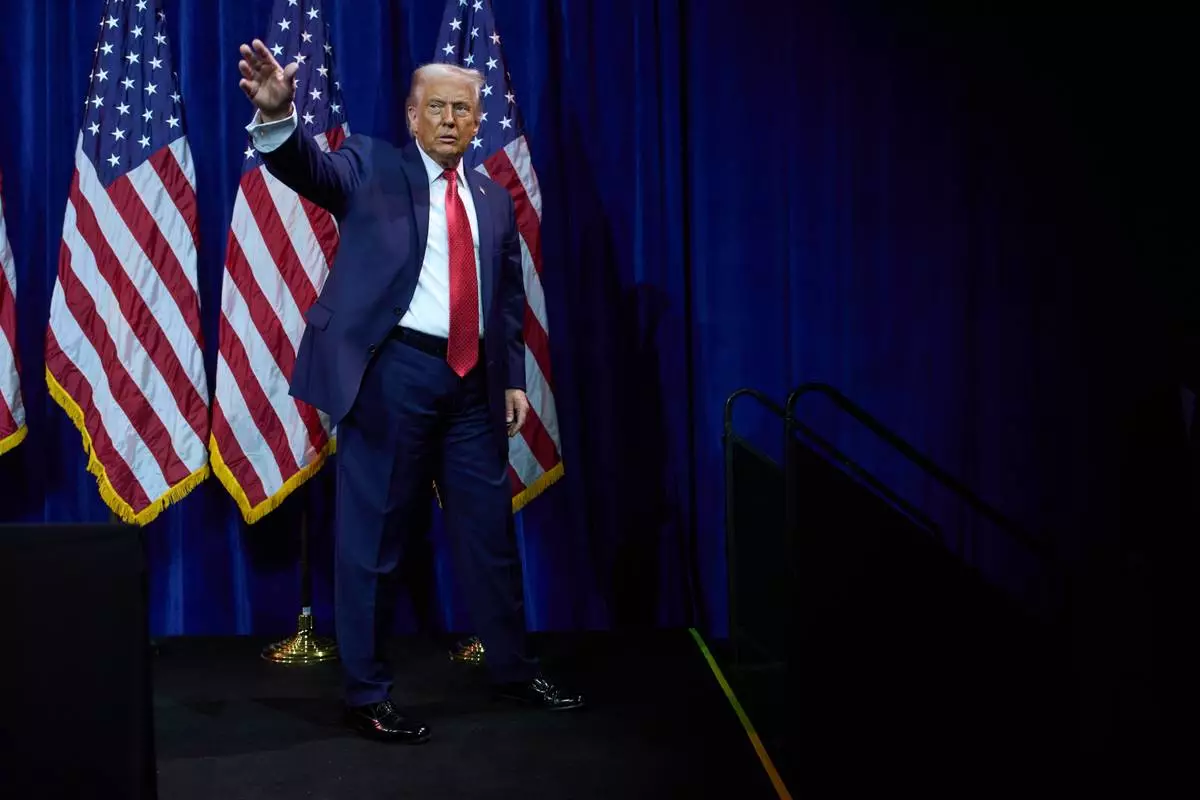
President Donald Trump waves as he walks off stage after speaking to House Republican lawmakers during their annual policy retreat, Tuesday, Jan. 6, 2026, in Washington. (AP Photo/Evan Vucci)