CAPE CANAVERAL, Fla. (AP) — Strauss’ “Blue Danube” is heading into space this month to mark the 200th anniversary of the waltz king's birth.
The classical piece will be beamed into the cosmos as it's performed by the Vienna Symphony Orchestra. The celestial send-off on May 31 — livestreamed with free public screenings in Vienna, Madrid and New York — also will celebrate the European Space Agency's founding 50 years ago.
Although the music could be converted into radio signals in real time, according to officials, ESA will relay a pre-recorded version from the orchestra's rehearsal the day before to avoid any technical issues. The live performance will provide the accompaniment.
The radio signals will hurtle away at the speed of light, or a mind-blowing 670 million mph (more than 1 billion kph).
That will put the music past the moon in 1 ½ seconds, past Mars in 4 ½ minutes, past Jupiter in 37 minutes and past Neptune in four hours. Within 23 hours, the signals will be as far from Earth as NASA’s Voyager 1, the world's most distant spacecraft at more than 15 billion miles (24 billion kilometers) in interstellar space.
NASA also celebrated its 50th anniversary in 2008 by transmitting a song directly into deep space: the Beatles' “Across the Universe.” And last year, NASA beamed up Missy Elliott's "The Rain (Supa Dupa Fly)" toward Venus.
Music has even flowed from another planet to Earth — courtesy of a NASA Mars rover. Flight controllers at California's Jet Propulsion Laboratory sent a recording of will.i.am's “Reach for the Stars” to Curiosity in 2012 and the rover relayed it back.
These are all deep-space transmissions as opposed to the melodies streaming between NASA's Mission Control and orbiting crews since the mid-1960s.
Now it's Strauss' turn, after getting passed over for the Voyager Golden Records nearly a half-century ago.
Launched in 1977, NASA's twin Voyagers 1 and 2 each carry a gold-plated copper phonograph record, along with a stylus and playing instructions for anyone or anything out there.
The records contain sounds and images of Earth as well as 90 minutes of music. The late astronomer Carl Sagan led the committee that chose Bach, Beethoven, Mozart and Stravinsky pieces, along with modern and Indigenous selections.
Among those skipped was Johann Strauss II, whose “Blue Danube” graced Stanley Kubrick’s 1968 sci-fi opus “2001: A Space Odyssey.”
The tourist board in Vienna, where Strauss was born on Oct. 25, 1825, said it aims to correct this “cosmic mistake” by sending the “the most famous of all waltzes" to its destined home among the stars.
ESA’s big radio antenna in Spain, part of the space agency’s deep-space network, will do the honors. The dish will be pointed in the direction of Voyager 1 so the “Blue Danube” heads that way.
“Music connects us all through time and space in a very particular way,” ESA’s director general Josef Aschbacher said in a statement. “The European Space Agency is pleased to share the stage with Johann Strauss II and open the imaginations of future space scientists and explorers who may one day journey to the anthem of space.”
The Associated Press Health and Science Department receives support from the Howard Hughes Medical Institute’s Science and Educational Media Group and the Robert Wood Johnson Foundation. The AP is solely responsible for all content.

This undated photo released by the European Space Agency shows the 35 meter-diameter deep-space dish antenna, DSA-2, in Cebreros, Spain, receiving the first signals from Venus Express. (ESA via AP)
TENERIFE, Spain (AP) — The head of the World Health Organization sought Saturday to reassure residents of the Spanish island where passengers of a hantavirus-stricken cruise ship are expected to be evacuated, issuing them a direct message that the virus was “not another COVID.”
The Dutch-flagged MV Hondius, with more than 140 passengers and crew on board, is headed to Spain's Canary Islands, off the coast of West Africa, and is expected to arrive at the island of Tenerife early Sunday.
WHO Director-General Tedros Adhanom Ghebreyesus, along with Spain’s Health Minister Monica Garcia and Interior Minister Fernando Grande-Marlaska, were due on the island Saturday to coordinate the disembarkation of passengers and some crew.
“I know you are worried. I know that when you hear the word ‘outbreak’ and watch a ship sail toward your shores, memories surface that none of us have fully put to rest. The pain of 2020 is still real, and I do not dismiss it for a single moment,” Tedros said in a message to the people of Tenerife.
“But I need you to hear me clearly: This is not another COVID. The current public health risk from hantavirus remains low. My colleagues and I have said this unequivocally, and I will say it again to you now,” Tedros added.
The WHO, Spanish authorities and cruise company Oceanwide Expeditions said nobody on the Hondius is currently showing symptoms of the virus.
Hantavirus can cause life-threatening illness. It usually spreads when people inhale contaminated residue of rodent droppings and isn’t easily transmitted between people. But the Andes virus detected in the cruise ship outbreak may be able to spread between people in rare cases. Symptoms usually show between one and eight weeks after exposure.
Three people have died since the outbreak, and five passengers who left the ship are infected with hantavirus.
Some on Tenerife say they are worried. On board the cruise ship, some Spanish passengers have voiced concern about being stigmatized.
“I tell you, I don’t like this very much,” said 69-year-old resident Simon Vidal. “Anyone can say what they want. Why did they have to bring a boat from another country here? Why not anywhere else, why bring it to the Canary Islands?”
Others said they empathized with the boat's passengers, but were still concerned.
“The truth is that it is very worrying,” said 27-year-old Venezuelan immigrant Samantha Aguero. She added: “We feel a bit unsafe, we don’t feel as there are 100% security measures in place to welcome it. This is a virus after all and we have lived this during the pandemic. But we also need to have empathy.”
Spanish Health Minister Monica Garcia said passengers and some crew would disembark in Tenerife “under maximum safety conditions.”
The ship will not dock but will remain at anchor. Everyone disembarking will be checked for symptoms and won't be taken off the ship until a flight is already in Tenerife waiting to fly them off the island, Garcia said during a news conference in Madrid. There are currently people of more than 20 different nationalities on board.
Both the U.S. and the U.K. have agreed to send planes to evacuate their citizens. Americans are to be quarantined at a medical center in Nebraska.
All Spanish passengers will be transferred to a medical facility and quarantined, Garcia said. Oceanwide has listed 13 Spanish passengers and one Spanish crew member on board.
Those disembarking will leave behind their luggage, Garcia said, and will be allowed to take only a small bag with essential items, a cellphone, charger and documentation.
Some crew, as well as the body of a passenger who died on board, will remain on the ship, which will sail on to the Netherlands, where it will undergo disinfection, the minister added.
According to a letter sent by the Dutch foreign and health ministers to parliament late Friday, Spain has activated the EU civil protection mechanism for a medical evacuation plane equipped for infections diseases to be on standby in case anyone on the ship becomes ill. That person would then be transported by air to the European mainland.
The Dutch government will work with Spanish authorities and the ship company to arrange repatriation of Dutch passengers and crew as soon as possible after arrival in Tenerife, subject to medical conditions and advice from the European Centre for Disease Prevention and Control, the letter said. Those without symptoms will go into home quarantine for six weeks and be monitored by local health services.
As the ship is Dutch-flagged, the Netherlands may also temporarily accommodate people of other nationalities and monitor them in quarantine, it said.
Health authorities across four continents were tracking down and monitoring more than two dozen passengers who disembarked before the deadly outbreak was detected. They were also scrambling to trace others who may have come into contact with them.
On April 24, nearly two weeks after the first passenger had died on board, more than two dozen people from at least 12 different countries left the ship without contact tracing, Dutch officials and the ship’s operator have said.
It wasn’t until May 2 that health authorities first confirmed hantavirus in a passenger.
Dutch public health authorities have been monitoring people who were on a flight that was briefly boarded by a Dutch ship passenger who later died and was confirmed to have hantavirus. Three people who were on the flight and had symptoms have all tested negative for hantavirus, Dutch National Institute for Public Health spokesperson Harald Wychgel told The Associated Press on Saturday.
Becatoros reported from Sparta, Greece. Associated Press reporters Angela Charlton in Paris and Helena Alves in Tenerife contributed to this report.
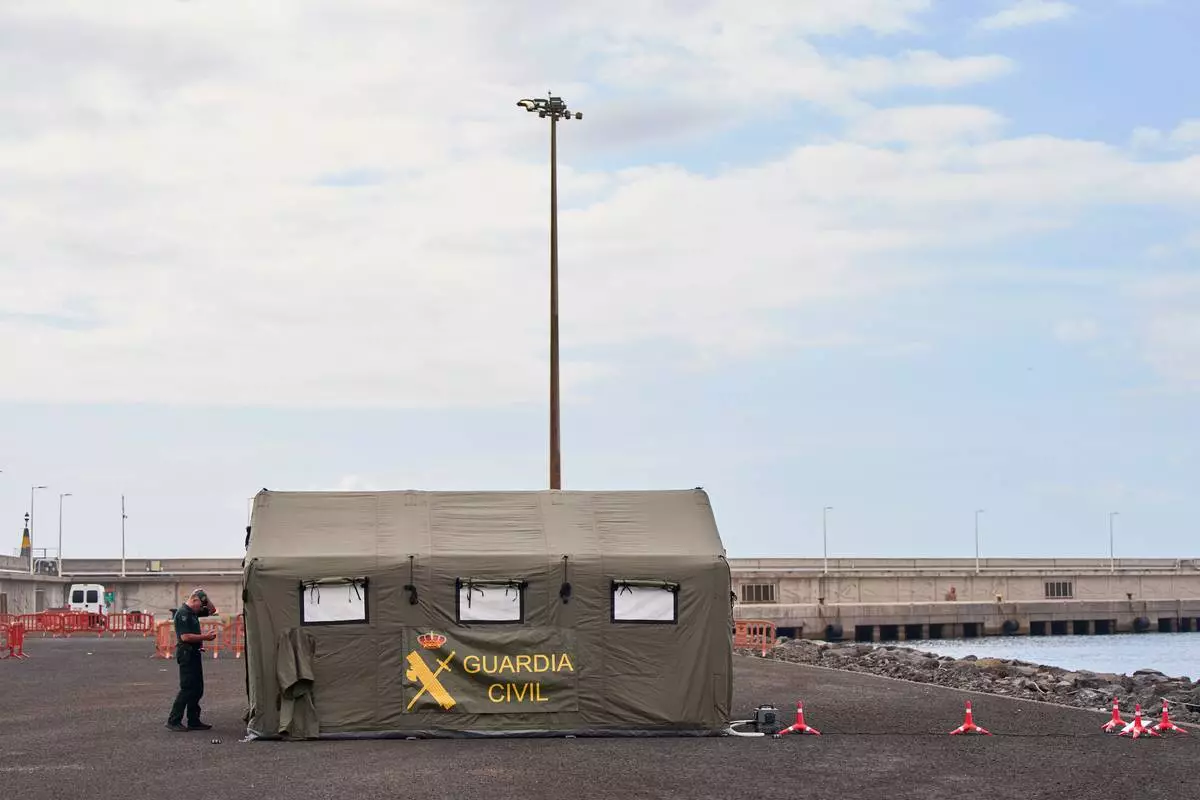
A Spanish Civil Guard officer inspects the area where passengers from the MV Hondius cruise ship are expected to arrive at the port of Granadilla in Tenerife, Canary Islands, Spain, Saturday, May 9, 2026. (AP Photo/Manu Fernandez)
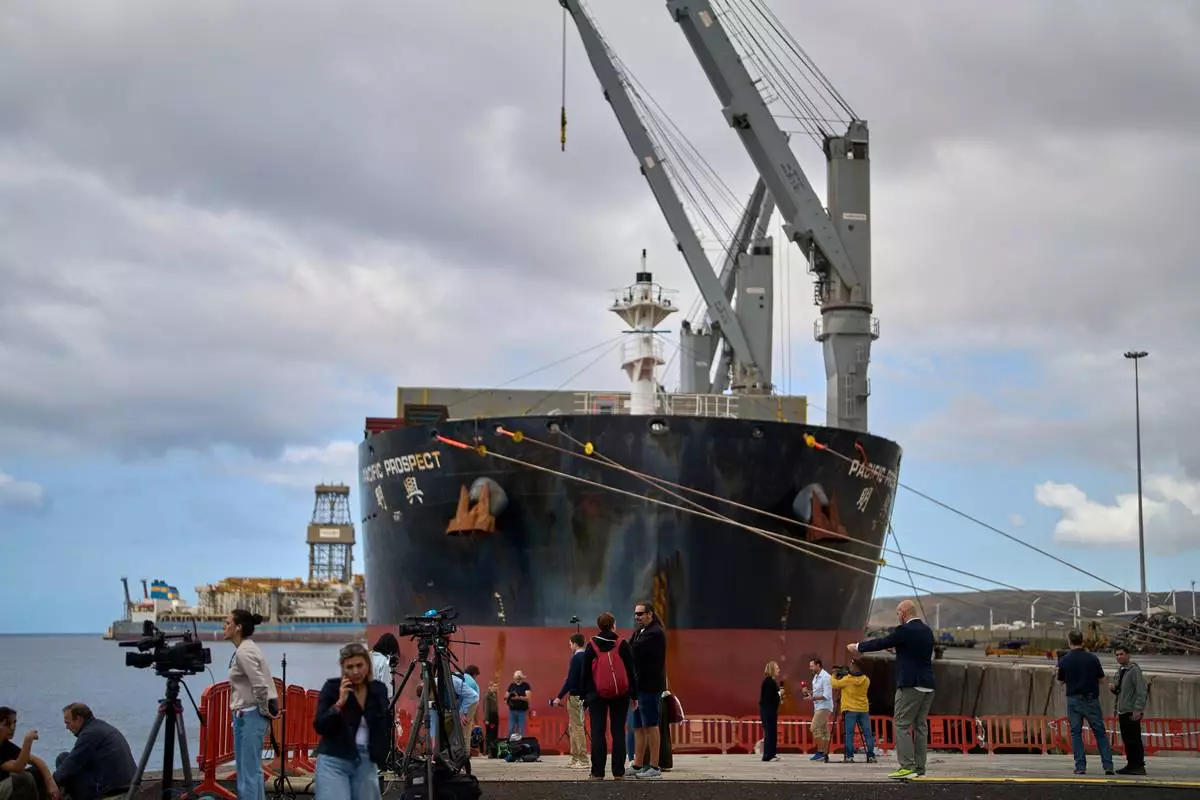
Media crew members stand in the area where passengers from the MV Hondius cruise ship are expected to arrive at the port of Granadilla in Tenerife, Canary Islands, Spain, Saturday, May 9, 2026. (AP Photo/Manu Fernandez)

Workers set up temporary shelters in the area where passengers from the MV Hondius cruise ship are expected to arrive at the port of Granadilla in Tenerife, Canary Islands, Spain, Saturday, May 9, 2026. (AP Photo/Manu Fernandez)
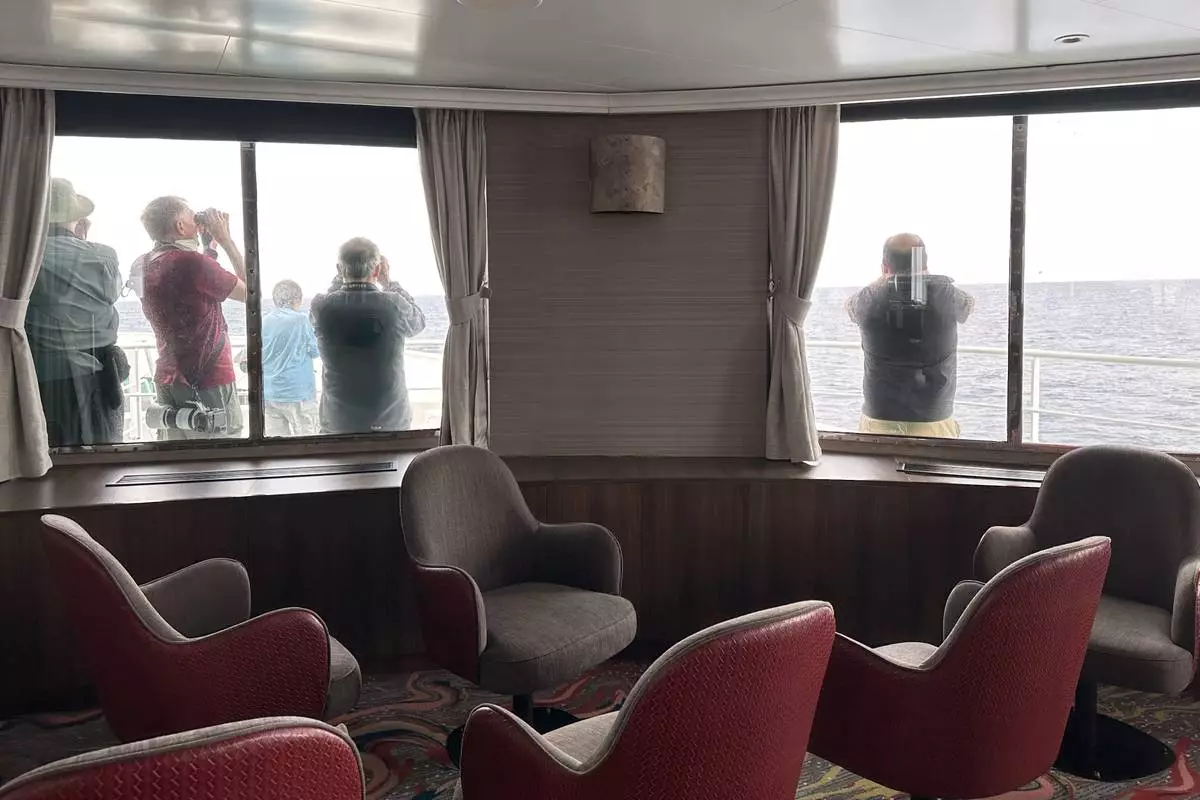
Passengers on the hantavirus-stricken cruise ship, MV Hondius, scan the horizon with binoculars during their voyage to Spain's port of Tenerife, May 6, 2026. (AP Photo)
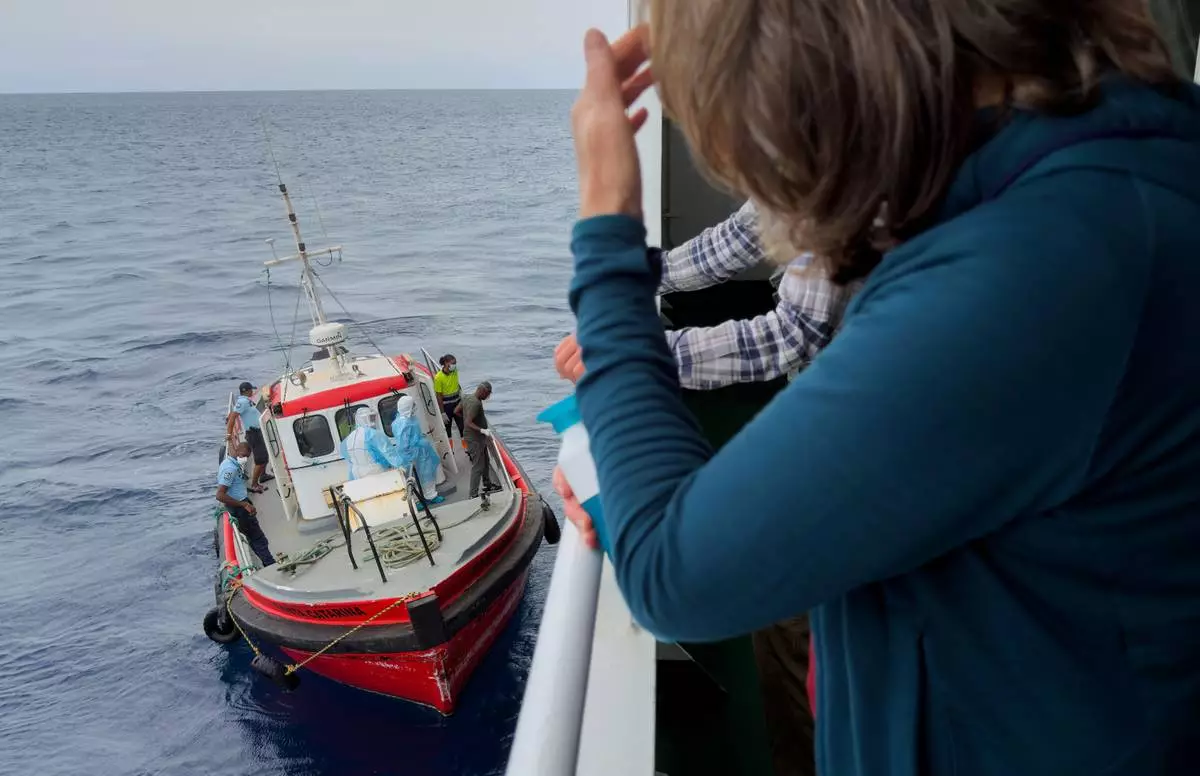
Passengers on the the hantavirus-stricken cruise ship, MV Hondius, watch epidemiologists board the boat in Praia, during their voyage to Spain's port of Tenerife, May 6, 2026. (AP Photo)
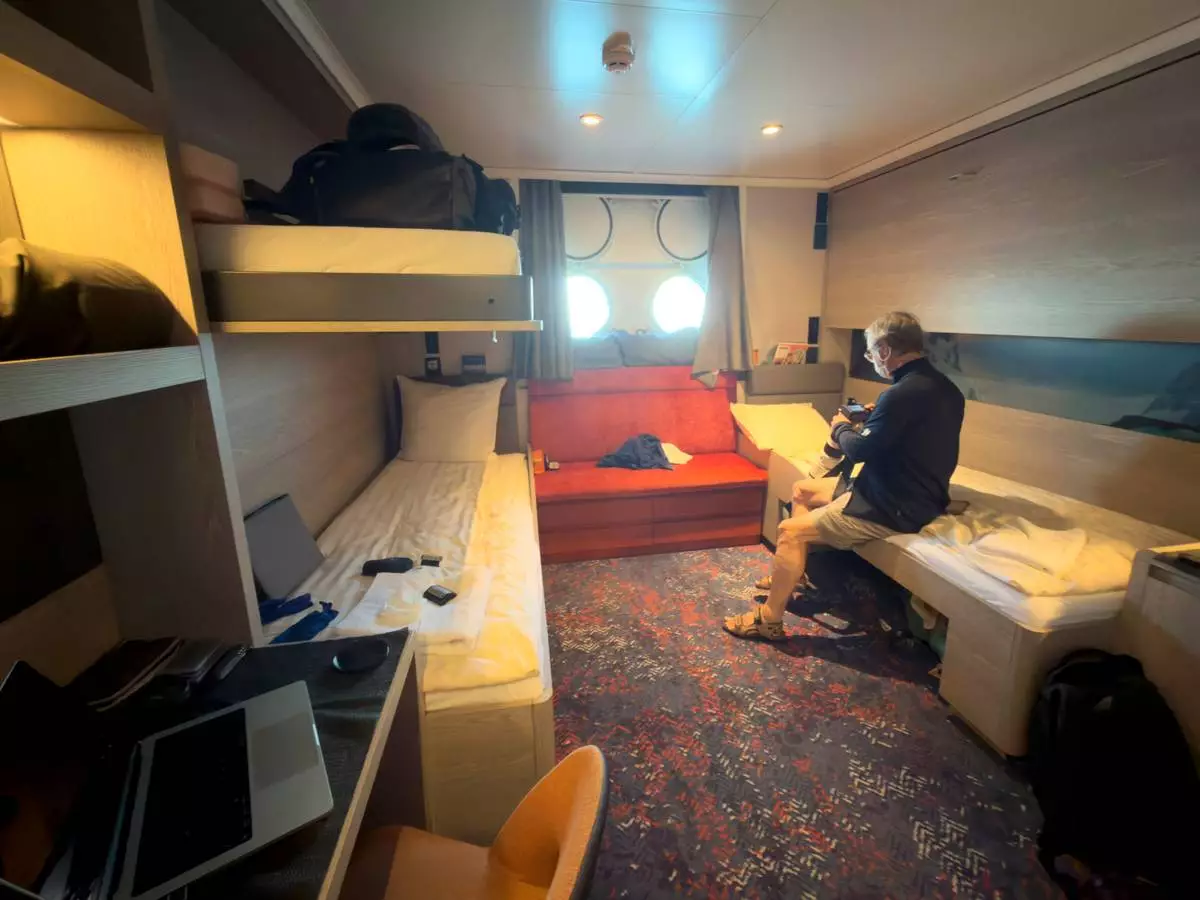
A passenger checks his camera inside his cabin on the hantavirus-stricken cruise ship, MV Hondius, during the voyage to Spain's port of Tenerife, May 6, 2026. (AP Photo)
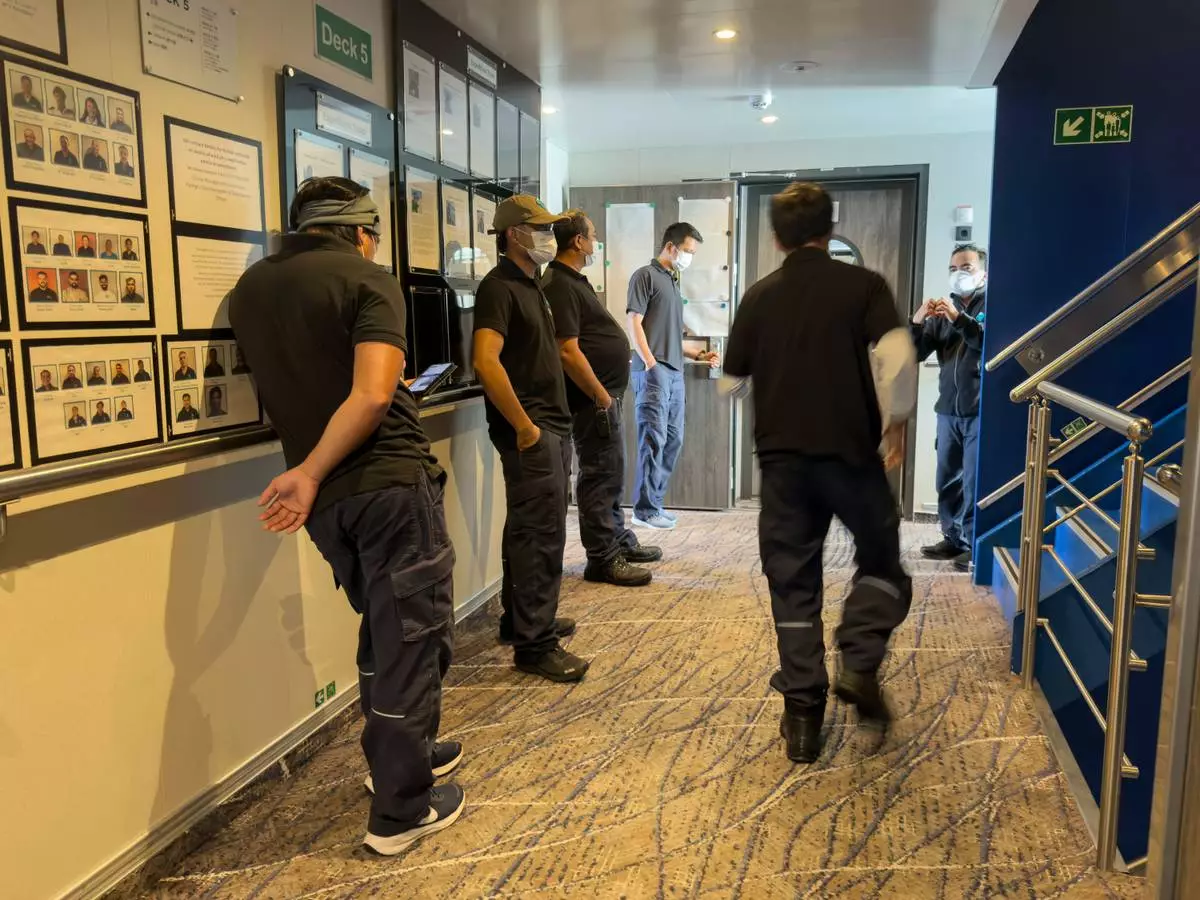
Crew members of the hantavirus-stricken cruise ship, MV Hondius, wait their turns for a first interview with epidemiologists, during the voyage to Spain's port of Tenerife, May 6, 2026. (AP Photo)
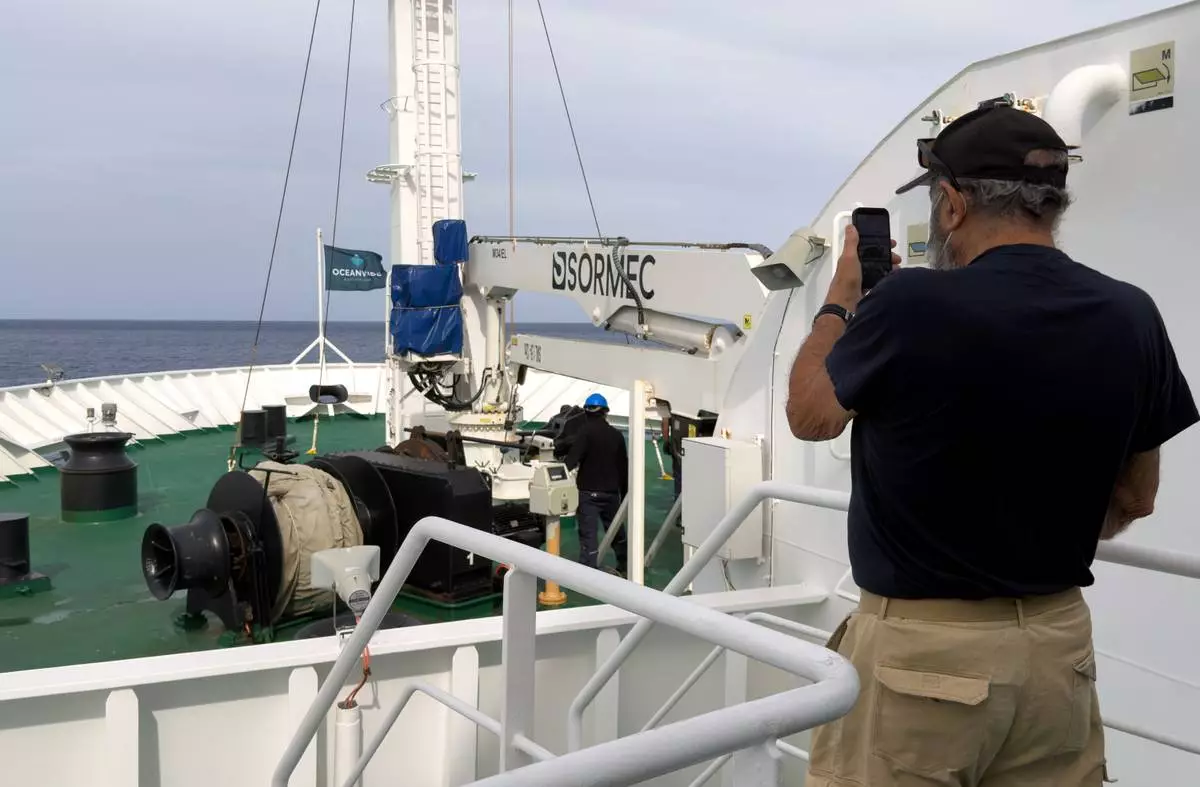
A passenger on the the hantavirus-stricken cruise ship, MV Hondius, takes a photo of the ship's weighing anchor in Praia, during the voyage to Spain's port of Tenerife, May 6, 2026. (AP Photo)