KUALA LUMPUR, Malaysia (AP) — Southeast Asian nations will forge a common front to face challenges including economic headwinds from U.S. tariffs and a four-year civil war in Myanmar, Malaysian Prime Minister Anwar Ibrahim said Monday.
Opening an annual summit of the Association of Southeast Asian Nations, Anwar said he has sought a unified bloc meeting with U.S. President Donald Trump to discuss the tariffs. Officials are hopeful it could happen later this year. Malaysia is the current chair of ASEAN.
Click to Gallery
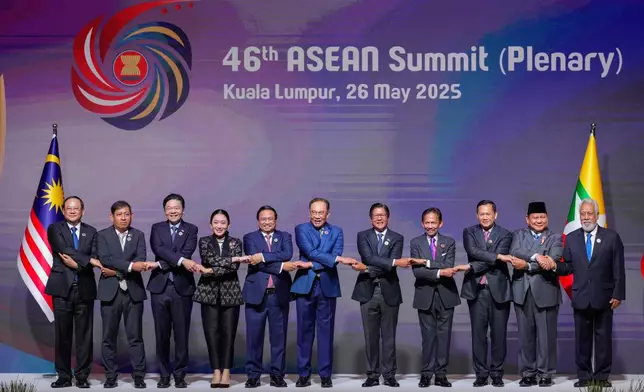
ASEAB leaders chain their hands while posing for a picture before the start of the plenary session at the Association of Southeast Asian Nations (ASEAN) Summit in Kuala Lumpur, Malaysia, Monday, May 26, 2025. From left to right, Laos's Prime Minister Sonexay Siphandone, Myanmar Permanent Secretary of the Ministry of Foreign Affairs Aung Kyaw Moe, Singapore's Prime Minister Lawrence Wong, Thailand's Prime Minister Paetongtarn Shinawatra, Vietnam's Prime Minister Pham Minh Chinh, Malaysia's Prime Minister Anwar Ibrahim, Philippine's President Ferdinand Marcos Jr., Brunei's Sultan Hassanal Bolkiah, Cambodian Prime Minister Hun Manet, Indonesia's President Prabowo Subianto and East Timor's Prime Minister Xanana Gusmao. (AP Photo/Vincent Thian)
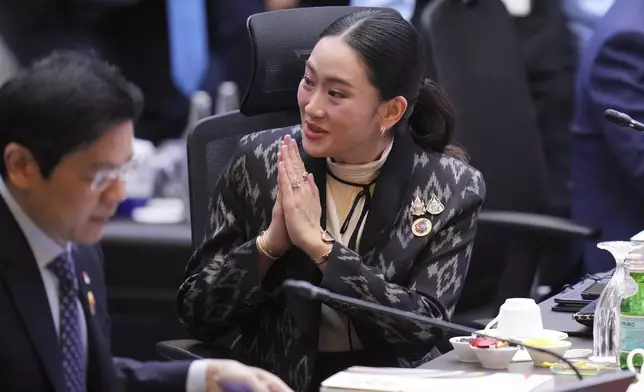
Thailand's Prime Minister Paetongtarn Shinawatra gestures as she attends the plenary session at the Association of Southeast Asian Nations (ASEAN) Summit in Kuala Lumpur, Malaysia, Monday, May 26, 2025. (AP Photo/Vincent Thian)
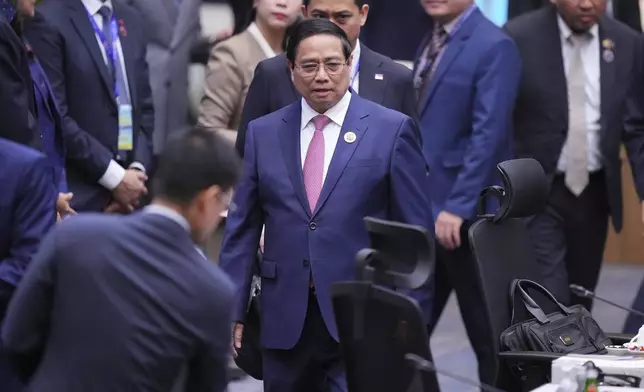
Vietnam's Prime Minister Pham Minh Chinh, center, arrives to attend the plenary session at the Association of Southeast Asian Nations (ASEAN) Summit in Kuala Lumpur, Malaysia, Monday, May 26, 2025. (AP Photo/Vincent Thian)
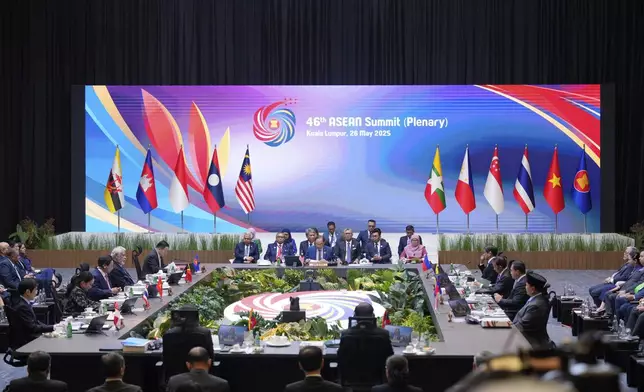
Malaysia's Prime Minister Anwar Ibrahim, center, together with others ASEAN countries leaders attends the plenary session at the Association of Southeast Asian Nations (ASEAN) Summit in Kuala Lumpur, Malaysia, Monday, May 26, 2025. (AP Photo/Vincent Thian)
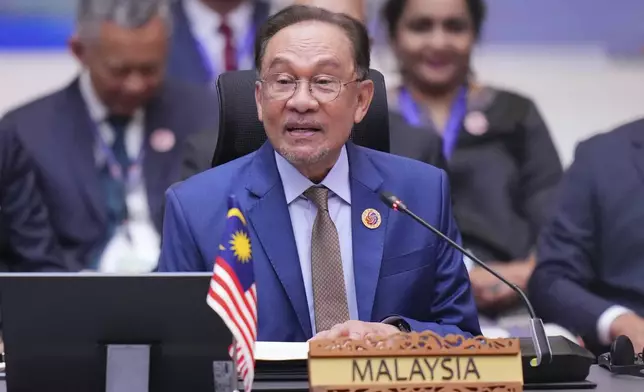
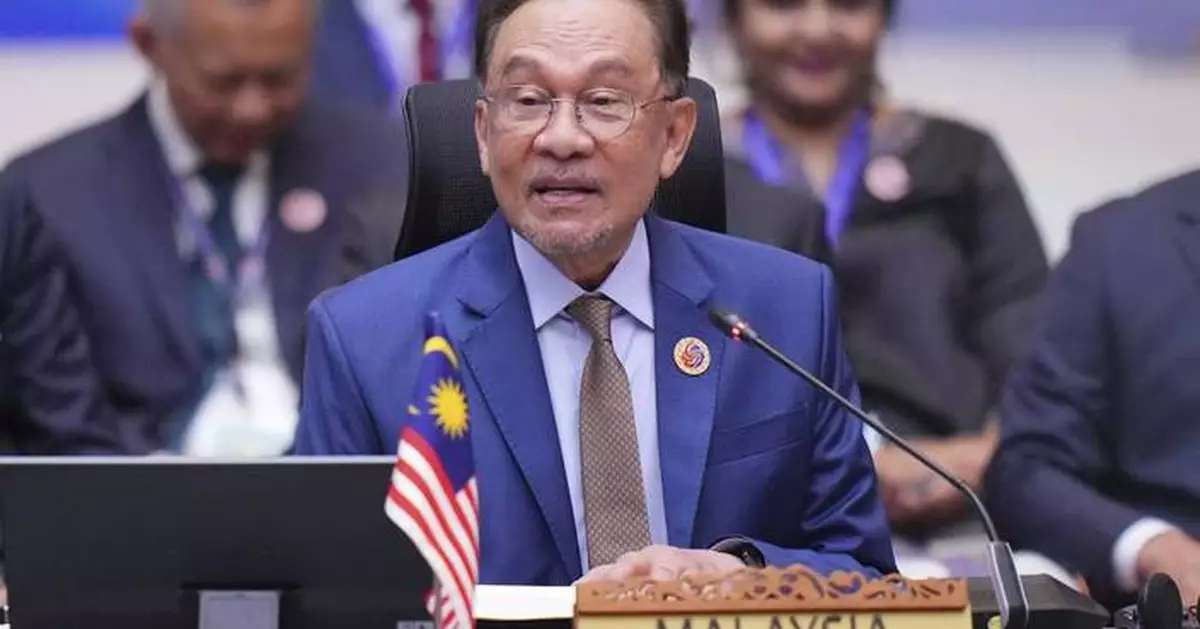
Malaysia's Prime Minister Anwar Ibrahim attends the plenary session at the Association of Southeast Asian Nations (ASEAN) Summit in Kuala Lumpur, Malaysia, Monday, May 26, 2025. (AP Photo/Vincent Thian)
“For ASEAN, our peace, stability and prosperity have often depended on an open, inclusive, rules-based international order... These foundations are now being dismantled under the force of arbitrary action," Anwar said.
ASEAN, which has agreed to avoid retaliatory measures, has formed a taskforce to coordinate a response to the U.S. tariffs in parallel with bilateral negotiations by some member countries, Anwar said. ASEAN members include bigger economies such as Singapore, Indonesia, Malaysia, Thailand and the Philippines, as well as Vietnam, Cambodia, Laos and Myanmar.
The region relies on exports to the U.S. and is hurt by the Trump administration's tariffs, which range from 10% for Singapore to as high as 49% for Cambodia. Trump announced a 90-day pause on tariffs in April for most of the world, and this month struck a similar deal with key rival China, easing trade war tensions.
Anwar said an ASEAN leaders' meeting on Tuesday with Chinese Premier Li Qiang and the Gulf Cooperation Council — the first such tripartite meeting — would spur new cooperation that could help insulate ASEAN's economy. The GCC comprises Bahrain, Kuwait, Oman, Qatar, Saudi Arabia and the United Arab Emirates.
ASEAN leaders later Monday will launch a new 20-year vision to deepen their economic and social integration, Anwar said.
Analysts said China, which is ASEAN's top trading partner, wants to expand its influence by presenting itself as a reliable ally in the region. But tensions persist over Beijing's aggressive stance in the disputed South China Sea that has led to frequent clashes especially with the Philippines.
Philippines President Ferdinand Marcos Jr. told the ASEAN summit that a "code of conduct” being negotiated by ASEAN and China to govern the busy sea passage must be binding — one of the factors that has hampered talks.
“We underscore the urgent need to accelerate the adoption of a legally binding code of conduct in the South China Sea to safeguard maritime rights, promote stability and prevent miscalculations at sea,” he said.
On the Myanmar crisis, Anwar said Malaysia has managed to “move the needle forward” after forming an informal advisory group headed by former Thai leader Thaksin Shinawatra. Anwar met last month with Myanmar military chief Gen. Ming Aung Hlaing in Bangkok and held virtual talks with the opposition National Unity Government.
Officials said the current emphasis on aid delivery following a March earthquake that killed 3,700 people could eventually pave the way for peace talks. But critics accuse the army of violating a self-proclaimed ceasefire with dozens of airstrikes, with aid not freely allowed into areas not under the army’s control.
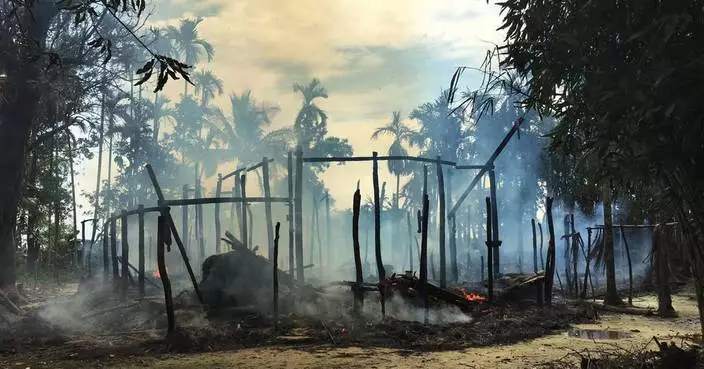
The Myanmar war, which has killed thousands and displaced millions, is a challenge to ASEAN since refugees have fled across borders to neighboring nations. The region has also seen rising transnational crimes and cybercrimes. The bloc has made little headway after the Myanmar military refused to comply with its peace plan, including a ceasefire, delivery of humanitarian aid and negotiations.
Anwar said more engagement is being planned in Myanmar.
“Quiet engagement matters. The steps may be small and the bridge may be fragile but as they say: In matters of peace, even a fragile bridge is better than a widening gulf,” Anwar said.
Thomas Daniel from Malaysia's Institute of Strategic and International Studies said ASEAN has no real leverage to push for reconciliation. The Myanmar military has reportedly lost control of a large part of the country, making the situation even more challenging.
“The conditions on the ground are extremely difficult. I don’t think we have reached a stage where ASEAN can facilitate any kind of political dialogue between conflicting parties. They are not ready for that yet,” he said.
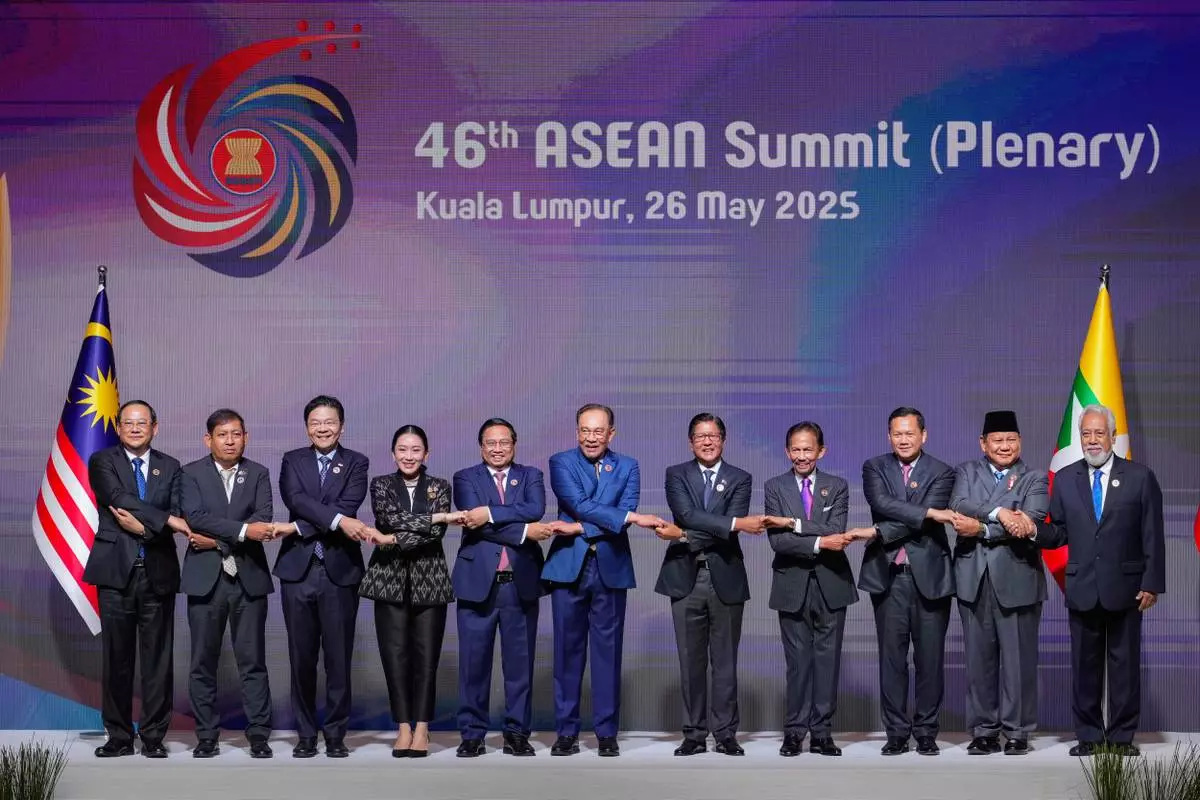
ASEAB leaders chain their hands while posing for a picture before the start of the plenary session at the Association of Southeast Asian Nations (ASEAN) Summit in Kuala Lumpur, Malaysia, Monday, May 26, 2025. From left to right, Laos's Prime Minister Sonexay Siphandone, Myanmar Permanent Secretary of the Ministry of Foreign Affairs Aung Kyaw Moe, Singapore's Prime Minister Lawrence Wong, Thailand's Prime Minister Paetongtarn Shinawatra, Vietnam's Prime Minister Pham Minh Chinh, Malaysia's Prime Minister Anwar Ibrahim, Philippine's President Ferdinand Marcos Jr., Brunei's Sultan Hassanal Bolkiah, Cambodian Prime Minister Hun Manet, Indonesia's President Prabowo Subianto and East Timor's Prime Minister Xanana Gusmao. (AP Photo/Vincent Thian)
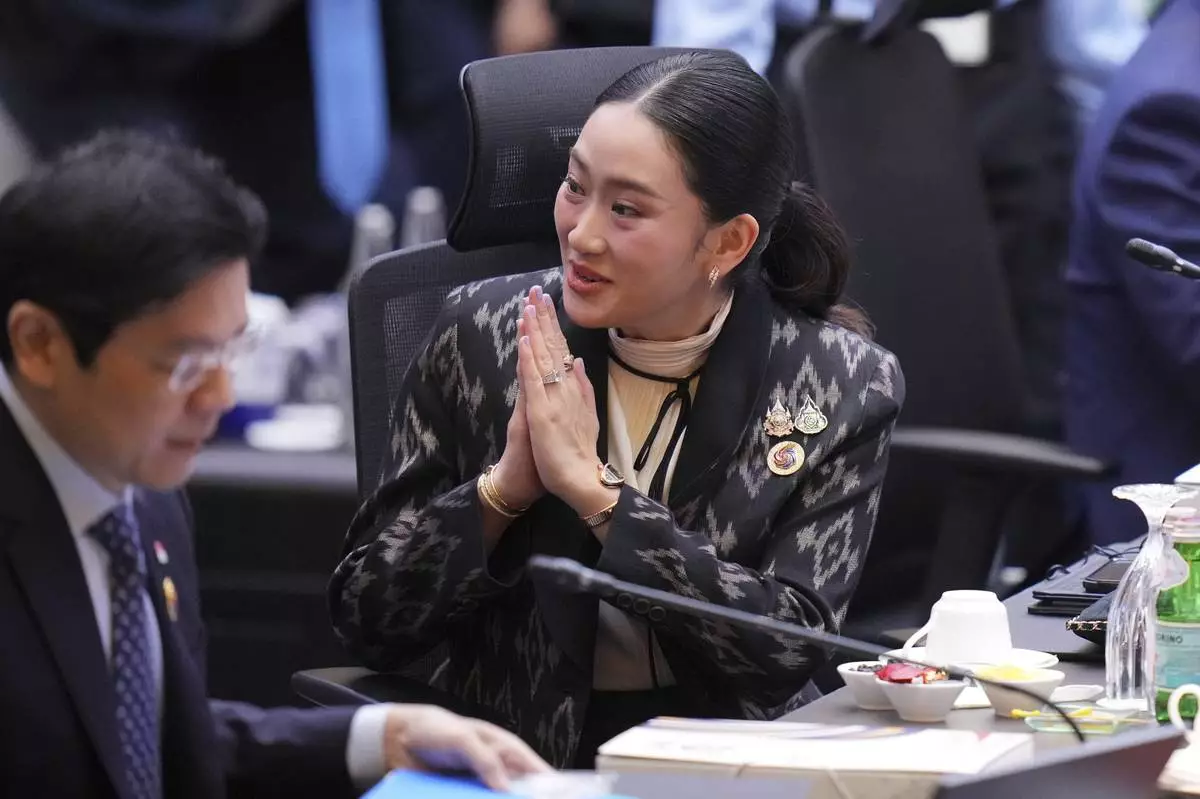
Thailand's Prime Minister Paetongtarn Shinawatra gestures as she attends the plenary session at the Association of Southeast Asian Nations (ASEAN) Summit in Kuala Lumpur, Malaysia, Monday, May 26, 2025. (AP Photo/Vincent Thian)
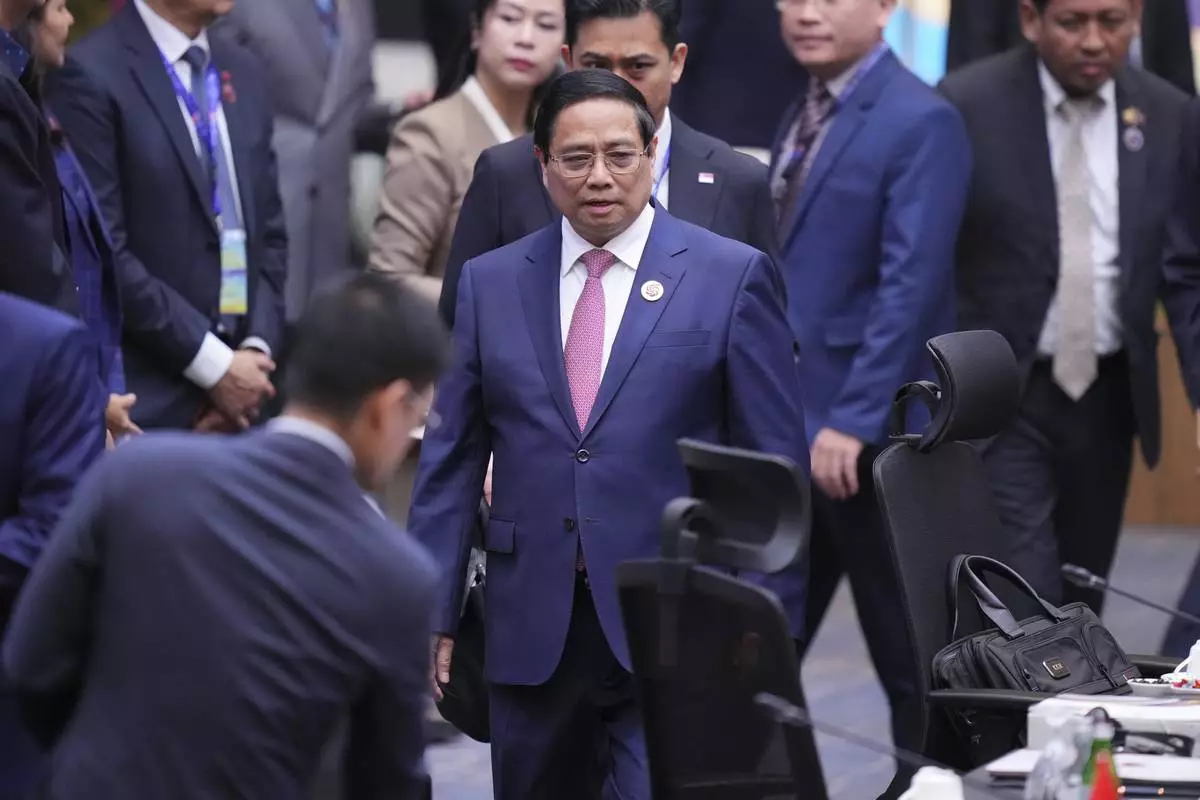
Vietnam's Prime Minister Pham Minh Chinh, center, arrives to attend the plenary session at the Association of Southeast Asian Nations (ASEAN) Summit in Kuala Lumpur, Malaysia, Monday, May 26, 2025. (AP Photo/Vincent Thian)
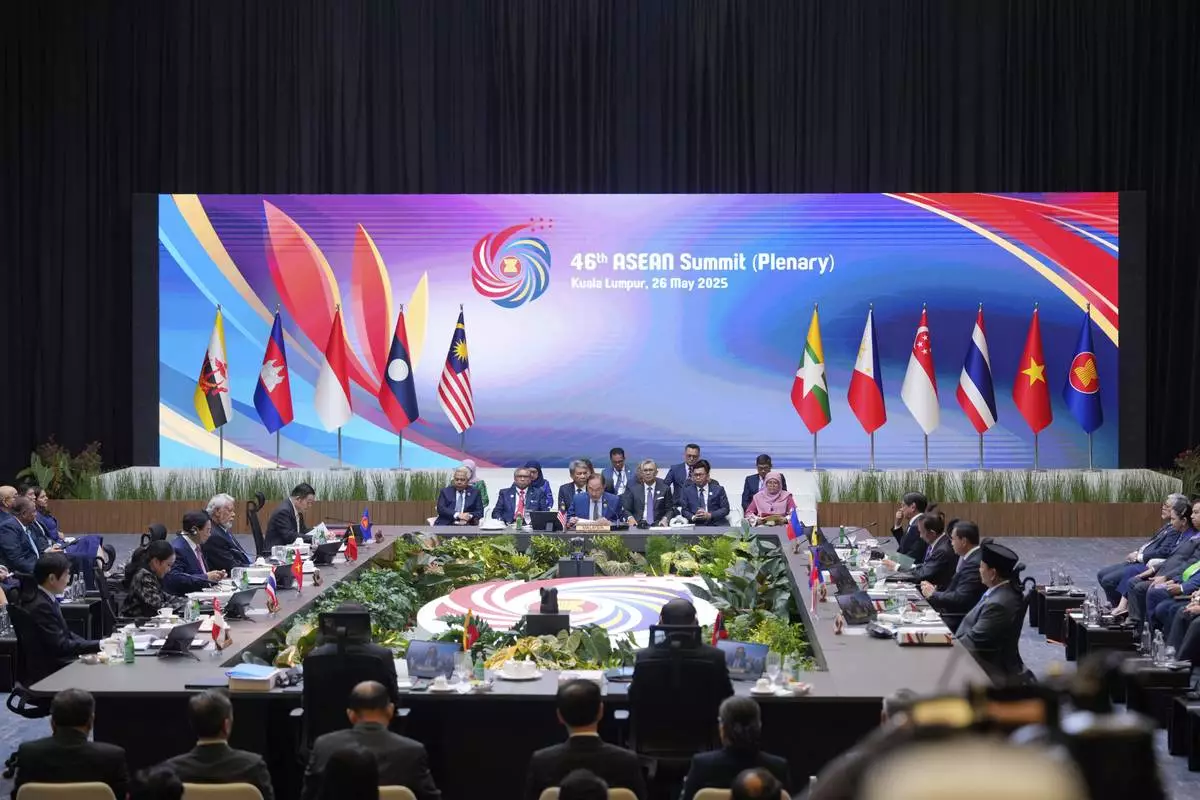
Malaysia's Prime Minister Anwar Ibrahim, center, together with others ASEAN countries leaders attends the plenary session at the Association of Southeast Asian Nations (ASEAN) Summit in Kuala Lumpur, Malaysia, Monday, May 26, 2025. (AP Photo/Vincent Thian)
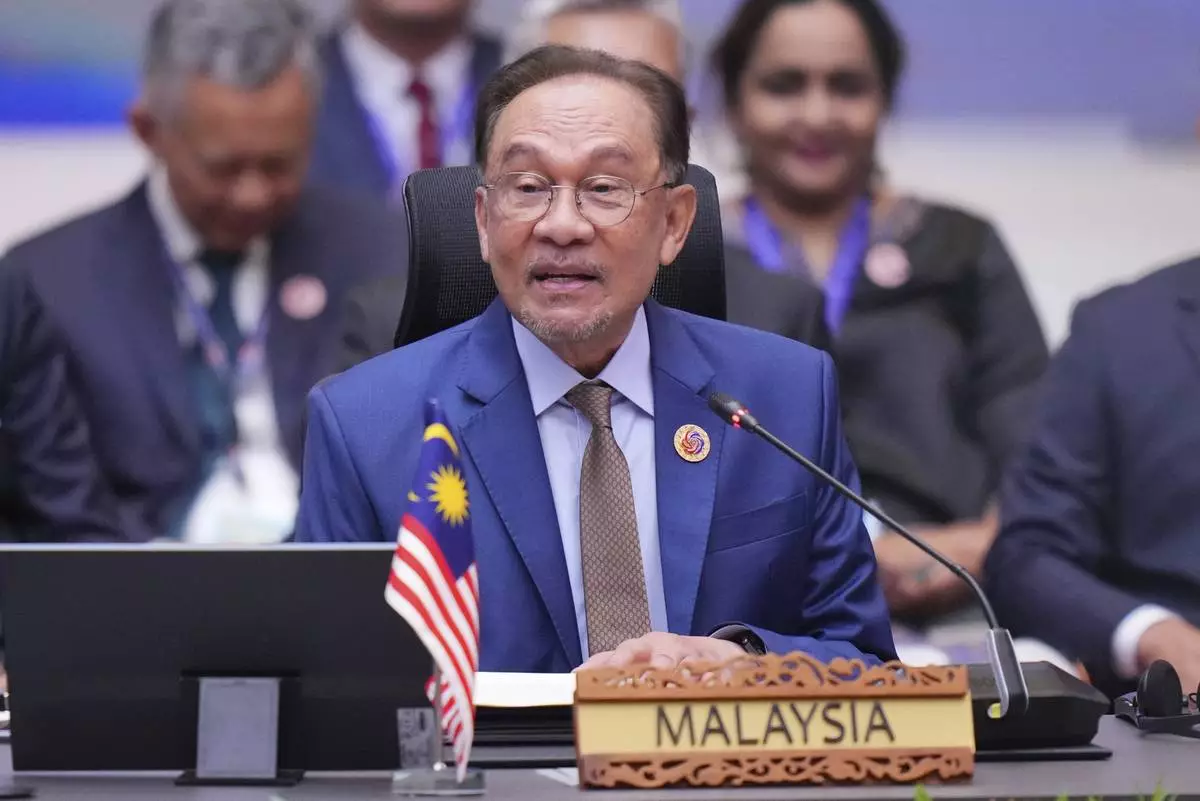
Malaysia's Prime Minister Anwar Ibrahim attends the plenary session at the Association of Southeast Asian Nations (ASEAN) Summit in Kuala Lumpur, Malaysia, Monday, May 26, 2025. (AP Photo/Vincent Thian)