GAZA CITY, Gaza Strip (AP) — The Abu Jarad family is homeless once again. For the 10th time during Israel’s 19-month campaign in Gaza, they have been forced to flee, and the latest uprooting was the most painful of all.
In January, during a ceasefire, Ne’man Abu Jarad, his wife and six daughters had a joyous return to their home in northern Gaza. They hoped it might be the end of their ordeal after more than a year of escaping Israeli offensives by traversing the length of the Gaza Strip and back.
Click to Gallery
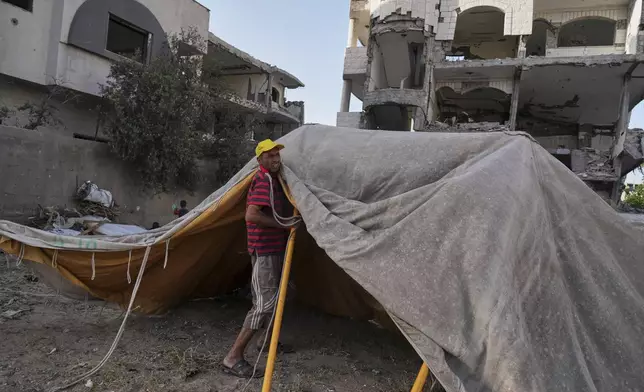
Ne'man Abu Jarad sets up a new tent for his family after they were displaced by the Israeli air and ground offensive in the Gaza Strip in Gaza City, Monday, May 19, 2025. (AP Photo/Jehad Alshrafi)
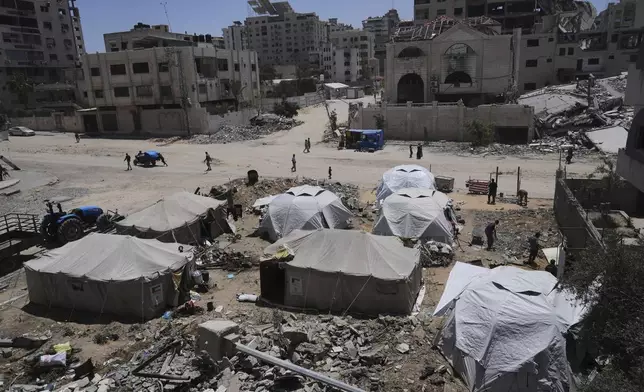
Tents fill a makeshift camp in Gaza City, where members of the Abu Jarad family and other Palestinians displaced by Israeli bombardment are sheltering, Monday, May 19, 2025. (AP Photo/Jehad Alshrafi)
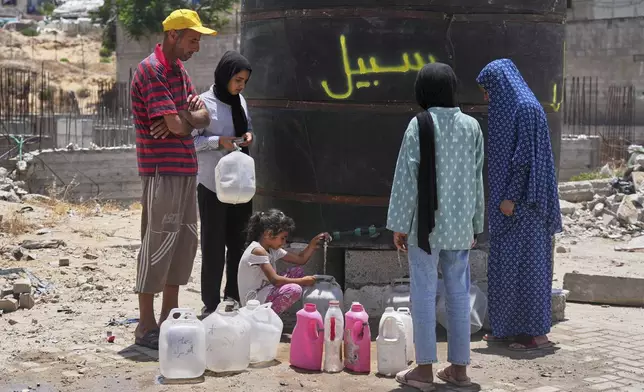
Members of the Abu Jarad family, who were displaced by the Israeli air and ground offensive in the Gaza Strip, fill containers with water in Gaza City, Tuesday, May 20, 2025. (AP Photo/Jehad Alshrafi)
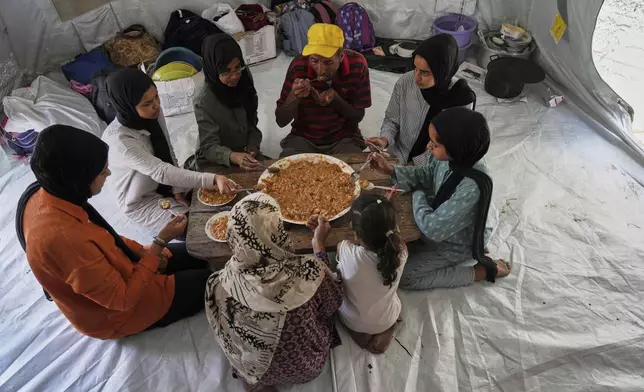
Members of the Abu Jarad family, who were displaced by the Israeli air and ground offensive in the Gaza Strip, eat in a tent where they are sheltering in Gaza City, Tuesday, May 20, 2025. (AP Photo/Jehad Alshrafi)
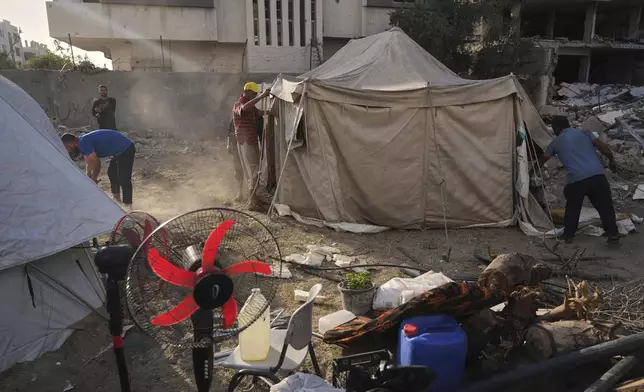
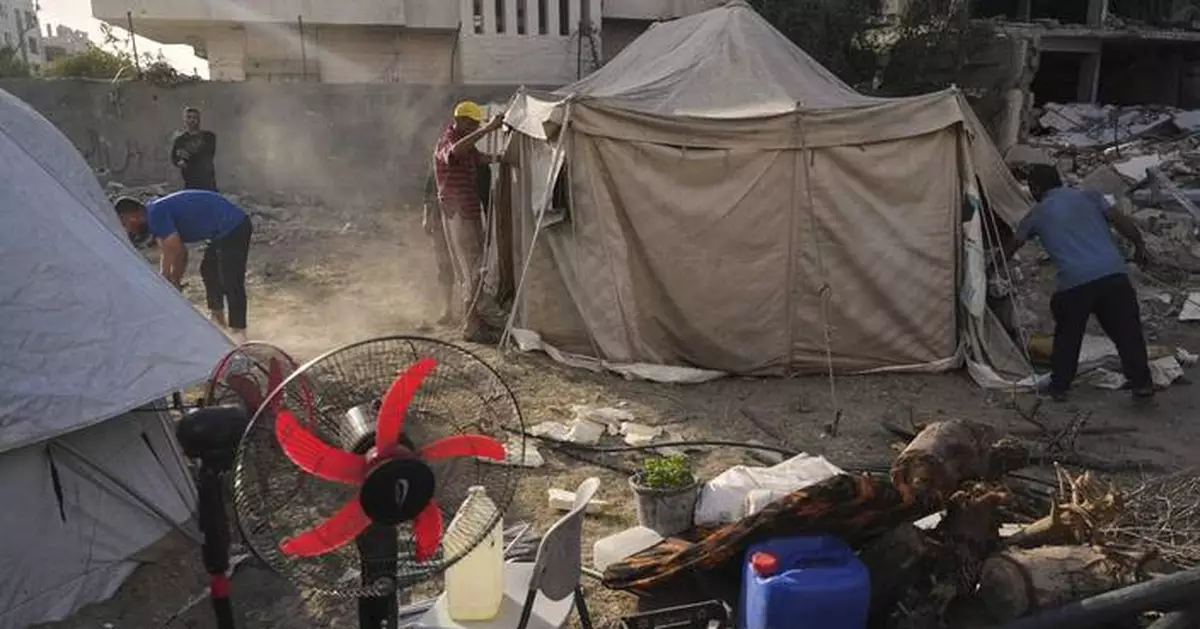
Members of the Abu Jarad family, who were displaced by the Israeli air and ground offensive in the Gaza Strip, build a new tent in Gaza City, Monday, May 19, 2025. (AP Photo/Jehad Alshrafi)
Weeks later, bombs started falling again. They tried to hold out, but the Abu Jarads eventually abandoned their home a second time.
“Each time you take this decision to leave, it’s like you’re executing yourself by your own hand,” Ne'man said. He spoke in Gaza City, where he and his brothers had set up tents for their families in the rubble-strewn yard of a destroyed apartment building.
The Associated Press has tracked the Abu Jarad family's journey across a territory where nearly the entire population of some 2.3 million Palestinians has been driven from their homes by the war. Like the Abu Jarads, most have moved multiple times.
The latest wave of forced displacement across the territory accelerated after Israel broke the two-month ceasefire on March 18 and resumed its military campaign.
At least 430,000 people have been on the move since then, and more are certain to follow as the Israeli military issues evacuation orders covering greater territory in an accelerating assault. Prime Minister Benjamin Netanyahu said last Wednesday that Israel intends to force the population into the far south of Gaza.
This time, the displacement is unfurling under the threat of famine. Israel blocked all food, fuel, medicine and other aid from entering Gaza starting March 2, pushing hundreds of thousands close to starvation. It said the blockade and its resumed military campaign aim to force Hamas to disarm and release the 58 hostages it holds. The past week, Israel let in a trickle of supplies, but aid groups say it is far short of what is needed.
Ne'man and his wife, Majida, were visibly gaunter than in January, when AP last spoke to them. Like others, they have struggled to feed their family. Their daughters range from age 6 to the eldest in her 20s, married and with a baby born just before the war began.
“When one of my daughters tells me, ‘Baba, I want to eat,’ I give her one or two bites so her piece of bread lasts till the end of the day,” Ne’man said.
It was only days into the war when the Abu Jarads first left their home in the far north of Gaza, as Israel began fierce bombardment in retaliation for Hamas’ Oct. 7, 2023, attack on southern Israel. They returned 15 months later, among hundreds of thousands of Palestinians streaming north on foot during the January ceasefire.
“Our happiness … was like we were entering Paradise,” Ne’man said.
The house was damaged but still standing. Most of their belongings had been stolen or were under rubble. But after months of living in tents, they had a sense of home and privacy again, he said. They did some repairs. Ne'man, whose garden was his passion before the war, revived some of his flowers.
On March 18, Israel resumed its campaign with one of the heaviest nights of bombardment of the war, hitting across Gaza and killing some 400 people. The military told residents of northern Gaza to leave.
“We said, let’s just be patient for a bit, maybe the situation will improve,” Majida said.
They didn’t want to undergo the pain of displacement again, Ne’man said. His daughters were crying, telling him, ‘We want to die in this house, this time we’re not leaving,’” he said.
But the shelling and gunfire was intense all around them, he said. The water trucks stopped delivering because it was too dangerous. “When you find death all around you … at that point I was forced to take the decision,” he said.
They packed up some belongings and went to a piece of land owned by his relatives in an area called Manshiya on the outskirts of the town of Beit Lahiya, only about a mile away.
They felt safe. Ne’man’s uncle’s house was nearby and other relatives were in tents around them.
But again the bombardment caught up to them. Last week, Israeli forces began barraging Manshiya – the heaviest Ne’man said he had experienced in the whole war.
They huddled in their tent for three days and nights, afraid to leave even to go to the bathroom. At one point, a drone struck only 20 meters (yards) away.
Another strike hit his uncle’s home, killing one of his cousins. “It was so dangerous, we couldn’t even go help him,” Ne’man said. The cousin’s family buried him on the spot, he said.
Others around them fled, but again the Abu Jarads tried to stay as long as they could.
“I was conflicted between two fires, should I leave or stay,” Majida said. Some of their daughters wanted to stay; the younger ones were terrified and wanted to go, she said.
Ne’man and his son-in-law went to Gaza City to scout out where to move. They found a place that seemed promising – an empty lot next to a demolished apartment building. They returned to Manshiya and on Sunday, the family set out.
They walked for miles, each of them weighed down with backpacks and plastic sacks filled with clothes and other belongings. At the edge of Gaza City, they found a pickup truck to take them the rest of the way.
They arrived after sunset, too late to set up their tents. A family in an intact apartment building was kind enough to take them in for the night, Ne’man said.
Ne’man’s brothers joined with their families. It took them three days to clear a lot of rubble and wreckage, smooth down the earth, pound tent pegs into the ground and erect seven tents for all of them. Majida and her daughters lay mattresses on the ground inside and arranged their things around them.
The men dug a pit by the edge of the lot for all the families to use as a toilet.
Then they sat for their meal of the day. Majida made a broth of boiled water, some tomato sauce and a little bit of bulghur wheat, then she mashed shreds of stale bread into it.
Now they face an unknown future.
His daughters are depressed and see little hope, he said. Wherever they move, there is still Israeli bombardment. All they can do is try to flee death, over and over, Ne'man said.
“We want the torrents of blood to stop," he said. “But this is our nation, our land. Even if it is soaked in our blood, we won’t leave it.”
Keath reported from Cairo.

Ne'man Abu Jarad sets up a new tent for his family after they were displaced by the Israeli air and ground offensive in the Gaza Strip in Gaza City, Monday, May 19, 2025. (AP Photo/Jehad Alshrafi)
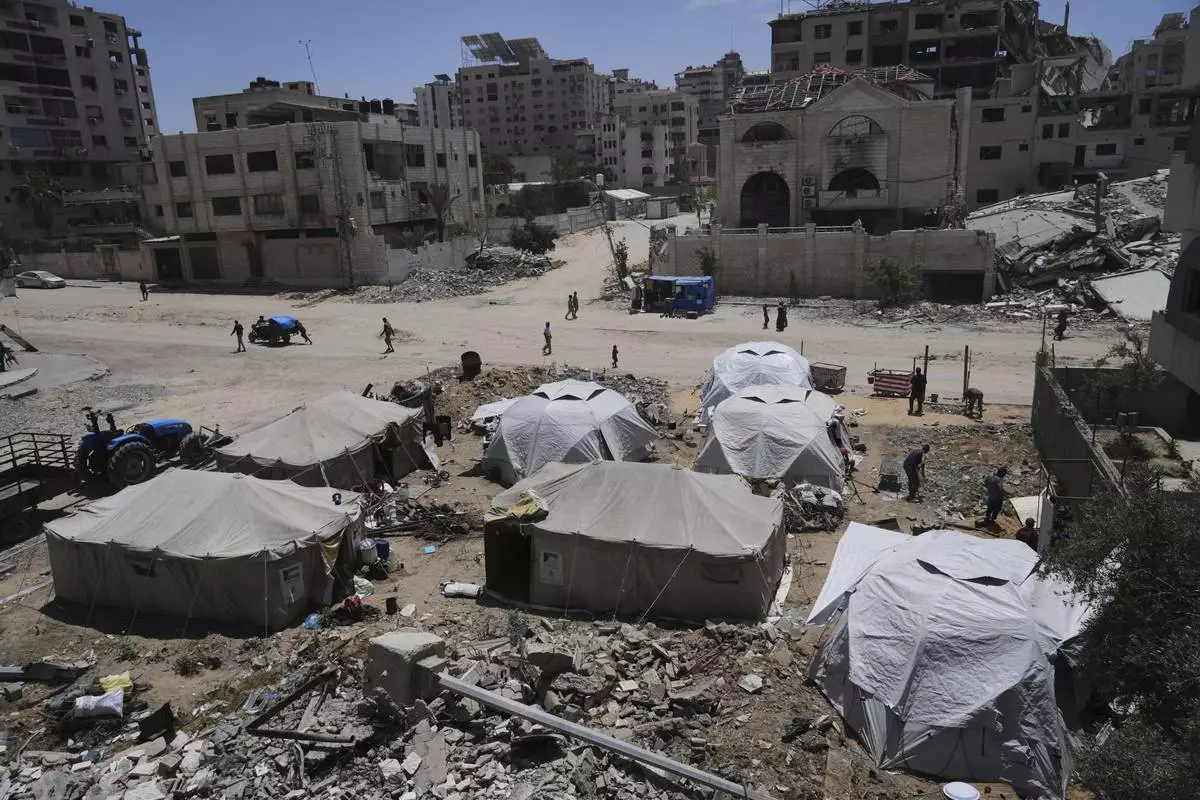
Tents fill a makeshift camp in Gaza City, where members of the Abu Jarad family and other Palestinians displaced by Israeli bombardment are sheltering, Monday, May 19, 2025. (AP Photo/Jehad Alshrafi)

Members of the Abu Jarad family, who were displaced by the Israeli air and ground offensive in the Gaza Strip, fill containers with water in Gaza City, Tuesday, May 20, 2025. (AP Photo/Jehad Alshrafi)

Members of the Abu Jarad family, who were displaced by the Israeli air and ground offensive in the Gaza Strip, eat in a tent where they are sheltering in Gaza City, Tuesday, May 20, 2025. (AP Photo/Jehad Alshrafi)

Members of the Abu Jarad family, who were displaced by the Israeli air and ground offensive in the Gaza Strip, build a new tent in Gaza City, Monday, May 19, 2025. (AP Photo/Jehad Alshrafi)