A cross-border e-commerce company based in east China's Hangzhou City is exploring new strategies by hiring foreign livestreaming hosts and expanding into new product categories, responding to shifting consumer demands in global markets.
In the live studios of the company, livestreaming hosts from Southeast Asia, Japan, South Korea and other countries were busy promoting Chinese products among the viewers in their home countries, with order numbers surging.
"Chinese products have good quality and diverse styles. I hope to share these products with my Malaysian friends through livestreaming from China," said Malaysian host Huang Yutong.
Originally targeting Western markets, the company has shifted its strategies, recruiting a number of foreign employees and expanding into emerging markets. Through market research, it found that consumer preferences in Southeast Asia have diversified beyond cosmetics and home health care products.
"We've indeed made some adjustments to our product categories and direction. For us, this is essentially like finding a new track and opening up new opportunities," said Liu Zhuo, director of the company's product selection department.
To open new markets, the team leader led the live-stream hosts to visit manufacturers in person. At a circuit board factory, Bati, a South African livestreamer with a background in electrical engineering grilled the manufacturer on technical specifications to better explain the product to potential buyers.
"Now I've gained a better understanding of and grew stronger interest in this product. This helps me introduce it better to customers and makes my livestreaming go smoother," said Bati.
Beyond hardware, the company has also partnered with cultural product manufacturers to test overseas demand for goods featuring traditional Chinese elements.
"These developments are creating new avenues for service expansion. We're highly confident about securing more partnerships and client opportunities moving forward," said Deng Yahui, CEO of the company.
The pivot reflects a broader trend among Chinese e-commerce firms adapting to shifting global demand and rising uncertainties by leveraging localized talent and diversified product offerings.

Chinese cross-border e-commerce firm explores new strategies to tap fresh markets
Iran has surprised its foes with the extent of its military power and resilience in the conflict with Israel and the U.S., Egyptian analysts in Cairo said.
With the conflict in its fourth week, Iran has shown that while it may lack the strong military muscle of the U.S. and Israel, it can strike effectively at Israeli cities and U.S. Gulf allies.
Iran's military capabilities are perhaps proving stronger than previously anticipated.
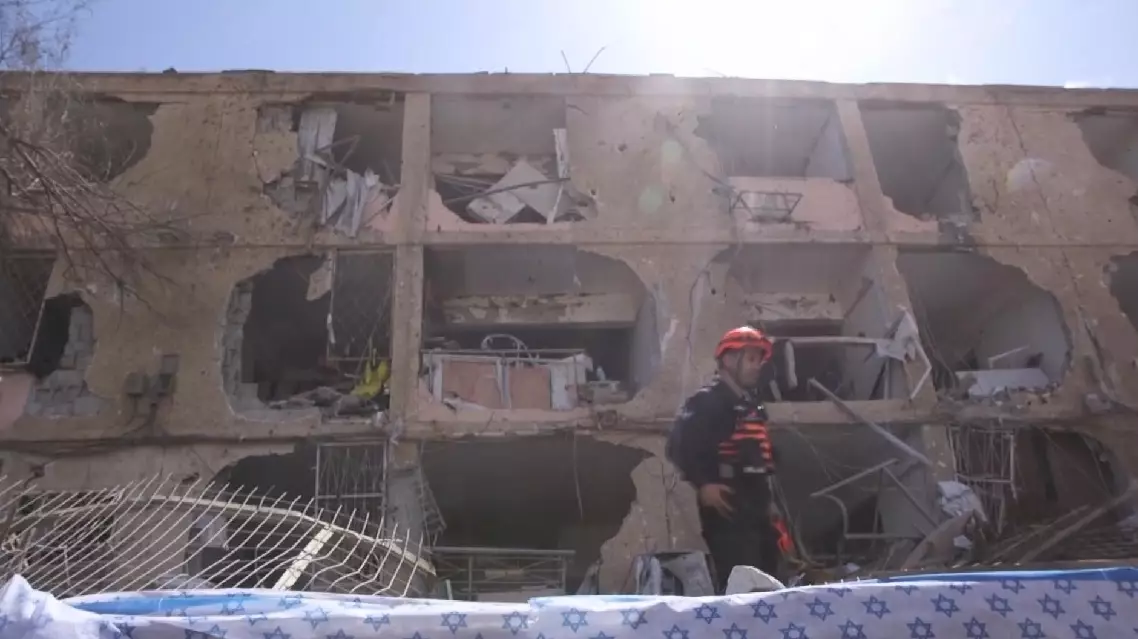
As soon as Israel and the U.S. attacked Iran on February 28, Tehran responded with barrages of missiles targeting Israel as well as U.S. military facilities in the six Gulf Cooperation Council countries and Jordan.
As the war began to stretch, Iran has expanded the list of its targets to include a total of 10 countries, and among them is a British base in Cyprus used by the United States.
Last week, a reported Iranian attack on another British military base on Diego Garcia Island in Mauritius signaled Tehran's possible capability to strike targets up to 4,000 kilometers away from its shores, bringing most of Europe within its radius of reach.
Walid Atlam, a researcher at the National Center for Studies, said Iran managed to use its military power to seize the global economic artery, the Strait of Hormuz, to exert pressure on the U.S. and Israel.
"The Iranian tactical strike on southern Israel, including the one near the Dimona nuclear facility or on Arad is the most effective qualitative attack during this war. It is also the deepest hit yet inside Israel. Another success for Iran is the closure of the Strait of Hormuz -- though only a partial one. In doing so, Iran managed to pressure a pillar of the global economy by disrupting energy markets and global supply chains. These effects will be felt even after a ceasefire," he said.
Iran does not match the U.S. and Israel in military might. For Tehran, surviving the war is the ultimate goal. Until then, it aims to inflict maximum damage -- not only militarily but also politically.
Mohamed al Shahawy, former chief of staff of military chemical warfare of the Egyptian Armed Forces, said Iran has surprised its foes with its military capabilities.
"Iran's resilience in fighting into the fourth week is the biggest surprise, so is its ability to target U.S. military bases with new generations of missiles. The U.S.-Israeli objective in this war, including overthrowing the regime in Iran, destroying Iran's ballistic missiles program and its nuclear facilities, and seizing Iran's enriched uranium, has failed," he said.
Atlam said the ongoing conflict seems to be undermining U.S. dominance and straining the close relations with its European allies.
"I think this war has created a kind of doubt about the United States and its foreign policy. The most significant sign is perhaps a clear European desire to reduce its dependence on the U.S., both militarily and economically. This was evident when many European countries refused to get directly involved in this war or join a coalition to secure navigation in the Strait of Hormuz," he said.
Iran's strike reveals military power, resilience against US: experts