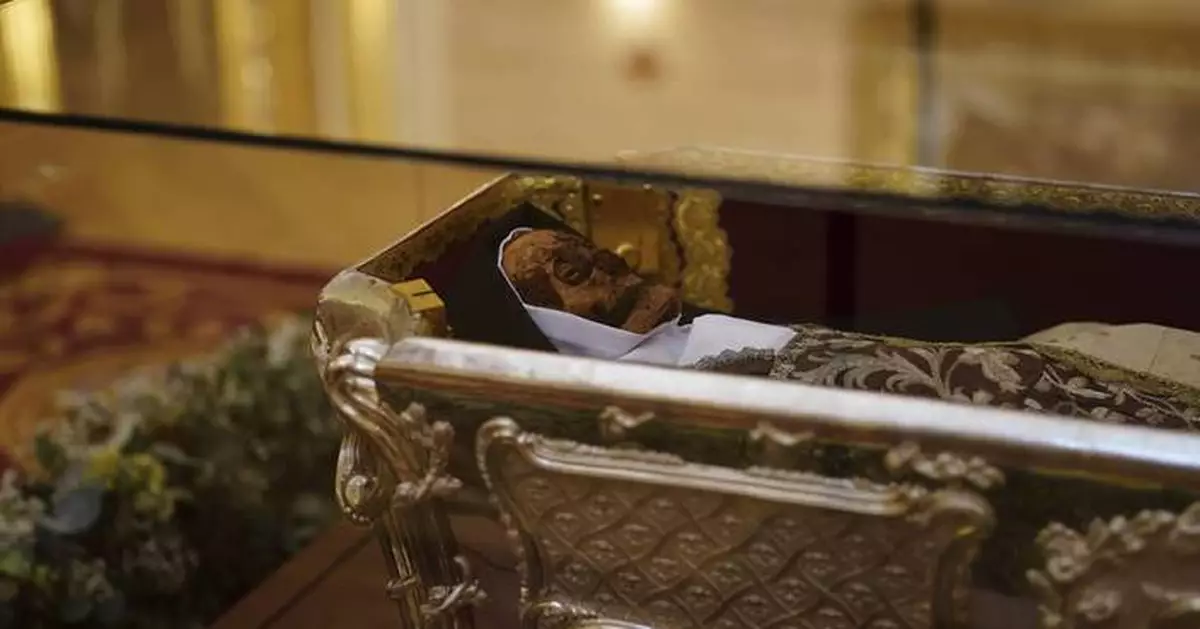
ALBA DE TORMES, Spain (AP) — They lined up to see her, silent and wonderstruck: Inside an open silver casket was Saint Teresa of Ávila, more than 440 years after her death.
Catholic worshippers have been flocking to Alba de Tormes, a town ringed by rolling pastures in western Spain where the remains of the Spanish saint, mystic and 16th-century religious reformer were on display this month.
Click to Gallery
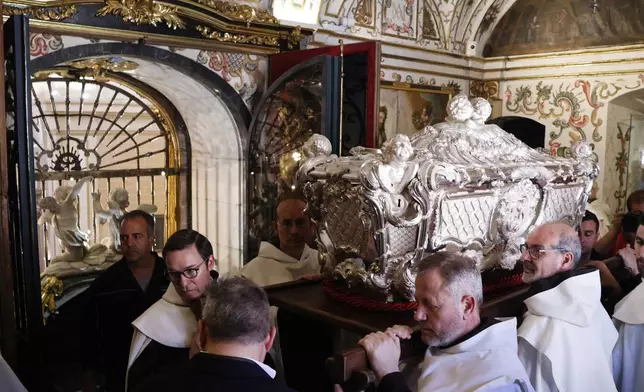
Religious carry in procession the silver casket containing the remains of Saint Teresa of Ávila, the Spanish saint, mystic, and 16th-century religious reformer, before her burial in Alba de Tormes, Salamanca, northwestern Spain, on Monday, May 26, 2025. (Manuel Ángel Laya/Europa Press via AP) **SPAIN OUT**
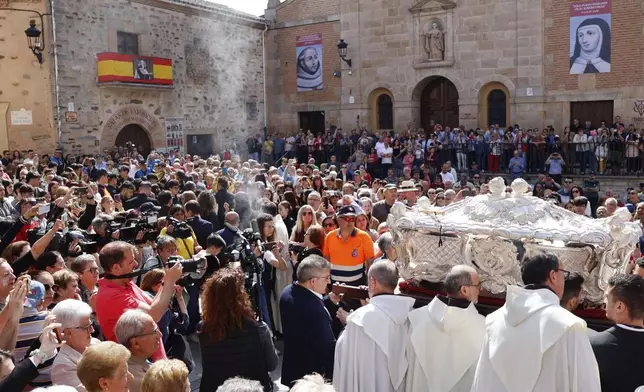
Religious carry in procession the silver casket containing the remains of Saint Teresa of Ávila, the Spanish saint, mystic, and 16th-century religious reformer, before her burial in Alba de Tormes, Salamanca, northwestern Spain, on Monday, May 26, 2025. (Manuel Ángel Laya/Europa Press via AP) **SPAIN OUT**
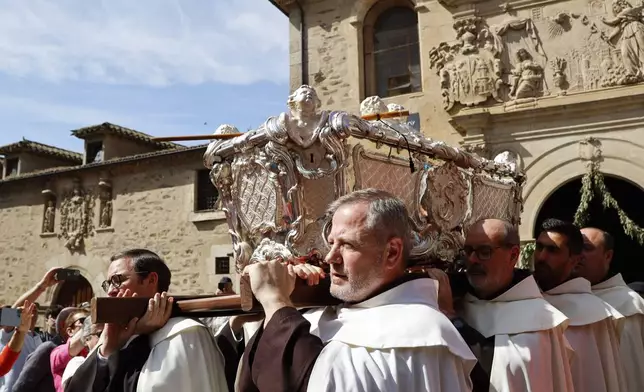
Religious carry in procession the casket containing the remains of Saint Teresa of Ávila, the Spanish saint, mystic, and 16th-century religious reformer, before her burial in Alba de Tormes, Salamanca, northwestern Spain, on Monday, May 26, 2025. (Manuel Ángel Laya/Europa Press via AP) **SPAIN OUT**
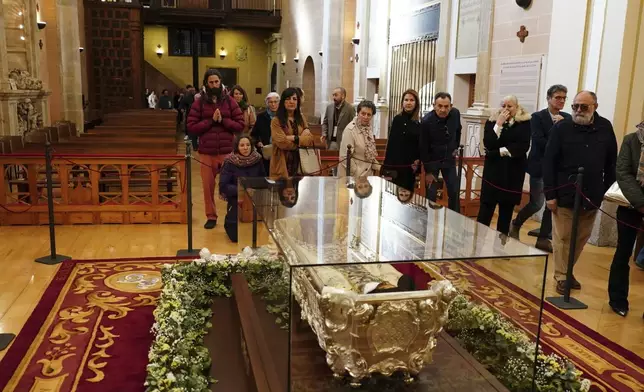
Catholic worshippers line up to view the remains of Saint Teresa of Ávila, the Spanish saint, mystic, and 16th-century religious reformer, displayed at a church in Alba de Tormes, Salamanca, northwestern Spain, on Sunday, May 11, 2025. (Manuel Ángel Laya/Europa Press via AP)
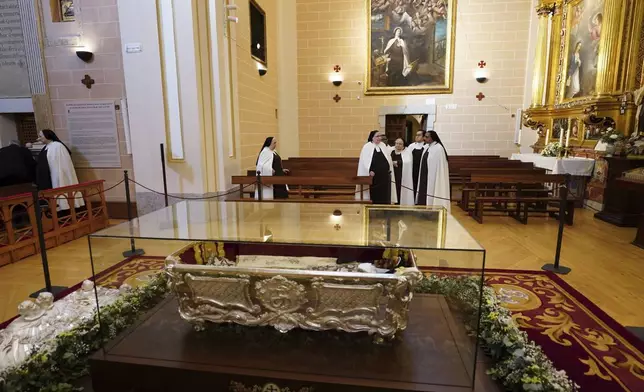
The remains of Saint Teresa of Ávila, the Spanish saint, mystic, and 16th-century religious reformer, are displayed at a church in Alba de Tormes, Salamanca, northwestern Spain, on Sunday, May 11, 2025. (Manuel Ángel Laya/Europa Press via AP)
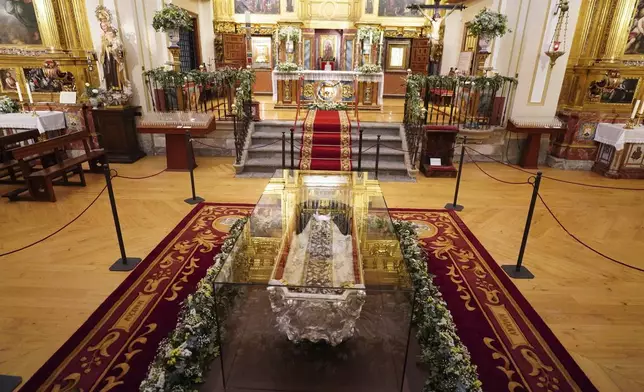
The remains of Saint Teresa of Ávila, the Spanish saint, mystic, and 16th-century religious reformer, are displayed at a church in Alba de Tormes, Salamanca, northwestern Spain, on Sunday, May 11, 2025. (Manuel Ángel Laya/Europa Press via AP)
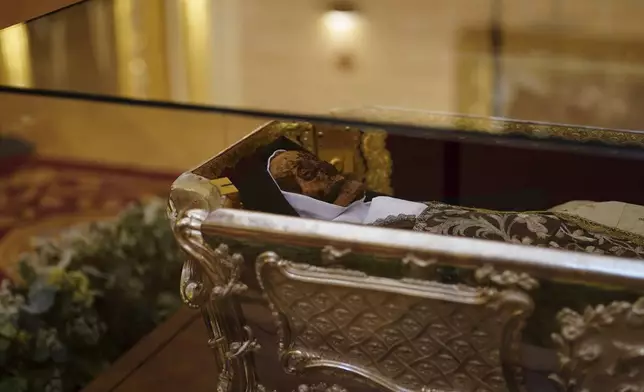
The remains of Saint Teresa of Ávila, the Spanish saint, mystic, and 16th-century religious reformer, are displayed at a church in Alba de Tormes, Salamanca, northwestern Spain, on Sunday, May 11, 2025. (Manuel Ángel Laya/Europa Press via AP)
“It gave me a feeling of fulfillment, of joy, and of sadness,” said Guiomar Sánchez, who traveled from Madrid with her two daughters on Sunday, the last full day of the exhibit.
Inspired by her mother’s belief in the Carmelite nun, Sánchez praised the mystic’s writings as being ahead of her time. Sánchez said she also came in part to honor her mother.
“Seeing her was an inexplicable experience,” Sánchez added.
On Monday morning, the casket of the saint who died in 1582 was resealed and carried through the town streets, with pilgrims following the procession. It is unclear how many years — or decades — will pass before the church once again makes St. Teresa's remains visible to the public.
Teresa was last displayed in 1914, when devotees had a single day to see the saint. This time, the display drew almost 100,000 visitors over two weeks, said Miguel Ángel González, the prior of the Discalced Carmelites of Salamanca.
The casket that holds the saint's remains is barely 1.3 meters (4 feet) long.
What is visible is a skull dressed in a habit with vestments covering other parts of the body, not all of which is intact. The saint’s heart is kept in another part of the church, officials said. Other body parts — fingers, a hand and a jaw — are kept as relics in churches across Europe.
Teresa is a towering figure from Spain’s Golden Age and 16th-century Counter-Reformation. Her explorations of the inner life and meditations on her relationship with God were controversial, yet they have been held up over the centuries as a “profound treatise on spirituality," said José Calvo, a professor of theology at the Pontifical University of Salamanca who specializes in Medieval history.
Many have venerated her. Former Spanish dictator Gen. Francisco Franco is believed to have kept a relic of the saint’s hand next to his bed.
Last September, the newly elected Pope Leo XIV visited the saint's birthplace in Avila, an hour's drive from Alba de Tormes.
Teresa's remains have also spawned memes online about the macabre nature of crowding around her centuries-old skull.
In Alba de Tormes, church officials and experts downplayed such reactions, saying the display was nothing out of the ordinary for how Catholics have revered their saints for centuries.
“It was just something people always did when they thought somebody might be a saint,” said Cathleen Medwick, who wrote the book “Teresa of Avila, The Progress of a Soul.”
“And the fact that her body hadn’t decayed very much was also considered a sign of her sanctity," Medwick added.
Some worshippers this month were visibly moved. On Sunday, a group of nuns from India wiped away tears as they stood by the side of the casket and looked at the saint's remains behind a glass case.
Gregoria Martín López, 75, climbed to an elevated part of the church behind the altar, hoping to get a better view from above of the diminutive saint's skull.
“The saint for me is a thing of great strength. If they close her, I can say that I saw her,” Martín said and with tears in her eyes, blew a kiss down to Teresa's relic as organ music filled the space.
Associated Press religion coverage receives support through the AP’s collaboration with The Conversation US, with funding from Lilly Endowment Inc. The AP is solely responsible for this content.
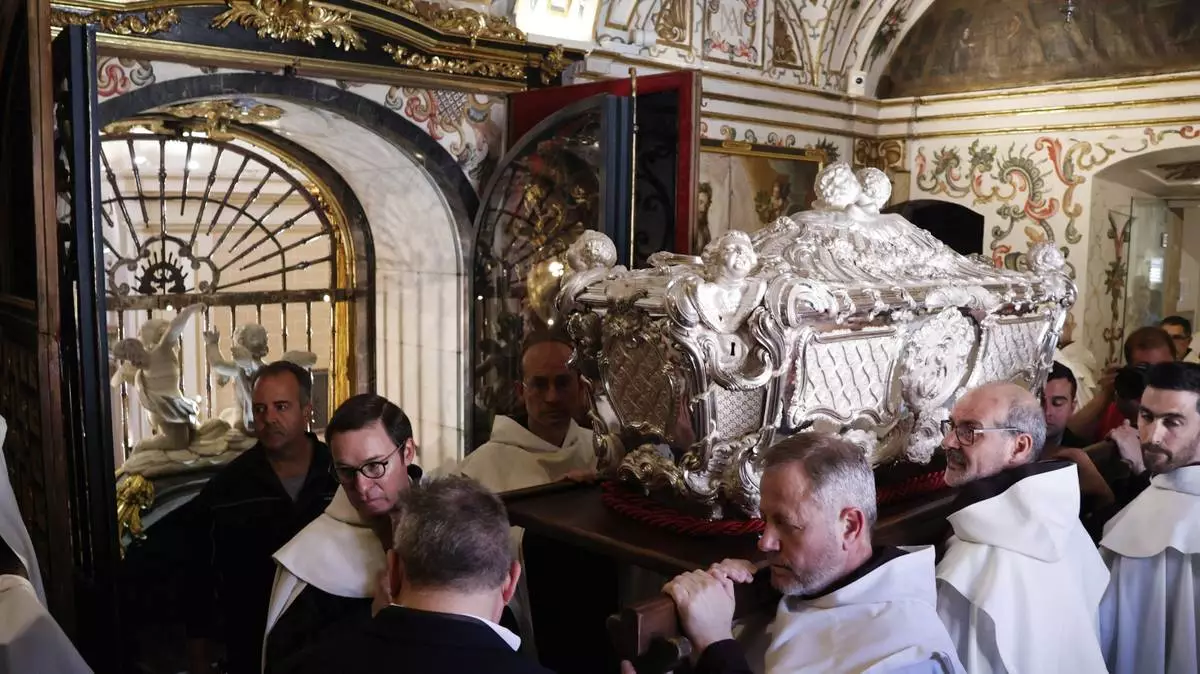
Religious carry in procession the silver casket containing the remains of Saint Teresa of Ávila, the Spanish saint, mystic, and 16th-century religious reformer, before her burial in Alba de Tormes, Salamanca, northwestern Spain, on Monday, May 26, 2025. (Manuel Ángel Laya/Europa Press via AP) **SPAIN OUT**
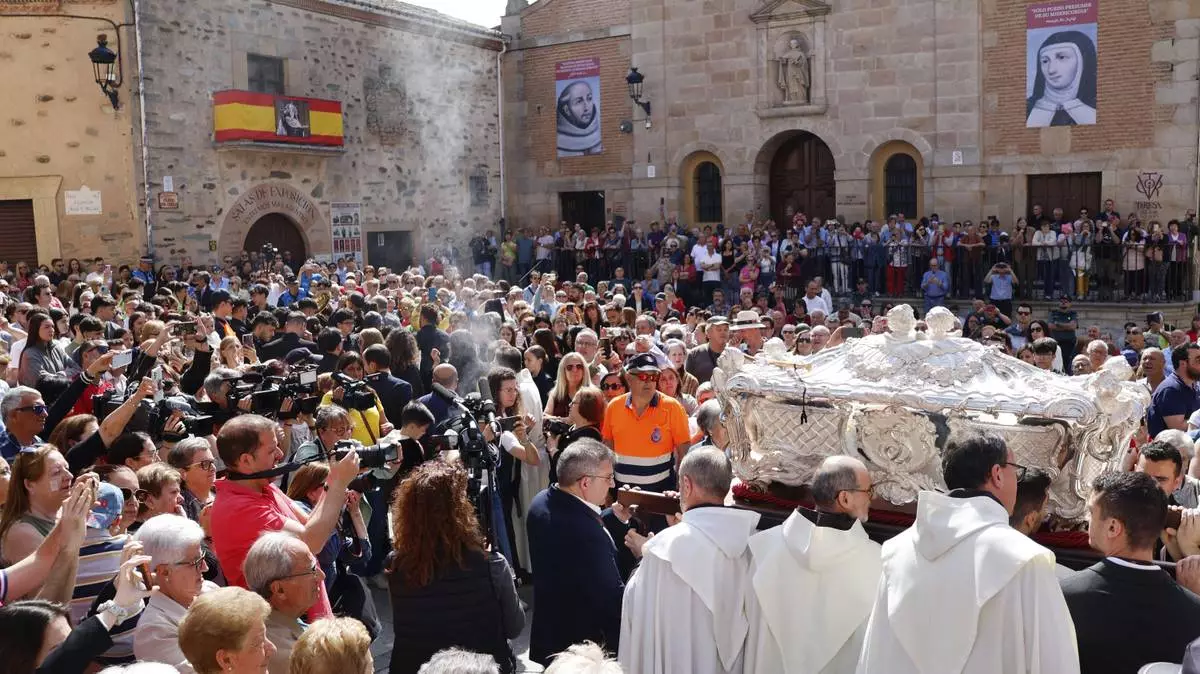
Religious carry in procession the silver casket containing the remains of Saint Teresa of Ávila, the Spanish saint, mystic, and 16th-century religious reformer, before her burial in Alba de Tormes, Salamanca, northwestern Spain, on Monday, May 26, 2025. (Manuel Ángel Laya/Europa Press via AP) **SPAIN OUT**
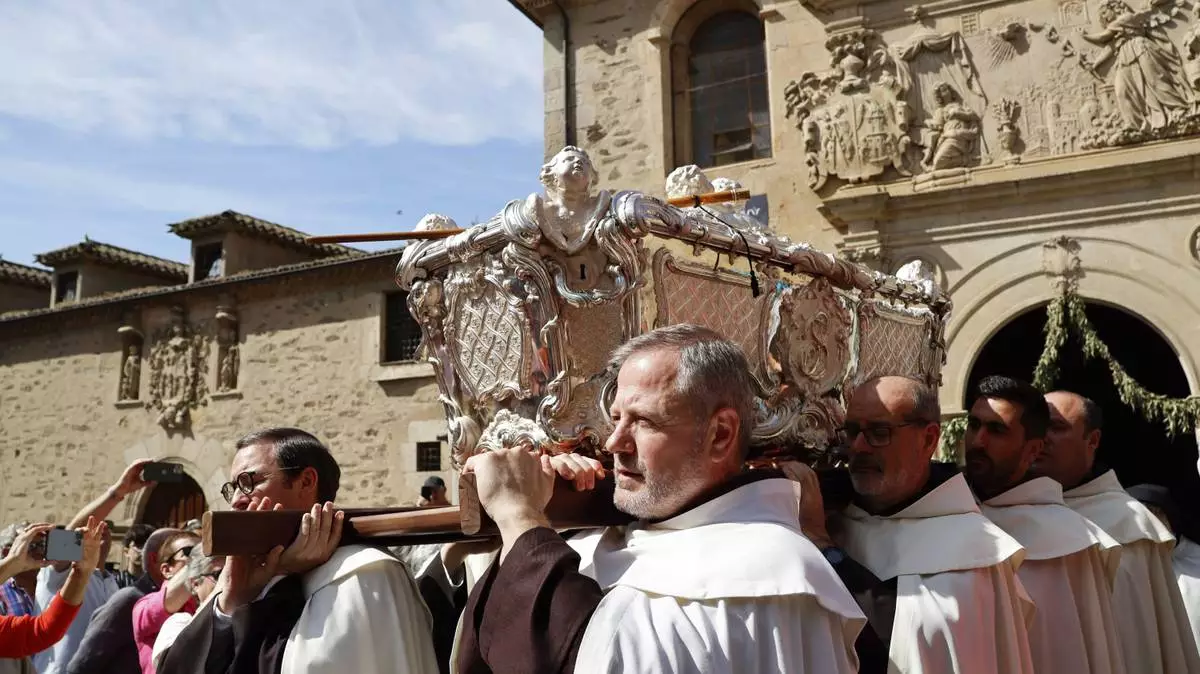
Religious carry in procession the casket containing the remains of Saint Teresa of Ávila, the Spanish saint, mystic, and 16th-century religious reformer, before her burial in Alba de Tormes, Salamanca, northwestern Spain, on Monday, May 26, 2025. (Manuel Ángel Laya/Europa Press via AP) **SPAIN OUT**
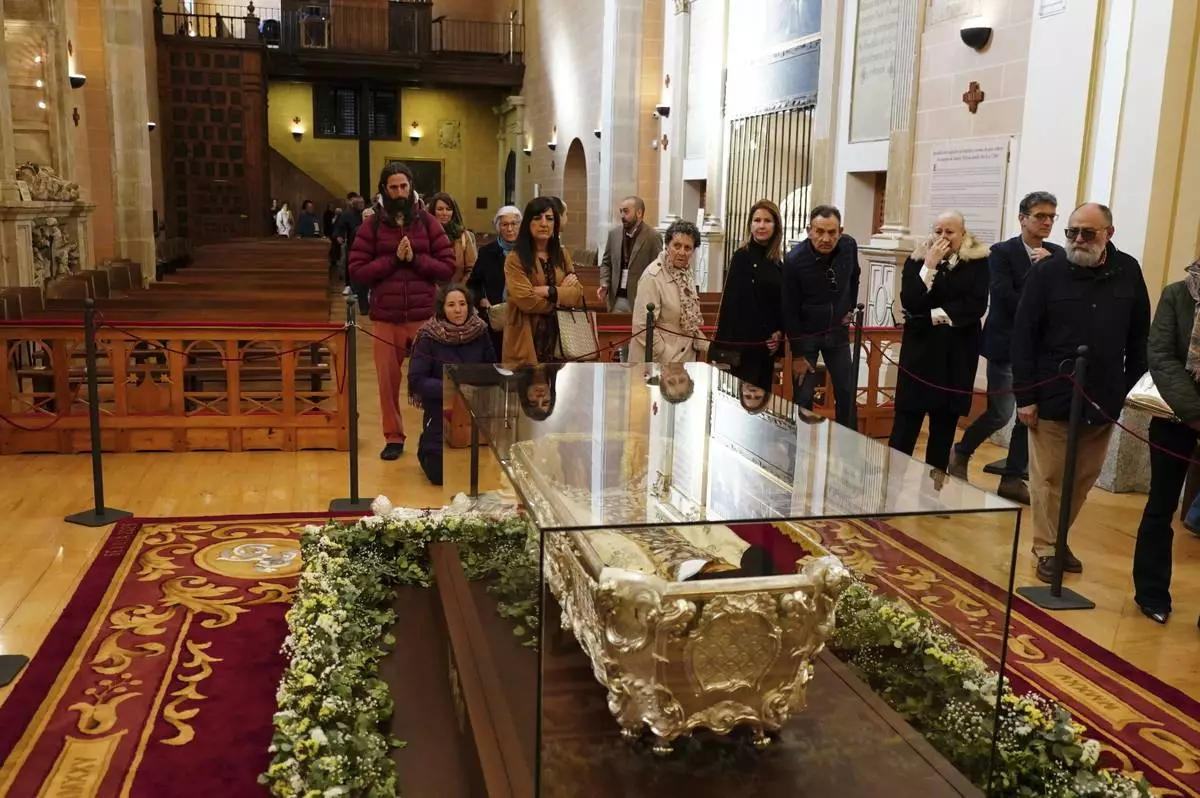
Catholic worshippers line up to view the remains of Saint Teresa of Ávila, the Spanish saint, mystic, and 16th-century religious reformer, displayed at a church in Alba de Tormes, Salamanca, northwestern Spain, on Sunday, May 11, 2025. (Manuel Ángel Laya/Europa Press via AP)
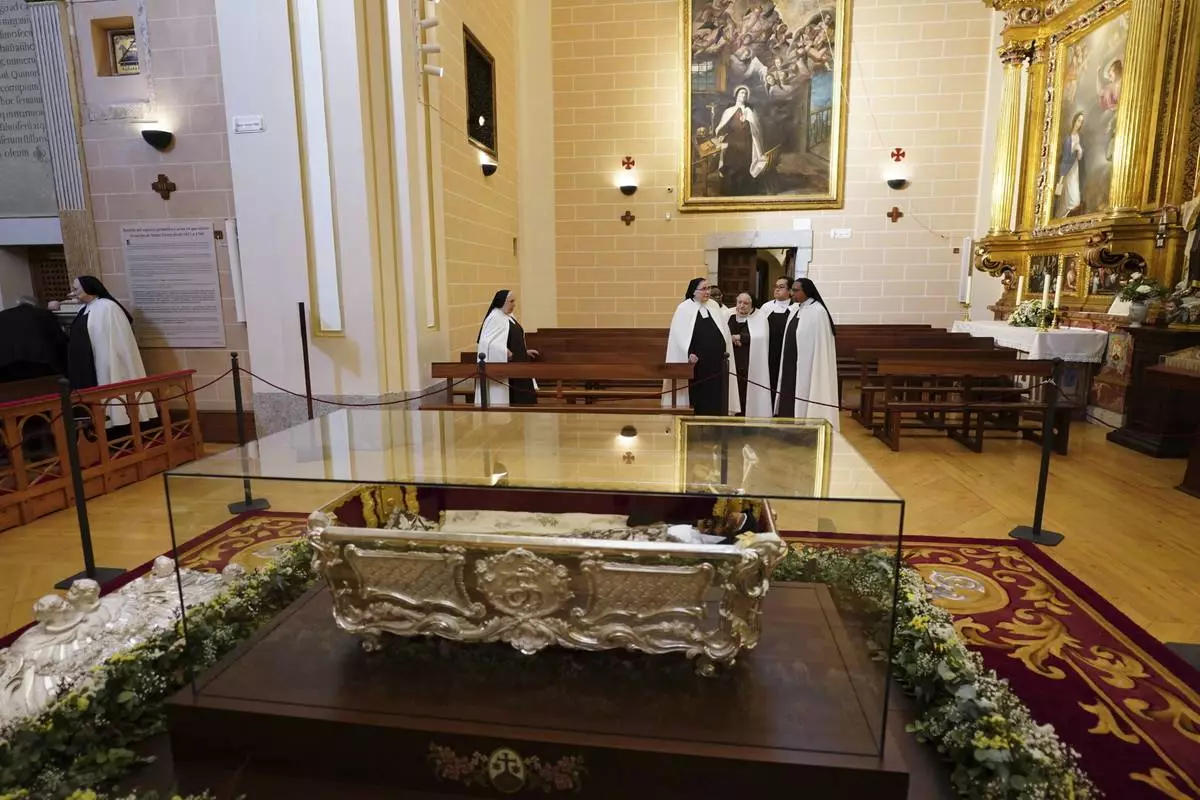
The remains of Saint Teresa of Ávila, the Spanish saint, mystic, and 16th-century religious reformer, are displayed at a church in Alba de Tormes, Salamanca, northwestern Spain, on Sunday, May 11, 2025. (Manuel Ángel Laya/Europa Press via AP)
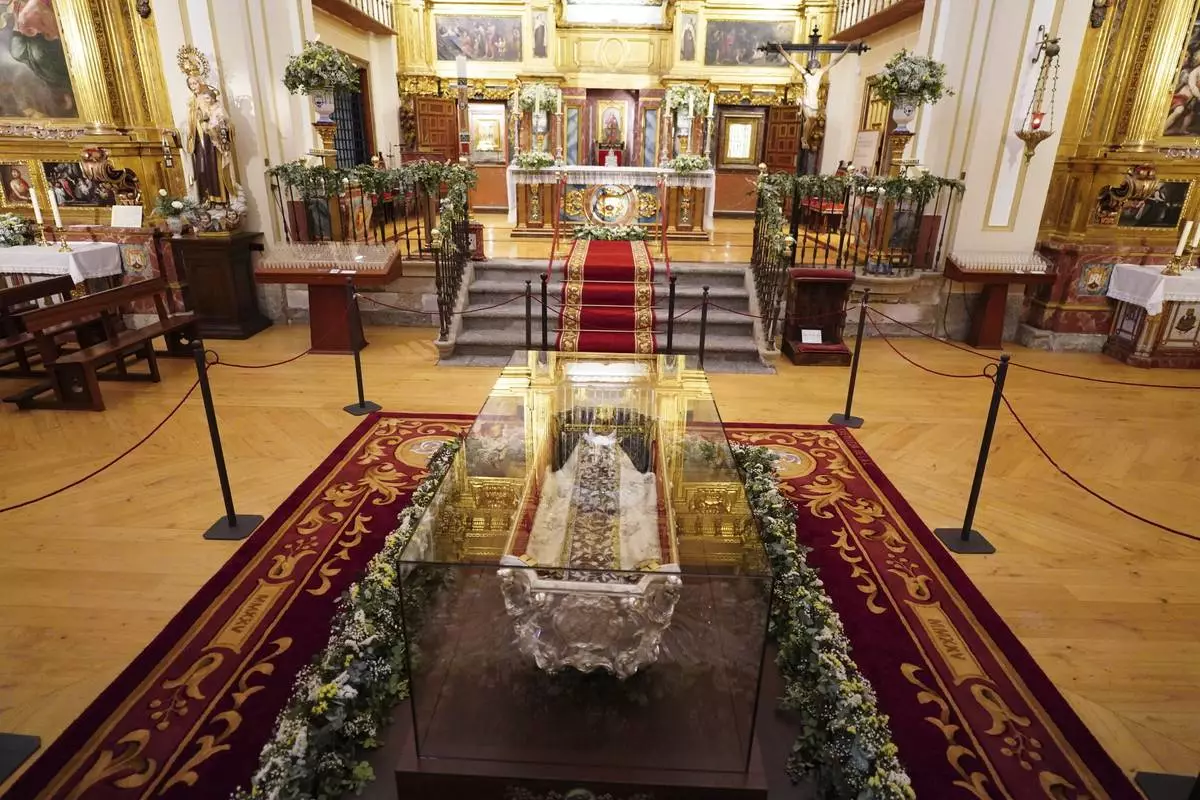
The remains of Saint Teresa of Ávila, the Spanish saint, mystic, and 16th-century religious reformer, are displayed at a church in Alba de Tormes, Salamanca, northwestern Spain, on Sunday, May 11, 2025. (Manuel Ángel Laya/Europa Press via AP)
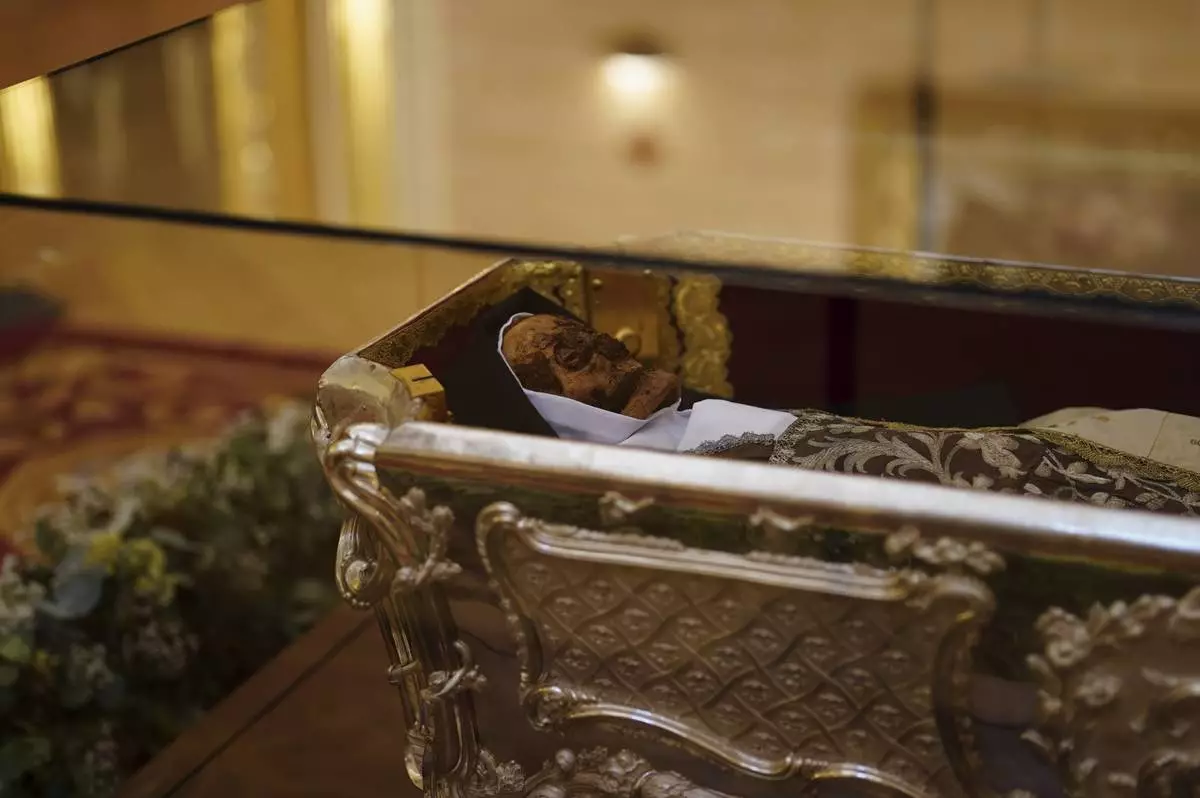
The remains of Saint Teresa of Ávila, the Spanish saint, mystic, and 16th-century religious reformer, are displayed at a church in Alba de Tormes, Salamanca, northwestern Spain, on Sunday, May 11, 2025. (Manuel Ángel Laya/Europa Press via AP)