COLOMBO, Sri Lanka (AP) — Debt-stricken Sri Lanka hosted one of New Zealand's top ministers to discuss ways to deepen bilateral ties in areas such as trade, tourism and agriculture.
Winston Peters, New Zealand’s deputy prime minister and foreign affairs minister, met Sri Lanka Foreign Affairs Minister Vijitha Herath in the capital Colombo on Monday. The five-day visit by Peters is scheduled to continue until Wednesday
The visit comes as Sri Lanka struggles to emerge from its worst economic crisis, which began in the Indian Ocean island nation three years ago.
The countries have improved relations in recent years, establishing a New Zealand embassy in Colombo in 2021 and a Sri Lankan embassy in Wellington this year.
The discussion Monday focused on advancing ties in trade, investment, agriculture, education and tourism, Herath said.
“We also explored expanding trade links in high-potential sectors such as diary, processed food, fresh produce and discussed improving market access for Sri Lankan products,” Herath told reporters.
He commended New Zealand’s support in developing Sri Lanka’s dairy industry, saying it had a “transformational impact on rural livelihood.”
Sri Lanka has embarked on an effort to expand and modernize its domestic diary industry in recent years, but still produces only about 40% of the country's demand for milk and dairy products, while the balance is imported.
New Zealand is a key supplier of those dairy products, especially milk powder. In 2024, New Zealand exported $335 million in goods to Sri Lanka, with dairy products forming the bulk.
Trade balance between the nations favors New Zealand, which in 2024 imported goods worth $64 million from Sri Lanka including tea, coffee, apparel and rubber products.
The discussion included reducing red tape at the border and how to “increase Sri Lanka’s market access capabilities," Peters said.
"We discussed the growing number of New Zealand companies working with and investing in Sri Lanka or looking to work with Sri Lankan partners,“ said Peters, adding that those collaborations will benefit Sri Lanka’s tourism, agriculture and healthcare sectors.
Sri Lanka declared bankruptcy in April 2022 with more than $83 billion in debt, more than half to foreign creditors. It sought the help of the International Monetary Fund, which approved a $2.9 billion, four-year bailout package in 2023 under which Sri Lanka was required to restructure its debt.
In September last year, Sri Lanka said it had concluded the debt restructuring process after reaching agreements with bilateral and multilateral creditors and private bondholders. Sri Lanka is seeking to obtain $17 billion in debt service relief.
Sri Lanka’s crisis was largely the result of economic mismanagement combined with fallout from the COVID-19 pandemic, along with 2019 terrorism attacks that devastated its important tourism industry. The pandemic also disrupted the flow of remittances from Sri Lankans working abroad.
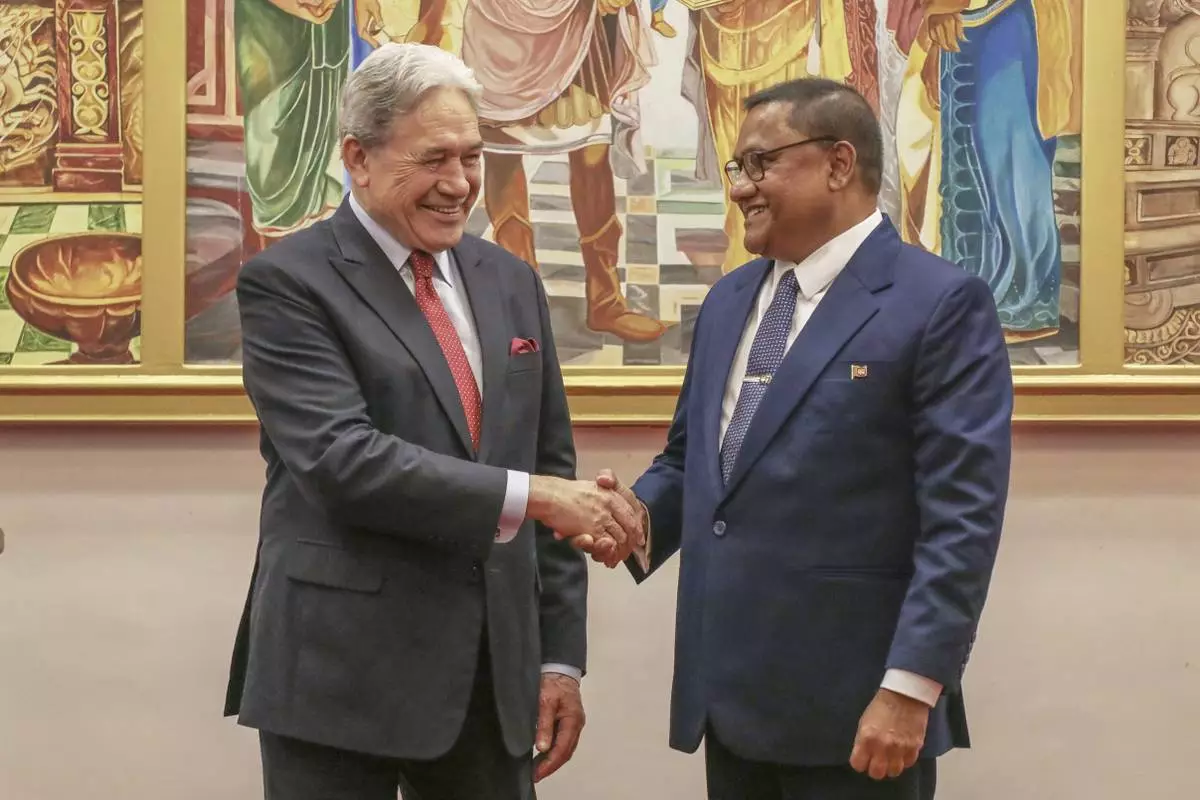
Winston Peters, New Zealand's Deputy Prime Minister and Foreign Affairs Minister, left, shakes hands with Sri Lanka Foreign Affairs Minister Vijitha Herath in Colombo, Sri Lanka, Monday, May 26, 2025. (AP Photo)
DUBAI, United Arab Emirates (AP) — U.S. President Donald Trump said Iran wants to negotiate with Washington after his threat to strike the Islamic Republic over its bloody crackdown on protesters, a move coming as activists said Monday the death toll in the nationwide demonstrations rose to at least 544.
Iran had no immediate reaction to the news, which came after the foreign minister of Oman — long an interlocutor between Washington and Tehran — traveled to Iran this weekend. It also remains unclear just what Iran could promise, particularly as Trump has set strict demands over its nuclear program and its ballistic missile arsenal, which Tehran insists is crucial for its national defense.
Meanwhile Monday, Iran called for pro-government demonstrators to head to the streets in support of the theocracy, a show of force after days of protests directly challenging the rule of 86-year-old Supreme Leader Ayatollah Ali Khamenei. Iranian state television aired chants from the crowd, who shouted “Death to America!” and “Death to Israel!”
Trump and his national security team have been weighing a range of potential responses against Iran including cyberattacks and direct strikes by the U.S. or Israel, according to two people familiar with internal White House discussions who were not authorized to comment publicly and spoke on condition of anonymity.
“The military is looking at it, and we’re looking at some very strong options,” Trump told reporters on Air Force One on Sunday night. Asked about Iran’s threats of retaliation, he said: “If they do that, we will hit them at levels that they’ve never been hit before.”
Trump said that his administration was in talks to set up a meeting with Tehran, but cautioned that he may have to act first as reports of the death toll in Iran mount and the government continues to arrest protesters.
“I think they’re tired of being beat up by the United States,” Trump said. “Iran wants to negotiate.”
He added: “The meeting is being set up, but we may have to act because of what’s happening before the meeting. But a meeting is being set up. Iran called, they want to negotiate.”
Iran through country's parliamentary speaker warned Sunday that the U.S. military and Israel would be “legitimate targets” if America uses force to protect demonstrators.
More than 10,600 people also have been detained over the two weeks of protests, said the U.S.-based Human Rights Activists News Agency, which has been accurate in previous unrest in recent years and gave the death toll. It relies on supporters in Iran crosschecking information. It said 496 of the dead were protesters and 48 were with security forces.
With the internet down in Iran and phone lines cut off, gauging the demonstrations from abroad has grown more difficult. The Associated Press has been unable to independently assess the toll. Iran’s government has not offered overall casualty figures.
Those abroad fear the information blackout is emboldening hard-liners within Iran’s security services to launch a bloody crackdown. Protesters flooded the streets in the country’s capital and its second-largest city on Saturday night into Sunday morning. Online videos purported to show more demonstrations Sunday night into Monday, with a Tehran official acknowledging them in state media.
In Tehran, a witness told the AP that the streets of the capital empty at the sunset call to prayers each night. By the Isha, or nighttime prayer, the streets are deserted.
Part of that stems from the fear of getting caught in the crackdown. Police sent the public a text message that warned: “Given the presence of terrorist groups and armed individuals in some gatherings last night and their plans to cause death, and the firm decision to not tolerate any appeasement and to deal decisively with the rioters, families are strongly advised to take care of their youth and teenagers.”
Another text, which claimed to come from the intelligence arm of the paramilitary Revolutionary Guard, also directly warned people not to take part in demonstrations.
“Dear parents, in view of the enemy’s plan to increase the level of naked violence and the decision to kill people, ... refrain from being on the streets and gathering in places involved in violence, and inform your children about the consequences of cooperating with terrorist mercenaries, which is an example of treason against the country,” the text warned.
The witness spoke to the AP on condition of anonymity due to the ongoing crackdown.
The demonstrations began Dec. 28 over the collapse of the Iranian rial currency, which trades at over 1.4 million to $1, as the country’s economy is squeezed by international sanctions in part levied over its nuclear program. The protests intensified and grew into calls directly challenging Iran’s theocracy.
Nikhinson reported from aboard Air Force One.
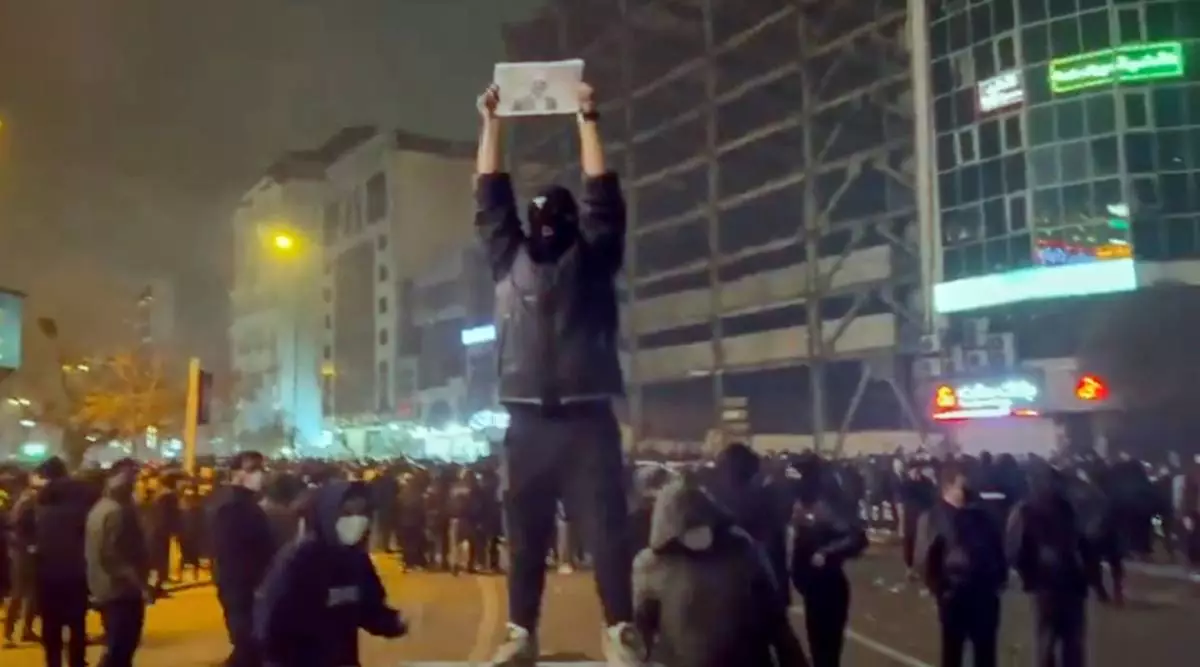
In this frame grab from video obtained by the AP outside Iran, a masked demonstrator holds a picture of Iran's Crown Prince Reza Pahlavi during a protest in Tehran, Iran, Friday, January. 9, 2026. (UGC via AP)
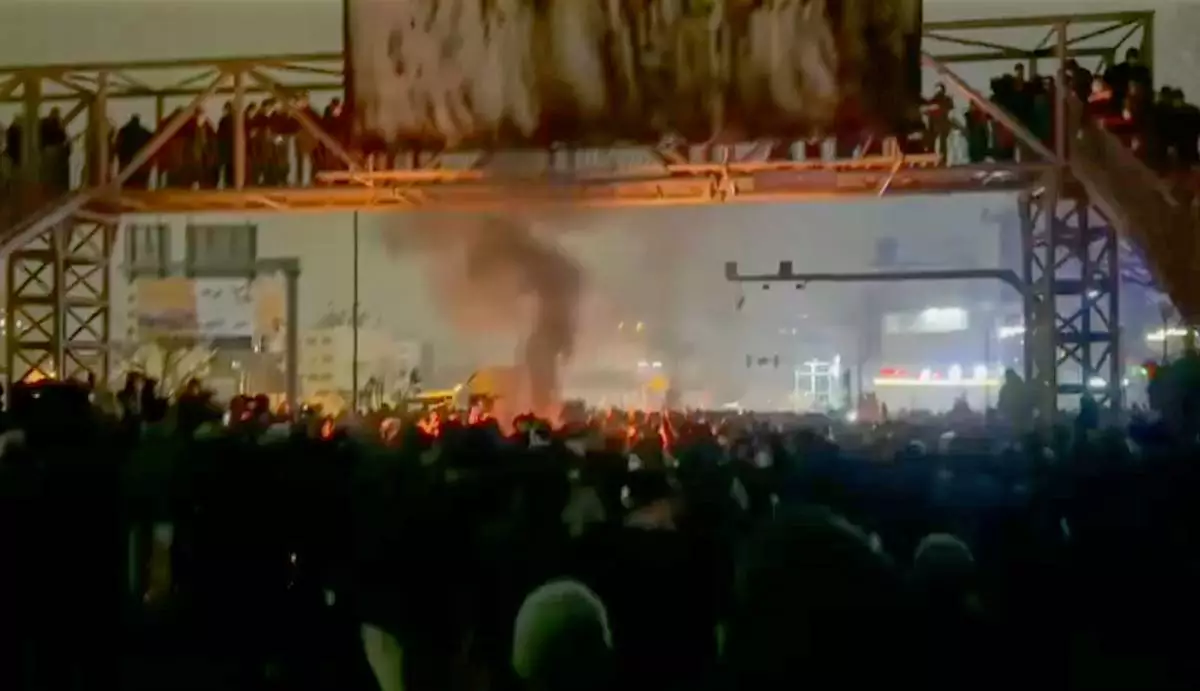
In this frame grab from footage circulating on social media from Iran shows protesters taking to the streets despite an intensifying crackdown as the Islamic Republic remains cut off from the rest of the world in Tehran, Iran, Friday, Jan. 9, 2026.(UGC via AP)
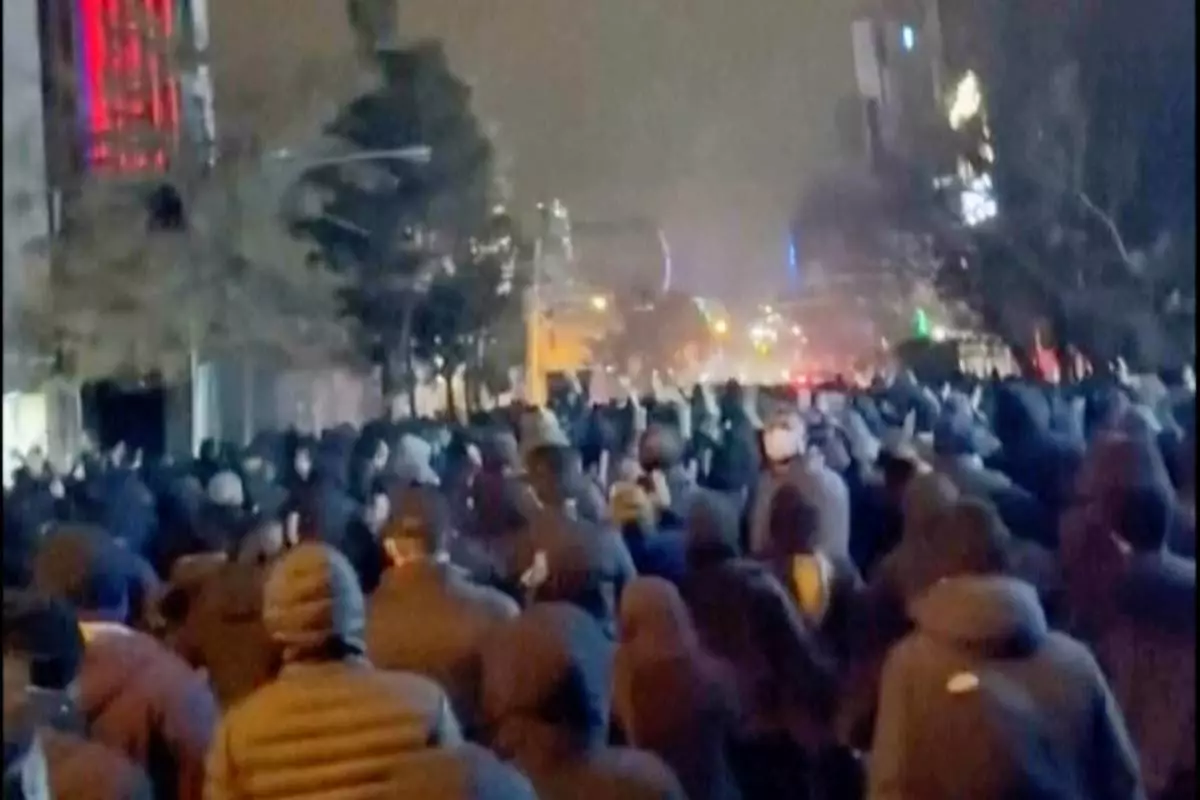
In this frame grab from footage circulating on social media from Iran showed protesters once again taking to the streets of Tehran despite an intensifying crackdown as the Islamic Republic remains cut off from the rest of the world in Tehran, Iran, Saturday Jan. 10, 2026. (UGC via AP)