In response to ever-changing international landscape, Chinese foreign trade enterprises are actively exploring new markets beyond the United States by leveraging cross-border e-commerce and artificial intelligence (AI), diversifying their approaches to growth.
Luyi County of Zhoukou City -- China's makeup brush manufacturing hub in Henan Province -- produces 150 million sets of makeup brushes annually and is home to over 300 makeup brush companies. Many of the companies previously relied heavily on U.S. orders, which accounted for more than half of their business. Currently, cross-border e-commerce has become a key channel for these companies to explore new markets, with many having formed international e-commerce teams.
"In addition to the United States, more than 100 other countries also need our products. Our team has been formed, and we are now promoting our products in these countries, including markets in the Middle East, Southeast Asia, Europe, and Russia," said Huang Chunjie, chairman of a local makeup tools company.
To support foreign trade enterprises in expanding their markets, the Zhejiang Provincial Department of Commerce has partnered with 20 cross-border e-commerce platforms to launch an initiative for market expansion.
However, entering new markets presents new challenges. Alibaba.com distributed 7,000 questionnaires among cross-border merchants in a survey, with results showing that language barriers and compliance issues in new markets are their biggest concerns.
To address these issues, the platform has introduced four AI assistants focused on risk assessment, product operations, customer service, and marketing respectively, all of which are available to sellers for free.
"If a French buyer contacts a seller, the seller can respond in Chinese, and the AI will automatically generate the reply in French. If you find the language too stiff, you can ask the AI to refine it. Our AI can also identify a buyers' needs and tailors the response based on their characteristics and information. For example, if a buyer asks questions such as 'What are the logistics details?' or 'Which port in France should I send it to?', the AI can automatically calculate and provide the logistics costs for those ports," said Lin Hao, person in charge of merchant products at Alibaba.com.
With the help of AI, Alibaba.com can significantly reduce barriers to cross-border trade, making it easier for small and medium-sized enterprises to go global. Data from the platform shows that business opportunities and order volumes in non-U.S. markets have steadily increased.
"According to current data, business opportunities in Europe have grown significantly, with an overall increase of around 86 percent. France, in particular, has seen a 150-percent growth. Other countries, such as Italy and the U.K., have experienced an increase of over 50 percent. Meanwhile, regions such as Asia-Pacific and emerging markets, including Latin America, have also witnessed notable growth," Lin said.
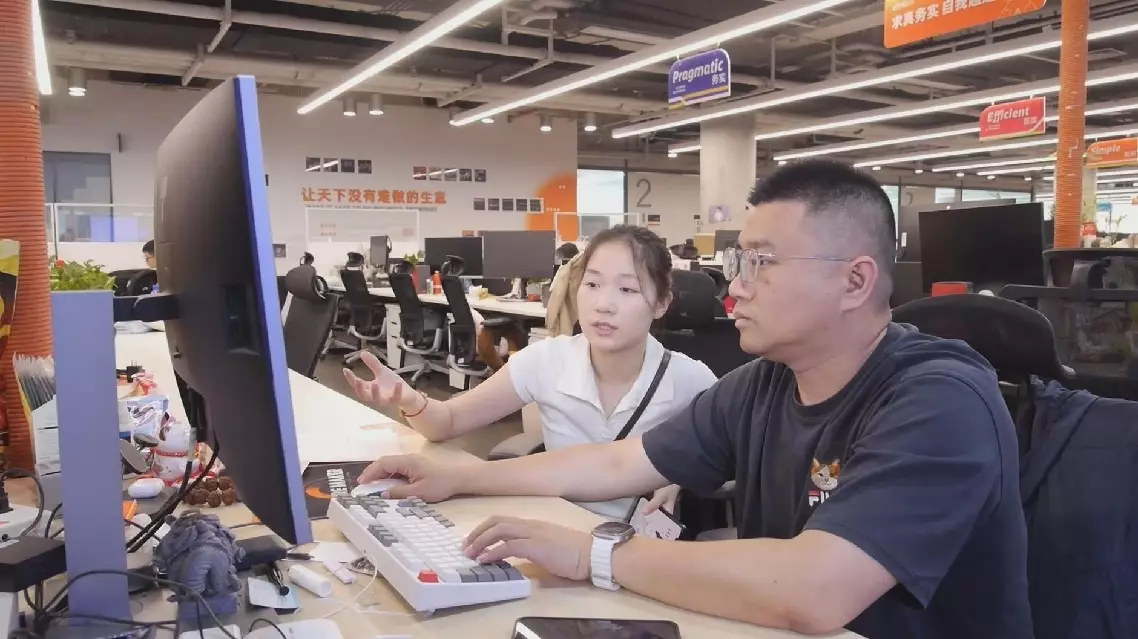
Chinese foreign trade enterprises embrace cross-border e-commerce, AI for market expansion