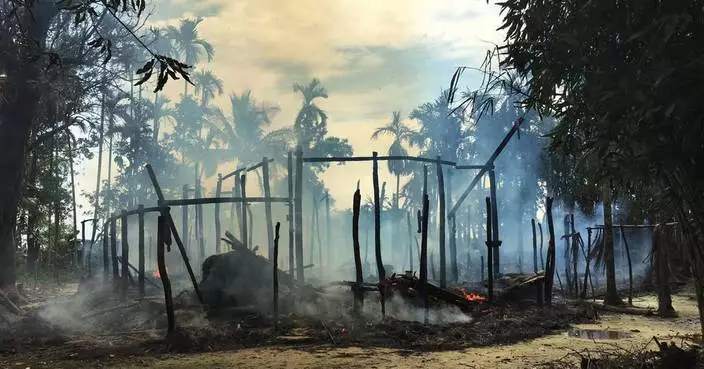
ABUJA, Nigeria (AP) — A resurgence of Boko Haram attacks is shaking Nigeria’s northeast, as Islamic extremists have repeatedly overrun military outposts, mined roads with bombs and raided civilian communities since the start of the year, raising fears of a possible return to peak Boko Haram-era insecurity despite the military's claims of successes.
Boko Haram, Nigeria’s homegrown jihadis, took up arms in 2009 to fight Western education and impose their radical version of Islamic law. The conflict has spilled into Nigeria’s northern neighbors and resulted in the death of around 35,000 civilians and the displacement of more than 2 million others, according to the United Nations.
Click to Gallery
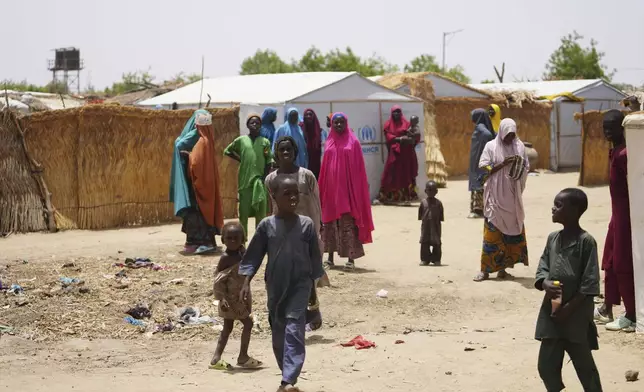
Women and children displaced by Boko haram attacks are seen outside there camp in Dikwa, north east Nigeria, April 29, 2025. (AP Photo/Sunday Alamba)
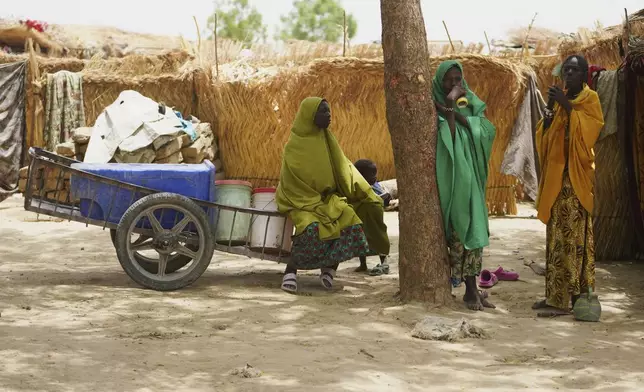
Women displaced by Boko haram attacks are seen outside there camp in Dikwa, north east Nigeria, April 29, 2025. (AP Photo/Sunday Alamba)
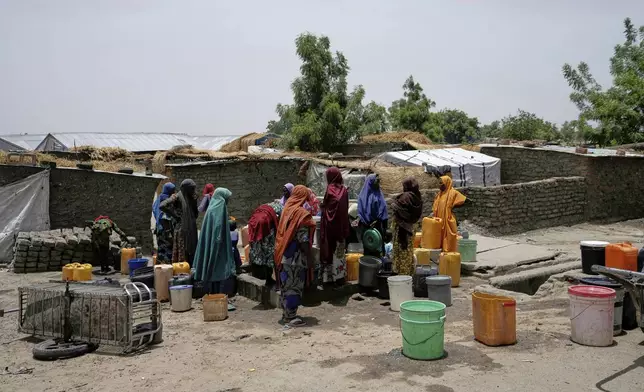
FILE- Women displaced from Boko Haram attacks fetch water from a borehole in Dikwa, north east Nigeria, April 29, 2025. (AP Photo/Sunday Alamba, File)
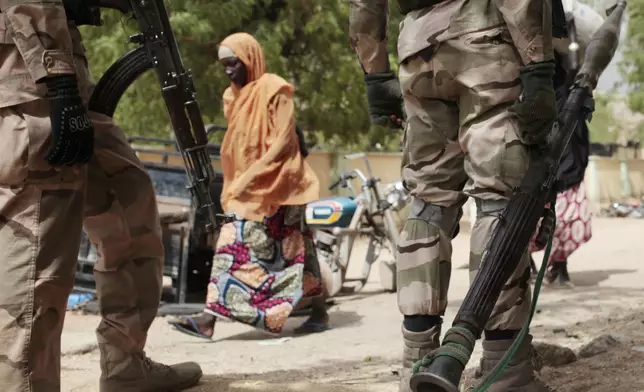
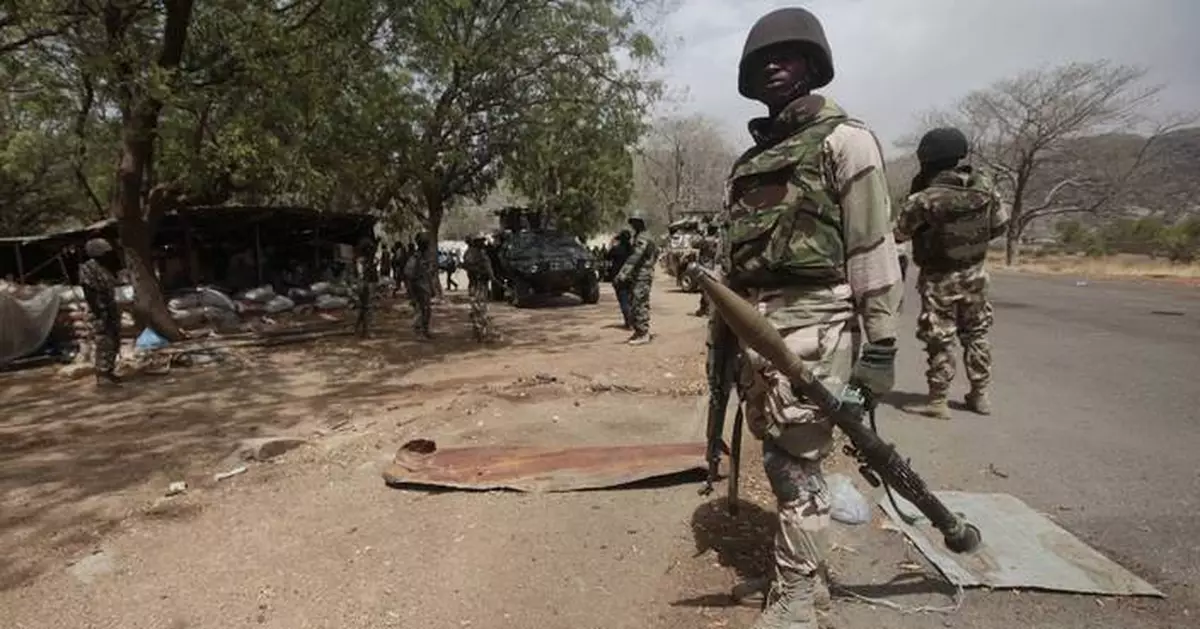
FILE - A woman walks past Nigerian soldiers at a checkpoint in Gwoza, northeast, Nigeria, April 8, 2015. (AP Photo/Lekan Oyekanmi, File)
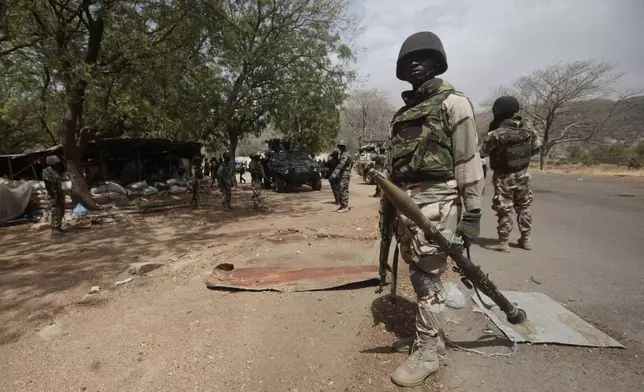
FILE - Nigerian soldiers man a checkpoint in Gwoza, northeast, Nigeria, April 8, 2015. (AP Photo/Lekan Oyekanmi, File)
In the latest attack last week in the village of Gajibo in Borno state, the epicenter of the crisis, extremists killed nine members of a local militia that supports the Nigerian military, after soldiers deserted the base when becoming aware of the insurgents’ advance, according to the group’s claim and local aid workers. That is in addition to roadside bombs and deadly attacks on villages in recent months.
Nyelni Kwari's area of Borno, Hawul, includes some of the affected villages, and returning home has become unsafe. “Unfortunately, the situation hasn't improved for me to feel secure,” said Kwari, a graduate student in Borno's capital, Maiduguri.
Boko Haram has split into two factions over the years.
One is backed by the Islamic State group and is known as the Islamic State West Africa Province, or ISWAP. It has become notorious for targeting military positions and has overrun the military on at least 15 occasions this year, killing soldiers and stealing weapons, according to an Associated Press count, experts and security reports.
In May, ISWAP struck outposts in Gajibo, Buni Gari, Marte, Izge and Rann and launched an assault on the Nigeria-Cameroon joint base in Wulgo and Soueram in Cameroon. Other attacks this year have hit Malam Fatori, Goniri, Sabon Gari, Wajiroko and Monguno, among others. The group often attacks at night.
The other faction, Jama’atu Ahlis Sunna Lidda’awati wal-Jihad, or JAS, has increasingly resorted to attacking civilians and perceived collaborators, and thrives on robberies and abductions for ransom.
Malik Samuel, senior researcher at nonprofit Good Governance Africa, said ISWAP’s success is a result of its territorial expansion following gains against rival JAS as well as a decentralized structure that has enhanced its ability to conduct “coordinated, near-simultaneous attacks across different regions.”
“The unpredictability of attacks under this framework illustrates ISWAP’s growing strategic sophistication,” Samuel said.
External support from IS in Iraq and Syria is also a critical resource, said Samuel, who has interviewed ex-fighters. Such support is evident in ISWAP’s evolving tactics, including nighttime raids, rapid assaults with light but effective weaponry and the use of modified commercial drones to drop explosives, Samuel said.
Ali Abani, a local nonprofit worker familiar with military operations in Borno's strategic town of Dikwa, said army bases are understaffed and located in remote areas, making them vulnerable to attacks.
"When these gunmen come, they just overpower the soldiers,” Abani said.
Reinforcements, in the form of air support or nearby ground troops, are often too slow to arrive, allowing militants time to strip the outposts of weapons needed to bolster their arsenal, he added, recalling a May 12 attack during which soldiers fled as they were outnumbered, leaving the extremists to cart away weaponry.
There also have been reports of former militants who continued to work as informants and logistics handlers after claiming to have repented.
At its peak in 2013 and 2014, Boko Haram gained global notoriety after kidnapping 276 Chibok schoolgirls and controlling an area the size of Belgium.
While it has lost much of that territory because of military campaigns, the new surge in Boko Haram attacks has raised fears about a possible return to the gloomy past.
Borno Gov. Babagana Zulum warned recently of lost gains after raising concerns that military formations in the state are being dislodged “almost on a daily basis without confrontation.”
Federal lawmakers highlight the extremists' growing sophistication and advanced weaponry, calling on the government to bolster military capabilities.
The Nigerian military didn't respond to a request for comment.
Last Friday, senior commanders visited one troubled area, Gamboru on the border with Cameroon, promising the deployment of more troops to combat Boko Haram.
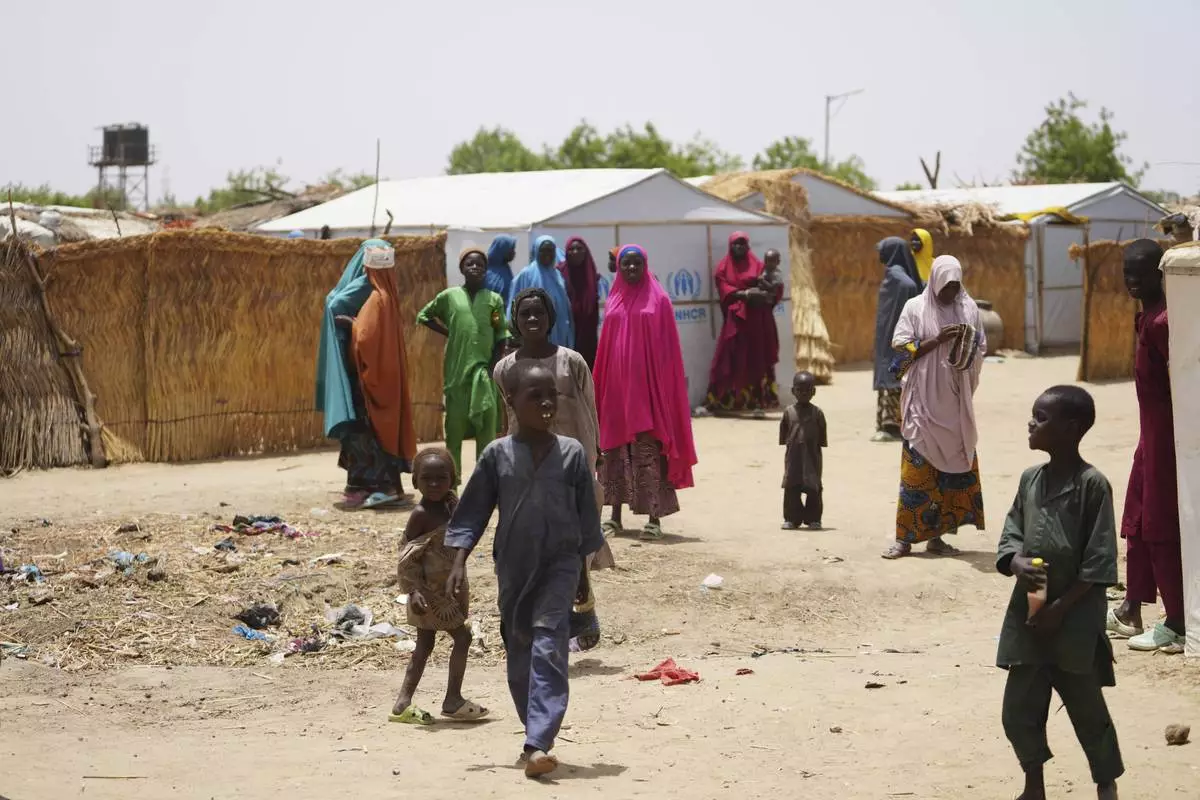
Women and children displaced by Boko haram attacks are seen outside there camp in Dikwa, north east Nigeria, April 29, 2025. (AP Photo/Sunday Alamba)
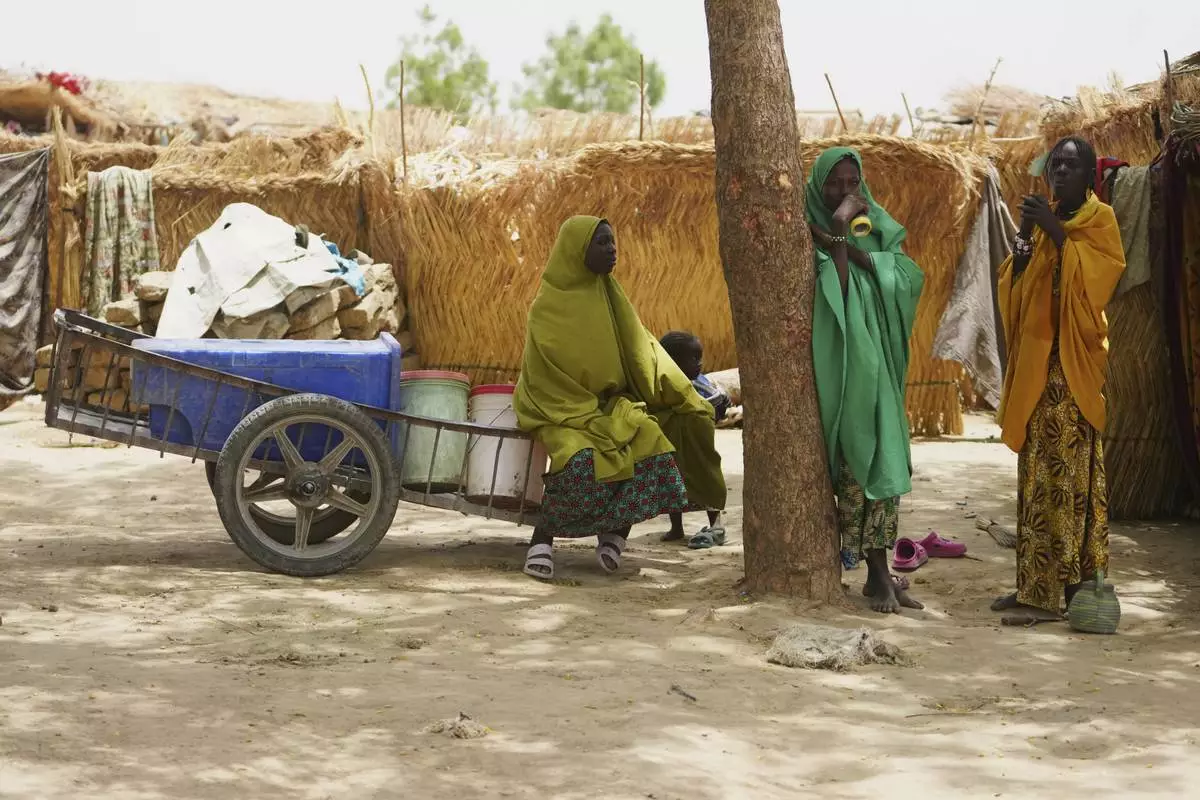
Women displaced by Boko haram attacks are seen outside there camp in Dikwa, north east Nigeria, April 29, 2025. (AP Photo/Sunday Alamba)
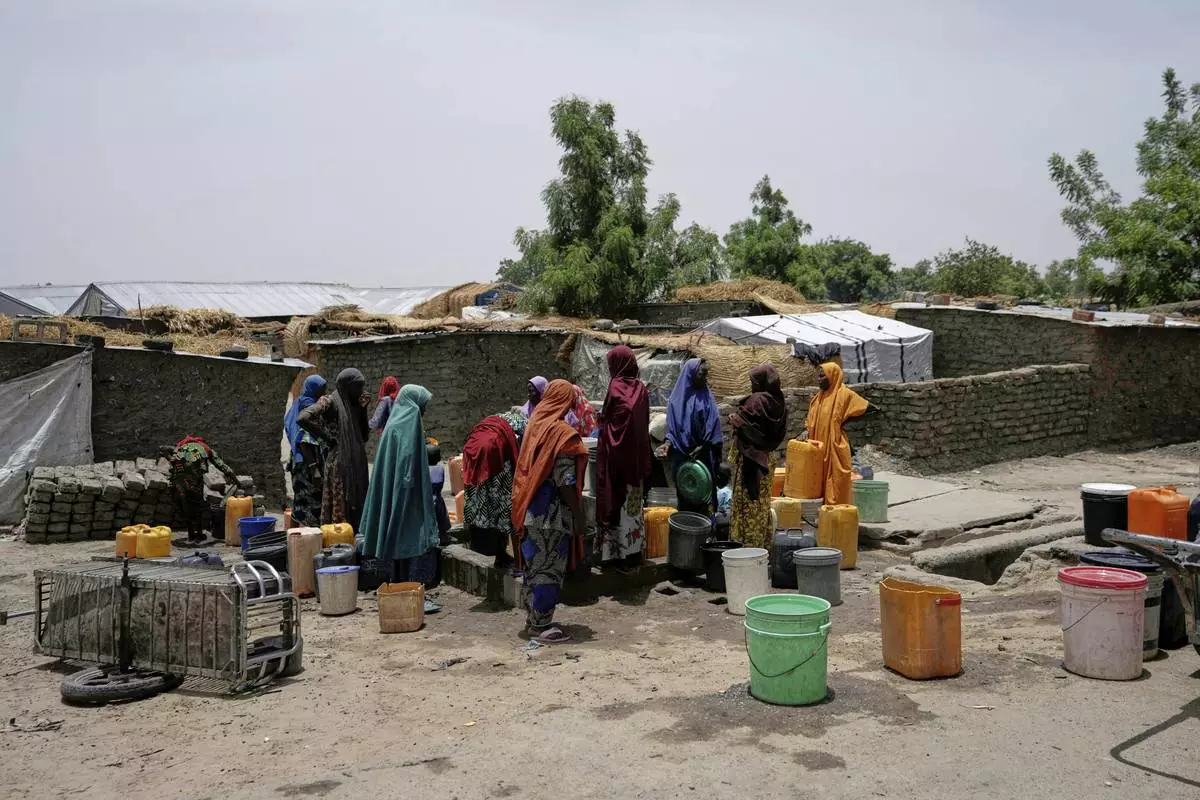
FILE- Women displaced from Boko Haram attacks fetch water from a borehole in Dikwa, north east Nigeria, April 29, 2025. (AP Photo/Sunday Alamba, File)
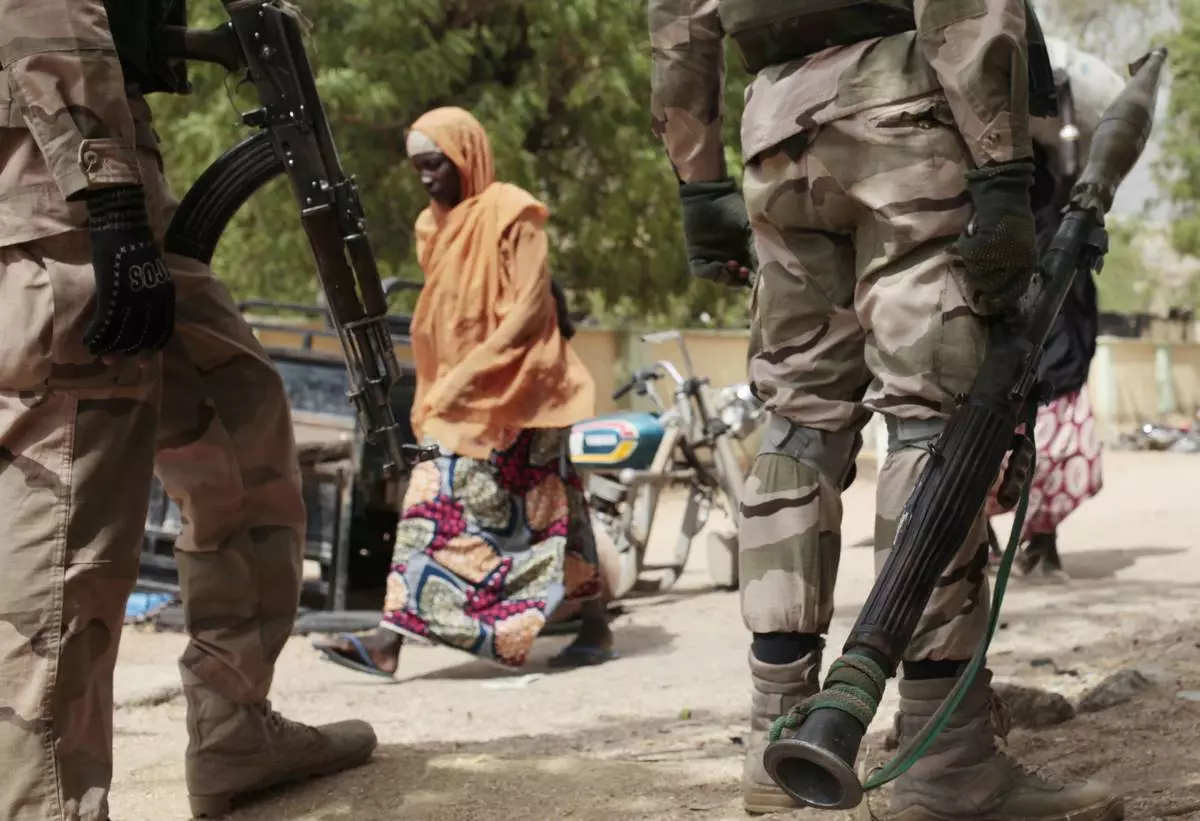
FILE - A woman walks past Nigerian soldiers at a checkpoint in Gwoza, northeast, Nigeria, April 8, 2015. (AP Photo/Lekan Oyekanmi, File)
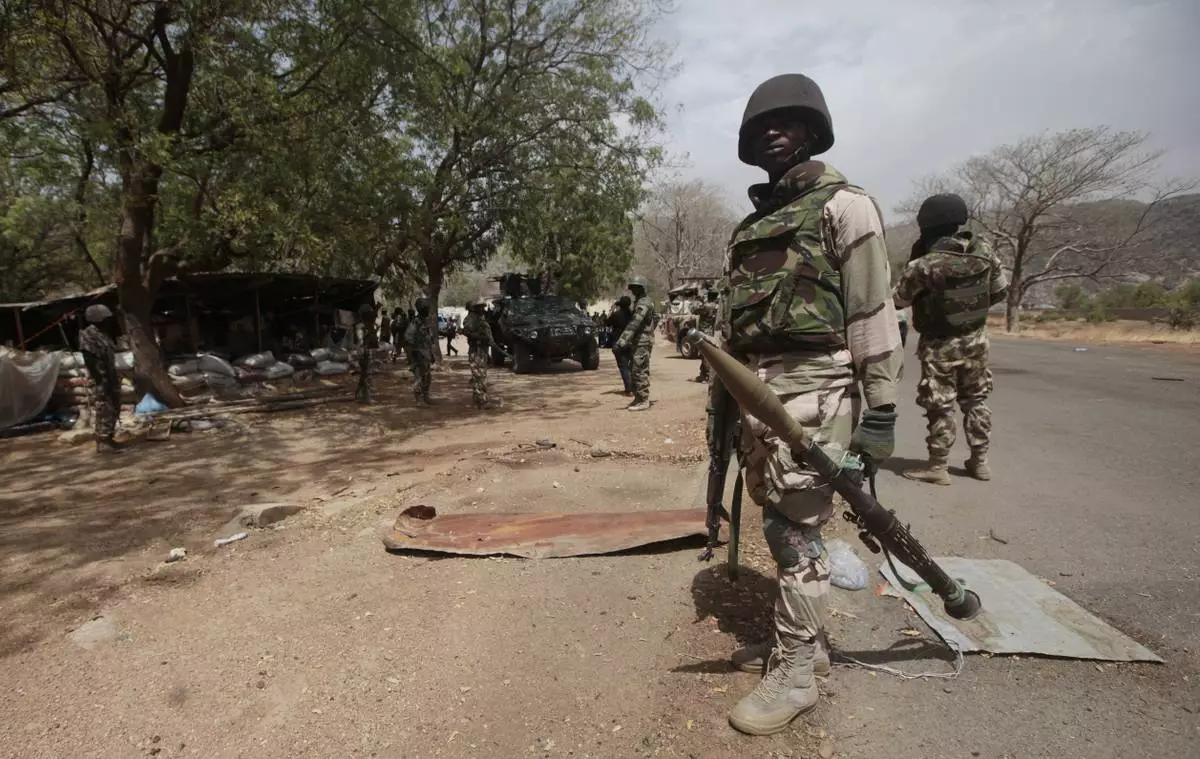
FILE - Nigerian soldiers man a checkpoint in Gwoza, northeast, Nigeria, April 8, 2015. (AP Photo/Lekan Oyekanmi, File)