
PARIS (AP) — France’s lower house of parliament adopted a bill Tuesday to allow adults with incurable illness to take lethal medication, as public demands grow across Europe for legal end-of-life options.
The National Assembly vote is a key step on the long-debated issue, though others remain before the bill can become law.
“I’m thinking of all the patients and their loved ones that I’ve met over more than a decade. Many are no longer here, and they always told me: Keep fighting," said Olivier Falorni, the bill's general rapporteur, amid applause from fellow lawmakers.
The proposed measure on lethal medication defines assisted dying as allowing use under certain conditions so that people may take it themselves. Only those whose physical condition doesn’t allow them to do it alone would be able to get help from a doctor or a nurse.
The bill, which received 305 votes in favor and 199 against, will be sent to the Senate, where the conservative majority could seek to amend it. A definitive vote on the measure could take months to be scheduled amid France’s long and complex process. The National Assembly has final say over the Senate.
Activists have criticized the complexity and length of the parliamentary process that they say is penalizing patients waiting for end-of-life options.
In parallel, another bill on palliative care meant to reinforce measures to relieve pain and preserve patients’ dignity was also adopted Tuesday, unanimously.
To benefit, patients would need to be over 18 and be French citizens or live in France.
A team of medical professionals would need to confirm that the patient has a grave and incurable illness “at an advanced or terminal stage,” is suffering from intolerable and untreatable pain and is seeking lethal medication of their own free will.
Patients with severe psychiatric conditions and neurodegenerative disorders such as Alzheimer’s disease won’t be eligible.
The person would initiate the request for lethal medication and confirm the request after a period of reflection. If approved, a doctor would deliver a prescription for the lethal medication, which could be taken at home or at a nursing home or a health care facility.
A 2023 report indicated that most French citizens back legalizing end-of-life options, and opinion polls show growing support over the past 20 years.
Initial discussions in parliament last year were abruptly interrupted by President Emmanuel Macron’s decision to dissolve the National Assembly, plunging France into a months-long political crisis.
“What a long road it has been, contrary to what the public thought, contrary to what the French people believed,” said Jonathan Denis, president of the Association for the Right to Die With Dignity (ADMD).
Earlier this month, Macron suggested he could ask French voters to approve the measure via referendum if parliament discussions get off track.
Macron on Tuesday called the vote an important step, adding on social media that "with respect for different sensibilities, doubts, and hopes, the path of fraternity I had hoped for is gradually beginning to open. With dignity and humanity.”
Many French people have traveled to neighboring countries where medically assisted suicide or euthanasia are legal.
Medically assisted suicide involves patients taking, of their own free will, a lethal drink or medication prescribed by a doctor to those who meet certain criteria. Euthanasia involves doctors or other health practitioners giving patients who meet certain criteria a lethal injection at their own request.
“I cannot accept that French men and women have to go to Switzerland — if they can afford it — or to Belgium to be supported in their choice, or that French men and women are being accompanied clandestinely in other countries," Denis said.
French religious leaders this month issued a joint statement to denounce the bill, warning about the dangers of an “anthropological rupture.” The Conference of Religious Leaders in France (CRCF), which represents the Catholic, Orthodox, Protestant, Jewish, Muslim and Buddhist communities, said the proposed measures risk exerting pressure on older people and those with illnesses or disabilities.
Assisted suicide is allowed in Switzerland and several U.S. states. Euthanasia is currently legal in the Netherlands, Spain, Portugal, Canada, Australia, Colombia, Belgium and Luxembourg under certain conditions.
In the U.K., lawmakers are debating a bill to help terminally ill adults end their lives in England and Wales after giving it initial approval in November.
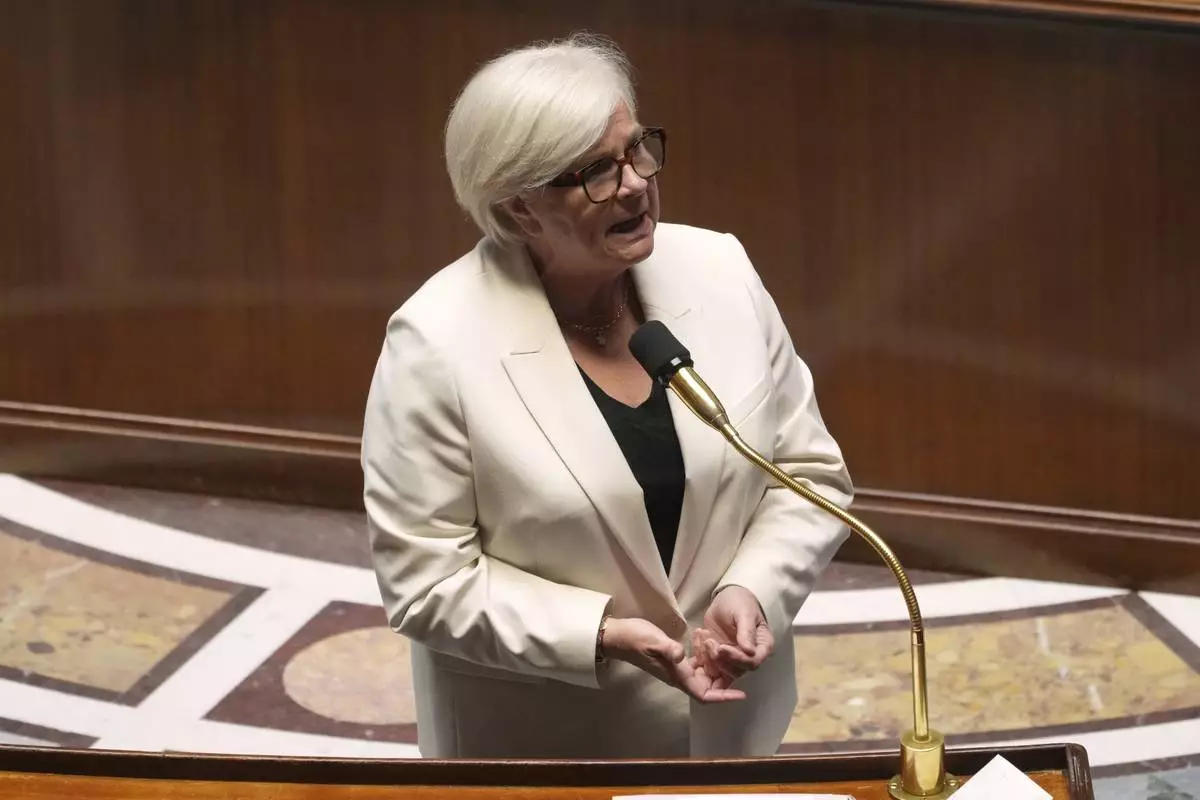
French Health Minister Catherine Vautrin speaks after France's lower house of parliament has adopted a bill to allow adults with incurable illness to take lethal medication, Tuesday, May 27, 2025 at the National Assembly in Paris. (AP Photo/Michel Euler)

A board shows the result after France's lower house of parliament has adopted a bill to allow adults with incurable illness to take lethal medication, Tuesday, May 27, 2025 at the National Assembly in Paris. (AP Photo/Michel Euler)

FILE - Lawmakers listen to French Prime Minister Francois Bayrou delivering his general policy speech, Jan. 14, 2025 at the National Assembly in Paris. (AP Photo/Thibault Camus, file)