WASHINGTON (AP) — Drones have harassed airports and bedeviled local police. They have trespassed over nuclear plants and prisons. On the battlefield, they can kill.
But aside from shooting down the devices, which may create further danger, there's often not much anyone can do to stop drones when they pose a threat or wander where they're not welcome.
That's beginning to change. Cheap and easily modified, unmanned aerial vehicles have become a part of daily life as well as a tool for governments and bad actors alike — used for intelligence gathering, surveillance, sabotage, terrorism and more. Concerns about their misuse have spurred a technological scramble for ways to stop the devices in midair.
“An adversary can use an off-the-shelf drone they bought for $500 and find out what’s going on at U.S. nuclear weapons bases," said Zachary Kallenborn, a London-based national security consultant and expert on drone warfare. “China, Russia, Iran: If they're not doing it they're stupid.”
Military drones are already potent weapons of war, used to track enemy movements and deliver attacks. But they have become an increasing threat at home, too. And anti-drone systems now hold significant promise for airports, water treatment plants, military installations and public events targeted by drones in recent years.
The rise in incidents involving unmanned aircraft — like the wave of sightings reported last year in New Jersey — has led to more research and investment into the most effective ways of countering drones, preferably while preventing injuries to those below.
Some systems work by firing a projectile to destroy it. Others jam the radio frequencies used to control the drones, causing them to land in place or fly back to their origin. Another approach uses other drones to fire nets at the offending devices.
All the techniques have their strengths and weaknesses.
Jamming a drone is highly effective and relatively easy from a technical standpoint. But it’s a blunt tool — jamming not just the drone's signal but other electromagnetic signals used by telephones, emergency responders, air traffic control and the internet.
The most basic anti-drone measures are called kinetic defenses, which involve shooting a missile, bullet, net or other projectile at the device to destroy or disable it.
Kinetic systems can be risky, however, by creating the threat that debris could fall on people or property or that a missile fired at unmanned aircraft could miss and hit civilians instead. In 2022, for instance, 12 people were injured in Saudi Arabia when they were hit by debris after authorities took down a drone launched by Houthi rebels near the Yemen border.
The Israeli firm D-Fend Solutions created a system it calls EnforceAir that allows the operator to hack into an adversarial drone and take over its controls. The equipment looks like a large computer router and can be set up on a tripod or a vehicle or carried in a backpack.
Like other anti-drone systems, D-Fend's product also detects any drones entering a predetermined area, allowing the operator to permit friendly devices to fly through while disabling others.
In a demonstration of the technology in an empty athletic field in suburban Washington, the system quickly hijacked a drone operated by one of D-Fend's technicians as it entered an area being monitored.
“We detect the drone, we take control and we land it,” said Jeffrey Starr, the company’s chief marketing officer.
Landing the aircraft safely allows authorities to study the device — a critical benefit to law enforcement or national security investigations. It also allows the drone to be given back to its owner in the case of harmless mistakes involving hobbyists.
Anti-drone systems that involve hacking the invading aircraft may not work on military drones, however, as they come equipped with greater cyberdefenses.
National security experts predict that a variety of techniques to counter drones could soon become commonplace, used to protect sensitive buildings, pipelines, ports and public areas. But before that can happen, federal laws must catch up to the threat.
“Most of the laws we're dealing with were written for manned aviation,” said DJ Smith, senior technical surveillance agent with the Virginia State Police's Bureau of Criminal Investigations.
Smith, who oversees his department’s use of drones, said any new federal rules should come with a public awareness campaign so hobbyists and commercial drone users understand the law and the responsibilities of using a drone. Authorities also need greater powers to use systems to track suspicious drones, he said, and take action against them when they pose a threat.
“We want to detect, we want to track, we want to identify,” Smith said.
Federal law currently restricts how local and state police can use anti-drone systems. Some lawmakers are pushing to change that.
“It is paramount that our state and local law enforcement agencies are able to be granted the proper authority to protect citizens at large events and gatherings,” said Rep. Cory Mills, a Florida Republican and a sponsor of legislation designed to make it easier for local authorities to use technology to counter drones at large public events.
The bill, introduced this month, would give local law enforcement the ability to use anti-drone systems that have been approved by the Department of Homeland Security, the Federal Aviation Administration and other agencies.
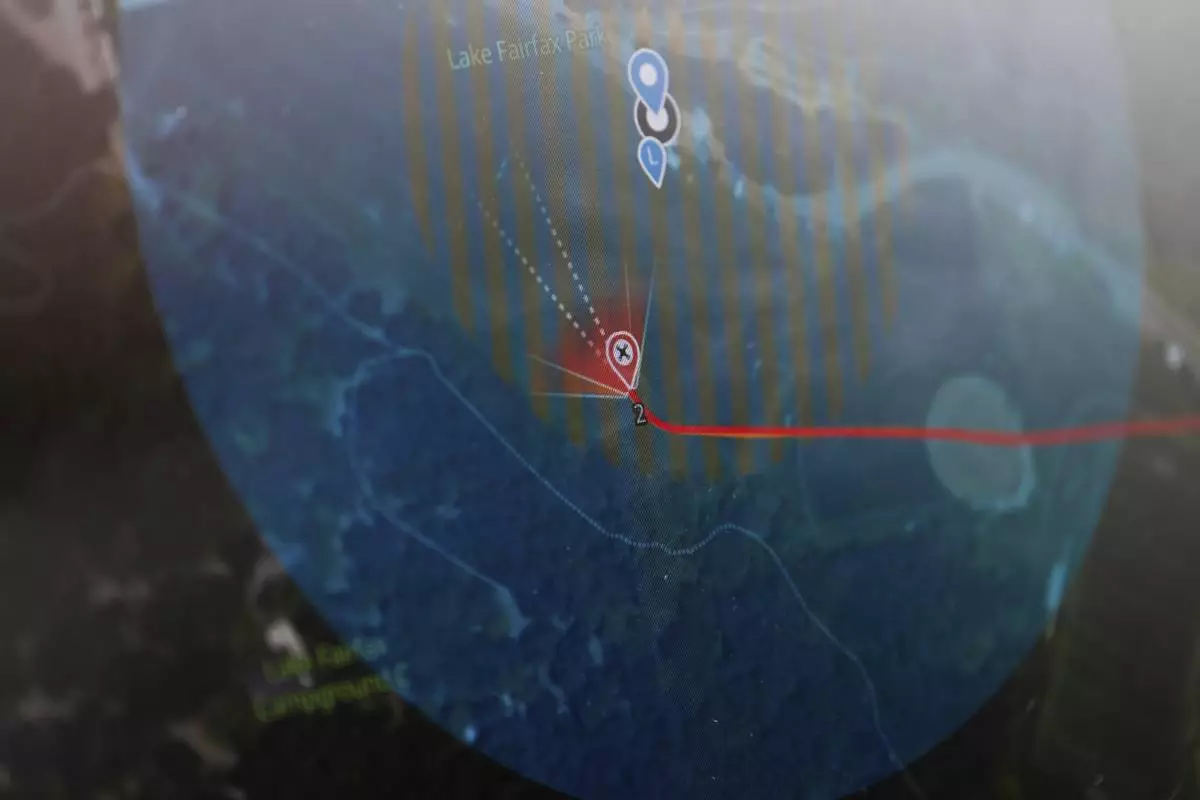
D-Fend Solutions counter drone technology is demonstrated, Wednesday, May 14, 2025, in Reston, Va. (AP Photo/Julia Demaree Nikhinson)
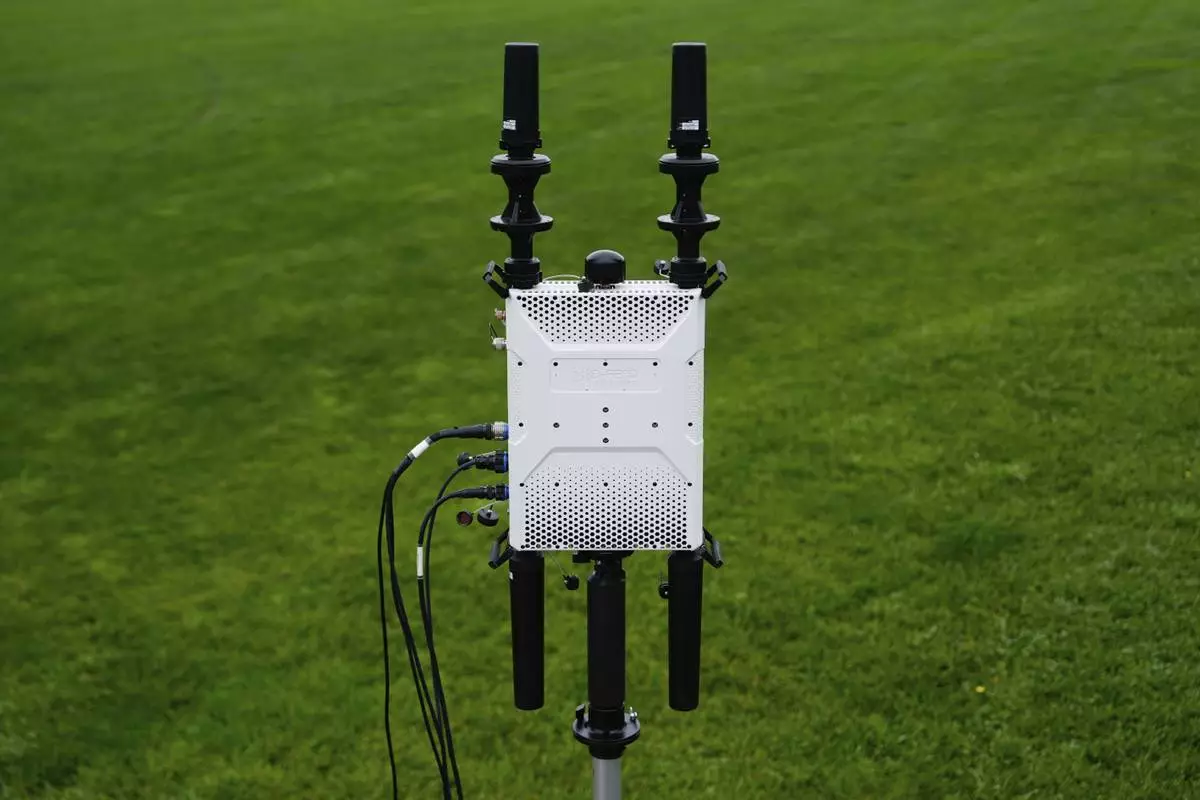
D-Fend Solutions counter drone technology is demonstrated, Wednesday, May 14, 2025, in Reston, Va. (AP Photo/Julia Demaree Nikhinson)
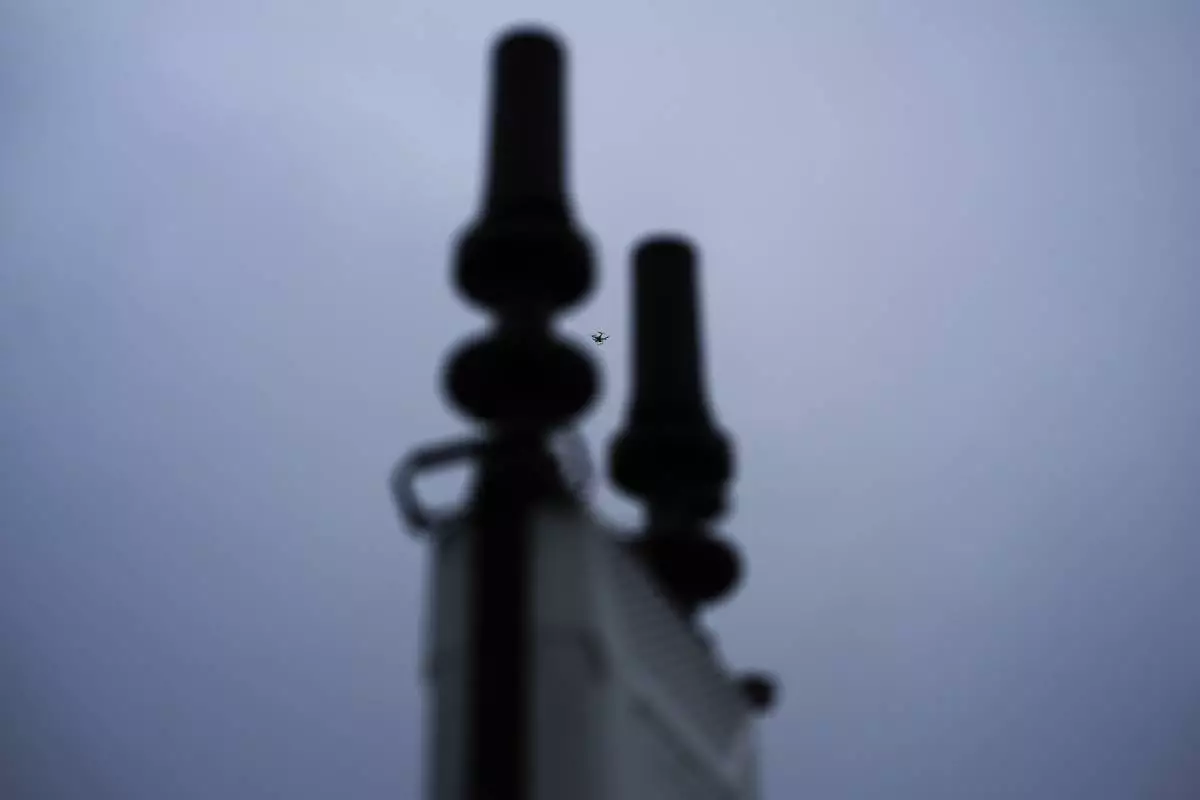
D-Fend Solutions counter drone technology is demonstrated, Wednesday, May 14, 2025, in Reston, Va. (AP Photo/Julia Demaree Nikhinson)