Remarks at question and answer session of Working Group on Promoting Silver Economy press conference
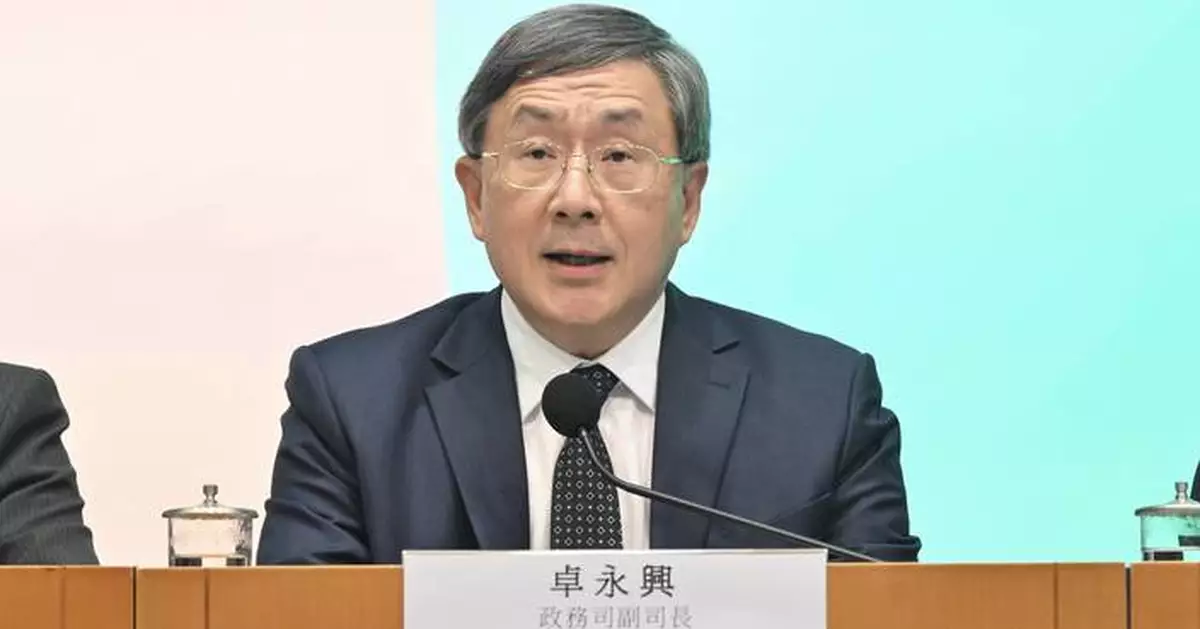
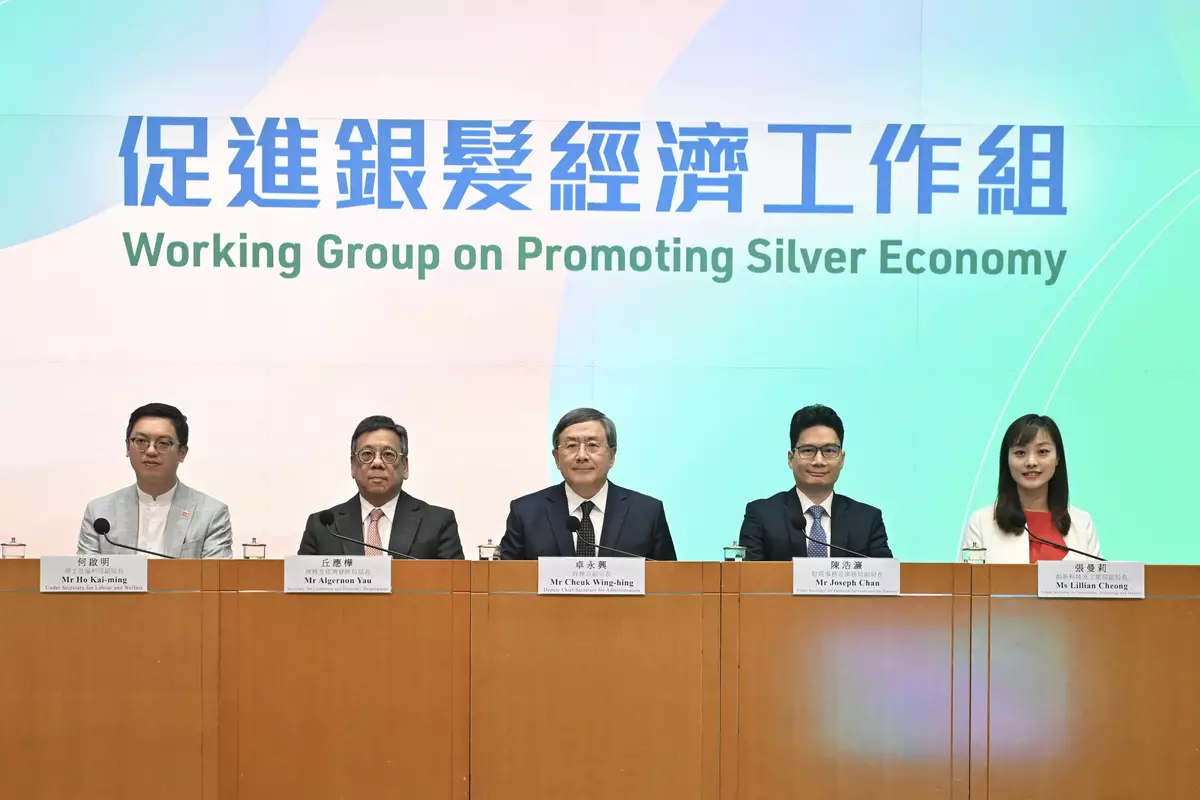
The Deputy Chief Secretary for Administration, Mr Cheuk Wing-hing, held a press conference today (May 27) on measures to be implemented by the Working Group on Promoting Silver Economy together with the Secretary for Commerce and Economic Development, Mr Algernon Yau; the Under Secretary for Financial Services and the Treasury, Mr Joseph Chan; the Under Secretary for Labour and Welfare, Mr Ho Kai-ming; and the Under Secretary for Innovation, Technology and Industry, Ms Lillian Cheong. Following are Mr Cheuk’s remarks at the question and answer session:
Reporter: Some English questions. First, because you mentioned that the Government will encourage post-50s to rejoin the labour market, do you have a target of how many more people above 50 will be rejoining the workforce, and what kinds of jobs or industries should attract the most of these people? And the second question, given the current economic situation of Hong Kong, how do you expect these measures to contribute to the economy and the GDP? And when will you review your measures? Thank you.
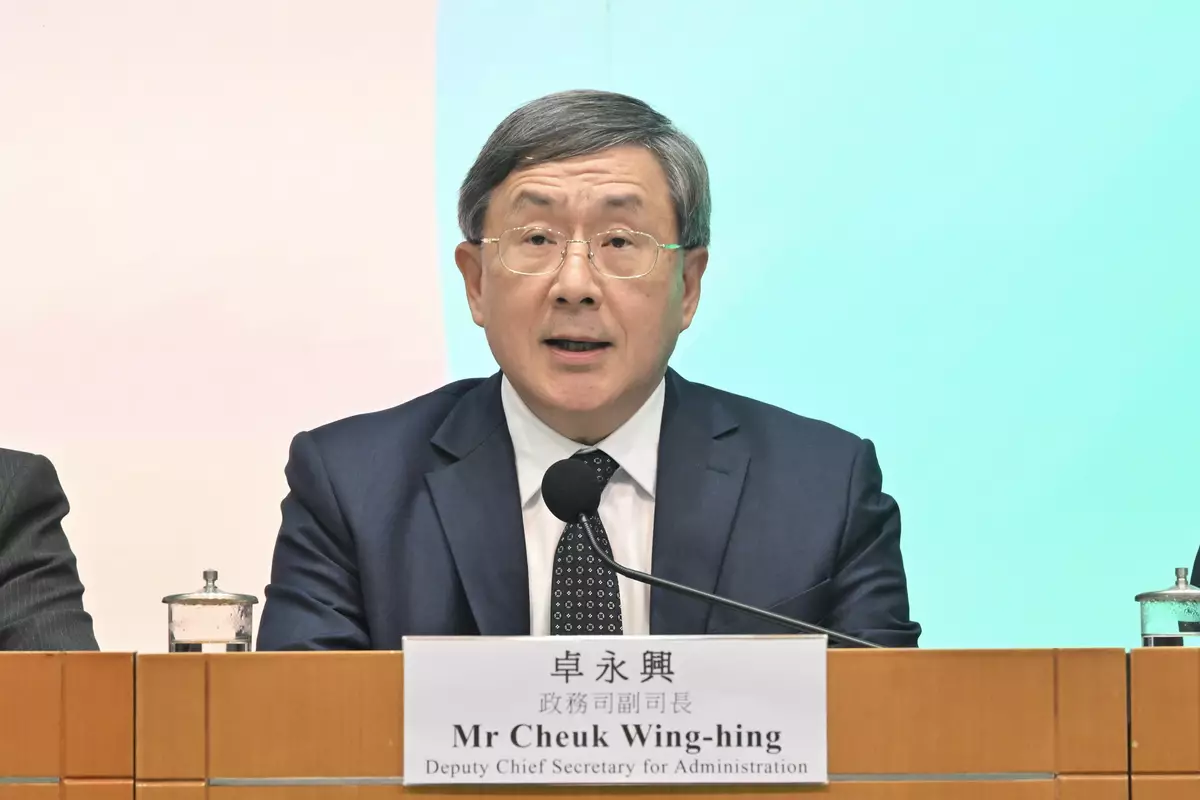
Deputy Chief Secretary for Administration: I take your questions briefly, and then I see if other colleagues may have anything to supplement. On the possible addition to the labour force, in 2024, the labour participation rate of Hong Kong people above the age of 60 is about 23.7 per cent, while the overall - if you take the whole Hong Kong workforce into account – the labour participation rate is 54.7 per cent. If you look at the figure in 2025 this year, the first quarter, the figure I gave you just now was relating to people above the age of 60, which could go up to as high as 70-something, 80-something. But if you zoom in on the age bracket of 60 to 69, the labour participation rate in the first quarter of 2025 is 38.8 per cent. If you look at the overall labour participation rate and the labour participation rate of this age bracket, it will give you a differential of about 16 per cent. Theoretically, that is the number that we can go for.
Your second question is about how our measures would contribute to GDP growth. I mentioned this in the reply to an earlier question. I think instead of setting a KPI, which actually is not appropriate for this kind of programme, which involves implementation by many outside parties, and the result of which is rather beyond the control of the administration, I think it is more realistic or instructional to look at what we are talking about in terms of what the magnitude of the silver economy is. Worldwide, the practice to measure silver economy is to look at the consumption of the elderly. In 2024, the elderly spending of people aged 60 and above amounted to $342 billion, and in 10 years' time, it is predicted to grow to $496 billion, that is the kind of magnitude of silver spending. If we can achieve a 5 per cent growth a year, say if we just take the first year as an illustration, that would amount to $17 billion, which is quite substantial.
(Please also refer to the Chinese portion of the remarks.)
Remarks at question and answer session of Working Group on Promoting Silver Economy press conference Source: HKSAR Government Press Releases
Remarks at question and answer session of Working Group on Promoting Silver Economy press conference Source: HKSAR Government Press Releases
SITI visits Guangxi
The Secretary for Innovation, Technology and Industry, Professor Sun Dong, visited Nanning in Guangxi today (January 14).
This morning, Professor Sun called on the Secretary of the CPC Guangxi Zhuang Autonomous Region Committee and Director of the Standing Committee of the Guangxi Zhuang Autonomous Regional People's Congress, Mr Chen Gang, and learned that Guangxi is accelerating the high-quality development of artificial intelligence and building an industrial co-operation highland for the AI industry facing the Association of Southeast Asian Nations (ASEAN). They also had exchanges and in-depth discussions on further strengthening the co-operation and synergistic development between Hong Kong and Guangxi in various areas including AI, innovation and technology (I&T) parks, data infrastructure, data governance, and nurturing talent. Member of the Standing Committee of the CPC Guangxi Zhuang Autonomous Region Committee and Vice Chairman of the People's Government of the Autonomous Region Ms Lu Xinning also attended the meeting.
Professor Sun said Hong Kong will fully leverage its distinctive advantage of having strong support from the motherland and a close connection with the world. Through complementary co-operation and synergistic development, Hong Kong and Guangxi will explore co-operation between the two places and with ASEAN countries in industries such as AI and the digital economy.
Professor Sun then met with Member of the Standing Committee of the CPC Guangxi Zhuang Autonomous Region Committee and the Secretary of the CPC Nanning Municipal Committee, Mr Xu Yongguo, to exchange views on I&T co-operation between Hong Kong and Nanning.
Professor Sun visited the Display Center of the China-ASEAN Countries Artificial Intelligence Application Cooperation Center and toured its display hall. The Center is an AI co-operation platform, jointly established by the Guangxi Zhuang Autonomous Region and ASEAN countries, which aims to promote regional co-operation in AI technologies and the digital transformation of industries. The center is also an industrial highland facing ASEAN.
He was briefed on the Center's construction and operation, as well as its co-operation with ASEAN countries. He also observed the AI+ industries and application scenarios, including industrialisation and social governance, and exchanged views on the co-operation model of research and development, integration in Guangxi, and applications in ASEAN.
Professor Sun also visited the exhibition centre of the China-ASEAN Information Harbor and the Beibu Gulf Big Data Exchange Center and studied the collaboration in AI between Guangxi and ASEAN countries, as well as the development and transaction of data products. He also learned about the cross-boundary data flow channels and industrial Internet platforms, the construction of the Digital Silk Road, and co-operation with the ASEAN market.
Professor Sun then visited the China-ASEAN Geographic Information Town to study the industrial applications of technologies, such as satellite navigation and geographic information, in the fields of smart city, cross-boundary logistics, and so on.
Meanwhile, Professor Sun visited the China-ASEAN Mercantile Exchange (China-Singapore Nanning International Logistics Park) to learn about the operation of the large-scale cross-boundary integrated logistics park and one-stop trade platform that integrates functions including production, warehousing, logistics, exhibition, commerce and finance. He also studied the international co-operation between ASEAN countries and Guangxi through the Western New Land-Sea Corridor.
Upon his arrival in Nanning, Guangxi yesterday, Professor Sun immediately met with Deputy Secretary-General of the People's Government of the Guangxi Zhuang Autonomous Region, Party Secretary and Director of the Guangxi Big Data Development Bureau Mr Zhao Zhigang, to have an in-depth exchange on issues including the promotion of data sharing, smart city development, and co-operation in digital industry.
The Chief Executive Officer of Hong Kong Cyberport Management Company Limited, Dr Rocky Cheng, also joined the visit.
Professor Sun will continue his visit tomorrow. He will visit a digital intelligent operations and maintenance service provider and its intelligent computing centre to learn about the service provider's latest achievements in AI and computing power, digital intelligence technology and products. He will also visit the China Mobile Group Guangxi Company to conduct studies on the planning of its infrastructure in computing power and its AI industry large models.
Professor Sun will conclude his visit before noon and return to Hong Kong.
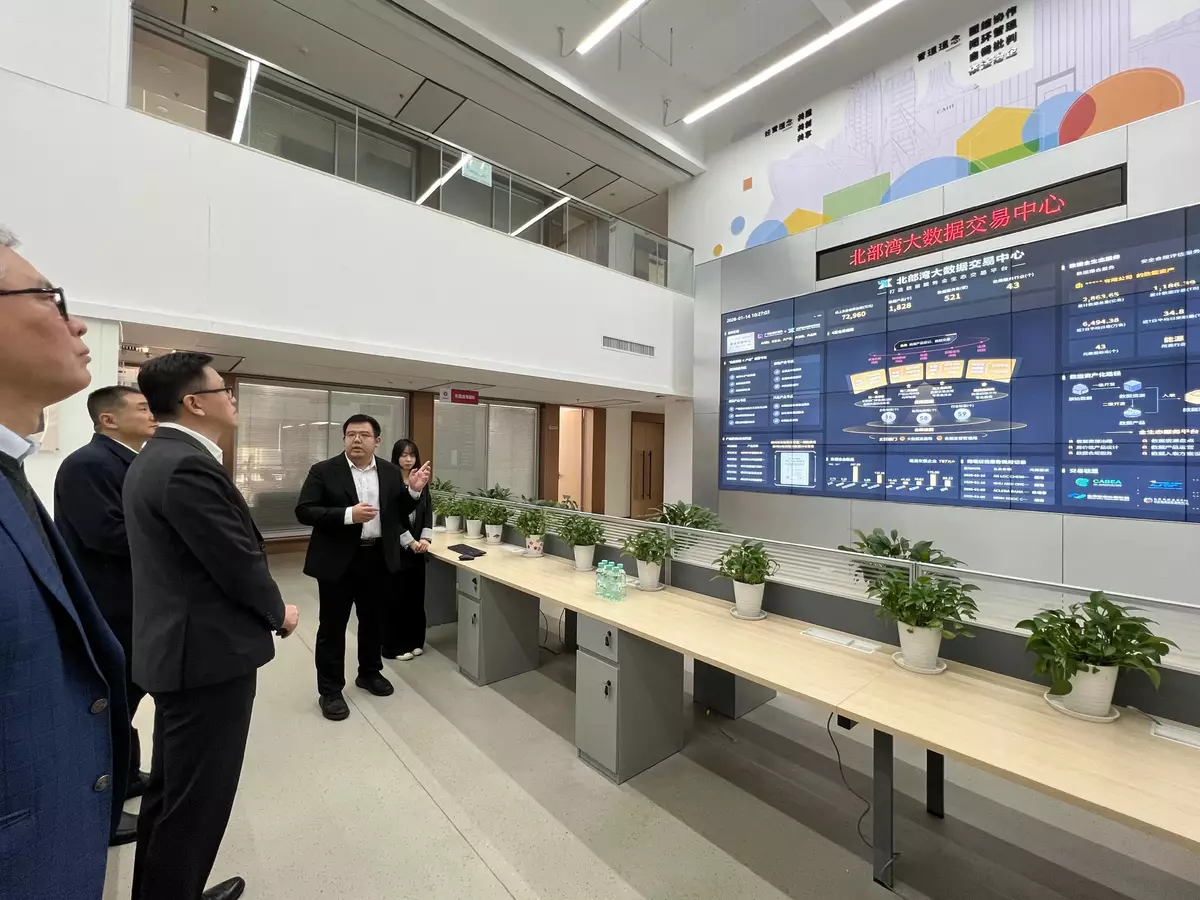
SITI visits Guangxi Source: HKSAR Government Press Releases
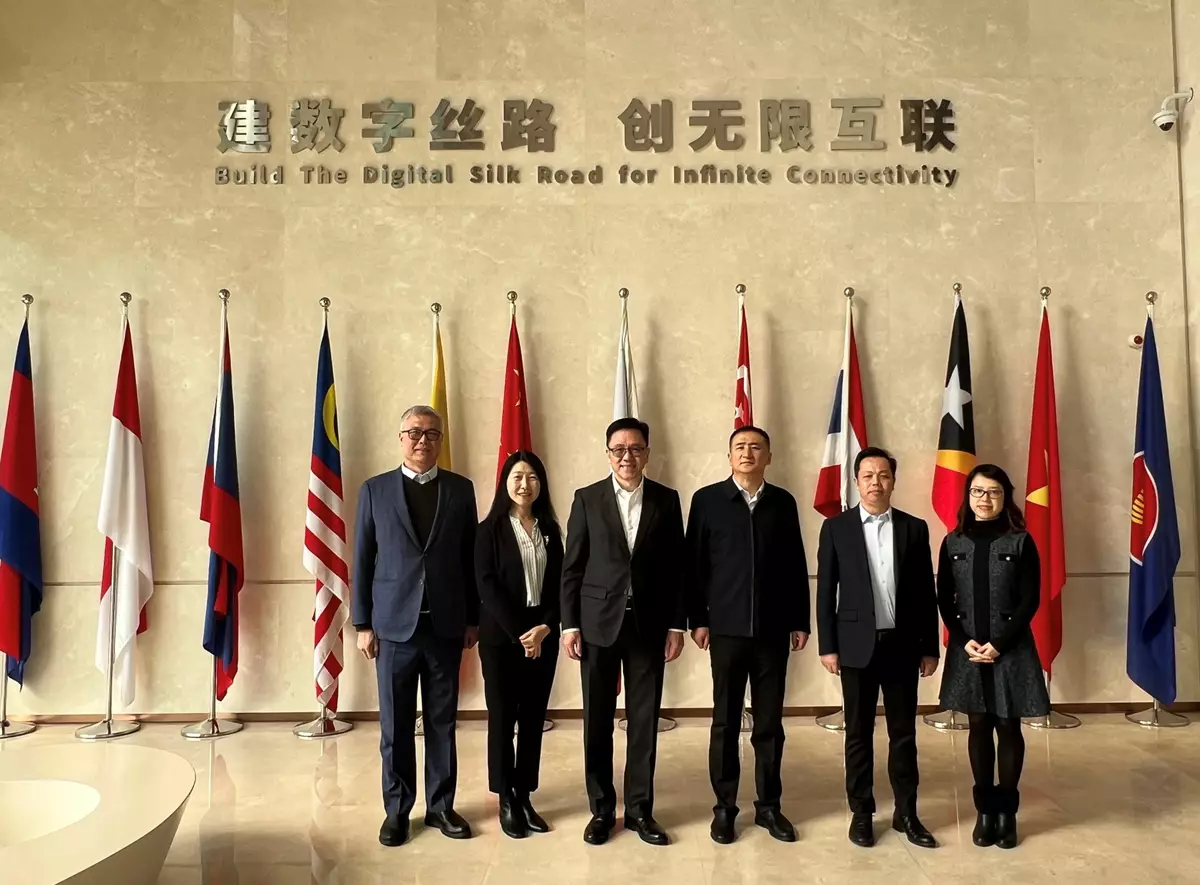
SITI visits Guangxi Source: HKSAR Government Press Releases
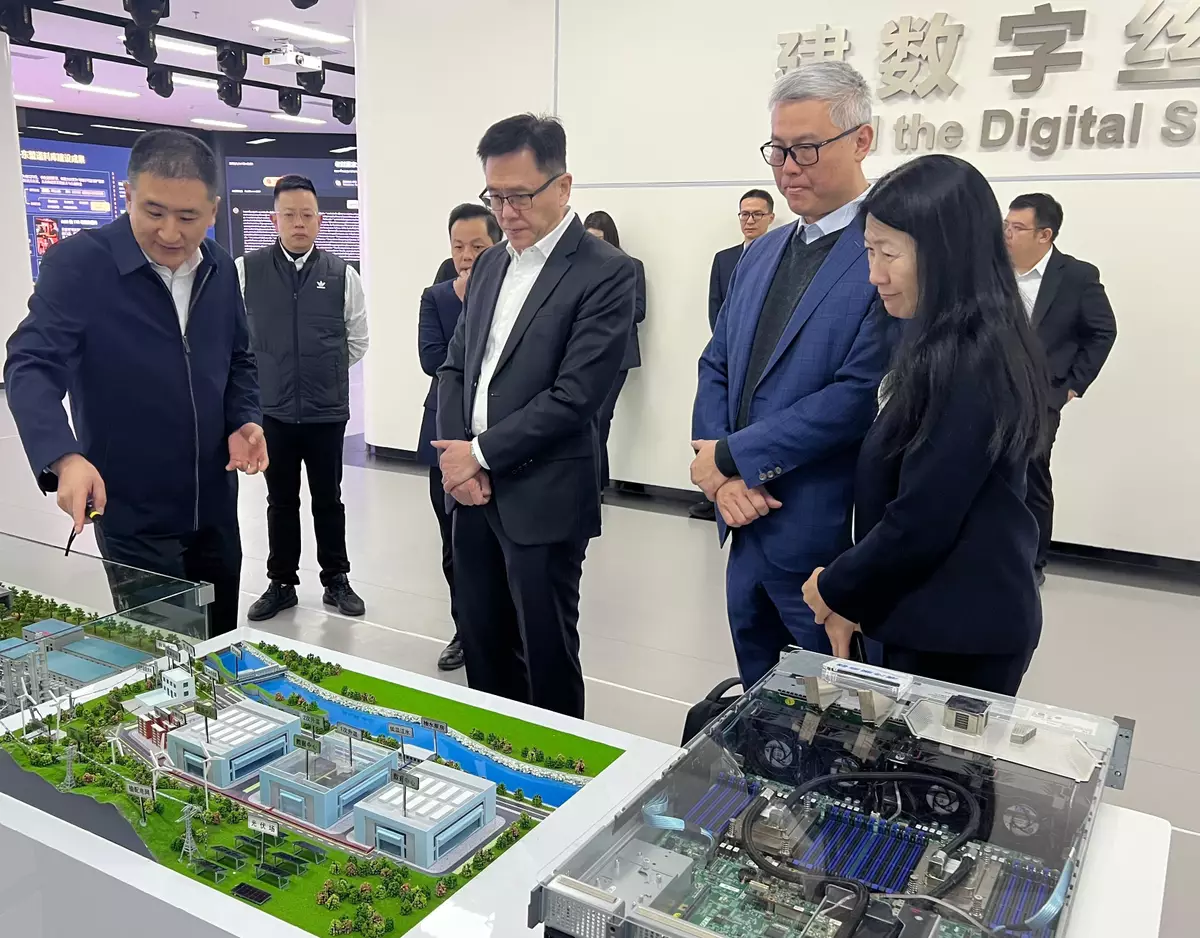
SITI visits Guangxi Source: HKSAR Government Press Releases