China released several significant findings in the field of scientific archaeology and cultural heritage preservation in Beijing. Among the highlights was the restoration of an ancient gold crown, which showcased the perfect integration of modern technology and traditional skills in advancing cultural relic preservation.
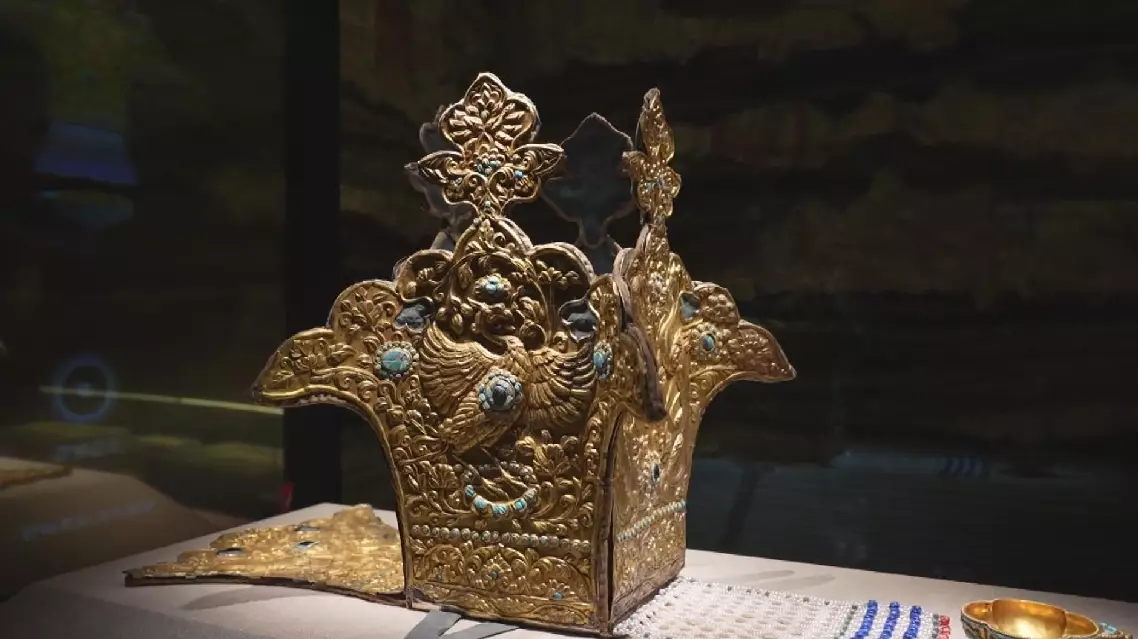
The gold crown, unearthed in northwest China's Qinghai Province, dates back to the early 8th century AD. Upon its excavation in 2019, the crown had suffered severe corrosion and cracking, losing its original form.
However, after nearly two years of meticulous restoration efforts, the crown has been restored to its former glory, with almost no visible traces of repair.
This marks the first successful restoration in China of a crown from the Tibetan Tubo Kingdom (618-842 AD), featuring a highly complex and intricate design.
The restoration process posed significant challenges due to the crown's collapse and disintegration upon being unearthed. The initial task for archaeologists was to restore the metal's structural integrity.
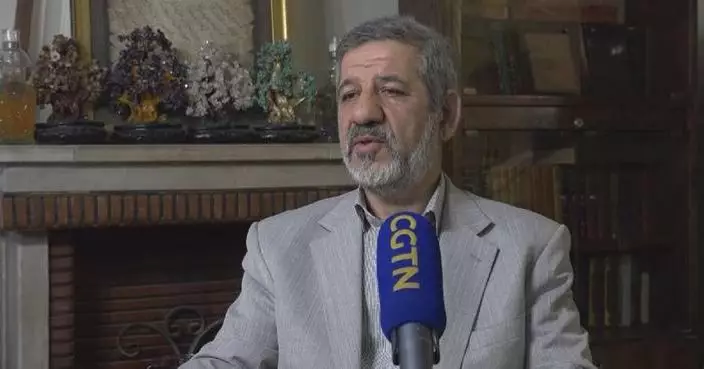
"We applied a domestically developed heat treatment and annealing method to re-crystallize the base metal of the crown. This process restored its mechanical strength, allowing us to reshape the crown," said Huang Xi, assistant researcher at the key laboratory on archaeological sciences and cultural heritage protection, the Chinese Academy of Social Sciences (CASS).
Through metallographic analysis and scanning electron microscopy, it was discovered that the gold sheets on the crown were only 200 microns thick, equivalent to the thickness of three or four sheets of A4 paper.
Furthermore, the crown had been crafted using engraving techniques, resulting in varying thicknesses across its surface, which made traditional bonding methods impossible to use in the restoration.
"To address this issue, we also developed modern technologies, such as laser welding, to restore the crown," Huang said.
Using non-destructive techniques like flat-panel CT scans, conservation experts analyzed the internal structure of the crown's beadwork and the remaining traces of broken edges. By combining these findings with photographs taken at the time of excavation, they successfully identified the original placement of 2,582 beads.
Additionally, the silk lining of the crown had completely deteriorated. Cultural heritage experts restored it by adhering to the original shape, using authentic materials and traditional sewing techniques.
Notably, the dyeing process used oak nuts and indigo to recreate the timeworn effect, perfectly matching the new lining to the ancient artifact. Even the most experienced artisans could not discern any signs of restoration.
China releases millennium-old crown restoration among achievements on scientific archaeology