The upgrading of the China-ASEAN Free Trade Area (CAFTA) is expected to further enhance market access, strengthen supply chain connectivity, and expand cooperation in the digital and green economies, said head of a Malaysian-based think tank.
On May 20, economic and trade ministers from China and ASEAN (the Association of Southeast Asian Nations) member states announced the full completion of Version 3.0 CAFTA negotiations. This enhanced agreement includes nine new chapters covering areas such as digital economy, green economy, supply chain connectivity, among others. The landmark move for China and ASEAN, two major developing economies, underscores the enduring value of open markets and multilateral cooperation. By unswervingly supporting free trade, it not only provides greater certainty for regional and global trade, but also serves as a model of openness, inclusiveness and win-win cooperation.
Danial Rahman, CEO of the Malaysia-based Asian Strategy and Leadership Institute, an independent, non-partisan, and non-profit leadership development think tank, spoke to China Global Television Network (CGTN) about the impact of the original China-ASEAN Free Trade Agreement.
"The China ASEAN free trade agreement was established in 2010. It has been almost 15 years now and it's marked one of the significant milestones because it was one of China's first free trade agreements with a foreign nation. And it created one of the world's largest FTAs by population of approximately 1.9 billion people. And that really boosted the economic opportunity and growth for all parties involved," said Rahman.
He pointed out that the much-anticipated upgrading of CAFTA marks a significant stride toward deepening bilateral engagement and regional economic integration, which is crucial for sustained growth of both economies.
"And the original agreement, just to kind of take a stock check, covered tariff reduction on goods, market access on services and investment, and cooperation in areas like agriculture as well as technology. So moving forward we saw in October last year, which was a couple of months ago, the conclusion of the CAFTA (China-ASEAN Free Trade Area) 3.0 Upgrade Negotiations. And there are four areas in which negotiations and enhancement of the free trade agreement is seen to be will come from," Rahman said.
"Firstly, it's broadening market access. So for the reduction of tariffs and non-tariff barriers. Second, supply chain connectivity which is to look at infrastructure and logistics and especially in areas like healthcare technology, medical devices and so on. Digital economic cooperation, I think we talked about this, and we can see e-commerce and digital trade is something really important. Of course, green economy initiative, so renewable energy, sustainable urban development, sustainable buildings, so on and so forth," he added.
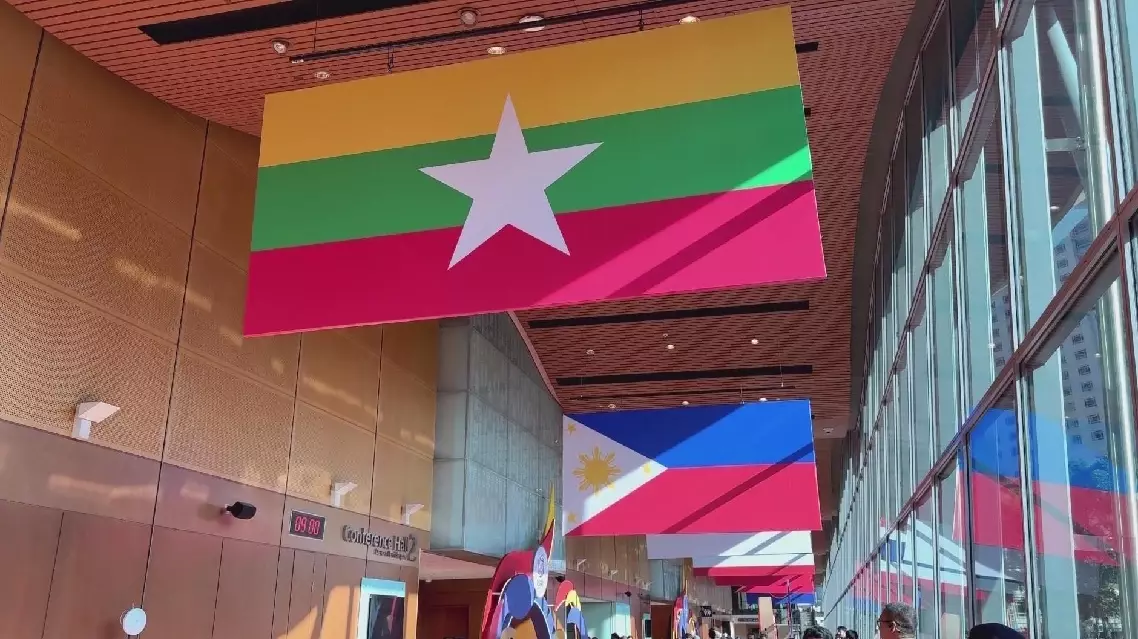
China-ASEAN Free Trade Area 3.0 to drive digital, supply chain growth: expert
Visiting Chinese Foreign Minister Wang Yi said Saturday China is willing to work with Lesotho to strengthen exchanges on governance experience, enhance coordination in multilateral affairs, and advance the China-Lesotho strategic partnership.
Wang, also a member of the Political Bureau of the Communist Party of China Central Committee, made the remarks when meeting with Lesotho Prime Minister Sam Matekane in the capital of Lesotho.
During the meeting, Wang congratulated Lesotho on the 60th anniversary of its independence this year, and spoke highly of Lesotho government's efforts to prioritize economic development and steer the African country onto a path of sustainable growth. Since the Beijing Summit of the Forum on China-Africa Cooperation (FOCAC) in 2024, the two sides have advanced cooperation under the 10 partnership action plans unveiled at the summit, successfully implementing a number of key projects to effectively promote Lesotho's development and revitalization, Wang said.
China stands ready to work with Lesotho to strengthen exchanges on governance experience, enhance coordination in multilateral affairs, and push for greater development of the China-Lesotho strategic partnership, he added.
Calling on the two sides to firmly support each other, Wang said that China will accelerate the implementation of its zero-tariff policy for African countries, including Lesotho, expand bilateral trade, investment and industrial cooperation, facilitate broader access of Lesotho's specialty products to the Chinese market, and continue to support Lesotho's national development.
China will continue to stand firmly with African countries, uphold justice for the Global South, including Lesotho, oppose unilateralism and acts of bullying, and work together to build a community with a shared future for humanity, Wang said.
On his part, Matekane said during the meeting that Lesotho cherishes its friendship with China and the strategic partnership between the two countries, and expressed gratitude for China's valuable support for the development of African countries, including Lesotho.
Lesotho firmly adheres to the one-China principle and resolutely supports China in safeguarding its core interests, he said, noting that his country stands ready to strengthen strategic mutual trust with China, expand people-to-people exchanges, jointly implement the outcomes of the FOCAC Beijing Summit, and deepen cooperation in areas such as infrastructure, manufacturing and energy.
Matekane stressed that China's zero-tariff policy for African products will inject new impetus into Lesotho's development. He also expressed Lesotho's willingness to strengthen solidarity and cooperation with China on multilateral platforms such as BRICS to jointly address global challenges.
On the same day, Wang also held talks with Lejone Mpotjoana, minister of foreign affairs and international relations of Lesotho.
China, Lesotho to strengthen exchanges, advance cooperation