NEW YORK (AP) — U.S. Health Secretary Robert F. Kennedy Jr. on Tuesday announced that COVID-19 vaccines are no longer recommended for healthy children and pregnant women — a move immediately questioned by several public health experts.
In a 58-second video posted on the social media site X, Kennedy said he removed COVID-19 shots from the Centers for Disease Control and Prevention's recommendations for those groups. No one from the CDC was in the video, and CDC officials referred questions about the announcement to Kennedy and the U.S. Department of Health and Human Services.
No other details were released, and HHS officials did not immediately respond to questions about how the decision was made.
Some doctors and public health leaders called the move concerning and confusing.
“There's no new data or information, just them flying by the seat of their pants,” said Michael Osterholm, director of the University of Minnesota’s Center for Infectious Disease Research and Policy.
U.S. health officials, following recommendations by infectious disease experts, have been urging annual COVID-19 boosters for all Americans ages 6 months and older.
The idea of changing the recommendations is not completely out of the blue. As the COVID-19 pandemic has waned, experts have increasingly discussed the possibility of focusing vaccination efforts on people 65 and older — who are among those most as risk for death and hospitalization.
A CDC advisory panel is set to meet in June to make recommendations about the fall shots. Among its options are suggesting shots for high-risk groups but still giving lower-risk people the choice to get vaccinated.
But Kennedy, a leading anti-vaccine advocate before becoming health secretary, decided not to wait for the scientific panel's review. He said that annual COVID-19 booster shots have been recommended for kids “despite the lack of any clinical data” to support that decision.
Some physicians and public health leaders expressed concern that HHS officials disregarded a scientific review process that has been in place for decades, in which experts — in public meetings — review current medical evidence and hash out the pros and cons of policy changes.
“It's a dangerous precedent. If you can start doing that with this vaccine, you can start doing that with any vaccine you want — including mumps-measles-rubella,” said Osterholm, referring to another vaccine that Kennedy has voiced doubts about.
He and others said the announcement raises an array of questions, including whether health insurance companies will keep covering COVID-19 vaccinations and how hard it will be now for people who want the shots to get them.
“The reason we give vaccines to healthy people is to keep them safe,” said Dr. Georges Benjamin, executive director of the American Public Health Association.
More than 1.2 million people have died in the U.S. from COVID-19, most of them elderly. But children haven't been spared: The coronavirus has been the underlying cause in more than 1,300 childhood deaths since the pandemic began, according to CDC data.
Food and Drug Administration Commissioner Dr. Marty Makary and Dr. Jay Battacharya, head of the National Institutes of Health, appeared in the video with Kennedy.
Earlier this year, during the nomination process, Kennedy gave assurances to wavering Republicans that he would not alter the federal vaccine schedule.
But since then, Kennedy and other Trump administration appointees have made big changes to the system for approval and use of vaccines.
They added restrictions to a recent vaccine approval. Last week, the FDA announced routine COVID-19 vaccine approvals will be limited to seniors and younger people with underlying medical risks, pending new research for healthy adults and children.
Among the confusion created by Tuesday's announcement, experts said, was the implication that the coronavirus isn't dangerous to pregnant women.
During the height of the pandemic, deaths of women during pregnancy or shortly after childbirth soared to their highest level in 50 years. Indeed, pregnancy was on the list of health conditions that would qualify someone for a COVID-19 vaccination under FDA’s new guidance “framework” announced last week.
Vaccination has been recommended for pregnant women, in part, because it's a way to pass immunity to newborns who are too young for vaccines and are vulnerable to infections.
“To say that they are not at any risk is simply incorrect,” said Dr. Sean O'Leary of the American Academy of Pediatrics.
Dr. Steven Fleischman, president of the American College of Obstetricians and Gynecologists, said: “The science has not changed. It is very clear that COVID infection during pregnancy can be catastrophic and lead to major disability, and it can cause devastating consequences for families.”
The Associated Press Health and Science Department receives support from the Howard Hughes Medical Institute’s Science and Educational Media Group and the Robert Wood Johnson Foundation. The AP is solely responsible for all content.
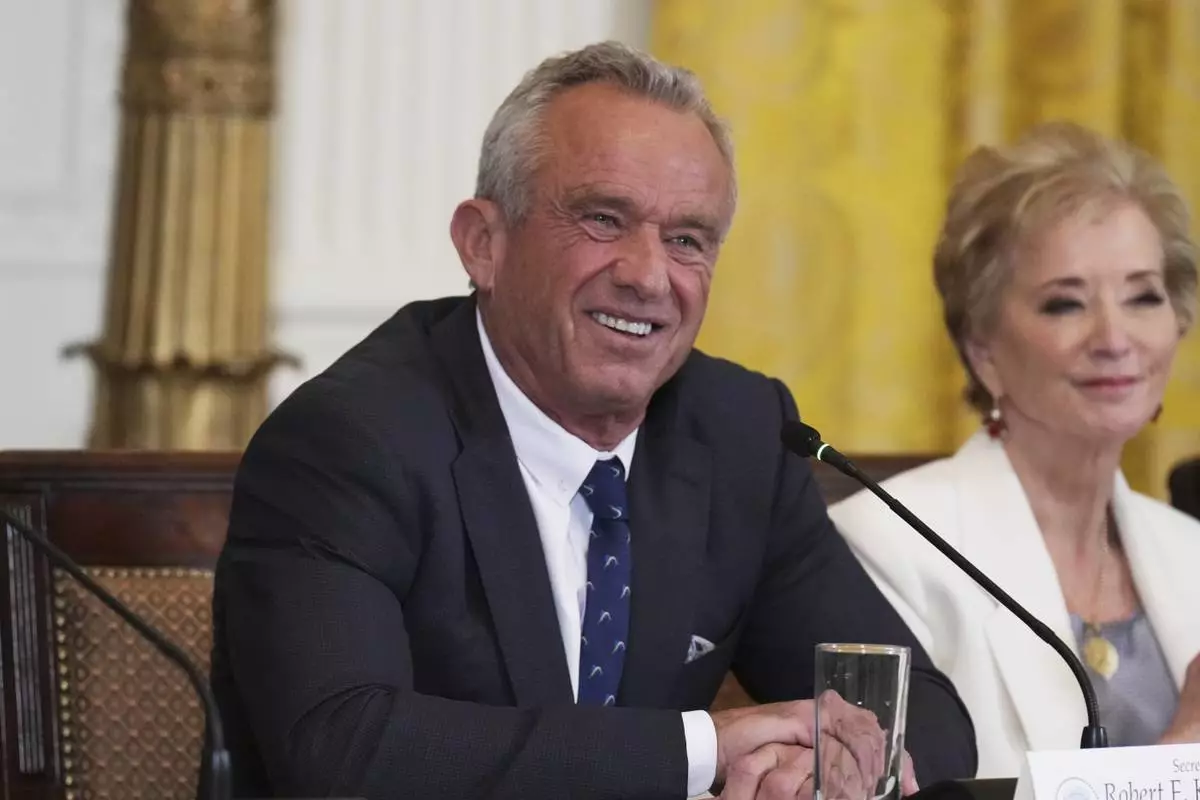
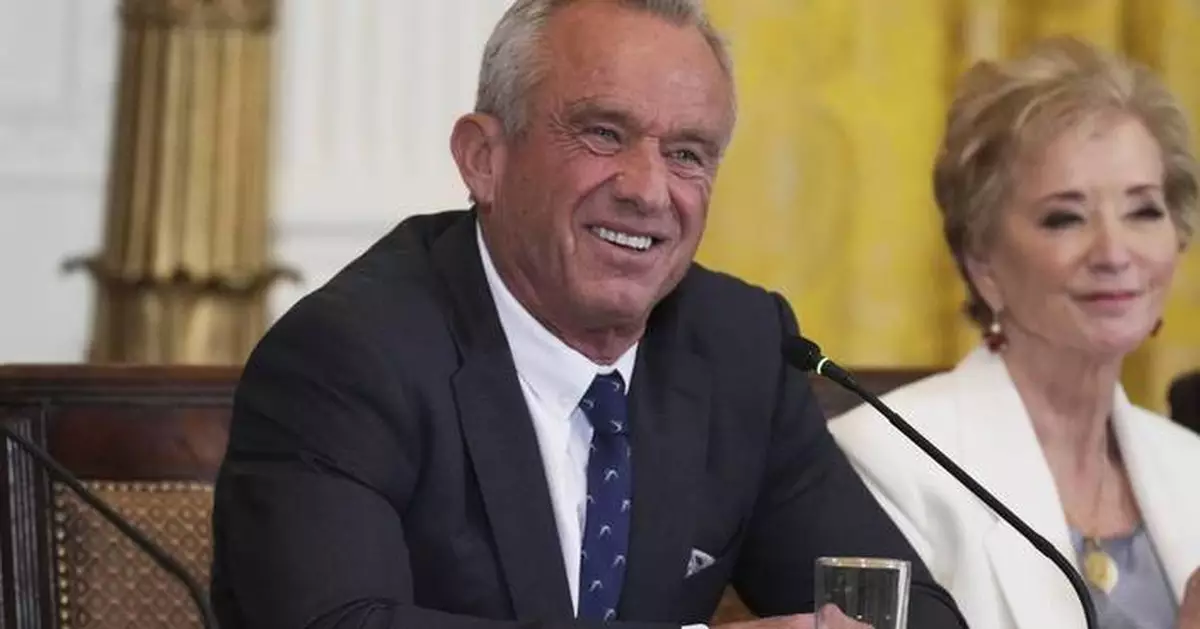
Health and Human Services Secretary Robert F. Kennedy Jr., left, and Education Secretary Linda McMahon attend a Make America Healthy Again (MAHA) Commission Event in the East Room of the White House, Thursday, May 22, 2025, in Washington. (AP Photo/Jacquelyn Martin)
DUBAI, United Arab Emirates (AP) — U.S. President Donald Trump said Iran wants to negotiate with Washington after his threat to strike the Islamic Republic over its bloody crackdown on protesters, a move coming as activists said Monday the death toll in the nationwide demonstrations rose to at least 544.
Iran had no immediate reaction to the news, which came after the foreign minister of Oman — long an interlocutor between Washington and Tehran — traveled to Iran this weekend. It also remains unclear just what Iran could promise, particularly as Trump has set strict demands over its nuclear program and its ballistic missile arsenal, which Tehran insists is crucial for its national defense.
Meanwhile Monday, Iran called for pro-government demonstrators to head to the streets in support of the theocracy, a show of force after days of protests directly challenging the rule of 86-year-old Supreme Leader Ayatollah Ali Khamenei. Iranian state television aired chants from the crowd, who shouted “Death to America!” and “Death to Israel!”
Trump and his national security team have been weighing a range of potential responses against Iran including cyberattacks and direct strikes by the U.S. or Israel, according to two people familiar with internal White House discussions who were not authorized to comment publicly and spoke on condition of anonymity.
“The military is looking at it, and we’re looking at some very strong options,” Trump told reporters on Air Force One on Sunday night. Asked about Iran’s threats of retaliation, he said: “If they do that, we will hit them at levels that they’ve never been hit before.”
Trump said that his administration was in talks to set up a meeting with Tehran, but cautioned that he may have to act first as reports of the death toll in Iran mount and the government continues to arrest protesters.
“I think they’re tired of being beat up by the United States,” Trump said. “Iran wants to negotiate.”
He added: “The meeting is being set up, but we may have to act because of what’s happening before the meeting. But a meeting is being set up. Iran called, they want to negotiate.”
Iran through country's parliamentary speaker warned Sunday that the U.S. military and Israel would be “legitimate targets” if America uses force to protect demonstrators.
More than 10,600 people also have been detained over the two weeks of protests, said the U.S.-based Human Rights Activists News Agency, which has been accurate in previous unrest in recent years and gave the death toll. It relies on supporters in Iran crosschecking information. It said 496 of the dead were protesters and 48 were with security forces.
With the internet down in Iran and phone lines cut off, gauging the demonstrations from abroad has grown more difficult. The Associated Press has been unable to independently assess the toll. Iran’s government has not offered overall casualty figures.
Those abroad fear the information blackout is emboldening hard-liners within Iran’s security services to launch a bloody crackdown. Protesters flooded the streets in the country’s capital and its second-largest city on Saturday night into Sunday morning. Online videos purported to show more demonstrations Sunday night into Monday, with a Tehran official acknowledging them in state media.
In Tehran, a witness told the AP that the streets of the capital empty at the sunset call to prayers each night. By the Isha, or nighttime prayer, the streets are deserted.
Part of that stems from the fear of getting caught in the crackdown. Police sent the public a text message that warned: “Given the presence of terrorist groups and armed individuals in some gatherings last night and their plans to cause death, and the firm decision to not tolerate any appeasement and to deal decisively with the rioters, families are strongly advised to take care of their youth and teenagers.”
Another text, which claimed to come from the intelligence arm of the paramilitary Revolutionary Guard, also directly warned people not to take part in demonstrations.
“Dear parents, in view of the enemy’s plan to increase the level of naked violence and the decision to kill people, ... refrain from being on the streets and gathering in places involved in violence, and inform your children about the consequences of cooperating with terrorist mercenaries, which is an example of treason against the country,” the text warned.
The witness spoke to the AP on condition of anonymity due to the ongoing crackdown.
The demonstrations began Dec. 28 over the collapse of the Iranian rial currency, which trades at over 1.4 million to $1, as the country’s economy is squeezed by international sanctions in part levied over its nuclear program. The protests intensified and grew into calls directly challenging Iran’s theocracy.
Nikhinson reported from aboard Air Force One.
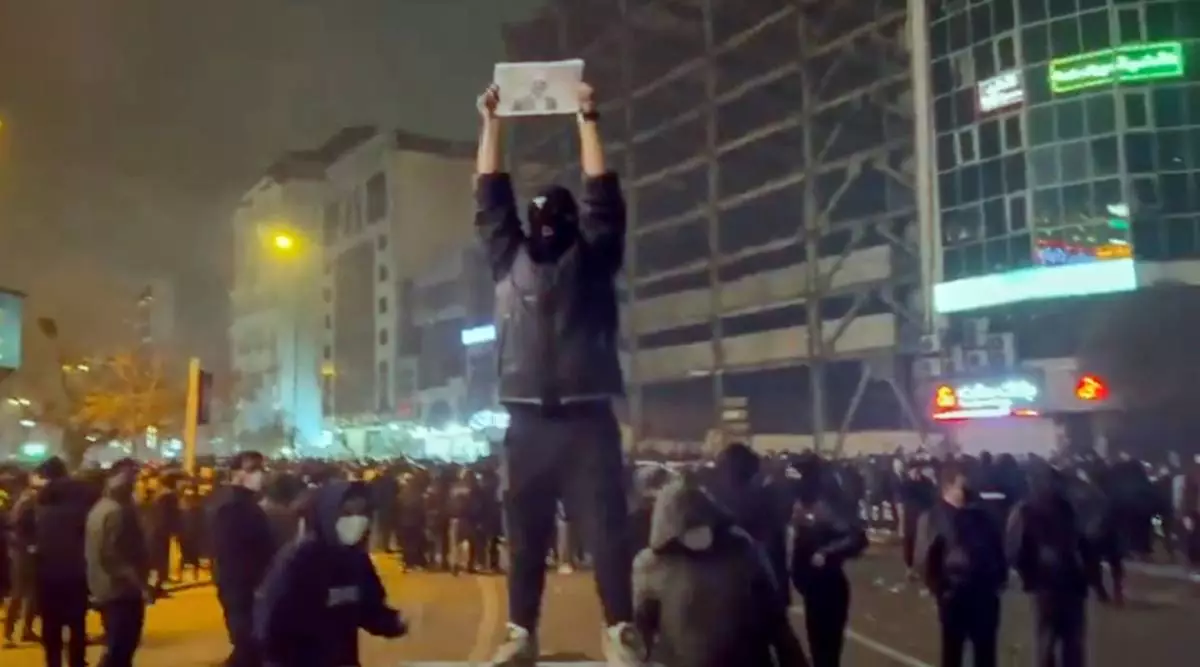
In this frame grab from video obtained by the AP outside Iran, a masked demonstrator holds a picture of Iran's Crown Prince Reza Pahlavi during a protest in Tehran, Iran, Friday, January. 9, 2026. (UGC via AP)
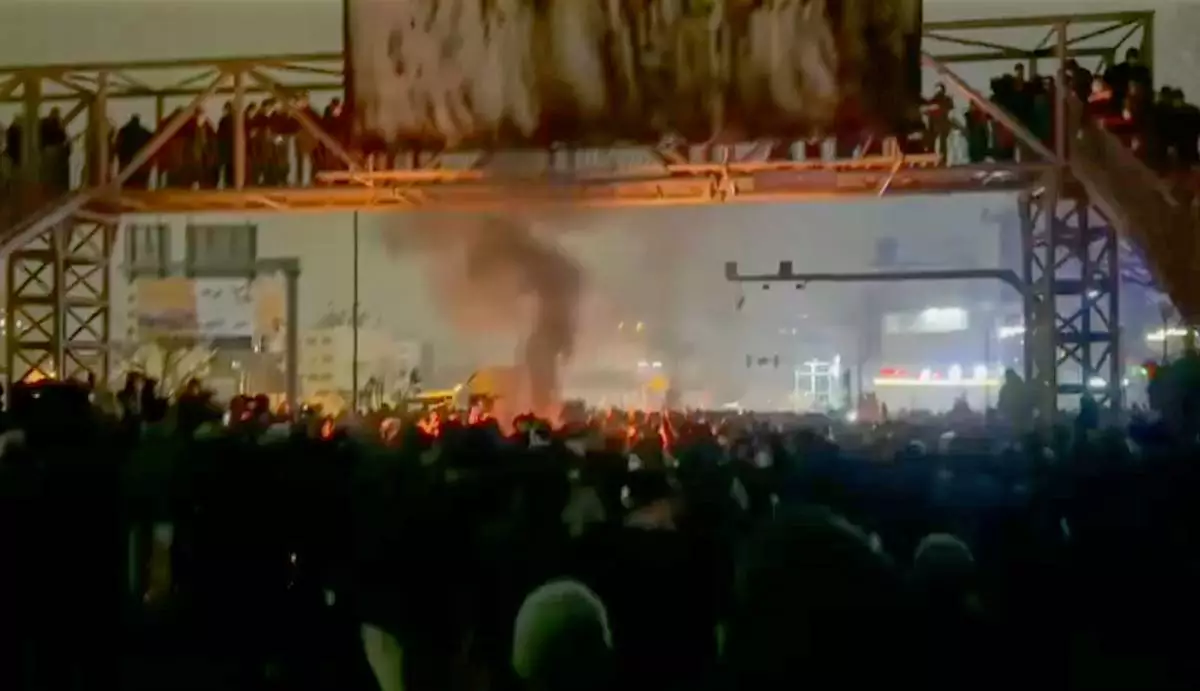
In this frame grab from footage circulating on social media from Iran shows protesters taking to the streets despite an intensifying crackdown as the Islamic Republic remains cut off from the rest of the world in Tehran, Iran, Friday, Jan. 9, 2026.(UGC via AP)
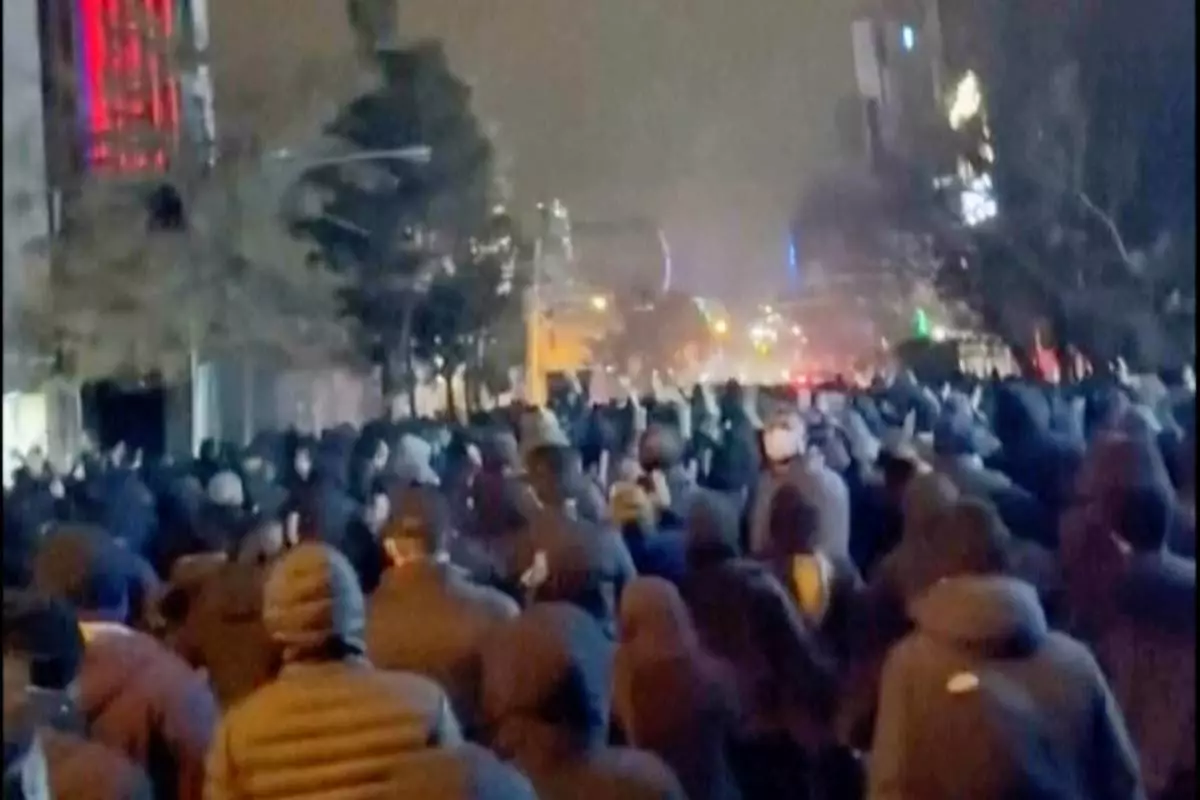
In this frame grab from footage circulating on social media from Iran showed protesters once again taking to the streets of Tehran despite an intensifying crackdown as the Islamic Republic remains cut off from the rest of the world in Tehran, Iran, Saturday Jan. 10, 2026. (UGC via AP)