Skip to Content Facebook Feature Image

Snowplow Unveils Signals: Real-Time Customer Intelligence Infrastructure for AI-Powered Products

News

Snowplow Unveils Signals: Real-Time Customer Intelligence Infrastructure for AI-Powered Products
News

News

Snowplow Unveils Signals: Real-Time Customer Intelligence Infrastructure for AI-Powered Products

2025-05-28 22:58 Last Updated At:23:11

BOSTON--(BUSINESS WIRE)--May 28, 2025--

Snowplow, the leader in customer data infrastructure, today announced the launch of Snowplow Signals, a real-time customer intelligence system that enables companies to build and deploy AI-powered customer experiences much faster. Signals provides applications with access to deep, real-time, trustworthy customer context — making it easier to hyper-personalize user journeys and equip AI agents to overcome the “cold start problem” and drive more relevant interactions.

This press release features multimedia. View the full release here: https://www.businesswire.com/news/home/20250528190036/en/

Long trusted by data teams at leading digital-first companies, Snowplow is now expanding its platform to support product, engineering, and data science teams building customer-facing AI-powered applications — such as personalization engines, adaptive UIs, and agentic applications like AI copilots and chatbots.

“By infusing real-time behavioral context into an application's memory, Signals transforms one-off customer interactions into deeply personalized, proactive experiences that drive measurable lift in customer engagement, conversion, and lifetime value,” said Todd Boes, Chief Product Officer at Snowplow. “We’re proud to partner with leading brands as they harness Signals to deliver the next generation of customer-intelligent applications.”

The Missing Link Between AI and Real-Time Customer Context

As organizations race to embed AI into their products, many hit a common set of roadblocks: they struggle to reliably identify who each user is in real-time, understand their current behavior, anticipate their needs, and serve deeply personalized experiences accordingly.

Existing data infrastructure often forces a trade-off — real-time speed without deep, trustworthy data, or deep, trustworthy data that is too slow to act on. Signals eliminates this compromise by providing extensible infrastructure for computing, retrieving, and acting on rich, well-governed customer data — both in-session and across historical context.

Snowplow Signals includes three core capabilities:

Built for Digital Product and Engineering Teams

Snowplow Signals is designed for teams building AI-powered products that want to deliver different experiences to different customers through the use of personalization and recommendation models and AI agents to drive revenue growth.

What sets Snowplow Signals apart:

“Snowplow Signals provides our product and engineering teams with the real-time customer intelligence infrastructure they need to build adaptive, AI-powered experiences into our FindMyPast product,” said Anup Purewal, Chief Data Officer at DC Thomson, a design partner for the release. “With Signals, we can advance beyond static searches and singular actions to offer a genealogy experience that truly reflects the hobby — guiding each user’s unique journey through our vast archives by proactively surfacing relevant content and suggesting next steps in real time. It’s a game-changer for hyper-personalizing each user’s deeply unique and personal experience.”

Deliver AI-Powered Experiences with Trusted Customer Data Infrastructure

Built on Snowplow’s industry-leading real-time data pipeline and streaming engine, Signals ensures high-quality, consistent data across stream and warehouse — and delivers millisecond lookups with governance built in.

The new product offering runs natively in Snowplow customers’ clouds and will support deployments on AWS, Azure, and GCP, with compatibility for Snowflake, Databricks, and BigQuery. Customers benefit from robust governance, built-in security, and full transparency across their end-to-end customer data operations.

Snowplow Signals marks a strategic expansion beyond data engineering to become foundational infrastructure for real-time, AI-driven digital experiences. As more companies move to productize AI, Signals positions Snowplow at the core of this transformation, unlocking new growth across product, engineering, and data science teams.

Availability

Snowplow Signals is currently available to select design partners, with general availability in Q3 2025. To learn more or request a custom demo, visit snowplow.io/signals.

Snowplow is the global leader in customer data infrastructure for AI, enabling every organization to transform raw behavioral data into governed, high-fidelity fuel for AI-powered applications — including advanced analytics, real-time personalization engines, and AI agents. Digital-first companies like Strava, HelloFresh, Auto Trader, Burberry, and DPG Media use Snowplow to collect and process event-level data in real time, delivering it securely to their warehouse, lake, or stream, and integrate deep customer context into their applications. Thousands of companies rely on Snowplow to uncover customer insights, predict customer behaviors, hyper-personalize customer experiences, and detect fraud in real time. Learn more: www.snowplow.io.
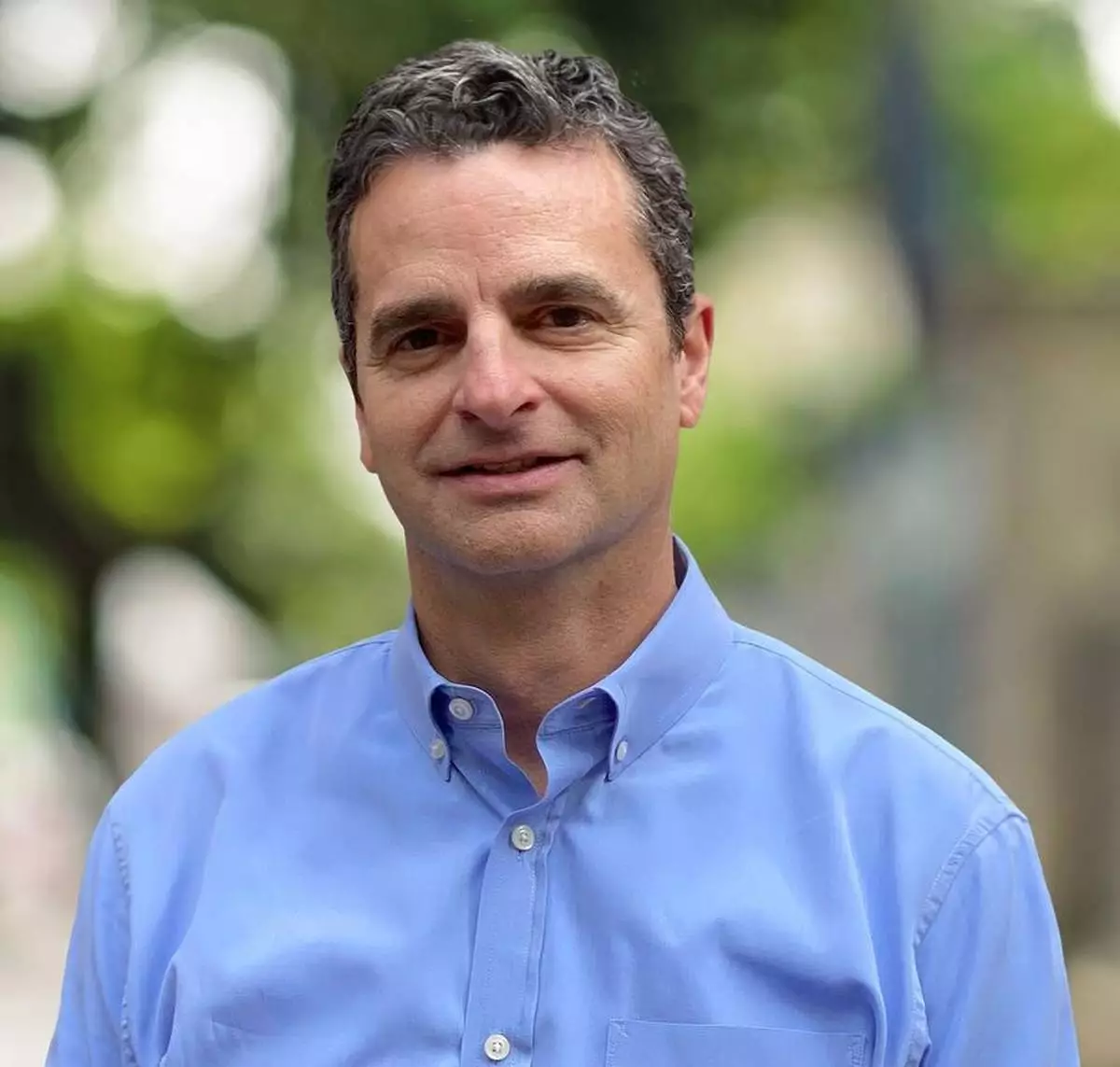
Todd Boes, Chief Product Officer at Snowplow, announces the launch of Snowplow Signals — a new real-time customer intelligence infrastructure for AI-powered applications.


Todd Boes, Chief Product Officer at Snowplow, announces the launch of Snowplow Signals — a new real-time customer intelligence infrastructure for AI-powered applications.
MEXICO CITY (AP) — La Profesa church in downtown Mexico City has endured through a tumultuous history. An uprising left bullet holes in its walls in 1847. A fire devoured its wooden floors decades later. Its foundation continues to sink due to unstable ground.

“What makes this space important is that it remains alive and continues to be in use,” art historian Alejandro Hernández said.

Hernández works with a handful of experts to preserve and promote the capital’s heritage through the Mexico City Historic Center Trust, which operates under the municipal government.

The trust recently launched an initiative aimed at encouraging Mexicans to reconnect with the historic heart of the city. The program includes visits to more than 40 churches, among them La Profesa, as part of 26 cultural activities planned for 2026.

“We wish for young people to get interested in their own heritage,” said Anabelí Contreras, head of outreach at the trust.

Her team constantly runs campaigns highlighting historical facts about the area.

They promote workshops and exhibitions, such as one celebrating the 700th anniversary of the founding of Tenochtitlan, the powerful Aztec capital that once stood on the site of present-day Mexico City. And the trust’s magazine, Kilómetro Cero, showcases hidden gems in the surrounding neighborhoods.

Experts like Hernández go one step further. They team up to restore treasured buildings like La Profesa, which was severely damaged by a deadly earthquake in 2017.

“After the quake, the valuable art collection inside the sanctuary’s gallery suffered the most,” he said. “We haven’t been able to reopen that space to the public yet, but we’re working on it.”

Each building overseen by the trust has treasures to protect. La Profesa’s uniqueness lies in the paintings it preserves, Hernández said.

“What is exceptional is that so many of the paintings originally made for the church have survived,” he said.

Founded by the Jesuits in 1610, the site later took the form of the church seen today. It was rebuilt by renowned architect Pedro de Arrieta in 1714.

Its heritage includes textiles worn to this day by priests celebrating Mass, relics displayed each Nov. 2 to mark Dia de Muertos, the Day of the Dead, and the artworks that led to the inauguration of a public gallery in the 1970s.

“The heritage found in this church today dates from the 17th through the 21st centuries,” Hernández said.

The gallery safeguarding La Profesa’s paintings lies hidden from sight on its upper floor. The space now looks renewed, but bringing it back to life was a delicate, almost surgical process.

Alejandra Barrón, an architect from the trust who oversaw its two restoration stages, said some of the cracks left by the 2017 quake were so severe that one could look into the walls of neighboring buildings.

“The entire floor was replaced, the cracks were stitched together, and the plasterwork was carefully restored,” she said.

There is still work to be done and the timing of its completion remains uncertain. But for now, Barrón is relieved to see some of the artworks hanging on the walls again.

“It’s unusual to find a church that can also serve as a gallery or a museum,” she said. “If these paintings were removed from here, they would no longer carry the same meaning.”

A few meters (yards) away stands the church of Santo Domingo. Founded by Dominican friars in the 16th century and rebuilt by de Arrieta nearly two centuries later, the sanctuary bears witness to the capital’s transformation.

The church currently dominates the landscape, yet it used to be part of a far larger complex. Most of its chapels and convent gradually were destroyed. A new street was later paved through the site, effectively splitting the complex into two.

Across from the church stands a residential compound where remains of the convent’s arches can be seen. The trust works closely with the community to preserve the site.

María Esther Centeno has lived there for decades. Dozens of Mexicans like her were offered an apartment in the area after a devastating quake in 1985 left many without a home.

“When they (from the trust) came to fix this place, we learned about its history,” she said. “There used to be a dining hall. On that other side were the nuns’ cells.”

Neither the homes nor other buildings underwent restoration after the 2017 quake. However, the church still hurts from the tragedy.

The trust’s architect overseeing its renovations knows the building like the back of his hand. A hidden clock, a wall shadowed by the organ and the bell tower all had cracks repaired by Jesús Martínez and his team.

“To me, this is the most important sanctuary in Mexico’s historic center after the cathedral,” Martínez said. “The choir stalls are unique because they are original — they haven’t been broken up or replaced.”

On a recent morning in late January, María Lourdes Flota entered Santo Domingo by chance.

She traveled from the state of Yucatán in southern Mexico to visit the Basilica of Our Lady of Guadalupe. While walking across downtown, the church caught her eye.

“This is my first time here and we decided to come in,” she said. “It’s so beautiful. I love all the images it preserves.”

Associated Press religion coverage receives support through the AP’s collaboration with The Conversation US, with funding from Lilly Endowment Inc. The AP is solely responsible for this content.

A man walks out of the archway of a cloister that was part of Santo Domingo church, now a residential housing complex in Mexico City, Tuesday, Jan. 27, 2026. (AP Photo/Ginnette Riquelme)

A man walks out of the archway of a cloister that was part of Santo Domingo church, now a residential housing complex in Mexico City, Tuesday, Jan. 27, 2026. (AP Photo/Ginnette Riquelme)

Maria Lourdes Flora, from Yucatan state, visits Santo Domingo church in Mexico City, Tuesday, Jan. 27, 2026. (AP Photo/Ginnette Riquelme)

Maria Lourdes Flora, from Yucatan state, visits Santo Domingo church in Mexico City, Tuesday, Jan. 27, 2026. (AP Photo/Ginnette Riquelme)

The main altarpiece, designed by artist Manuel Tolsa, stands in La Profesa church in Mexico City, Tuesday, Jan. 27, 2026. (AP Photo/Ginnette Riquelme)

The main altarpiece, designed by artist Manuel Tolsa, stands in La Profesa church in Mexico City, Tuesday, Jan. 27, 2026. (AP Photo/Ginnette Riquelme)

Architect Jesus Martínez, left, and art historian Alejandro Hernandez stand inside the restored choir area of Santo Domingo church in Mexico City, Tuesday, Jan. 27, 2026. (AP Photo/Ginnette Riquelme)

Architect Jesus Martínez, left, and art historian Alejandro Hernandez stand inside the restored choir area of Santo Domingo church in Mexico City, Tuesday, Jan. 27, 2026. (AP Photo/Ginnette Riquelme)

The interior of the Santo Domingo temple in Mexico City, Tuesday, Jan. 27, 2026. (AP Photo/Ginnette Riquelme)

The interior of the Santo Domingo temple in Mexico City, Tuesday, Jan. 27, 2026. (AP Photo/Ginnette Riquelme)

People look at the restored art gallery at La Profesa church in Mexico City, Tuesday, Jan. 27, 2026. (AP Photo/Ginnette Riquelme)

People look at the restored art gallery at La Profesa church in Mexico City, Tuesday, Jan. 27, 2026. (AP Photo/Ginnette Riquelme)

Santo Domingo church stands in Mexico City, Tuesday, Jan. 27, 2026. (AP Photo/Ginnette Riquelme)

Santo Domingo church stands in Mexico City, Tuesday, Jan. 27, 2026. (AP Photo/Ginnette Riquelme)

Recommended Articles