Skip to Content Facebook Feature Image

Cargill Earns #1 Global Ranking for Removing Trans Fats From Edible Oils Portfolio

News

Cargill Earns #1 Global Ranking for Removing Trans Fats From Edible Oils Portfolio
News

News

Cargill Earns #1 Global Ranking for Removing Trans Fats From Edible Oils Portfolio

2025-05-28 23:11 Last Updated At:23:31

WAYZATA, Minn.--(BUSINESS WIRE)--May 28, 2025--

Cargill earned the top spot on the inaugural Edible Oil Supplier Index 2025, published by global nonprofit Access to Nutrition initiative (ATNi). The ranking recognizes the company’s leadership in removing industrially produced trans-fatty acids* (iTFAs) from its entire edible oils portfolio, even in markets with no regulatory mandate.

This press release features multimedia. View the full release here: https://www.businesswire.com/news/home/20250528074187/en/

Cargill’s leadership in this space has made a tangible difference for customers and consumers around the world. Chantilly, a cherished brand in Mexico known for its bakery, pastry and confectionery products, is a standout example. The company credits Cargill as a key ally in helping remove iTFAs from its popular whipping cream recipes.

“Cargill provided the expertise and technology needed to solve crucial challenges such as maintaining the taste and texture our consumers and operators expect, while preserving the functionality suitable for various culinary applications,” said Miriam Leticia Rodriguez Chigora, R&D leader, Chantilly. “It not only highlights Cargill's ability to provide technical support and innovative solutions but also its commitment to consumer health and regulatory compliance.”

These efforts are part of what ATNi evaluated in its first-ever ranking of the eight largest edible oil suppliers. The international nutrition organization assessed the companies on 19 indicators across four categories. Cargill earned the highest overall score, 81.4%, leading across all assessment areas, with the second-highest scoring company achieving just 14.2%.

This recognition builds on a major milestone reached in January 2024, when Cargill became the first — and still only known — global edible oil supplier whose entire portfolio complies with the World Health Organization’s (WHO) recommended limit of no more than two grams of iTFAs per 100 grams of fats and oils in food products — a threshold set to protect public health.

Cargill’s journey began years earlier, well ahead of the WHO’s 2018 REPLACE initiative, which called for the global elimination of industrial trans fats. The company invested millions in capital upgrades, committed thousands of R&D hours and helped hundreds of customers reformulate products. To date, Cargill has helped remove more than 1.5 billion pounds of products containing iTFAs from the global food chain.

“Being recognized by ATNi reinforces our responsibility to lead with purpose — delivering safe, sustainable nutrition through the food and ingredient solutions we provide,” said David VandenEinde, Vice President of R&D for Food North America, Cargill. “This achievement is the result of decades of innovation, close collaboration with customers like Chantilly, and investment in improved edible oil solutions. We will remain fully engaged with food manufacturers and related stakeholders, working together to help pave the way for a healthier and more resilient global food supply.”

According to the WHO’s 2024 progress report, as of the end of 2023, only 53 of the world’s 195 countries — covering just 46% of the global population — had adopted one of WHO’s best practice policies to limit iTFA in foods. That reality puts added meaning to ATNi’s call for other suppliers to “follow Cargill by example.” The company not only drove change within its own operations and with its customers, but it has also worked as a catalyst for global change, actively collaborating with health organizations to share expertise and support policy development in markets where iTFA regulations are still emerging.

# # #

*Industrially produced trans-fatty acids (iTFAs) are created during the partial hydrogenation of vegetable oils but can also be formed by high thermal treatment during edible oil refining. At high levels of consumption, they have been linked to increased risk of coronary heart disease and mortality, prompting the World Health Organization (WHO) to recommend eliminating iTFAs from global food supplies.

About Cargill

Cargill is committed to providing food, ingredients, agricultural solutions, and industrial products to nourish the world in a safe, responsible, and sustainable way. Sitting at the heart of the supply chain, we partner with farmers and customers to source, make and deliver products that are vital for living.

Our approximately 160,000 employees innovate with purpose, providing customers with life’s essentials so businesses can grow, communities prosper, and consumers live well. With 160 years of experience as a family company, we look ahead while remaining true to our values. We put people first. We reach higher. We do the right thing—today and for generations to come. For more information, visit Cargill.com and our News Center.
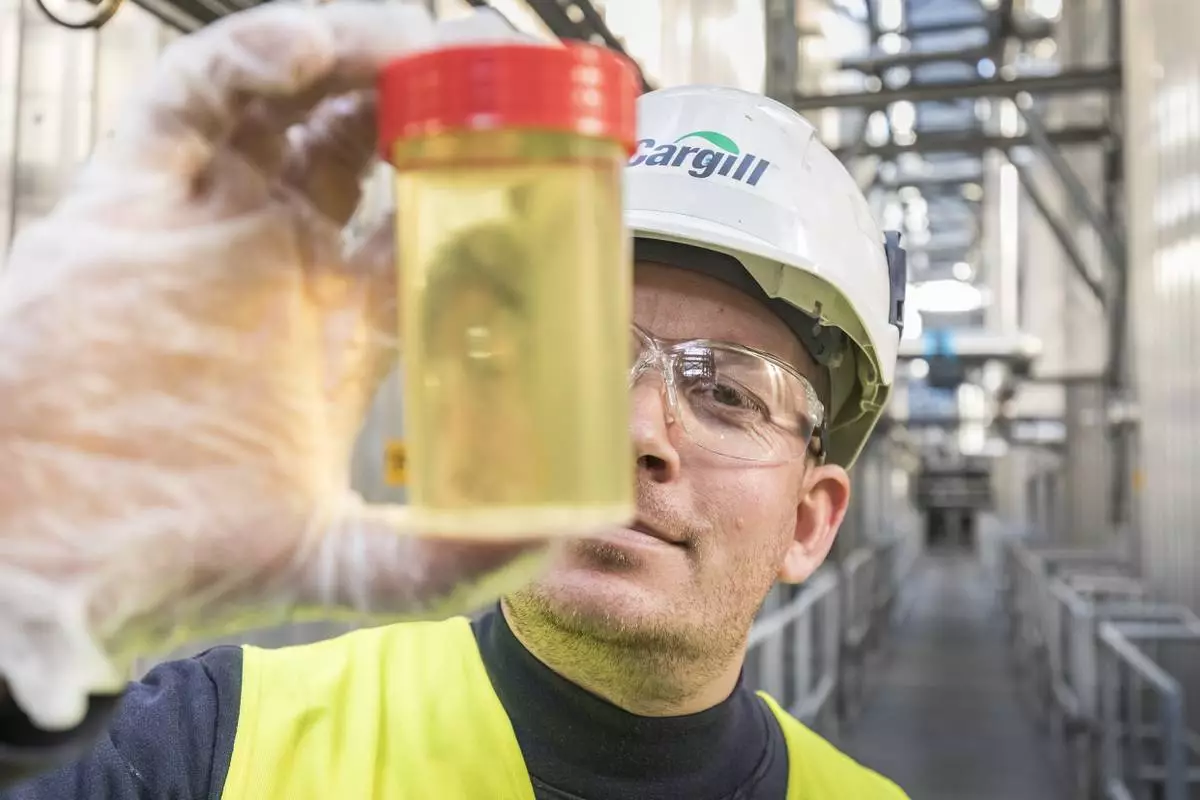
Cargill earned the top spot on the inaugural Edible Oil Supplier Index 2025, published by global nonprofit Access to Nutrition initiative (ATNi)


Cargill earned the top spot on the inaugural Edible Oil Supplier Index 2025, published by global nonprofit Access to Nutrition initiative (ATNi)

ADEN, Yemen (AP) — Saudi warplanes have reportedly struck on Friday forces in southern Yemen backed by the United Arab Emirates, a separatist leader says.

This comes as a Saudi-led operation attempts to take over camps of the Southern Transitional Council, or STC, in the governorate of Haramout that borders Saudi Arabia.

Tensions between Saudi Arabia and the UAE rose after the STC moved last month into Yemen’s governorates of Hadramout and Mahra and seized an oil-rich region. The move pushed out forces affiliated with the Saudi-backed National Shield Forces, a group aligned with the coalition in fighting the Iran-backed Houthis in Yemen.

Meanwhile, the Saudi ambassador to Yemen accused the head of the STC of blocking a Saudi mediation delegation from landing in the southern city of Aden.

The STC deputy and former Hamdrmout governor, Ahmed bin Breik, said in a statement that the Saudi-backed National Shield Forces advanced toward the camps, but the separatists refused to withdraw, apparently leading to the airstrikes.

Mohamed al-Nakib, spokesperson for the STC-backed Southern Shield Forces, also known as Dera Al-Janoub, said Saudi airstrikes caused fatalities, without providing details. The Associated Press couldn’t independently verify that claim.

Al-Nakib also accused Saudi Arabia in a video on X of using “Muslim Brotherhood and al-Qaeda militias” in a "large-scale attack " early Friday that he claimed sepratists were able to repel.

He likened the latest developments to Yemen’s 1994 civil war, “except that this time it is under the cover of Saudi aviation operations.”

Salem al-Khanbashi, the governor of Hadramout who was chosen Friday by Yemen's internationally recognized government to command the Saudi-led forces in the governorate, refuted STC claims, calling them “ridiculous” and showing intentions of escalation instead of a peaceful handover, according Okaz newspaper, which is aligned with the Saudi government.

Earlier on Friday, al-khanbashi called the current operation of retrieving seized areas “peaceful.”

“This operation is not a declaration of war and does not seek escalation,” al-Khanbashi said in a speech aired on state media. “This is a responsible pre-emptive measure to remove weapons and prevent chaos and the camps from being used to undermine the security in Hadramout,” he added.

The Saudi-led coalition in Yemen demands the withdrawal of STC forces from the two governorates as part of de-escalation efforts. The STC has so far refused to hand over its weapons and camps.

The coalition's spokesperson Brig. Gen. Turki al-Maliki said Friday on X that Saudi-backed naval forces were deployed across the Arabian Sea to carry out inspections and combat smuggling.

In his post on X, the Saudi ambassador to Yemen, Mohammed al-Jaber, said the kingdom had tried “all efforts with STC” for weeks "to stop the escalation" and to urge the separatists to leave Hadramout and Mahra, only to be faced with “continued intransigence and rejection from Aidarous al-Zubaidi," the STC head.

Al-Jaber said the latest development was not permitting the Saudi delegation's jet to land in Aden, despite having agreed on its arrival with some STC leaders to find a solution that serves “everyone and the public interest.”

Yemen’s transport ministry, aligned with STC, said Saudi Arabia imposed on Thursday requirements mandating that flights to and from Aden International Airport undergo inspection in Jeddah. The ministry expressed “shock” and denounced the decision. There was no confirmation from Saudi authorities.

ِA spokesperson with the transport ministry told the AP late Thursday that all flights from and to the UAE were suspended until Saudi Arabia reverses these reported measures.

Yemen has been engulfed in a civil war for more than a decade, with the Houthis controlling much of the northern regions, while a Saudi-UAE-backed coalition supports the internationally recognized government in the south. However, the UAE also helps the southern separatists who call for South Yemen to secede once again from Yemen. Those aligned with the council have increasingly flown the flag of South Yemen, which was a separate country from 1967-1990.

Associated Press writers Bassem Mroue in Beirut and Fatma Khaled in Cairo contributed to this report.

Southern Yemen soldiers of Southern Transitional Council (STC) at a check point, in Aden, Yemen, Wednesday, Dec. 31, 2025. (AP Photo)

Southern Yemen soldiers of Southern Transitional Council (STC) at a check point, in Aden, Yemen, Wednesday, Dec. 31, 2025. (AP Photo)

Recommended Articles