Skip to Content Facebook Feature Image

State can't use medication evidence to counter insanity defense in fatal crash, Georgia court says

News

State can't use medication evidence to counter insanity defense in fatal crash, Georgia court says
News

News

State can't use medication evidence to counter insanity defense in fatal crash, Georgia court says

2025-05-29 04:45 Last Updated At:04:50

ATLANTA (AP) — In the prosecution of a Georgia woman who caused a fatal car crash while suffering a psychotic break, the state cannot use evidence that she had stopped taking some of her psychiatric medications to counter her insanity defense, the state's highest court ruled Wednesday.

Michelle Wierson was driving her Volkswagen Tiguan at high speed through the streets of DeKalb County, in Atlanta's suburbs, when she hit a Toyota Corolla stopped at a traffic light. The impact pushed the car into the intersection, where it collided with another car. Miles Jenness, a 5-year-old passenger in the Toyota, suffered a traumatic brain injury and a severed spine and died days later.

Everyone agrees that Wierson caused the September 2018 wreck. Her defense attorneys filed notice that she intended to plead not guilty by reason of insanity, saying that at the time of the wreck she was suffering from a “delusional compulsion” caused by mental illness that absolves her of criminal liability. The DeKalb County district attorney's office wanted to present evidence that Wierson had stopped taking some medication prescribed to treat bipolar disorder, arguing that the jury should be allowed to consider that she voluntarily contributed to her mental state.

The trial court said the state could use that evidence, but the state Court of Appeals reversed that ruling in a pretrial appeal. The state then appealed to the state Supreme Court, which upheld the intermediate appeals court's ruling.

An Atlanta-area psychologist with a yearslong history of bipolar disorder, Wierson believed at the time of the crash that she was on a mission from God to save her daughter from being killed, her lawyers have said.

Georgia law outlines two tests for someone seeking to use an insanity defense at trial. Both have to do with the person’s mental state “at the time of” the alleged crime. The first says a person shall not be found guilty of a crime if they “did not have mental capacity to distinguish between right and wrong” related to the act. The second says a person shall not be found guilty of a crime if the person acted because of “a delusional compulsion” that “overmastered” their will.

An expert hired by the defense and another engaged by the court found that Wierson met both of those criteria. Justice Andrew Pinson wrote in Wednesday's majority opinion that the law says nothing about the cause of the person's mental state at the time of the crime.

“Put simply, the plain language of the insanity-defense statutes gives not even a hint that these defenses would not be available to a person who has ‘brought about’ the relevant mental state voluntarily, whether by not taking medication or otherwise,” he wrote.

Robert Rubin, a lawyer for Wierson, has said that his client is “haunted by the tragic consequences” of her actions. But he said in an email Wednesday that he hopes the Supreme Court ruling will allow the case to be resolved without a trial.

“The Georgia Supreme Court reaffirmed the basic principle that the focus of an insanity case is the defendant’s state of mind at the time of the act,” he wrote. “The State never disputed that our client was insane at the time of the accident. Its attempt to make this case about alleged medication compliance was misplaced and dragged this case out unnecessarily.”

A spokesperson for the DeKalb County district attorney's office said in a statement that prosecutors are committed to taking the case to trial and having a jury determine whether Wierson was responsible for her actions.

“While we are disappointed with the Georgia Supreme Court’s ruling in this case, it will not deter us from pursuing justice for Miles Jenness and his family," the statement says.

Miles' mother, Leah Jenness, said her son “should have just wrapped up sixth grade, but instead he's in an urn on our mantel.” She said the ruling has compounded her pain.

“Since Miles was killed, we have always believed that he deserves to have his story told,” she wrote. “The idea of justice, for us, has always involved a jury being able to hear all the facts about what happened to him. As we understand the Supreme Court’s ruling today, that’s not possible now. It’s hard for us to see how that’s fair and just.”

In its ruling on this case, the Supreme Court also overturned its own ruling in a 1982 case that had created an exception to the insanity defenses. That case involved a man diagnosed with paranoid schizophrenia who, against his doctor's orders, put himself in a highly stressful situation and ended up killing two people.
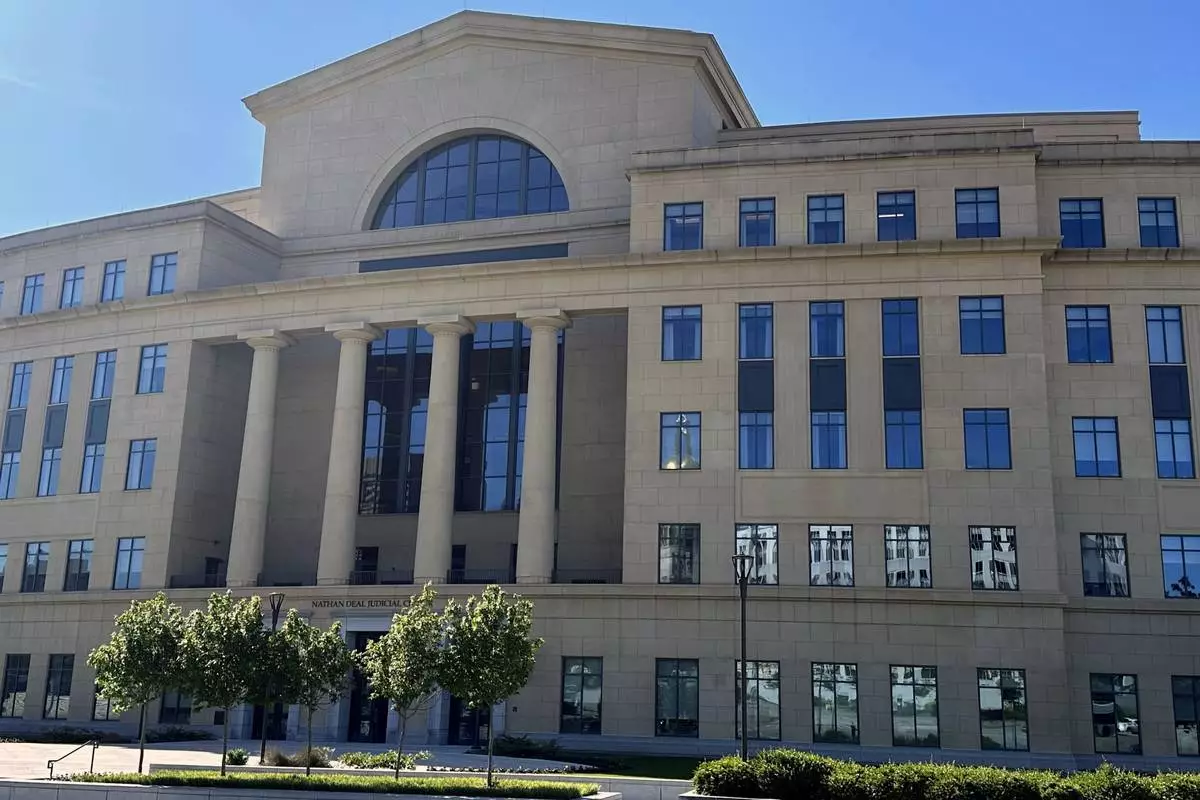
FILE - The Nathan Deal Judicial Center, home of Georgia's Supreme Court and Court of Appeals, is seen on May, 1, 2024, in Atlanta. (AP Photo/Kate Brumback, File)
FILE - The Nathan Deal Judicial Center, home of Georgia's Supreme Court and Court of Appeals, is seen on May, 1, 2024, in Atlanta. (AP Photo/Kate Brumback, File)
WASHINGTON (AP) — President Donald Trump is meeting with oil executives at the White House on Friday in hopes of securing $100 billion in investments to revive Venezuela’s ability to fully tap into its expansive reserves of petroleum — a plan that rides on their comfort in making commitments in a country plagued by instability, inflation and uncertainty.

Since the U.S. military raid to capture former Venezuelan leader Nicolás Maduro on Saturday, Trump has quickly pivoted to portraying the move as a newfound economic opportunity for the U.S., seizing tankers carrying Venezuelan oil, saying the U.S. is taking over the sales of 30 million to 50 million barrels of previously sanctioned Venezuelan oil and will be controlling sales worldwide indefinitely.

On Friday, U.S. forces seized their fifth tanker over the past month that has been linked to Venezuelan oil. The action reflected the determination of the U.S. to fully control the exporting, refining and production of Venezuelan petroleum, a sign of the Trump administration's plans for ongoing involvement in the sector as it seeks commitments from private companies.

It's all part of a broader push by Trump to keep gasoline prices low. At a time when many Americans are concerned about affordability, the incursion in Venezuela melds Trump’s assertive use of presidential powers with an optical spectacle meant to convince Americans that he can bring down energy prices.

The meeting, set for 2:30 p.m. EST, will be open to the news media, according to an update to the president's daily schedule. “At least 100 Billion Dollars will be invested by BIG OIL, all of whom I will be meeting with today at The White House,” Trump said Friday in a pre-dawn social media post.

Trump is set to meet with executives from 17 oil companies, according to the White House. Among the companies attending are Chevron, which still operates in Venezuela, and ExxonMobil and ConocoPhillips, which both had oil projects in the country that were lost as part of a 2007 nationalization of private businesses under Maduro’s predecessor, Hugo Chávez.

The president is meeting with a wide swath of domestic and international companies with interests ranging from construction to the commodity markets. Other companies slated to be at the meeting include Halliburton, Valero, Marathon, Shell, Singapore-based Trafigura, Italy-based Eni and Spain-based Repsol.

Large U.S. oil companies have so far largely refrained from affirming investments in Venezuela as contracts and guarantees need to be in place. Trump has suggested on social media that America would help to backstop any investments.

Venezuela’s oil production has slumped below one million barrels a day. Part of Trump's challenge to turn that around will be to convince oil companies that his administration has a stable relationship with Venezuela’s interim President Delcy Rodríguez, as well as protections for companies entering the market.

Secretary of State Marco Rubio, Energy Secretary Chris Wright and Interior Secretary Doug Burgum are slated to attend the oil executives meeting, according to the White House.

Meanwhile, the United States and Venezuelan governments said Friday they were exploring the possibility of r estoring diplomatic relations between the two countries, and that a delegation from the Trump administration arrived to the South American nation on Friday.

The small team of U.S. diplomats and diplomatic security officials traveled to Venezuela to make a preliminary assessment about the potential re-opening of the U.S. Embassy in Caracas, the State Department said in a statement.

Trump also announced on Friday he’d meet with President Gustavo Petro in early February, but called on the Colombian leader to make quick progress on stemming flow of cocaine into the U.S.

Trump, following the ouster of Maduro, had made vague threats to take similar action against Petro. Trump abruptly changed his tone Wednesday about his Colombian counterpart after a friendly phone call in which he invited Petro to visit the White House.

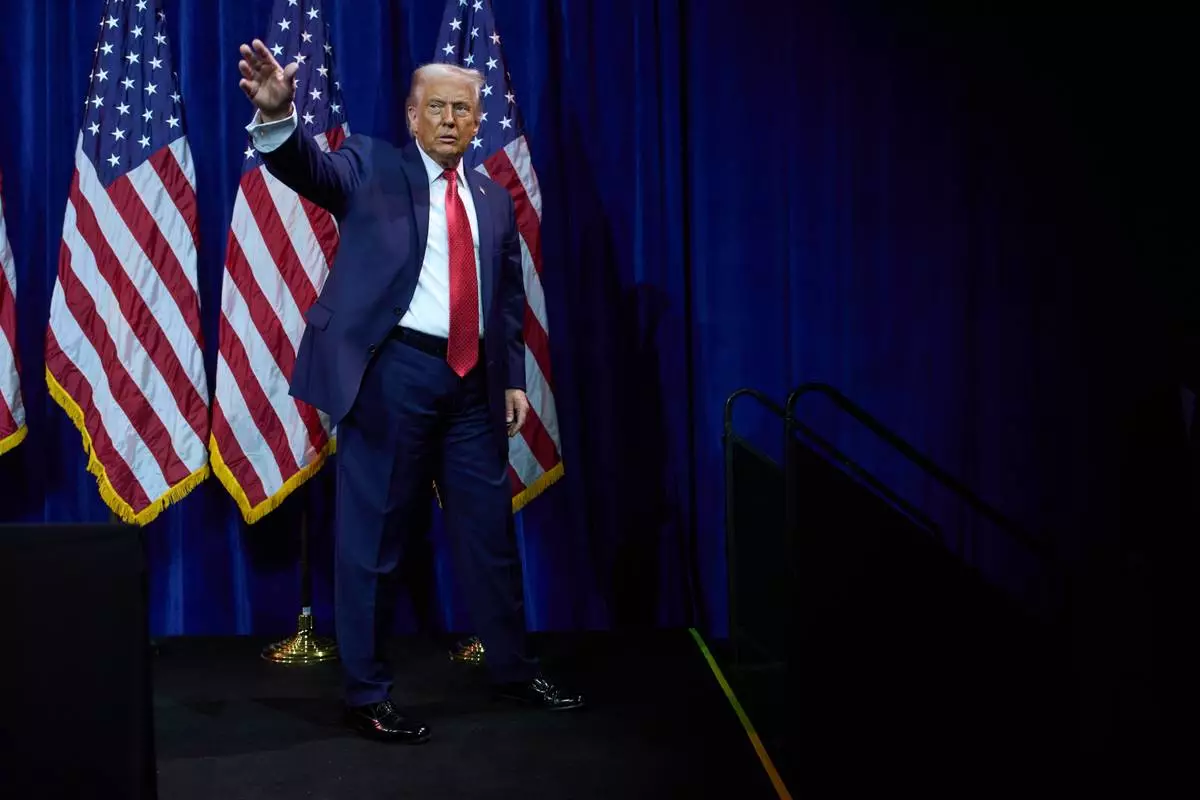
President Donald Trump waves as he walks off stage after speaking to House Republican lawmakers during their annual policy retreat, Tuesday, Jan. 6, 2026, in Washington. (AP Photo/Evan Vucci)

President Donald Trump waves as he walks off stage after speaking to House Republican lawmakers during their annual policy retreat, Tuesday, Jan. 6, 2026, in Washington. (AP Photo/Evan Vucci)

Recommended Articles