Chairman of the ASEAN Business Advisory Council (ASEAN-BAC) Nazir Razak told China Global Television Network (CGTN) that regional cooperation and connectivity would boost further economic growth in Asia and across the globe, despite economic headwinds in the world economy.
The 46th Association of Southeast Asian Nations (ASEAN) Summit opened on Monday in Kuala Lumpur, the capital of Malaysia, with greater regional integration and resilience against trade and economic disruptions high on the agenda.
Malaysia served as the chair of the ASEAN for 2025 and hosted the ASEAN Summit and related summits under the theme "Inclusivity and Sustainability."
Razak said that Malaysia has outlined a clear, strategic plan to mitigate the impact of tariffs and other economic shocks and safeguard its economic interests.
"Malaysia is doing four things. One is to negotiate for the right tariff levels. Two is we're looking at ways that we can help our weaker companies, our SMEs (small and medium-sized enterprises), MSMEs (micro, small and medium-sized enterprises), cope with this. Thirdly, we need to look within the region and strengthen our ties within the ASEAN region. And of course, fourthly is strengthen our business ties with other parts of the world, including China, India, GCC (Gulf Cooperation Council), and even further afield to the other sort of countries of the South," he said.
On May 20, economic and trade ministers from China and ASEAN member states announced the full completion of negotiations on Version 3.0 of the China-ASEAN Free Trade Area (CAFTA), a key step towards signing the CAFTA 3.0 upgrade protocol.
Razak said that Malaysia welcomes bringing regional and bilateral frameworks up to date to align with current realities.
"I think the 3.0 is covering areas that were kind of left out, given how the world has changed since 2.0. I think, it includes areas like digital in a much more significant way. I think of impact, it will definitely be positive. It reflects the quality of our relationship with China that we constantly review the enabling agreements for trade and investment between us," he said.
Alongside the 46th ASEAN Summit, the 2nd ASEAN-GCC Summit and the ASEAN-GCC-China Summit also took place in the Kuala Lumpur, emphasizing the region's collaborative ambitions.
Razak said that building on the evolving trade frameworks shows a growing recognition of untapped potential within key regional corridors, which calls for both innovative entrepreneurial ideas and proactive government support to fully harness opportunities.
"When you look at the numbers, clearly, there's still so much more to do, particularly within the ASEAN-GCC Corridor, and to some extent, the China-GCC Corridor. There's a lot to do. Need is the mother of invention. When you had the huge U.S. market, we probably didn't spend enough time on these opportunities. Between the three regions, I think we need to look at specific opportunities, for instance in the Halal food area and the food security area. These kind of ideas, entrepreneurs need to come up with the ideas, and governments need to come up to enable them to happen," he said.
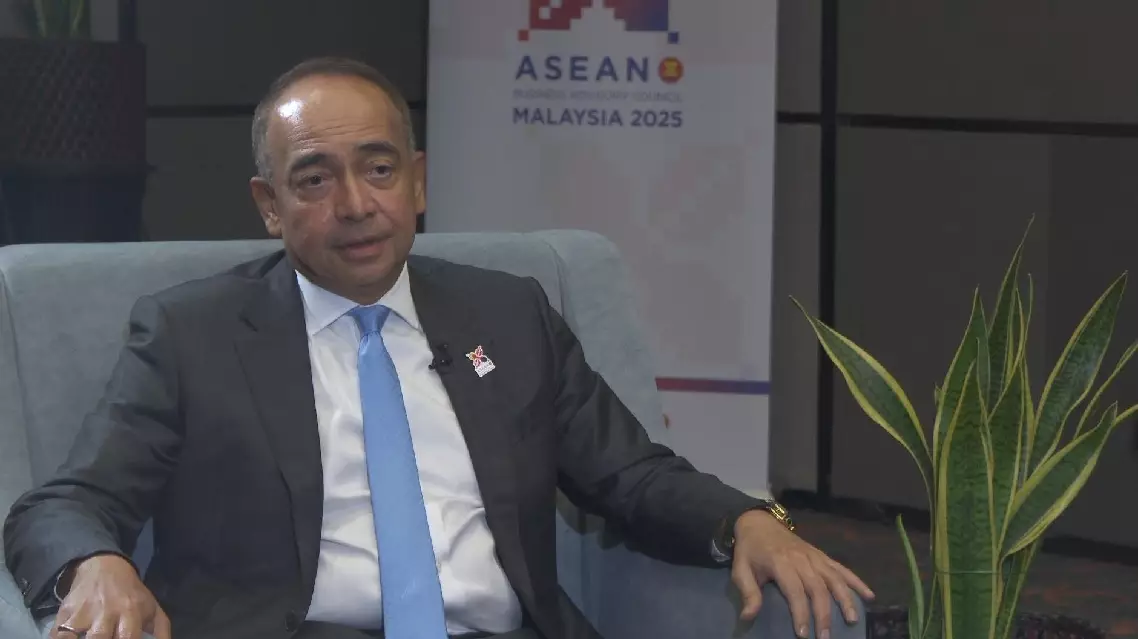
ASEAN business council chairman says connectivity, cooperation will boost growth