Skip to Content Facebook Feature Image

California avocado growers say Mexican imports have helped their sales

News

California avocado growers say Mexican imports have helped their sales
News

News

California avocado growers say Mexican imports have helped their sales

2025-05-29 12:02 Last Updated At:12:11

SOMIS, Calif. (AP) — Andreas Tompros lost his home and at least a third of his avocado orchard to a wildfire last year, but the 47-year-old grower is not worried about his farm making a comeback.

While California farmers often rattle off a list of challenges they face including high labor costs, water restrictions and overseas competition, many avocado growers say they have a good thing going. A key reason may come as a surprise to some — Mexican imports.

More Images
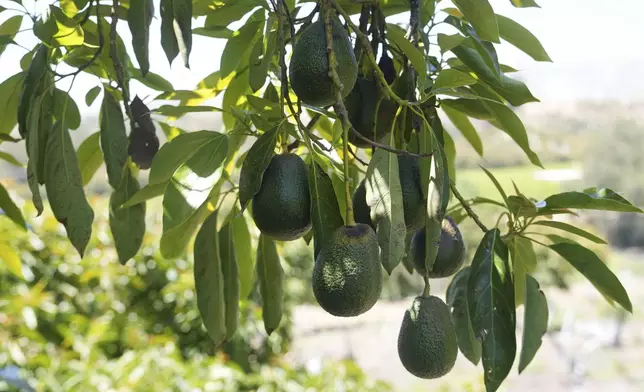
Avocados grow at Ridgecrest Avocados in Somis, Calif., on Thursday, May 15, 2025. (AP Photo/Damian Dovarganes)
Avocados grow at Ridgecrest Avocados in Somis, Calif., on Thursday, May 15, 2025. (AP Photo/Damian Dovarganes)

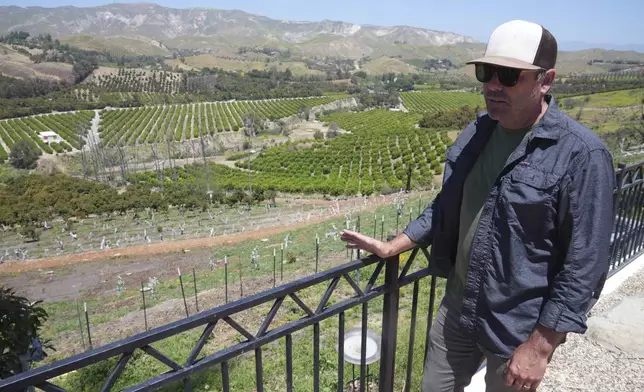
Andreas Tompros looks out at his avocado farm, Ridgecrest Avocados, in Somis, Calif., on Thursday, May 15, 2025. (AP Photo/Damian Dovarganes)
Andreas Tompros looks out at his avocado farm, Ridgecrest Avocados, in Somis, Calif., on Thursday, May 15, 2025. (AP Photo/Damian Dovarganes)

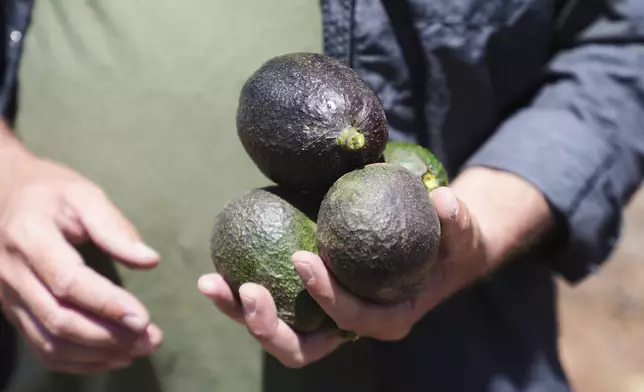
Andreas Tompros holds ripe avocados grown at his avocado farm, Ridgecrest Avocados, in Somis, Calif., on Thursday, May 15, 2025. (AP Photo/Damian Dovarganes)

Andreas Tompros holds ripe avocados grown at his avocado farm, Ridgecrest Avocados, in Somis, Calif., on Thursday, May 15, 2025. (AP Photo/Damian Dovarganes)

Andreas Tompros tours his avocado farm, Ridgecrest Avocados, on Thursday, May 15, 2025. (AP Photo/Damian Dovarganes)

Andreas Tompros tours his avocado farm, Ridgecrest Avocados, on Thursday, May 15, 2025. (AP Photo/Damian Dovarganes)

When the United States lifted its ban on Mexican avocados in 1997, California growers worried at first that the imported fruit would displace their production.

But the steady flow of avocados has wound up helping, not hurting, their sales by allowing for a year-round supply to markets and restaurants that has fomented demand, farmers say. Before the influx, most American consumers considered avocados to be specialty items — and when they came into season in California, industry officials had to work to rev up widespread interest in order to sell them.

But not anymore.

Avocado consumption has been booming in the United States over the past two decades. The amount of fruit available per person tripled to more than 8 pounds (3.6 kilograms) between 2000 and 2021, federal statistics show. Avocado toast and guacamole are regular offerings not just in culinary hubs like NYC but at cafes around the Midwest and the South.

On a steep, sun-soaked hillside northwest of Los Angeles, Tompros is replanting nearly 300 avocado trees with the belief that Americans’ hunger for the fruit — and his orchard — will continue to grow.

“It will come back, and I believe it will become better than it was,” Tompros, who previously ran a software company in Hollywood, said of the orchard he took over five years ago in the tiny community of Somis.

Avocado demand has also been buoyed by consumers' growing interest in healthy fats, said Emiliano Escobedo, executive director of the Hass Avocado Board.

A 2000 U.S. law created the board that collected 2.5 cents for every pound (0.5 kilograms) of avocados imported or produced in the United States. The board used the money to market avocados and conduct nutritional research, an effort that has been widely credited with making the fruit ubiquitous in supermarkets and on restaurant menus.

“It’s been really wildly successful. It generates way more money than most of these other industry boards do,” said Richard Sexton, distinguished professor of agricultural and resource economics at the University of California, Davis. “When you look at the growth rate in avocado consumption relative to all fruits, the difference in growth rate is dramatic.”

Escobedo said about 60% of U.S. households currently buy avocados, and about half of these are responsible for the overwhelming majority of consumption, which means there’s still room for the market to grow — especially in the Northeast, where the fruit is less common.

“There is a lot of opportunity for certain groups of people to increase their purchasing of avocados,” Escobedo said.

While the Trump administration has threatened tariffs on a spate of Mexican goods, avocados have so far been spared. California growers said they want Mexican avocados to keep flowing into the country, though they also want robust U.S. inspections of the imports to keep out pests to protect their crop.

“If you are going to farm in California, avocados are about the best deal right now,” said Ken Melban, president of the California Avocado Commission.

California farmers grow about 10% of the avocados eaten in the United States, Melban said, and account for nearly all of the country’s domestic avocado production. The fruit is largely grown in California from April through September, and Mexican imports arrive year-round to meet nationwide demand, which exceeds what the state's farmers grow, he said.

In Southern California's Ventura County, many growers have shifted to avocados since lemon prices were walloped by cheaper imports from Argentina. As recently planted trees start bearing fruit in a few years, the region's avocado production is likely to rise, said Korinne Bell, agricultural commissioner for the county northwest of Los Angeles.

Avocado trees do not come without risks in a region prone to wildfires.

Still, demand for the trees has jumped due to interest from lemon growers — and since the November 2024 fire charred Ventura County avocado orchards, said Rob Brokaw, whose family-owned nursery has supplied avocado trees to California growers for 70 years.

“Right now we are sold out essentially for this year,” Brokaw said. “And we're mostly sold out for 2026.”

Tompros debated whether to plant the more fire-resistant lemon trees or another crop after the fire ripped through Somis, but he decided to replant due to the soaring demand for Super Bowl guacamole and avocado toast.

“It’s the super food, and it’s still growing in popularity,” Tompros said.

He’s taking precautions to not plant the trees too close to what will eventually be his rebuilt home, because the dried-out leaves that help nourish the orchard's soil can also fuel blazes.

It may take a few years, but Tompros hopes it won’t be too long before his newly planted trees bear fruit that he can sell to a local packinghouse or in seasonal gift boxes with citrus and passionfruit that he ships directly to customers.
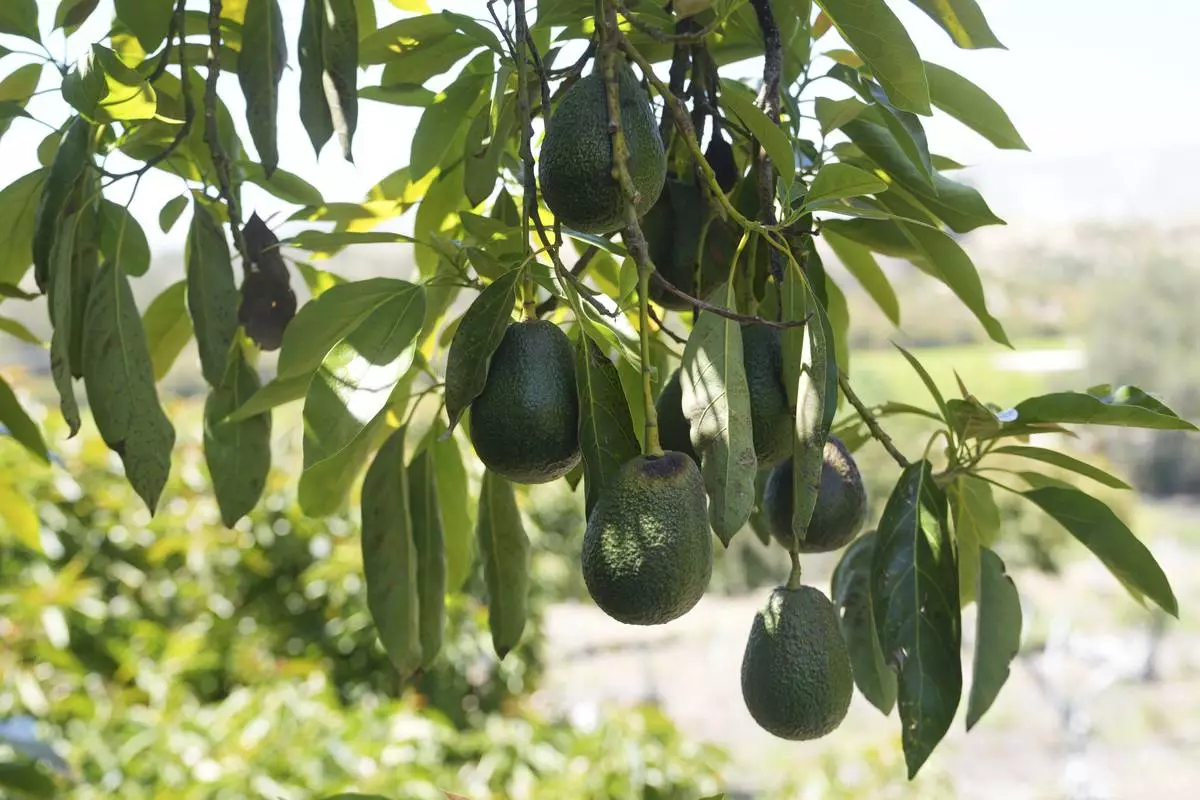
Avocados grow at Ridgecrest Avocados in Somis, Calif., on Thursday, May 15, 2025. (AP Photo/Damian Dovarganes)
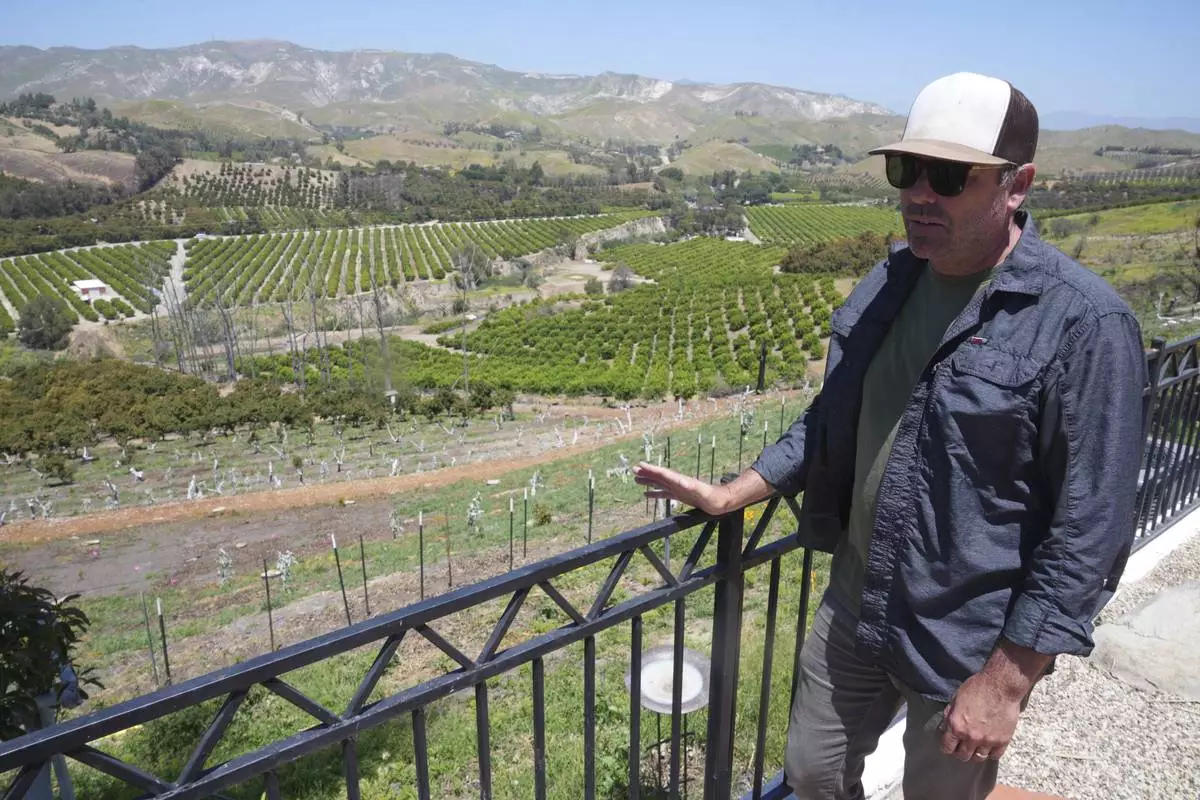
Avocados grow at Ridgecrest Avocados in Somis, Calif., on Thursday, May 15, 2025. (AP Photo/Damian Dovarganes)

Andreas Tompros looks out at his avocado farm, Ridgecrest Avocados, in Somis, Calif., on Thursday, May 15, 2025. (AP Photo/Damian Dovarganes)
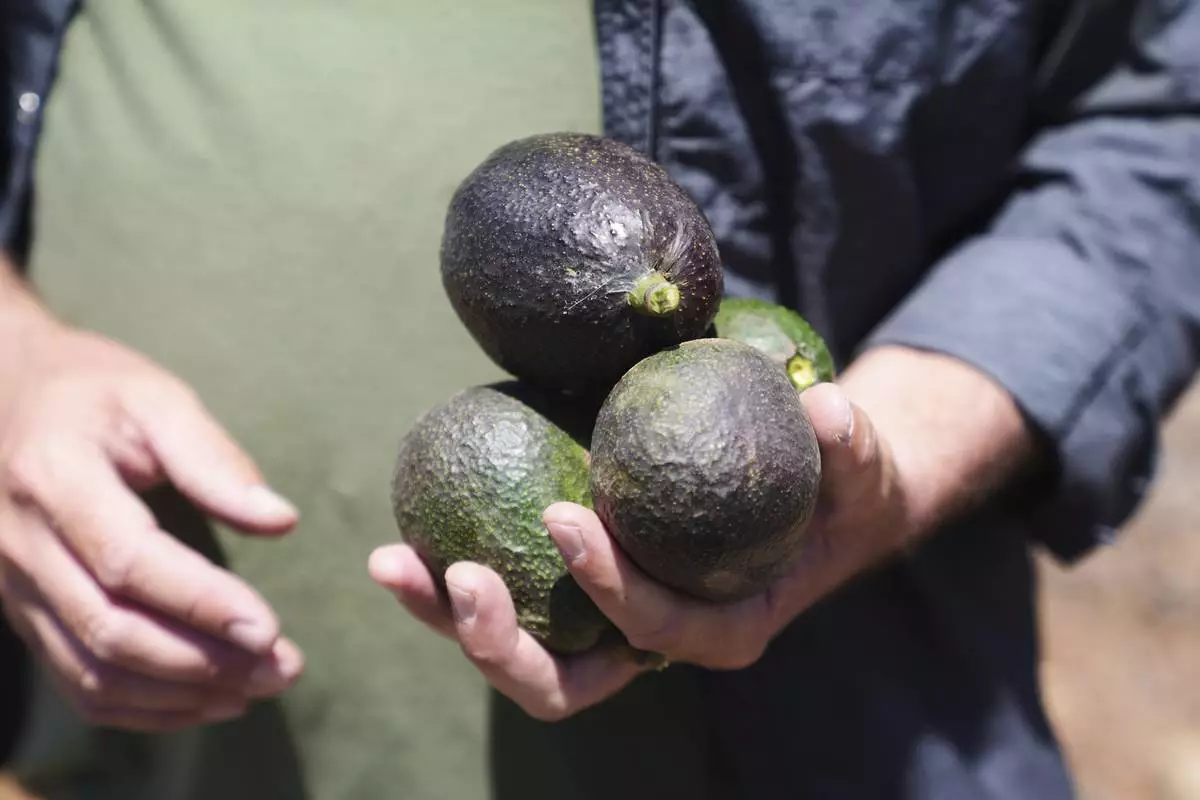
Andreas Tompros looks out at his avocado farm, Ridgecrest Avocados, in Somis, Calif., on Thursday, May 15, 2025. (AP Photo/Damian Dovarganes)

Andreas Tompros holds ripe avocados grown at his avocado farm, Ridgecrest Avocados, in Somis, Calif., on Thursday, May 15, 2025. (AP Photo/Damian Dovarganes)

Andreas Tompros holds ripe avocados grown at his avocado farm, Ridgecrest Avocados, in Somis, Calif., on Thursday, May 15, 2025. (AP Photo/Damian Dovarganes)

Andreas Tompros tours his avocado farm, Ridgecrest Avocados, on Thursday, May 15, 2025. (AP Photo/Damian Dovarganes)
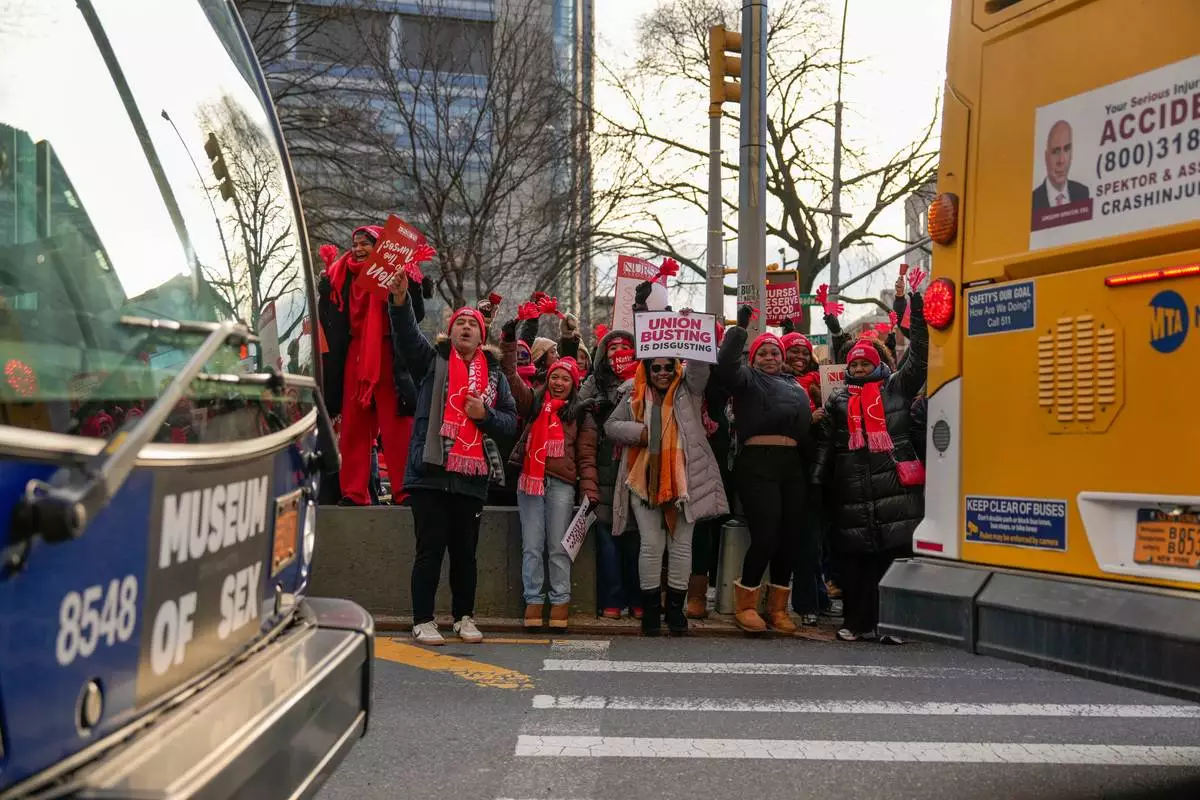
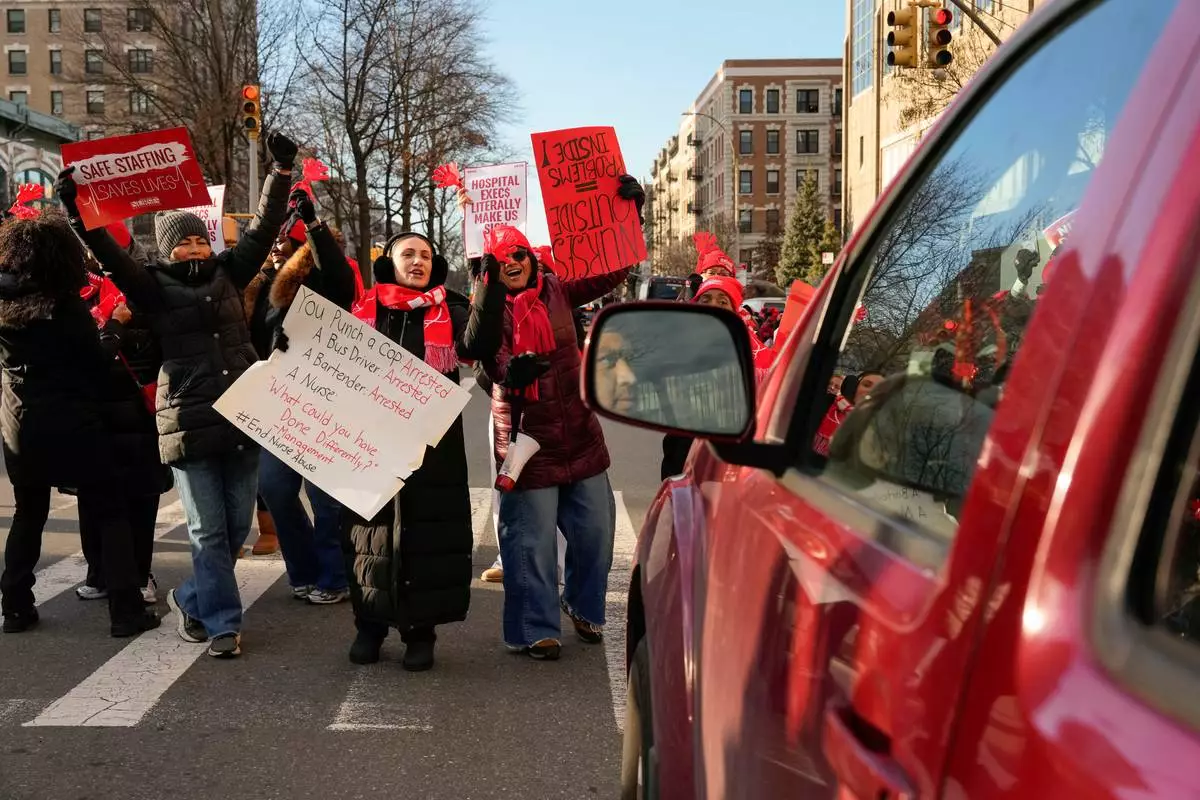
Andreas Tompros tours his avocado farm, Ridgecrest Avocados, on Thursday, May 15, 2025. (AP Photo/Damian Dovarganes)
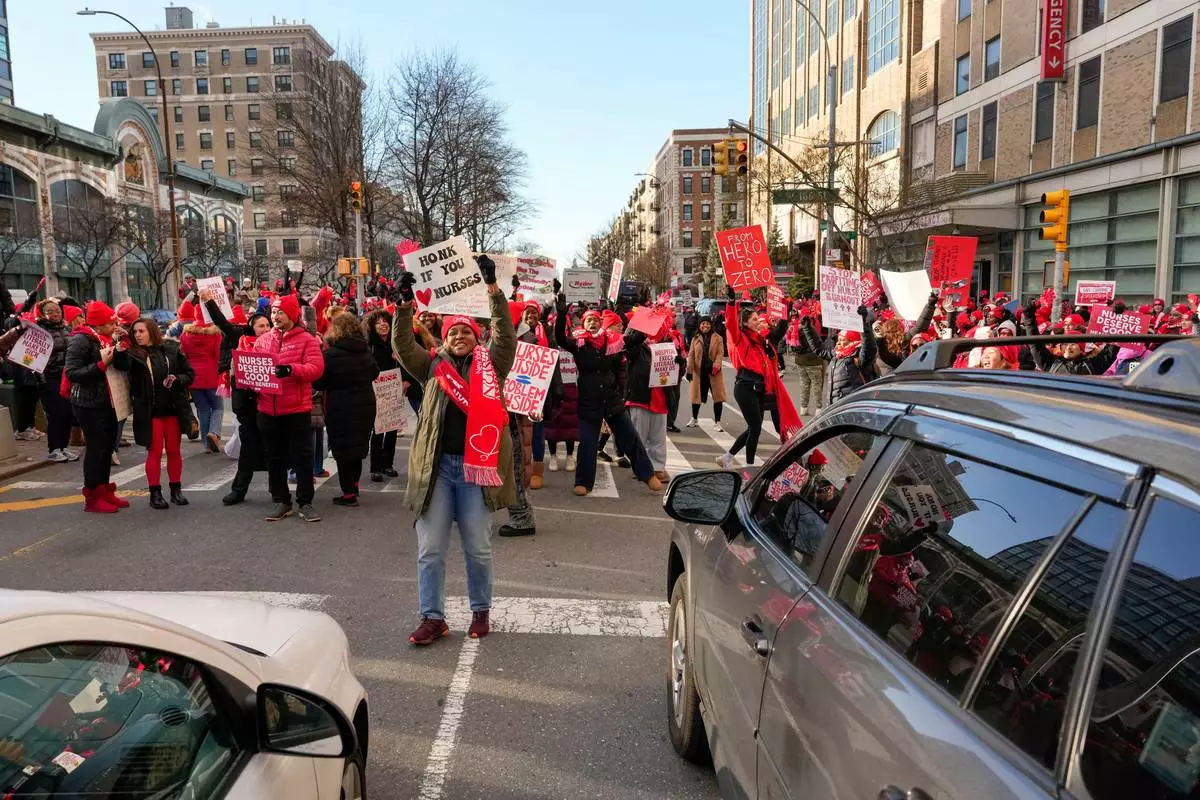
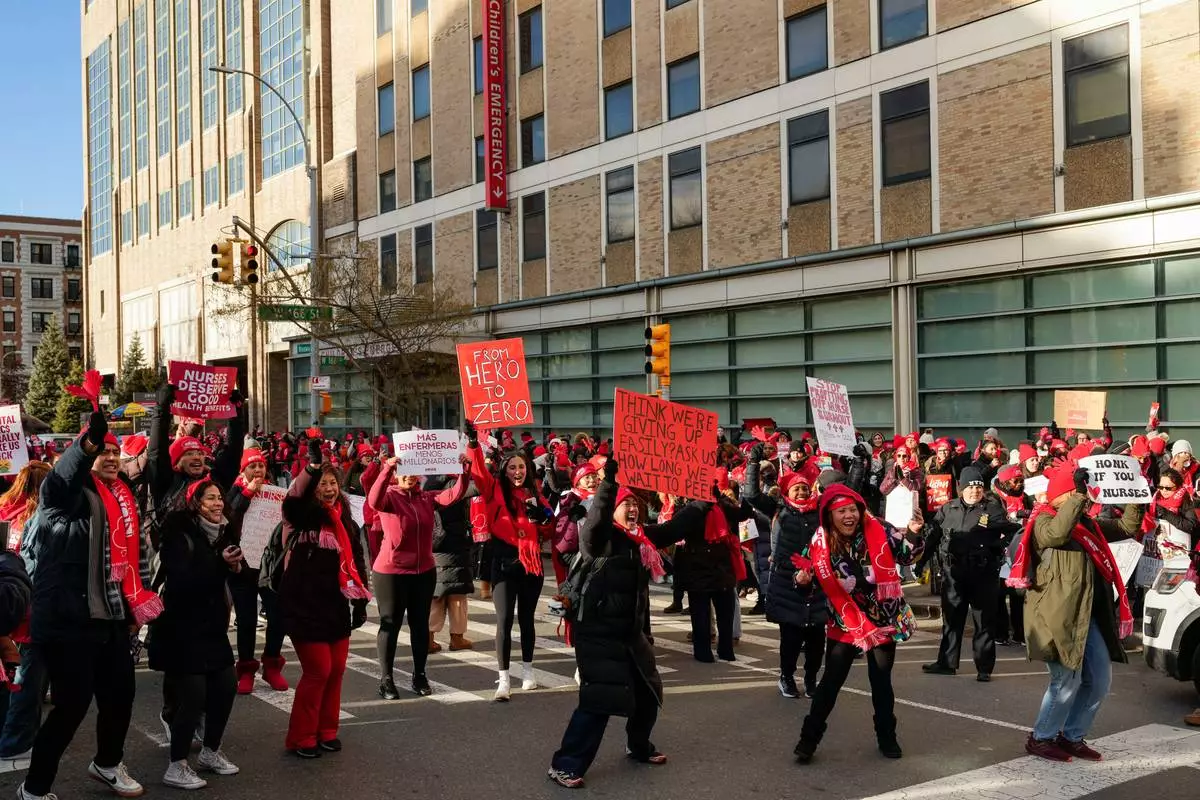
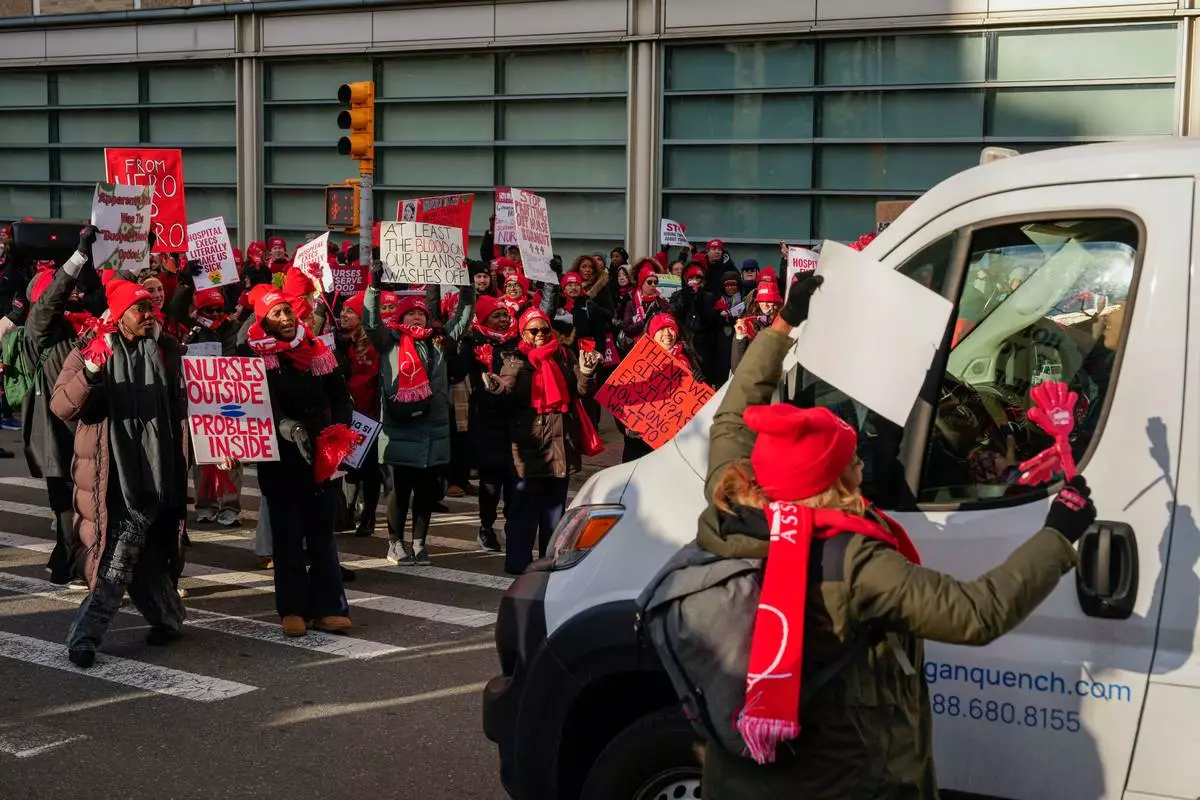
NEW YORK (AP) — Thousands of nurses in three hospital systems in New York City went on strike Monday after negotiations through the weekend failed to yield breakthroughs in their contract disputes.

The strike was taking place at The Mount Sinai Hospital and two of its satellite campuses, with picket lines forming. The other affected hospitals are NewYork-Presbyterian and Montefiore Medical Center in the Bronx.

About 15,000 nurses are involved in the strike, according to New York State Nurses Association.

“After months of bargaining, management refused to make meaningful progress on core issues that nurses have been fighting for: safe staffing for patients, healthcare benefits for nurses, and workplace violence protections,” the union said in a statement issued Monday. “Management at the richest hospitals in New York City are threatening to discontinue or radically cut nurses’ health benefits.”

The strike, which comes during a severe flu season, could potentially force the hospitals to transfer patients, cancel procedures or divert ambulances. It could also put a strain on city hospitals not involved in the contract dispute, as patients avoid the medical centers hit by the strike.

The hospitals involved have been hiring temporary nurses to try and fill the labor gap during the walkout, and said in a statement during negotiations that they would “do whatever is necessary to minimize disruptions.” Montefiore posted a message assuring patients that appointments would be kept.

“NYSNA’s leaders continue to double down on their $3.6 billion in reckless demands, including nearly 40% wage increases, and their troubling proposals like demanding that a nurse not be terminated if found to be compromised by drugs or alcohol while on the job," Montefiore spokesperson Joe Solmonese said Monday after the strike had started. "We remain resolute in our commitment to providing safe and seamless care, regardless of how long the strike may last.”

New York-Presbyterian accused the union of staging a strike to “create disruption,” but said in a statement that it has taken steps to ensure patients receive the care they need.

"We’re ready to keep negotiating a fair and reasonable contract that reflects our respect for our nurses and the critical role they play, and also recognizes the challenging realities of today’s healthcare environment,” the statement said.

The work stoppage is occurring at multiple hospitals simultaneously, but each medical center is negotiating with the union independently. Several other hospitals across the city and in its suburbs reached deals in recent days to avert a possible strike.

The nurses’ demands vary by hospital, but the major issues include staffing levels and workplace safety. The union says hospitals have given nurses unmanageable workloads.

Nurses also want better security measures in the workplace, citing incidents like a an incident last week, when a man with a sharp object barricaded himself in a Brooklyn hospital room and was then killed by police.

The union also wants limitations on hospitals’ use of artificial intelligence.

The nonprofit hospitals involved in the negotiations say they’ve been working to improve staffing levels, but say the union’s demands overall are too costly.

Nurses voted to authorize the strike last month.

Both New York Gov. Kathy Hochul and Mayor Zohran Mamdani had expressed concern about the possibility of the strike. As the strike deadline neared, Mamdani urged both sides to keep negotiating and reach a deal that “both honors our nurses and keeps our hospitals open.”

“Our nurses kept this city alive through its hardest moments. Their value is not negotiable,” Mamdani said.

State Attorney General Letitia James voiced similar support, saying "nurses put their lives on the line every day to keep New Yorkers healthy. They should never be forced to choose between their own safety, their patients’ well-being, and a fair contract.”

The last major nursing strike in the city was only three years ago, in 2023. That work stoppage, at Mount Sinai and Montefiore, was short, lasting three days. It resulted in a deal raising pay 19% over three years at those hospitals.

It also led to promised staffing improvements, though the union and hospitals now disagree about how much progress has been made, or whether the hospitals are retreating from staffing guarantees.

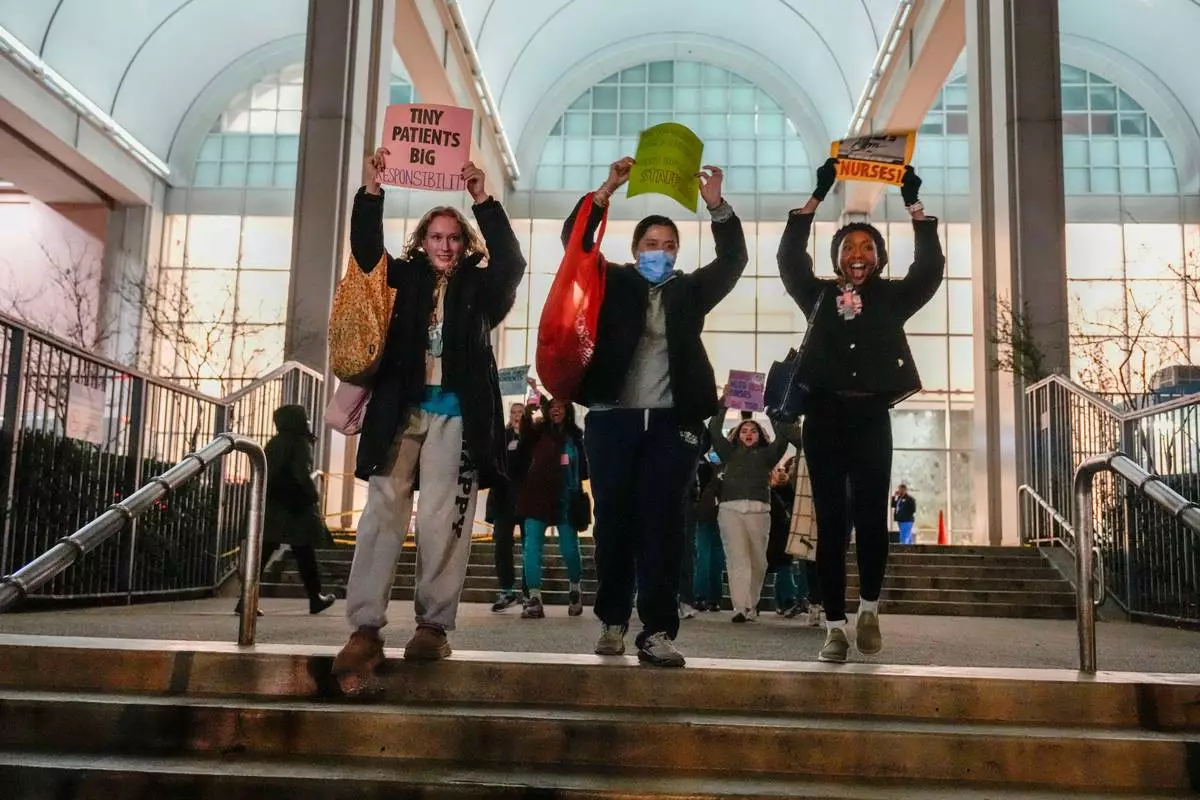
Nurses strike outside New York-Presbyterian Hospital, Monday, Jan. 12, 2026, in New York. (AP Photo/Yuki Iwamura)

Nurses strike outside New York-Presbyterian Hospital, Monday, Jan. 12, 2026, in New York. (AP Photo/Yuki Iwamura)

Nurses strike outside New York-Presbyterian Hospital, Monday, Jan. 12, 2026, in New York. (AP Photo/Yuki Iwamura)

Nurses strike outside New York-Presbyterian Hospital, Monday, Jan. 12, 2026, in New York. (AP Photo/Yuki Iwamura)

Nurses strike outside New York-Presbyterian Hospital, Monday, Jan. 12, 2026, in New York. (AP Photo/Yuki Iwamura)

Nurses strike outside New York-Presbyterian Hospital, Monday, Jan. 12, 2026, in New York. (AP Photo/Yuki Iwamura)

Nurses strike outside New York-Presbyterian Hospital, Monday, Jan. 12, 2026, in New York. (AP Photo/Yuki Iwamura)

Nurses strike outside New York-Presbyterian Hospital, Monday, Jan. 12, 2026, in New York. (AP Photo/Yuki Iwamura)

Nurses strike outside New York-Presbyterian Hospital, Monday, Jan. 12, 2026, in New York. (AP Photo/Yuki Iwamura)

Nurses strike outside New York-Presbyterian Hospital, Monday, Jan. 12, 2026, in New York. (AP Photo/Yuki Iwamura)

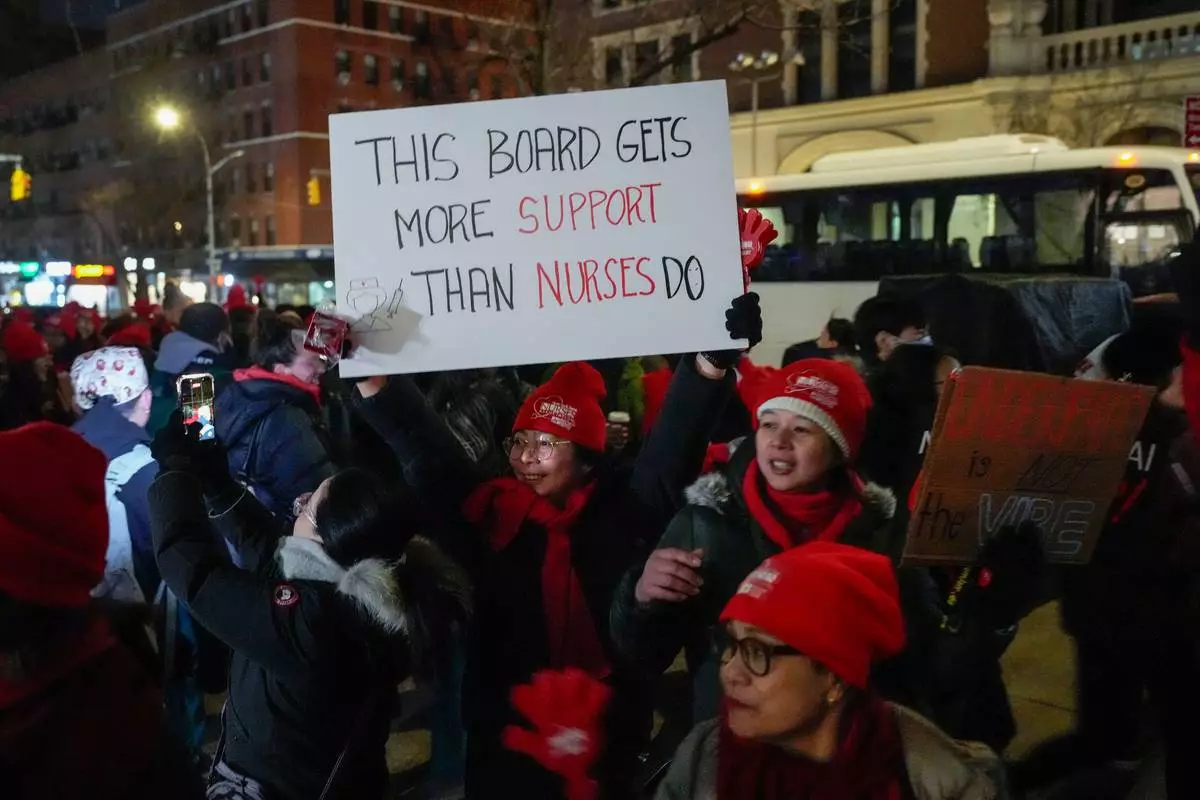
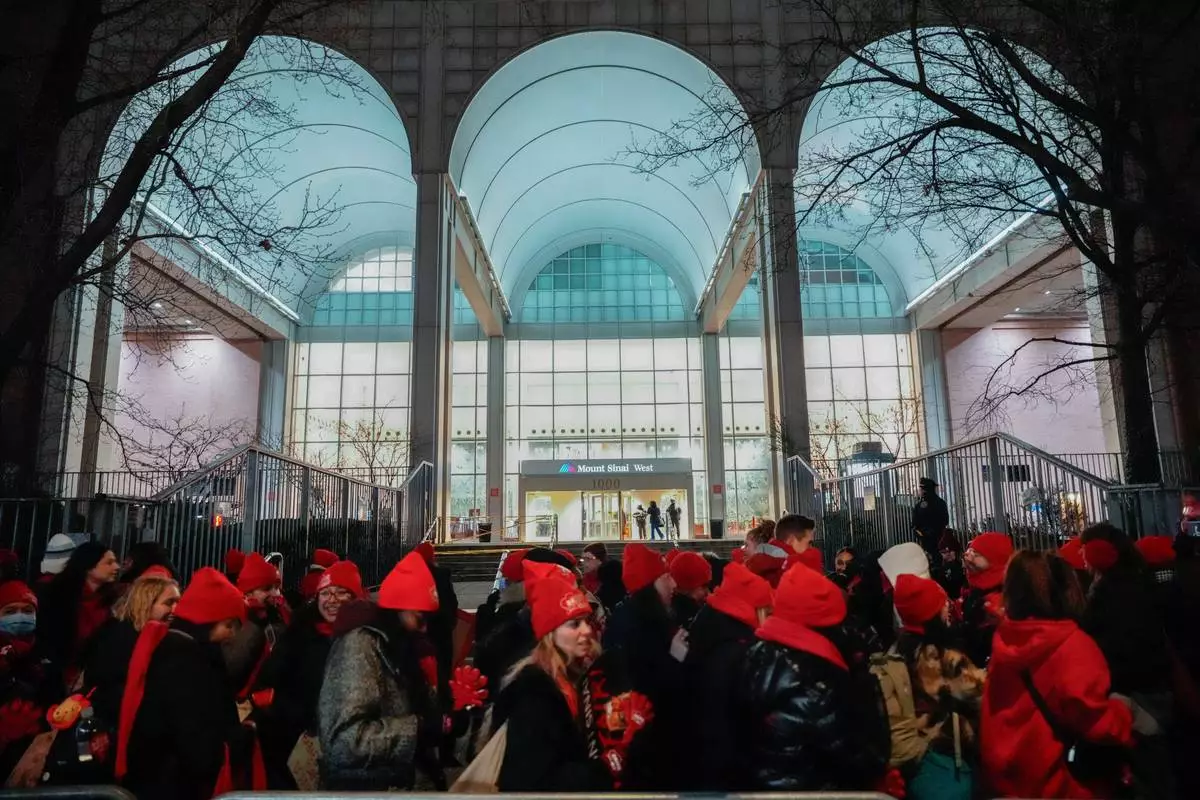
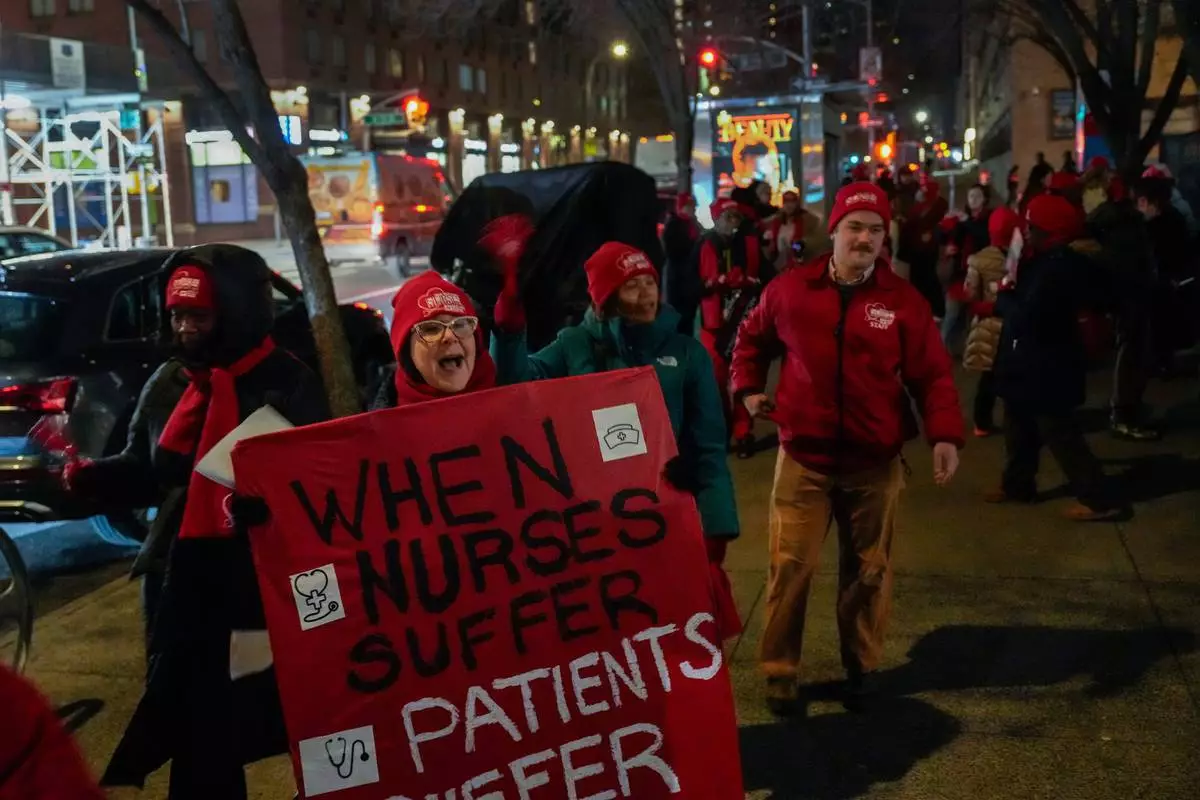
Nurses strike outside Mount Sinai West Hospital, Monday, Jan. 12, 2026, in New York. (AP Photo/Yuki Iwamura)

Nurses strike outside Mount Sinai West Hospital, Monday, Jan. 12, 2026, in New York. (AP Photo/Yuki Iwamura)

Nurses strike outside Mount Sinai West Hospital, Monday, Jan. 12, 2026, in New York. (AP Photo/Yuki Iwamura)

Nurses strike outside Mount Sinai West Hospital, Monday, Jan. 12, 2026, in New York. (AP Photo/Yuki Iwamura)

Nurses strike outside Mount Sinai West Hospital, Monday, Jan. 12, 2026, in New York. (AP Photo/Yuki Iwamura)

Nurses strike outside Mount Sinai West Hospital, Monday, Jan. 12, 2026, in New York. (AP Photo/Yuki Iwamura)

Nurses strike outside Mount Sinai West Hospital, Monday, Jan. 12, 2026, in New York. (AP Photo/Yuki Iwamura)

Nurses strike outside Mount Sinai West Hospital, Monday, Jan. 12, 2026, in New York. (AP Photo/Yuki Iwamura)

FILE - A medical worker transports a patient at Mount Sinai Hospital, April 1, 2020, in New York. (AP Photo/Mary Altaffer, File)

FILE - A medical worker transports a patient at Mount Sinai Hospital, April 1, 2020, in New York. (AP Photo/Mary Altaffer, File)

Recommended Articles