Papua New Guinea looks forward to its future relationship with China and believes ties will grow stronger, the Pacific Island country's Foreign Minister Justin Tkatchenko said on Wednesday.
Tkatchenko made the remarks in a group interview with China Global Television Network on the sidelines of the 3rd China-Pacific Island Countries (PICs) Foreign Ministers' Meeting, which runs from Wednesday to Thursday in Xiamen, east China's Fujian Province.
"We have a very strong relationship with China. We'll be celebrating 50 years of diplomacy and diplomatic relations going forward. China is one of our biggest economic and trade partners for our country and sits greatly in infrastructure and development in many different ways -- privately, as well as government-to-government and grant," he said.
The foreign minister reaffirmed his country's commitment to the one-China principle and the Belt and Road Initiative, highlighting the significant growth prospects of bilateral cooperation.
"We have a lot of ongoing projects that will enhance the lives of Papua New Guineans. We are working through the One Belt One Road Initiative of China, which greatly enhances the economic and trade with Papa New Guinea and China and increases the prosperity of our people going forward in many different sectors from education to health and to the well-being of our people and their future," said Tkatchenko.
Noting Papua New Guinea's strategic position, Tkatchenko said he expects ties with China will help his country balance its role both in the South Pacific as well as Southeast Asia.
The Association of Southeast Asian Nations (ASEAN) has also engaged in growing ties with China in recent years, including through the signing of free trade agreements.
Papua New Guinea's bid to join ASEAN recently caught the attention of the association's Secretary-General Kao Kim Hourn, who highlighted the matter at a press briefing on Wednesday in Jakarta, Indonesia.
"For us, the relationship with China is no mistake. It is a positive attribute to our country and we look forward to continuing our relationship with China, growing our countries together, with also Papua New Guinea moving forward to becoming a member of ASEAN," he said.
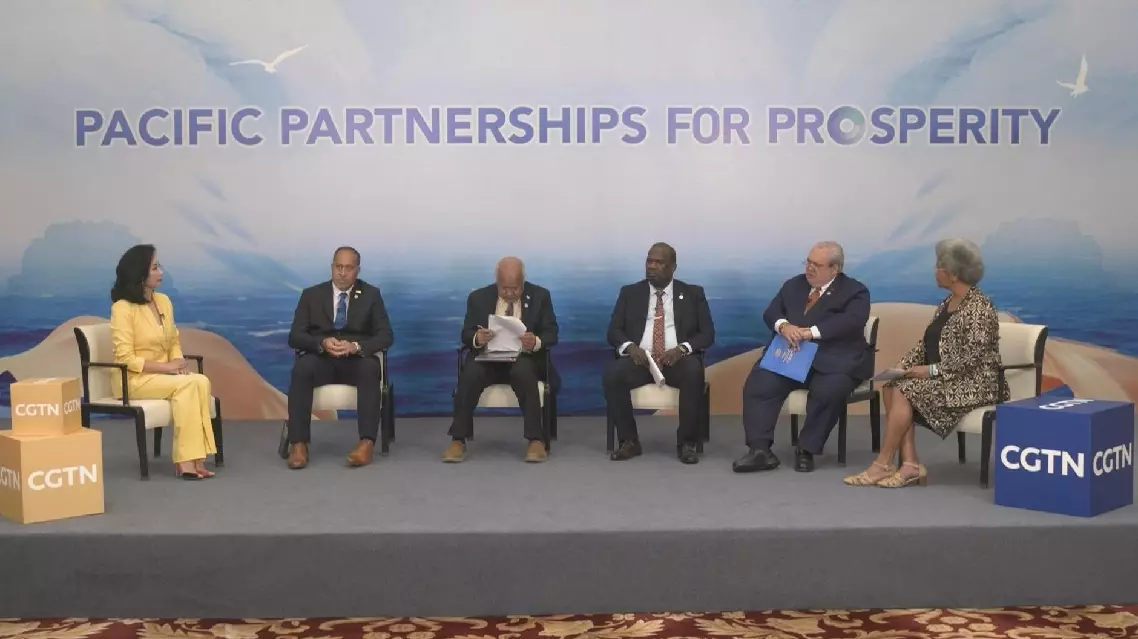
Papua New Guinea looks forward to stronger future ties with China: FM
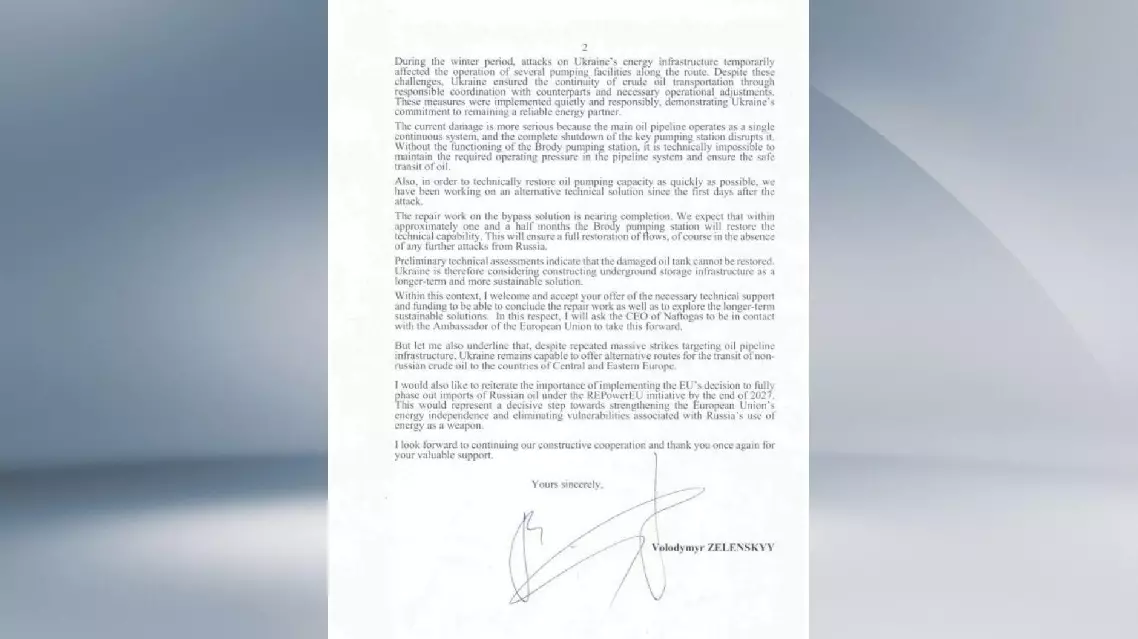
Ukrainian President Volodymyr Zelensky has pledged to repair the Druzhba pipeline, which carries Russian crude oil to Central Europe via Ukraine, within about one and a half months, with support from the European Union (EU), according to a letter sent to EU leaders on Tuesday.
The Druzhba pipeline, also known as the Friendship Pipeline, has been out of operation since the end of January due to an attack.
European Commission President Ursula von der Leyen and European Council President Antonio Costa confirmed the commitment in a joint statement issued the same day.
According to the statement, Ukraine welcomes and accepts technical support and funding from EU, so as to repair the pipeline and restore the flow of oil to Hungary and Slovakia.
Oil supplies through the Druzhba pipeline to Slovakia and Hungary were suspended following an attack on January 27, Ukrainian officials said, blaming Russia for the pipeline damage. Slovakia later declared an oil emergency and claimed that Ukraine was deliberately halting oil supplies through the Druzhba pipeline.
One Monday, Slovak Prime Minister Robert Fico said the Slovak government can't accept the Ukrainian president's unilateral and harmful move to halt oil transit.
Fico emphasized that the EU must not prioritize Ukraine's interests over those of EU-member states such as Slovakia or Hungary.
Slovakia expects the EU to pressure Ukraine to resume the oil flow through the Druzhba pipeline, said Fico.
Also on Monday, Hungary and Slovakia signed an agreement to build a new pipeline to transport gasoline and diesel between the two countries.
In a video posted on Facebook, Hungarian Minister of Foreign Affairs and Trade Peter Szijjarto said he had signed an agreement earlier in the day with Slovak Economy Minister Denisa Sakova to construct the pipeline linking the oil refineries in Bratislava, Slovakia's capital, and Szazhalombatta in central Hungary.
According to Szijjarto, the pipeline will be 127 km long and capable of transporting up to 1.5 million tons of oil products annually, including diesel and gasoline.
He said the project would strengthen Hungary's energy supply, particularly diesel supplies, and help improve regional energy security.
The pipeline is expected to be completed in the first half of next year and will allow direct transportation of refined oil products between the two refineries, the minister added.
Ukraine pledges to repair Druzhba pipeline with EU support