Conflict and confrontation should not be the choice for China and the United States, and the U.S. side should stop conjuring up "powerful enemy" for itself, Chinese Ministry of National Defense spokesman Zhang Xiaogang said Thursday in Beijing.
Zhang made the remarks when asked to comment on the claims by the U.S. Defense Secretary that the U.S. side would build up its military to counter China in the Indo-Pacific, and the claims by the Commander of the U.S. Army Pacific that the U.S. army is building new units in response to potential conflicts with China.
"Mutual respect, peaceful coexistence and win-win cooperation are the right way for China and the United States to deal with each other. The U.S. side should stop conjuring up a powerful enemy for itself whether intentionally or unintentionally. Such an irrational approach is extremely dangerous," Zhang said at a regular press briefing.
"The Chinese military will make all-out efforts to enhance its combat readiness, and firmly safeguard national sovereignty, security and development interests," Zhang said.
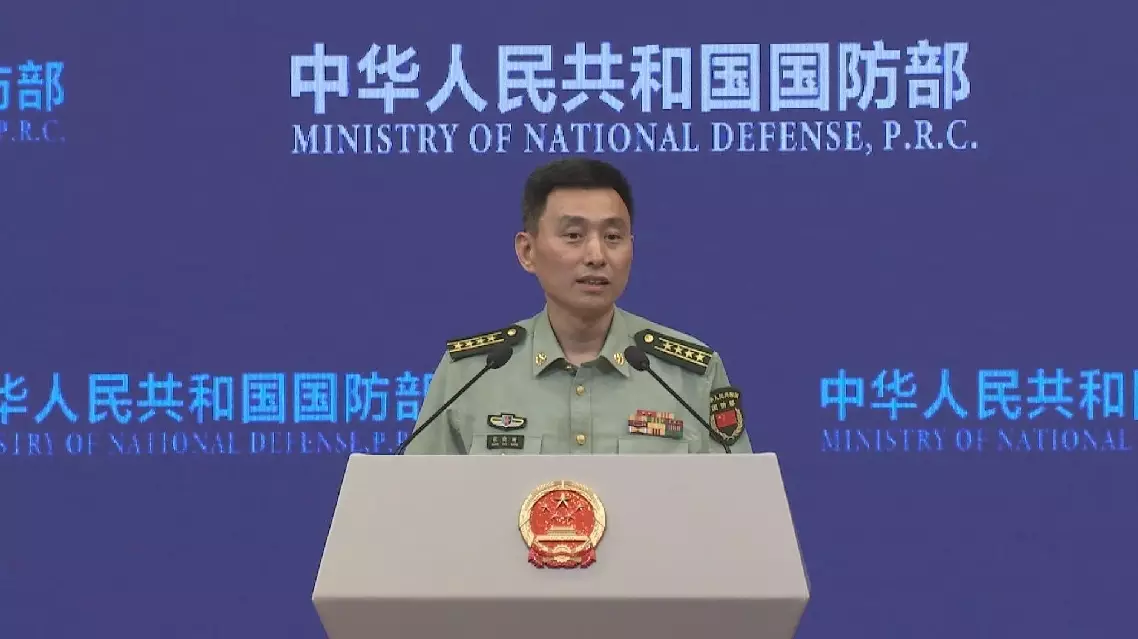
US should stop conjuring up its "powerful enemy": Chinese Defense Ministry
The Chinese naval hospital ship, Silk Road Ark, carried out a medical rescue drill in Atlantic waters during its Mission Harmony 2025, testing its capability to provide medical support during long-distance deployments.
The drill marked the vessel's first overseas medical-support exercise in unfamiliar waters in 2026, designed to simulate real-world emergency response scenarios far from home ports.
It brought together the hospital ship, a sea-based medical facility and shipborne helicopters in a coordinated rescue operation.
The exercise was conducted against a simulated backdrop of a commercial vessel in distress on the high seas with multiple casualties. After receiving the emergency signals, a shipborne helicopter immediately took off under an aerial evacuation plan, transferring simulated injured personnel to the triage area for rapid assessment and emergency treatment.
As part of the exercise, medical teams practiced a time-sensitive rescue approach, combining casualty transfer, triage and treatment to ensure prompt and accurate assessment of injuries under operational conditions.
"We followed the principle of providing treatment while transferring and carrying out triage and rescuing, ensuring that casualties are correctly assessed at the earliest time possible. If a patient is in a critical condition, we must carry out necessary emergency treatment in the triage area. Once vital signs are relatively stable, the patient is then transferred to an appropriate treatment unit," said Jiang Yingbo, a member of the Mission Harmony 2025.
Severely injured patients were transferred to intensive care units for further observation and treatment after surgery. A medical expert group then conducted timely consultations to formulate targeted treatment plans.
Under complex sea conditions in distant waters, the drill covered multiple training modules including maritime evacuation, triage, emergency treatment and surgery, strengthening the military medical ship's integrated emergency medical response, and enhancing the navy's far-sea medical support capability, according to the authorities.
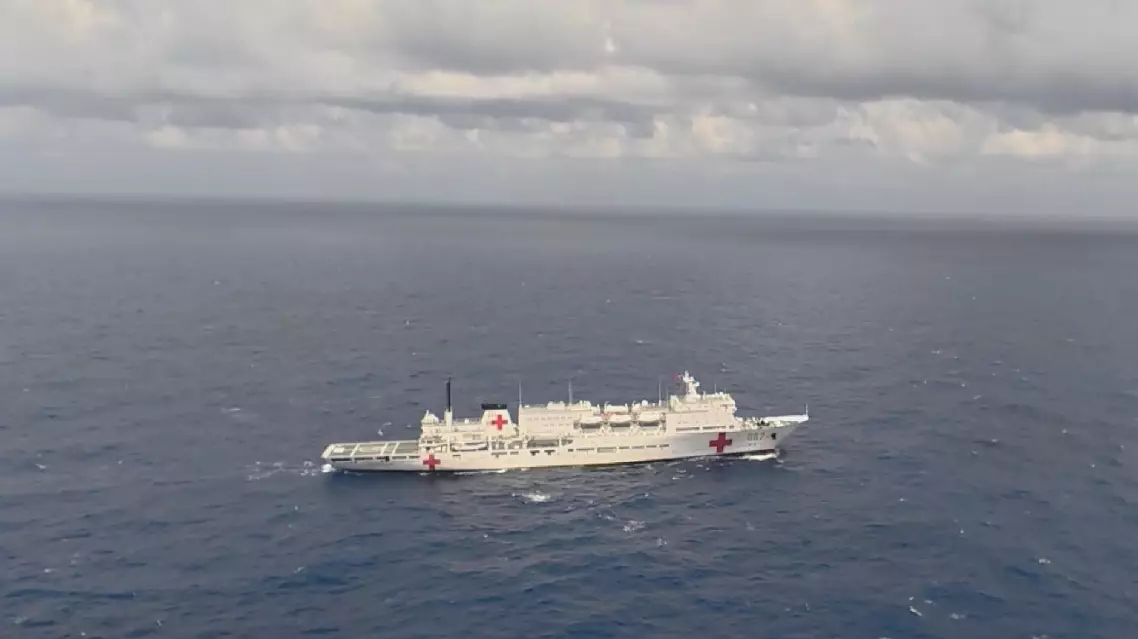
Chinese navy hospital ship drills medical rescue in Atlantic waters