WASHINGTON (AP) — A little-known federal court threw a giant monkey wrench into a foundational part of President Donald Trump's economic agenda by striking down most of the sweeping tariffs he has imposed since taking office.
The Court of International Trade, based in New York, on late Wednesday said that Trump had overstepped his authority by using a 1977 law, the International Economic Emergency Powers Act, to justify tariffs on Canada, Mexico, China, and more than 50 other nations.
So what is the Court of International Trade? And how can it wield such power?
The CIT is a specialized federal court that typically considers disputes over customs duties and trade restrictions. It has evolved from an 1890 entity called the Board of General Appraisers, and was renamed the Customs Court in 1926.
The CIT typically deals with highly-technical cases that are rarely as high-profile as this case. It handles trade-related disputes from all over the country.
Nine judges sit on the court, and most of its cases are handled by just one of those judges. But three judges considered the challenge to Trump's tariffs, which typically happens when a case involves “the constitutionality of an act of Congress, a Presidential proclamation, or an Executive order, or otherwise has broad and significant implications,” the court says on its website.
The three judges in this case were Gary Katzman, who was appointed by President Barack Obama; Timothy Reif, who was appointed by Trump; and Jane Restani, who was appointed by President Ronald Reagan.
Its decisions can be appealed to the Court of Appeals for the Federal Circuit and then to the Supreme Court. The Trump administration has said it will file an appeal, and the appeals court on Thursday said the duties could remain in place while it considered the case.
Karoline Leavitt, White House press secretary, sharply criticized the decision, saying that the members of the three-judge panel “brazenly abused their judicial power to usurp the authority of President Trump” and added that the courts “should have no role here.”
Leavitt said the president’s tariff policies are “legally sound and grounded in common sense.”
Yet many trade and legal experts said that at least parts of the CIT's ruling would likely stand up under scrutiny.
Edward Alden, a senior fellow at the Council on Foreign Relations, said that the decision striking down Trump's 10% universal tariffs, as well as his so-called reciprocal tariffs on more than 50 countries, would likely withstand appeal. That's because, as the CIT pointed out, those duties are intended to counter trade deficits the United States has with those countries.
Yet Congress specifically said that duties to address trade imbalances must be applied under a different law, not IEEPA. That law allows a maximum of 15% tariff for up to 150 days.
“I think it’s airtight because there’s no way around the reasoning,” Alden said, “which is Congress controls tariffs and Congress quite explicitly delegated the authority” to a separate law.
Trump said that his duties on Canada, Mexico, and some of the tariffs on China were in response to those countries' alleged shortcomings in combatting illegal drugs and unauthorized immigration. It's possible that other judges will find that the president has the authority to impose those tariffs under the IEEPA law, Alden said.
Other analysts said that part of the ruling would likely be upheld, as well.
“The court said what everybody knew — that there is no reasonable basis to say these tariffs are related to fentanyl,” Barry Appleton, a law professor and co-director New York Law School’s Center for International Law, said.
More generally, “the president cannot under the guise of emergency powers claim for himself what the Constitution gives to Congress,” he added.
Some of Trump’s duties — those on steel, aluminum, and cars — will remain in place because they rely on separate laws that weren’t challenged. Many economists have said that Trump could seek to re-impose many of his tariffs under a range of other laws that authorize tariffs, though usually after a legal process that can take a few months.
AP Writer Michelle L. Price contributed to this report.
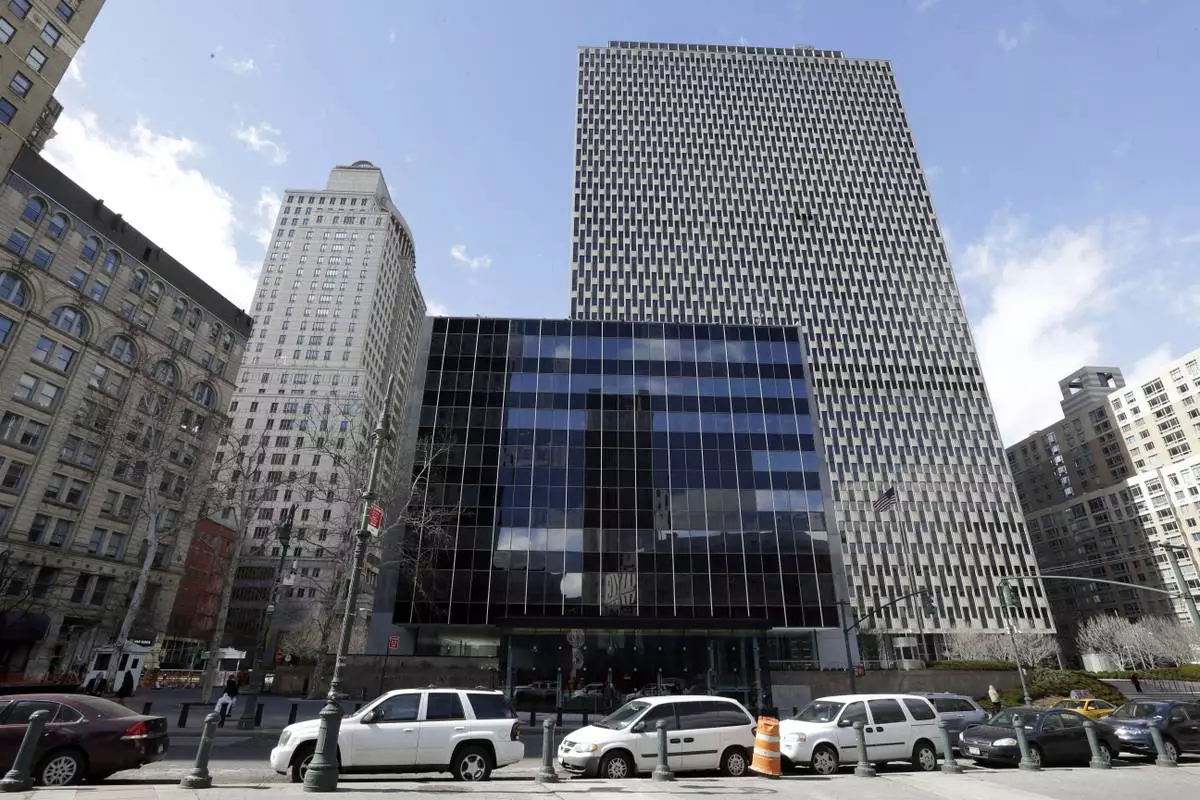
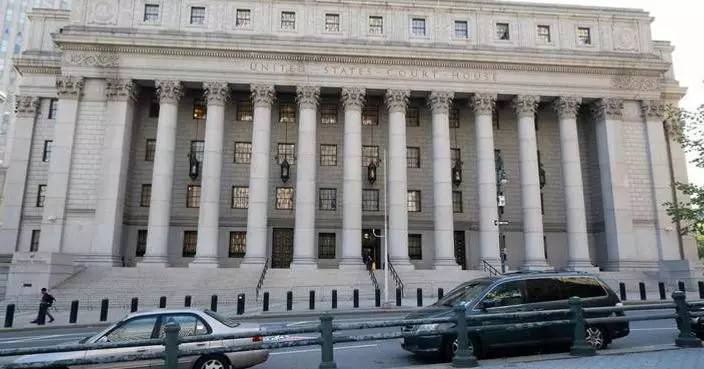
FILE - The United States Court of International Trade is seen in front of the Jacob K. Javits Federal building in this Wednesday, March 18, 2015, in New York. (AP Photo/Mary Altaffer, File)
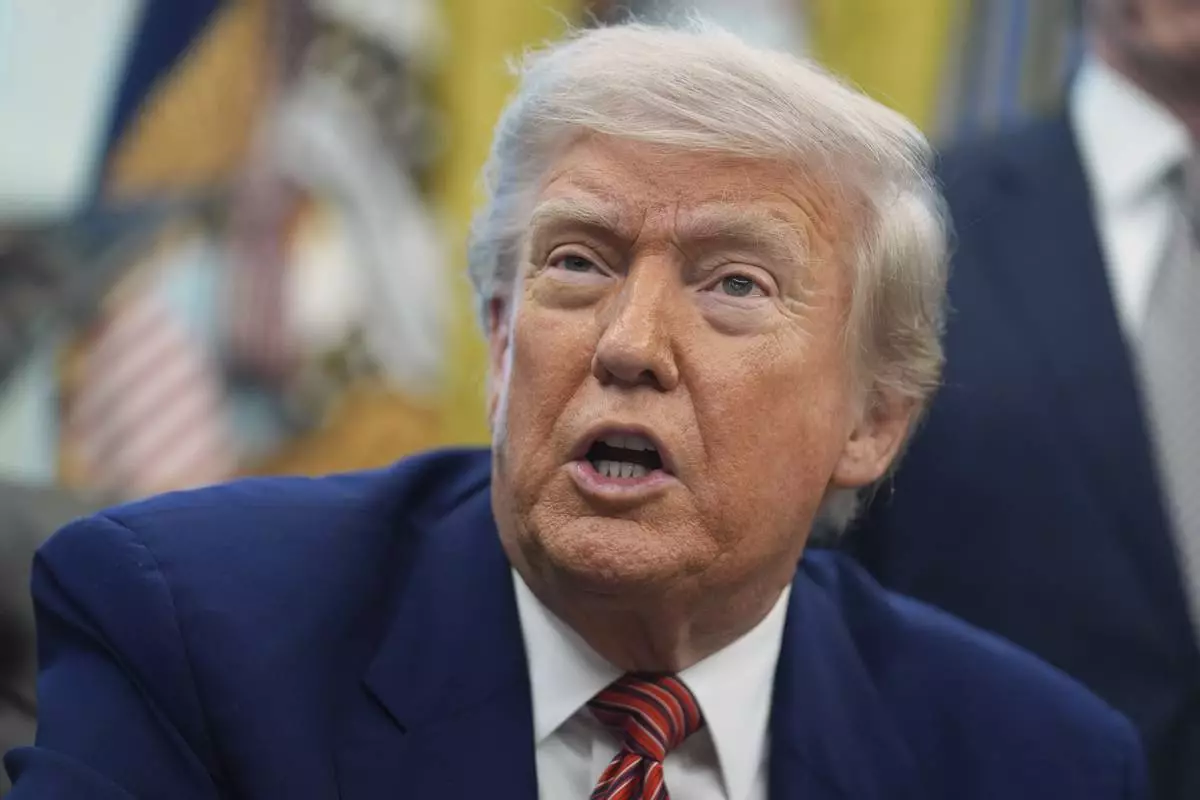
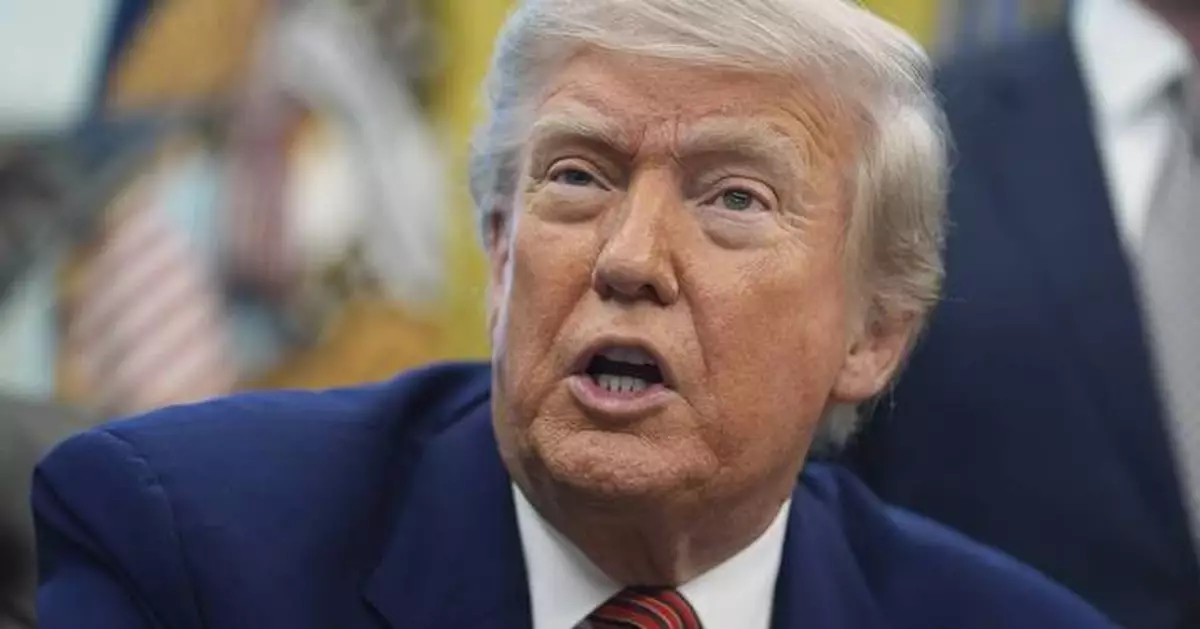
FILE - President Donald Trump speaks to reporters in the Oval Office of the White House, Friday, May 23, 2025, in Washington. (AP Photo/Evan Vucci, File)
The United States pulled off a daring rescue of two aviators whose fighter jet was shot down by Iran, plucking the pilot from behind enemy lines before setting off a complicated extraction of the second service member who hid deep in the mountains as Tehran called for Iranians to help capture him.
The CIA looked to throw off Iran’s government before the crew member was found, launching a deception campaign to spread word inside the Islamic Republic that it had already located him.
Even as President Donald Trump and other U.S. officials described an almost cinematic mission, rescuers faced major obstacles, including two Black Hawk helicopters coming under fire and problems with two transport planes that forced the U.S. military to blow them up.
“This is the first time in military memory that two U.S. Pilots have been rescued, separately, deep in Enemy Territory,” Trump wrote early Sunday on his Truth Social platform. “WE WILL NEVER LEAVE AN AMERICAN WARFIGHTER BEHIND!”
In a pair of social media posts, Trump said the operation over the weekend required the U.S. to remain completely silent to avoid jeopardizing the effort, even as the president and top members of his administration continuously monitored the airman’s location.
The White House and the Pentagon refused to publicly discuss details about the downed fighter jet for well over 24 hours after the initial crash, particularly about the first crew member rescued from the F-15E Strike Eagle— an effort that Trump later said took seven hours in broad daylight over Iran.
The United States and Iran's government then were both racing to find the second crew member, a weapons systems officer, whose location neither side knew.
The CIA spread word that the U.S. had found him and were moving him by ground to get him out of Iran, according to a senior Trump administration official who spoke on condition of anonymity to discuss details not yet made public.
The confusion allowed the CIA to uncover the location of the service member, who was hiding in a mountain crevice, the official said. The intelligence agency sent the coordinates to the Pentagon and the White House, where Trump ordered a rescue operation.
Meanwhile, an anchor on a channel affiliated with Iranian state television had been urging residents in the mountainous region of southwest Iran where the fighter jet went down to hand over any “enemy pilot” to police and promised a reward for anyone who did.
Trump said the American aviator was being “hunted down” by enemies who were “getting closer and closer by the hour.” The United States was monitoring his location continuously, he said.
At the right moment, Trump said, he directed the military to send dozens of heavily armed aircraft to rescue the crew member, who the president said is “seriously wounded” but will recover.
Iranian state media reported that airstrikes in southwestern Iran on Saturday killed at least three people and wounded others, in the same area where the missing American crew member was believed to be.
The American rescue mission ran into major challenges behind enemy lines. Iran’s joint military command claimed it struck two U.S. Black Hawk helicopters taking part in the operation.
A person familiar with the situation said the two helicopters were able to navigate to safe airspace, although it’s unclear if they landed or if crew members were injured. The person spoke on the condition of anonymity to discuss the sensitive information.
Two American transport planes also encountered a technical malfunction and additional aircraft were brought in to complete the rescue, according to a regional intelligence official briefed on the mission. The U.S. military blew up the transport planes, said the official, who spoke on condition of anonymity to discuss the covert mission.
Iran’s state television on Sunday aired a video showing what it claimed were parts of a U.S. aircraft shot down by Iranian forces, along with a photo of thick, black smoke rising. The broadcaster said Iran had shot down a transport plane and two helicopters that were part of the rescue operation.
Iran’s joint military command said the destroyed aircraft included two C-130 military transport aircraft and two Black Hawk helicopters in the province of Isfahan, where the rescue took place.
“The fact that we were able to pull off both of these operations, without a SINGLE American killed, or even wounded, just proves once again, that we have achieved overwhelming Air Dominance and Superiority over the Iranian skies,” Trump said on social media.
Trump, however, did not mention that a second military jet also went down the same day as the F-15E.
Iranian state media said Friday that a U.S. A-10 attack aircraft crashed after being struck by Iran’s defense forces.
A U.S. official, speaking on condition of anonymity to discuss a sensitive military situation, confirmed a second U.S. Air Force combat aircraft went down in the Middle East on Friday. The official provided no other details on what happened and no information on the status of the crew.
Kim and Lee reported from Washington, and Magdy from Cairo. Associated Press writers Lisa Mascaro and Konstantin Toropin in Washington, Farnoush Amiri in New York and Julia Frankel in Jerusalem contributed to this report.
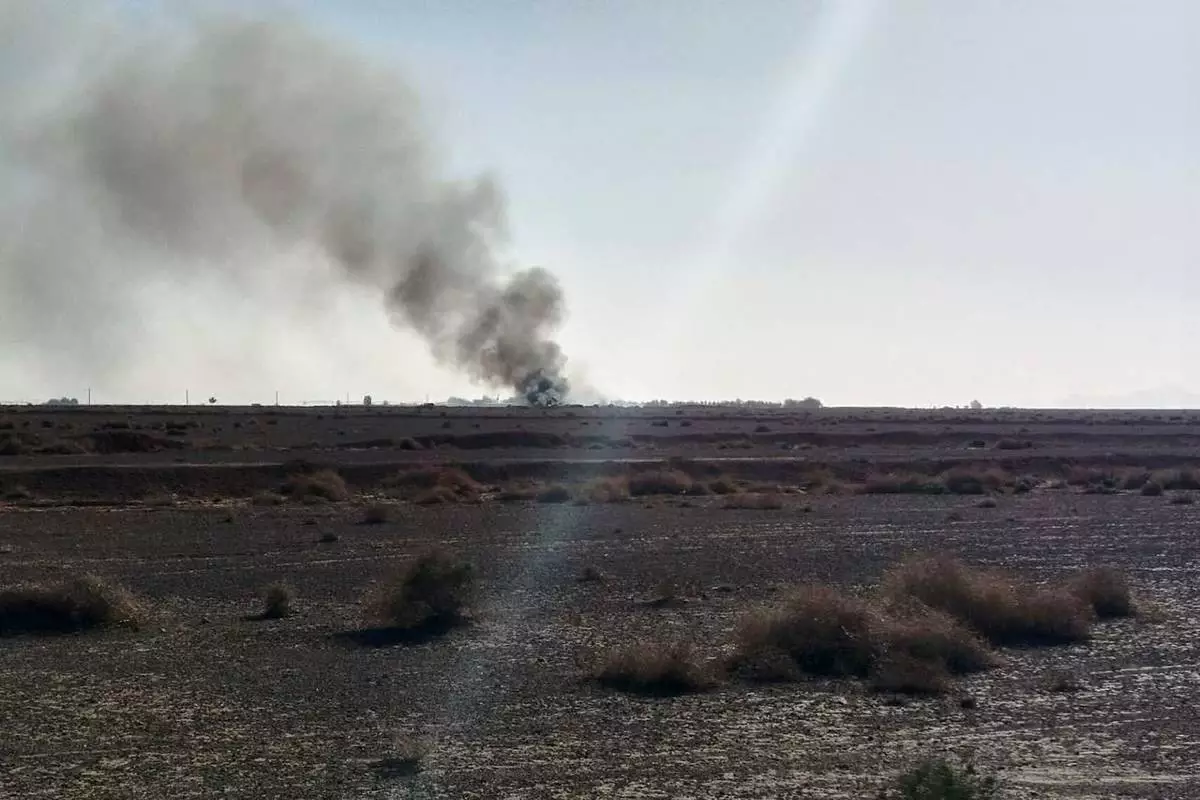
In this image provided by Sepahnews, the Iranian Revolutionary Guard's official website, black smoke rises into the air at what Iran's state TV claimed was the site where an American transport plane and two helicopters involved in a rescue operation were shot down, in Isfahan province, Iran, April, 2026. (Sepahnews via AP)
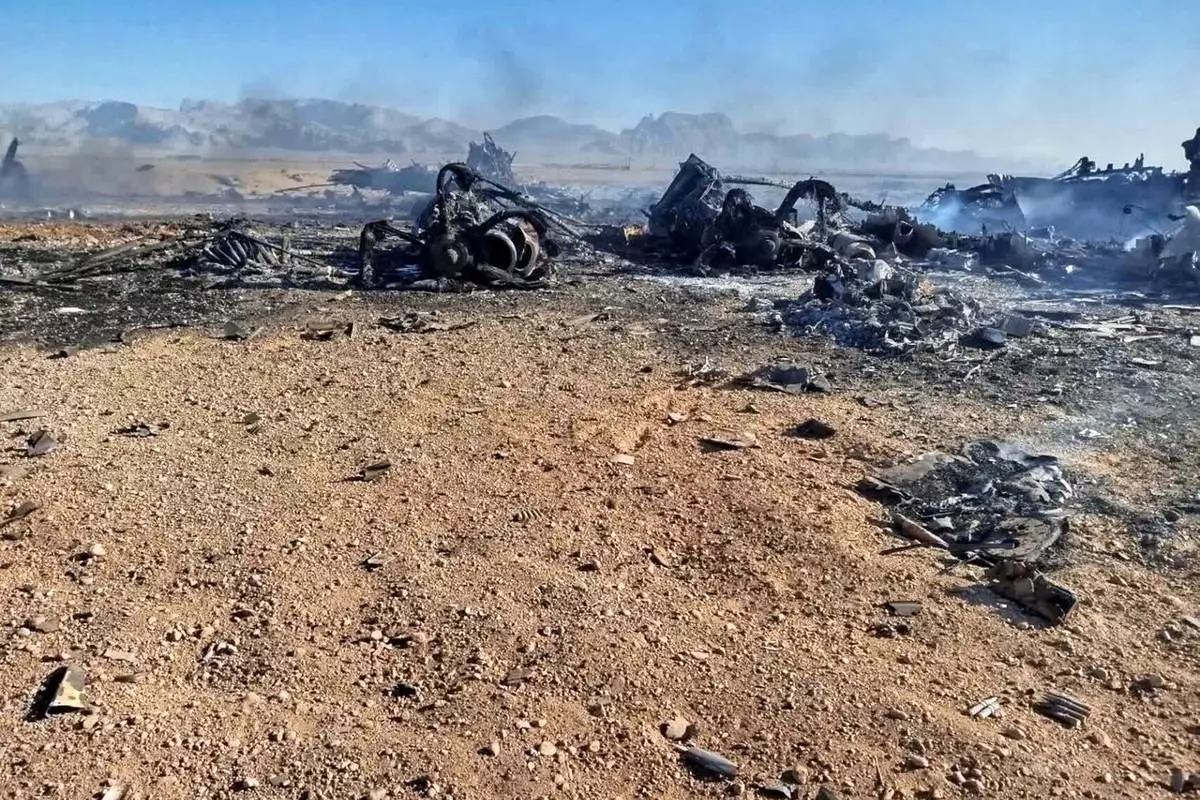
In this image provided by Sepahnews, the Iranian Revolutionary Guard's official website, wreckage is shown at what Iran's state TV claimed was the site of a downed American transport plane and two helicopters involved in a rescue operation, in Isfahan province, Iran, April, 2026. (Sepahnews via AP)
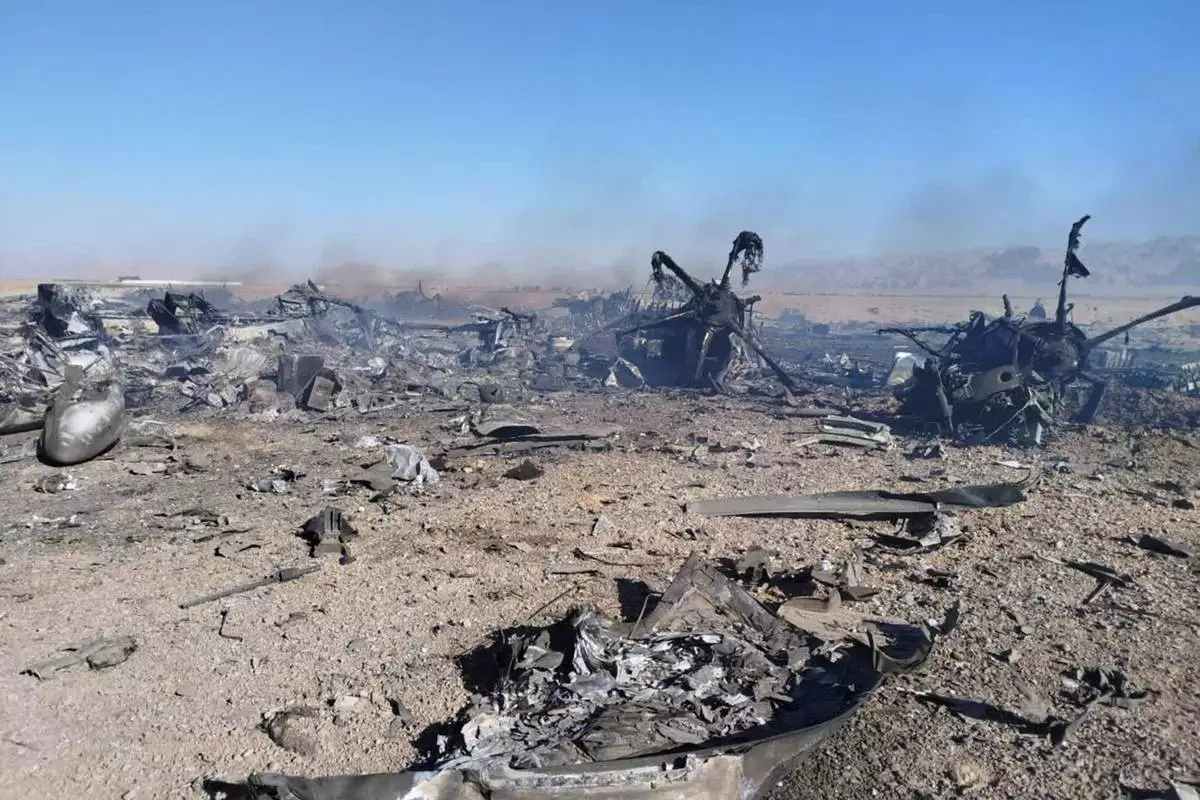
In this image provided by Sepahnews, the Iranian Revolutionary Guard's official website, wreckage is shown at what Iran's state TV claimed was the site of a downed American transport plane and two helicopters involved in a rescue operation, in Isfahan province, Iran, April, 2026. (Sepahnews via AP)