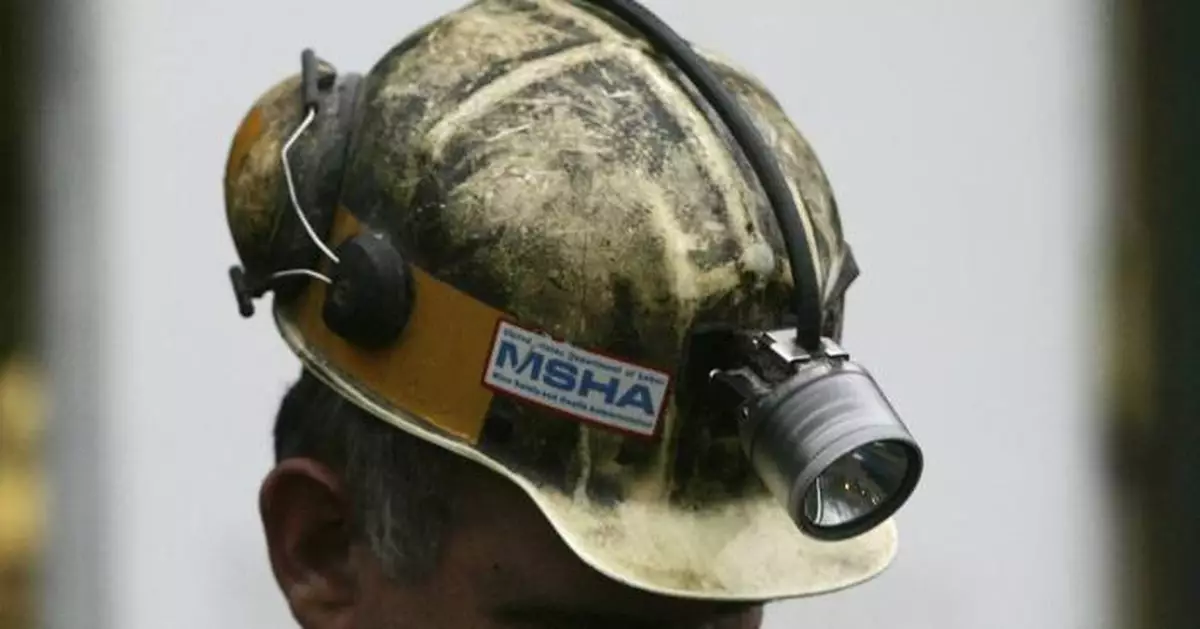
CHARLESTON, W.Va. (AP) — The Trump administration is dropping plans to terminate leases for 34 offices in the Mine Safety and Health Administration, the agency responsible for enforcing mine safety laws, the Department of Labor said Thursday.
Earlier this year, the Department of Government Efficiency, created by President Donald Trump and run by Elon Musk, had targeted federal agencies for spending cuts, including terminating leases for three dozen MSHA offices. Seven of those offices were in Kentucky alone. Ending the MSHA leases had been projected to save $18 million.
Musk said this week that he’s leaving his job as a senior adviser.
A statement released by a Labor Department spokesperson Thursday said it has been working closely with the General Services Administration “to ensure our MSHA inspectors have the resources they need to carry out their core mission to prevent death, illness, and injury from mining and promote safe and healthy workplaces for American miners.”
Some MSHA offices are still listed on the chopping block on the DOGE website, but the statement did not indicate whether those closings will move forward.
MSHA was created by Congress within the Labor Department in 1978, in part because state inspectors were seen as too close to the industry to force coal companies to take the sometimes costly steps necessary to protect miners. MSHA is required to inspect each underground mine quarterly and each surface mine twice a year.
“That’s a relief and good news for miners and the inspectors at MSHA,” said Jack Spadaro, a longtime mine safety investigator and environmental specialist who worked for the agency.
Mining fatalities over the past four decades have dropped significantly, in large part because of the dramatic decline in coal production. But the proposed DOGE cuts would have required MSHA inspectors to travel farther to get to a mine.
“I don’t know what they were thinking when they talked about closing offices,” Spadaro said. “They obviously did not understand the nature of the frequency and depth of inspections that go on in mines. It’s important for the inspectors to be near the mine operations that they’re inspecting.”
A review in March of publicly available data by the Appalachian Citizens’ Law Center indicates that nearly 17,000 health and safety inspections were conducted from the beginning of 2024 through February 2025 by staff at MSHA offices in the facilities on the chopping block. MSHA, which also oversees metal and nonmetal mines, already was understaffed. Over the past decade, it has seen a 27% reduction in total staff, including 30% of enforcement staff in general and 50% of enforcement staff for coal mines, the law center said.
Coal industry advocates are also trying to save hundreds of jobs within the National Institute for Occupational Safety and Health. Some estimates had about 850 of the agency’s roughly 1,000 employees being cut by the Trump administration.
Earlier this month, a federal judge ordered the restoration of a health monitoring program for coal miners and rescinded layoffs within NIOSH’s respiratory health division in Morgantown, West Virginia. The division is responsible for screening and reviewing medical exams to determine whether there is evidence that coal miners have developed a respiratory ailment, commonly known as black lung disease.
At a May 14 Congressional hearing, U.S. Health Secretary Robert F. Kennedy Jr. said he was reversing the firing of about 330 NIOSH workers. That same day, the United Mine Workers of America was among several groups that filed a lawsuit seeking to reinstate all NIOSH staff and functions.
“For months, coal communities have been raising the alarm about how cuts to MSHA and NIOSH would be disastrous for our miners,” said Vonda Robinson, vice president of the National Black Lung Association. “We’re glad that the administration has listened and restored these offices, keeping mine inspectors in place.”
“We’re going to keep making progress and do whatever it takes to protect coal miners from black lung disease and accidents,” she said.
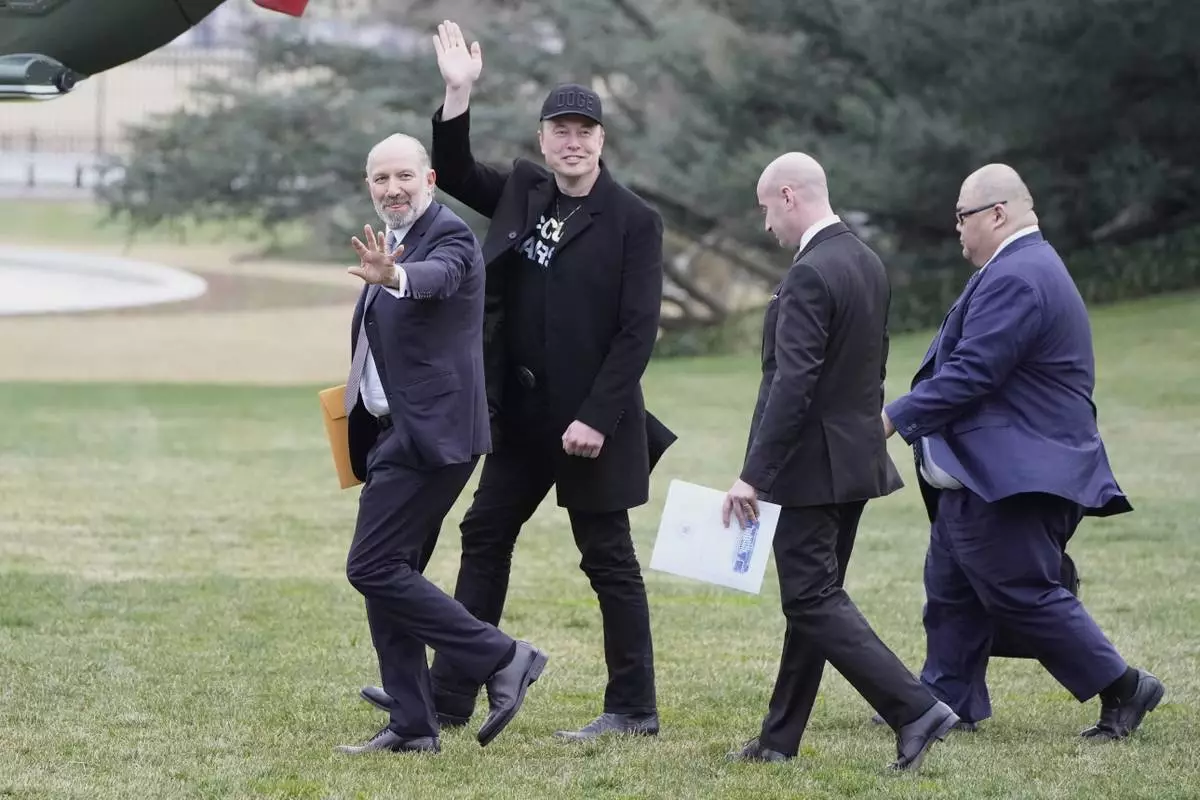
FILE - From left, Commerce Secretary Howard Lutnick, Elon Musk, Stephen Miller and Steven Cheung walk to board Marine One with President Donald Trump on the South Lawn of the White House, March 14, 2025, in Washington. (AP Photo/Alex Brandon, File)
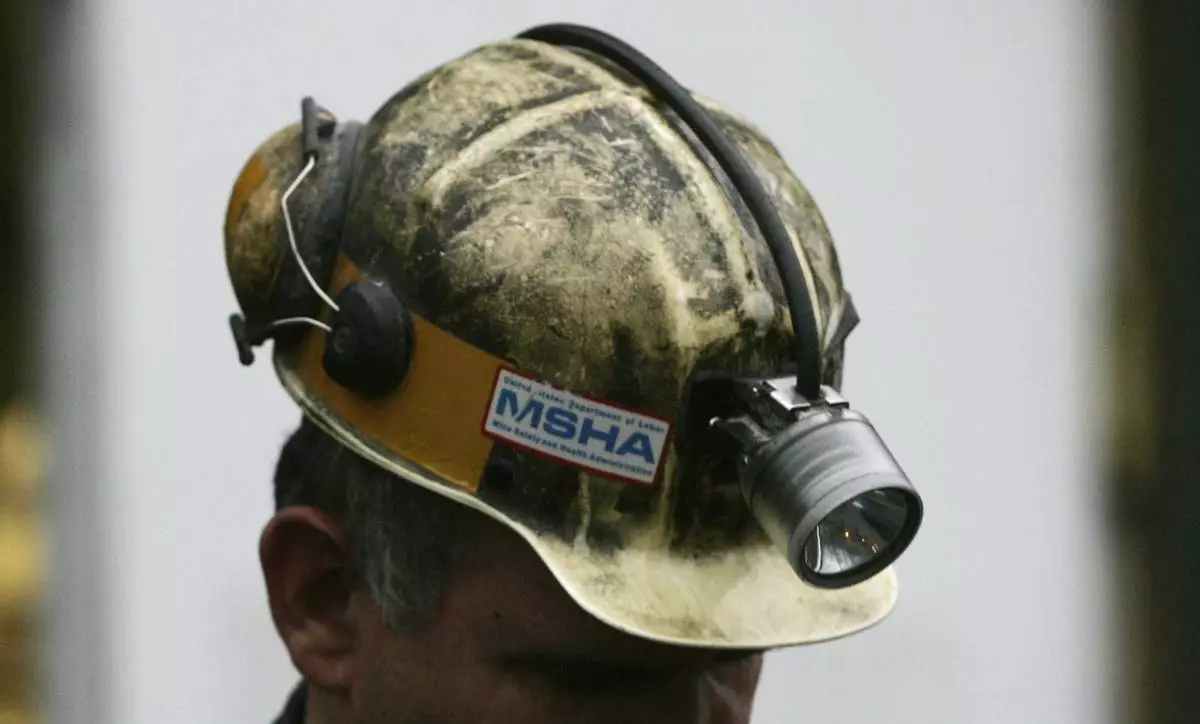
FILE - A miner gathers his thought before taking part in a rescue mission, Tuesday, Jan. 3, 2006, in Tallmansville, W.Va.. (AP Photo/Haraz N. Ghanbari, Pool, File)
MINNEAPOLIS (AP) — Already shaken by the fatal shooting of a woman by an immigration officer, Minnesota's Twin Cities on Sunday braced for what many expect will be a new normal over the next few weeks as the Department of Homeland Security carries out what it called its largest enforcement operation ever.
In one Minneapolis neighborhood filled with single-family homes, protesters confronted federal agents and attempted to disrupt their operations by blowing car horns and whistles and banging on drums.
There was some pushing and several people were hit with chemical spray just before agents banged down the door of one home on Sunday. They later took one person away in handcuffs.
“We’re seeing a lot of immigration enforcement across Minneapolis and across the state, federal agents just swarming around our neighborhoods,” said Jason Chavez, a Minneapolis city councilmember. “They’ve definitely been out here.”
Chavez, the son of Mexican immigrants who represents an area with a growing immigrant population, said he is closely monitoring and gathering information from chat groups about where residents are seeing agents operating.
While the enforcement activity continues, two of the state’s leading Democrats said on Sunday that the investigation into shooting death of Renee Good shouldn’t be overseen solely by the federal government.
Minneapolis Mayor Jacob Frey and U.S. Sen. Tina Smith both said in separate interviews Sunday that state authorities should be included in the investigation because the federal government has already made clear what it believes happened.
“How can we trust the federal government to do an objective, unbiassed investigation, without prejudice, when at the beginning of that investigation they have already announced exactly what they saw — what they think happened," Smith said on ABC’s "This Week."
The Trump administration has defended the officer who shot Good in her car, saying he was protecting himself and fellow agents and that Good had “weaponized” her vehicle.
Homeland Security Secretary Kristi Noem dismissed complaints from Minnesota officials about local agencies being denied any participation in the investigation during an interview with CNN.
“We do work with locals when they work with us,” she said, criticizing the Minneapolis mayor and others for not assisting Immigration and Customs Enforcement operations.
Frey and Noem each pointed fingers at the other for their rhetoric after Good's killing, and each pushed their own firm conclusions about what video of the incident shows. The mayor stood by his assertions that videos show “a federal agent recklessly abusing power that ended up in somebody’s dying.”
“Let’s have the investigation in the hands of someone that isn’t biased," Frey said on NBC’s “Meet the Press.”
The killing of Good on Wednesday by an ICE officer and the shooting of two people by federal agents in Portland, Oregon, led to dozens of protests across the country over the weekend.
Thousands of people marched in Minneapolis on Saturday where Homeland Security called its deployment of immigration officers in the Twin Cities its biggest ever immigration enforcement operation.
Associated Press journalists Thomas Strong in Washington, Bill Barrow in Atlanta, and John Seewer in Toledo, Ohio, contributed.
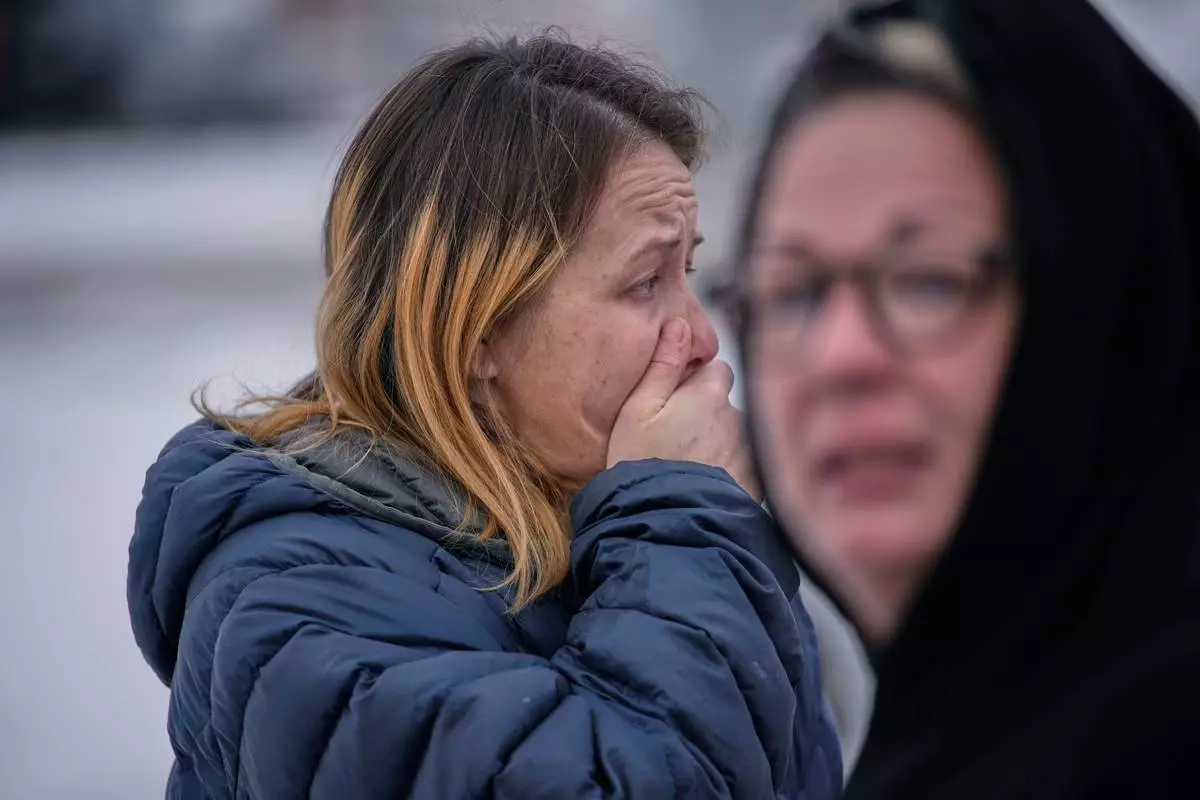
Bystanders react after a man was detained by Immigration and Customs Enforcement (ICE) agents during a traffic stop, Sunday, Jan. 11, 2026, in Robbinsdale, Minn. (AP Photo/John Locher)
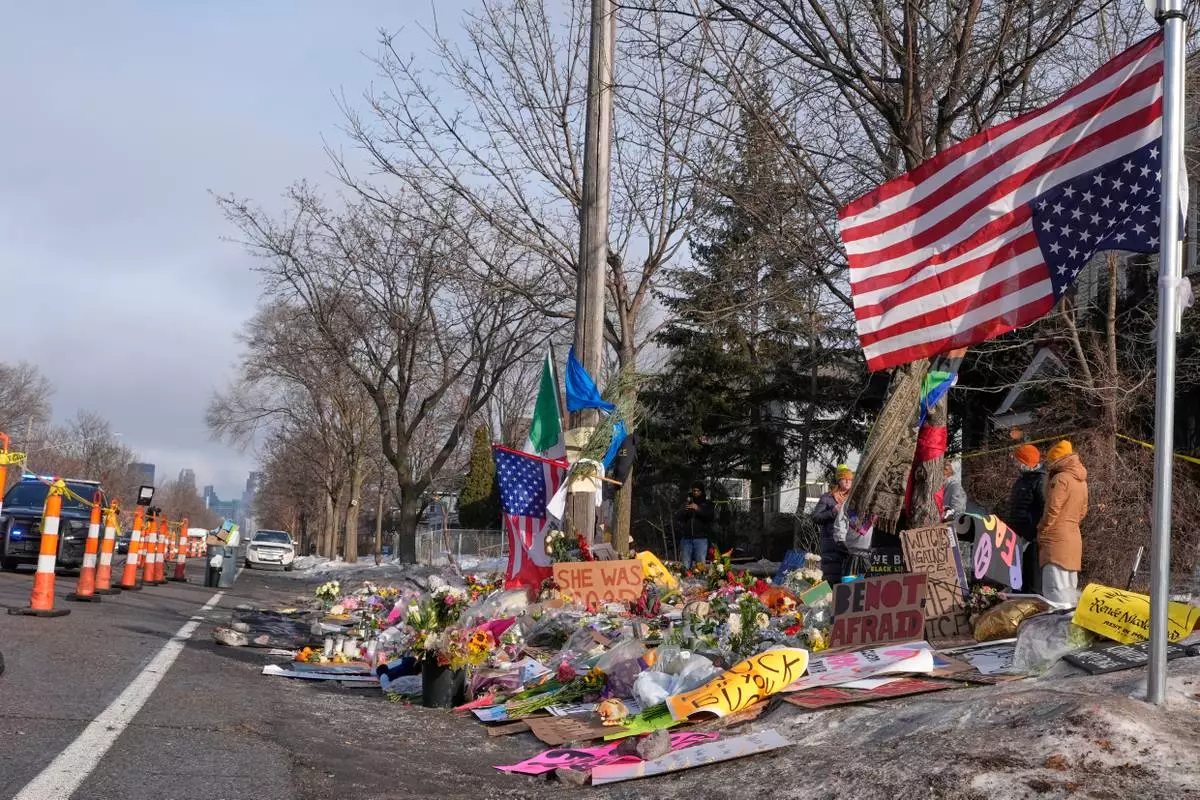
People stand near a memorial at the site where Renee Good was fatally shot by an ICE agent, Sunday, Jan. 11, 2026, in Minneapolis. (AP Photo/Jen Golbeck)
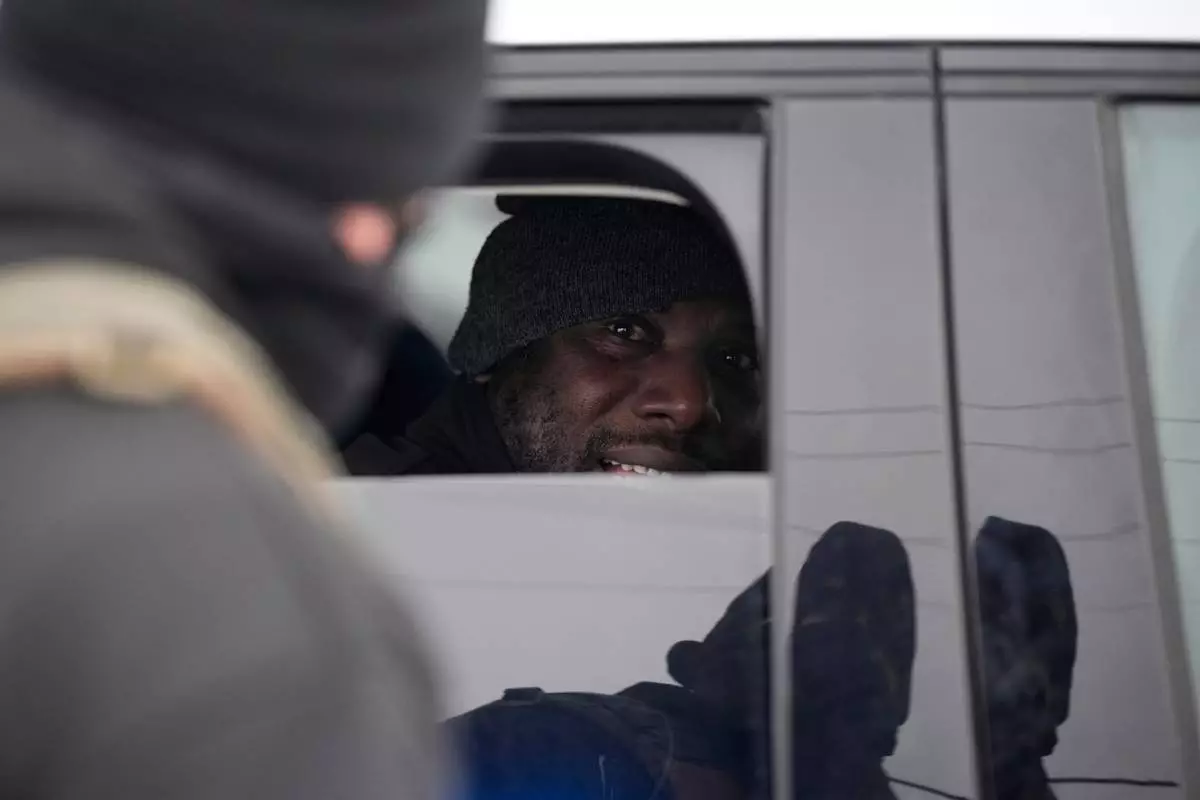
A man looks out of a car window after being detained by Immigration and Customs Enforcement (ICE) agents during a traffic stop, Sunday, Jan. 11, 2026, in Robbinsdale, Minn. (AP Photo/John Locher)
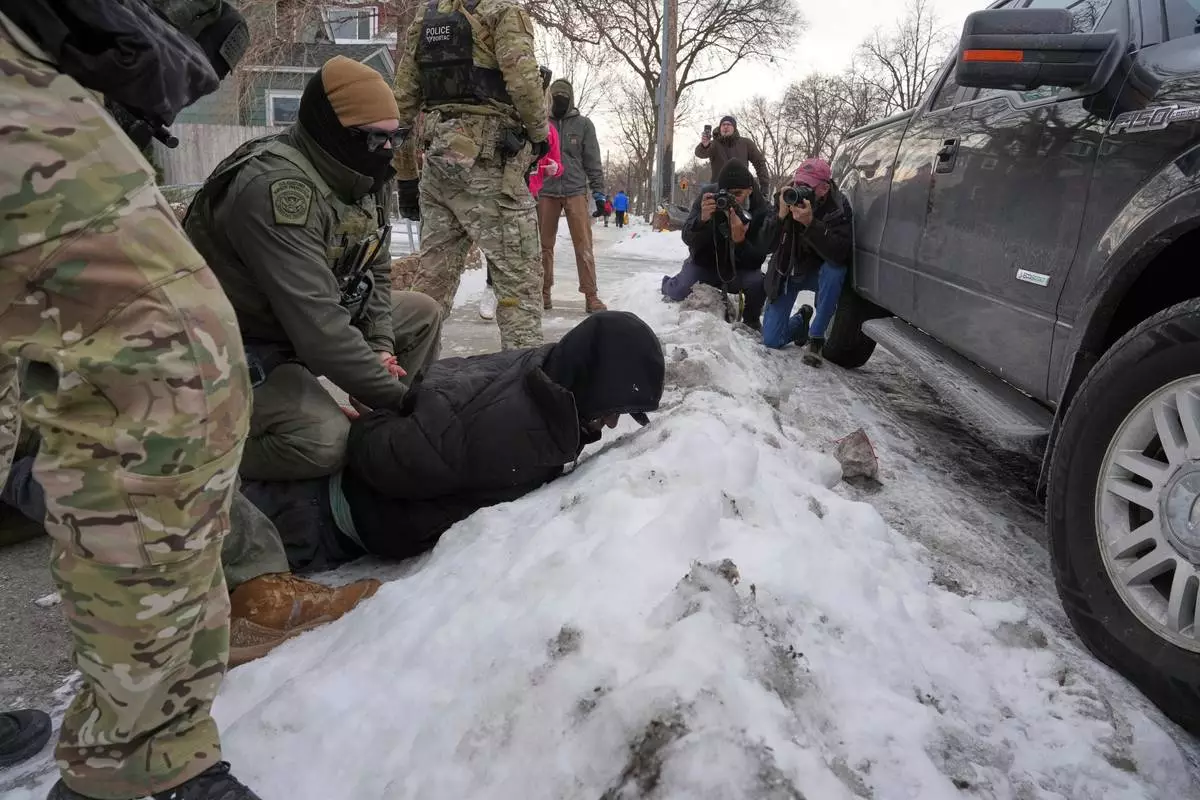
Border Patrol agents detain a man, Sunday, Jan. 11, 2026, in Minneapolis. (AP Photo/Adam Gray)
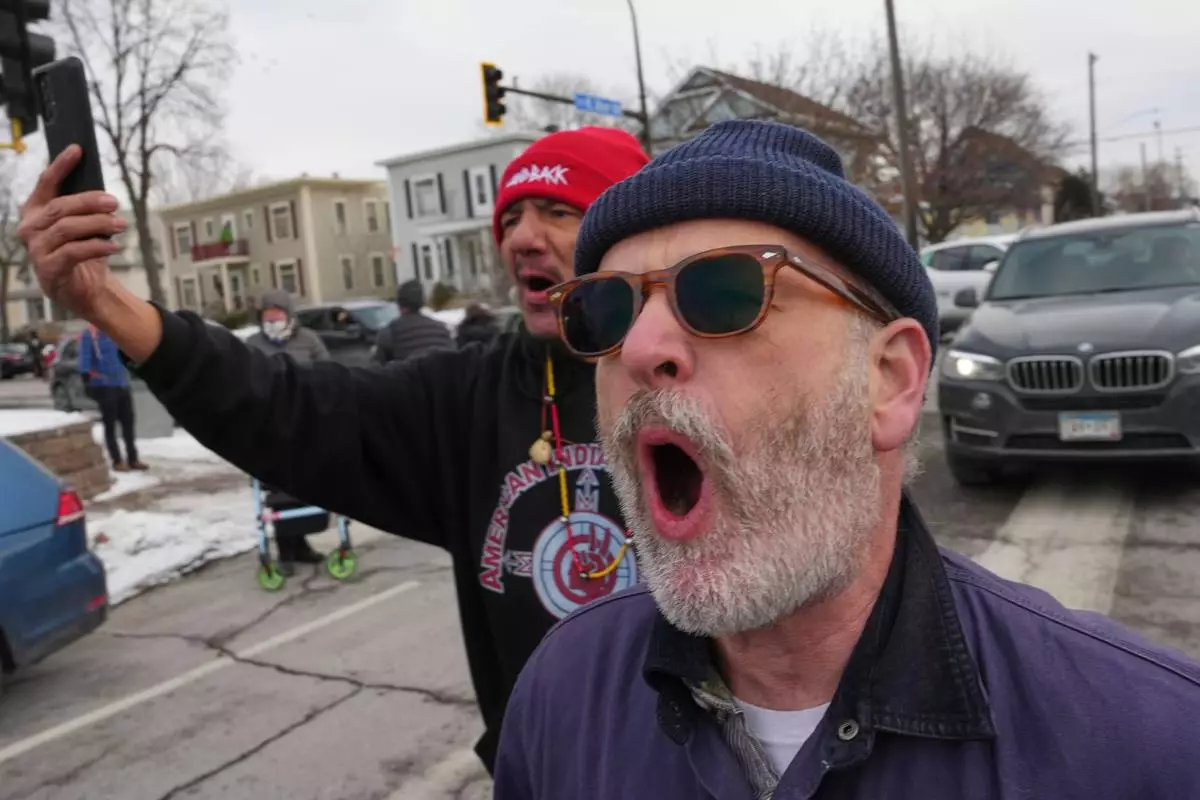
People shout toward Border Patrol agents making an arrest, Sunday, Jan. 11, 2026, in Minneapolis. (AP Photo/Adam Gray)
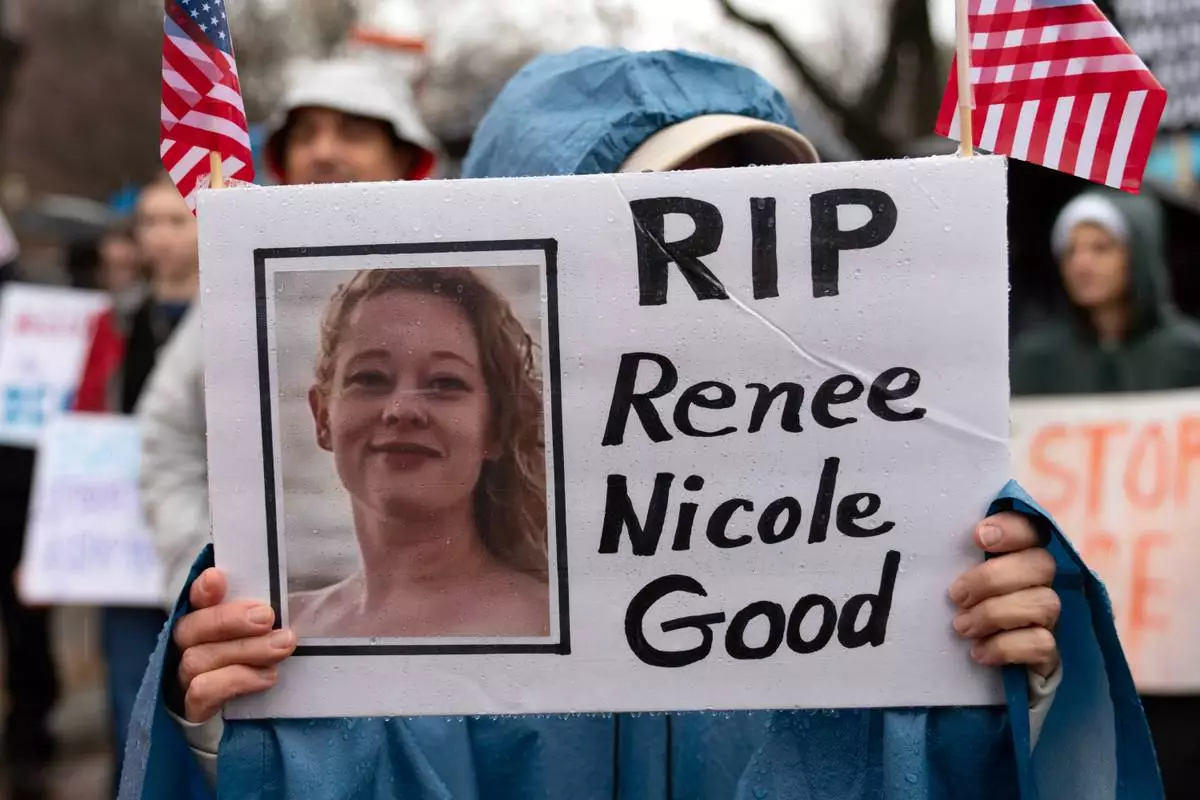
Demonstrators protest outside the White House in Washington, Saturday, Jan. 10, 2026, against the Immigration and Customs Enforcement agent who fatally shot Renee Good in Minneapolis. (AP Photo/Jose Luis Magana)
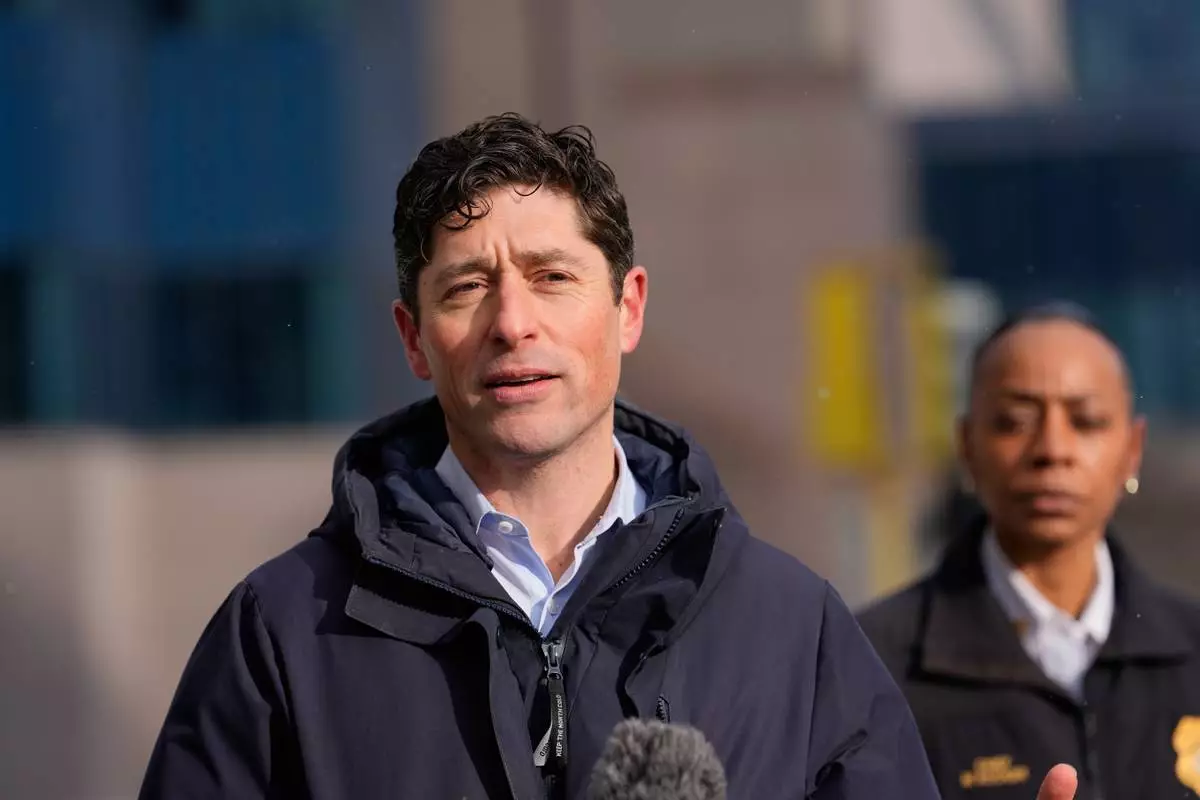
Minneapolis Mayor Jacob Frey holds a news conference on Saturday, Jan. 10, 2026, in Minneapolis. (AP Photo/Jen Golbeck)
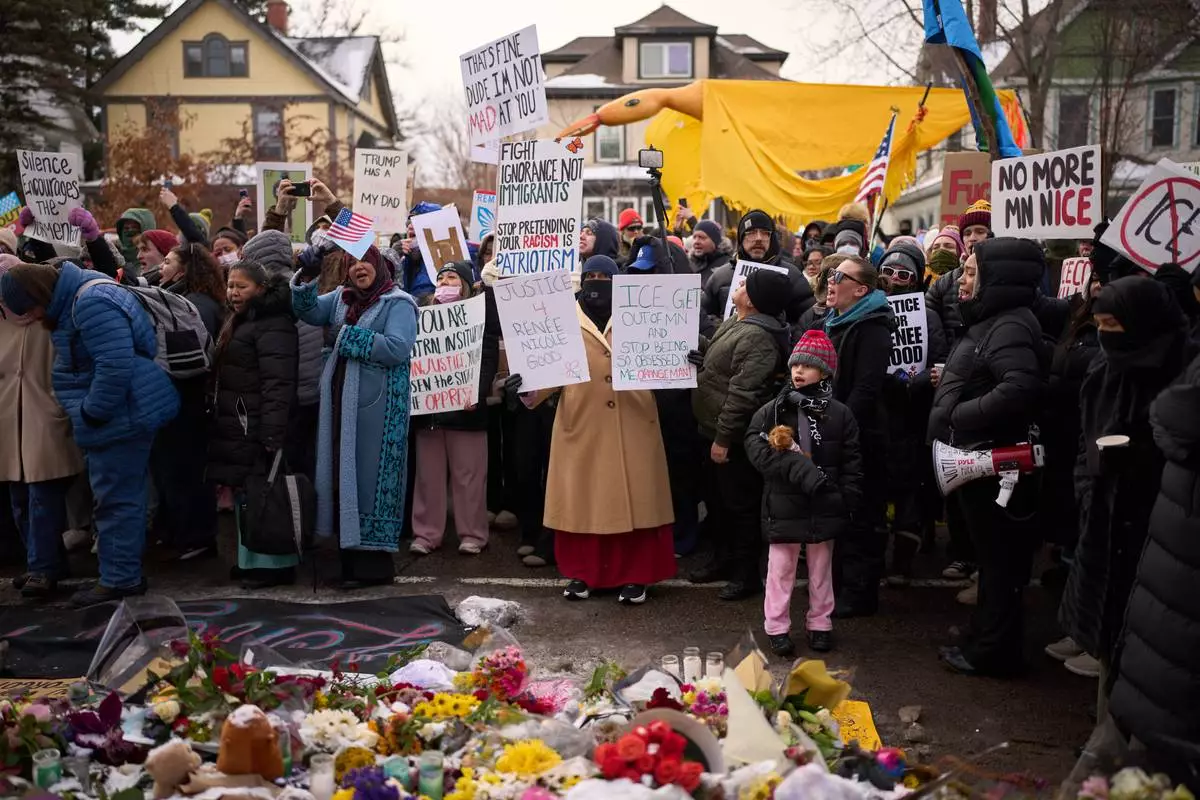
Protesters react as they visit a makeshift memorial during a rally for Renee Good, who was fatally shot by an ICE officer earlier in the week, Saturday, Jan. 10, 2026, in Minneapolis. (AP Photo/John Locher)