UNITED NATIONS (AP) — The United States and 10 allies on Thursday said the military cooperation between Russia and North Korea flagrantly violates U.N. sanctions and has helped Moscow increase its missile strikes on Ukrainian cities.
They made the accusations in their first report since joining forces to monitor sanctions against North Korea after Russia vetoed a resolution in March 2024 to continue the monitoring by a U.N. Security Council panel of experts. It had been issuing reports of Pyongyang’s sanctions violations since 2010.
The 29-page report produced by the Multilateral Sanctions Monitoring Team — comprised of the U.S., Australia, Canada, France, Germany, Italy, Japan, Netherlands, New Zealand, South Korea and the United Kingdom — said the evidence it gathered demonstrates that North Korea and Russia have engaged in “myriad unlawful activities” explicitly prohibited by U.N. sanctions resolutions.
It said North Korea has transferred arms and related materiel by sea, air and rail, including artillery, ballistic missiles and combat vehicles, for Russia’s use in the war in Ukraine.
Russia has transferred air defense systems to North Korea, and its forces trained the North’s troops deployed to support Russia's war, the team said. And Moscow also has supplied refined petroleum products to Pyongyang in far excess of the yearly cap under U.N. sanctions, and has maintained corresponding banking relations with the North in violation of sanctions.
The 11 countries said this unlawful cooperation has “contributed to Moscow’s ability to increase its missile attacks against Ukrainian cities including targeted strikes against critical civilian infrastructure.”
The cooperation also has provided resources for North Korea to fund its military and banned ballistic missile programs., and it allowed the more than 11,000 troops Pyongyang has deployed to Russia since October 2024 to gain first-hand military experience, the team said.
There was no immediate response from the Russian Mission to the United Nations to a request for comment on the report.
The report covers the period between Jan. 1, 2024, and April 30, 2025, and points to evidence that Russia and North Korea intend to further deepen their military cooperation for at least the foreseeable future.
It cites an unnamed country in the team reporting that Russian-flagged cargo vessels delivered as many as 9 million rounds of ammunition for artillery and multiple rocket launchers from North Korea to Russia in 2024.
The report includes images of containers, which the team says were from North Korean and Russian ports and an ammunition dump in Russia.
Citing an unnamed team member, the report says North Korea last year transferred at least 100 ballistic missiles to Russia, which were launched into Ukraine “to destroy civilian infrastructure and terrorize populated areas such as Kyiv and Zaporizhzhia." It also transferred “elements of three brigade sets of heavy artillery,” the report said.
It includes images of a North Korean 170mm self-propelled gun that it said was being transported through Russia, and North Korean multiple rocket launcher ammunition and an anti-tank missile it said were found in Ukraine.
The team said in a joint statement that it will continue to monitor implementation of U.N. resolutions “and raise awareness of ongoing attempts to violate and evade U.N. sanctions.” It urged North Korea “to engage in meaningful diplomacy.”
The Security Council imposed sanctions after North Korea’s first nuclear test explosion in 2006 and tightened them over the years in a total of 10 resolutions seeking — so far unsuccessfully — to cut funds and curb its nuclear and ballistic missile programs.
The last sanctions resolution was adopted by the council in December 2017. China and Russia vetoed a U.S.-sponsored resolution in May 2022 that would have imposed new sanctions over a spate of intercontinental ballistic missile launches, and have blocked all other U.N. action against North Korea.

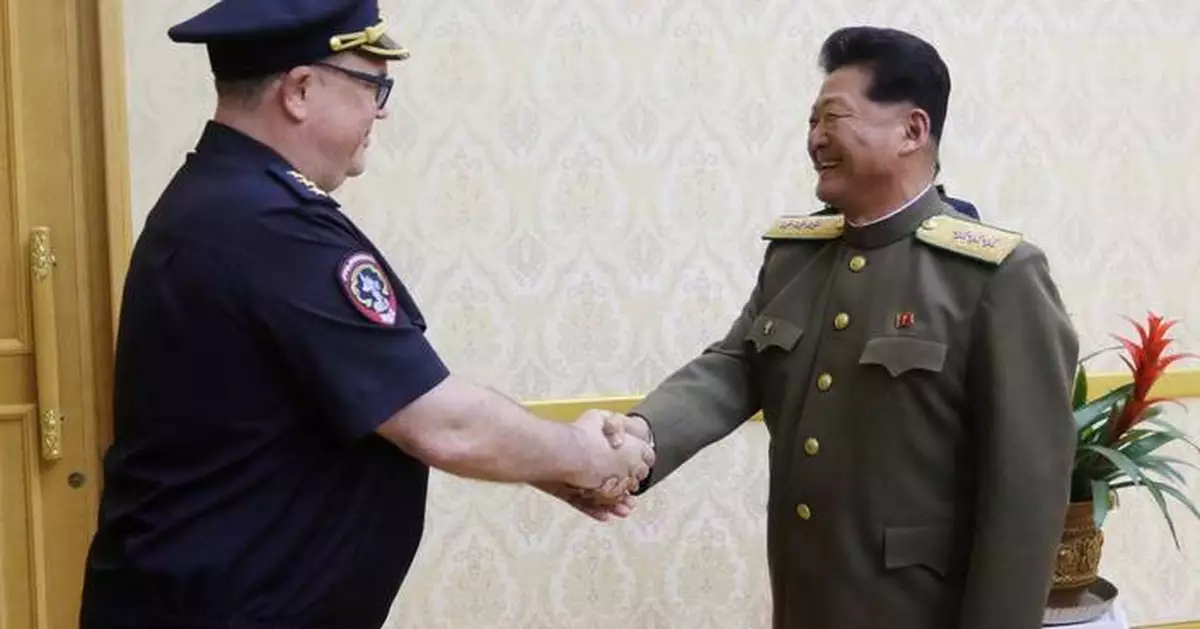
North Korean Public Security Minister Pang Tu Sop, right, meets with Russian Vice Interior Minister Vitaly Shulika at the Mansudae Assembly Hall in Pyongyang, North Korea Wednesday, May 28, 2025. (AP Photo/Jon Chol Jin)
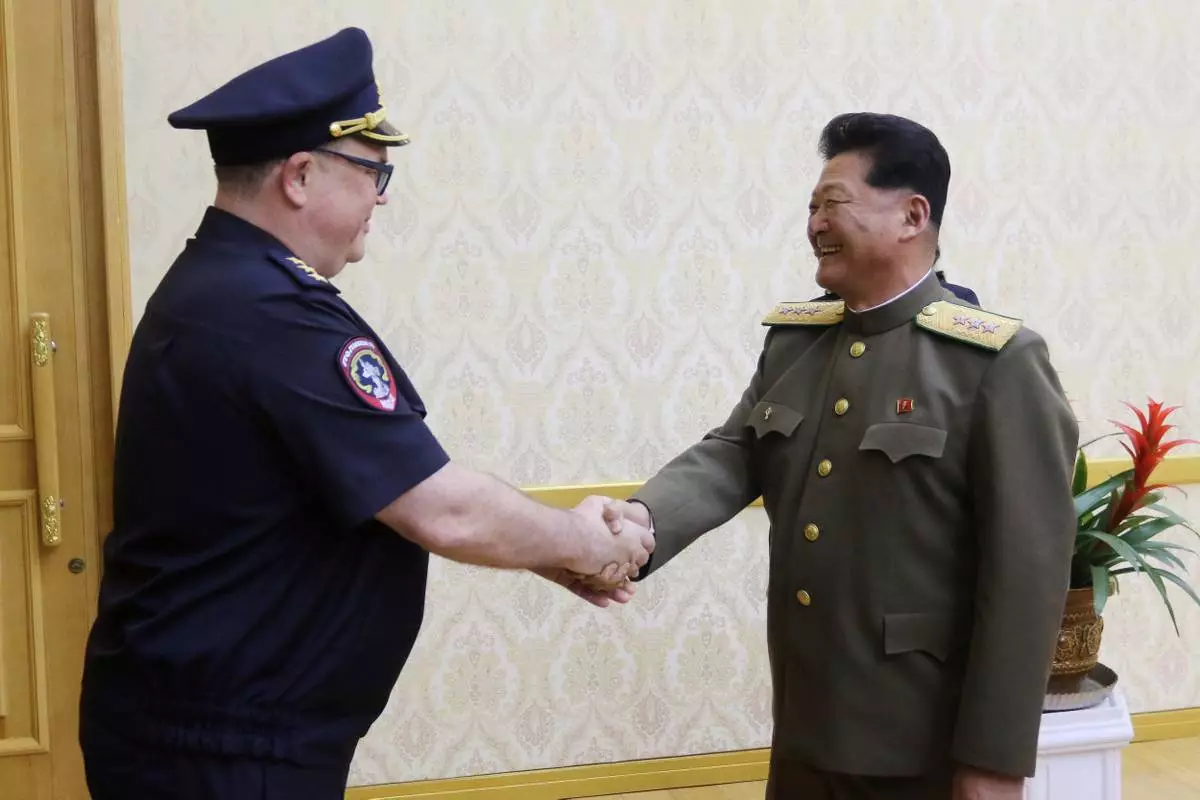
North Korean Public Security Minister Pang Tu Sop, right, meets with Russian Vice Interior Minister Vitaly Shulika at the Mansudae Assembly Hall in Pyongyang, North Korea Wednesday, May 28, 2025. (AP Photo/Jon Chol Jin)
NEW YORK (AP) — Thousands of nurses in three hospital systems in New York City went on strike Monday after negotiations through the weekend failed to yield breakthroughs in their contract disputes.
The strike was taking place at The Mount Sinai Hospital and two of its satellite campuses, with picket lines forming. The other affected hospitals are NewYork-Presbyterian and Montefiore Medical Center in the Bronx.
About 15,000 nurses are involved in the strike, according to New York State Nurses Association.
“After months of bargaining, management refused to make meaningful progress on core issues that nurses have been fighting for: safe staffing for patients, healthcare benefits for nurses, and workplace violence protections,” the union said in a statement issued Monday. “Management at the richest hospitals in New York City are threatening to discontinue or radically cut nurses’ health benefits.”
The strike, which comes during a severe flu season, could potentially force the hospitals to transfer patients, cancel procedures or divert ambulances. It could also put a strain on city hospitals not involved in the contract dispute, as patients avoid the medical centers hit by the strike.
The hospitals involved have been hiring temporary nurses to try and fill the labor gap during the walkout, and said in a statement during negotiations that they would “do whatever is necessary to minimize disruptions.” Montefiore posted a message assuring patients that appointments would be kept.
“NYSNA’s leaders continue to double down on their $3.6 billion in reckless demands, including nearly 40% wage increases, and their troubling proposals like demanding that a nurse not be terminated if found to be compromised by drugs or alcohol while on the job," Montefiore spokesperson Joe Solmonese said Monday after the strike had started. "We remain resolute in our commitment to providing safe and seamless care, regardless of how long the strike may last.”
New York-Presbyterian accused the union of staging a strike to “create disruption,” but said in a statement that it has taken steps to ensure patients receive the care they need.
"We’re ready to keep negotiating a fair and reasonable contract that reflects our respect for our nurses and the critical role they play, and also recognizes the challenging realities of today’s healthcare environment,” the statement said.
The work stoppage is occurring at multiple hospitals simultaneously, but each medical center is negotiating with the union independently. Several other hospitals across the city and in its suburbs reached deals in recent days to avert a possible strike.
The nurses’ demands vary by hospital, but the major issues include staffing levels and workplace safety. The union says hospitals have given nurses unmanageable workloads.
Nurses also want better security measures in the workplace, citing incidents like a an incident last week, when a man with a sharp object barricaded himself in a Brooklyn hospital room and was then killed by police.
The union also wants limitations on hospitals’ use of artificial intelligence.
The nonprofit hospitals involved in the negotiations say they’ve been working to improve staffing levels, but say the union’s demands overall are too costly.
Nurses voted to authorize the strike last month.
Both New York Gov. Kathy Hochul and Mayor Zohran Mamdani had expressed concern about the possibility of the strike. As the strike deadline neared, Mamdani urged both sides to keep negotiating and reach a deal that “both honors our nurses and keeps our hospitals open.”
“Our nurses kept this city alive through its hardest moments. Their value is not negotiable,” Mamdani said.
State Attorney General Letitia James voiced similar support, saying "nurses put their lives on the line every day to keep New Yorkers healthy. They should never be forced to choose between their own safety, their patients’ well-being, and a fair contract.”
The last major nursing strike in the city was only three years ago, in 2023. That work stoppage, at Mount Sinai and Montefiore, was short, lasting three days. It resulted in a deal raising pay 19% over three years at those hospitals.
It also led to promised staffing improvements, though the union and hospitals now disagree about how much progress has been made, or whether the hospitals are retreating from staffing guarantees.
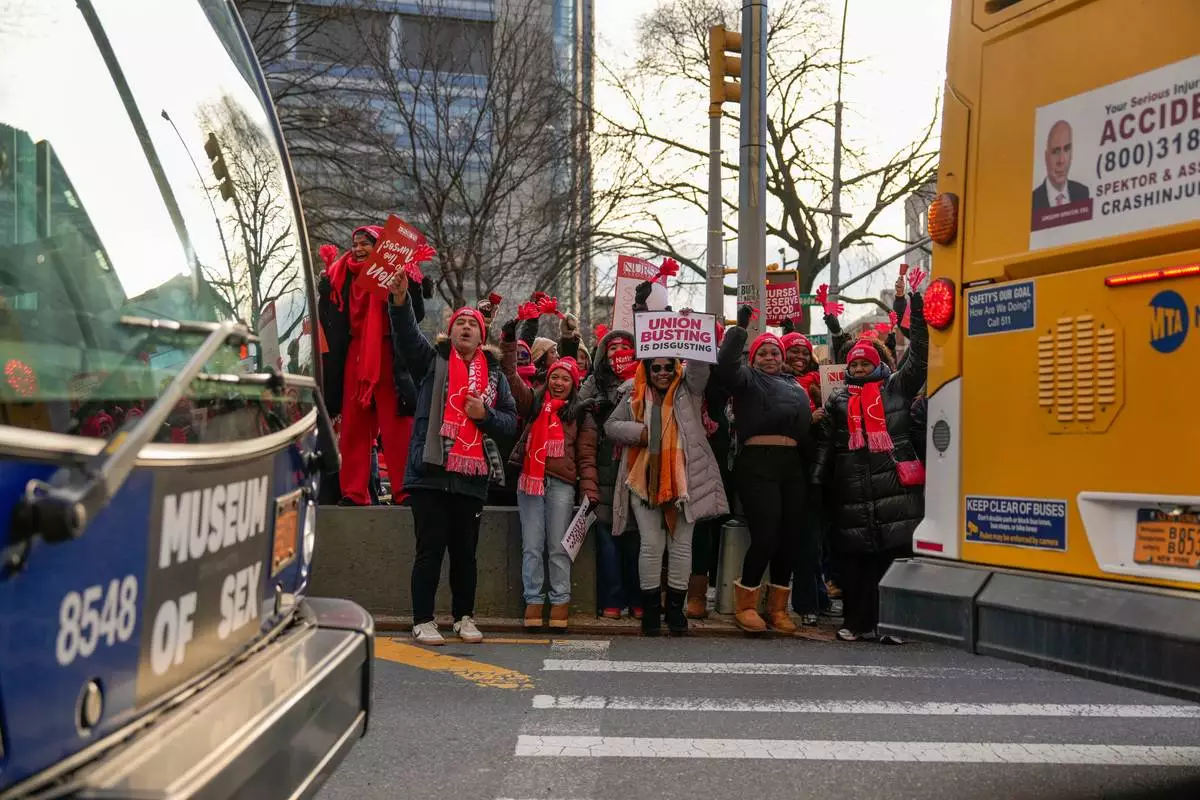
Nurses strike outside New York-Presbyterian Hospital, Monday, Jan. 12, 2026, in New York. (AP Photo/Yuki Iwamura)
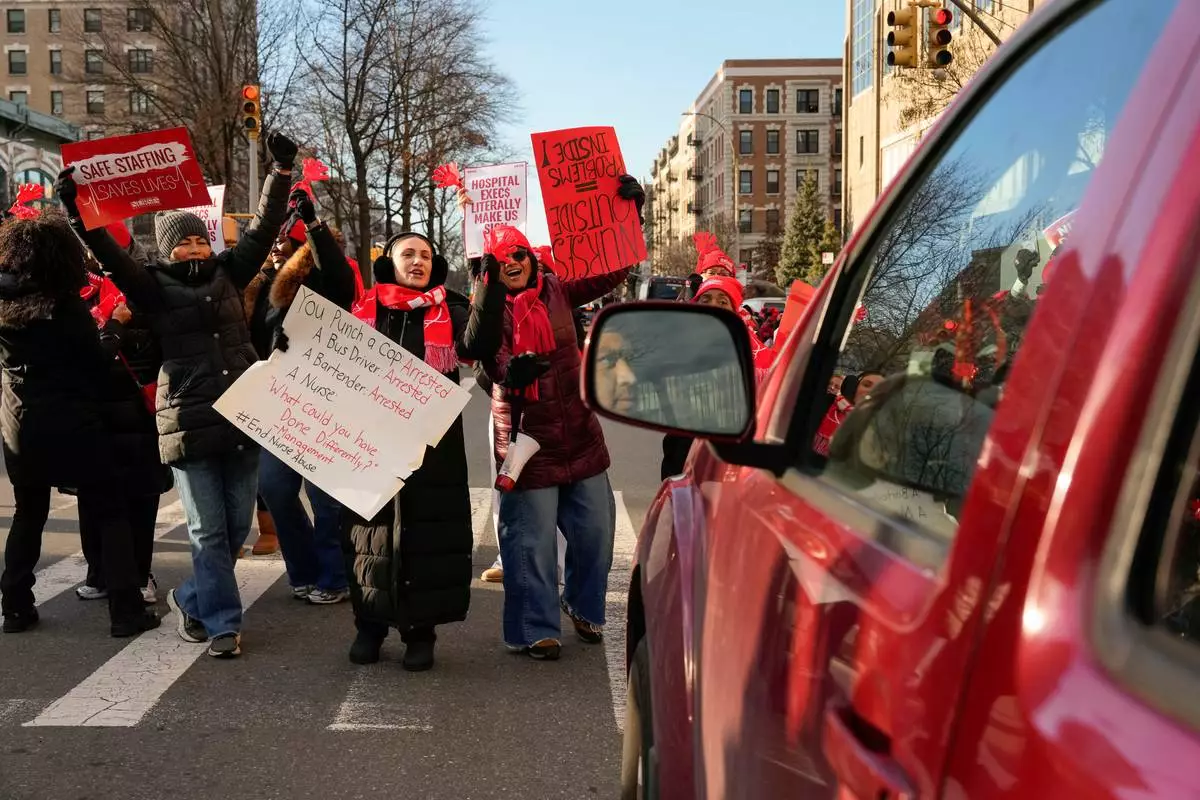
Nurses strike outside New York-Presbyterian Hospital, Monday, Jan. 12, 2026, in New York. (AP Photo/Yuki Iwamura)
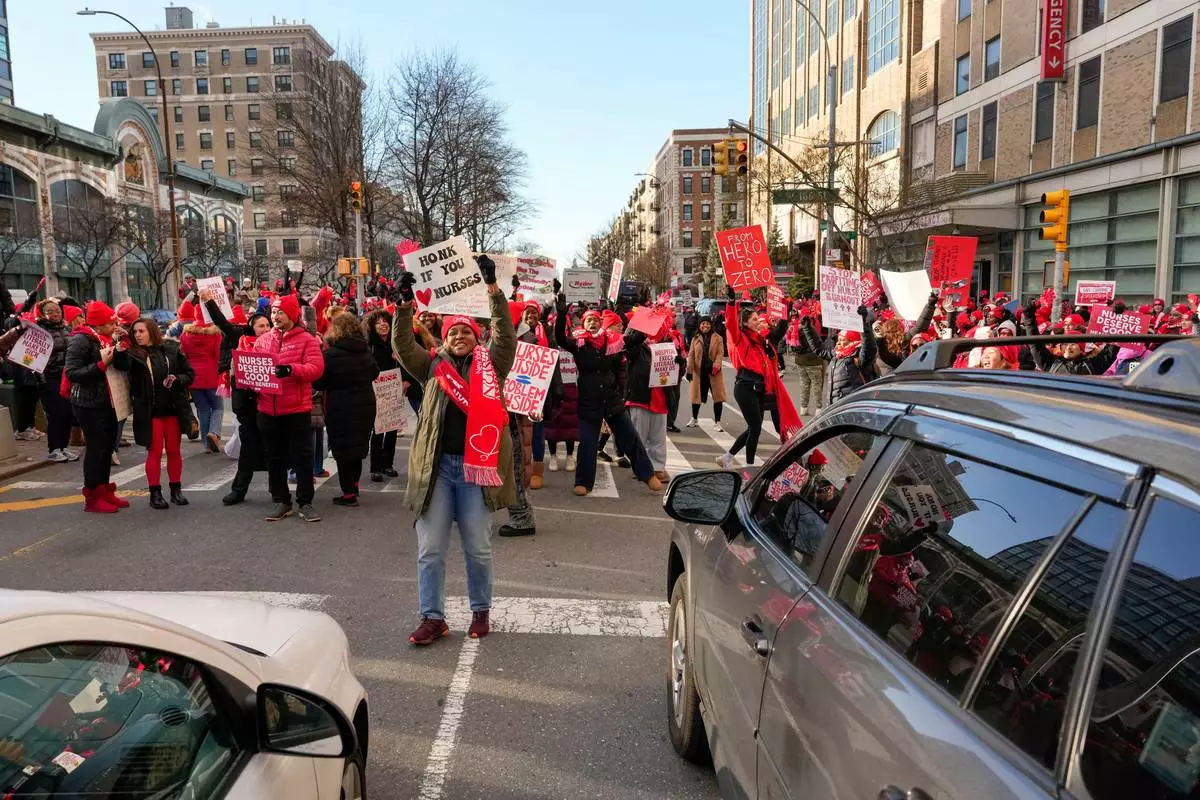
Nurses strike outside New York-Presbyterian Hospital, Monday, Jan. 12, 2026, in New York. (AP Photo/Yuki Iwamura)
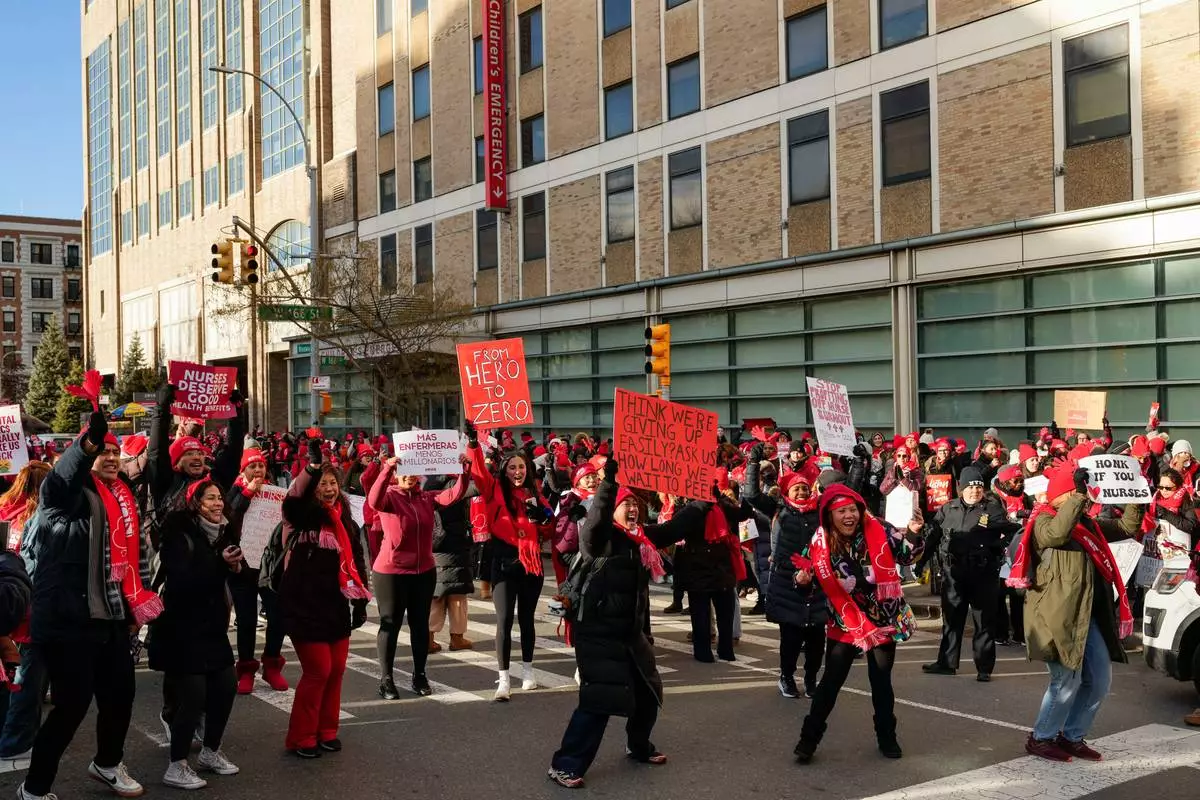
Nurses strike outside New York-Presbyterian Hospital, Monday, Jan. 12, 2026, in New York. (AP Photo/Yuki Iwamura)
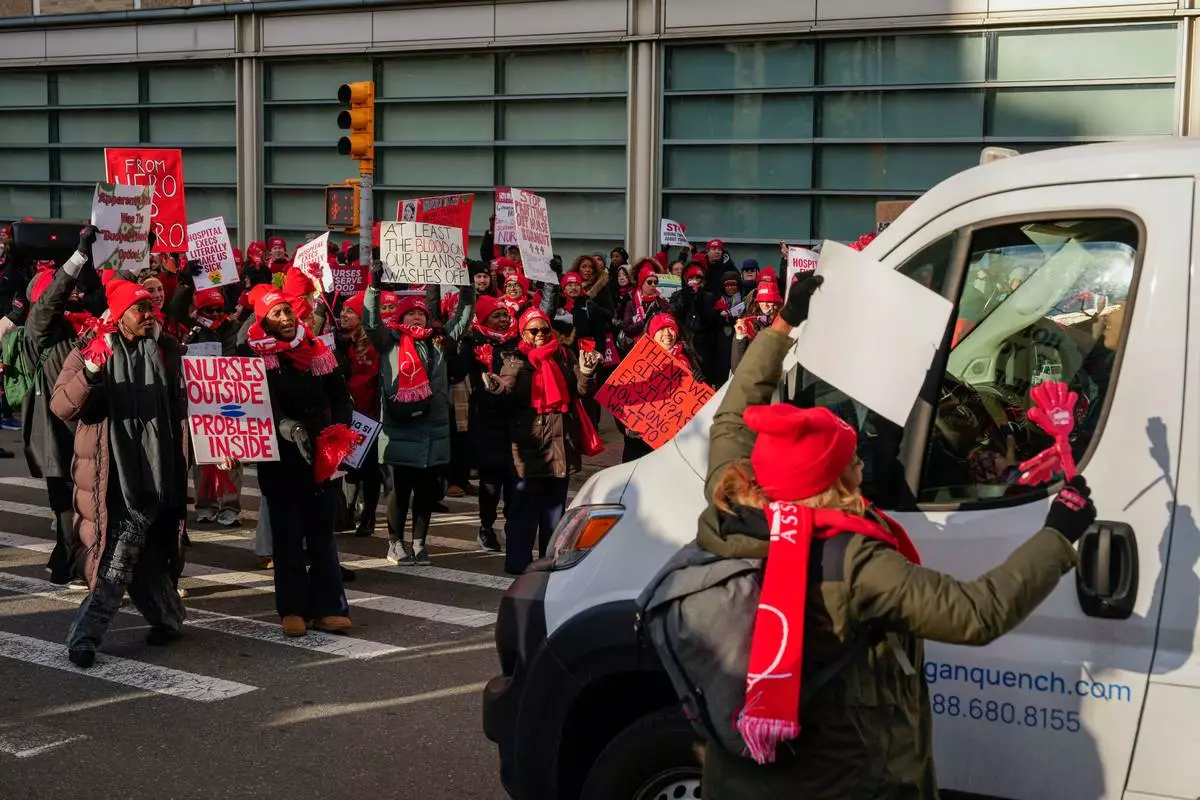
Nurses strike outside New York-Presbyterian Hospital, Monday, Jan. 12, 2026, in New York. (AP Photo/Yuki Iwamura)
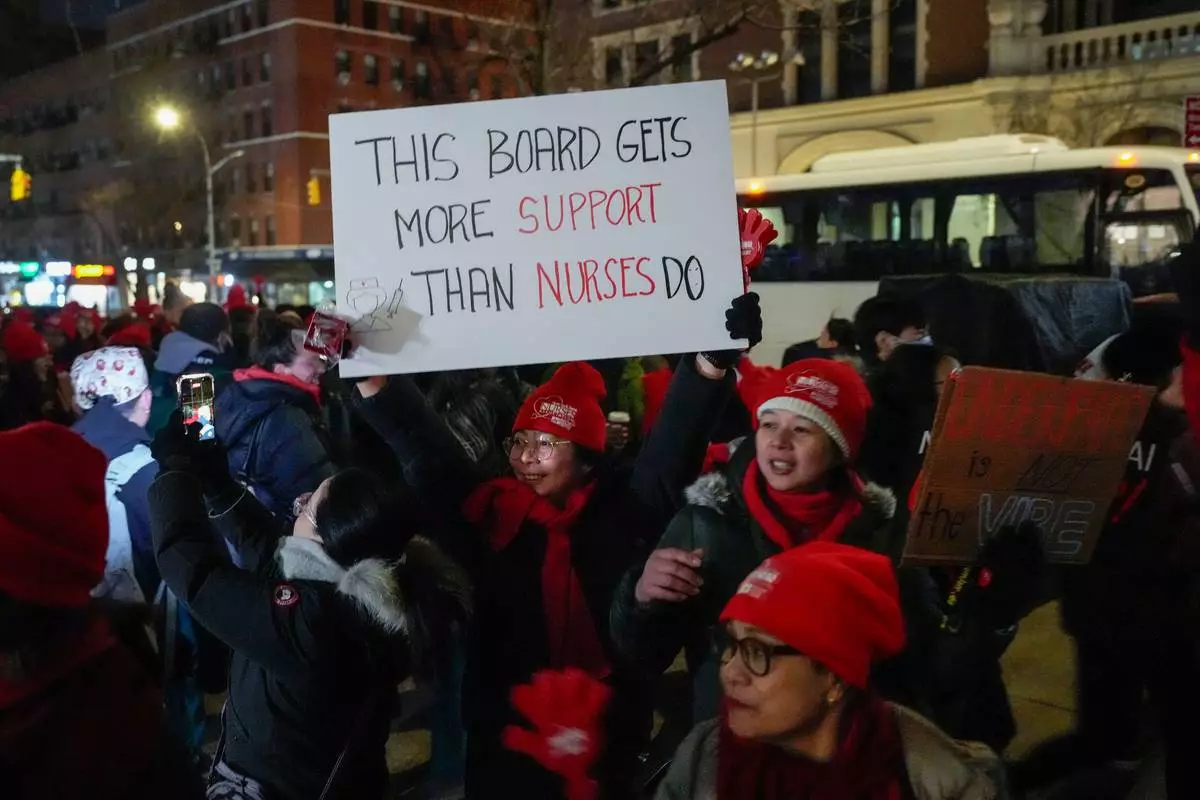
Nurses strike outside Mount Sinai West Hospital, Monday, Jan. 12, 2026, in New York. (AP Photo/Yuki Iwamura)
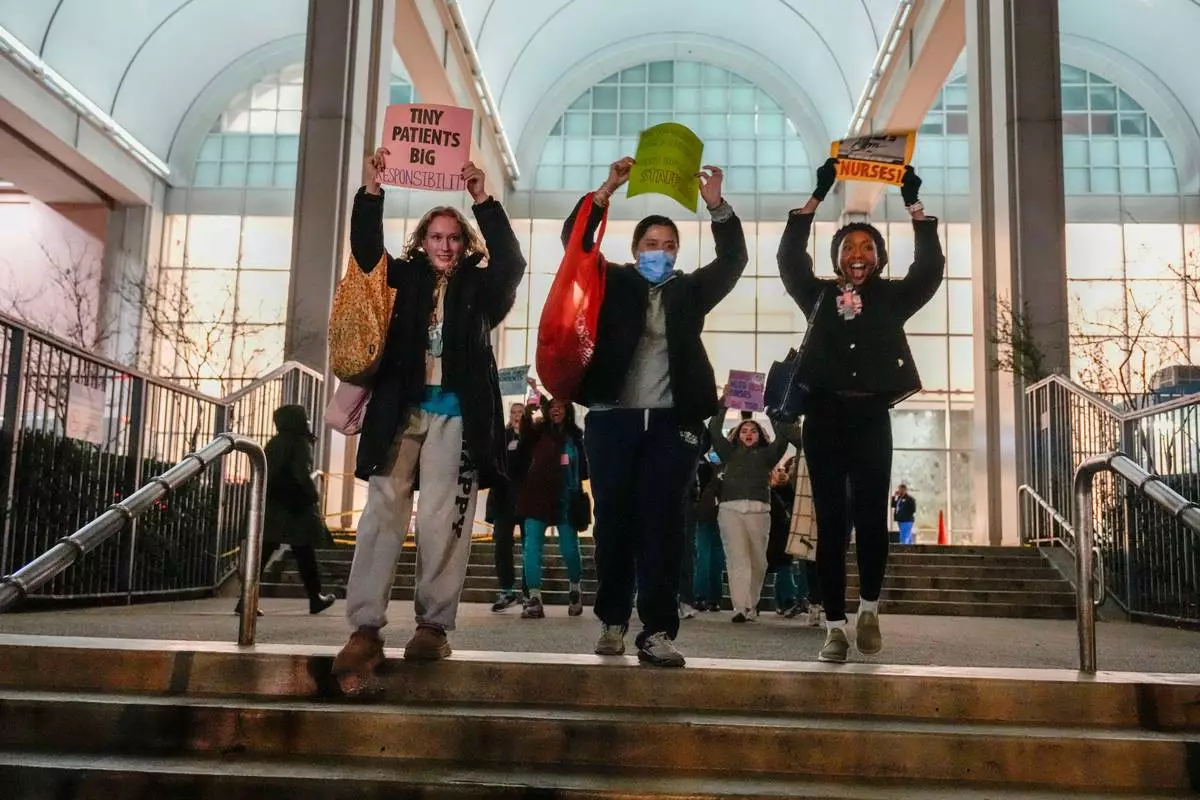
Nurses strike outside Mount Sinai West Hospital, Monday, Jan. 12, 2026, in New York. (AP Photo/Yuki Iwamura)
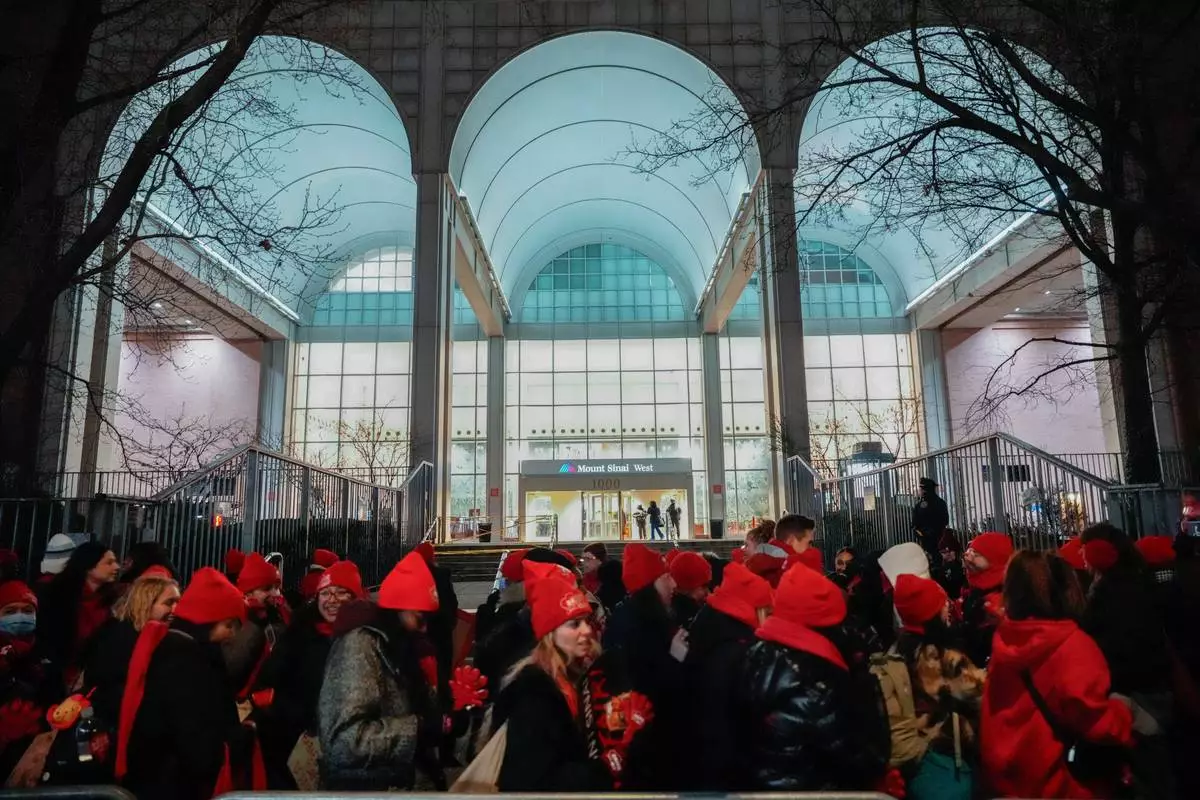
Nurses strike outside Mount Sinai West Hospital, Monday, Jan. 12, 2026, in New York. (AP Photo/Yuki Iwamura)

Nurses strike outside Mount Sinai West Hospital, Monday, Jan. 12, 2026, in New York. (AP Photo/Yuki Iwamura)

FILE - A medical worker transports a patient at Mount Sinai Hospital, April 1, 2020, in New York. (AP Photo/Mary Altaffer, File)