CHP announces two new melioidosis cases
The Centre for Health Protection (CHP) of the Department of Health today (May 30) announced that two new melioidosis cases were recorded in the past week (May 23 to 29).
The first case involves an 88-year-old male with underlying illnesses who lives in Eastern District. He developed a cough in early April. On May 18, he attended Pamela Youde Nethersole Eastern Hospital due to his health condition and was admitted for treatment on the same day. He subsequently developed a fever after admission.
The second case involves a 58-year-old male with good past health who lives in Kwun Tong. He developed an on and off fever, a cough with sputum and shortness of breath on May 8. He attended two hospitals on the Mainland and was admitted for treatment from May 10 to May 21. He returned to Hong Kong and attended Kwong Wah Hospital on May 21 and was admitted for treatment on the same day.
The clinical samples were of the two cases confirmed to be positive for Burkholderia pseudomallei upon testing.
The CHP is investigating the infection source of the cases. Epidemiological investigations are ongoing.
So far, seven melioidosis cases have been recorded in Hong Kong this year. In 2024, 23 melioidosis cases were recorded.
Person-to-person transmission and animal-to-human transmission are rare, but the bacteria causing melioidosis can survive in the local environment. Melioidosis is an endemic disease in Hong Kong, and melioidosis cases have been recorded in Hong Kong each year.
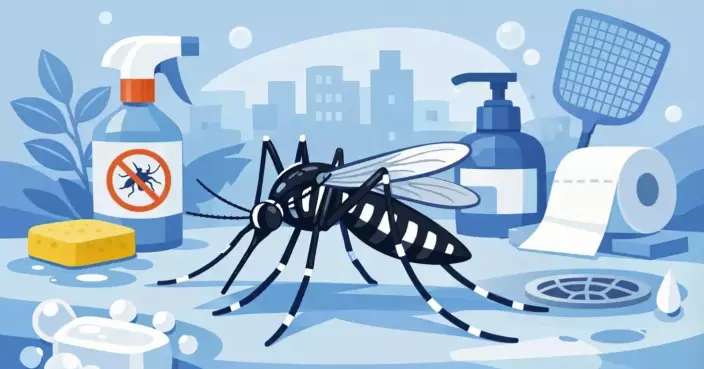
According to literature, melioidosis cases are more common after typhoons or rainstorms. The bacterium Burkholderia pseudomallei in soil and muddy water may become exposed to the ground after typhoons or rainstorms, and the bacteria could spread more easily with strong winds or rainstorms. As such, the number of melioidosis cases may increase.
With this in mind, where practicable, members of the public should stay indoors during typhoons and rainstorms, avoid travelling to areas with potential flooding, and do not wade in or have contact with muddy water and soil. In addition, high-risk individuals should avoid paths near stormwater drains where aerosols may be generated from contaminated water.
Members of the public should also take the following preventive measures against infection:
Avoid contact with contaminated soil;
Wear appropriate protective clothing or footwear when participating in activities with possible contact with soil or water, e.g. using gloves and wearing boots. High-risk individuals may also consider wearing a surgical mask;
Wash or shower after exposure to contaminated water or soil;
Always clean any wounds as soon as possible and cover them with waterproof dressings;
Wash hands with liquid soap and water after handling soil or gardening;
Observe food hygiene and avoid drinking raw water; and
Travellers can contract the disease through outdoor water sports. Risk of infection can be minimised by avoiding exposure to water sources (such as rivers, ponds or lakes) that might be contaminated.
The CHP appealed to members of the public to seek medical advice if they develop symptoms, in particular people with diabetes or other immunocompromising conditions, in order to receive an appropriate medical diagnosis and treatment. For more information on melioidosis, please visit the website of the CHP at www.chp.gov.hk/en/healthtopics/content/24/101110.html.
Speech by CS at Nobel Heroes Forum: Shaping Science and Future
Following is the speech by the Chief Secretary for Administration, Mr Chan Kwok-ki, at the Nobel Heroes Forum: Shaping Science and Future today (January 12):
Dr Wong (Chairman of the University of Hong Kong (HKU) Council, Dr Peter Wong), Professor Zhang (President and Vice-Chancellor of the HKU, Professor Zhang Xiang), Mr Turner (Executive Director of Foundation Lindau Nobel Laureate Meetings, Mr Nikolaus Turner), distinguished Nobel Laureates, esteemed scientists,ladies and gentlemen,
Good morning. It is my great pleasure to join you today for the Nobel Heroes Forum: Shaping Science and Future.
To our Nobel Laureates – we are truly privileged to have you with us. You represent the very best of human curiosity and perseverance. Your ground-breaking work expands our understanding of the universe, lights the path for future discovery, and inspires generations. Thank you for joining this extraordinary gathering.
And to all our distinguished guests from around the world – a very warm welcome to Hong Kong.
Today's dialogue is more than an academic event. It is a powerful convergence of the world's finest scientific minds, right here in a city that is determined to play its part in global innovation.
Hong Kong's mission is clear and unwavering: to become a premier international innovation and technology centre. A hub where top scientists, scholars and entrepreneurs can thrive, collaborate and serve the world.
To achieve this, the Government is fully committed. We are building a world-class ecosystem and nurturing the talent to power it.
First, we are building the infrastructure for greatness.
We have established a strategic I&T framework centred on three major I&T (innovation and technology) parks and five key research and development institutions.
Building on the success of the Science Park and Cyberport, we officially launched the Hong Kong Park of the Hetao Shenzhen-Hong Kong Science and Technology Innovation Co-operation Zone last month.
The Hetao Co-operation Zone is a major co-operation platform in the Guangdong-Hong Kong-Macao Greater Bay Area under the National 14th Five-Year Plan. The Hong Kong Park is envisioned as a world-class hub for technological innovation, connecting the Chinese Mainland with the international community, and serving as an important source for fostering new quality productive forces.
Together with our five key R&D (research and development) institutions focus on frontier technologies, these developments will create more favourable conditions for Hong Kong to attract global I&T resources and talent.
Second, we are investing decisively.
We back our words with resources. We have launched significant funding schemes across the entire innovation chain.
To support excellent and impactful research, the Research Grants Council (RGC) under the University Grants Committee administers more than 20 competitive research grant and fellowship schemes.
Furthermore, last year we launched the 3 billion HK dollars Frontier Technology Research Support Scheme to empower ground-breaking basic research led by world-class researchers and academics.
To accelerate the midstream and downstream development, we rolled out three separate 10 billion HK dollars initiatives to drive the commercialisation of R&D outcomes and new industrialisation.
Third, and most crucially, we are nurturing and attracting top talent.
Talent is our ultimate driving force. We are expanding our talent pool through multiple strategies.
On nurturing young research talent, the Government has launched the Young Collaborative Research Grant to support early-stage researchers in leading and managing collaborative research. We are also actively fostering research collaboration between Hong Kong, the Chinese Mainland and overseas research funding agencies through operating various Joint Research Schemes. These partnerships not only foster academic exchange but also provide opportunities to nurture researchers in exploring new frontiers in their respective fields.
On attracting global talent, the RGC Junior Research Fellow Scheme has supported some 300 doctoral graduates from Hong Kong and around the world to pursue research careers at our universities.
Our international research flagship, the InnoHK research clusters, is also there to bring together brilliant minds from all over the world to conduct world-class scientific research. To date, our two existing InnoHK research clusters – one focusing on healthcare technology and another on AI and robotics – have successfully built links with over 30 world-class universities and research institutes from 12 economies, pooling together around 3 000 researchers locally and across the globe.
To go further, the Government is now expediting the development of the third InnoHK research cluster, with the focus on sustainable development, energy, advanced manufacturing and materials.
Our strategy follows a powerful cycle: promoting technology with talent, leading industries with technology, and attracting talent with industries.
And we are seeing results. Hong Kong ranks third globally in "Technology" in the World Digital Competitiveness Ranking. The Shenzhen-Hong Kong-Guangzhou cluster ranks first in the 2025 Global Innovation Index Ranking of the World's Top 100 innovation clusters.
Our startup community has grown nearly fivefold in the past decade, producing homegrown unicorns.
This progress is no accident. It is built on Hong Kong's unique strengths. Under "one country, two systems", we enjoy unwavering national support and unparalleled global connectivity. Our robust rule of law, free-flowing capital and vibrant multicultural society make Hong Kong the perfect incubator for scientific exploration and technological breakthroughs.
To every scientist, researcher and innovator here today: Hong Kong is open for you. We provide the platform, the funding, the freedom and the connections to turn visionary ideas into reality.
We invite you to build your legacy here. To join us in shaping not just the future of Hong Kong, but the future of science for humanity.
On this note, let the dialogue begin. I look forward to the fruitful and inspirational exchanges. Thank you.

Source: AI-found images