FRANKFORT, Ky. (AP) — A longtime state lawmaker announced Friday that she is switching parties, joining Republican supermajorities in the latest setback for Democrats trying to rebuild support across rural Kentucky.
State Sen. Robin Webb, who represents a four-county swath of northeastern Kentucky, revealed she will join the ranks of GOP lawmakers who control the flow of legislation in the state. Webb was one of the last rural Democrats in Kentucky's legislature, and her defection leaves her ex-party more tethered to urban and suburban districts in a state with large stretches of rural territory controlled by the GOP.
Webb said in a news release that she felt increasingly disconnected from the Democratic Party as it continued to “lurch to the left."
“It has become untenable and counterproductive to the best interests of my constituents for me to remain a Democrat,” Webb said. “I will continue to be a fearless advocate for rural Kentucky and for the residents of eastern Kentucky who have been so good to me and my family."
Kentucky Democratic Party Chair Colmon Elridge said in a release that Webb chose to align with a political party attempting to fund tax breaks for the wealthy “off the backs of vulnerable” people.
It was a barbed reference to the multitrillion-dollar tax breaks package passed recently by U.S. House Republicans. To make up for some of the lost tax revenue, Republicans focused on changes to Medicaid and the food stamps program. The nonpartisan Congressional Budget Office estimates 8.6 million fewer people would have health care coverage and 3 million less people a month would have SNAP food stamps benefits with the proposed changes.
"If those are her priorities, then we agree: she isn’t a Democrat,” Elridge said.
Webb stressed that her core values have not changed.
"The only difference today is the letter next to my name,” she said.
Webb has compiled a personal and professional resume deeply ingrained in Kentucky culture. She's a hunter, a horse enthusiast and a former coal miner who changed career paths to become an attorney.
Webb first joined the Kentucky House in 1999, when Democrats controlled the chamber. She spent a decade as a state representative before joining the GOP-led Senate in 2009. Republicans seized total control of the legislature in the 2016 election, when they rode Donald Trump's coattails to win the Kentucky House. Republicans padded their legislative numbers in subsequent elections, giving them their overwhelming majorities.
Republicans attained that dominance by winning in rural districts previously held by Democrats, but Webb's district had remained a blue dot on the map until Friday.
Her party switch leaves Democrats mostly devoid of a rural presence in the legislature. One exception is Democratic state Rep. Ashley Tackett Laferty, who represents an Appalachian district.
The state's two-term governor, Democrat Andy Beshear, won a number of rural counties and shrank GOP margins in others in his 2023 reelection. His popularity was built on the state's robust economic growth during his tenure and his handling of disasters, from tornadoes and floods to the COVID-19 pandemic.
Kentucky Democrats are trying to spark a rural comeback with a grassroots strategy, evidenced by the state party's ongoing “listening tour” with stops in culturally conservative towns across the state.
State Republican Party Chairman Robert Benvenuti said Webb's party switch reflects a broader political trend. In 2022, the GOP overtook the Democratic Party in statewide voter registration.
“Like countless other Kentuckians, she has recognized that the policies and objectives of today’s Democratic Party are simply not what they once were, and do not align with the vast majority of Kentuckians," he said.
Lawmakers will begin their 2026 session in early January, but Beshear has said he will likely call lawmakers back for a special session sometime this year to take up storm-relief funding. Parts of southeastern Kentucky were devastated by deadly tornadoes earlier in May, while other parts of the Bluegrass State were inundated by flooding in April.
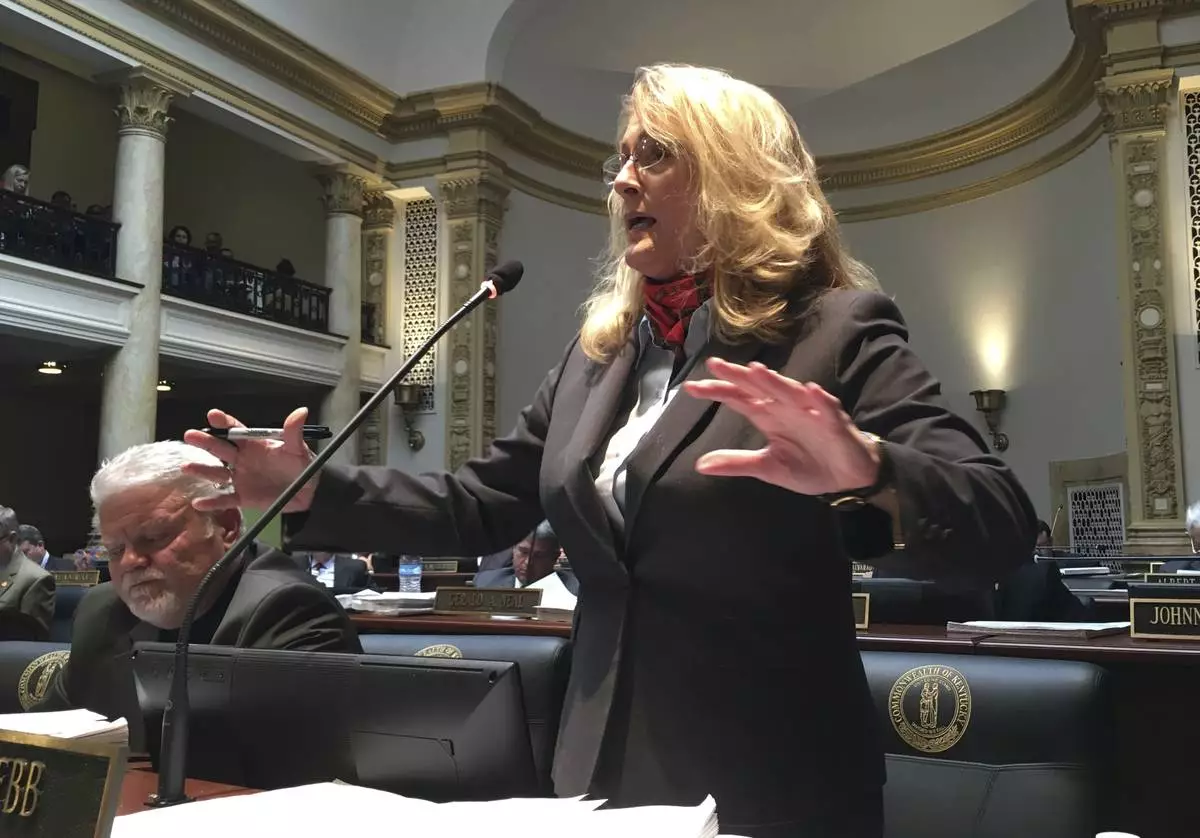
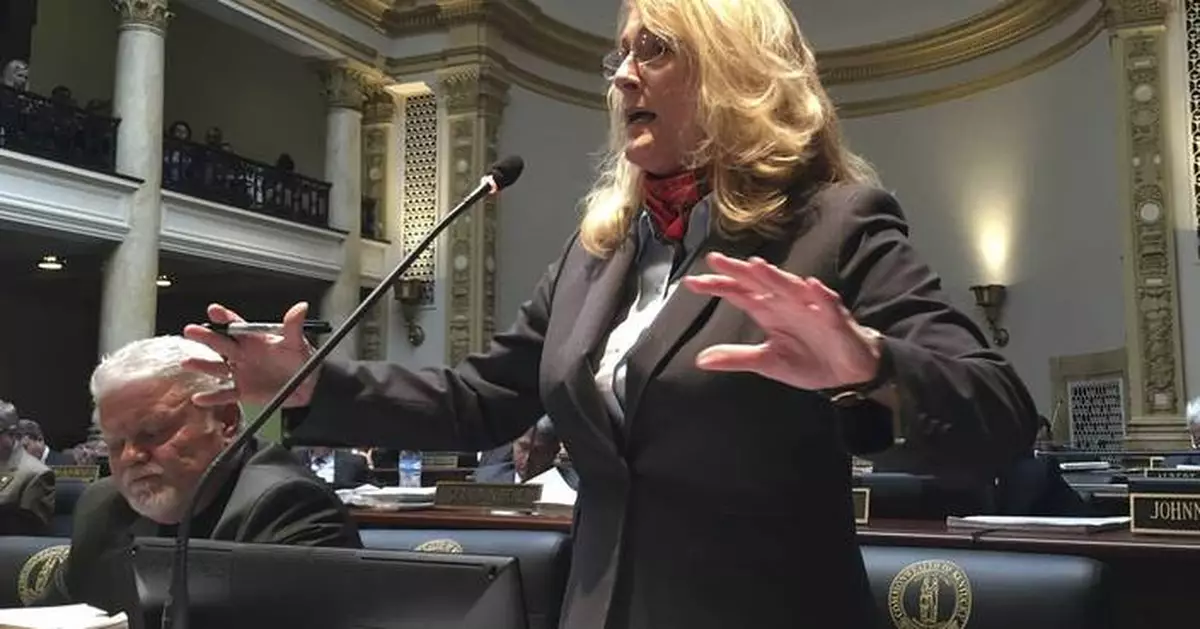
FILE - Democratic state Sen. Robin Webb speaks against a Republican tax proposal on Monday, April 2, 2018, in Frankfort, Ky. (AP Photo/Adam Beam, File)
DUBAI, United Arab Emirates (AP) — U.S. President Donald Trump said Iran wants to negotiate with Washington after his threat to strike the Islamic Republic over its bloody crackdown on protesters, a move coming as activists said Monday the death toll in the nationwide demonstrations rose to at least 544.
Iran had no immediate reaction to the news, which came after the foreign minister of Oman — long an interlocutor between Washington and Tehran — traveled to Iran this weekend. It also remains unclear just what Iran could promise, particularly as Trump has set strict demands over its nuclear program and its ballistic missile arsenal, which Tehran insists is crucial for its national defense.
Meanwhile Monday, Iran called for pro-government demonstrators to head to the streets in support of the theocracy, a show of force after days of protests directly challenging the rule of 86-year-old Supreme Leader Ayatollah Ali Khamenei. Iranian state television aired chants from the crowd, who shouted “Death to America!” and “Death to Israel!”
Trump and his national security team have been weighing a range of potential responses against Iran including cyberattacks and direct strikes by the U.S. or Israel, according to two people familiar with internal White House discussions who were not authorized to comment publicly and spoke on condition of anonymity.
“The military is looking at it, and we’re looking at some very strong options,” Trump told reporters on Air Force One on Sunday night. Asked about Iran’s threats of retaliation, he said: “If they do that, we will hit them at levels that they’ve never been hit before.”
Trump said that his administration was in talks to set up a meeting with Tehran, but cautioned that he may have to act first as reports of the death toll in Iran mount and the government continues to arrest protesters.
“I think they’re tired of being beat up by the United States,” Trump said. “Iran wants to negotiate.”
He added: “The meeting is being set up, but we may have to act because of what’s happening before the meeting. But a meeting is being set up. Iran called, they want to negotiate.”
Iran through country's parliamentary speaker warned Sunday that the U.S. military and Israel would be “legitimate targets” if America uses force to protect demonstrators.
More than 10,600 people also have been detained over the two weeks of protests, said the U.S.-based Human Rights Activists News Agency, which has been accurate in previous unrest in recent years and gave the death toll. It relies on supporters in Iran crosschecking information. It said 496 of the dead were protesters and 48 were with security forces.
With the internet down in Iran and phone lines cut off, gauging the demonstrations from abroad has grown more difficult. The Associated Press has been unable to independently assess the toll. Iran’s government has not offered overall casualty figures.
Those abroad fear the information blackout is emboldening hard-liners within Iran’s security services to launch a bloody crackdown. Protesters flooded the streets in the country’s capital and its second-largest city on Saturday night into Sunday morning. Online videos purported to show more demonstrations Sunday night into Monday, with a Tehran official acknowledging them in state media.
In Tehran, a witness told the AP that the streets of the capital empty at the sunset call to prayers each night. By the Isha, or nighttime prayer, the streets are deserted.
Part of that stems from the fear of getting caught in the crackdown. Police sent the public a text message that warned: “Given the presence of terrorist groups and armed individuals in some gatherings last night and their plans to cause death, and the firm decision to not tolerate any appeasement and to deal decisively with the rioters, families are strongly advised to take care of their youth and teenagers.”
Another text, which claimed to come from the intelligence arm of the paramilitary Revolutionary Guard, also directly warned people not to take part in demonstrations.
“Dear parents, in view of the enemy’s plan to increase the level of naked violence and the decision to kill people, ... refrain from being on the streets and gathering in places involved in violence, and inform your children about the consequences of cooperating with terrorist mercenaries, which is an example of treason against the country,” the text warned.
The witness spoke to the AP on condition of anonymity due to the ongoing crackdown.
The demonstrations began Dec. 28 over the collapse of the Iranian rial currency, which trades at over 1.4 million to $1, as the country’s economy is squeezed by international sanctions in part levied over its nuclear program. The protests intensified and grew into calls directly challenging Iran’s theocracy.
Nikhinson reported from aboard Air Force One.
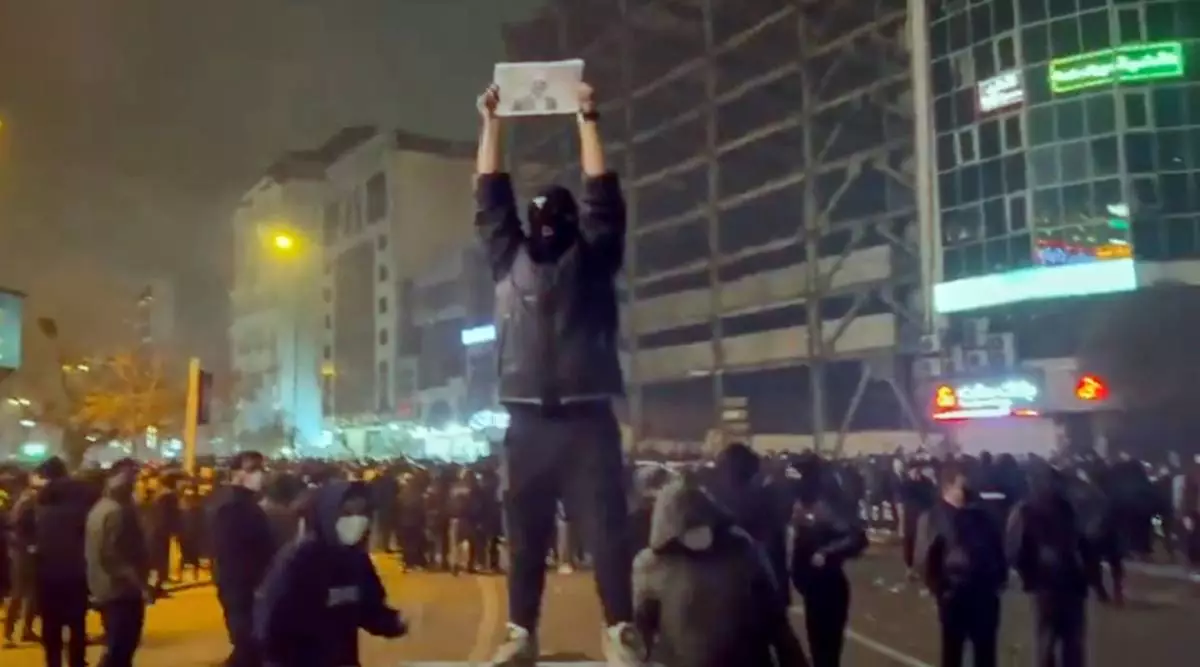
In this frame grab from video obtained by the AP outside Iran, a masked demonstrator holds a picture of Iran's Crown Prince Reza Pahlavi during a protest in Tehran, Iran, Friday, January. 9, 2026. (UGC via AP)
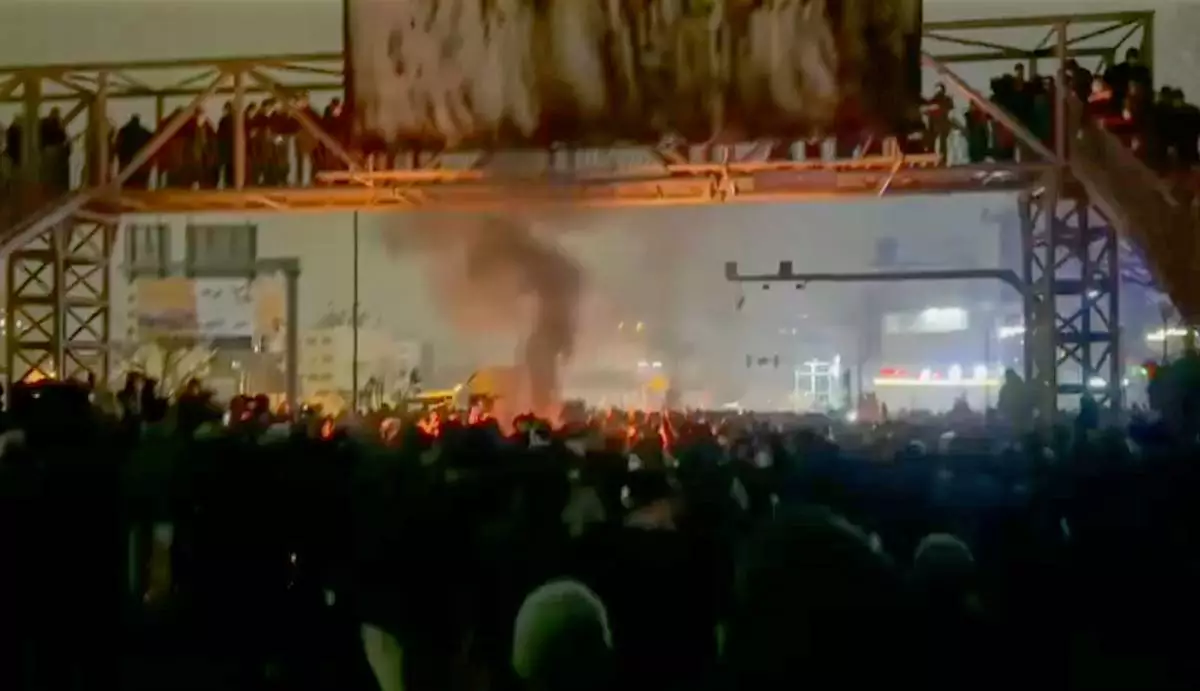
In this frame grab from footage circulating on social media from Iran shows protesters taking to the streets despite an intensifying crackdown as the Islamic Republic remains cut off from the rest of the world in Tehran, Iran, Friday, Jan. 9, 2026.(UGC via AP)
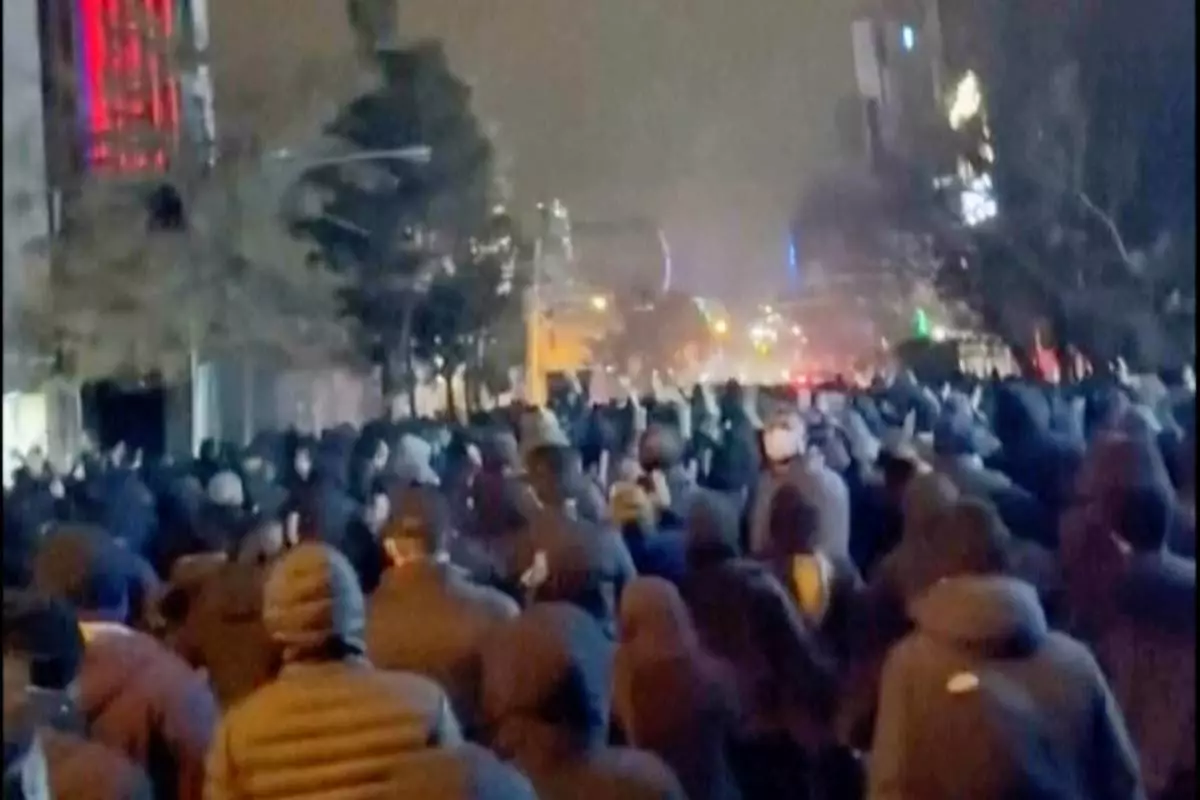
In this frame grab from footage circulating on social media from Iran showed protesters once again taking to the streets of Tehran despite an intensifying crackdown as the Islamic Republic remains cut off from the rest of the world in Tehran, Iran, Saturday Jan. 10, 2026. (UGC via AP)