UNITED NATIONS (AP) — A divided U.N. Security Council voted Friday to extend an arms embargo on South Sudan, where escalating political tensions have led the U.N. to warn that the country could again plunge into civil war.
A U.S.-sponsored resolution to extend the embargo and other sanctions was approved by the narrowest margin — the minimum nine “yes” votes required. Six countries abstained – Russia, China, Algeria, Sierra Leone, Somalia and Pakistan.
The arms embargo, and travel bans and asset freezes on South Sudanese on the U.N. sanctions blacklist, were extended for a year until May 31, 2026.
There were high hopes for peace and stability after oil-rich South Sudan gained independence from Sudan in 2011, becoming the world’s newest nation.
But the country slid into civil war in December 2013 when forces loyal to President Salva Kiir, who is from the largest ethnic group in the country, the Dinka, started battling those loyal to Riek Machar, who is from the second-largest ethnic group, the Nuer.
A 2018 peace deal that brought Machar into the government as first vice-president has been fragile, and implementation has been slow. A presidential election has been postponed until 2026.
Last month, the U.N. envoy to South Sudan, Nicholas Haysom, warned that the escalating rivalry between Kiir and Machar had degenerated into direct military confrontation between their parties and led to Machar’s arrest.
A campaign of misinformation, disinformation and hate speech is “fueling political and ethnic tensions — particularly on social media,” he warned. And “these conditions are darkly reminiscent of the 2013 and 2016 conflicts, which took over 400,000 lives.”
U.S. Minister Counselor John Kelley thanked the council after the vote, saying the arms embargo “remains necessary to stem the unfettered flow of weapons into a region that remains awash with guns.”
“Escalating violence in recent months has brought South Sudan to the brink of civil war,” he said, urging the country’s leaders to restore peace.
Russia’s deputy U.N. ambassador Anna Evstigneeva countered by saying the easing of Security Council sanctions on South Sudan is long overdue. She said the arms embargo and other sanctions are restricting implementation of the 2018 peace agreement.
She accused the resolution’s supporters of “putting a brake on a successful political process unfolding in Sudan, as well as complicating the deployment and proper equipping of the national armed forces.”
South Sudan’s U.N. ambassador, Cecilia Adeng, expressed “deep disappointment” at the extension of the arms embargo and other sanctions.
“The lifting of the sanctions and the arms embargo is not only a matter of national security or sovereignty, but also a matter of economic opportunity and dignity,” she said. “These measures create barriers to growth, delay development, discourage foreign investment, and leave the state vulnerable to non-state actors and outlaws.”
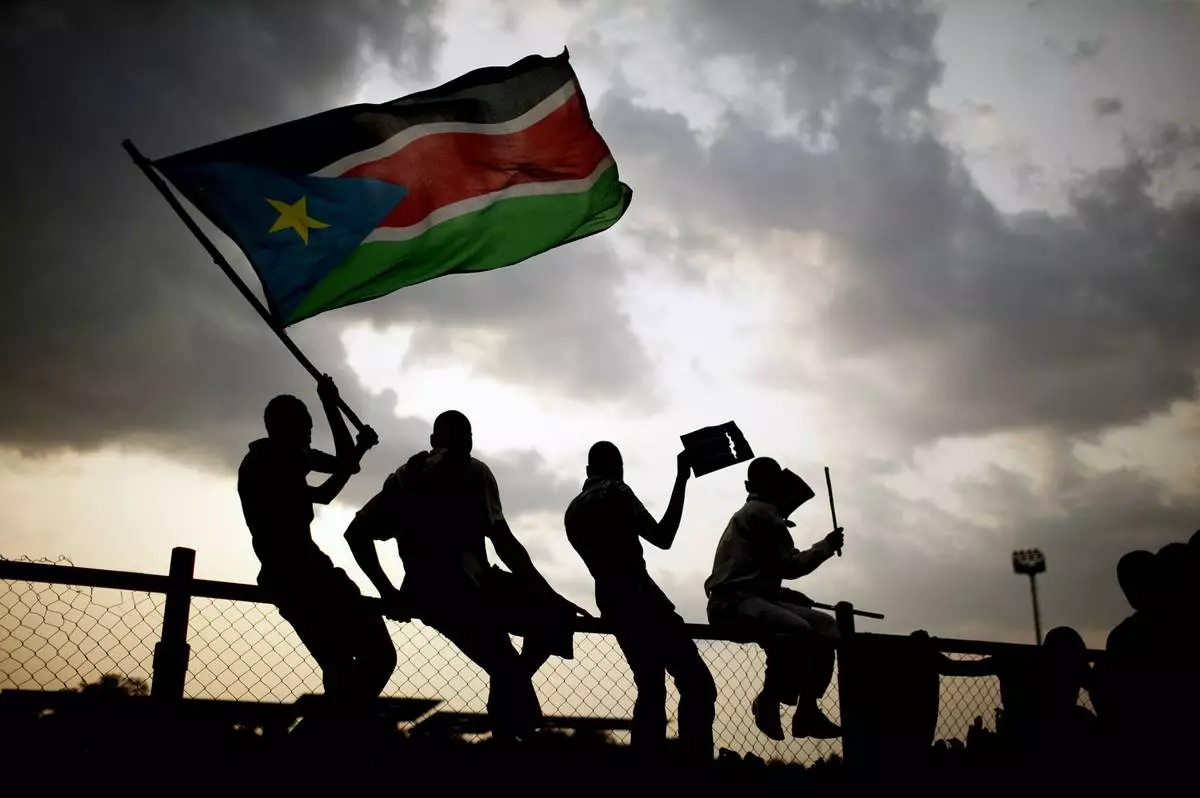
FILE - In this Sunday, July 10, 2011 file photo, Southern Sudanese wave the national flag in the capital Juba. (AP Photo/Pete Muller, File)
NEW YORK (AP) — Thousands of nurses in three hospital systems in New York City went on strike Monday after negotiations through the weekend failed to yield breakthroughs in their contract disputes.
The strike was taking place at The Mount Sinai Hospital and two of its satellite campuses, with picket lines forming. The other affected hospitals are NewYork-Presbyterian and Montefiore Medical Center in the Bronx.
About 15,000 nurses are involved in the strike, according to New York State Nurses Association.
“After months of bargaining, management refused to make meaningful progress on core issues that nurses have been fighting for: safe staffing for patients, healthcare benefits for nurses, and workplace violence protections,” the union said in a statement issued Monday. “Management at the richest hospitals in New York City are threatening to discontinue or radically cut nurses’ health benefits.”
The strike, which comes during a severe flu season, could potentially force the hospitals to transfer patients, cancel procedures or divert ambulances. It could also put a strain on city hospitals not involved in the contract dispute, as patients avoid the medical centers hit by the strike.
The hospitals involved have been hiring temporary nurses to try and fill the labor gap during the walkout, and said in a statement during negotiations that they would “do whatever is necessary to minimize disruptions.” Montefiore posted a message assuring patients that appointments would be kept.
“NYSNA’s leaders continue to double down on their $3.6 billion in reckless demands, including nearly 40% wage increases, and their troubling proposals like demanding that a nurse not be terminated if found to be compromised by drugs or alcohol while on the job," Montefiore spokesperson Joe Solmonese said Monday after the strike had started. "We remain resolute in our commitment to providing safe and seamless care, regardless of how long the strike may last.”
New York-Presbyterian accused the union of staging a strike to “create disruption,” but said in a statement that it has taken steps to ensure patients receive the care they need.
"We’re ready to keep negotiating a fair and reasonable contract that reflects our respect for our nurses and the critical role they play, and also recognizes the challenging realities of today’s healthcare environment,” the statement said.
The work stoppage is occurring at multiple hospitals simultaneously, but each medical center is negotiating with the union independently. Several other hospitals across the city and in its suburbs reached deals in recent days to avert a possible strike.
The nurses’ demands vary by hospital, but the major issues include staffing levels and workplace safety. The union says hospitals have given nurses unmanageable workloads.
Nurses also want better security measures in the workplace, citing incidents like a an incident last week, when a man with a sharp object barricaded himself in a Brooklyn hospital room and was then killed by police.
The union also wants limitations on hospitals’ use of artificial intelligence.
The nonprofit hospitals involved in the negotiations say they’ve been working to improve staffing levels, but say the union’s demands overall are too costly.
Nurses voted to authorize the strike last month.
Both New York Gov. Kathy Hochul and Mayor Zohran Mamdani had expressed concern about the possibility of the strike. As the strike deadline neared, Mamdani urged both sides to keep negotiating and reach a deal that “both honors our nurses and keeps our hospitals open.”
“Our nurses kept this city alive through its hardest moments. Their value is not negotiable,” Mamdani said.
State Attorney General Letitia James voiced similar support, saying "nurses put their lives on the line every day to keep New Yorkers healthy. They should never be forced to choose between their own safety, their patients’ well-being, and a fair contract.”
The last major nursing strike in the city was only three years ago, in 2023. That work stoppage, at Mount Sinai and Montefiore, was short, lasting three days. It resulted in a deal raising pay 19% over three years at those hospitals.
It also led to promised staffing improvements, though the union and hospitals now disagree about how much progress has been made, or whether the hospitals are retreating from staffing guarantees.
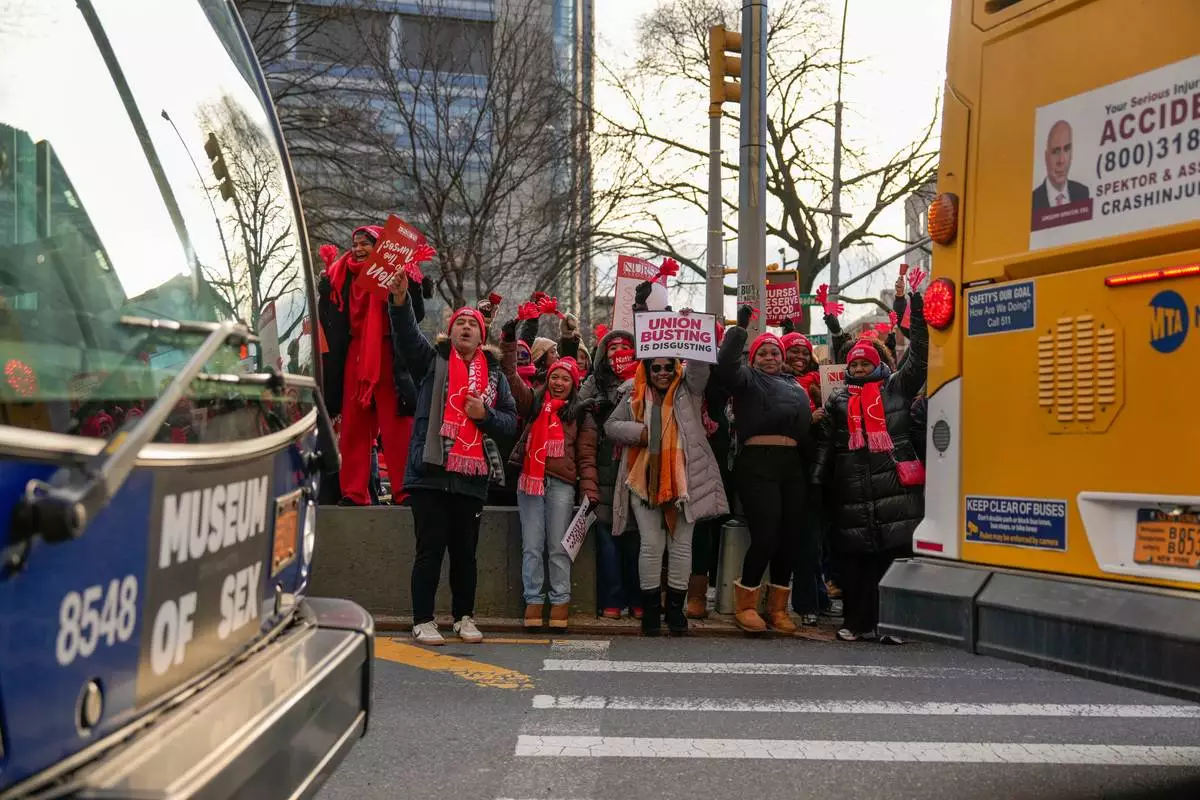
Nurses strike outside New York-Presbyterian Hospital, Monday, Jan. 12, 2026, in New York. (AP Photo/Yuki Iwamura)
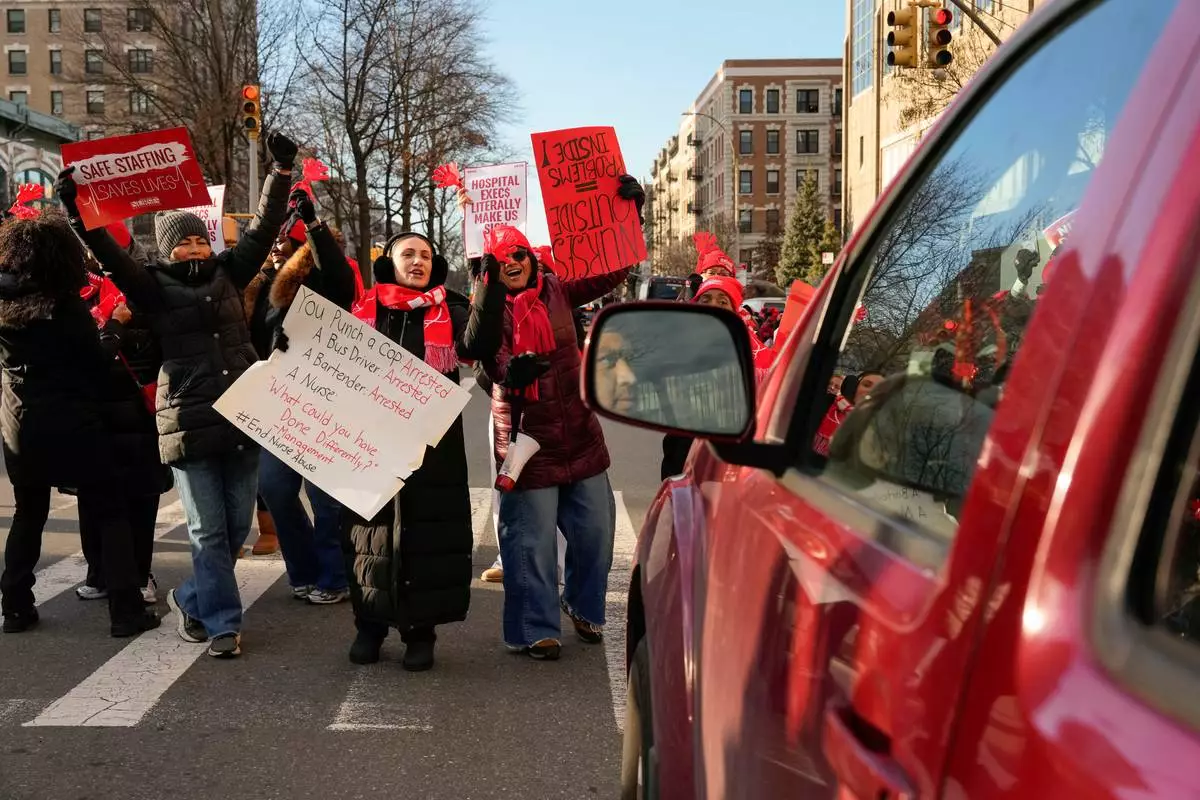
Nurses strike outside New York-Presbyterian Hospital, Monday, Jan. 12, 2026, in New York. (AP Photo/Yuki Iwamura)
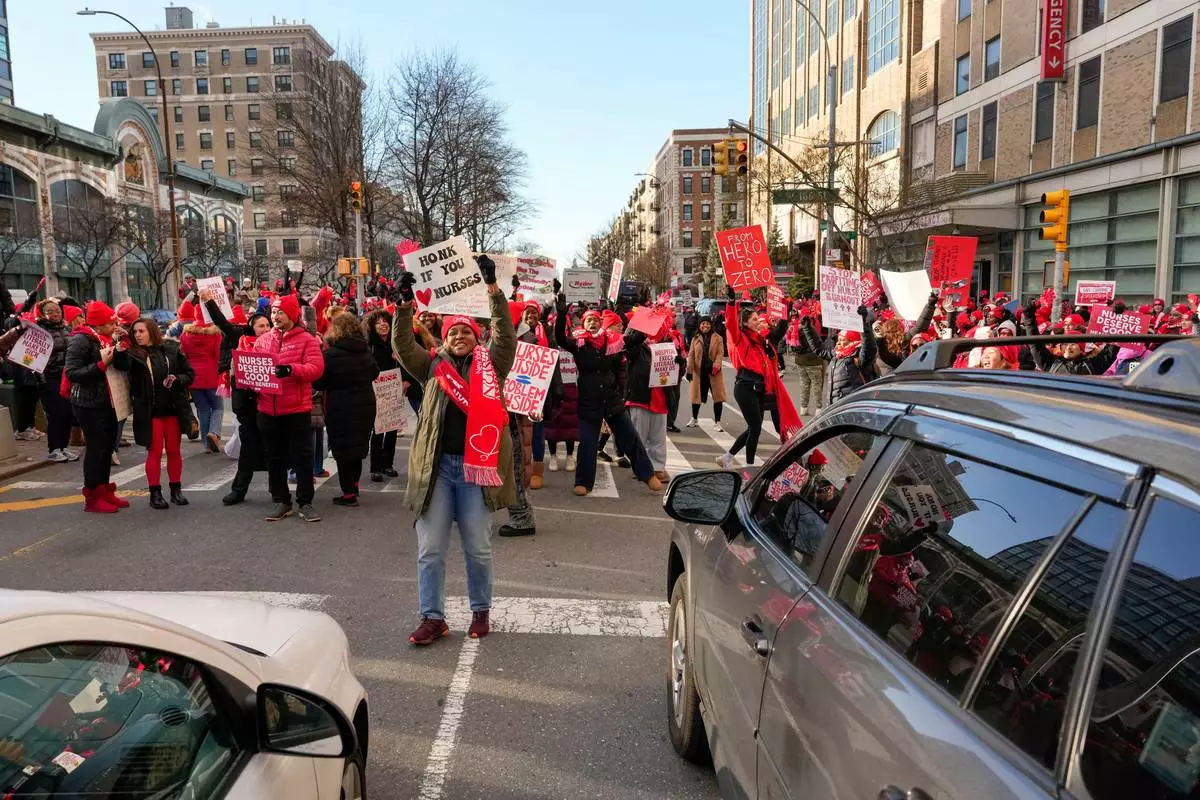
Nurses strike outside New York-Presbyterian Hospital, Monday, Jan. 12, 2026, in New York. (AP Photo/Yuki Iwamura)
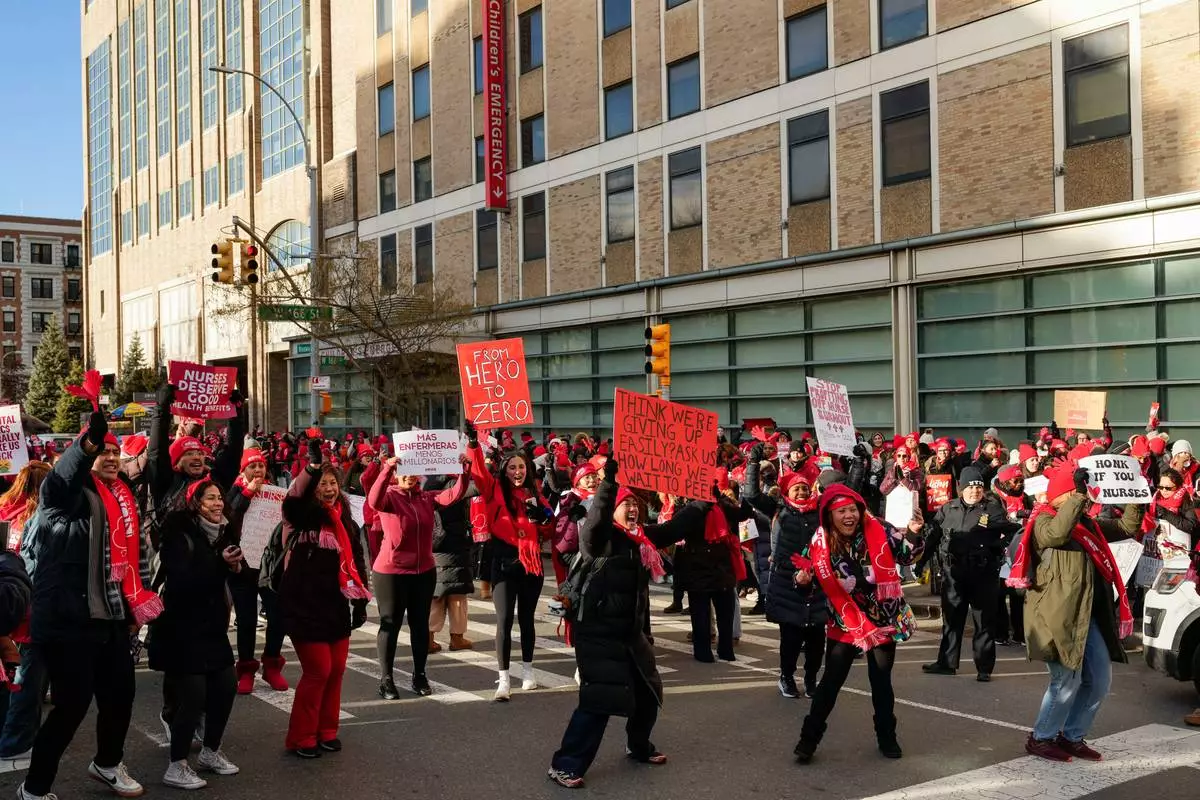
Nurses strike outside New York-Presbyterian Hospital, Monday, Jan. 12, 2026, in New York. (AP Photo/Yuki Iwamura)
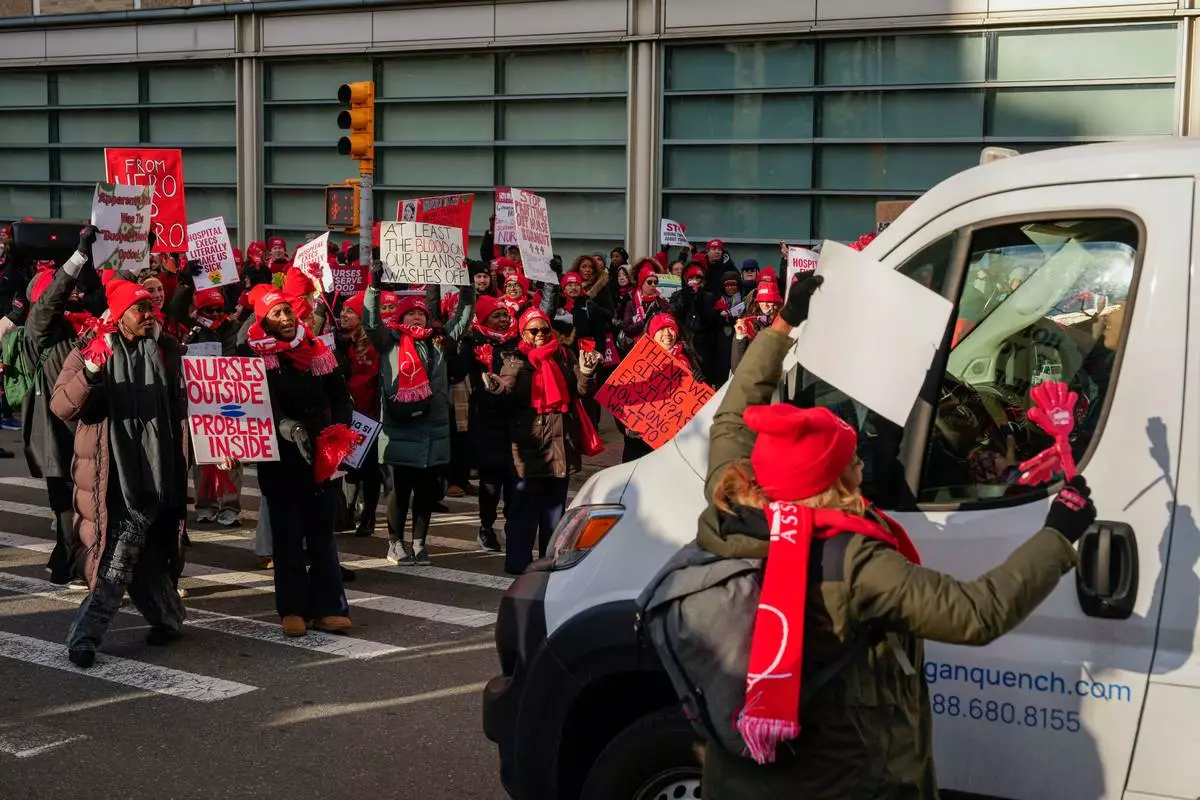
Nurses strike outside New York-Presbyterian Hospital, Monday, Jan. 12, 2026, in New York. (AP Photo/Yuki Iwamura)
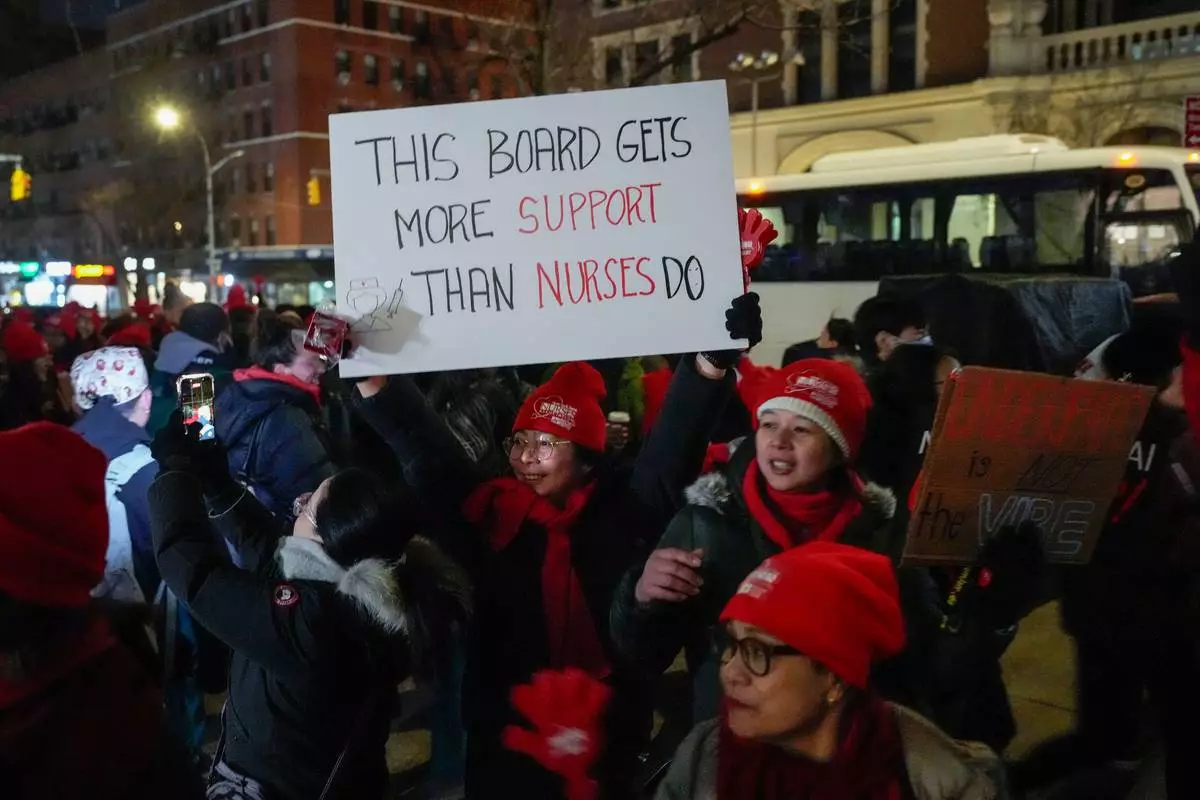
Nurses strike outside Mount Sinai West Hospital, Monday, Jan. 12, 2026, in New York. (AP Photo/Yuki Iwamura)
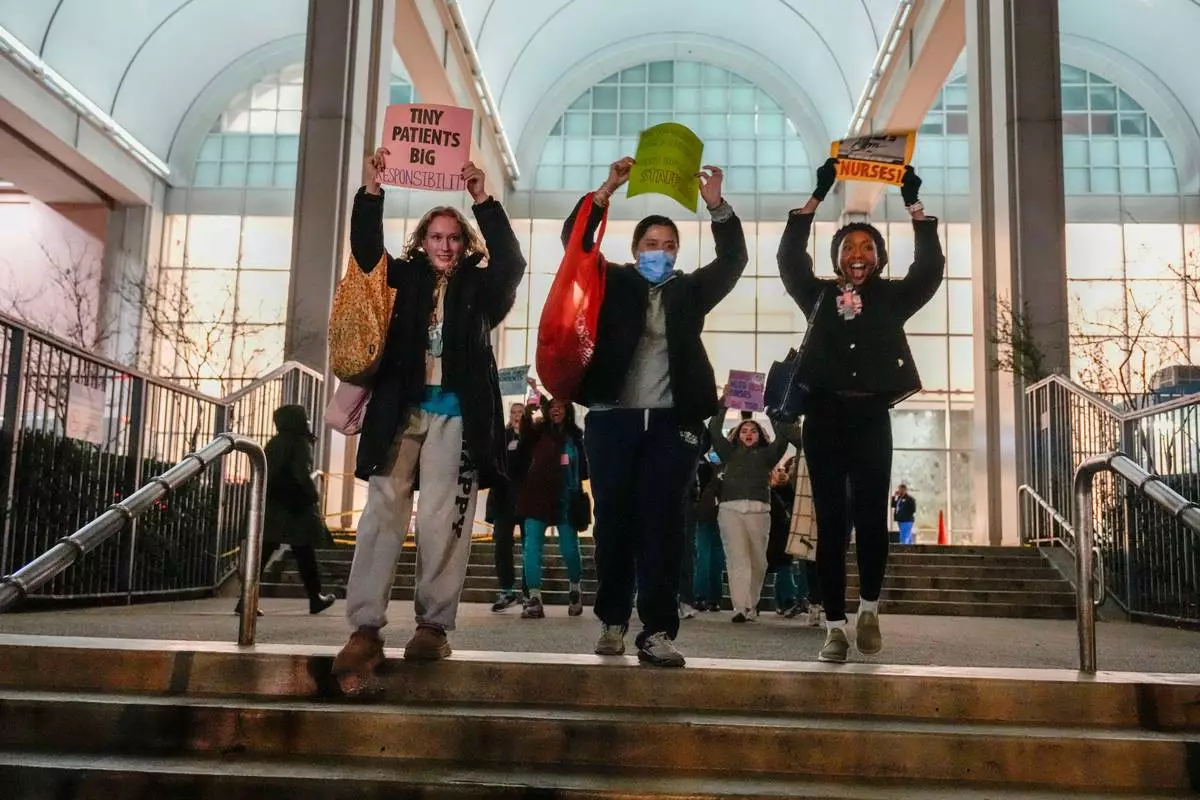
Nurses strike outside Mount Sinai West Hospital, Monday, Jan. 12, 2026, in New York. (AP Photo/Yuki Iwamura)
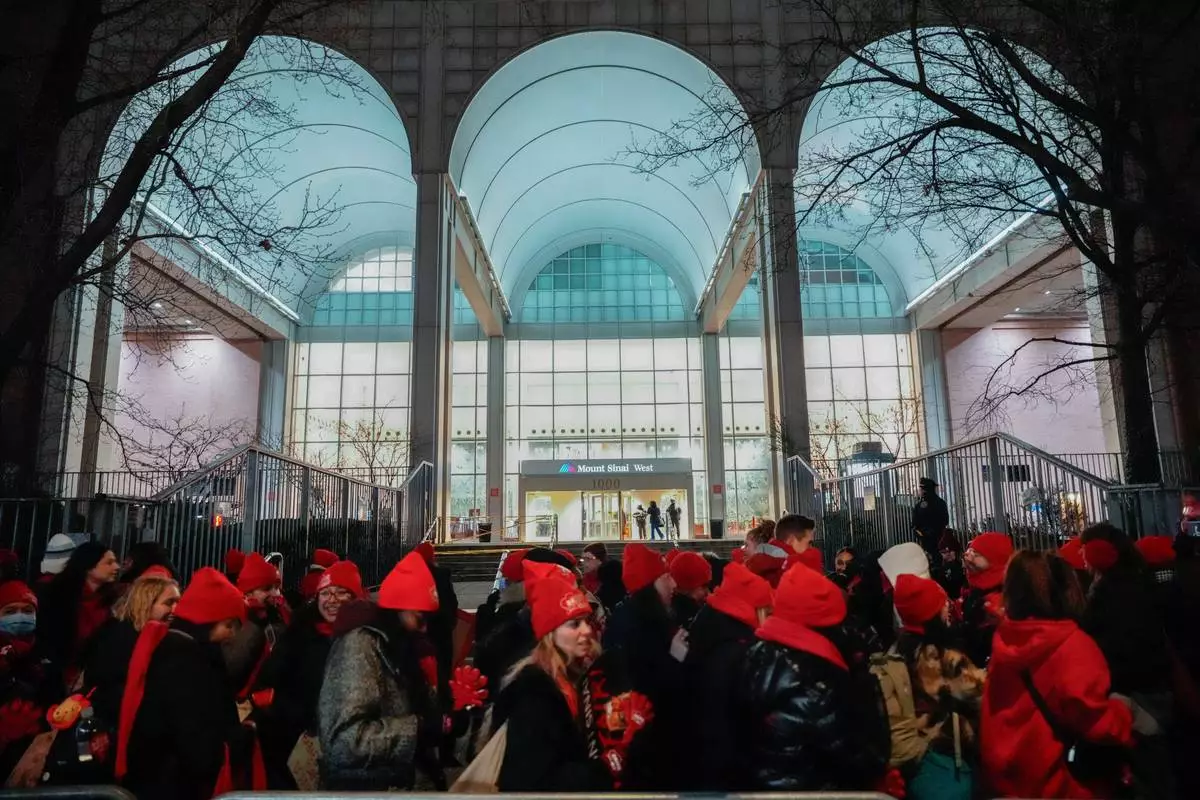
Nurses strike outside Mount Sinai West Hospital, Monday, Jan. 12, 2026, in New York. (AP Photo/Yuki Iwamura)
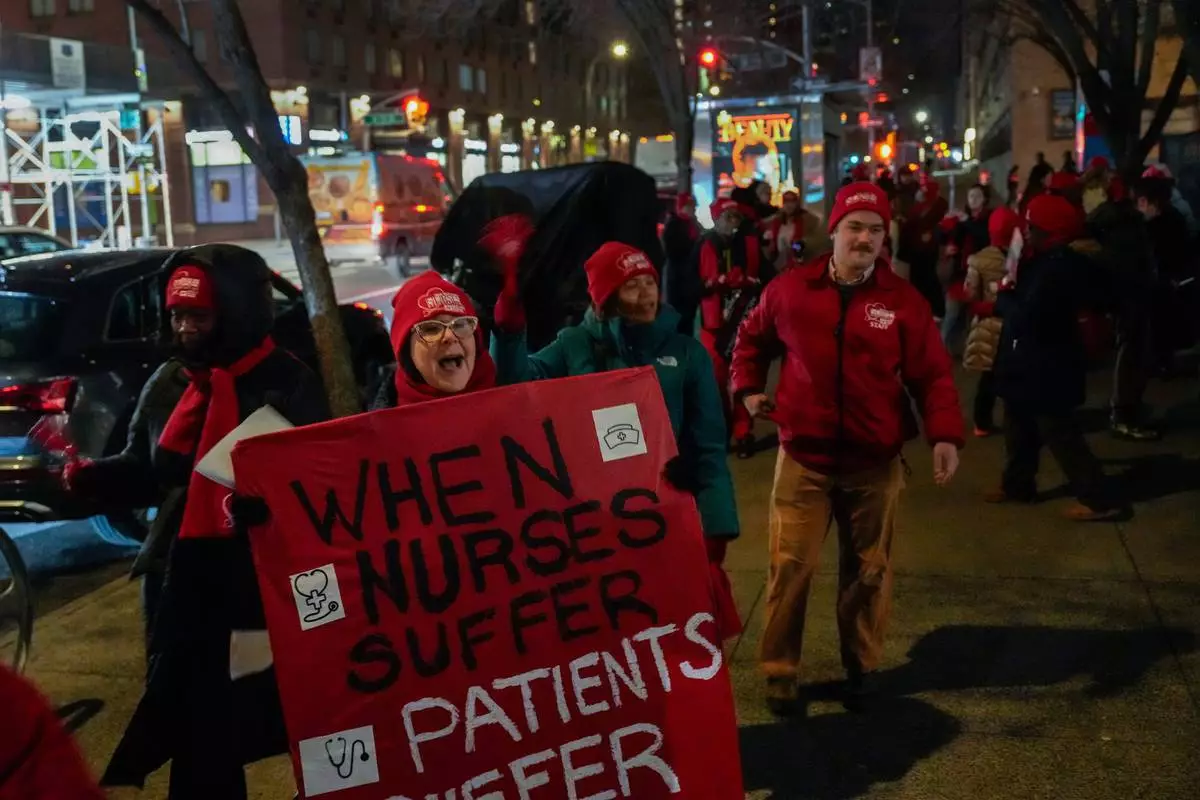
Nurses strike outside Mount Sinai West Hospital, Monday, Jan. 12, 2026, in New York. (AP Photo/Yuki Iwamura)

FILE - A medical worker transports a patient at Mount Sinai Hospital, April 1, 2020, in New York. (AP Photo/Mary Altaffer, File)