A high-level think tank forum between China and Russia was held in Beijing on Friday, against the backdrop of the 80th anniversary of the victory of the World Anti-Fascist War and the 80th anniversary of the establishment of the United Nations, highlighting strengthening cooperation in various fields between the two countries.
Themed as "China and Russia: Cooperation in a New Era", the event featured main topics including jointly upholding true multilateralism, promoting a multipolar world, deepening practical cooperation and developing humanitarian exchanges.
On the sidelines of the forum, scholars said major powers should strengthen dialogue and take responsibility in the context of global instability.
"It is of vital importance to preserve the historical truth at present - there are too many attempts to distort the history of World War II, especially the contributions of China and Russia. We must learn lessons from history. In the current unstable world, dialogue and cooperation between major powers are more realistic than ever," said Liu Xianzhong, analyst of Chinese Academy of Social Sciences.
Experts said cooperation between the two countries demonstrates high potential for future development.
"We have a wide range of cooperation from space exploration to atomic research. And if we talk about new or promising areas of cooperation, then I would note, first of all, artificial intelligence and other modern innovative areas of scientific and technological progress. I think that we have a sound basis for cooperation, I think that we will promote cooperation in these areas. In any case, I place great hopes on it," said Andrey Denisov, first deputy chair of Russia's Federation Council Committee on Foreign Affairs and former Russian ambassador to China.
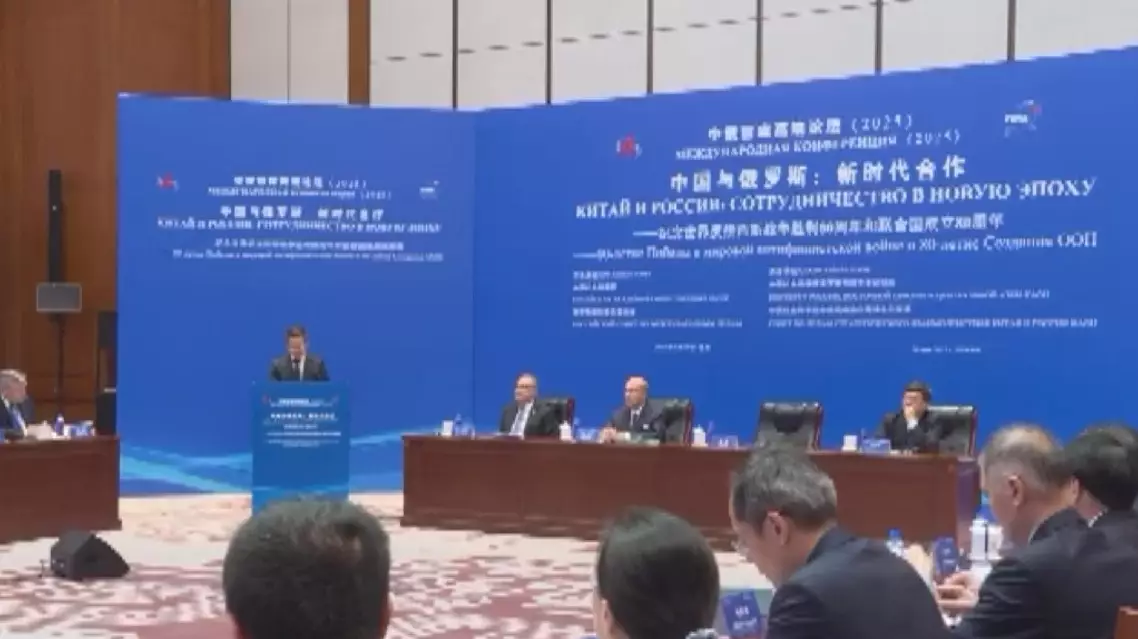
China-Russia think tank forum highlights growing cooperation
China attaches great importance to the development of China-Singapore relations, and is willing to maintain the momentum of high-level exchanges, promote practical cooperation in various fields, and enhance people-to-people exchanges with Singapore, Chinese Foreign Minister Wang Yi said on Monday.
Wang, also a member of the Political Bureau of the Communist Party of China Central Committee, made the remarks when holding talks with Singaporean Foreign Minister Vivian Balakrishnan in Beijing.
Noting that over the past year, under the strategic guidance of leaders of the two countries and joint efforts of both sides, the all-round high-quality and future-oriented partnership between China and Singapore has maintained a good momentum, Wang urged the two countries to continue to enhance strategic communication, increase mutual trust, jointly address the ever-emerging global challenges at present, and safeguard the overall situation of regional peace and stability.
Wang said that maintaining the security of global industrial and supply chains and the smooth flow of maritime navigation is in the common interests of the international community, and China is willing to continue to make efforts to this end.
Noting that Singapore is an important ASEAN member and will assume ASEAN's rotating presidency next year, Wang said China expects the Singaporean side to continue playing an active role in promoting China-ASEAN cooperation.
Balakrishnan said Singapore highly values its relations with China, adheres to the one-China policy, and firmly opposes "Taiwan independence."
Singapore is willing to maintain close high-level exchanges with China, promote practical cooperation in various fields, carry out key cooperation projects of both sides, and promote regional connectivity, he said.
Singapore is ready to promote greater progress in ASEAN-China comprehensive strategic partnership, support the Global Development Initiative, and uphold multilateralism and free trade, and is willing to work with China to make joint efforts in promoting world peace, development and prosperity, he added.
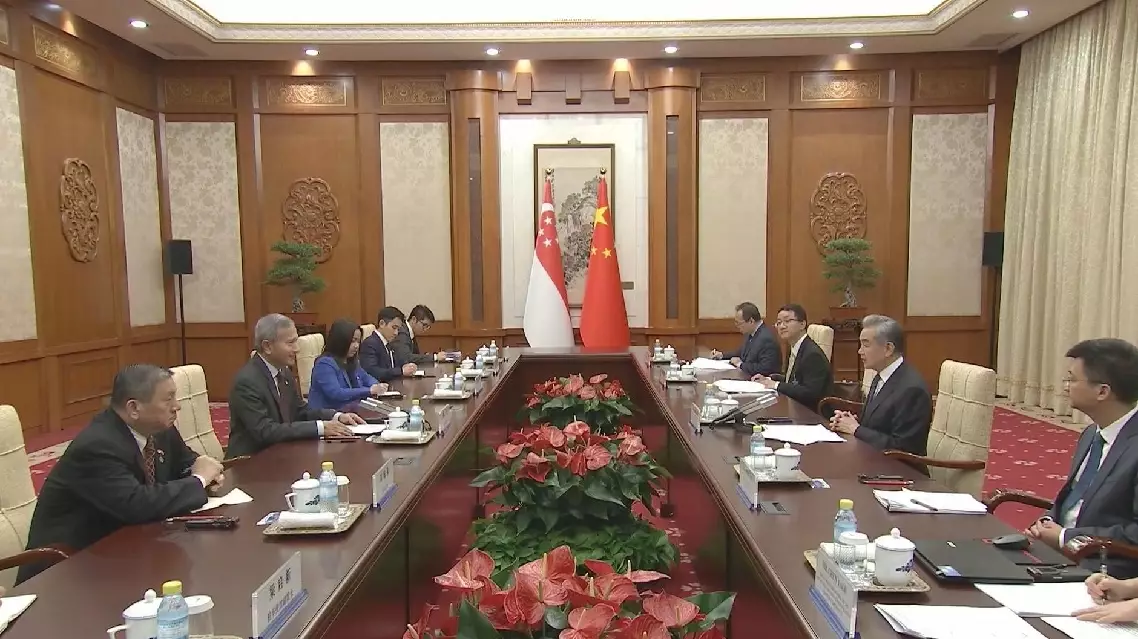
China ready to promote practical cooperation with Singapore: Chinese FM