Skip to Content Facebook Feature Image

A new natural gas project off Senegal makes fishing communities feel threatened

News

A new natural gas project off Senegal makes fishing communities feel threatened
News

News

A new natural gas project off Senegal makes fishing communities feel threatened

2025-06-01 13:25 Last Updated At:13:31

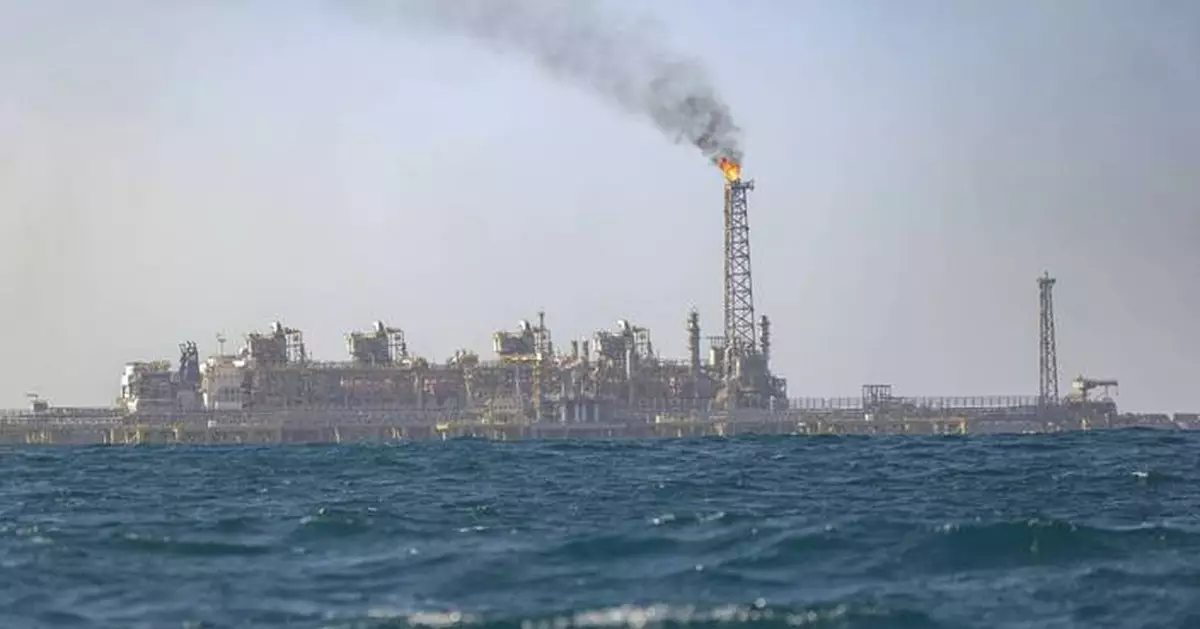
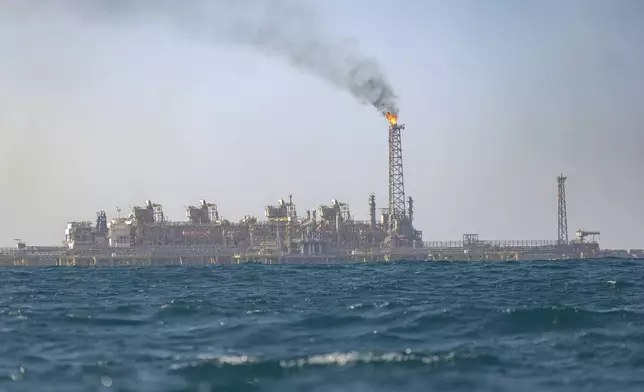
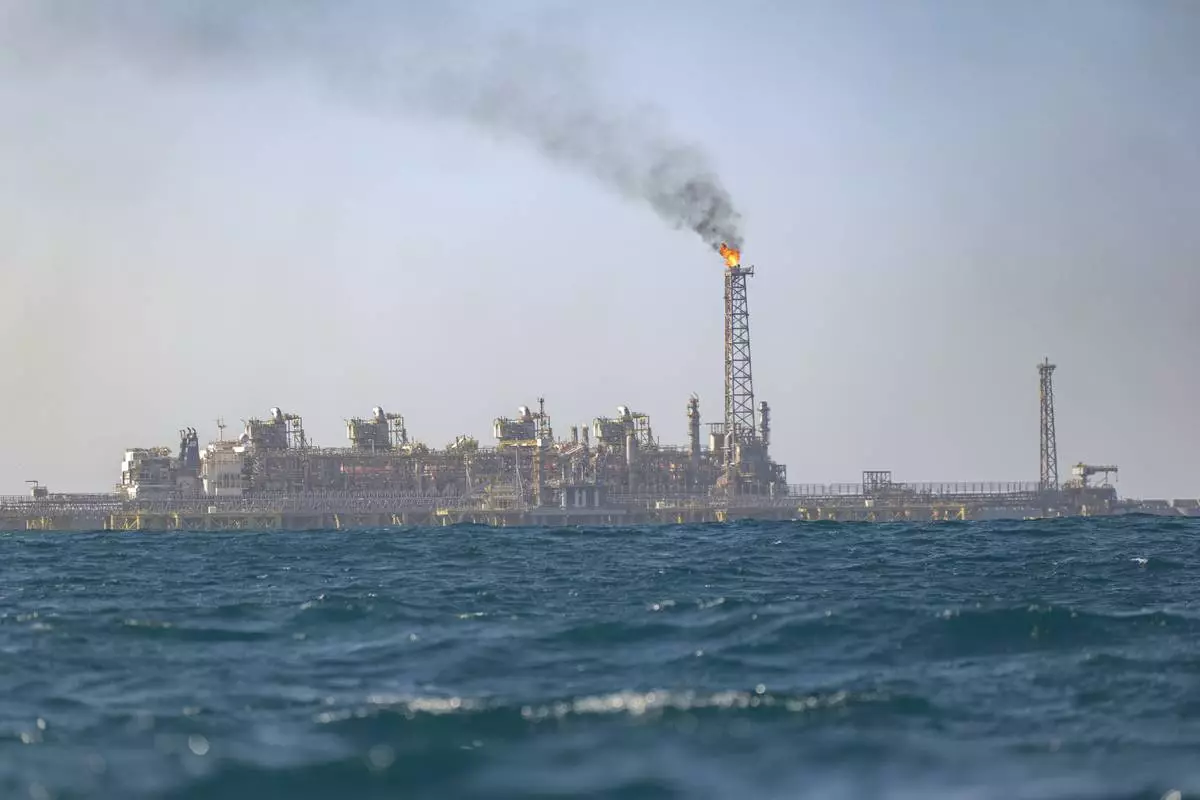
GUET NDAR, Senegal (AP) — It’s impossible to miss the gas platform off the coast of northern Senegal. Its flare stack burns day and night above the rolling breakers.

The natural gas project, a joint venture between British energy giant BP and U.S.-based Kosmos Energy, started operations on the final day of 2024. It is meant to bring jobs to the densely populated fishing community of Guet Ndar, just outside the old colonial capital of Saint Louis.

More Images
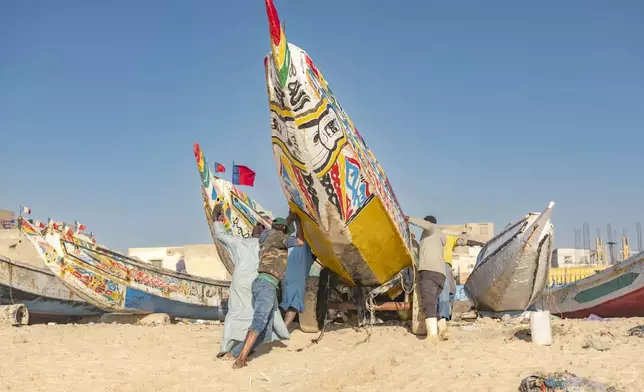
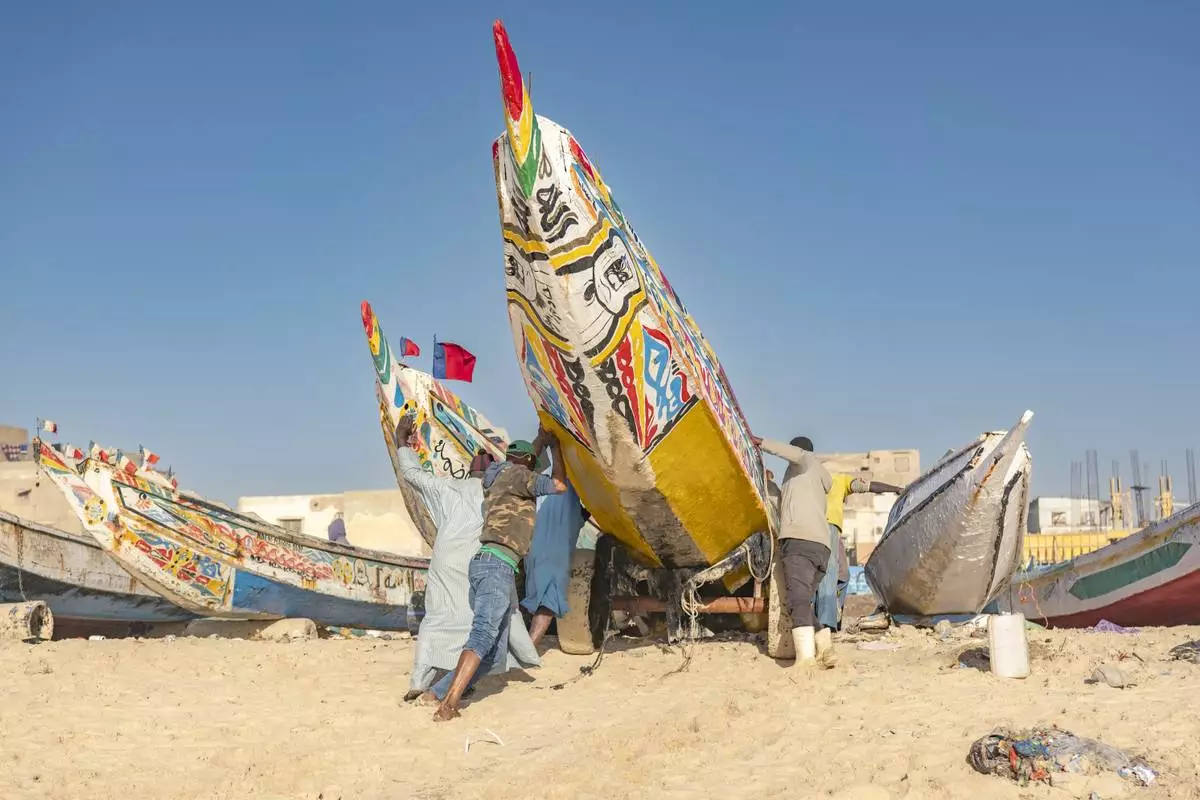
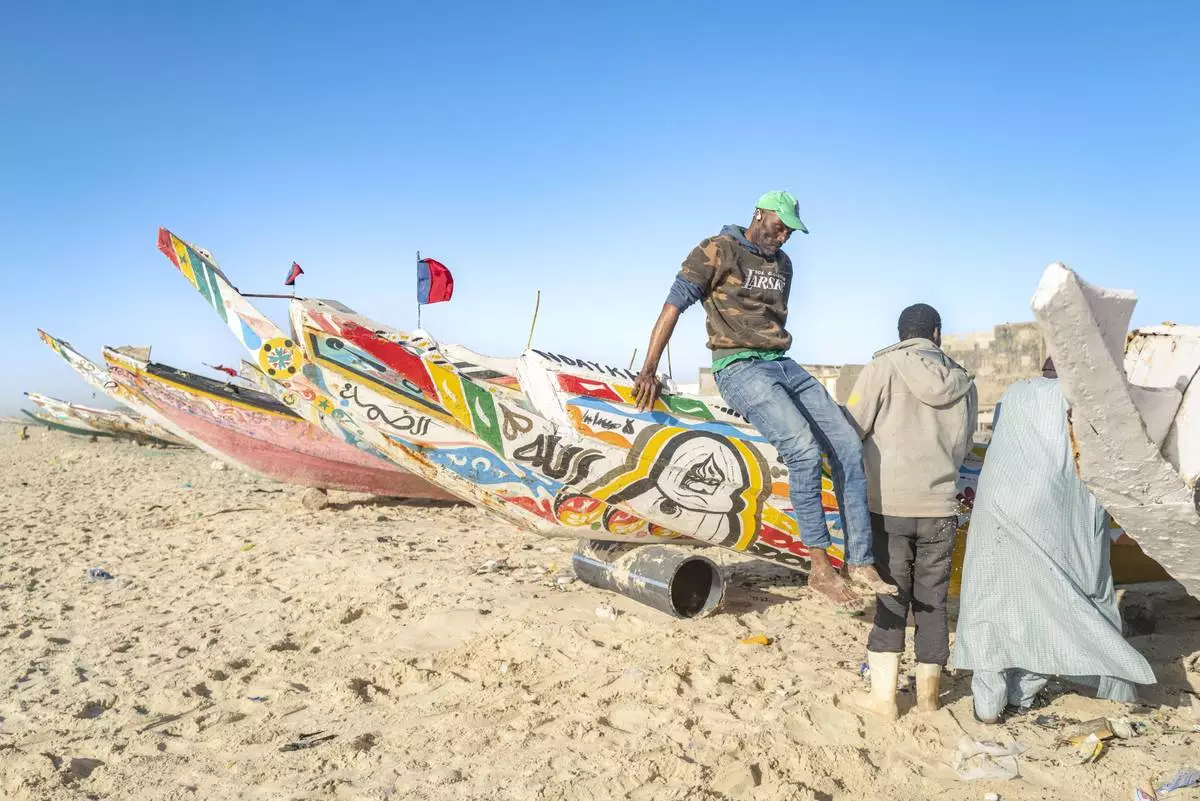
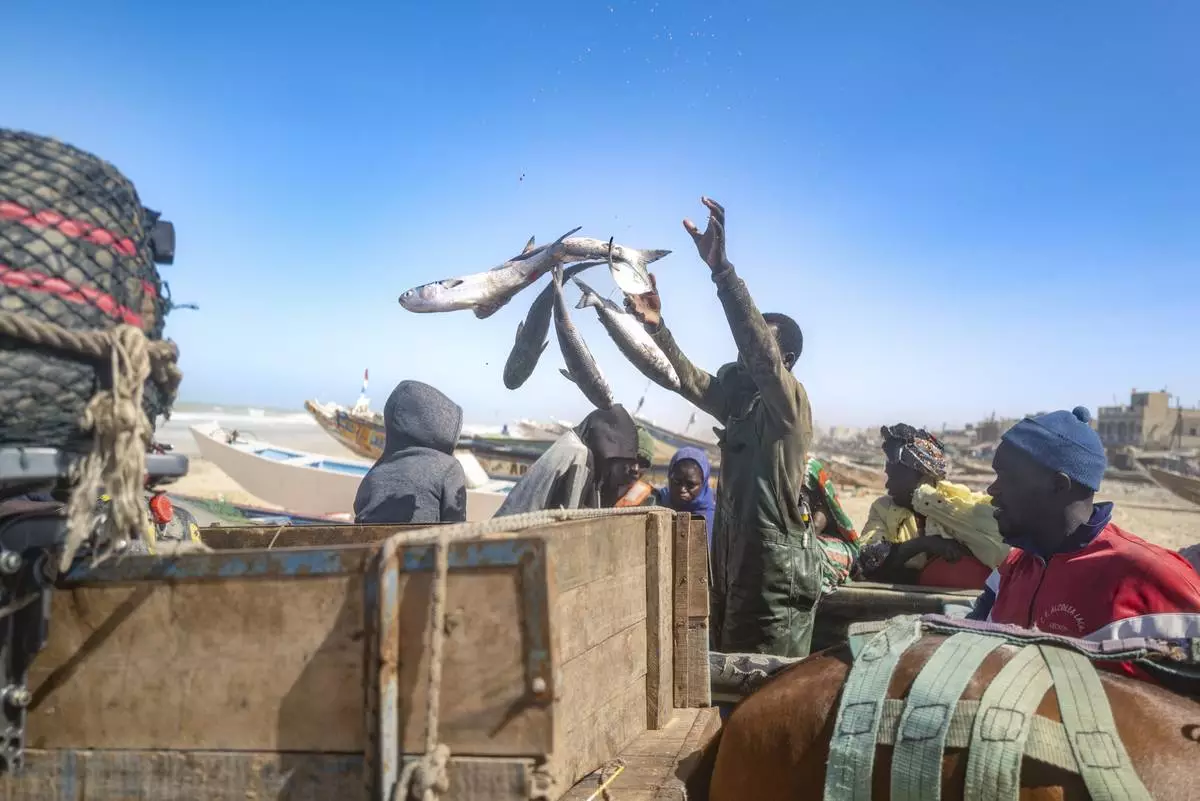
Fishermen park their pirogues after returning from fishing in Saint-Louis, Senegal, Thursday, March 13, 2025. (AP Photo/Sylvain Cherkaoui)
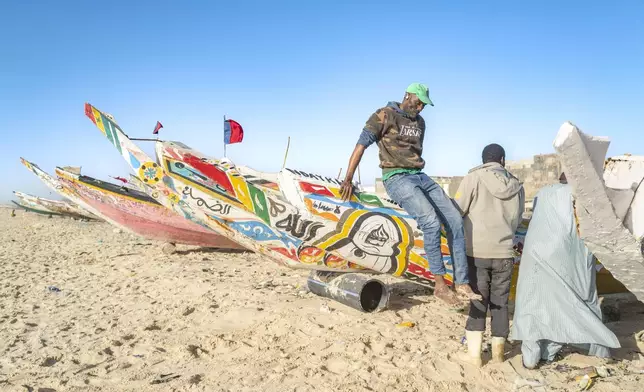
Fishermen park their pirogues after returning from fishing in Saint-Louis, Senegal, Thursday, March 13, 2025. (AP Photo/Sylvain Cherkaoui)
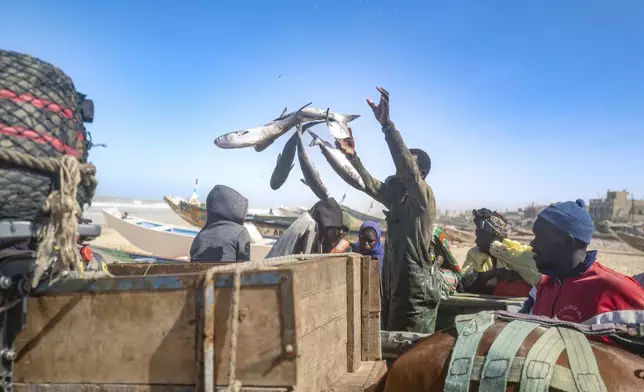
Fishermen park their pirogues after returning from fishing in Saint-Louis, Senegal, Thursday, March 13, 2025. (AP Photo/Sylvain Cherkaoui)

Fishermen park their pirogues after returning from fishing in Saint-Louis, Senegal, Thursday, March 13, 2025. (AP Photo/Sylvain Cherkaoui)

Fishermen return to Saint-Louis, Senegal, Thursday, March 13, 2025. (AP Photo/Sylvain Cherkaoui)
Fishermen return to Saint-Louis, Senegal, Thursday, March 13, 2025. (AP Photo/Sylvain Cherkaoui)

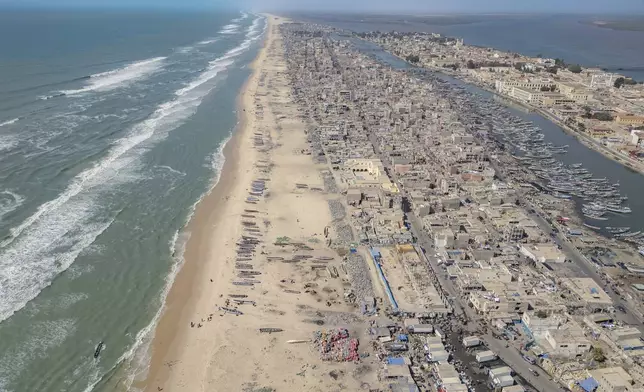
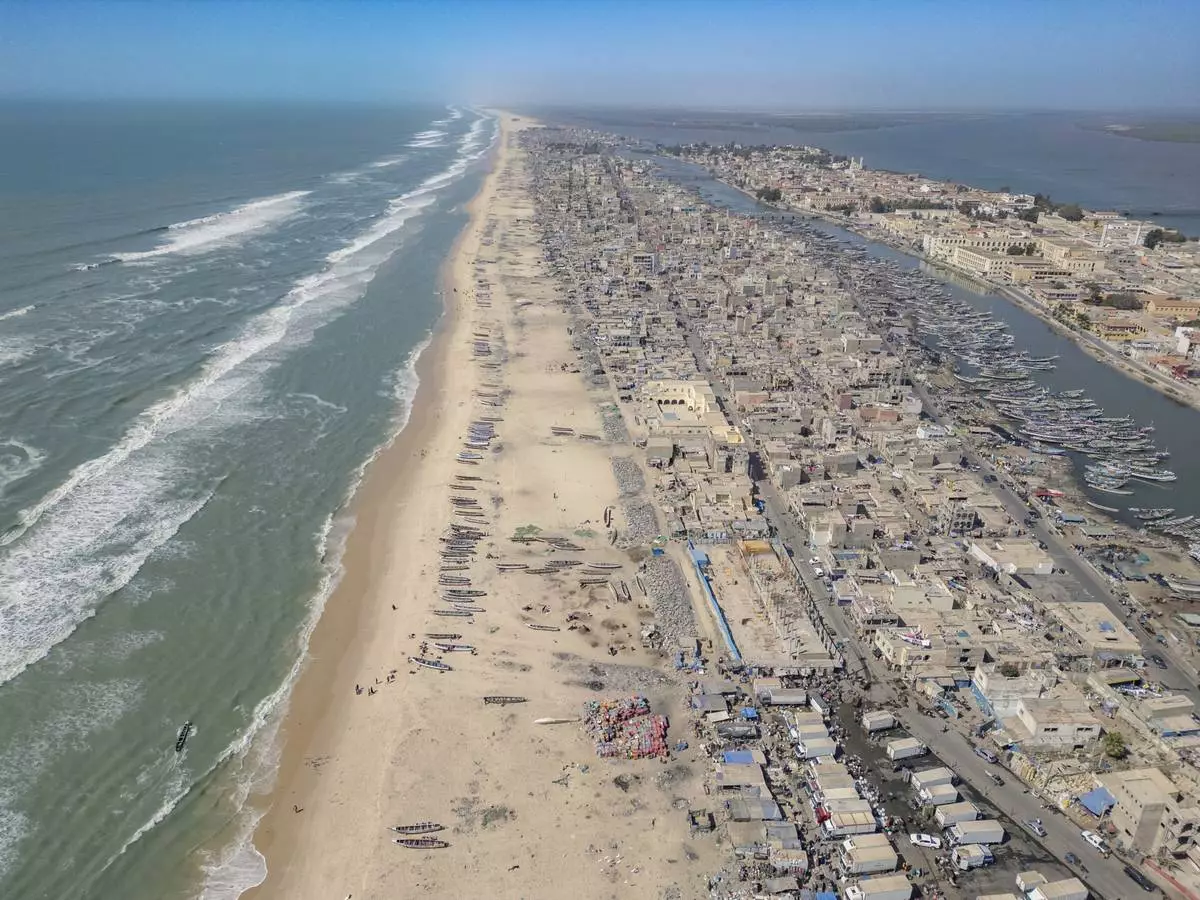
Aerial view of the fishing town of St Louis, Senegal, Thursday, March 13, 2025. (AP Photo/Sylvain Cherkaoui)
Aerial view of the fishing town of St Louis, Senegal, Thursday, March 13, 2025. (AP Photo/Sylvain Cherkaoui)

View of the Grand Tortue Ahmeyim (GTA) natural gas extraction platform located 8km from the beach Off the coast of Saint-Louis, Senegal, Thursday, March 13, 2025. (AP Photo/Sylvain Cherkaoui)

View of the Grand Tortue Ahmeyim (GTA) natural gas extraction platform located 8km from the beach Off the coast of Saint-Louis, Senegal, Thursday, March 13, 2025. (AP Photo/Sylvain Cherkaoui)

The gas extraction plant, the deepest in Africa, is aimed at helping to transform Senegal's stagnant economy after the discovery just over a decade ago of oil and gas off the country's coast. The first offshore oil project also began last year.

Mariam Sow, one of the few remaining sellers in the once-thriving fish market, said the decline began in 2020 when the platform started rising from the sea.

“This market used to be full every day,” Sow said, gesturing at the barren lot. The nearby beach is now occupied by hundreds of unused boats.

Fishing is central to life in coastal Senegal. It employs over 600,000 people, according to the U.S. Department of Agriculture. The country exported nearly half a billion dollars worth of fish in 2022, according to think tank Chatham House, citing international trade data.

The Grand Tortue Ahmeyim project plans to extract gas off Senegal and neighboring Mauritania. According to BP, the field could produce 2.3 million tons of liquefied natural gas every year.

Last year, Senegal elected President Bassirou Diomaye Faye, who ran on an anti-establishment platform. He pledged to maximize the country’s natural resources, including by renegotiating what he called unfair contracts with foreign firms and distributing revenues to the population.

“I will proceed with the disclosure of the effective ownership of extractive companies (and) with an audit of the mining, oil, and gas sector," he said in his first address. It was not clear whether contract renegotiation efforts had begun, or whether they would include the gas project.

The fishermen of Guet Ndar say the benefits promised by both the project and Senegal's government have not materialized. The cost of living remains high, and the price of natural gas, a major cooking source in Senegal, is still rising. Lower gas prices had been a major selling point for the gas project.

Mohamed Sow, a shopkeeper in Dakar, said his customers complain that a 12-liter gas canister has gone from 5,000 CFA ($8.50) to 8,000 CFA ($13.80) in the past few years.

“It’s impossible to keep raising the price,” he said.

Senegal's government did not respond to requests for comment.

The fishing community near the project says it has noticed more signs of trouble.

Soon after the gas project's production began, fishermen said they noticed a large number of bubbles in the sea. BP cited a temporary gas leak that “had no immediate impact on ongoing production activities from the remaining wells."

The leak took weeks to fix. BP did not say how much gas — largely methane — leaked into the ocean, or what caused a leak so early in the new project.

In a response to written questions, BP said “the environmental impact of the release was assessed as negligible" considering the “low rate” of release.

The environmental charity Greenpeace, however, called the effects of such spills on the environment significant.

“The GTA field is home to the world’s largest deep-water coral reef, a unique ecosystem. A single spill can wipe out decades of marine biodiversity, contaminate food chains and destroy habitat,” it said in a statement.

Sitting outside a BP-built and branded fish refrigeration unit meant to help community relations, Mamadou Sarr, the president of the Saint Louis fishermen’s union, talked about the concerns.

Sarr asserted that fish have become more scarce as they are attracted to the platform and away from several reefs that the people of Guet Ndar had fished for centuries.

Drawing in the sand, he explained how the fish, drawn by the project's lights and underwater support structures, no longer visit their old “homes.” Areas around the platforms are off-limits to fishermen.

Sarr also said an artificial reef that BP is building lies in the path of ships that regularly visit the structures, keeping the fish away.

One fisherman, Abdou, showed off his catch after two days at sea: two insulated boxes full of fish, each about the size of an oil drum. A box of fish fetches 15,000 CFA, or $26.

Prior to the gas project, he said, he would get four or five boxes per two-day trip. Now, getting two is a win.

That worsens a problem already created by overfishing by foreign vessels.

BP stressed that face-to-face talks with members of the community about such issues are ongoing, and noted its community-facing projects such as microfinance and vocational training programs in the region.

Sarr said that despite its promises, the government failed to consider his community when agreeing to the gas project.

“This is our land and sea, why don’t we get a voice?” he asked.

He and others expressed irony that the refrigeration unit sitting next to them cannot be opened. The key is “somewhere in Dakar” Sarr said, and locals said they have never seen inside it.

For more on Africa and development: https://apnews.com/hub/africa-pulse

The Associated Press receives financial support for global health and development coverage in Africa from the Gates Foundation. The AP is solely responsible for all content. Find AP’s standards for working with philanthropies, a list of supporters and funded coverage areas at AP.org.
Fishermen park their pirogues after returning from fishing in Saint-Louis, Senegal, Thursday, March 13, 2025. (AP Photo/Sylvain Cherkaoui)
Fishermen park their pirogues after returning from fishing in Saint-Louis, Senegal, Thursday, March 13, 2025. (AP Photo/Sylvain Cherkaoui)
Fishermen park their pirogues after returning from fishing in Saint-Louis, Senegal, Thursday, March 13, 2025. (AP Photo/Sylvain Cherkaoui)

Fishermen park their pirogues after returning from fishing in Saint-Louis, Senegal, Thursday, March 13, 2025. (AP Photo/Sylvain Cherkaoui)

Fishermen return to Saint-Louis, Senegal, Thursday, March 13, 2025. (AP Photo/Sylvain Cherkaoui)
Fishermen return to Saint-Louis, Senegal, Thursday, March 13, 2025. (AP Photo/Sylvain Cherkaoui)

Aerial view of the fishing town of St Louis, Senegal, Thursday, March 13, 2025. (AP Photo/Sylvain Cherkaoui)
Aerial view of the fishing town of St Louis, Senegal, Thursday, March 13, 2025. (AP Photo/Sylvain Cherkaoui)

View of the Grand Tortue Ahmeyim (GTA) natural gas extraction platform located 8km from the beach Off the coast of Saint-Louis, Senegal, Thursday, March 13, 2025. (AP Photo/Sylvain Cherkaoui)

View of the Grand Tortue Ahmeyim (GTA) natural gas extraction platform located 8km from the beach Off the coast of Saint-Louis, Senegal, Thursday, March 13, 2025. (AP Photo/Sylvain Cherkaoui)
RHO, Italy (AP) — No ice is colder and harder than speedskating ice. The precision it takes has meant that Olympic speedskaters have never competed for gold on a temporary indoor rink – until the 2026 Milan Cortina Winter Games.

In the pursuit of maximum glide and minimum friction, Olympic officials brought on ice master Mark Messer, a veteran of six previous Olympic speedskating tracks and the ice technician in charge of the Olympic Oval in Calgary, Canada — one of the fastest tracks in the world with over 300 records.

Messer has been putting that experience to work one thin layer of ice at a time since the end of October at the new Speed Skating Stadium, built inside adjacent trade fair halls in the city of Rho just north of Milan.

“It’s one of the biggest challenges I’ve had in icemaking,’’ Messer said during an interview less than two weeks into the process.

If Goldilocks were a speedskater, hockey ice would be medium hard, for fast puck movement and sharp turns. Figure skating ice would be softer, allowing push off for jumps and so the ice doesn’t shatter on landing. Curling ice is the softest and warmest of all, for controlled sliding.

For speedskating ice to be just right, it must be hard, cold and clean. And very, very smooth.

“The blades are so sharp, that if there is some dirt, the blade will lose the edge,’’ Messer said, and the skater will lose speed.

Speedskater Enrico Fabris, who won two Olympic golds in Turin in 2006, has traded in his skates to be deputy sports manager at the speedskating venue in Rho. For him, perfect ice means the conditions are the same for all skaters — and then if it's fast ice, so much the better.

"It's more of a pleasure to skate on this ice,'' he said.

Messer’s first Olympics were in Calgary in 1988 — the first time speedskating was held indoors. “That gave us some advantages because we didn’t have to worry about the weather, wind blowing or rain,’’ he said. Now he is upping the challenge by becoming the first ice master to build a temporary rink for the Olympics.

Before Messer arrived in Italy, workers spent weeks setting up insulation to level the floor and then a network of pipes and rubber tubes that carry glycol — an antifreeze — that is brought down to minus 7 or minus 8 degrees Celsius (17.6 to 19.4 degrees Fahrenheit) to make the ice.

Water is run through a purification system — but it can’t be too pure, or the ice that forms will be too brittle. Just the right amount of impurities “holds the ice together,’’ Messer said.

The first layers of water are applied slowly, with a spray nozzle; after the ice reaches a few centimeters it is painted white — a full day’s work — and the stripes are added to make lanes.

“The first one takes about 45 minutes. And then as soon as it freezes, we go back and do it again, and again and again. So we do it hundreds of times,’’ Messer said.

As the ice gets thicker, and is more stable, workers apply subsequent layers of water with hoses. Messer attaches his hose to hockey sticks for easier spreading.

What must absolutely be avoided is dirt, dust or frost — all of which can cause friction for the skaters, slowing them down. The goal is that when the skaters push “they can go as far as possible with the least amount of effort,’’ Messer said.

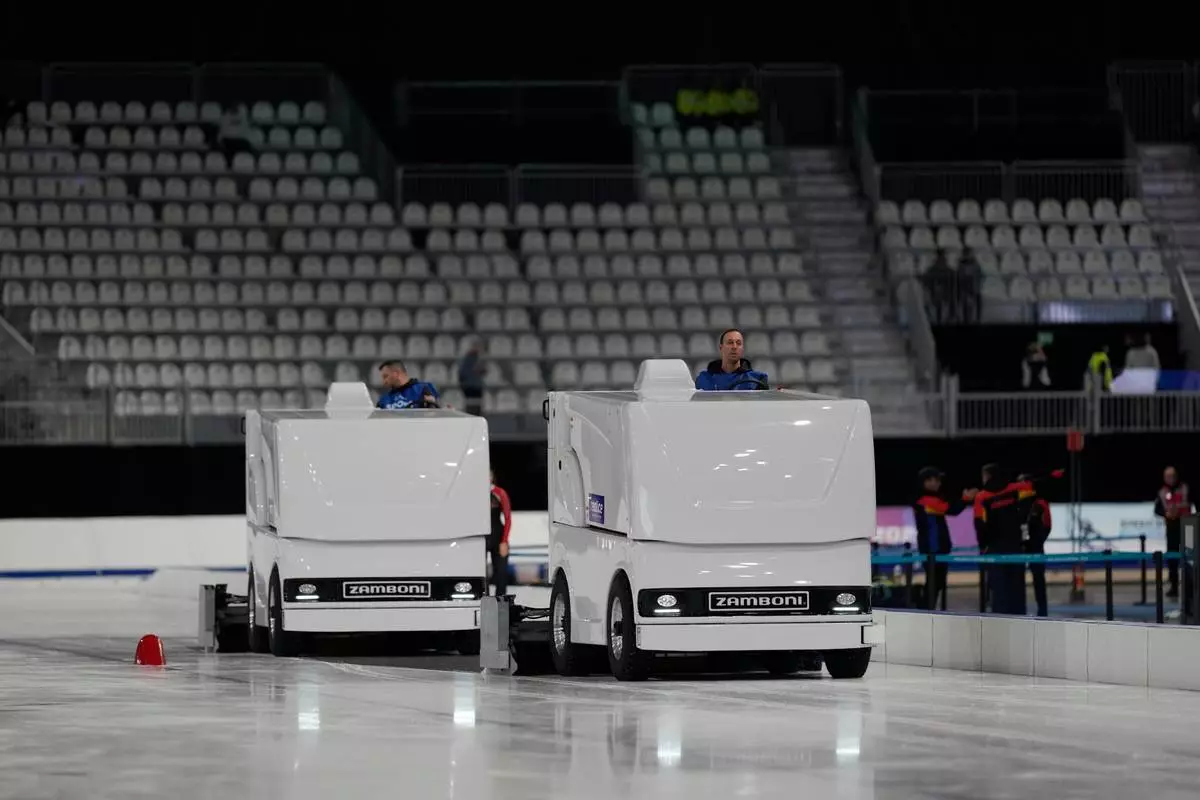
The Zamboni ice resurfacing machine plays a key role in keeping the track clean, cutting off a layer and spraying water to make a new surface.

One challenge is gauging how quickly the water from the resurfacing machine freezes in the temporary rink.

Another is getting the ice to the right thickness so that the Zamboni, weighing in at six tons, doesn’t shift the insulation, rubber tubing or ice itself.

“When you drive that out, if there’s anything moving it will move. We don’t want that,’’ Messer said.

The rink got its first big test on Nov. 29-30 during a Junior World Cup event. In a permanent rink, test events are usually held a year before the Olympics, leaving more time for adjustments. “We have a very small window to learn,’’ Messer acknowledged.

Dutch speedskater Kayo Vos, who won the men’s neo-senior 1,000 meters, said the ice was a little soft — but Messer didn’t seem too concerned.

“We went very modest to start, now we can start to change the temperatures and try to make it faster and still maintain it as a safe ice,’’ he said.

Fine-tuning the air temperature and humidity and ice temperature must be done methodically — taking into account that there will be 6,000 spectators in the venue for each event. The next real test will be on Jan. 31, when the Olympians take to the ice for their first training session.

“Eighty percent of the work is done but the hardest part is the last 20 percent, where we have to try to find the values and the way of running the equipment so all the skaters get the same conditions and all the skaters get the best conditions,’’ Messer said.

AP Winter Olympics: https://apnews.com/hub/milan-cortina-2026-winter-olympics

Serpentines are set on the ice of the stadium where speed skating discipline of the Milan Cortina 2026 Winter Olympics will take place, in Rho, outskirt of Milan, Tuesday, Nov. 11, 2025. (AP Photo/Luca Bruno)

Serpentines are set on the ice of the stadium where speed skating discipline of the Milan Cortina 2026 Winter Olympics will take place, in Rho, outskirt of Milan, Tuesday, Nov. 11, 2025. (AP Photo/Luca Bruno)

Ice Master Mark Messer poses in the stadium where speed skating discipline of the Milan Cortina 2026 Winter Olympics will take place, in Rho, outskirt of Milan, Tuesday, Nov. 11, 2025. (AP Photo/Luca Bruno)

Ice Master Mark Messer poses in the stadium where speed skating discipline of the Milan Cortina 2026 Winter Olympics will take place, in Rho, outskirt of Milan, Tuesday, Nov. 11, 2025. (AP Photo/Luca Bruno)

Workers clean the ice surface during a peed skating Junior World Cup and Olympic test event, in Rho, near Milan, Italy, Saturday, Nov. 29, 2025. (AP Photo/Luca Bruno)

Workers clean the ice surface during a peed skating Junior World Cup and Olympic test event, in Rho, near Milan, Italy, Saturday, Nov. 29, 2025. (AP Photo/Luca Bruno)

Ice Master Mark Messer poses in the stadium where speed skating discipline of the Milan Cortina 2026 Winter Olympics will take place, in Rho, outskirt of Milan, Tuesday, Nov. 11, 2025. (AP Photo/Luca Bruno)

Ice Master Mark Messer poses in the stadium where speed skating discipline of the Milan Cortina 2026 Winter Olympics will take place, in Rho, outskirt of Milan, Tuesday, Nov. 11, 2025. (AP Photo/Luca Bruno)

Ice Master Mark Messer poses in the stadium where speed skating discipline of the Milan Cortina 2026 Winter Olympics will take place, in Rho, outskirt of Milan, Tuesday, Nov. 11, 2025. (AP Photo/Luca Bruno)

Ice Master Mark Messer poses in the stadium where speed skating discipline of the Milan Cortina 2026 Winter Olympics will take place, in Rho, outskirt of Milan, Tuesday, Nov. 11, 2025. (AP Photo/Luca Bruno)

Recommended Articles