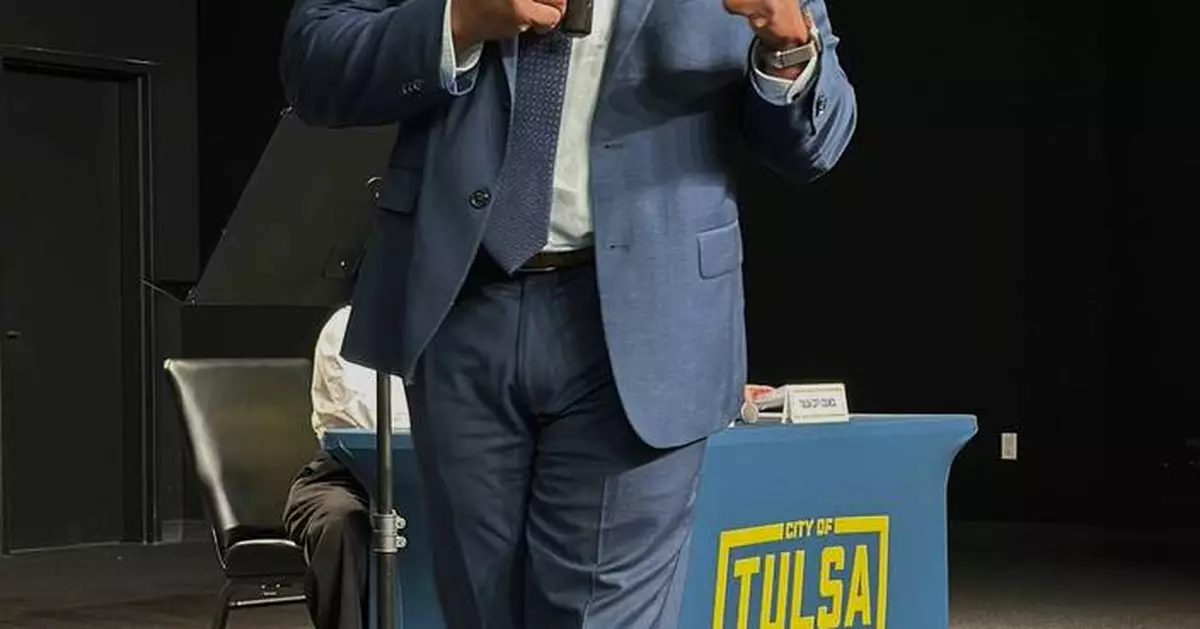
TULSA, Okla. (AP) — Tulsa's new mayor on Sunday proposed a $100 million private trust as part of a reparations plan to give descendants of the 1921 Tulsa Race Massacre scholarships and housing help in a city-backed bid to make amends for one of the worst racial attacks in U.S. history.
The plan by Mayor Monroe Nichols, the first Black mayor of Oklahoma's second-largest city, would not provide direct cash payments to descendants or the last two centenarian survivors of the attack that killed as many as 300 Black people. He made the announcement at the Greenwood Cultural Center, located in the once-thriving district of North Tulsa that was destroyed by a white mob.
Click to Gallery
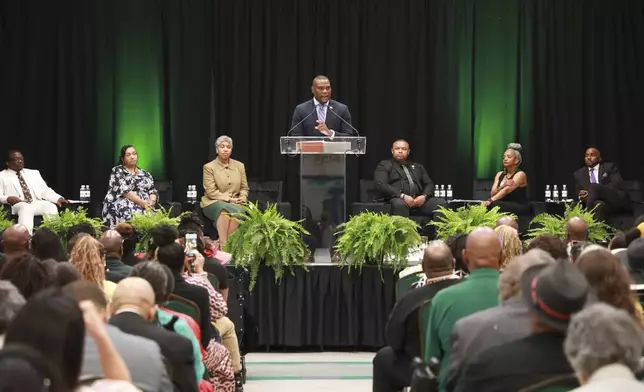
Tulsa Mayor Monroe Nichols IV speaks during the Legacy event for the Tulsa Race Massacre on Sunday, June 1, 2025, at Greenwood Cultural Center in Tulsa, Okla. (AP Photo/Joey Johnson)
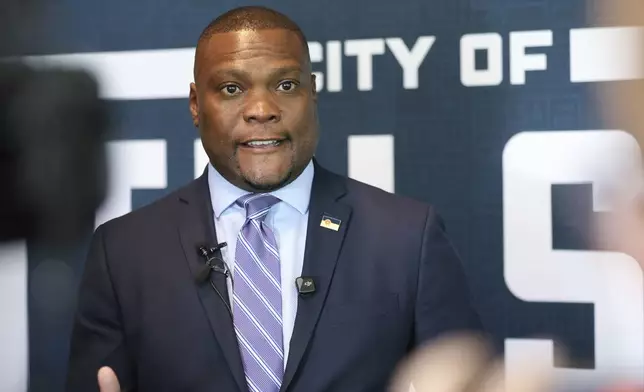
Tulsa Mayor Monroe Nichols IV speaks during the Legacy event for the Tulsa Race Massacre on Sunday, June 1, 2025, at Greenwood Cultural Center in Tulsa, Okla. (AP Photo/Joey Johnson)
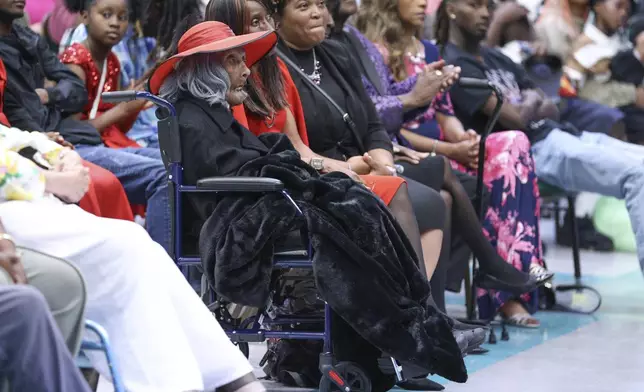
Lessie Benningfield "Mother" Randle, one of the final two survivors at 109 years old, listens during the Legacy event for the Tulsa Race Massacre on Sunday, June 1, 2025, at Greenwood Cultural Center in Tulsa, Okla. (AP Photo/Joey Johnson)
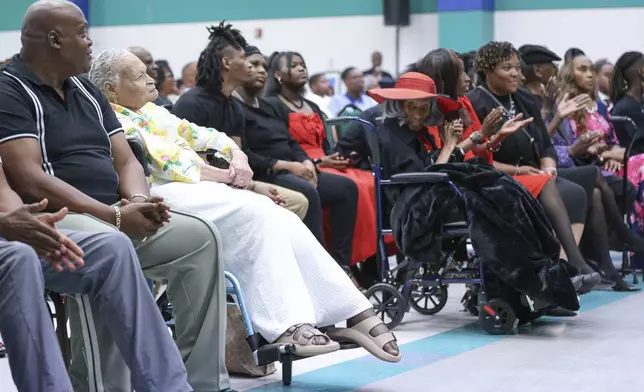
Viola "Mother" Ford Fletcher, 110 years of age (yellow) is one of the final two survivors sits across the aisle from the other survivor Lessie Benningfield "Mother" Randle (red hat), 109 years old, as they listen during the Legacy event for the Tulsa Race Massacre on Sunday, June 1, 2025, at Greenwood Cultural Center in Tulsa, Okla. (AP Photo/Joey Johnson)
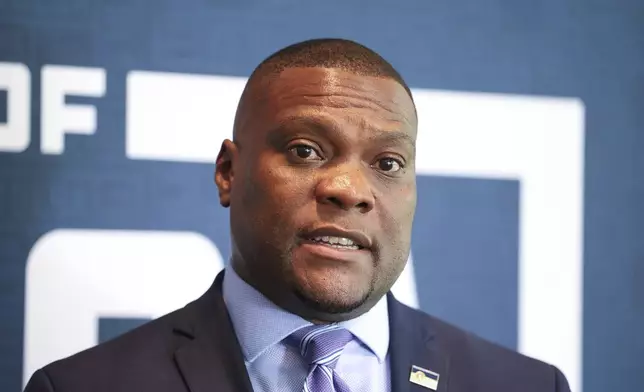
Tulsa Mayor Monroe Nichols IV speaks during the Legacy event for the Tulsa Race Massacre on Sunday, June 1, 2025, at Greenwood Cultural Center in Tulsa, Okla. (AP Photo/Joey Johnson)
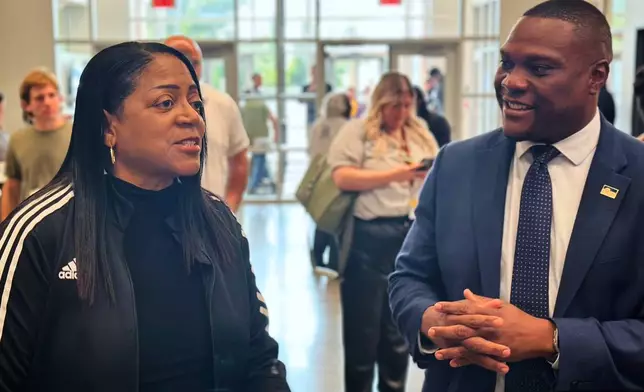
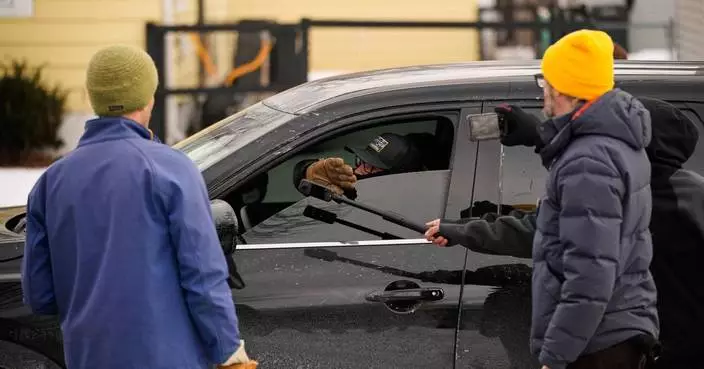
Tulsa Mayor Monroe Nichols speaks with North Tulsa resident Rose Hardwick on Thursday, May 22, 2025, as part of a series of "community conversations" the first-term mayor had across the city. (AP Photo/Sean Murphy
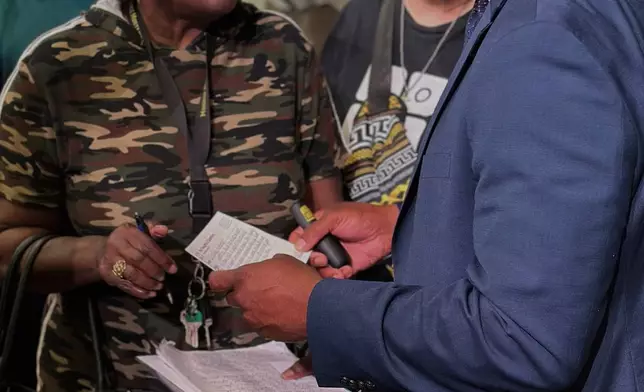
Tulsa Mayor Monroe Nichols speaks to North Tulsa resident Robbin Jones on Thursday, May 22, 2025, as part of a series of "community conversations" the first-term mayor had across the city. (AP Photo/Sean Murphy
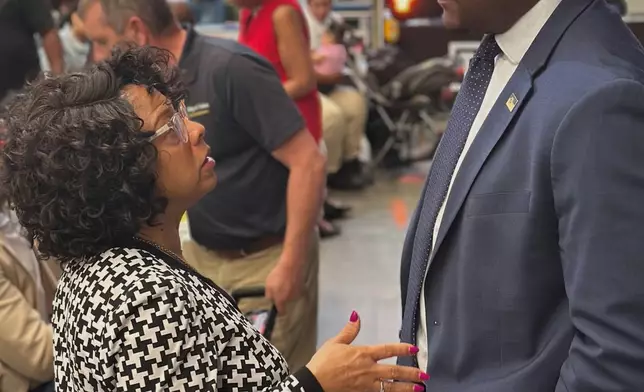
Tulsa Mayor Monroe Nichols speaks to North Tulsa resident Jacqueline Weary, a descendant of a Tulsa Race Massacre survivor, on Thursday, May 22, 2025. (AP Photo/Sean Murphy
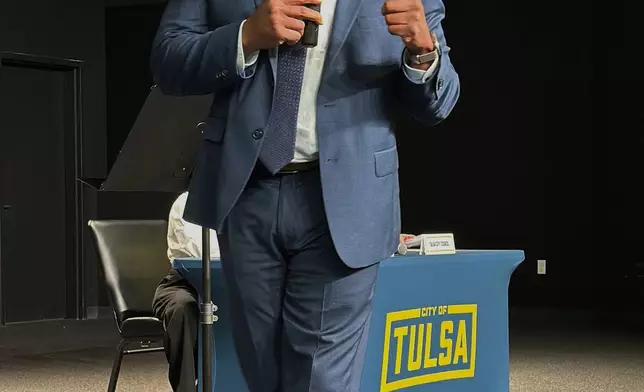
Tulsa Mayor Monroe Nichols speaks to residents of the city's north side on Thursday, May 22, 2025, as part of a series of "community conversations" the first-term mayor had across the city. (AP Photo/Sean Murphy
Nichols said he does not use the term reparations, which he calls politically charged, characterizing his sweeping plan instead as a “road to repair.”
“For 104 years, the Tulsa Race Massacre has been a stain on our city's history,” Nichols said Sunday after receiving a standing ovation from several hundred people. “The massacre was hidden from history books, only to be followed by the intentional acts of redlining, a highway built to choke off economic vitality and the perpetual underinvestment of local, state and federal governments.
“Now it's time to take the next big steps to restore.”
Nichols said the proposal wouldn't require city council approval, although the council would need to authorize the transfer of any city property to the trust, something he said was highly likely.
The private charitable trust would be created with a goal to secure $105 million in assets, with most of the funding either secured or committed by June 1, 2026. Although details would be developed over the next year by an executive director and a board of managers, the plan calls for the bulk of the funding, $60 million, to go toward improving buildings and revitalizing the city's north side.
“The Greenwood District at its height was a center of commerce,” Nichols said in a telephone interview. “So what was lost was not just something from North Tulsa or the Black community. It actually robbed Tulsa of an economic future that would have rivaled anywhere else in the world."
Nichols' proposal follows an executive order he signed earlier this year recognizing June 1 as Tulsa Race Massacre Observance Day, an official city holiday. Events Sunday in the Greenwood District included a picnic for families, worship services and an evening candlelight vigil.
Nichols also realizes the current national political climate, particularly President Trump's sweeping assault on diversity, equity and inclusion programs, poses challenging political crosswinds.
“The fact that this lines up with a broader national conversation is a tough environment,” Nichols admitted, “but it doesn't change the work we have to do.”
Jacqueline Weary, is a granddaughter of massacre survivor John R. Emerson, Sr., who owned a hotel and cab company in Greenwood that were destroyed. She acknowledged the political difficulty of giving cash payments to descendants. But at the same time, she wondered how much of her family's wealth was lost in the violence.
“If Greenwood was still there, my grandfather would still have his hotel,” said Weary, 65. “It rightfully was our inheritance, and it was literally taken away.”
Tulsa is not the first U.S. city to explore reparations. The Chicago suburb of Evanston, Illinois, was the first U.S. city to make reparations available to its Black residents for past discrimination, offering qualifying households $25,000 for home repairs, down payments on property, and interest or late penalties on property in the city. The funding for the program came from taxes on the sale of recreational marijuana.
Other communities and organizations that have considered providing reparations range from the state of California to cities including Amherst, Massachusetts; Providence, Rhode Island; Asheville, North Carolina; and Iowa City, Iowa; religious denominations like the Episcopal Church; and prominent colleges like Georgetown University in Washington.
In Tulsa, there are only two living survivors of the Race Massacre: 110-year-old Lessie Benningfield Randle and Viola Fletcher, who is 111. The women, both of whom were in attendance on Sunday, received direct financial compensation from both a Tulsa-based nonprofit and a New York-based philanthropic organization, but have not received any recompense from the city or state.
Damario Solomon-Simmons, an attorney for the survivors and the founder of the Justice for Greenwood Foundation, said earlier this year that any reparations plan should include direct payments to Randle and Fletcher and a victims' compensation fund for outstanding claims.
A lawsuit filed by Solomon-Simmons on behalf of the survivors was rejected by the Oklahoma Supreme Court last year, dampening racial justice advocates' hopes that the city would ever make financial amends.
This story has been corrected to show one of the two living survivors of the Tulsa Race Massacre is Lessie Benningfield Randle, not Leslie, and that the other living survivor, Viola Fletcher, is 111, not 110.
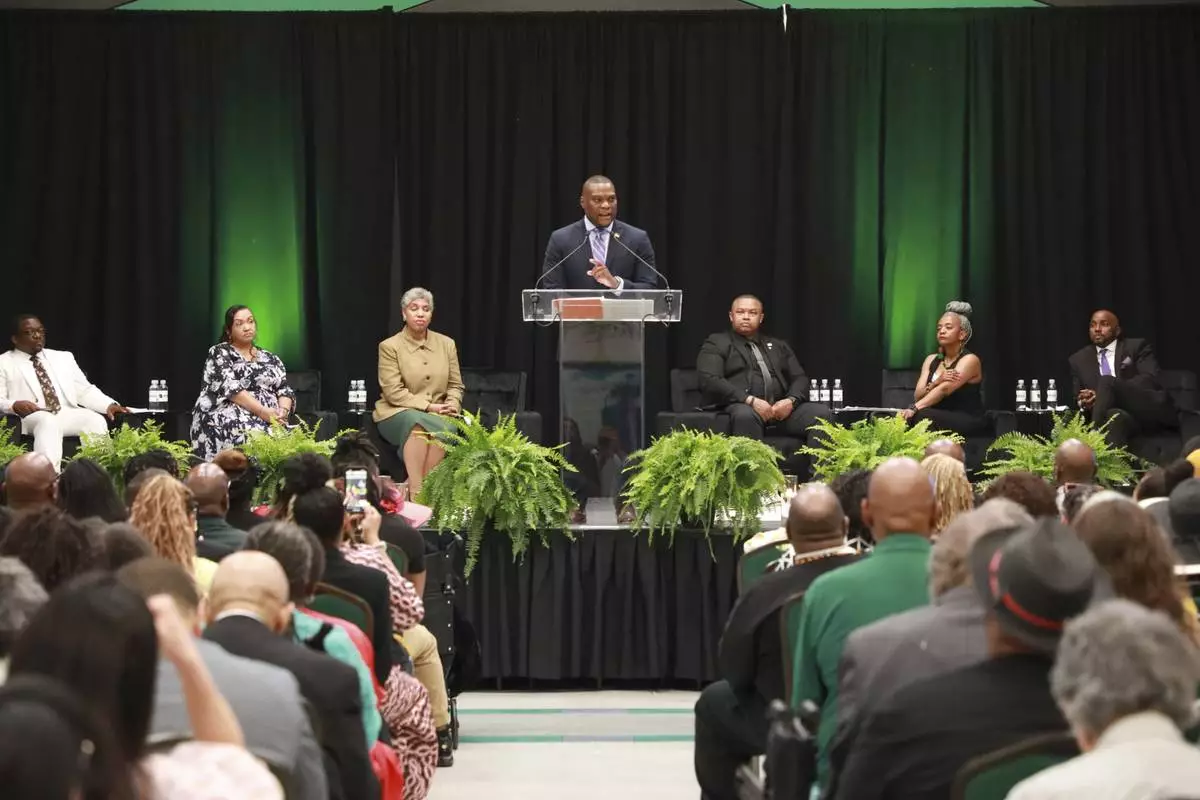
Tulsa Mayor Monroe Nichols IV speaks during the Legacy event for the Tulsa Race Massacre on Sunday, June 1, 2025, at Greenwood Cultural Center in Tulsa, Okla. (AP Photo/Joey Johnson)
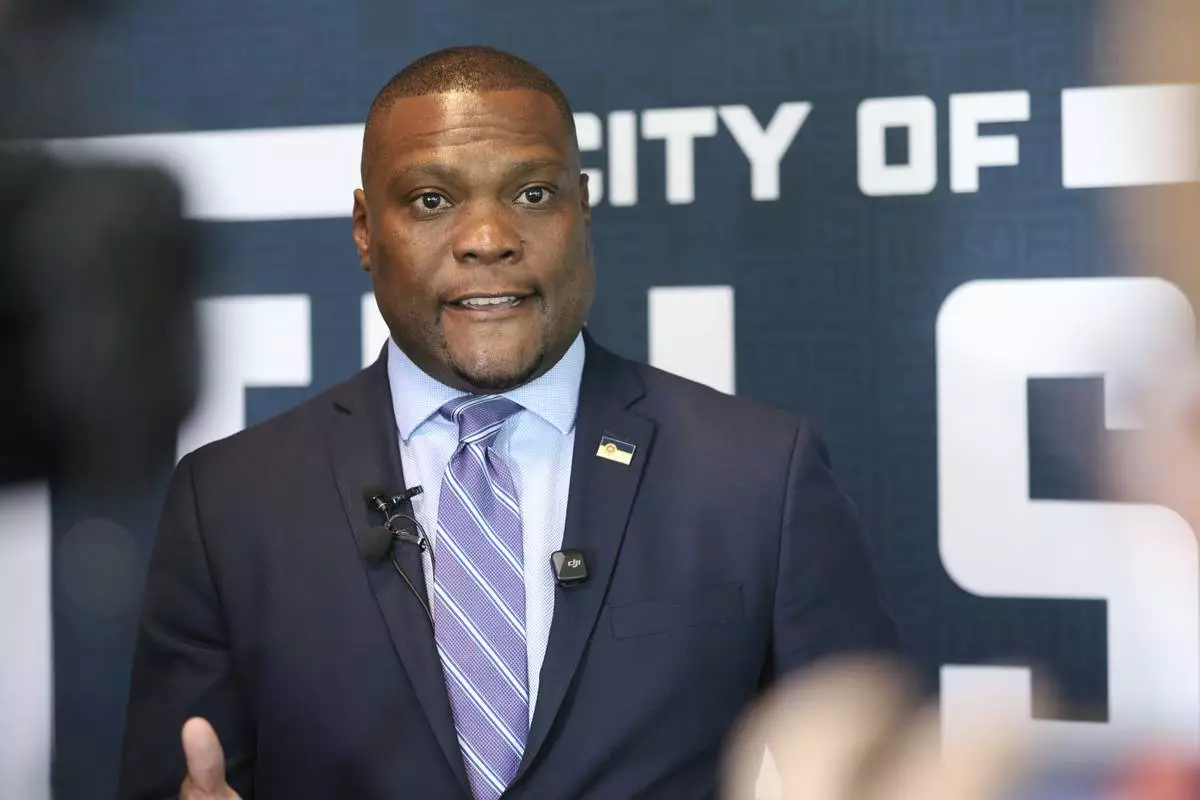
Tulsa Mayor Monroe Nichols IV speaks during the Legacy event for the Tulsa Race Massacre on Sunday, June 1, 2025, at Greenwood Cultural Center in Tulsa, Okla. (AP Photo/Joey Johnson)
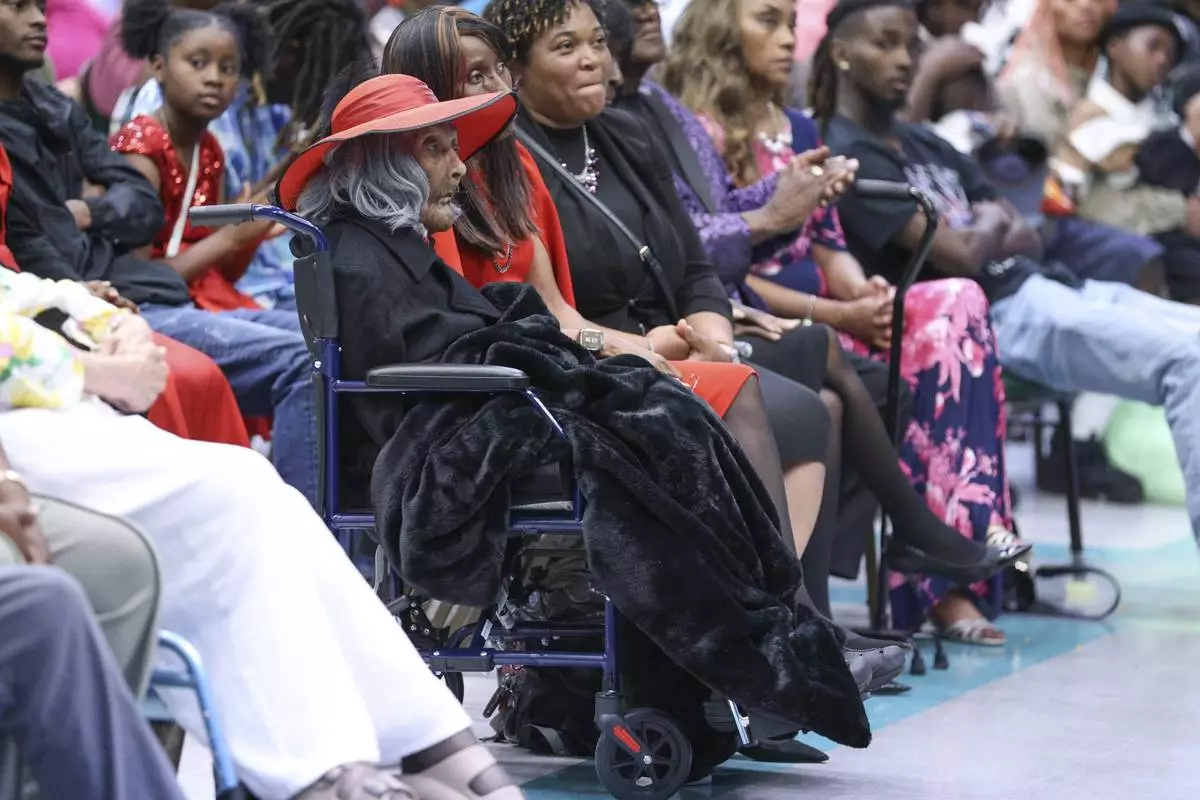
Lessie Benningfield "Mother" Randle, one of the final two survivors at 109 years old, listens during the Legacy event for the Tulsa Race Massacre on Sunday, June 1, 2025, at Greenwood Cultural Center in Tulsa, Okla. (AP Photo/Joey Johnson)
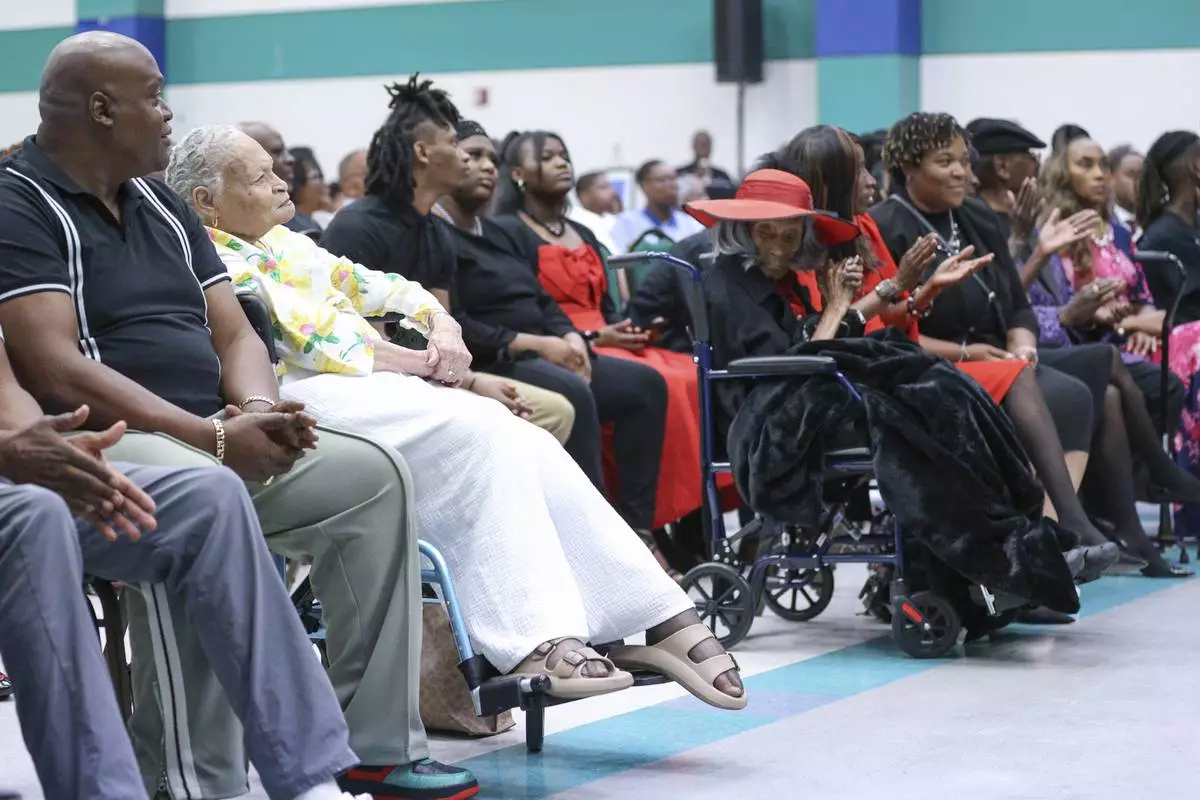
Viola "Mother" Ford Fletcher, 110 years of age (yellow) is one of the final two survivors sits across the aisle from the other survivor Lessie Benningfield "Mother" Randle (red hat), 109 years old, as they listen during the Legacy event for the Tulsa Race Massacre on Sunday, June 1, 2025, at Greenwood Cultural Center in Tulsa, Okla. (AP Photo/Joey Johnson)
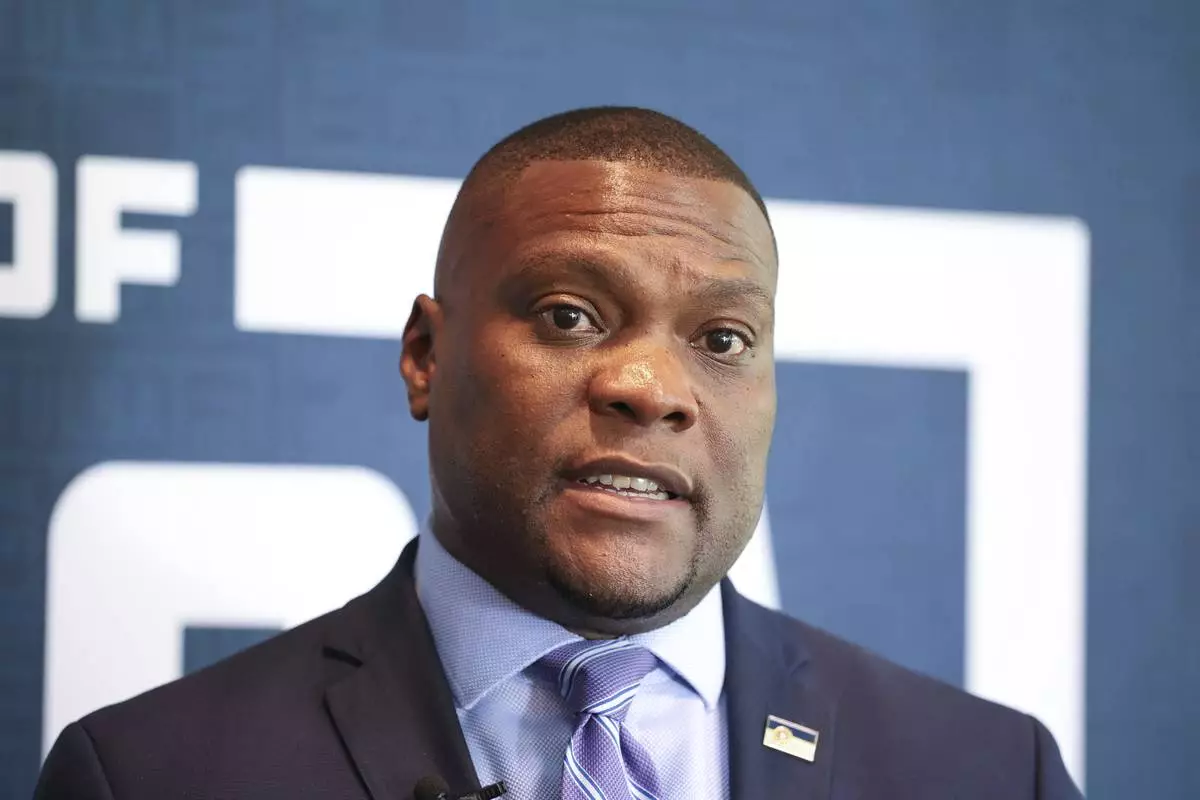
Tulsa Mayor Monroe Nichols IV speaks during the Legacy event for the Tulsa Race Massacre on Sunday, June 1, 2025, at Greenwood Cultural Center in Tulsa, Okla. (AP Photo/Joey Johnson)
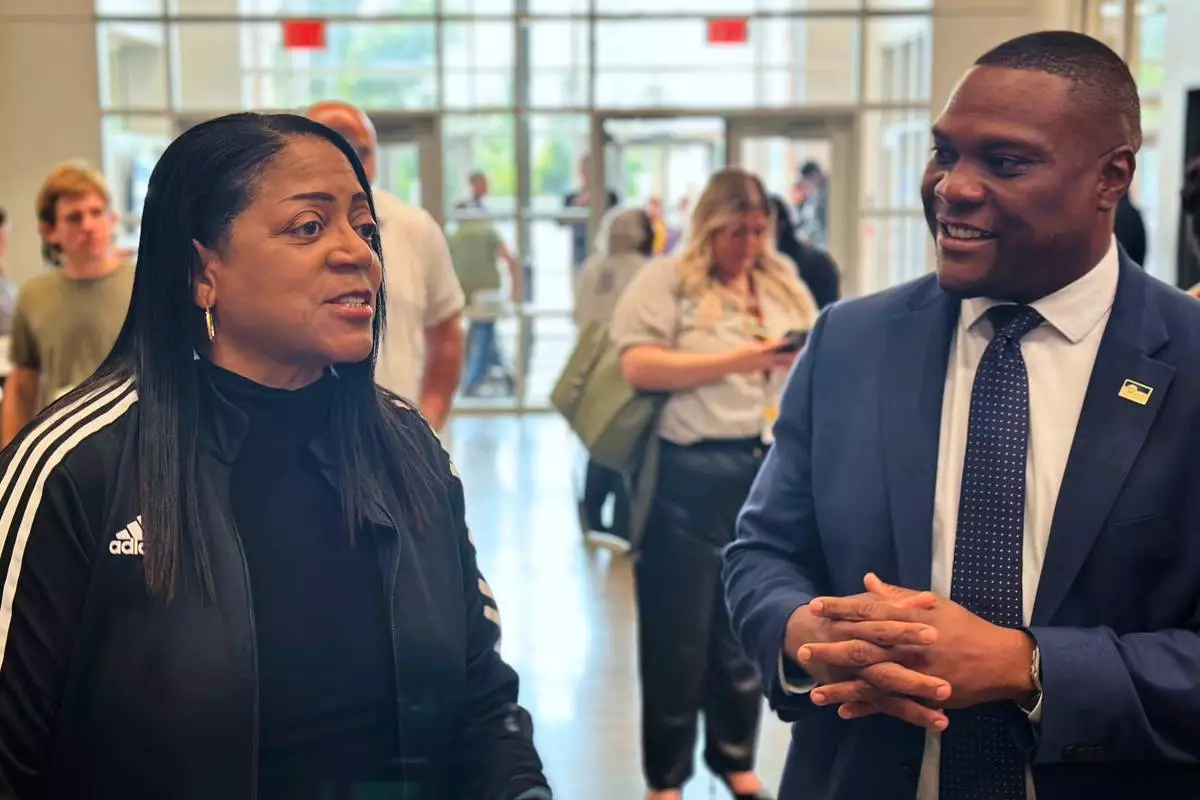
Tulsa Mayor Monroe Nichols speaks with North Tulsa resident Rose Hardwick on Thursday, May 22, 2025, as part of a series of "community conversations" the first-term mayor had across the city. (AP Photo/Sean Murphy
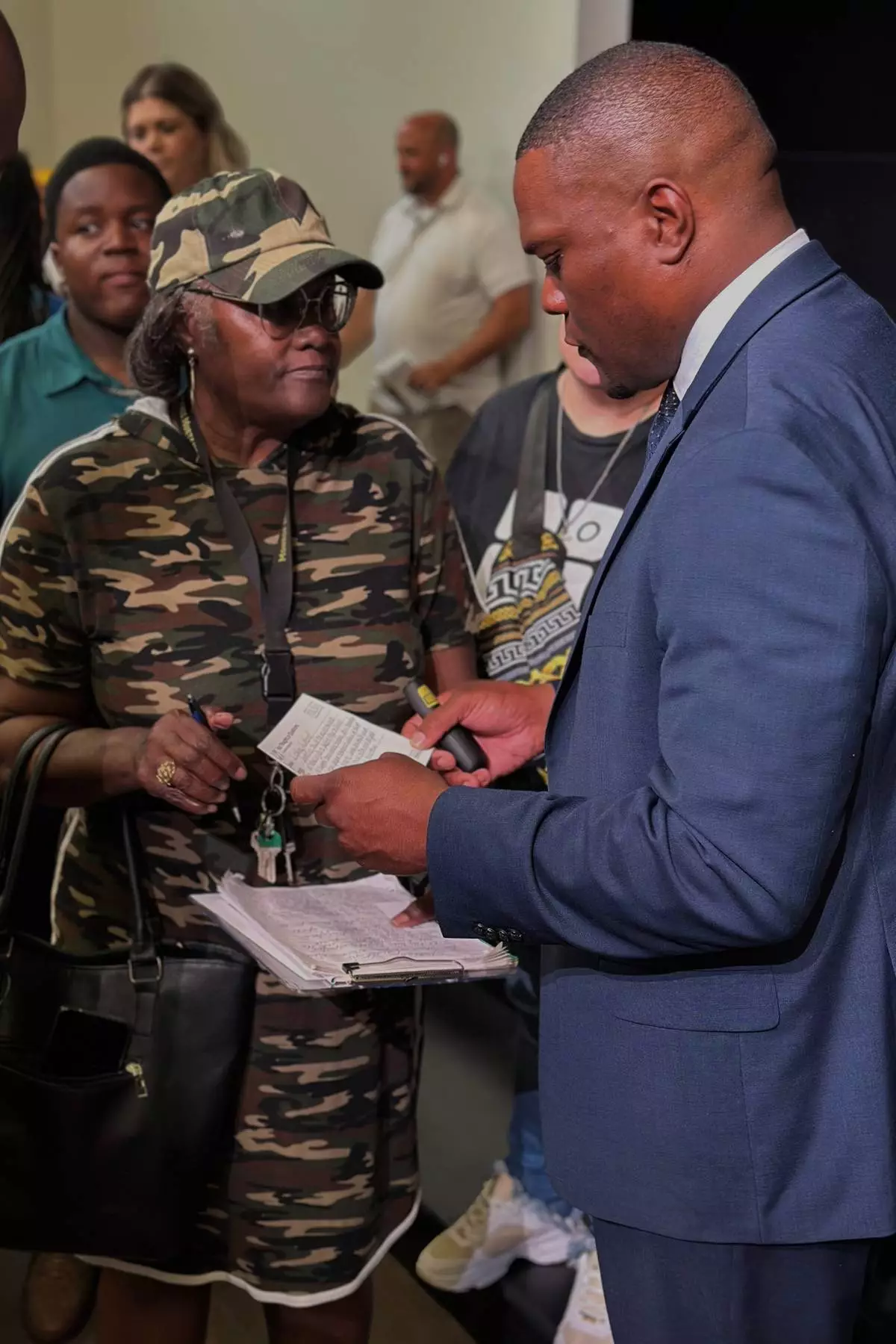
Tulsa Mayor Monroe Nichols speaks to North Tulsa resident Robbin Jones on Thursday, May 22, 2025, as part of a series of "community conversations" the first-term mayor had across the city. (AP Photo/Sean Murphy
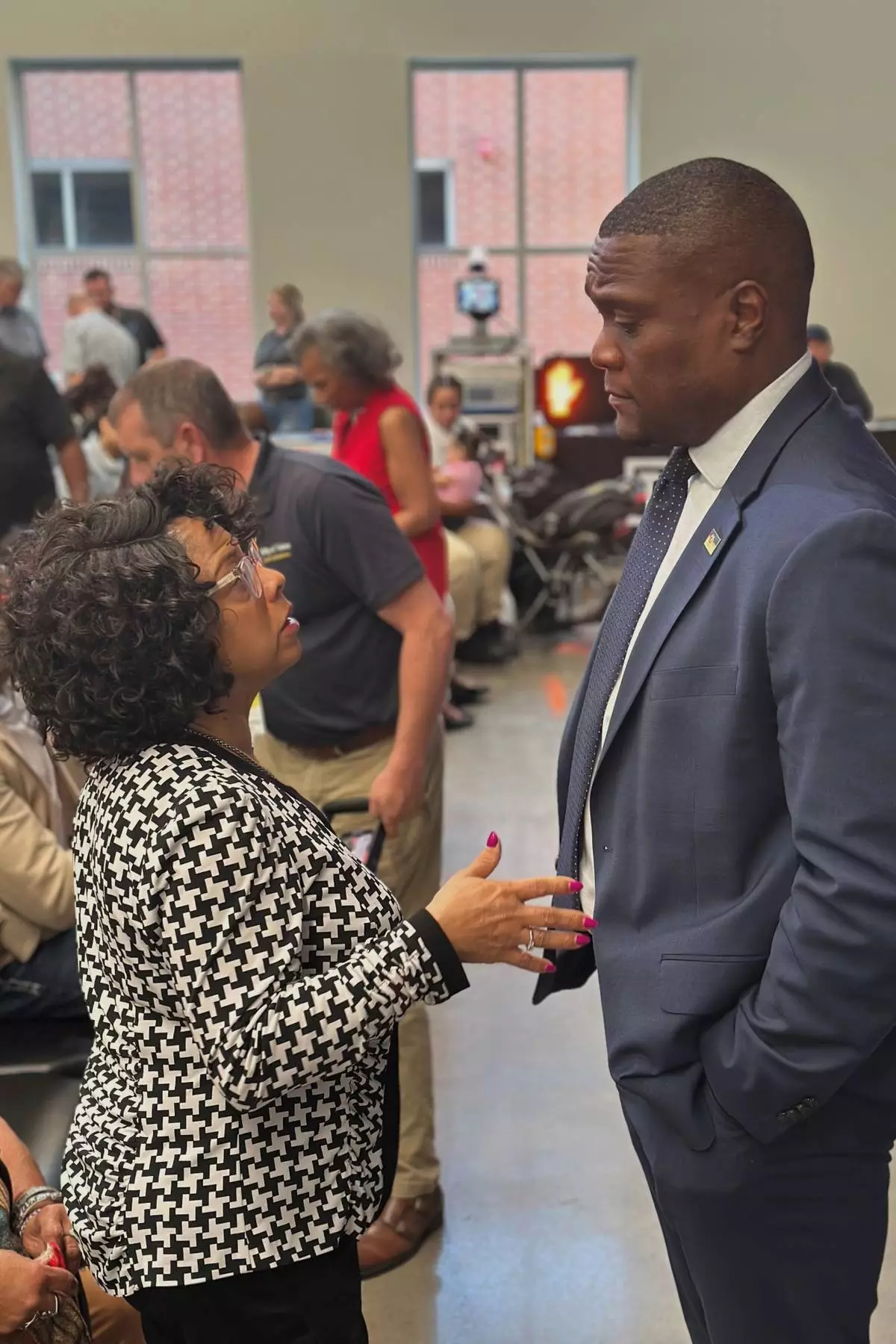
Tulsa Mayor Monroe Nichols speaks to North Tulsa resident Jacqueline Weary, a descendant of a Tulsa Race Massacre survivor, on Thursday, May 22, 2025. (AP Photo/Sean Murphy
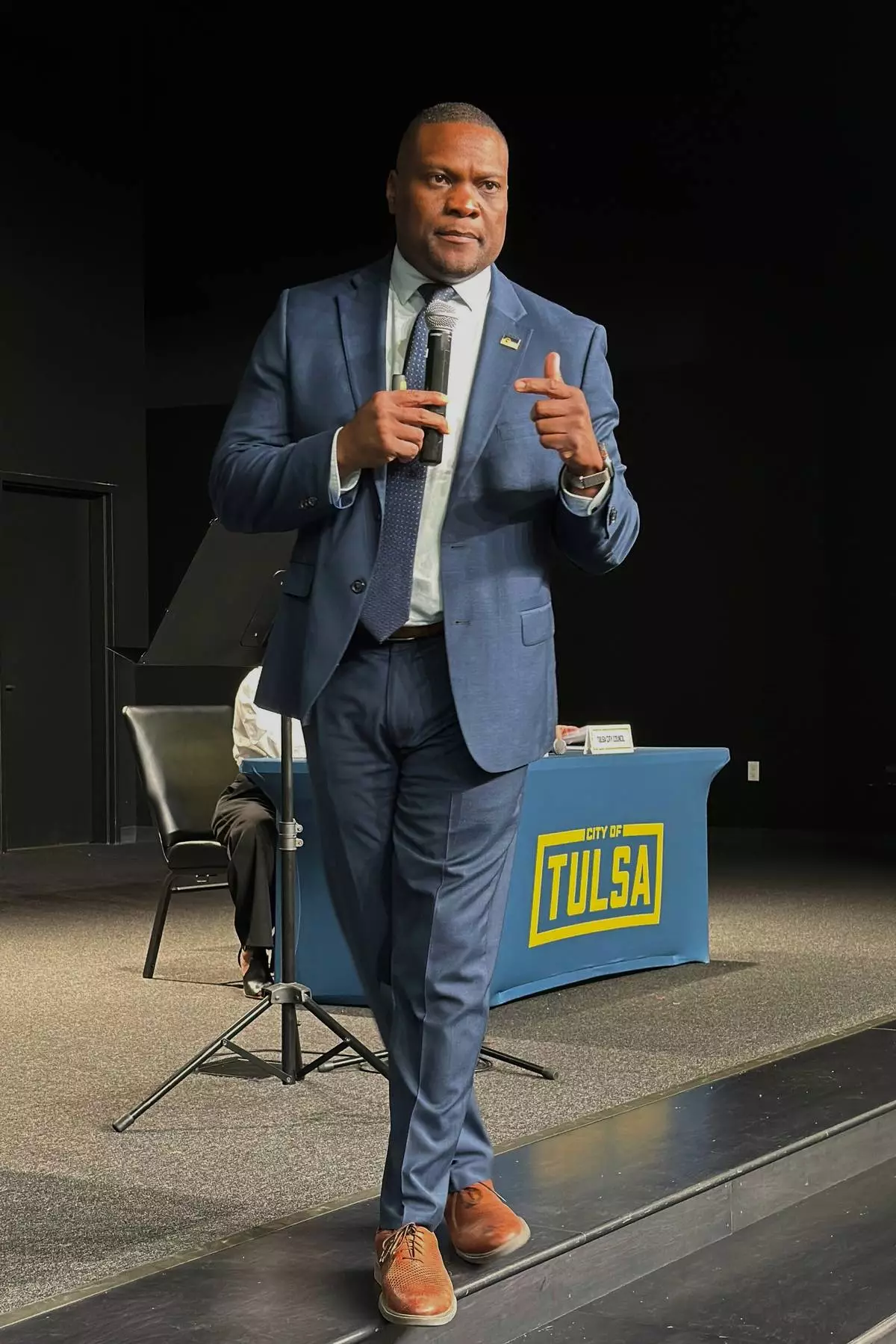
Tulsa Mayor Monroe Nichols speaks to residents of the city's north side on Thursday, May 22, 2025, as part of a series of "community conversations" the first-term mayor had across the city. (AP Photo/Sean Murphy