NEW YORK (AP) — U.S. stock indexes drifted closer to their records on Monday, coming off their stellar May, which was Wall Street’s best month since 2023.
The S&P 500 rose 0.4% after erasing an early loss from the morning. The Dow Jones Industrial Average added 35 points, or 0.1%, and the Nasdaq composite climbed 0.7%.
Click to Gallery
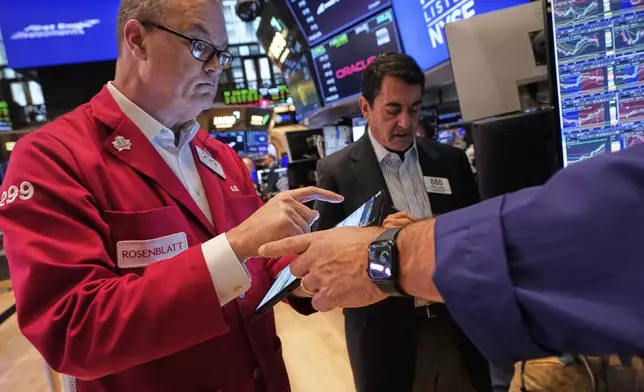
Traders William Lawrence, left, and Mark Mueller work on the floor of the New York Stock Exchange, Thursday, May 29, 2025. (AP Photo/Richard Drew)
A dealer walks past screens showing the Korea Composite Stock Price Index (KOSPI), left, and the foreign exchange rate between U.S. dollar and South Korean won at a dealing room of Hana Bank in Seoul, South Korea, Monday, June 2, 2025. (AP Photo/Lee Jin-man)
A dealer watches computer monitors at a dealing room of Hana Bank in Seoul, South Korea, Monday, June 2, 2025. (AP Photo/Lee Jin-man)
A screen showing the Korea Composite Stock Price Index (KOSPI) is seen at a dealing room of Hana Bank in Seoul, South Korea, Monday, June 2, 2025. (AP Photo/Lee Jin-man)
A dealer walks past a screen showing the Korea Composite Stock Price Index (KOSPI) at a dealing room of Hana Bank in Seoul, South Korea, Monday, June 2, 2025. (AP Photo/Lee Jin-man)
Indexes had been down close to 1% in the morning following some discouraging updates on U.S. manufacturing. President Donald Trump has been warning that U.S. businesses and households could feel some pain as he tries to use tariffs to bring more manufacturing jobs back to the country, and their on-and-off rollout has created lots of uncertainty.
But stocks rallied back as the day progressed, and gains for a few influential stocks helped lift the S&P 500 even though more stocks within it fell than rose. Nvidia climbed 1.7%, and Meta Platforms rose 3.6%, for example.
Some of Monday’s strongest action was in the oil market, where the price of crude spurted more than 3%. The countries in the OPEC+ alliance decided to increase their production again, a move that often pushes crude prices down because it puts more on the market, but analysts said investors were widely expecting it.
The past weekend’s attacks by Ukraine in Russia, meanwhile, helped to raise uncertainty about the flow of oil and gas around the world.
Monday’s market moves also came after more harsh rhetoric crossed between the world’s two largest economies, just a few weeks after the United States and China had agreed to pause many of their tariffs that had threatened to drag the economy into a recession.
China blasted the United States for moves that it said hurt China’s interests, including issuing AI chip export control guidelines, stopping the sale of chip design software to China and planning to revoke Chinese student visas.
“These practices seriously violate the consensus” reached during trade discussions in Geneva last month, the Commerce Ministry said in a statement. That followed President Donald Trump’s accusation at the end of last week, where he said China was not living up to its end of the agreement that paused their tariffs against each other.
Hopes for lower tariffs because of potential trade deals between Trump and other countries were the main reasons for Wall Street’s big rally last month, which brought the S&P 500 back within 3.8% of its all-time high. The index had dropped roughly 20% below the mark in April.
But Trump on Friday told Pennsylvania steelworkers he’s doubling the tariff on steel imports to 50% to protect their industry, a dramatic increase that could further push up prices for a metal used to make housing, autos and other goods. That helped stocks of U.S. steelmakers climb. Nucor jumped 10.1%, and Steel Dynamics rallied 10.3%.
On the losing side of Wall Street were automakers and other heavy users of steel and aluminum. Ford fell 3.9%, and General Motors reversed by 3.9%.
All told, the S&P 500 rose 24.25 points to 5,935.94. The Dow Jones Industrial Average added 35.41 to 42,305.48, and the Nasdaq composite climbed 128.85 to 19,242.61.
Lyra Therapeutics soared nearly 311% for one of the market’s biggest gains after reporting positive late-stage trial results of an implant to treat chronic sinus inflammation in some patients.
In the bond market, Treasury yields rose as worries continue about how much debt the U.S. government will pile on due to plans to cut taxes and increase the deficit.
The yield on the 10-year Treasury climbed to 4.44% from 4.41% late Friday and from just 4.01% roughly two months ago. That’s a notable move for the bond market.
Besides making it more expensive for U.S. households and businesses to borrow money, such increases in Treasury yields can deter investors from paying high prices for stocks and other investments.
Yields had dipped briefly in the morning, before rallying back, following the updates on manufacturing, which suggested that effects of Trump’s tariffs are taking root in the economy.
“The impact of ever-changing trade policies of the current administration has wreaked havoc on suppliers’ ability to react and remain profitable,” one manufacturer in the transportation equipment industry said in the Institute for Supply Management’s survey, which came in weaker than economists expected.
A separate report from S&P Global on manufacturing came in better than expected, but the overall figure “masks worrying developments under the hood of the U.S. manufacturing economy,” said Chris Williamson, chief business economist at S&P Global Market Intelligence. He said uncertainty caused by tariffs has worries high about supplier delays and rising prices.
In stock markets abroad, Hong Kong’s Hang Seng fell 0.6% following the harsh words tossed between the United States and China. A report over the weekend also said that China’s factory activity contracted in May, although the decline slowed from April.
Indexes also dipped across much of the rest of Asia and Europe. Japan’s Nikkei 225 was one of the biggest movers after falling 1.3%.
AP Writers Jiang Junzhe and Matt Ott contributed.
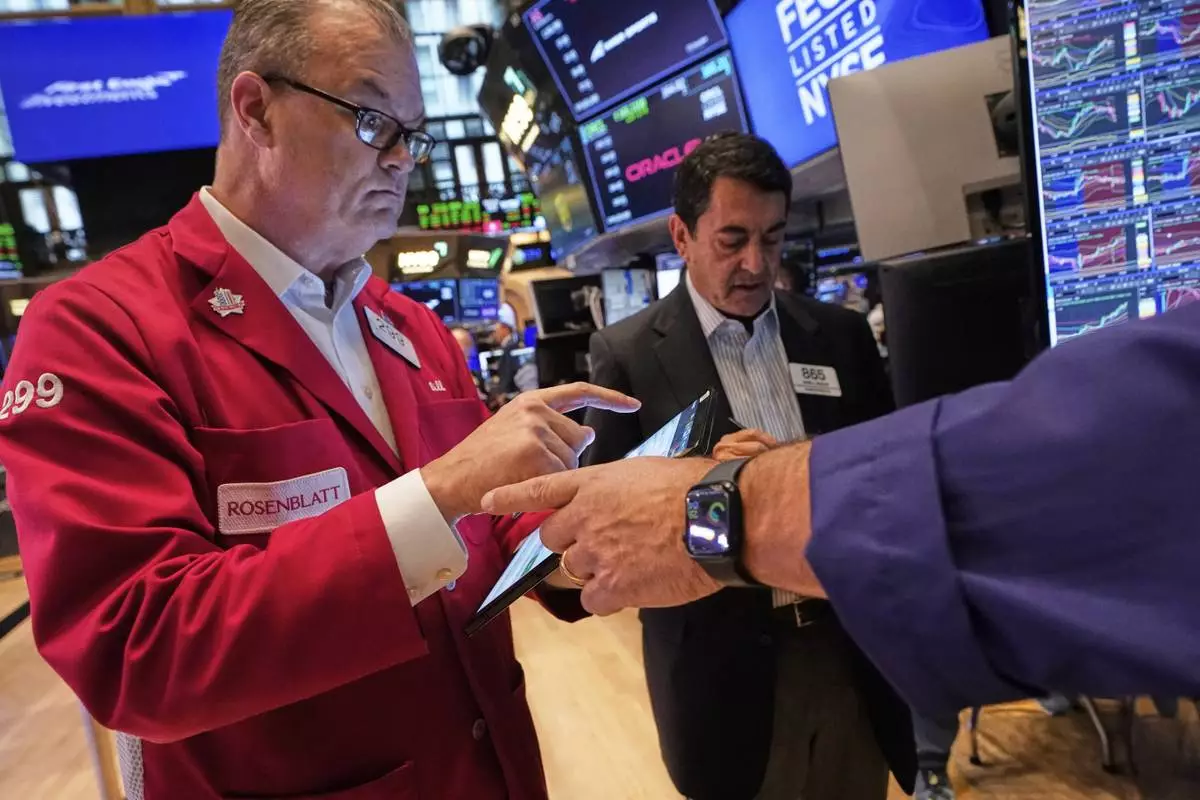
Traders William Lawrence, left, and Mark Mueller work on the floor of the New York Stock Exchange, Thursday, May 29, 2025. (AP Photo/Richard Drew)

A dealer walks past screens showing the Korea Composite Stock Price Index (KOSPI), left, and the foreign exchange rate between U.S. dollar and South Korean won at a dealing room of Hana Bank in Seoul, South Korea, Monday, June 2, 2025. (AP Photo/Lee Jin-man)

A dealer watches computer monitors at a dealing room of Hana Bank in Seoul, South Korea, Monday, June 2, 2025. (AP Photo/Lee Jin-man)

A screen showing the Korea Composite Stock Price Index (KOSPI) is seen at a dealing room of Hana Bank in Seoul, South Korea, Monday, June 2, 2025. (AP Photo/Lee Jin-man)

A dealer walks past a screen showing the Korea Composite Stock Price Index (KOSPI) at a dealing room of Hana Bank in Seoul, South Korea, Monday, June 2, 2025. (AP Photo/Lee Jin-man)
MINNEAPOLIS (AP) — Federal agents carrying out immigration arrests in Minnesota's Twin Cities region already shaken by the fatal shooting of a woman rammed the door of one home Sunday and pushed their way inside, part of what the Department of Homeland Security has called its largest enforcement operation ever.
In a dramatic scene similar to those playing out across Minneapolis, agents captured a man in the home just minutes after pepper spraying protesters outside who had confronted the heavily armed federal agents. Along the residential street, protesters honked car horns, banged on drums and blew whistles in attempts to disrupt the operation.
Video of the clash taken by The Associated Press showed some agents pushing back protesters while a distraught woman later emerged from the house with a document that federal agents presented to arrest the man. Signed by an immigration officer, the document — unlike a warrant signed by a judge — does not authorize forced entry into a private residence. A warrant signed by an immigration officer only authorizes arrest in a public area.
Immigrant advocacy groups have conducted extensive “know-your-rights” campaigns urging people not to open their doors unless agents have a court order signed by a judge.
But within minutes of ramming the door in a neighborhood filled with single-family homes, the handcuffed man was led away.
More than 2,000 immigration arrests have been made in Minnesota since the enforcement operation began at the beginning of December, said Homeland Security spokesperson Tricia McLaughlin.
Homeland Security Secretary Kristi Noem told Fox News on Sunday that the administration would send additional federal agents to Minnesota to protect immigration officers and continue enforcement.
The Twin Cities — the latest target in President Donald Trump’s immigration enforcement campaign — is bracing for what is next after 37-year-old Renee Good was shot and killed by an immigration officer on Wednesday.
“We’re seeing a lot of immigration enforcement across Minneapolis and across the state, federal agents just swarming around our neighborhoods,” said Jason Chavez, a Minneapolis city councilmember. “They’ve definitely been out here.”
Chavez, the son of Mexican immigrants who represents an area with a growing immigrant population, said he is closely monitoring information from chat groups about where residents are seeing agents operating.
People holding whistles positioned themselves in freezing temperatures on street corners Sunday in the neighborhood where Good was killed, watching for any signs of federal agents.
More than 20,000 people have taken part in a variety of trainings to become “observers” of enforcement activities in Minnesota since the 2024 election, said Luis Argueta, a spokesperson for Unidos MN, a local human rights organization .
“It’s a role that people choose to take on voluntarily, because they choose to look out for their neighbors,” Argueta said.
The protests have been largely peaceful, but residents remained anxious. On Monday, Minneapolis public schools will start offering remote learning for the next month in response to concerns that children might feel unsafe venturing out while tensions remain high.
Many schools closed last week after Good’s shooting and the upheaval that followed.
While the enforcement activity continues, two of the state’s leading Democrats said that the investigation into Good's shooting death should not be overseen solely by the federal government.
Minneapolis Mayor Jacob Frey and U.S. Sen. Tina Smith said in separate interviews Sunday that state authorities should be included in the investigation because the federal government has already made clear what it believes happened.
“How can we trust the federal government to do an objective, unbiased investigation, without prejudice, when at the beginning of that investigation they have already announced exactly what they saw — what they think happened," Smith said on ABC’s "This Week."
The Trump administration has defended the officer who shot Good in her car, saying he was protecting himself and fellow agents and that Good had “weaponized” her vehicle.
Todd Lyons, acting director of U.S. Immigration and Customs Enforcement, defended the officer on Fox News Channel’s “The Sunday Briefing.”
"That law enforcement officer had milliseconds, if not short time to make a decision to save his life and his other fellow agents,” he said.
Lyons also said the administration’s enforcement operations in Minnesota wouldn't be needed “if local jurisdictions worked with us to turn over these criminally illegal aliens once they are already considered a public safety threat by the locals.”
The killing of Good by an ICE officer and the shooting of two people by federal agents in Portland, Oregon, led to dozens of protests in cities across the country over the weekend, including New York, Los Angeles, Washington D.C. and Oakland, California.
Contributing were Associated Press journalists Giovanna Dell’Orto in Minneapolis; Thomas Strong in Washington; Bill Barrow in Atlanta; Christopher Weber in Los Angeles; and John Seewer in Toledo, Ohio.
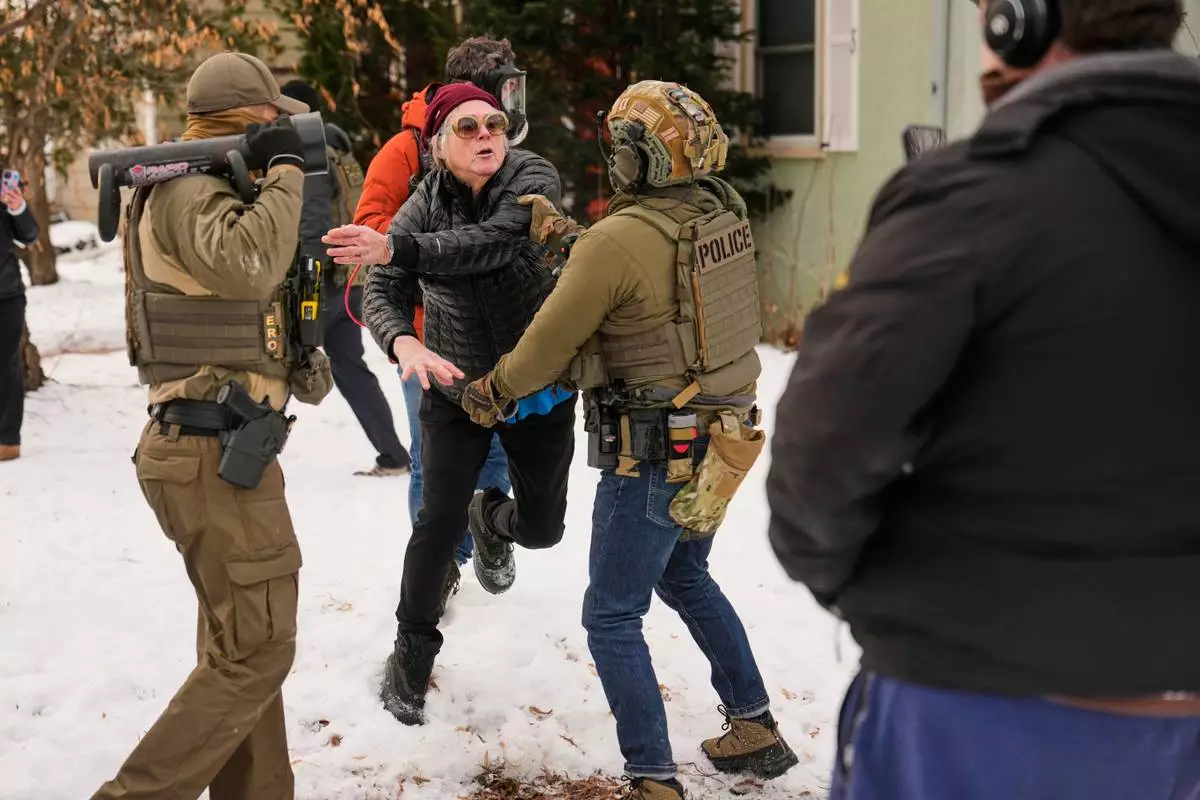
A woman gets into an altercation with a federal immigration officer as officers make an arrest Sunday, Jan. 11, 2026, in Minneapolis. (AP Photo/John Locher)
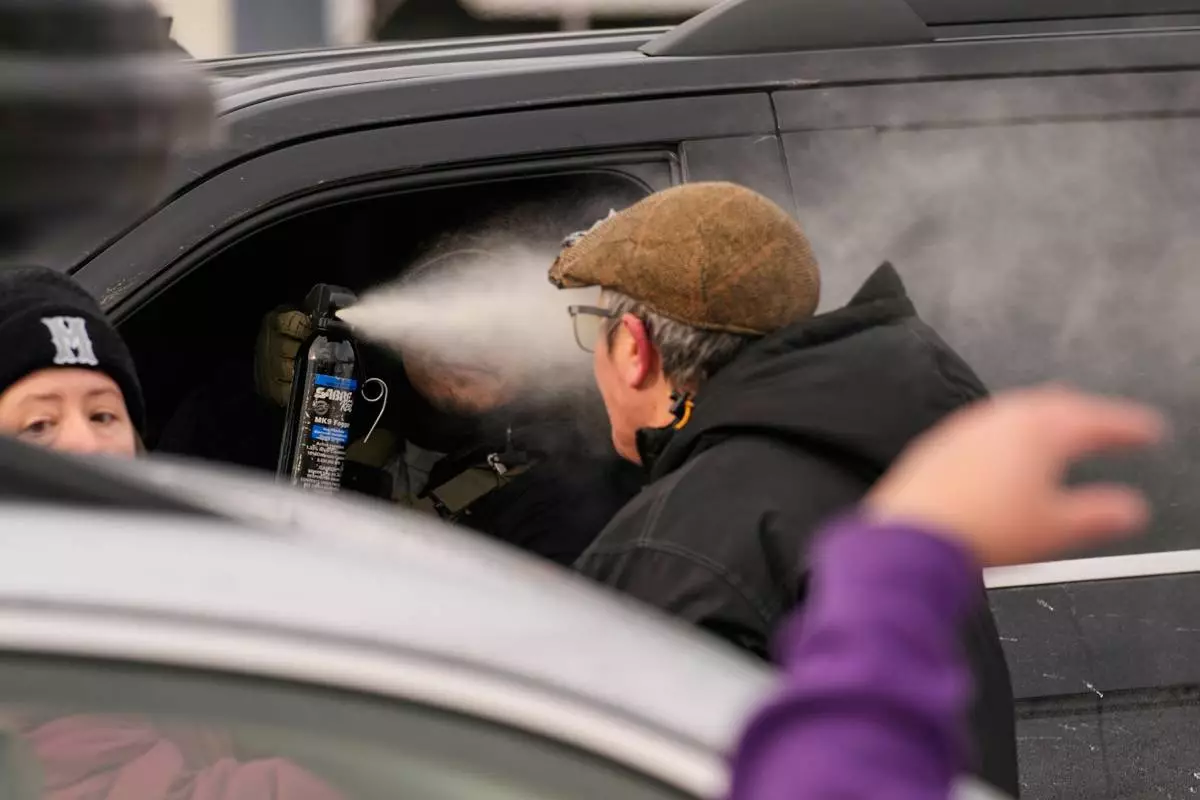
A federal immigration officer deploys pepper spray as officers make an arrest Sunday, Jan. 11, 2026, in Minneapolis. (AP Photo/John Locher)
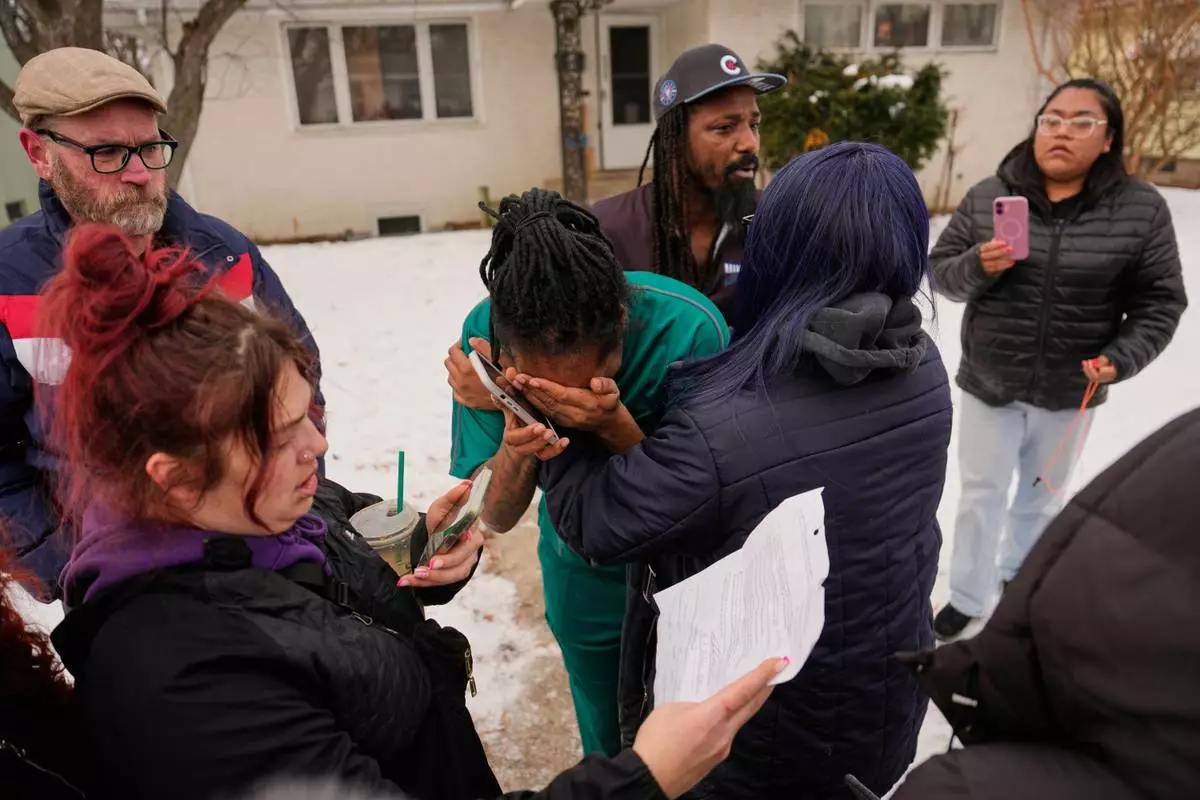
A family member, center, reacts after federal immigration officers make an arrest Sunday, Jan. 11, 2026, in Minneapolis. (AP Photo/John Locher)
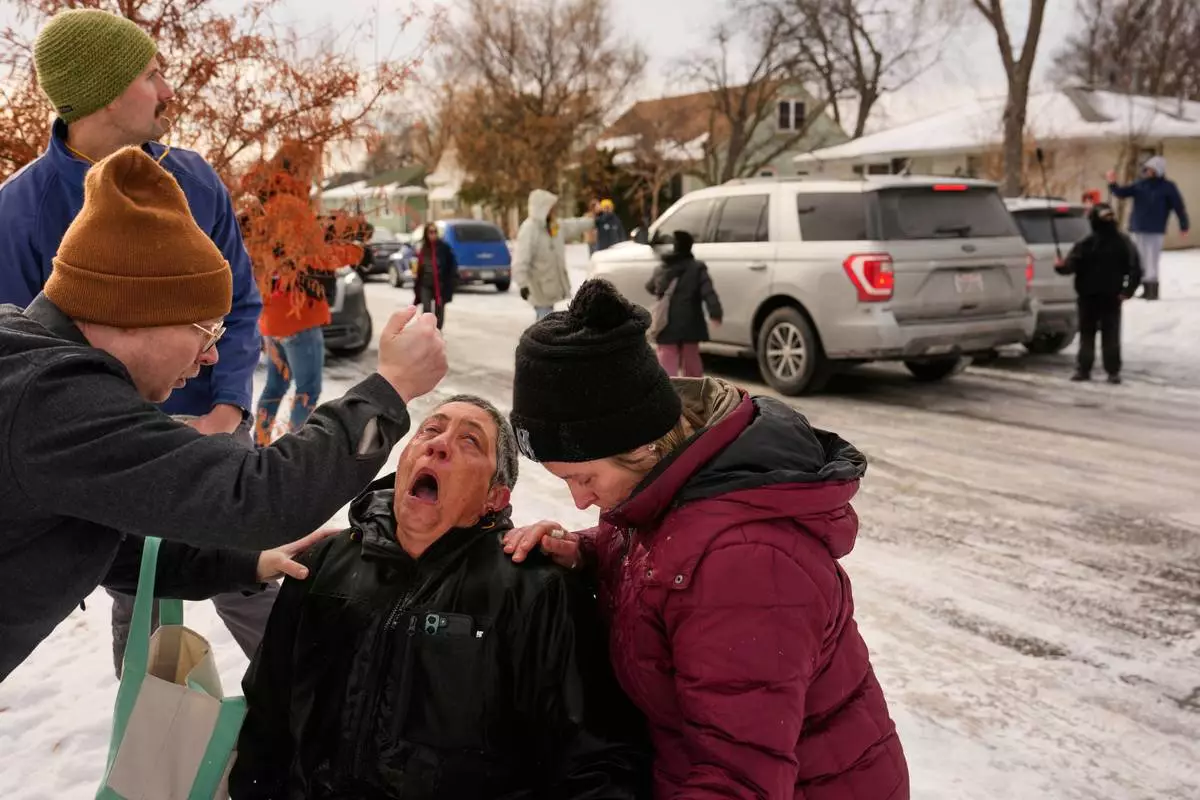
Bystanders are treated after being pepper sprayed as federal immigration officers make an arrest Sunday, Jan. 11, 2026, in Minneapolis. (AP Photo/John Locher)
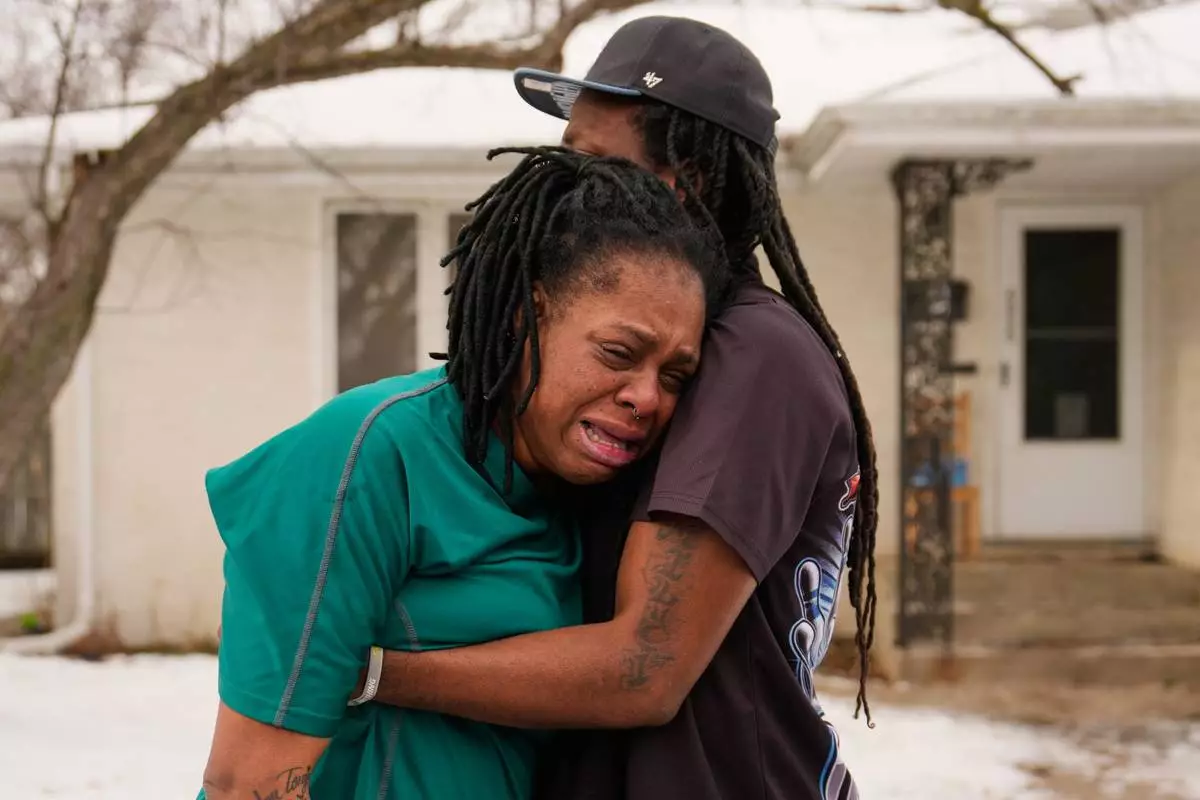
A family member reacts after federal immigration officers make an arrest Sunday, Jan. 11, 2026, in Minneapolis. (AP Photo/John Locher)
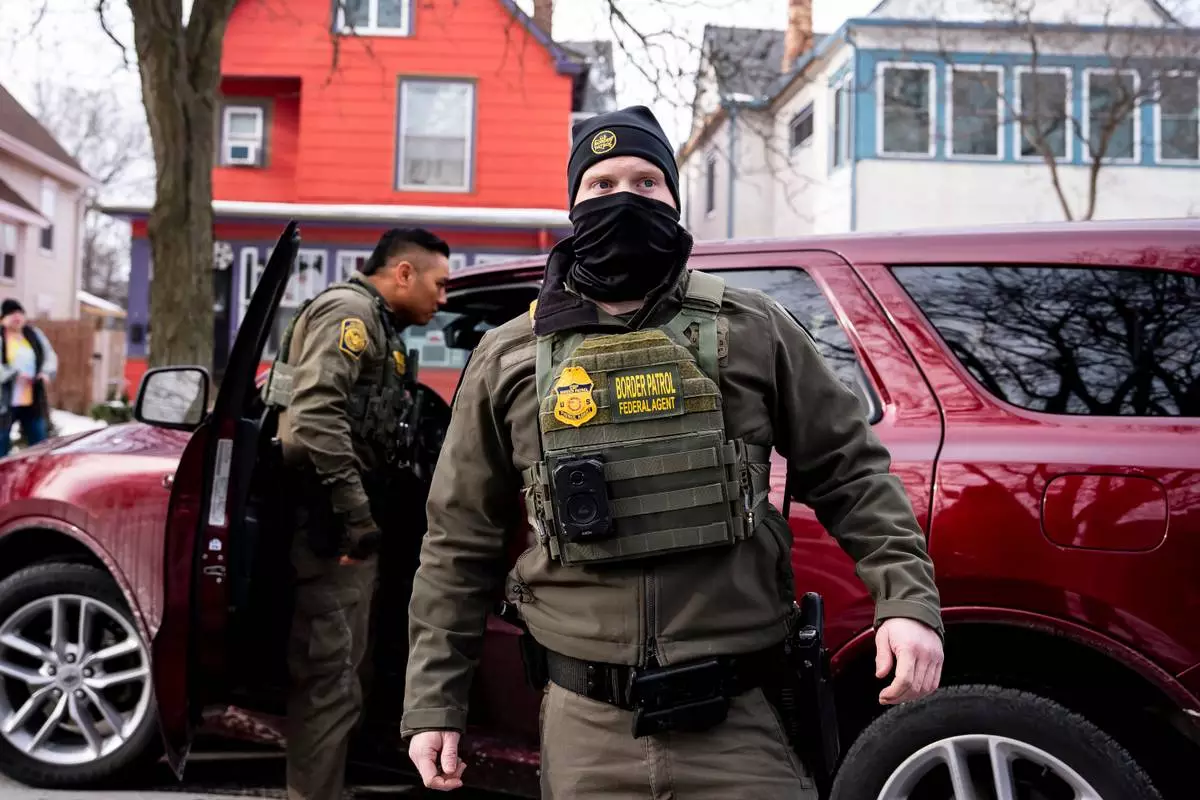
Federal agents look on after detaining a person during a patrol in Minneapolis, Minn., Sunday, Jan. 11, 2026. (Christopher Katsarov/The Canadian Press via AP)
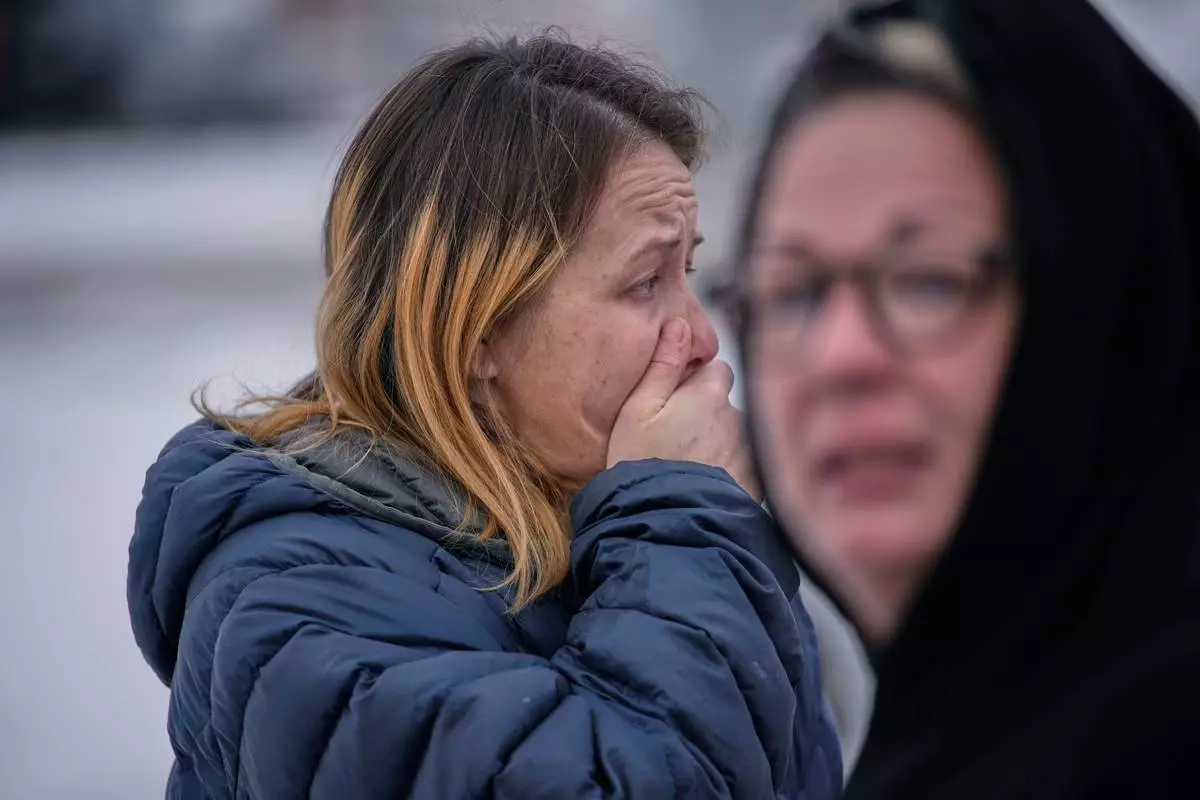
Bystanders react after a man was detained by Immigration and Customs Enforcement (ICE) agents during a traffic stop, Sunday, Jan. 11, 2026, in Robbinsdale, Minn. (AP Photo/John Locher)
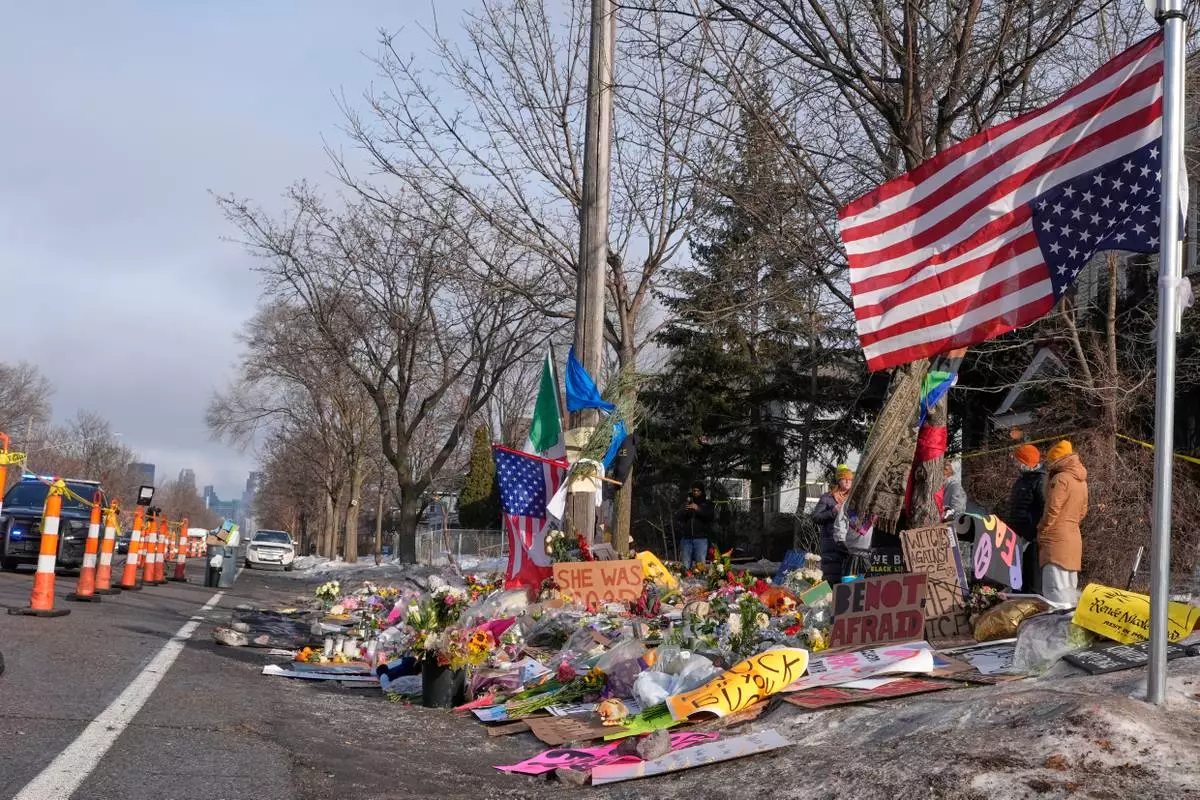
People stand near a memorial at the site where Renee Good was fatally shot by an ICE agent, Sunday, Jan. 11, 2026, in Minneapolis. (AP Photo/Jen Golbeck)
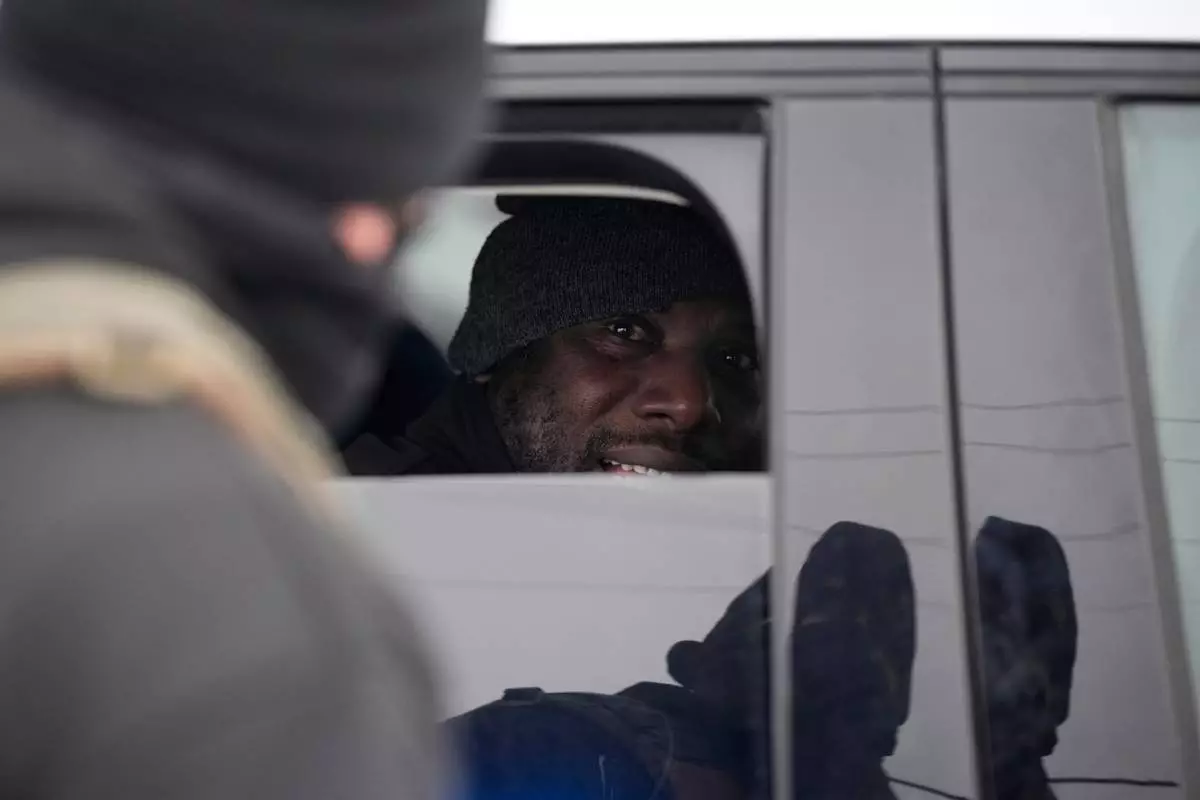
A man looks out of a car window after being detained by Immigration and Customs Enforcement (ICE) agents during a traffic stop, Sunday, Jan. 11, 2026, in Robbinsdale, Minn. (AP Photo/John Locher)
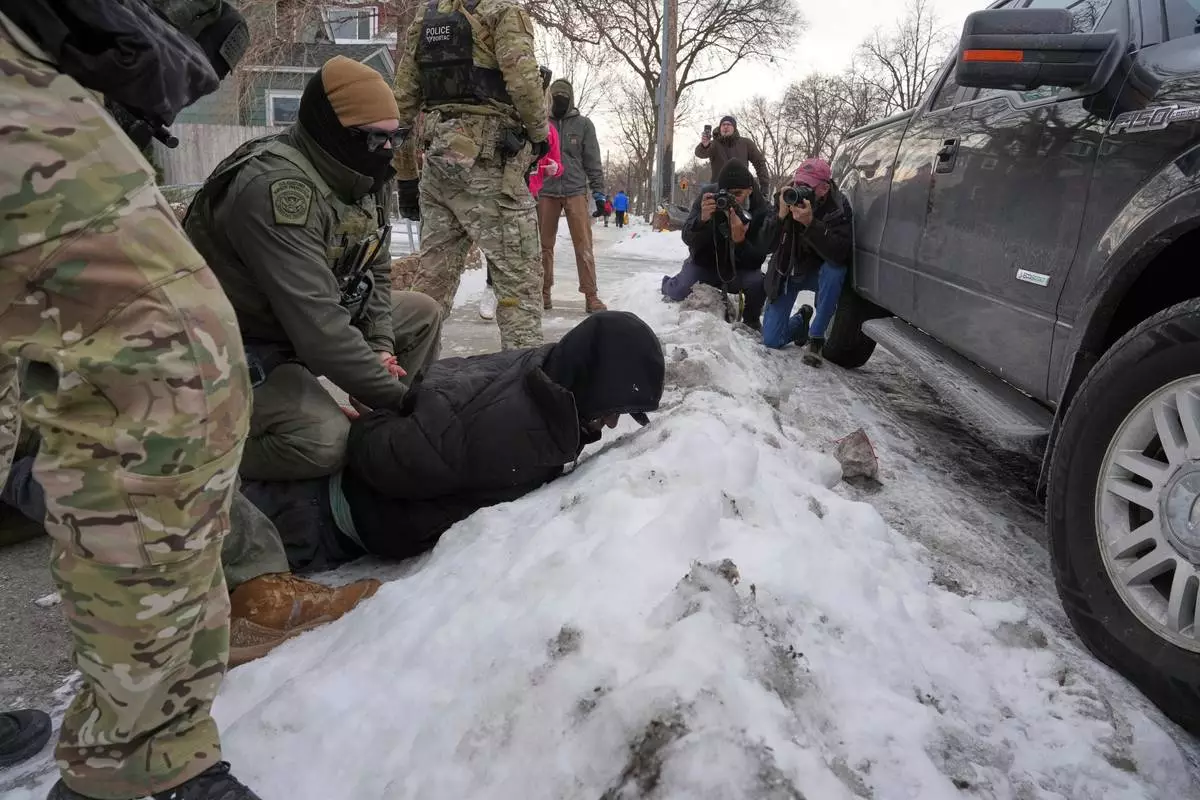
Border Patrol agents detain a man, Sunday, Jan. 11, 2026, in Minneapolis. (AP Photo/Adam Gray)
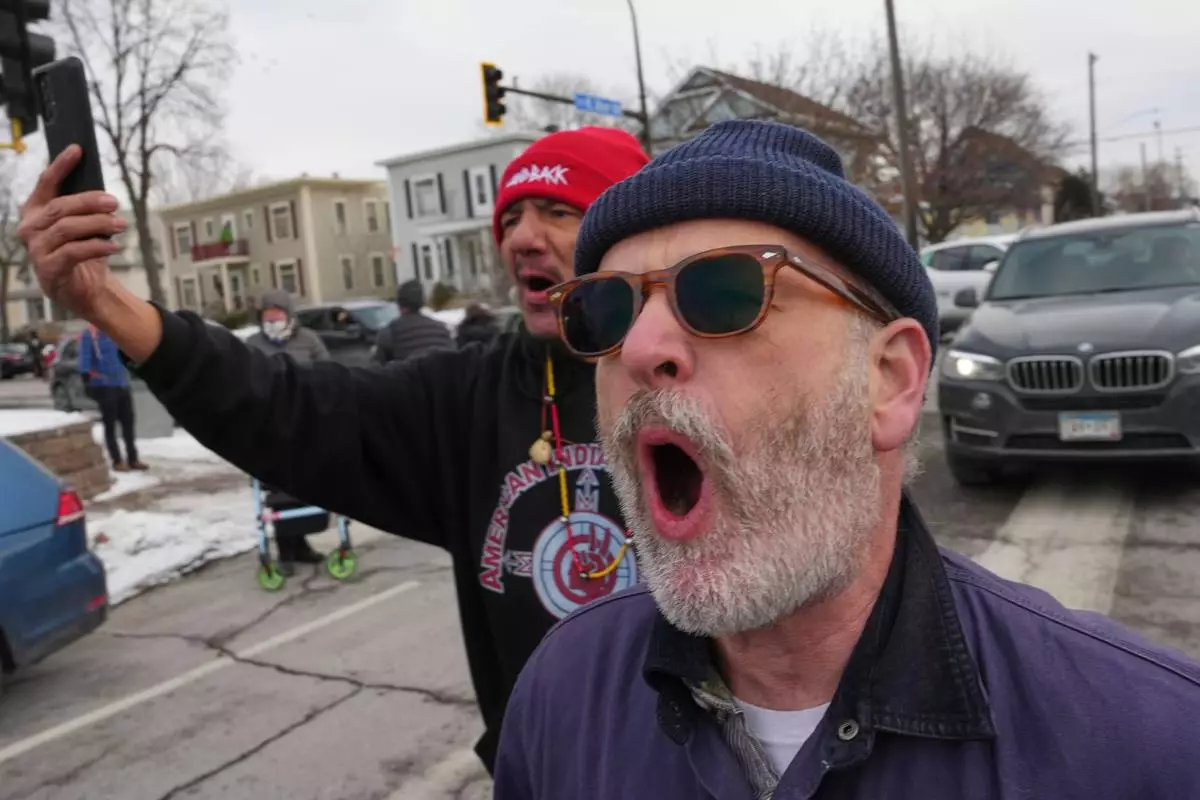
People shout toward Border Patrol agents making an arrest, Sunday, Jan. 11, 2026, in Minneapolis. (AP Photo/Adam Gray)
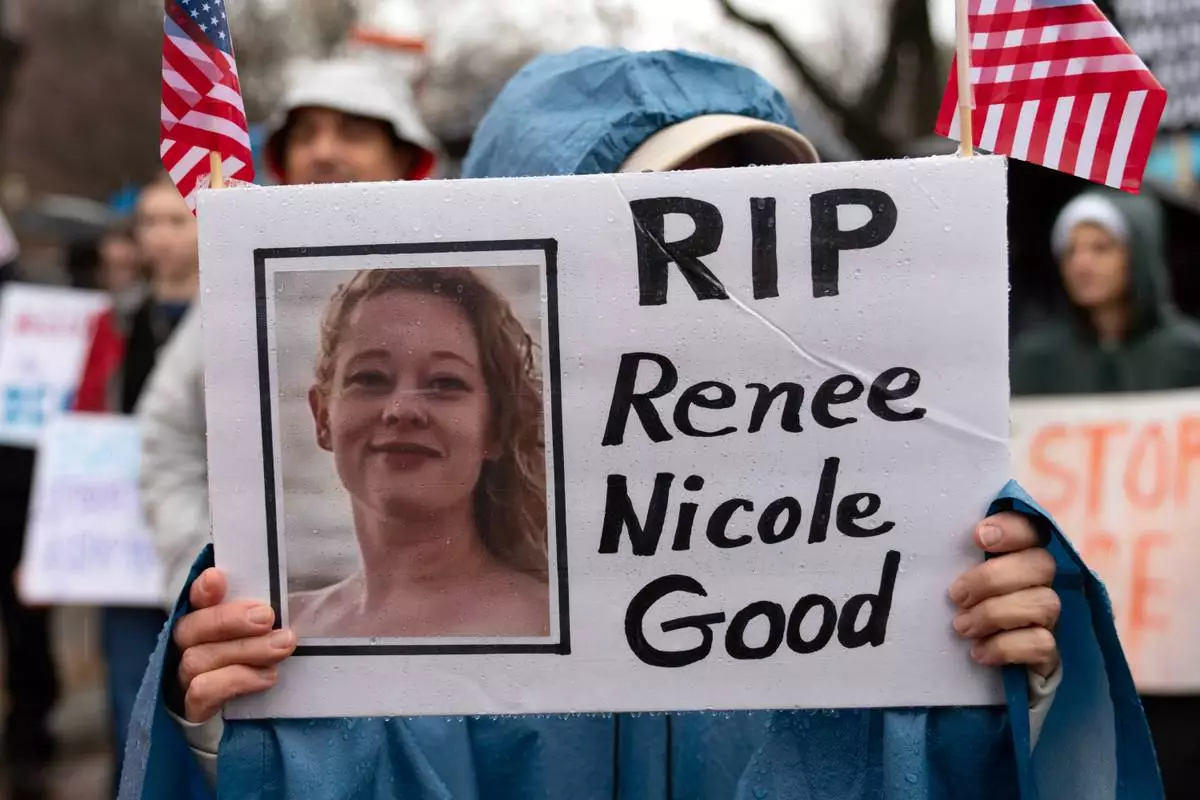
Demonstrators protest outside the White House in Washington, Saturday, Jan. 10, 2026, against the Immigration and Customs Enforcement agent who fatally shot Renee Good in Minneapolis. (AP Photo/Jose Luis Magana)
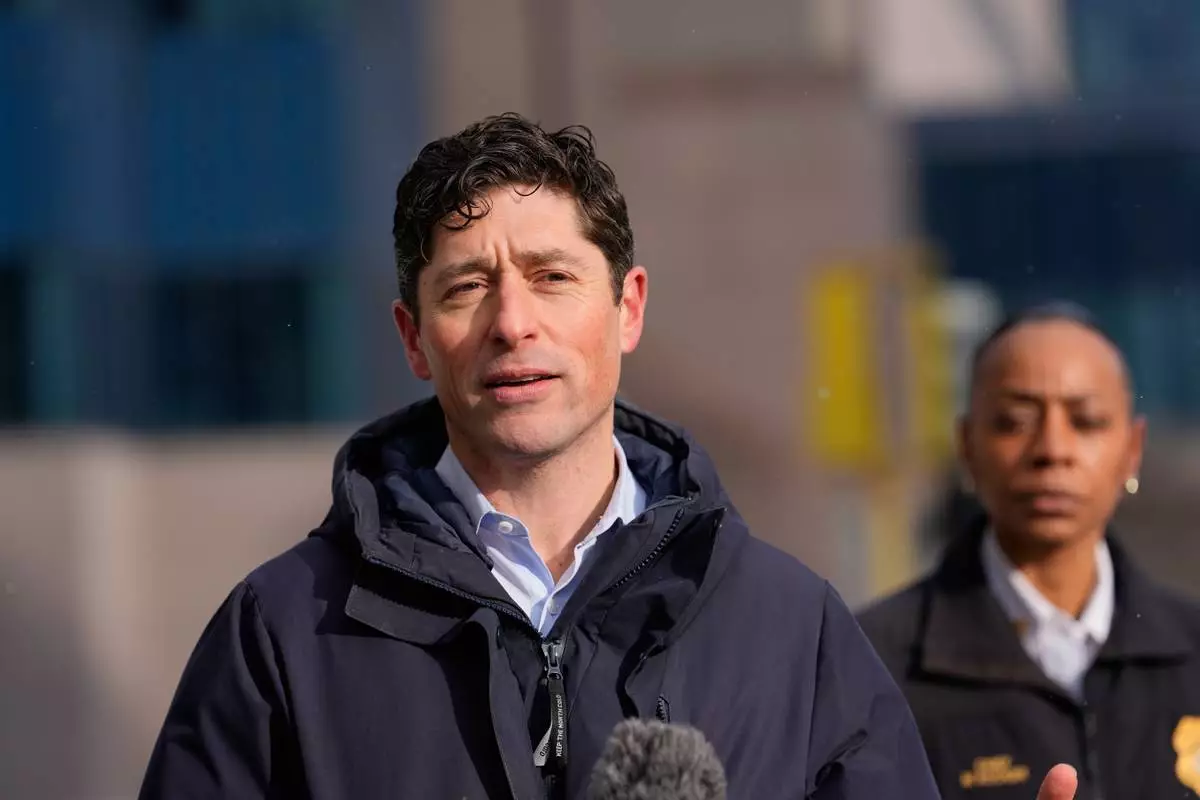
Minneapolis Mayor Jacob Frey holds a news conference on Saturday, Jan. 10, 2026, in Minneapolis. (AP Photo/Jen Golbeck)
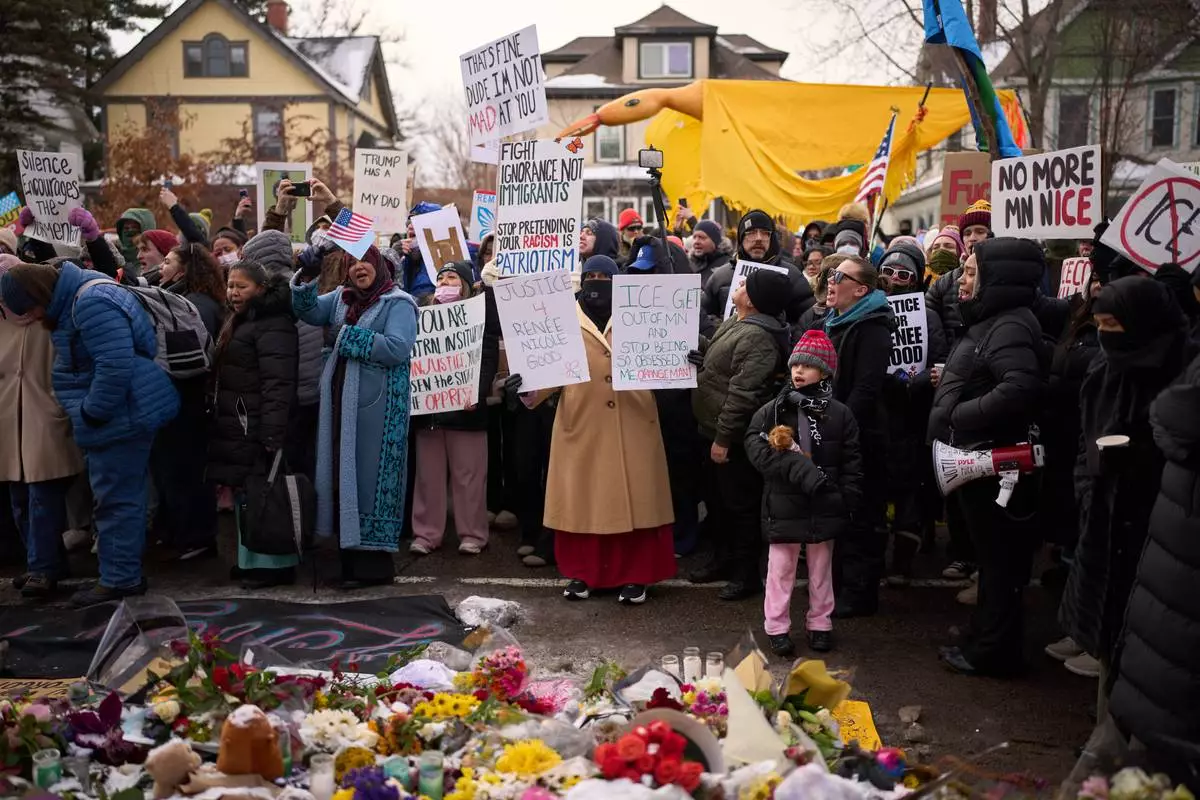
Protesters react as they visit a makeshift memorial during a rally for Renee Good, who was fatally shot by an ICE officer earlier in the week, Saturday, Jan. 10, 2026, in Minneapolis. (AP Photo/John Locher)