LONDON--(BUSINESS WIRE)--Jun 2, 2025--
With the UK heading into its biggest summer of live events in years, experts are warning that the Government’s plans to cap the resale price of tickets could backfire - dramatically increasing fraud, pushing fans into the hands of scammers and triggering a financial backlash for both banks and consumers.
This press release features multimedia. View the full release here: https://www.businesswire.com/news/home/20250601083455/en/
While the move to strengthen regulation is welcome, the proposal to restrict the price of resold tickets is raising serious concerns. In response to the Government’s recent consultation on ticket resale regulation, which includes proposals to restrict the price of resold tickets, We Fight Fraud (WFF) - supported by one of the UK’s leading fintechs, Revolut - is sounding the alarm: price caps won’t protect fans - they’ll expose them.
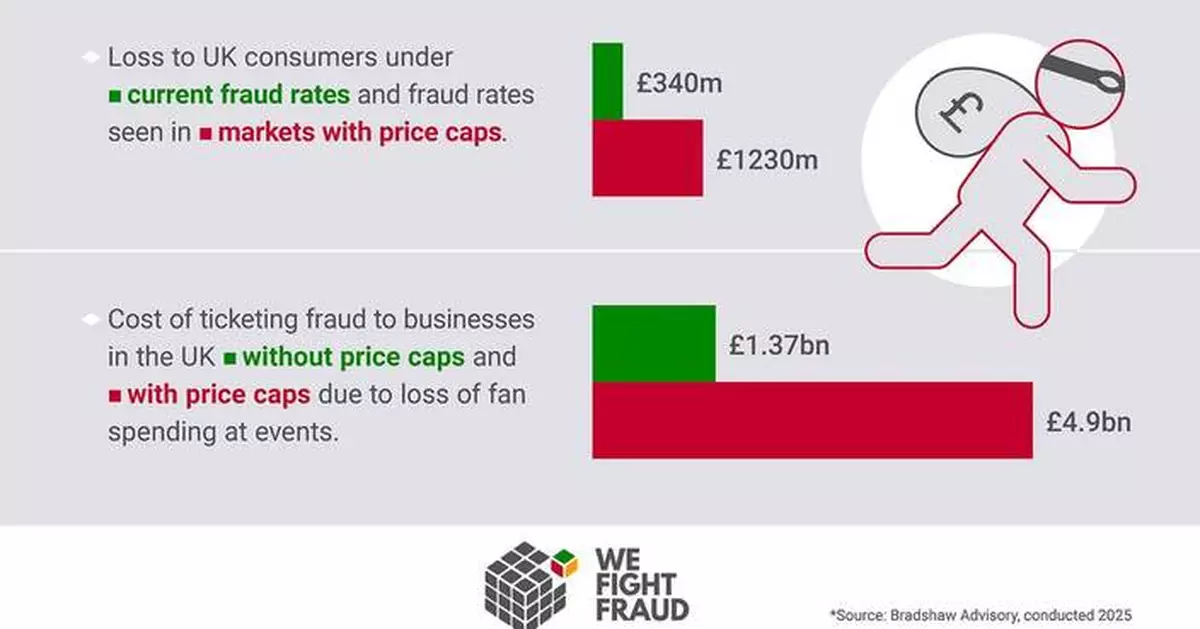
Data from the National Fraud Intelligence Bureau, Action Fraud and the National Crime Agency shows that the cost of reported ticket fraud for England and Wales was £70 million last year.
Yet this pales into insignificance with how much consumers would lose in the event of a mooted price cap being introduced. New figures from Bradshaw Advisory, backed by independent research from We Fight Fraud, suggest that number would quadruple as ticket resales migrate from the regulated secondary market to social media.
This would mean consumers being hit in the pocket to the tune of £280 million a year – with £100 million of that falling in the peak summer months alone.
Dr Nicola Harding, CEO of We Fight Fraud, a specialist unit made up of ex-police, intelligence officers, cyber experts, and financial crime investigators, said: “Capping resale prices may sound fan-friendly - but in practice, it pushes buyers into unregulated, risky spaces where criminals operate freely. We’ve tested this market. We’ve seen what happens. Price caps don’t stop fraud - they multiply it and we could see live event fans defrauded to the tune of £100 million this summer.”
As part of its investigation, We Fight Fraud conducted a covert ticket-buying operation at a Premier League match in March between Liverpool and Southampton. The results were stark:
“These aren’t opportunistic chancers,” said Harding. “They’re organised criminal networks exploiting fans who’ve been shut out of safe, legitimate resale routes. “The more you limit legitimate access, the more you push desperate fans into the shadows - and that’s exactly where scammers lie in wait.”
While We Fight Fraud’s research* focused on the UK, international data tells a worrying story. In Ireland and Victoria, Australia - where ticket resale caps are in place - fraud has surged. Bradshaw Advisory’s research found that in Ireland, 13.6% of fans reported being scammed, over three times the UK’s 3.8% rate. Independent research shows fraud has risen in step with these restrictions.
Since October 2024, UK banks have been required to reimburse victims of Authorised Push Payment (APP) fraud, which includes most ticket scams. With resale restrictions forcing more buyers onto risky channels, the financial burden is now spreading from fans to banks - and eventually to the wider economy.
Revolut saw ticket scams increase by 40% in the run-up to Taylor Swift concerts in London in August 2024.
"We know that highly anticipated events, like concerts and sports matches, can become a target for unscrupulous criminals preying on enthusiastic fans,” said Dave Eborne, Head of Fraud Operations at Revolut.
“Especially with sought-after tickets, fraudsters leverage both the fear of missing out on a unique opportunity and a sense of urgency due to scarcity and high demand. The idea that a potential ticket could disappear quickly encourages people to act fast without thinking – but it’s vital that consumers look for tell-tale warning signs before handing over their hard-earned cash. As Dr. Harding’s research shows, banning or capping resale doesn't stop these scams; it simply provides another platform for them to thrive, costing fans and the wider economy through increased fraud. Smart, transparent regulation of the resale market, and robust consumer education on the warning signs of ticket scams, are the only real solutions to protect fans."
For further information please contact contact@wefightfraud.org or call us on +44(0)20 3633 0996
NOTES TO EDITORS
About Revolut:
Revolut is one of the UK’s leading fintechs, helping people get more from their money. In 2015, Revolut launched in the UK offering money transfer and exchange. Today, more than 50 million customers around the world use dozens of Revolut’s innovative products to make more than half a billion transactions a month.
Across our personal and business accounts, we give customers more control over their finances and connect people seamlessly across the world.
About the data:
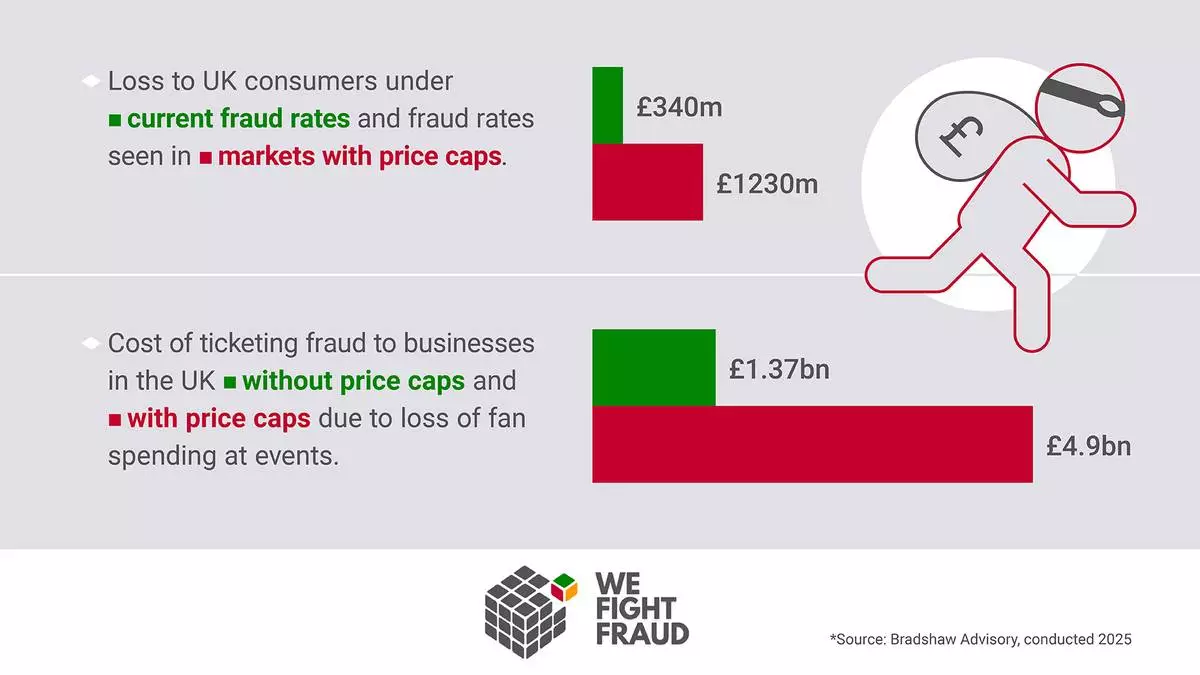
Consumer and business losses from ticket fraud in the UK, with and without resale price caps.
DUBAI, United Arab Emirates (AP) — U.S. President Donald Trump said Iran wants to negotiate with Washington after his threat to strike the Islamic Republic over its bloody crackdown on protesters, a move coming as activists said Monday the death toll in the nationwide demonstrations rose to at least 544.
Iran had no immediate reaction to the news, which came after the foreign minister of Oman — long an interlocutor between Washington and Tehran — traveled to Iran this weekend. It also remains unclear just what Iran could promise, particularly as Trump has set strict demands over its nuclear program and its ballistic missile arsenal, which Tehran insists is crucial for its national defense.
Meanwhile Monday, Iran called for pro-government demonstrators to head to the streets in support of the theocracy, a show of force after days of protests directly challenging the rule of 86-year-old Supreme Leader Ayatollah Ali Khamenei. Iranian state television aired chants from the crowd, who shouted “Death to America!” and “Death to Israel!”
Trump and his national security team have been weighing a range of potential responses against Iran including cyberattacks and direct strikes by the U.S. or Israel, according to two people familiar with internal White House discussions who were not authorized to comment publicly and spoke on condition of anonymity.
“The military is looking at it, and we’re looking at some very strong options,” Trump told reporters on Air Force One on Sunday night. Asked about Iran’s threats of retaliation, he said: “If they do that, we will hit them at levels that they’ve never been hit before.”
Trump said that his administration was in talks to set up a meeting with Tehran, but cautioned that he may have to act first as reports of the death toll in Iran mount and the government continues to arrest protesters.
“I think they’re tired of being beat up by the United States,” Trump said. “Iran wants to negotiate.”
He added: “The meeting is being set up, but we may have to act because of what’s happening before the meeting. But a meeting is being set up. Iran called, they want to negotiate.”
Iran through country's parliamentary speaker warned Sunday that the U.S. military and Israel would be “legitimate targets” if America uses force to protect demonstrators.
More than 10,600 people also have been detained over the two weeks of protests, said the U.S.-based Human Rights Activists News Agency, which has been accurate in previous unrest in recent years and gave the death toll. It relies on supporters in Iran crosschecking information. It said 496 of the dead were protesters and 48 were with security forces.
With the internet down in Iran and phone lines cut off, gauging the demonstrations from abroad has grown more difficult. The Associated Press has been unable to independently assess the toll. Iran’s government has not offered overall casualty figures.
Those abroad fear the information blackout is emboldening hard-liners within Iran’s security services to launch a bloody crackdown. Protesters flooded the streets in the country’s capital and its second-largest city on Saturday night into Sunday morning. Online videos purported to show more demonstrations Sunday night into Monday, with a Tehran official acknowledging them in state media.
In Tehran, a witness told the AP that the streets of the capital empty at the sunset call to prayers each night. By the Isha, or nighttime prayer, the streets are deserted.
Part of that stems from the fear of getting caught in the crackdown. Police sent the public a text message that warned: “Given the presence of terrorist groups and armed individuals in some gatherings last night and their plans to cause death, and the firm decision to not tolerate any appeasement and to deal decisively with the rioters, families are strongly advised to take care of their youth and teenagers.”
Another text, which claimed to come from the intelligence arm of the paramilitary Revolutionary Guard, also directly warned people not to take part in demonstrations.
“Dear parents, in view of the enemy’s plan to increase the level of naked violence and the decision to kill people, ... refrain from being on the streets and gathering in places involved in violence, and inform your children about the consequences of cooperating with terrorist mercenaries, which is an example of treason against the country,” the text warned.
The witness spoke to the AP on condition of anonymity due to the ongoing crackdown.
The demonstrations began Dec. 28 over the collapse of the Iranian rial currency, which trades at over 1.4 million to $1, as the country’s economy is squeezed by international sanctions in part levied over its nuclear program. The protests intensified and grew into calls directly challenging Iran’s theocracy.
Nikhinson reported from aboard Air Force One.
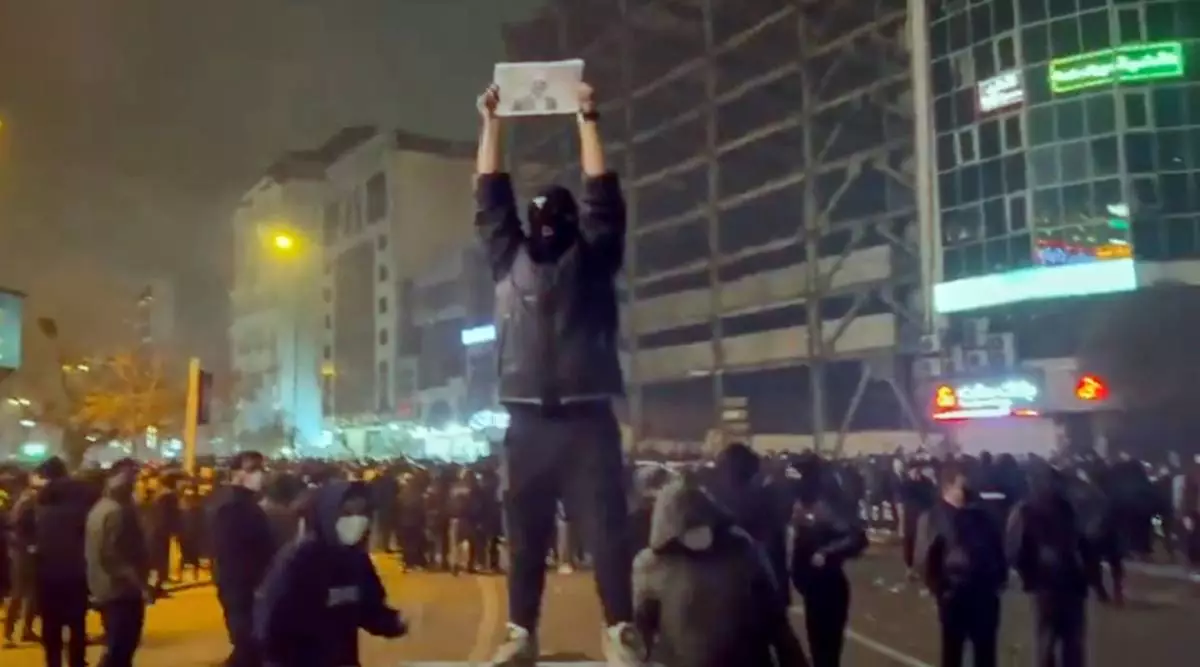
In this frame grab from video obtained by the AP outside Iran, a masked demonstrator holds a picture of Iran's Crown Prince Reza Pahlavi during a protest in Tehran, Iran, Friday, January. 9, 2026. (UGC via AP)
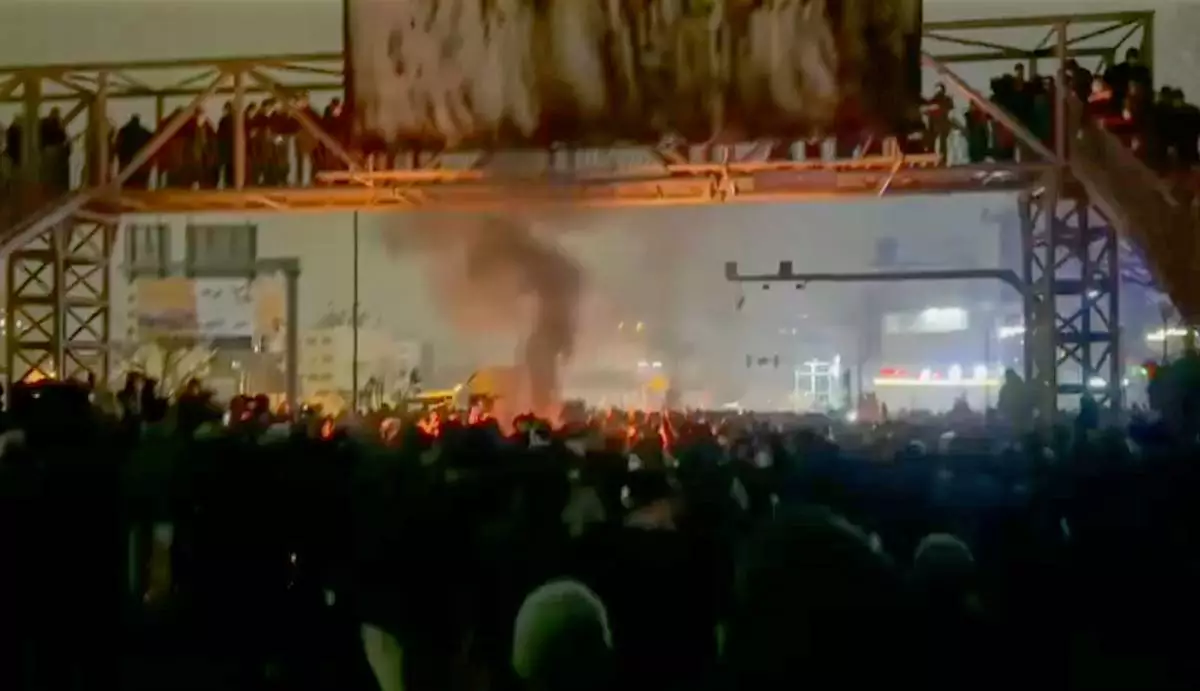
In this frame grab from footage circulating on social media from Iran shows protesters taking to the streets despite an intensifying crackdown as the Islamic Republic remains cut off from the rest of the world in Tehran, Iran, Friday, Jan. 9, 2026.(UGC via AP)
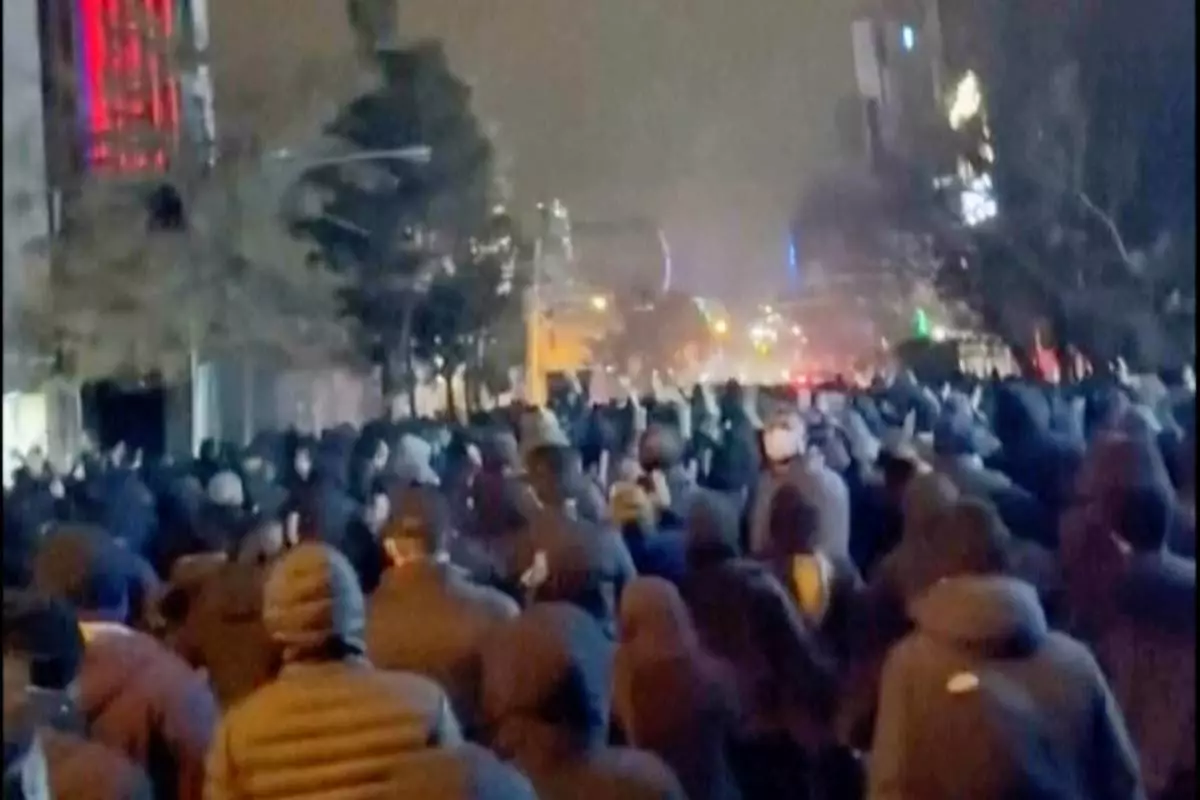
In this frame grab from footage circulating on social media from Iran showed protesters once again taking to the streets of Tehran despite an intensifying crackdown as the Islamic Republic remains cut off from the rest of the world in Tehran, Iran, Saturday Jan. 10, 2026. (UGC via AP)