Insufficient production, poor harvests and occasional factors have driven up rice prices in Japan, said an expert as new record prices cause concerns among the public.
According to the latest data from the Ministry of Agriculture, Forestry and Fisheries, the average retail prices of rice sold at supermarkets across Japan rose to a new high, reaching 4,285 yen (about 29.97 U.S. dollars) per 5 kilograms in the week ending May 18. This marks a 17-yen rise from the previous week and the highest price since comparable records began in March 2022.
The Japanese government has made several attempts to stabilize prices since March by releasing reserve rice into the market, which has had little effect.
Japan has experienced three significant price hikes since the 1990s, primarily caused by poor harvests. For instance, the low temperatures in 1993 and 2003 resulted in rice production cuts of about 30 percent and 15 percent, respectively, causing retail prices to go up. However, the price increases were not as dramatic, with price hikes never exceeding the 30-percent threshold.
This time, however, the price hikes have been much steeper, with prices doubling compared with the same period last year.
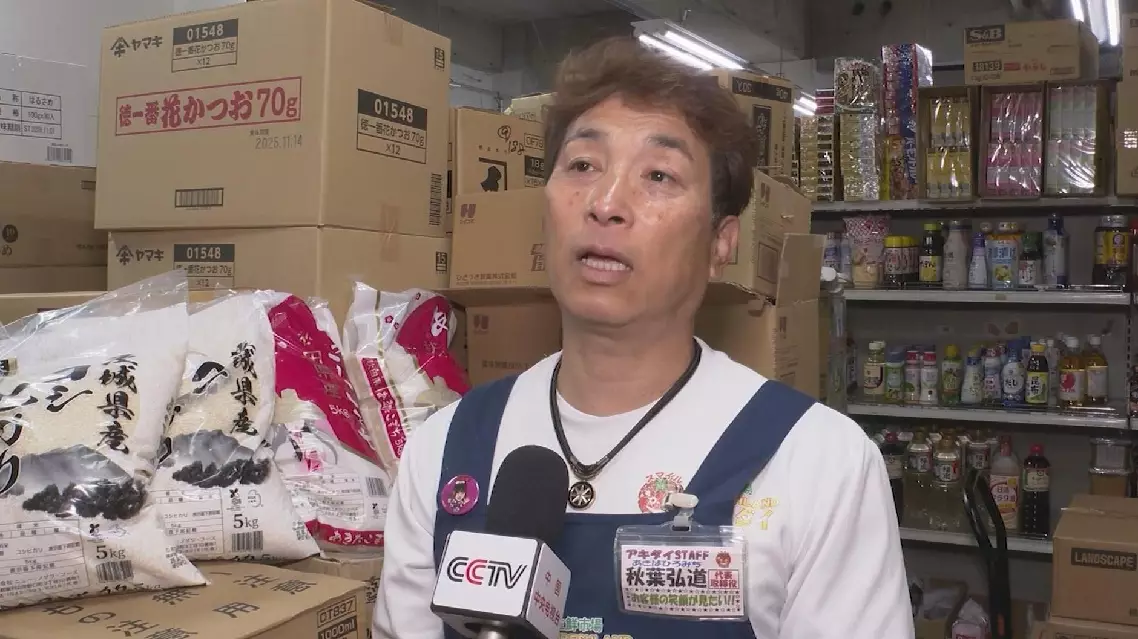
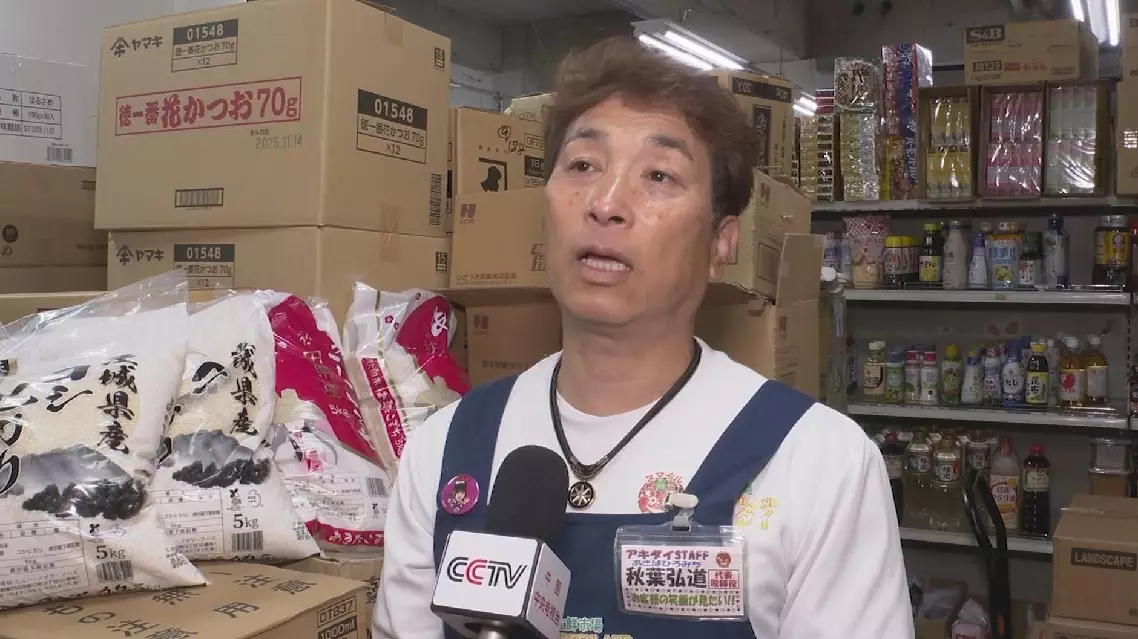
Hirofumi Akiha, manager of a supermarket chain store, stressed the challenges faced by retailers.
"It is said that rice prices (excluding reserve rice) will continue to rise in June. Currently, we can't even get the required amount from wholesalers. Our order quantity is being restricted," he said.
Many believe that the root cause of the current rice price surge is Japan's long-standing rice reduction policy.
As dietary habits changed, per capita rice consumption in Japan has been declining since the 1960s. To prevent oversupply and maintain price stability, the Japanese government introduced a policy of reducing rice production in 1971. Over the past five decades, Japan's annual rice production for consumption has decreased from around 12 million tons to less than 7 million tons.
Hideo Kumano, chief economist at the Dai-ichi Life Research Institute Economic Research Department, explained that multiple factors contributed to the current price hike.
"At the same time as insufficient rice production, there have been occasional factors leading to increased demand. Additionally, poor harvests have also caused prices to rise. These factors are the reasons behind the current continuous increase in rice prices and the imbalance between supply and demand," he said.
The occasional factors mentioned by Kumano include multiple main rice-producing regions facing summer heatwaves and pest infestations, a significant increase in tourists visiting Japan, which has boosted demand in the restaurant industry, and the social unrest triggered by Japan's strong earthquake warning in August, causing some people to hoard rice. These unforeseen factors have disrupted the already delicate balance of supply and demand, leading to skyrocketing rice prices in Japan.
In response to this situation, Japan's Prime Minister Shigeru Ishiba recently stated in Parliament that he supports transitioning from a rice reduction policy to one that encourages increased production.
Hideo Ito, a rice farmer from the Chiba Prefecture, shared the farming community's response to the price surges.
"This year, everyone is increasing the cultivation of staple food rice and reducing the area planted with rice for processing and other purposes, shifting to food-grade rice," he said.
According to Japan's Ministry of Agriculture, Forestry and Fisheries, the planting area for staple food rice in Japan is expected to exceed 1.33 million hectares this year, with production estimated at 7.19 million tons - an increase of 400,000 tons over the previous year.
Japan's insufficient production, poor harvests lead to rice price hikes: expert
Japan's insufficient production, poor harvests lead to rice price hikes: expert