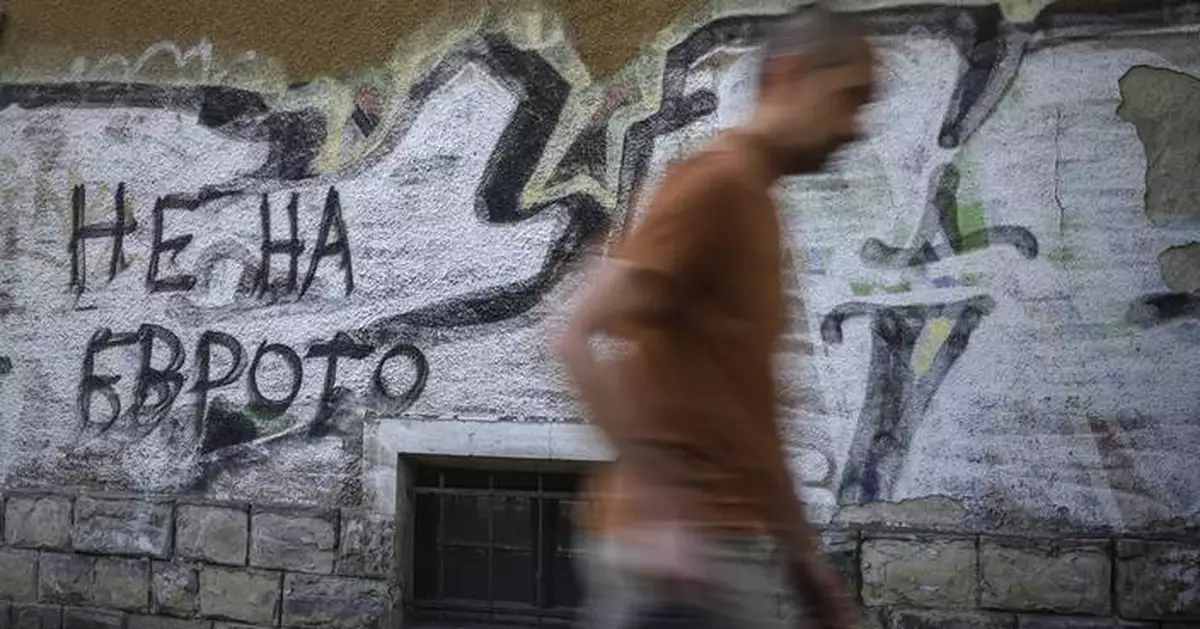
SOFIA, Bulgaria (AP) — Bulgaria is close to realizing its decades-old goal of joining the euro currency union and deepening ties with the more prosperous countries of Western Europe. But the government faces a populist backlash against the shared currency on the eve of a key decision by European Union authorities.
Fears of inflation, poverty and the unknown are mingling with disinformation spread on social media that aims to turn people against the euro. The discontent tracks with increased support for populist and anti-EU parties across Europe, which is exploited by nationalist and pro-Russian politicians in a country that remains one of Europe's poorest and most afflicted with corruption.
Click to Gallery
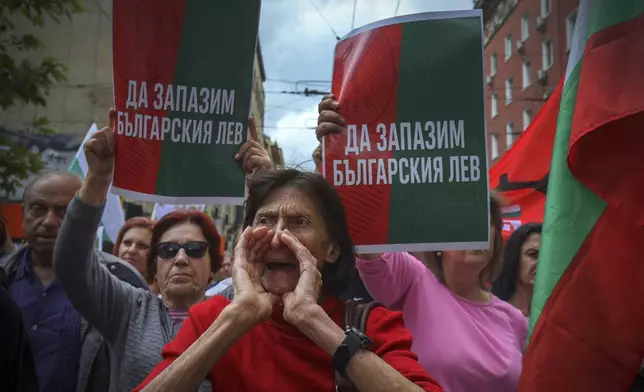
A protester shouts anti-euro slogans in front of signs reading 'Preserve Bulgarian Lev!' during an anti-Euro protest in Sofia, Bulgaria, Saturday 31, May 2025. (AP Photo/Valentina Petrova)
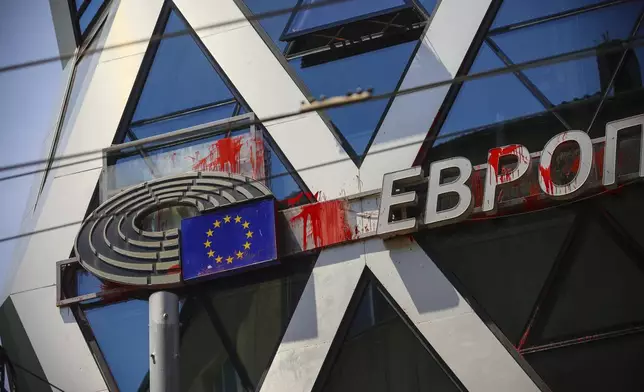
Red paint from pro-Russian protests remain visible on the European Parliament and European Commission building in Sofia, Bulgaria, Monday, June 2, 2025. (AP Photo/Valentina Petrova)
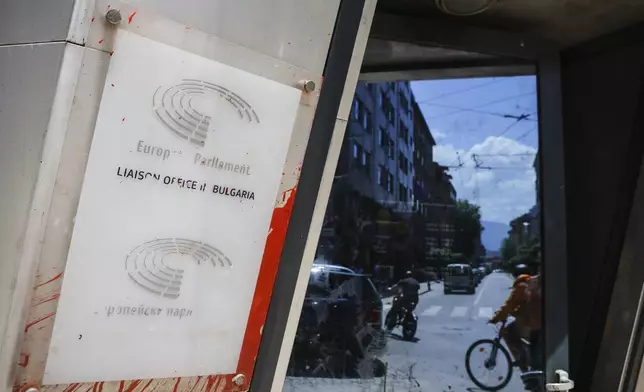
Street traffic is mirrored next to a damged sign of the EU Parliament and Commission in Sofia, Bulgaria, Monday, June 2, 2025. (AP Photo/Valentina Petrova)
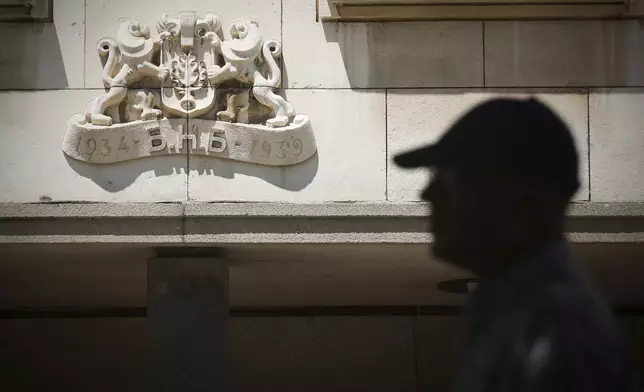
A man passes by a Bulgarian National Bank logo in Sofia, Bulgaria, Monday, June 2, 2025. (AP Photo Valentina Petrova)
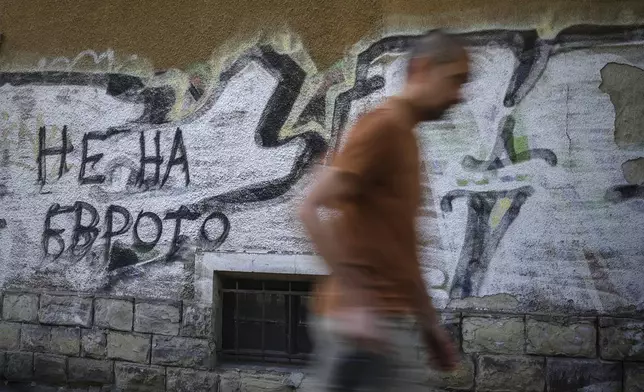
A man passes by graffiti sign reading 'No to Euro' in Sofia, Bulgaria, Monday, June 2, 2025. (AP Photo/Valentina Petrova)
“Adopting the euro will make us feel the threshold of poverty. After all, prices will be in euros,” said 78-year-old retiree Tanya Ignatova.
“Bulgaria is not ready for the euro. Someday we may be ready, but not now," said another retiree, Mario Georgiev.
Several thousand people rallied against the euro in the capital on Saturday, urging a referendum on whether to transition from the lev currency to the euro. The head of the pro-Russian Varazhdane party, Kostadin Kostadinov, told the crowd that “Bulgaria has risen and declared: Freedom, we choose the Bulgarian lev!”
Others in Bulgaria say the country already benefits from EU membership and it does not matter what the currency is. "We have inflation now and we will have it in the future,” said 26-year-old Konstantin Bozhinov.
Aiming at deepening European integration amid growing geopolitical tensions, the government is pressing ahead. It has asked for a review of whether it meets the requirements of low inflation, sound government finances and legal conformity to EU institutions. On Wednesday, the European Commission will announce the results.
If the commission gives a green light, other member states will decide on Bulgaria's candidacy in the coming weeks.
At the last review in 2022, Bulgaria failed on the inflation requirement. Inflation has since fallen.
President Rumen Radev has encouraged the anti-euro voices by proposing a referendum on the currency, citing public concerns over inflation and purchasing power. That followed a protest in February that saw the offices of the EU's executive commission in Sofia spattered with red paint and its entrance set on fire.
The president's proposal was turned down by the pro-European majority in parliament, which accused Radev of acting in favor of Russia with his last-minute attempt to sabotage the euro adoption.
According to the EU’s multi-country Eurobarometer survey released last week, 50% of Bulgarians are against the adoption of the euro, while 43% are in favor. In contrast, trust in the euro continues to grow across the rest of the EU.
Bulgaria joined the EU in 2007. It has been plagued by political instability and corruption that have fueled euroscepticism among its 6.4 million citizens. Analysts say disinformation campaigns from abroad have fed fears of economic changes that could bring more poverty.
Scores of false claims by opponents of the eurozone have been published on social networks. One claim says the EU plans to take away people’s savings if they fail to spend them within a certain period. Another claims that plans to introduce a digital version of the euro are part of a plan to control everyone.
“There is a powerful brainwashing of the average Bulgarian. Illusory fears are being spread, lies are being told wholesale, unscrupulously and brazenly," said Ognyan Minchev, director of the Institute for Regional and International Studies in Sofia.
Economists say joining the euro will not bring massive change to Bulgaria's economy in the short run. That's because the government has pegged the currency to the euro by law, at a fixed rate of 1 lev for every 51 euro cents.
Joining the euro can bring lower borrowing costs, greater ease in comparing domestic and foreign prices and no need to exchange money when vacationing in another euro country. More than that, it’s a sign of integration into the EU and its large economy. Members get a seat on the European Central Bank’s interest rate-setting committee.
Countries agree to join the euro when they join the EU, but so far 20 of 27 members have taken the step. Croatia was the last to join in 2023.
Bulgaria's government has very little debt, at 24.1% of GDP — the second lowest in the EU and well below the 60% level in euro membership criteria. That's a sharp contrast to its neighbor, Greece, which entered the euro in 1999 with high debt that was concealed through complex financial transactions. Greece's broken finances eventually triggered a eurozone-wide crisis.
Bulgaria's government has been “fiscally super conservative ... the risk of Bulgaria becoming a fiscal risk to the eurozone is essentially zero,” said Zsolt Darvas, senior fellow at the Bruegel think tank in Brussels.
Fears of inflation are not entirely without basis. Experience in other countries shows that “whenever there is a changeover from national currency to the euro, there is often a minor inflation effect, but it's typically less than 1%,” said Darvas
Economists say a one-time increase occurs as service providers such as restaurants, which don't adjust prices as often as other sectors, take advantage of re-doing menus and price lists to implement hikes.
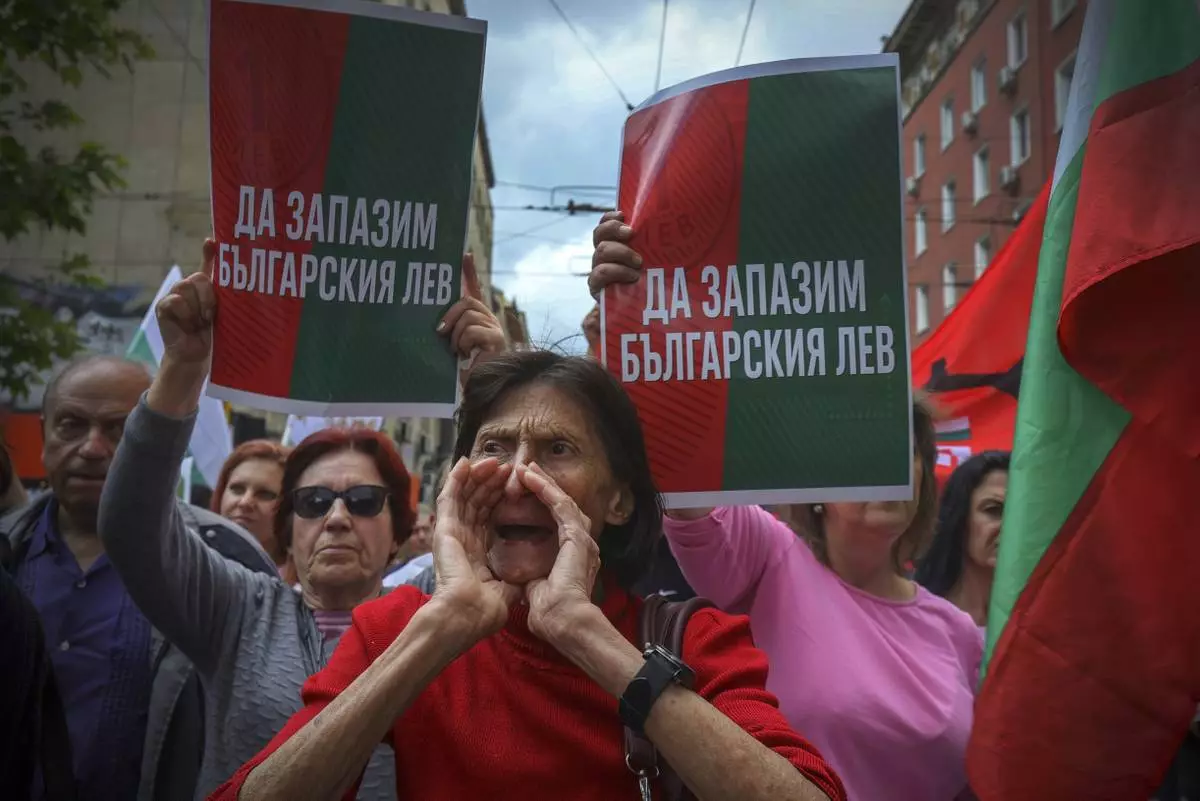
A protester shouts anti-euro slogans in front of signs reading 'Preserve Bulgarian Lev!' during an anti-Euro protest in Sofia, Bulgaria, Saturday 31, May 2025. (AP Photo/Valentina Petrova)
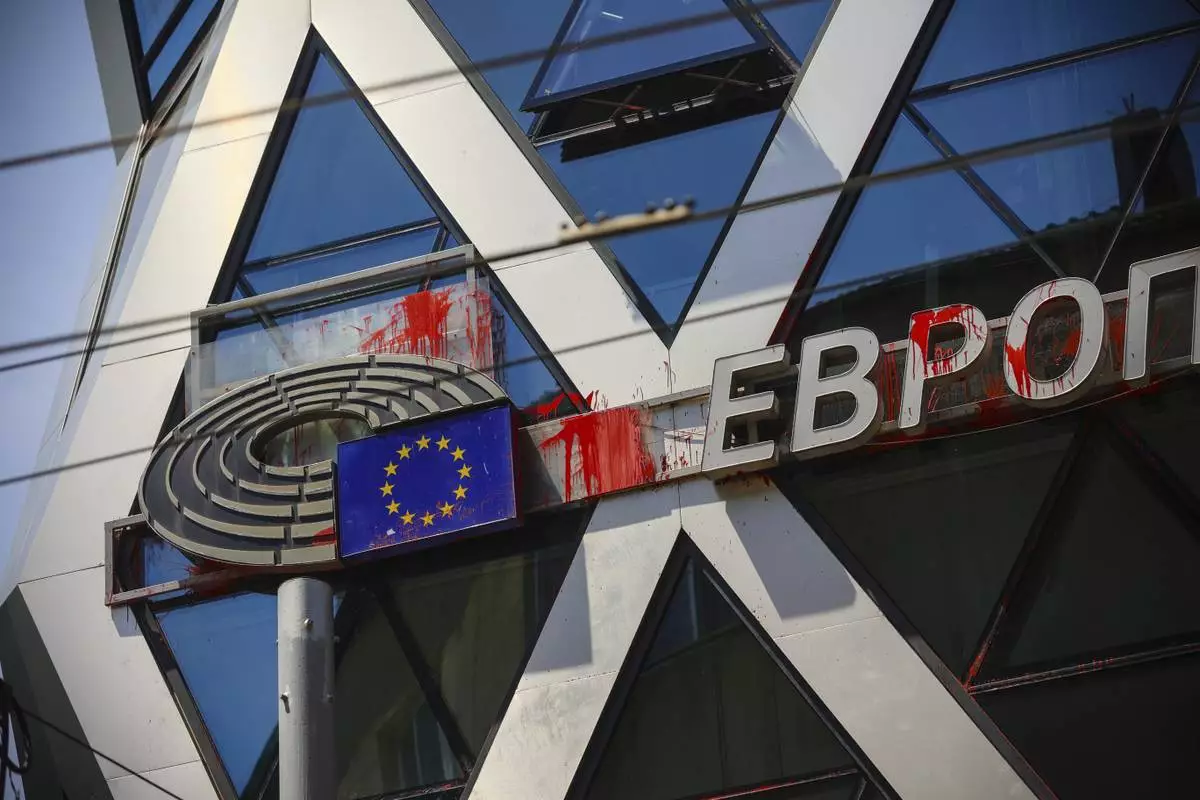
Red paint from pro-Russian protests remain visible on the European Parliament and European Commission building in Sofia, Bulgaria, Monday, June 2, 2025. (AP Photo/Valentina Petrova)
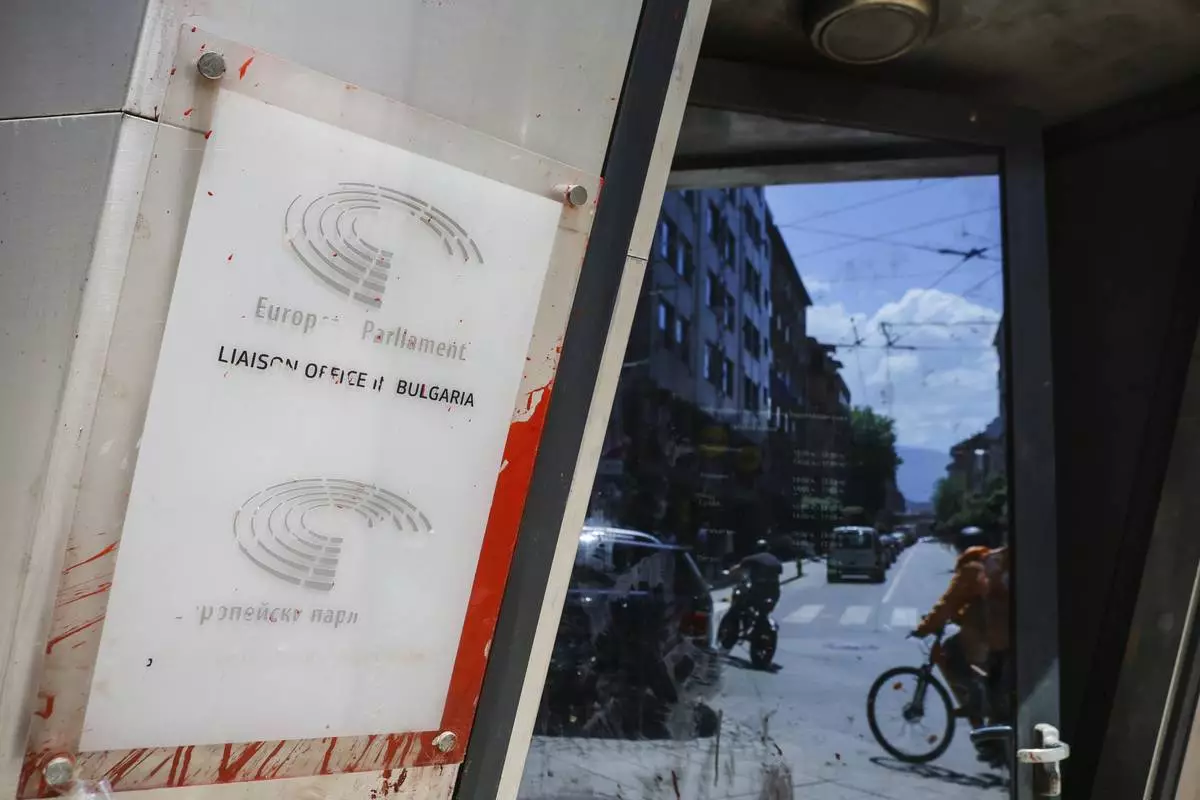
Street traffic is mirrored next to a damged sign of the EU Parliament and Commission in Sofia, Bulgaria, Monday, June 2, 2025. (AP Photo/Valentina Petrova)
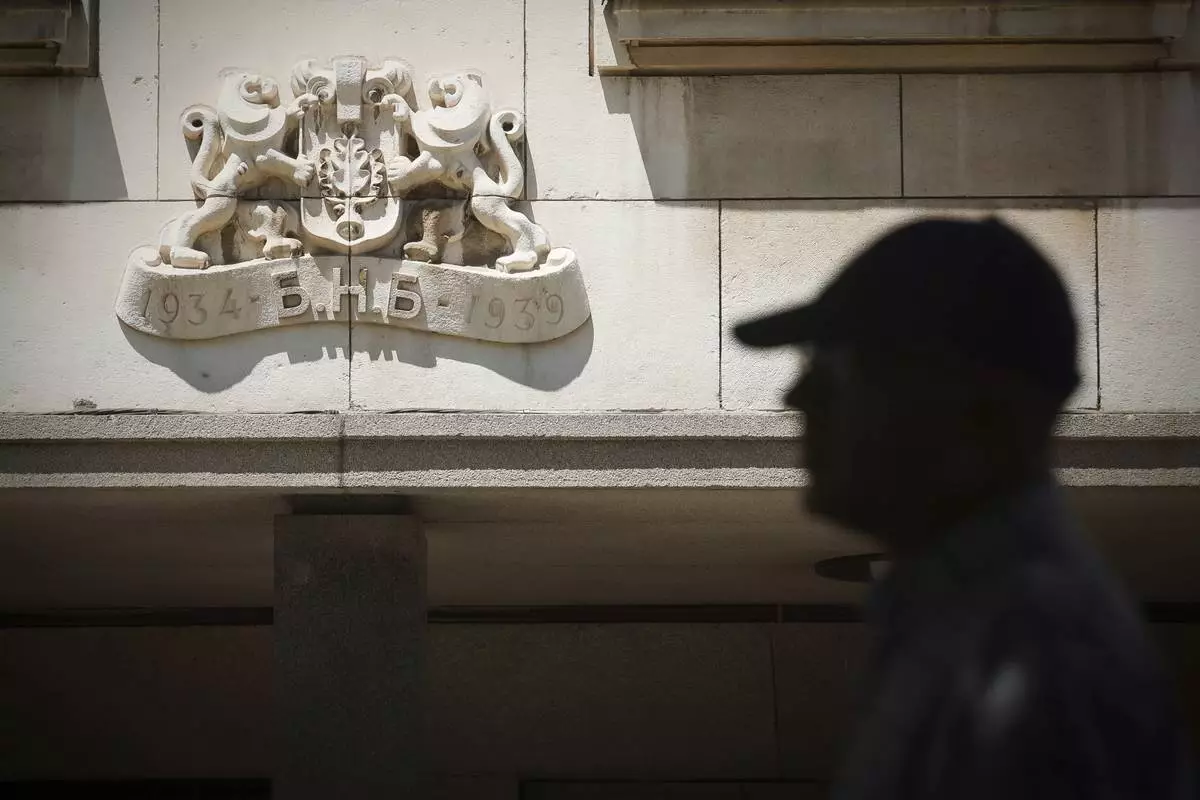
A man passes by a Bulgarian National Bank logo in Sofia, Bulgaria, Monday, June 2, 2025. (AP Photo Valentina Petrova)
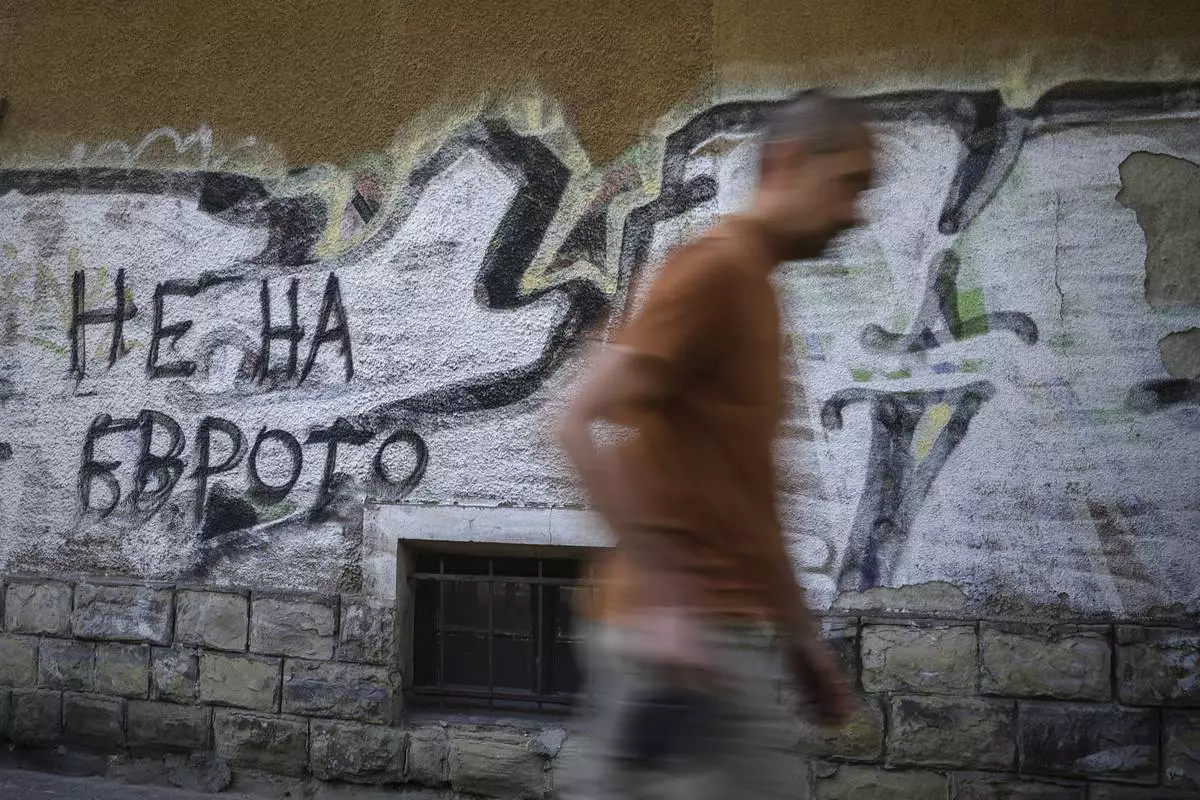
A man passes by graffiti sign reading 'No to Euro' in Sofia, Bulgaria, Monday, June 2, 2025. (AP Photo/Valentina Petrova)