High-quality cultural products from the Chinese mainland are gaining increasing influence and impact in the Taiwan Region, enhancing cultural identity of people in Taiwan and dealing a heavy blow to the Democratic Progressive Party (DPP) authorities led by Lai Ching-te who are attempting to block cross-Strait cultural exchanges, said scholars at a recent cross-Strait Chinese cultural summit in Beijing.
Mainland film and television works such as the newly released TV series "The Legend of Zang Hai" and the Minnan-dialect-dubbed animated movie "30,000 Miles from Chang'an" have continued to gain immense popularity among the people in Taiwan.
At the second Cross-Strait Chinese Culture Summit, which was held from Wednesday to Friday in Beijing, participants from both sides of the Taiwan Strait discussed this phenomenon, agreeing that mainland cultural products and events are gaining greater influence in the island.
Products that blend traditional cultural elements with modern innovation and fashion are particularly loved by young people in the island. Taiwan director Wang Chung-cheng said that mainland film and television works, as well as animations that creatively interpret historical and cultural themes, have a huge fan base in the region.
"Palace drama series and costume drama series are very popular among people in Taiwan, as Chinese culture is deeply embedded in our DNA," said Wang.
In addition to film and television works, mainland's excellent cultural products and events, including games, online literature, China-chic (a fashion trend featuring modern designs mixed with traditional cultural elements) and folk customs, are continuously sparking waves of excitement in the island.
Scholars said that despite the DPP authorities' numerous attempts to obstruct cross-Strait cultural exchanges and seek "de-sinicization", mainland cultural products have continued going viral in the island, which proves that cross-Strait cultural exchanges cannot be blocked and stopped.
"The culture on both sides of the Taiwan Strait is rooted in the same origin and shares the same lineage. It cannot be severed or stopped," said Stella Lin, an actress from Taiwan.
"In the face of such suppression, we should stand firm and strive to break through. We should never retreat," said Chi Chia-lin, honorary chairman of Taiwan's Reunification Alliance Party.
"In times of greater difficulty, we should unite even more and continue to work on [cross-strait exchange]," said Lai Lien-chin, president of the Senior Chinese Journalist Association and president of Nan Hua Times.
Scholars from Taiwan also said that the increasing popularity of mainland cultural products in Taiwan demonstrates that the DPP authorities' attempts to pursue secessionism through severing cultural connection between Taiwan and the motherland and blocking cross-Strait cultural exchanges are ultimately futile -- it's like trying to cut off the flow of water with a knife, which will only make it flow faster.
Ren Dongmei, a researcher at the Institute of Taiwan Studies of the Chinese Academy of Social Sciences, analyzed that one important reason for this situation is that the mainland has stronger cultural confidence, so that more and more people are voluntarily learning and inheriting the excellent traditional culture, with rapid cultural innovation and the continuous rise of Chinese culture's international influence.
Some compatriots who used to be overly enamored with Western culture are now beginning to acknowledge mainland cultural industries, she said, adding that this shift has awakened the deeply embedded traditional Chinese culture and values within themselves, and this trend continues to strengthen.
Scholars also said that the demand for development of their own culture among people in Taiwan is also a reality of the "unstoppable" cross-Strait cultural exchange.
"For me, the Chinese culture is a fertile ground for creation. It provides a certain kind of delicacy in word choices and classical expressions in my creation, or a kind of misty and picturesque atmosphere that are unique in the southern part of China in my composition style," said Taiwan lyricist Vincent Fang.
"[The mainland and Taiwan region] share the same cultural foundation. We have all came from Tang poems, Song lyrics, Yuan opera and Ming and Qing novels. In essence, we are the same," said mainland singer-songwriter Ke Zhaolei, who's known by his stage name Xiao Ke.
"We share a common writing system and a common language, so there's no barrier between us [in cross-cultural exchange]," said Wang Hsiang-chi, founding director of the Taipei Artist Agency Association (TAAA).
"We are a unified whole, so our cultural traditions and our bloodline connections are not only about facing history, they should also be about facing the future," said Meng Man, a professor at the School of History and Culture of Minzu University of China.
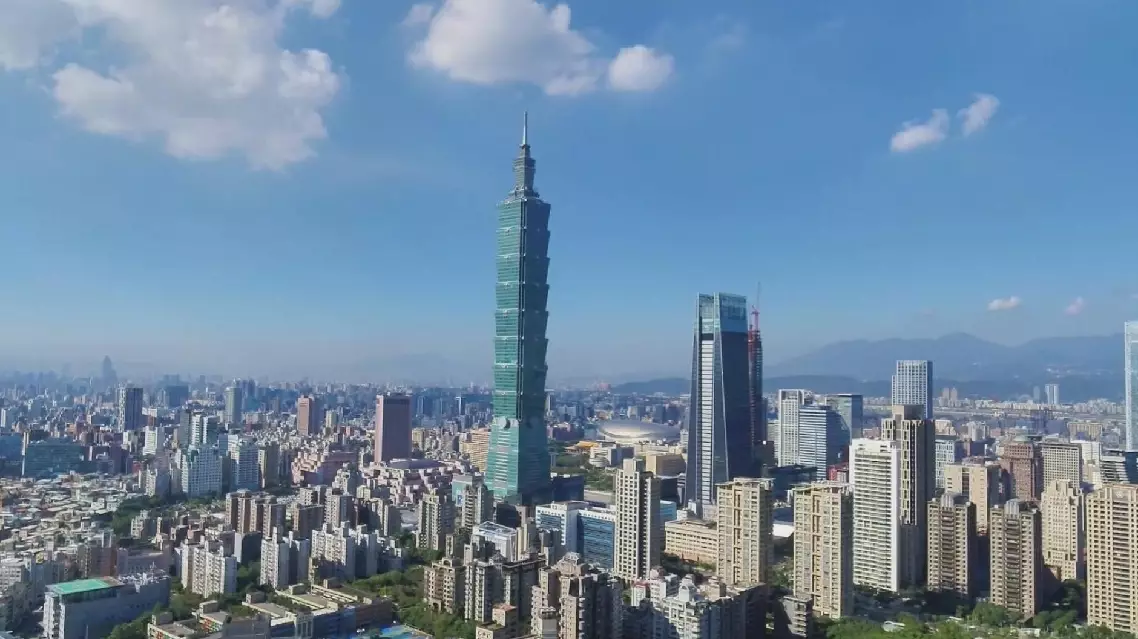
High-quality cultural products from mainland enhance cultural identity of people in Taiwan: scholars
High-quality cultural products from mainland enhance cultural identity of people in Taiwan: scholars