Japan's ongoing rice crisis has intensified calls for tariff policy reform, while spotlighting challenges in production efficiency and the limited commercialization of the nation's agricultural sector, according to a Tokyo-based researcher. To bring down surging rice prices, the Japanese government have decided to sell state-held reserves in recent weeks.
The average price of rice sold at some 1,000 supermarkets nationwide came to 4,260 yen (about 29.76 U.S. dollars) per 5 kilogram, including tax, down 25 yen from the previous week, due to government-stockpiled rice starting to hit store shelves, the Ministry of Agriculture, Forestry and Fisheries said Monday.
However, the latest price is still about double what it was during the same period last year.
Despite the high rice prices and the obvious importance of the staple food to its people, the Japanese government has refused to change entrenched protectionist measures designed to shield small-scale rice farmers through high tariffs and rigid distribution systems.
The government imports about 770,000 metric tons of rice annually with zero tariffs under the "minimum access" quota, with about 100,000 tons designated for staple food use, and the rest is used for processed foods like rice crackers or as feedstuff. A tariff of 341 yen (about 2.39 U.S. dollars) per kilogram is imposed on any rice exceeding this quota.
The high tariff rate has helped pushed up the prices of imported rice and made domestic brands more competitive.
"I haven't made any careful comparison lately, but I feel that our domestic rice is cheaper than imported rice," a Japanese shopper told China Central Television (CCTV) in an interview.
The government's unwillingness to lower tariffs on rice and further open its market has been attributed to the pushback from the Japan Agricultural Cooperatives (JA), the country's largest buyer of rice with significant economic and political clout, due to its influence on how millions of farm households vote in national elections.
The JA has long opposed more foreign rice imports to protect domestic farms from price competitions. Recently, the U.S. government has accused Japan of imposing a 700-percent tariff on imported American rice, making rice duties one of the main focal points in bilateral negotiations. The JA has reportedly pressed Japanese negotiators to not make compromise on the issue.
According to Shunsuke Orikasa, lead research at the Distribution Economic Institute of Japan, said although the JA has the Japanese farmers' interests at heart, it can only offer them short-term support, stressing that this protectionist approach does not help solve the structural problems in Japan's agricultural industry, such as low efficiency.
He believed that in the absence of healthy market competition, Japan's rapidly aging agricultural workforce will not be able to adapt to changes in the market.
"The JA should have focused more on agricultural commercialization with large-scale and highly efficient production. However, the Japanese agricultural sector has failed to keep abreast of the times, resulting in low efficiency in production," he said.
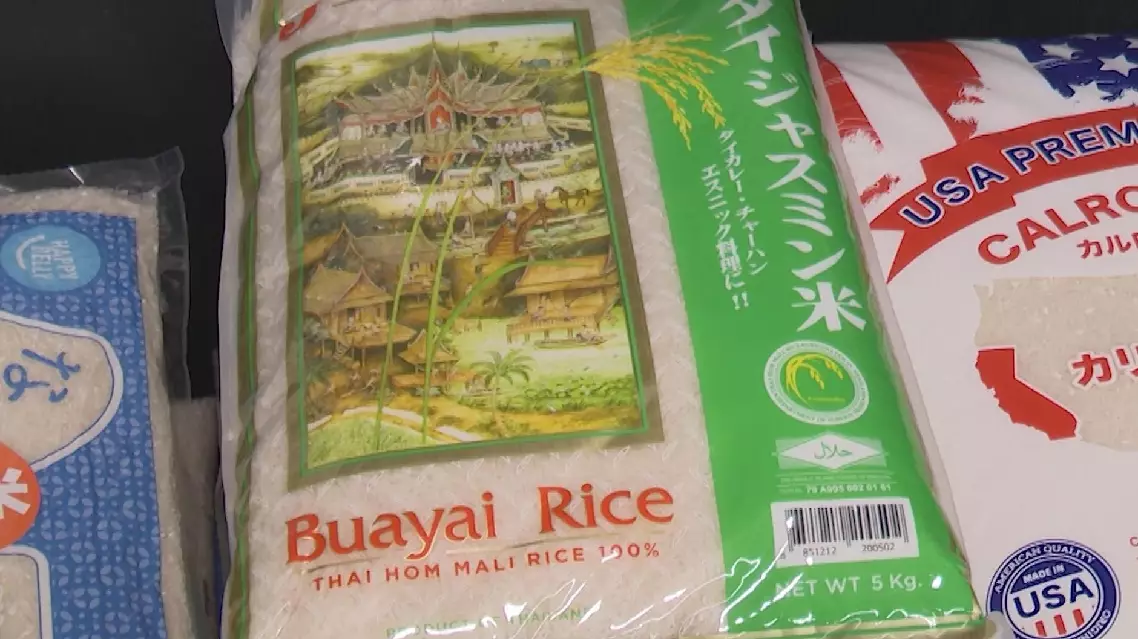
Japan's rice crisis due to high tariffs, structural problems in agriculture sector: analyst
U.S. President Donald Trump said on Friday that he estimates a deal with Iran will be signed "in the next day or two."
Trump said in an interview with Israel's Channel 12 News that the United States and Iran will probably meet over the weekend to finalize a deal to end the war. "The Iranians want to meet and make a deal," he said.
He said "the naval blockade on Iran is helping to make a deal. I will not lift it until we make a deal," adding that "the biggest part of this deal is that it will make Israel safer. This deal is good for Israel."
According to the channel, one component of the deal under discussion is that the United States will release 20 billion U.S. dollars in frozen Iranian funds.
In exchange, Iran would give up its stockpile of enriched uranium, and would be only allowed to have nuclear research reactors to produce medical isotopes, all above ground.
Trump also stressed that Israel must stop the strikes on Lebanon, saying, "They can't keep blowing up buildings. I'm not going to allow that."
Also on Friday, Trump said in a phone interview with Bloomberg that a deal to end the U.S.-Israeli war with Iran is mostly complete as talks over a lasting peace deal will "probably" be held this weekend in Pakistan.
Trump said in the phone interview that Iran agreed to suspend its nuclear program indefinitely, and will not receive any frozen funds from the United States.
"Most of the main points are finalized. It'll go pretty quickly," Trump said.
Asked if he would travel to Pakistan to sign the potential deal, Trump said: "I may."
Trump again denied that the moratorium on Iran's nuclear program would expire after 20 years. "No years, unlimited," Trump said.
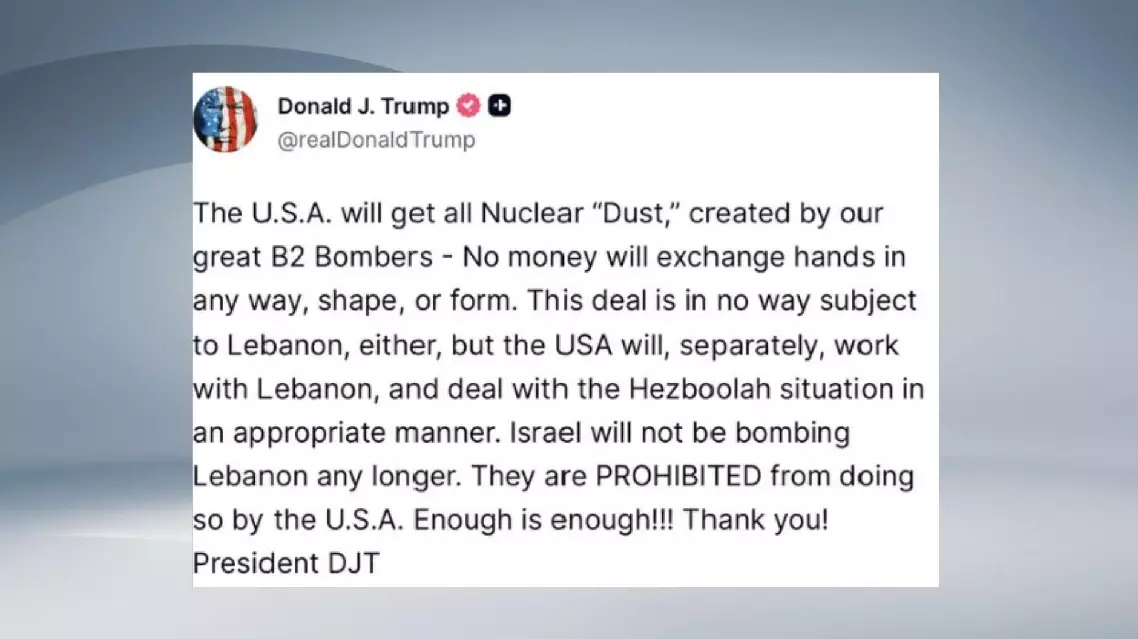
The United States will get all of Iran's nuclear "dust" with no money having exchanged hands "in any way, shape, or form," Trump wrote on social media earlier on Friday. Multiple Western media outlets have interpreted Trump's reference to nuclear "dust" as meaning Iran's stockpile of enriched uranium.
Iran has yet to comment on any deal beyond the reopening of the Strait of Hormuz, nor on claims made by Trump that Tehran had offered concessions, including over the key issue of its nuclear program.
If the United States continues its naval blockade of the Strait of Hormuz, Iran will consider it a violation of the ceasefire between the two countries and will close the waterway, the semi-official Tasnim news agency reported Friday, citing an informed source close to the Supreme National Security Council.
The Iranian side has yet to respond to the media report on the enriched uranium issue.
The United States and Iran had their first round of negotiations in Pakistan's Islamabad last weekend to ease tension in the Middle East. The talks, which failed to produce an agreement, took place after a ceasefire was announced on April 8 between Iran, the United States, and Israel, following 40 days of fighting.
Iran tightened control over the Strait of Hormuz after the United States and Israel launched joint attacks on the country on Feb. 28. The United States also imposed a naval blockade on the strait following the failed negotiations in Islamabad.
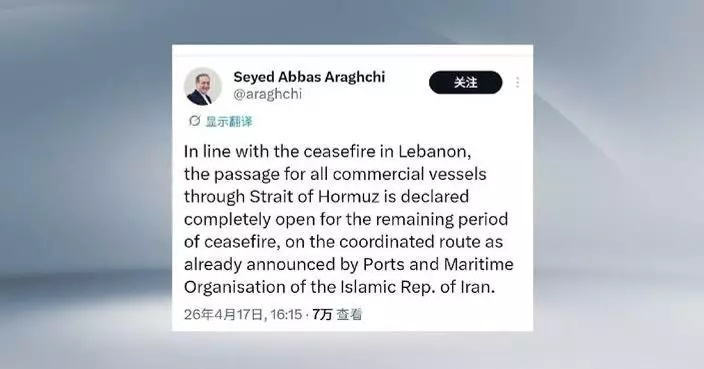
Earlier on Friday, both Washington and Tehran confirmed that the strait had been completely open for all commercial vessels. However, Trump said on Truth Social that the U.S. naval blockade would "remain in full force." In response, Iran warned of closing the waterway again if the U.S. blockade continues.
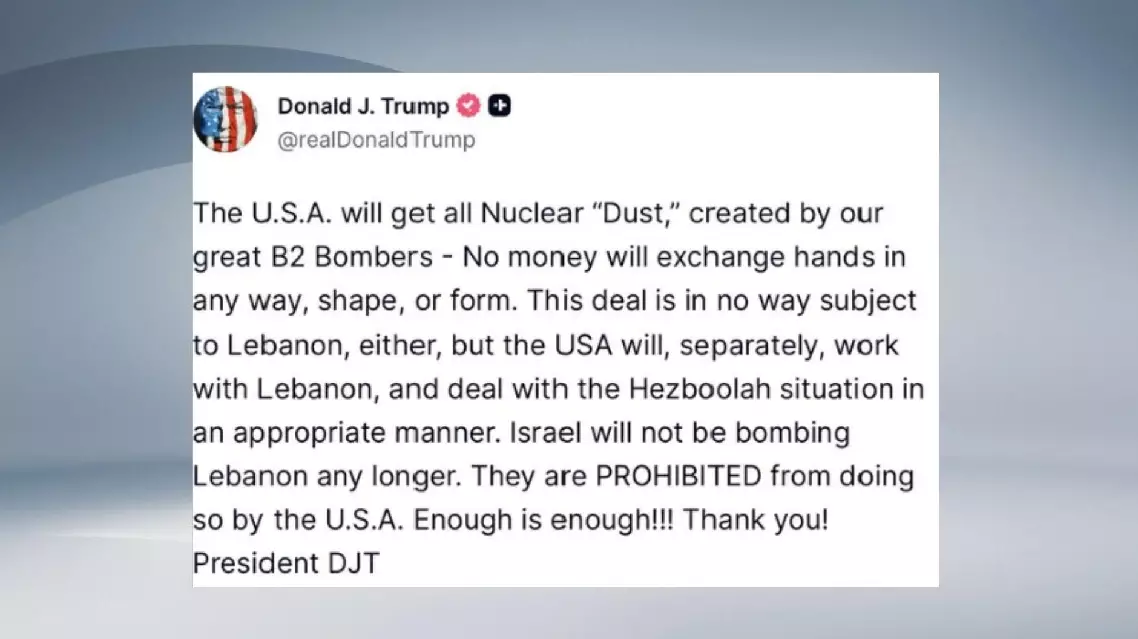
Trump says may sign deal with Iran "in the next day or two": Israeli media
Trump claims peace deal with Iran mostly complete: report