China is revitalizing its cultural heritage through immersive experiences which enable tourists to explore traditions in an innovative and interactive manner.
In Xiamen, Fujian Province, China's first Minnan fantasy-themed scenic area, "Yu Jian Minnan: A Journey Through Time," is drawing crowds of tourists. By engaging with actors and exploring 83 representative intangible cultural heritage projects, visitors can gain a deeper appreciation of Minnan, or Hokkien, culture - an ethnic culture with unique origins and great historical importance.
"Kids do not really know much about our intangible cultural heritage, which makes this a great experience," said a tourist.
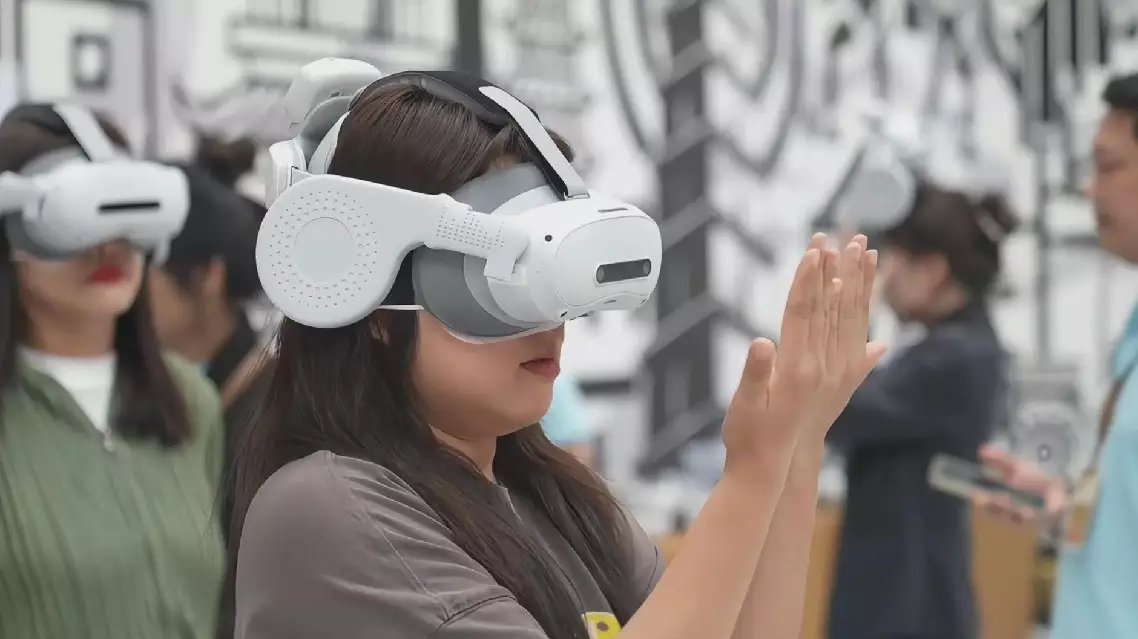
In Hangzhou, Zhejiang Province, an immersive project featuring the XR exhibition 'Tang Gong Ye Yan' (Night Banquet in Tang Dynasty Palace) has officially opened to the public, blending extended reality with cultural storytelling.
Through virtual and digital display, cultural relics have come 'alive,' enabling viewers to immerse in the lives of ancient people in Tang Dynasty (618-907).
"It's extremely stunning! The scenery on both sides of the river is particularly beautiful. Technology brings us a different and brand-new experience," said a visitor.
"Enterprises are not merely using their equipment and facilities on culture itself, but are actively engaging in the creation of new scenarios. They are also addressing their previous deficiencies in operational capabilities and cultural exploration, allowing them to take an integrated approach on exploring and marketing cultural contents," said Song Yangyang, Deputy Director of the Creative Industry Technology Research Institute of Renmin University of China.
In addition to immersive scenarios, the modernization of performance equipment plays a crucial role in driving the transformation of digital cultural consumption.
Guo Hao, the technical director of Zhejiang Dafeng Industry, an enterprise with extensive experience in the development of performance equipment, pointed out that the company is developing cutting-edge artistic installations, like drone-like stage apparatus to further enhance the audience's immersive experience during shows.
"We conducted more than 300 flight simulation experiments and more than 1,500 code-writing computational analyses on flight angles and attitudes, ultimately achieving the current effect that can be perfectly integrated with virtual backgrounds, audio, lighting and other multimedia equipment," said Guo.
Immersive experiences breathe new life into China's cultural heritage, relics