WASHINGTON (AP) — The White House on Tuesday officially asked Congress to claw back $9.4 billion in already approved spending, taking funding away from programs targeted by Elon Musk's Department of Government Efficiency.
It's a process known as “rescission,” which requires President Donald Trump to get approval from Congress to return money that had previously been appropriated. Trump's aides say the funding cuts target programs that promote liberal ideologies.
The request, if it passes the House and Senate, would formally enshrine many of the spending cuts and freezes sought by DOGE. It comes at a time when Musk is extremely unhappy with the tax cut and spending plan making its way through Congress, calling it on Tuesday a “disgusting abomination” for increasing the federal deficit.
White House budget director Russ Vought said more rescission packages and other efforts to cut spending could follow if the current effort succeeds.
“We are certainly willing and able to send up additional packages if the congressional will is there,” Vought told reporters.
Here's what to know about the rescissions request:
The request to Congress is unlikely to meaningfully change the troublesome increase in the U.S. national debt. Tax revenues have been insufficient to cover the growing costs of Social Security, Medicare and other programs. The Congressional Budget Office estimates the government is on track to spend roughly $7 trillion this year, with the rescission request equaling just 0.1% of that total.
White House press secretary Karoline Leavitt told reporters at Tuesday's briefing that Vought — a “well-respected fiscal hawk,” she called him — would continue to cut spending, hinting that there could be additional efforts to return funds.
“He has tools at his disposal to produce even more savings,” Leavitt said.
Vought said he can send up additional rescissions at the end of the fiscal year in September “and if Congress does not act on it, that funding expires.”
“It’s one of the reasons why we are not putting all of our expectations in a typical rescissions process,” he added.
A spokesperson for the White House Office of Management and Budget, speaking on condition of anonymity to preview some of the items that would lose funding, said that $8.3 billion was being cut from the State Department and the U.S. Agency for International Development. NPR and PBS would also lose federal funding, as would the U.S. President’s Emergency Plan for AIDS Relief, also known as PEPFAR.
The spokesperson listed specific programs that the Trump administration considered wasteful, including $750,000 to reduce xenophobia in Venezuela, $67,000 for feeding insect powder to children in Madagascar and $3 million for circumcision, vasectomies and condoms in Zambia.
House Speaker Mike Johnson, R-La., complimented the planned cuts and pledged to pass them.
“This rescissions package reflects many of DOGE’s findings and is one of the many legislative tools Republicans are using to restore fiscal sanity,” Johnson said. “Congress will continue working closely with the White House to codify these recommendations, and the House will bring the package to the floor as quickly as possible.”
Members of the House Freedom Caucus, among the chamber’s most conservative lawmakers, said they would like to see additional rescission packages from the administration.
“We will support as many more rescissions packages the White House can send us in the coming weeks and months,” the group said in a press release. “Passing this rescissions package will be an important demonstration of Congress’s willingness to deliver on DOGE and the Trump agenda.”
Sen. Susan Collins, chair of the Senate Appropriations Committee, gave the package a less optimistic greeting.
“Despite this fast track, the Senate Appropriations Committee will carefully review the rescissions package and examine the potential consequences of these rescissions on global health, national security, emergency communications in rural communities, and public radio and television stations,” the Maine lawmaker said in a statement.
The White House's request to return appropriated funds is meant to comply with the 1974 Impoundment Control Act. That law created the process by which the president can formally disclose to Congress the appropriated money it intends to not spend. Congress generally has 45 days to review and approve the request, but Vought is arguing that the end of the fiscal year would enable the administration to bypass a vote.
The Committee for a Responsible Federal Budget, a fiscal watchdog group, said in a 2018 backgrounder that the Senate can pass rescission packages with a simple majority, instead of the 60 votes needed to overcome a possible filibuster. Between 1974 and 2000, presidents requested $76 billion worth of rescissions and Congress approved $25 billion.
Bobby Kogan, senior director of federal budget policy at the Center for American Progress, a liberal think tank, said in an emailed statement that the Trump administration was already “illegally impounding additional funds,” as withholding money has “always been illegal without explicit Congressional approval.”
On CNN on Sunday, Vought insisted that the Trump administration was complying with the law, but it simply had a different view of the law relative to some Democrats.
“We’re not breaking the law,” Vought said. “Every part of the federal government, each branch, has to look at the Constitution themselves and uphold it, and there’s tension between the branches.”
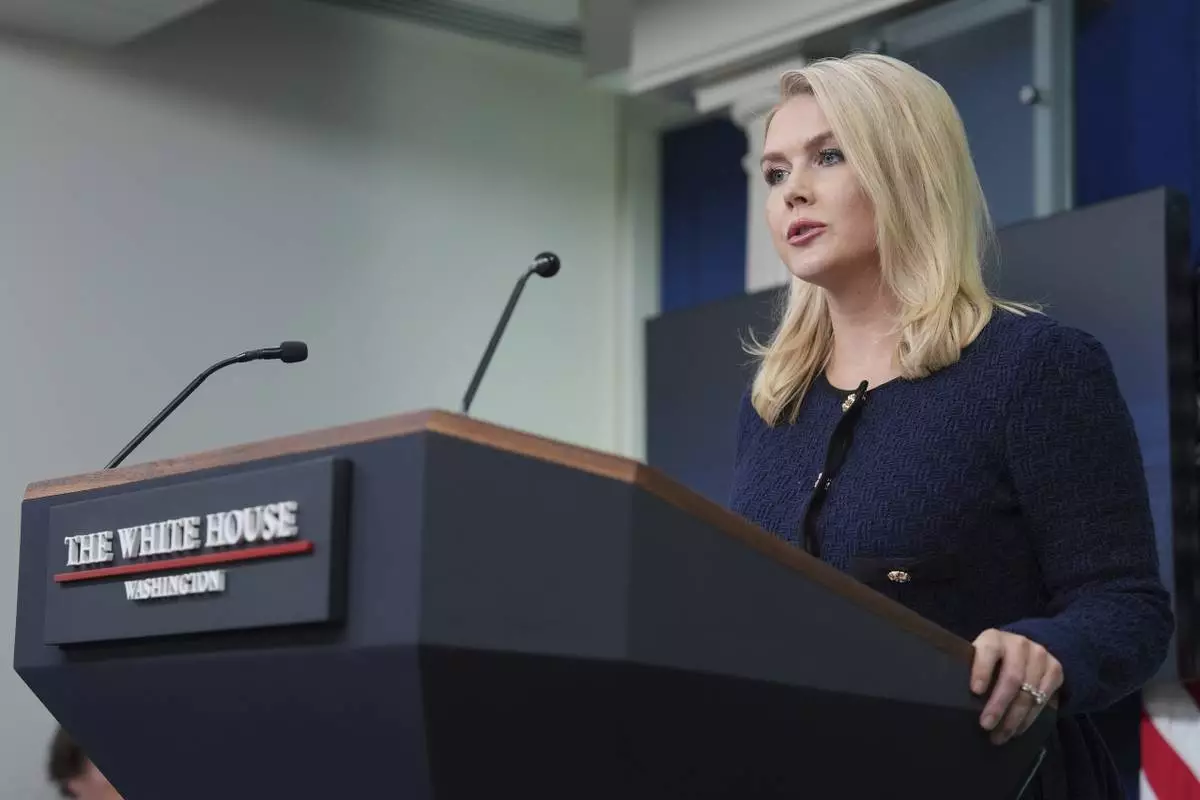
White House press secretary Karoline Leavitt speaks during a briefing at the White House, Tuesday, June 3, 2025, in Washington. (AP Photo/Evan Vucci)
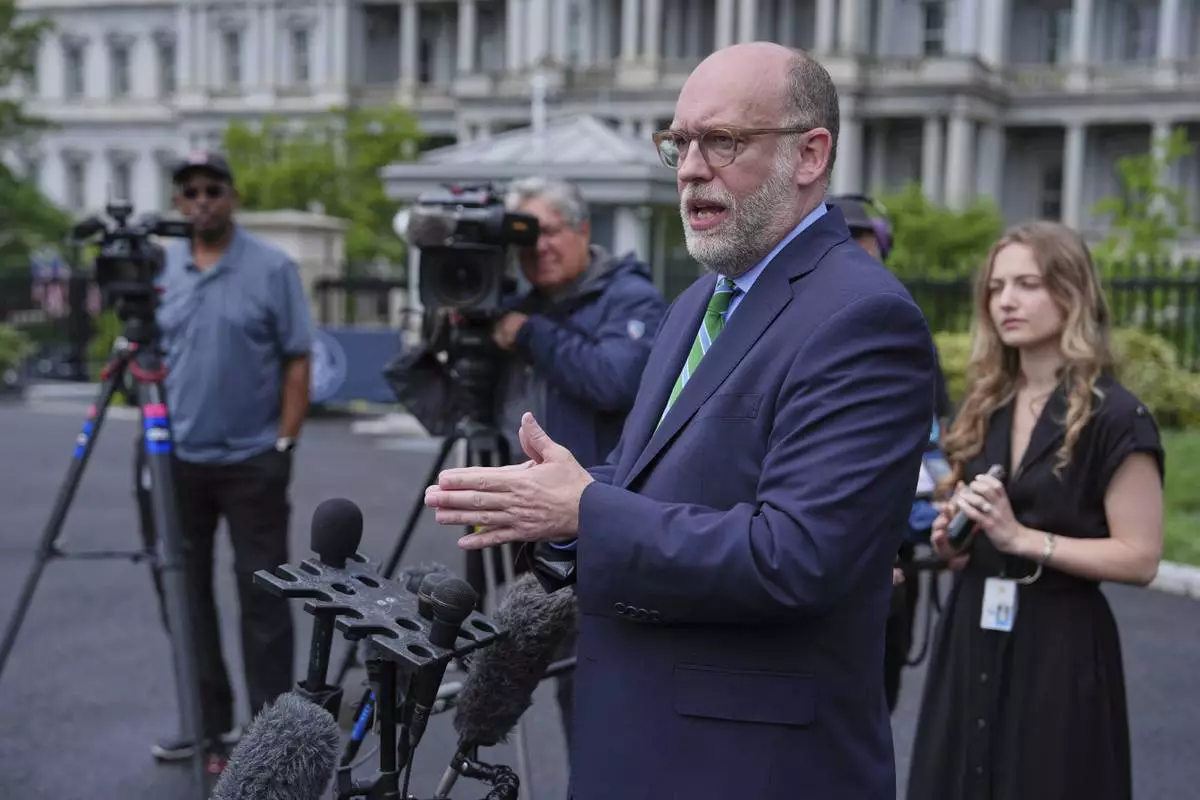
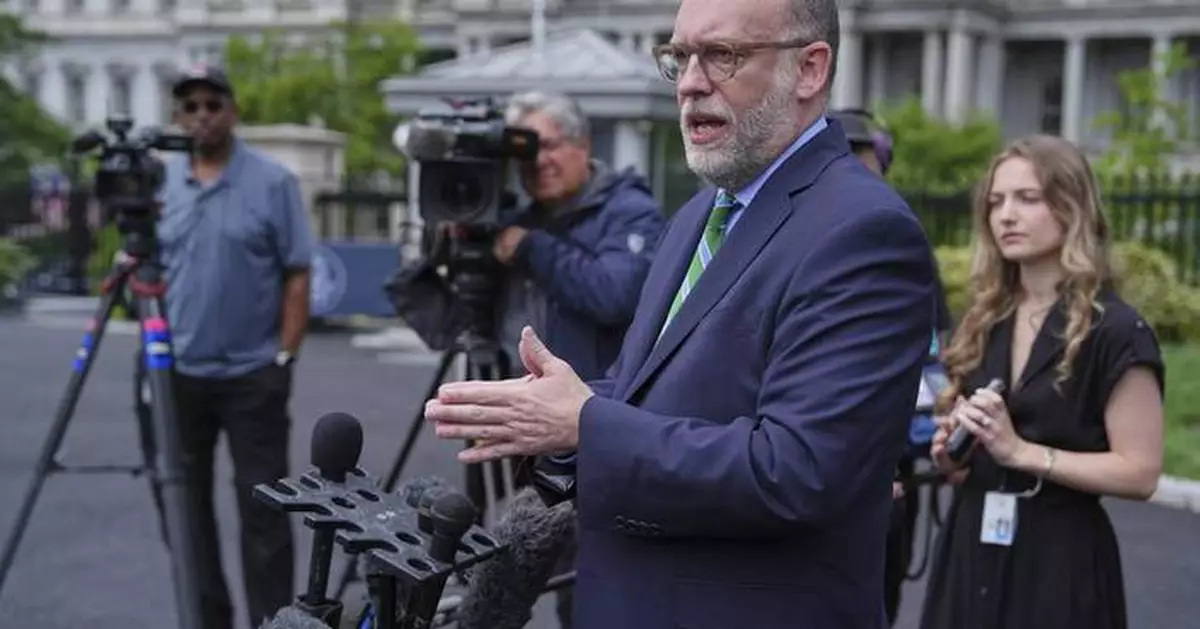
Office of Management and Budget director Russell Vought speaks to reporters at the White House, Thursday, May 22, 2025, in Washington. (AP Photo/Evan Vucci)