Innovative cultural parks converted from old industrial factories are gaining popularity in many parts of China, as the country continue to advance the urban renewal campaign.
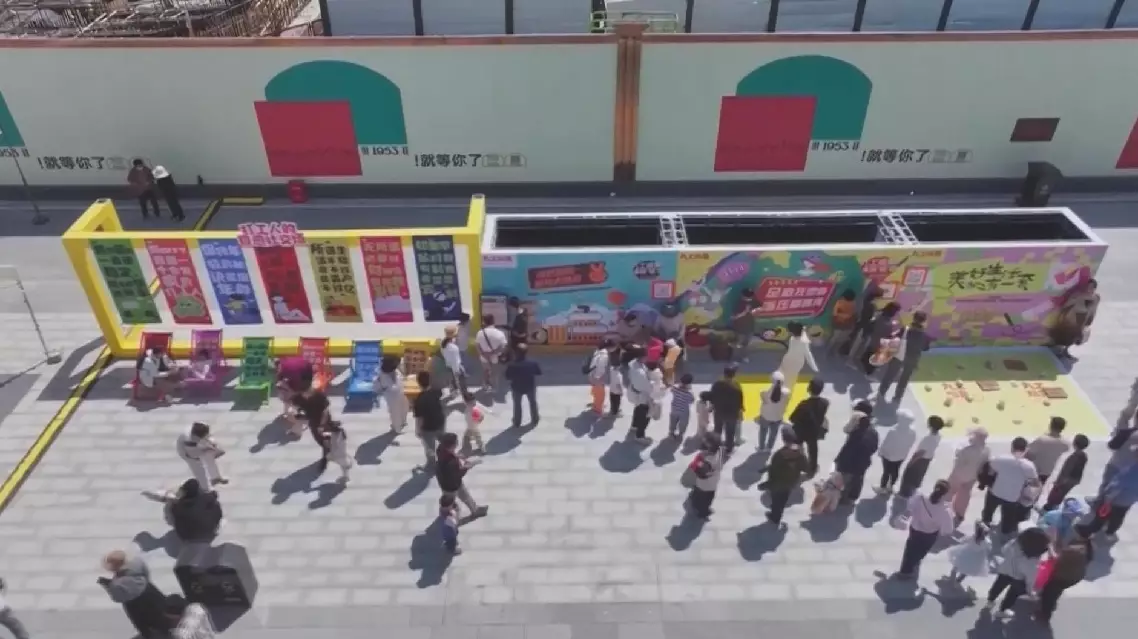
In Shijiazhuang City of north China's Hebei Province, the sites of the city's old cotton textile factories -- once the largest textile industrial base in north China back in the 1950s -- have been converted into new urban spaces for culture, art and fashion consumption.
The renovated sites have attracted flocks of young people, tourists and entrepreneurs, as well as the old generation who have personally experienced the evolution of the industrial sites.
"This new park is like a three-dimensional diary for us that is worth remembering. We should pass on the spirit [of hard work] and build Shijiazhuang into a better city," said He Shuangxi, a retired employee of the former Shijiazhuang Cotton Textile Factory.
The renewal project's manager, Zhang Yongjin, said the original style of the old factories has been preserved to the greatest extent during the renovation.
"We have been trying to retain the original style of the site during the renovation. Take this brick for example. We searched many brick factories in Henan, Shandong and Shanxi at that time, and finally found a brick similar to the original one in a factory in Shanxi. To ensure the quality of the repair work, we invited a team that is professional in restoring ancient city from Zhengding to carry out the construction work," Zhang said.
In Nanchang City of east China's Jiangxi Province, local authorities have converted a deserted bus factory to a creative cultural and sports center serving the students of nearby colleges and universities.
The new center has also preserved the red brick exterior walls and steel structure frames and other historical elements of the old factory.
More than a dozen old factory sites in Nanchang have been renovated so far, stretching an area of over 65 hectares.
"Through such renewal projects, we can make a good use of the location, the rich cultural and historical resources of the old sites to create new scenes for consumption. These renovated sites enable young people to travel in time to the old districts of the city and carry out innovative activities there," said Yang Baojun, chairman of Urban Planning Society of China.
China is advancing the renovation of old commercial blocks, factory areas and urban villages as the country targets to achieve key progress in its urban renewal campaign by 2030.
Cultural parks converted from old industrial sites gain popularity in parts of China