The Ministry of Finance on Wednesday unveiled this year's list of 20 Chinese cities eligible for central budget support for urban renewal projects, as the government continues with its nationwide push to build livable, resilient and smart cities and advance high-quality urban development.
Over the next few years, the central government will allocate upwards of 20 billion yuan (about 2.78 billion U.S. dollars) in subsidies to support urban infrastructure upgrade projects, such as underground pipework renovations, household waste sorting and disposal drives, and reconstruction of historical and cultural blocks, in 20 municipalities, capitals of provincial-level regions, and other large cities.
According to the arrangements, the subsidies are capped at 800 million yuan for each eastern city, 1 billion yuan for each central city, and 1.2 billion yuan for each western city and municipality, respectively.
The 20 cities are: Beijing, Tianjin, Tangshan, Baotou, Dalian, Harbin, Suzhou, Wenzhou, Wuhu, Xiamen, Jinan, Zhengzhou, Yichang, Changsha, Guangzhou, Haikou, Yibin, Lanzhou, Xining, and Urumqi.
According to a statement released on the Ministry of Finance's website in early April, the central government would explore ways to establish a sustainable urban renewal mechanism, tackle gaps and weaknesses in urban infrastructure, and boost the construction of consumption-oriented infrastructure.
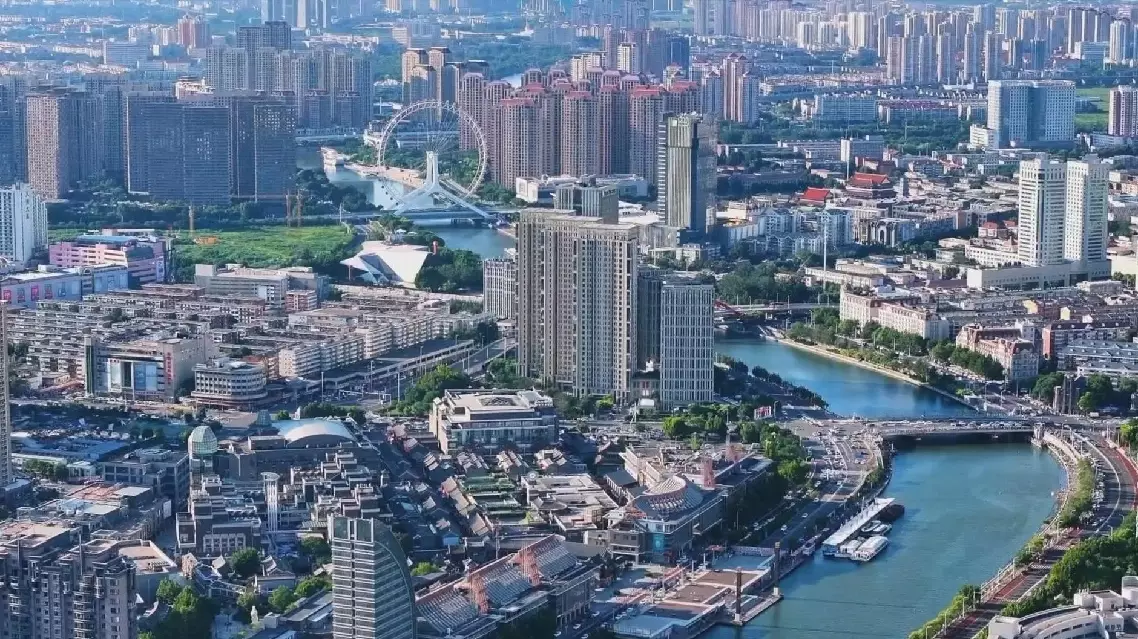
20 Chinese cities eligible for central budget support for urban renewal projects: Ministry of Finance
Chinese President Xi Jinping awarded Serbian President Aleksandar Vucic the Friendship Medal of the People's Republic of China in Beijing on Monday.
As solemn music played and the golden doors slowly opened, Xi and Vucic entered the hall together, followed by Xi's wife Peng Liyuan and Vucic's wife Tamara Vucic.
Applauding guests rose to their feet, and paid respect to the two heads of state.
A Guard of Honor escorted the Friendship Medal into the hall, and amid solemn music, Xi formally presented the medal to Vucic.
Xi highlighted Vucic's long-standing commitment to advancing China-Serbia friendship and underscored the significance of the honor.
"President Vucic has long stayed committed to China-Serbia friendship, and he has always given China the firmest and clearest support on issues concerning China's core interests and major concerns. He gains the respect from the Chinese people. This medal is not only a high recognition of President Vucic's contributions to bilateral friendship, but also carries the earnest expectations of both peoples for building a China-Serbia community with a shared future in the new era," Xi said.
The Friendship Medal is China's highest state honor for foreigners, reserved for those who have made outstanding contributions to China's modernization drive, promoting exchange and cooperation between China and the world, and safeguarding world peace.
At the invitation of Xi, Vucic is on a state visit to China from Sunday to Thursday, with this marking his first state visit to China and his ninth trip to the country overall.

Xi awards Serbian President Aleksandar Vucic China's friendship medal