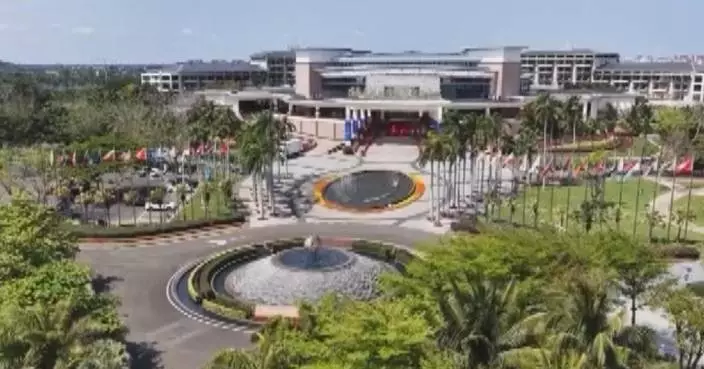
An eight-year-long commitment from China to ensuring both ecological protection and electricity generation has led to a thriving mangrove forest and a sprawling thermal power project co-existing in harmony side by side in the Indonesian province of Banten, despite the fact that the plant is fired by dirty coal.
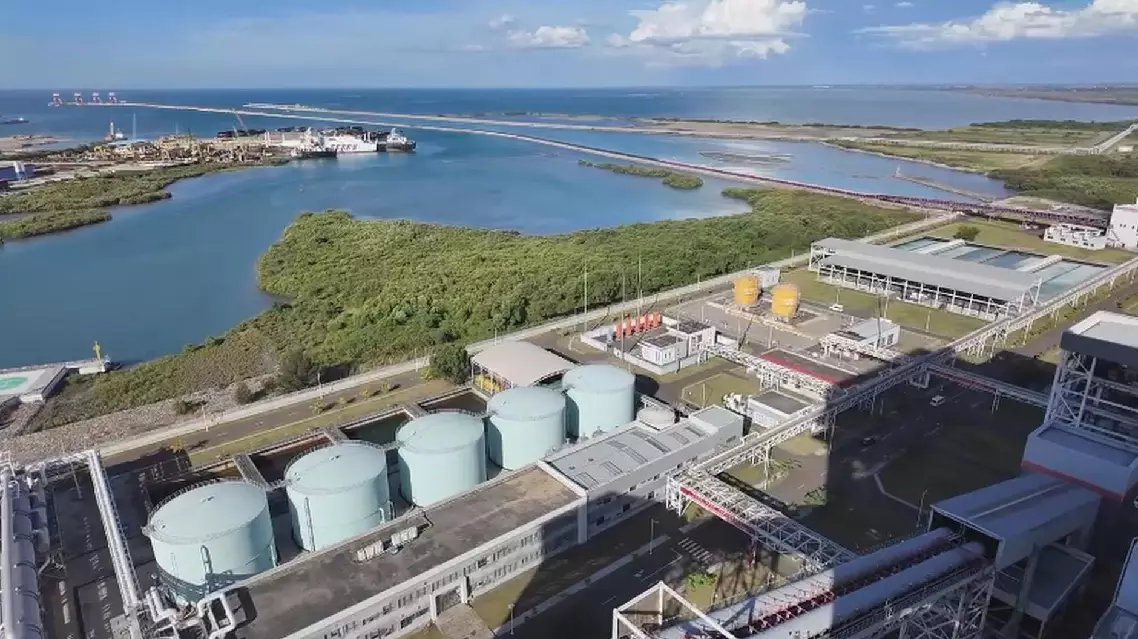
Growing along the shorelines right next to the Java No. 7 project, Indonesia's largest single-unit thermal power generator, the mangrove forest has seen its area nearly quadruple from less than five hectares since 2017. Today, the forest boasts a diversity of birds and other wild animal species, playing a critical role as a natural storm shield and a guardian of coastal livelihoods.
The coal-fired power project is a joint venture between China Shenhua Energy Co. Ltd. and PT Pembangkitan Jawa Bali under the Belt and Road Initiative, with an investment of about 1.8 billion U.S. dollars. The construction of the project commenced in 2017 in phases and the plant entered commercial operation in December 2019.
Before the construction started, the Chinese side decided to prioritize the conservation of the nearby mangroves and ensure that the coal-fired plant would not harm the ecosystem, a move that was in line with the Indonesian government's mangrove restoration goals.
"We've established a base for protection of the flora and fauna species of the mangrove forest and decided not to disturb the area where the trees grow. So, we've chosen other plots for the project instead, which meant that the costs would run higher. But we believe it is worth it," said Zhao Zhigang, president of the PT Shenhua Guohua Pembangkitan Jawa Bali, told China Central Television (CCTV) in a recent interview.
The mangrove reforestation project has paid off, with the total area of the trees expanding three times in less than a decade.
The coal-fired power project was also designed to minimize polluting emissions, as Indonesia, one of the world's most disaster-prone countries, faces the urgent need for climate change adaptation.
Among the environmentally friendly designs is a 3.6 km-long closed-trough conveyor belt for coal transportation, as the project eschewed ordinary exposed belts to curb dust emissions.
"An ordinary belt is exposed, but as you can see, our 3.6 km-long conveyor belt is enclosed in a trough-shaped structure. It's designed to protect the environment," said Zhang Xiongjun, a staff member at the company's operations department.
As a result, the Chinese side's continued push to protect the mangroves has helped provide livelihood opportunities for local coastal communities through fisheries and ecotourism.
China's efforts to revive Indonesia's much-valued ecosystem have been applauded by the provincial government of Banten.
"The 20 hectares of mangroves are of extraordinary significance as they will help reduce carbon emissions. Compared with three years ago, the PT Shenhua Guohua Pembangkitan Jawa Bali's reforestation efforts have contributed to an increase of 50 percent in mangrove forest coverage. The Banten government, including the environmental services agencies, highly appreciate the role of reforestation in the development of environmental protection-related industries," said Budi Darma Sumapraja, head of the Environment and Forestry Bureau of Banten province.
Indonesia relies heavily on coal for electricity generation. While the country has set ambitious goals to transition to renewable energy and phase out coal by 2040, coal still dominates the country's power sector.
Chinese energy company contributes to mangrove ecosystem protection in Indonesia