
NEW YORK--(BUSINESS WIRE)--Jun 4, 2025--
The Summer 2025 edition of Carnegie Reporter magazine examines what is driving division in our society and how individuals and communities are finding ways to come together to reduce political polarization.
This press release features multimedia. View the full release here: https://www.businesswire.com/news/home/20250604951025/en/
Published by the philanthropic foundation Carnegie Corporation of New York, the magazine explores domestic and international factors contributing to polarization, from growing income inequality to immigration policy. It highlights the leaders, thinkers, and practitioners who are working together across differences, building local connections, finding the causes of polarization, and focusing on shared goals.
“I believe that philanthropy has a role in lancing this boil of polarization; indeed, I see it as our responsibility. It will take a long-term, multifaceted approach that supports hands-on societal efforts to bridge divides,” writes Dame Louise Richardson, president of Carnegie, in the issue’s opening essay. “There is so much more to be done, but the stakes have never been higher.”
The issue also offers a special section on the nearly 1,700 libraries that Andrew Carnegie funded in communities across America, and celebrates the contributions of 10 exceptional librarians who are strengthening and serving communities every day. A former New York Times foreign correspondent shares photos and stories about the 150 Carnegie Libraries that he has visited, from New Jersey to Texas, and why what he saw and learned made him proud to be an American.
Among the articles:
Why Polarization Is a Problem
Carnegie president Dame Louise Richardson, a political scientist and terrorism expert, writes about the short-, medium-, and long-term approaches to the deeply complex issue of decreasing political polarization — and how philanthropy can play an important role.
How Polarized Are We?
It depends on where you look. A new survey finds that local government is far less affected by division than at the national level — even after the 2024 election. Find out how local leaders are navigating divisive challenges and addressing and reducing polarization’s most harmful effects.
‘Nothing Is Unfixable’
Former New Jersey Governor Thomas H. Kean, in conversation with former Financial Times editor Lionel Barber, reflects on a lifetime of bipartisan leadership, from chairing the 9/11 Commission to guiding the Carnegie board for over two decades. Kean argues that political compromise remains essential to solving national problems — and shares why he remains optimistic about America's ability to navigate divisions and emerge stronger.
Welcome to a World Defined by Polarization
Political scientist and Eurasia Group president Ian Bremmer analyzes a new era when Americans have been primed to view their fellow countrymen on opposite sides of the political spectrum as “enemies of the people,” and no country is both willing and able to drive a public global agenda and maintain international order. What can be done? Bremmer advises bringing more understanding to our political divisions and doing more to work against them.
Want Greater Prosperity? Mind the Gap
Why are the richest 20 percent of countries 30 times richer than the poorest? Three economists — two of whom received funding from Carnegie — have an answer, and it won them a 2024 Nobel Prize. Their research shows that it depends on a society’s institutional structures and whether they provide opportunities and incentives to people.
Welcome to the U.S.
A rural town in Iowa, where just one in 50 residents are foreign-born, came together to provide homes and jobs to Ukrainian refugees. Will they be able to keep the community they’ve created?
The American Exchange Project Is Creating Cross-Country Friendships
Fifty-four percent of young people in America have never seen a cow in real life — many have never traveled outside their own state. The American Exchange Project, founded after a life-changing 7,100-mile road trip across the country by a college senior, hopes to make a week in a different town as common to the high school experience as the prom.
Additional highlights:
A Carnegie Library Road Trip
Former New York Times foreign correspondent Mark McDonald traveled to more than 150 Carnegie Libraries across the United States. Through his text and photos, McDonald documents how these historic buildings — among the nearly 1,700 libraries Andrew Carnegie funded across America — house stories of civic life, education, and community resilience.
Great Immigrants, Great Americans
To highlight the extraordinary contributions of naturalized citizens to American life, Carnegie has commissioned a comic series to illustrate how they are contributing to communities across the country. Three Great Immigrants are featured in the issue: DC comics publisher and artist Jim Lee, Flint public health advocate Mona Hanna, and librarian Homa Naficy, who has pioneered services for new immigrants.
For more information, visit the online issue of the Carnegie Reporter. Subscribe to receive the print edition and our newsletters — always free.
The Reporter has been the flagship “magazine of ideas” for Carnegie Corporation of New York for more than two decades. Readers are encouraged to republish or excerpt articles by seeking permission from the foundation.
About Carnegie Corporation of New York
Carnegie Corporation of New York was established by Andrew Carnegie in 1911 to promote the advancement and diffusion of knowledge and understanding. Today the foundation works to reduce political polarization through philanthropic support for the issues that Carnegie considered most important: education, democracy, and peace. @CarnegieCorp
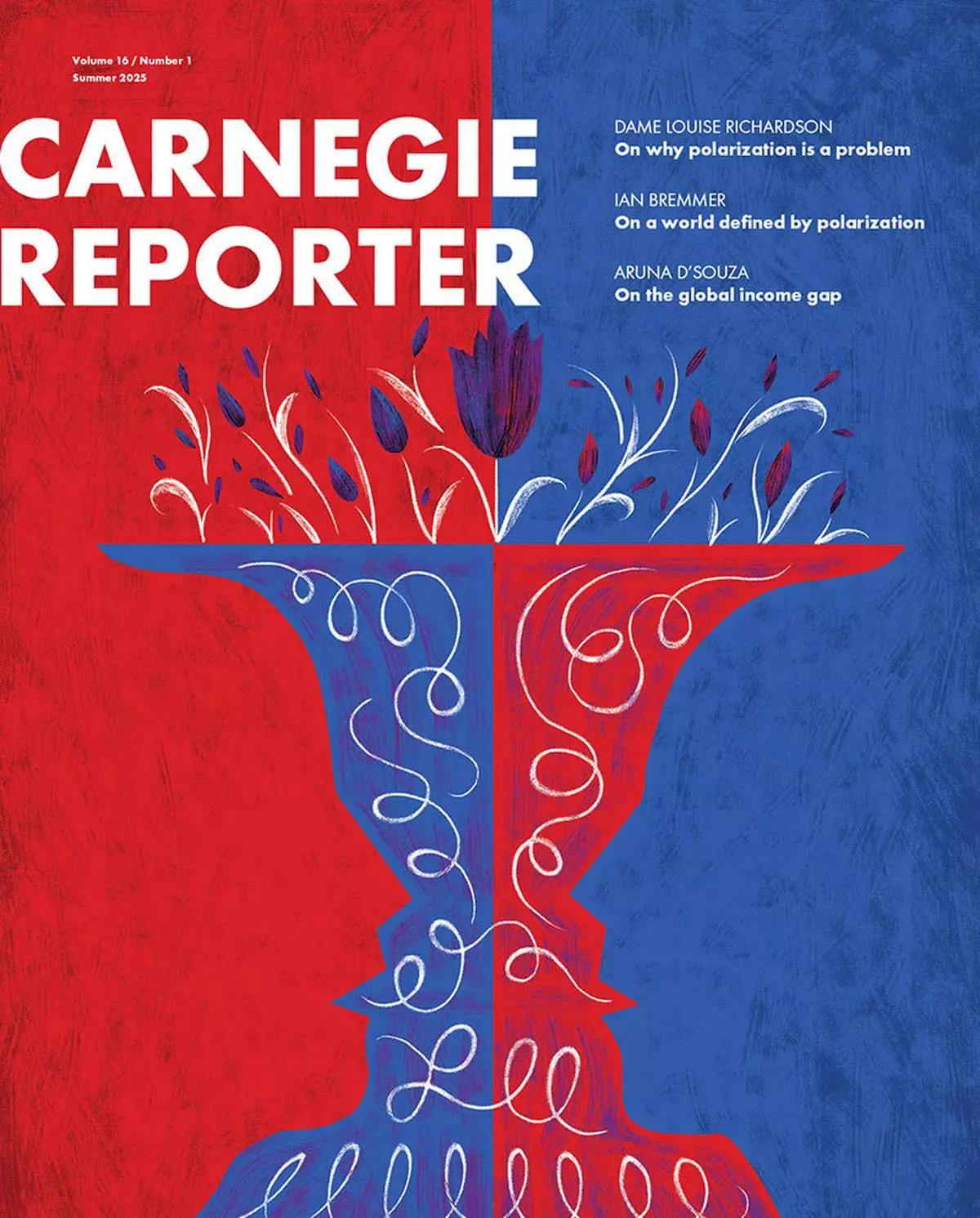
The Summer 2025 edition of Carnegie Reporter magazine