Economic uncertainty fueled by U.S. President Donald Trump's trade policies could significantly impact the U.S. advertising industry during a critical time of the year, according to U.S. scholars.
New York is widely considered to be the advertising capital of the world, and on the fabled Madison Avenue it's now selling season for the nation's biggest media companies as they vie to sell advertising slots for their multimillion-dollar productions, from live TV events to scripted shows and streaming smash hits. But in uncertain times, advertisers might think twice before spending big.
"The Internet Advertising Bureau did a study recently, and in that study they found that 94 percent of advertisers are very concerned about the tariffs and the effect on the U.S. economy, and 45 percent are looking at cutting their budgets for this year. So a lot has changed since end of fourth quarter last year, when the planning was going on, to today," said Court Stroud, adjunct professor of Integrated Marketing and Communications at New York University’s School of Professional Studies.
In recent weeks, media companies have been holding what are known as the "upfronts" - rolling out stars and champagne in a bid to convince Madison Avenue agencies to spend their clients’ budgets on network shows. But Stroud expects the current economy to cast doubt in advertisers' minds.
"A lot has happened since the planning that was done last year, including Liberation Day, the tariffs, a lot of uncertainty. I would expect that when we're talking about the upfront, and the upfront is to television what Fashion Week is to the fashion industry, that the upfront is likely to be lower in terms of its volume, the total dollars that are going to be spent," said Stroud.
Consumer confidence has fallen to its lowest level in three years according to one key measurement, while JP Morgan recently forecast the chances of a recession in 2025 to be around 50 percent.
Research firm eMarketer projects that spending on traditional TV ad spots during the upfronts could fall by four billion U.S. dollars from last year, down to around 13.4 billion U.S. dollars.
Marc Kalan, associate professor of Professional Practice at Rutgers Business School, spent 40 years in the advertising industry and expects advertisers to be more cautious when it comes to spending.
He said this means major media companies like Disney, Fox, NBCUniversal and Warner Bros. Discovery may need to offer advertisers more value for their money.
"How do you protect stock? You protect earnings. How do you protect earnings? You take short term hits to expenses. My belief is, or my feeling, and I'm not running ABC or NBC or CBS, but I do believe they're going to have to negotiate and probably offer a lot of extra make-goods or time, they'll give up some inventory and try to hold their costs, their costs, if they can," said Kalan.
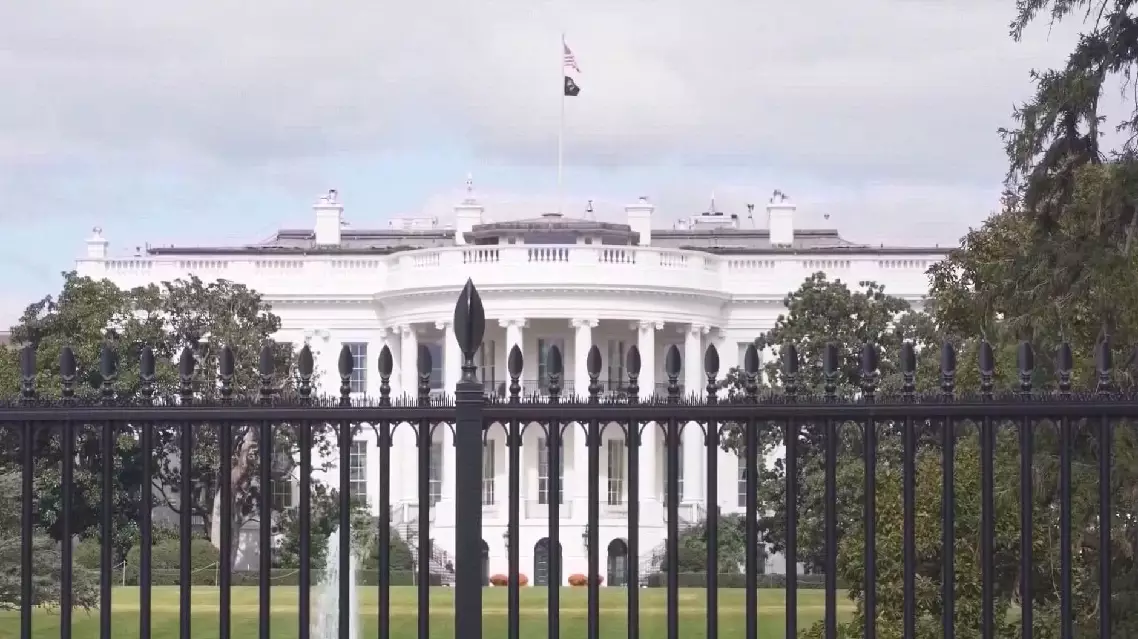
US advertising firms might rein in spending because of Trump's tariffs: academics
Visiting Chinese Foreign Minister Wang Yi said Saturday China is willing to work with Lesotho to strengthen exchanges on governance experience, enhance coordination in multilateral affairs, and advance the China-Lesotho strategic partnership.
Wang, also a member of the Political Bureau of the Communist Party of China Central Committee, made the remarks when meeting with Lesotho Prime Minister Sam Matekane in the capital of Lesotho.
During the meeting, Wang congratulated Lesotho on the 60th anniversary of its independence this year, and spoke highly of Lesotho government's efforts to prioritize economic development and steer the African country onto a path of sustainable growth. Since the Beijing Summit of the Forum on China-Africa Cooperation (FOCAC) in 2024, the two sides have advanced cooperation under the 10 partnership action plans unveiled at the summit, successfully implementing a number of key projects to effectively promote Lesotho's development and revitalization, Wang said.
China stands ready to work with Lesotho to strengthen exchanges on governance experience, enhance coordination in multilateral affairs, and push for greater development of the China-Lesotho strategic partnership, he added.
Calling on the two sides to firmly support each other, Wang said that China will accelerate the implementation of its zero-tariff policy for African countries, including Lesotho, expand bilateral trade, investment and industrial cooperation, facilitate broader access of Lesotho's specialty products to the Chinese market, and continue to support Lesotho's national development.
China will continue to stand firmly with African countries, uphold justice for the Global South, including Lesotho, oppose unilateralism and acts of bullying, and work together to build a community with a shared future for humanity, Wang said.
On his part, Matekane said during the meeting that Lesotho cherishes its friendship with China and the strategic partnership between the two countries, and expressed gratitude for China's valuable support for the development of African countries, including Lesotho.
Lesotho firmly adheres to the one-China principle and resolutely supports China in safeguarding its core interests, he said, noting that his country stands ready to strengthen strategic mutual trust with China, expand people-to-people exchanges, jointly implement the outcomes of the FOCAC Beijing Summit, and deepen cooperation in areas such as infrastructure, manufacturing and energy.
Matekane stressed that China's zero-tariff policy for African products will inject new impetus into Lesotho's development. He also expressed Lesotho's willingness to strengthen solidarity and cooperation with China on multilateral platforms such as BRICS to jointly address global challenges.
On the same day, Wang also held talks with Lejone Mpotjoana, minister of foreign affairs and international relations of Lesotho.
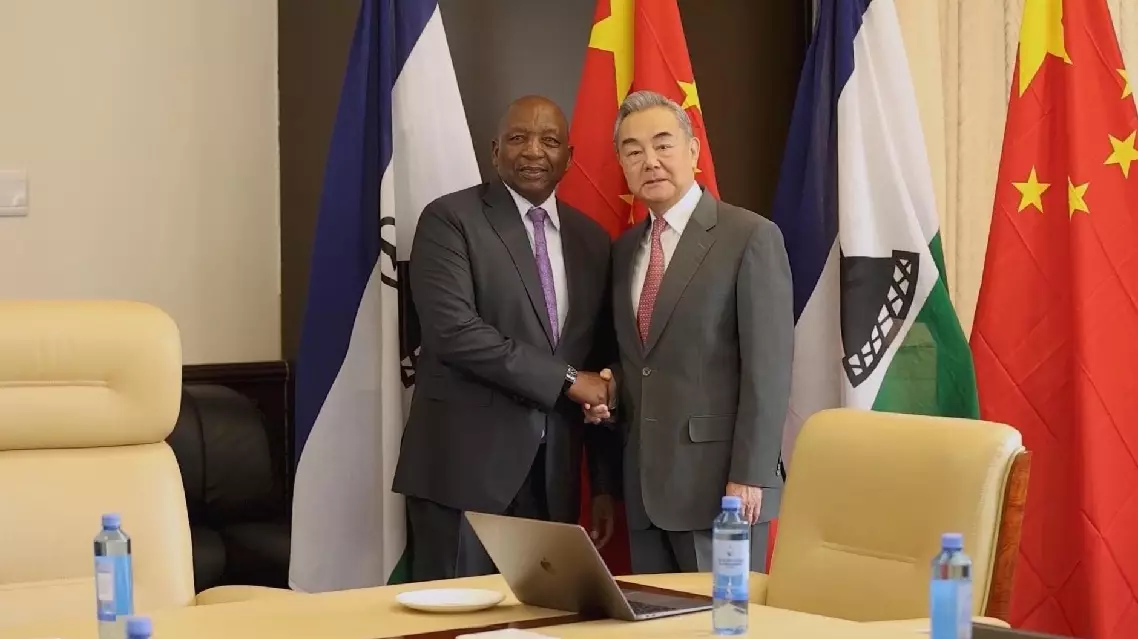
China, Lesotho to strengthen exchanges, advance cooperation
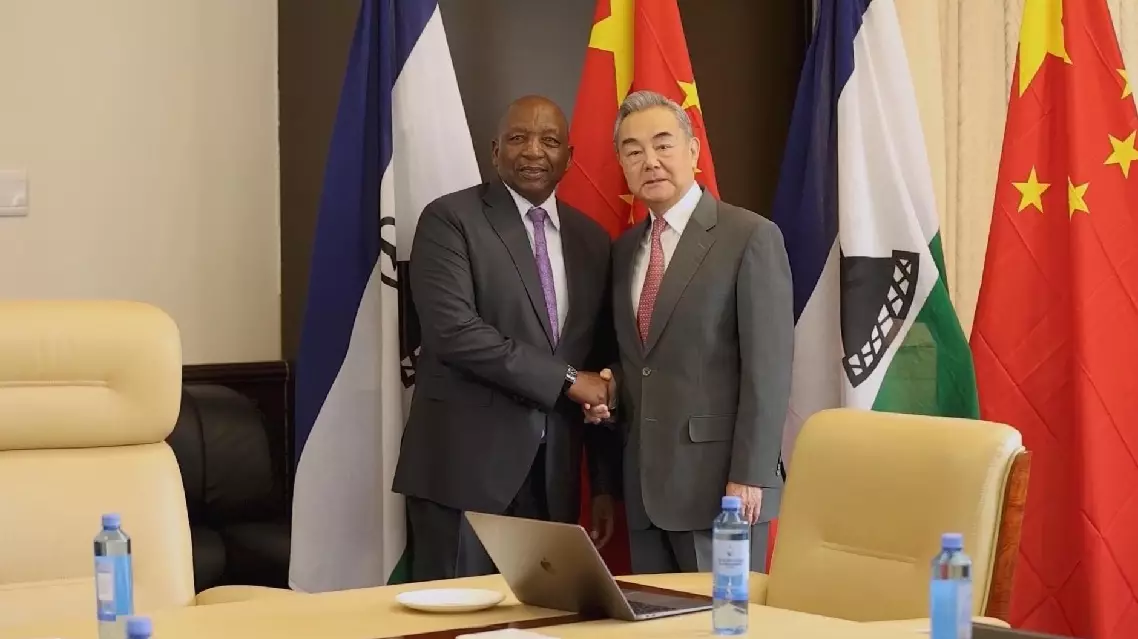
China, Lesotho to strengthen exchanges, advance cooperation