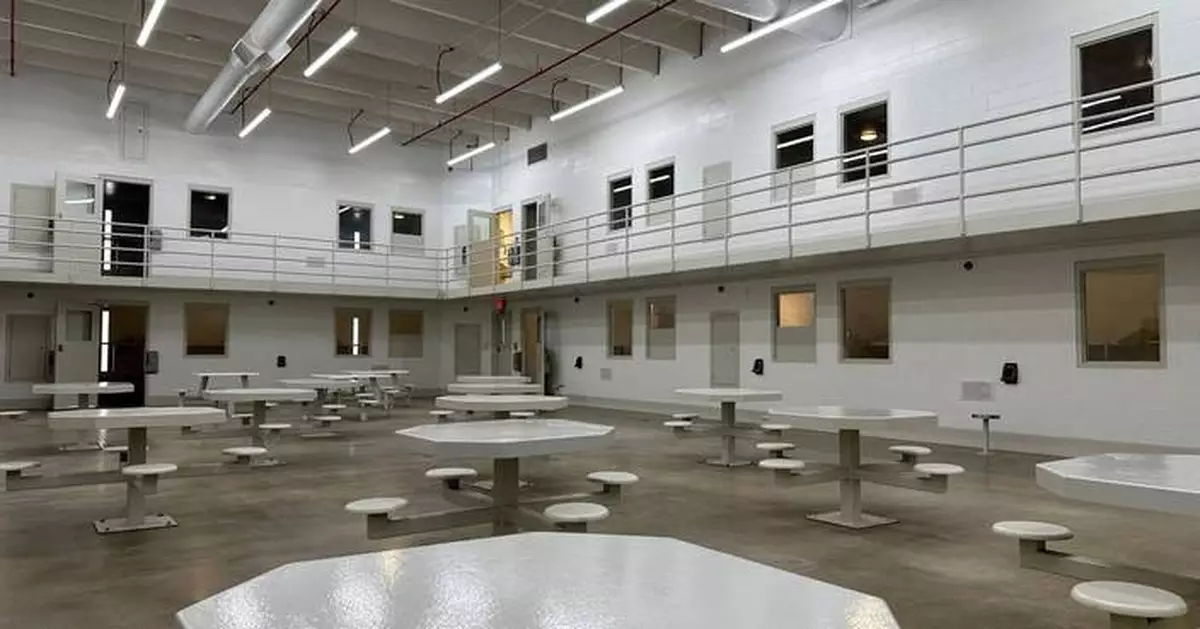
LEAVENWORTH, Kan. (AP) — A judge on Wednesday barred a major U.S. private prison operator from housing immigrants facing possible deportation in a shuttered Kansas City area detention center unless it can get a permit from frustrated city officials.
Leavenworth County Judge John Bryant agreed after a packed hearing to grant the city of Leavenworth's request for a temporary restraining order against CoreCivic, one of the nation's largest private prison operators.
CoreCivic had claimed in legal filings that halting the opening of the 1,033-bed facility on the northwest outskirts of the Kansas City area would cost it $4.2 million in revenue each month. City officials said they anticipated the arrival of detainees apprehended by U.S. Immigration and Customs Enforcement was imminent under a Trump administration crackdown on illegal immigration.
Leavenworth isn’t the first city where controversy has surrounded the reopening of a private prison as an ICE detention facility. In Newark, New Jersey, Mayor Ras Baraka sued the state’s top federal prosecutor on Tuesday over his recent arrest on a trespassing charge at a federal immigration detention facility in that state, saying the Trump-appointed attorney had pursued the case out of political spite.
Scott Peterson, the city manager for Leavenworth, said he didn’t know if the case in Kansas marked the first time a municipality had prevailed in court.
“I would point out that maybe the reason we have seen some success here today is this is not about immigration,” Peterson said. “This is not about private prisons. This is about land use.”
In late 2021, CoreCivic stopped housing pretrial detainees for the U.S. Marshals Service in the Leavenworth facility after then-President Joe Biden called on the Justice Department to curb the use of private prisons. In the months leading up to the closure, the American Civil Liberties Union and federal public defenders urged the White House to speed up the closure, citing inmate rights violations there along with stabbings, suicides and even one homicide.
But with President Donald Trump pushing for mass deportations under a wide-ranging crackdown on illegal immigration, the facility that CoreCivic now calls the Midwest Regional Reception Center is in demand again. It is located just 10 miles (16 kilometers) west of the Kansas City International Airport. As part of his crackdown, Trump has vowed to sharply increase detention beds nationwide from the budgeted 41,000 beds this year.
Tennessee-based CoreCivic initially applied for a special use permit from the city in February but then withdrew that application the next month, arguing in court filings that it didn’t need the permit and that the process would take too long.
“It became clear to CoreCivic that there was not a cooperative relationship,” said Taylor Concannon Hausmann, an attorney for the private prison operator, speaking in court.
The city sued CoreCivic, the lawsuit claiming that CoreCivic impeded the city police force’s ability to investigate sexual assaults and other violent crimes. The lawsuit contended that the permitting process was needed to safeguard itself from future problems.
“Just follow our rules," an attorney for the city, Joe Hatley, said in court. “Go get a permit.”
The first version of the lawsuit, filed in March in federal court, was tossed out in May on technical grounds. But Bryant sided with Hatley in the case refiled the same month in state court, finding that the proper procedures weren't followed.
Concannon Hausmann, CoreCivic's attorney, declined to comment as the crowd filtered out of the courtroom Wednesday. Norman Mallicoat held a sign reading, “CoreCivic Doesn’t Run Leavenworth” as he left.
“I see this as basically a large company trying to bully a small city into getting what it wants and not having to follow the rules and ordinances of the city,” Mallicoat said.
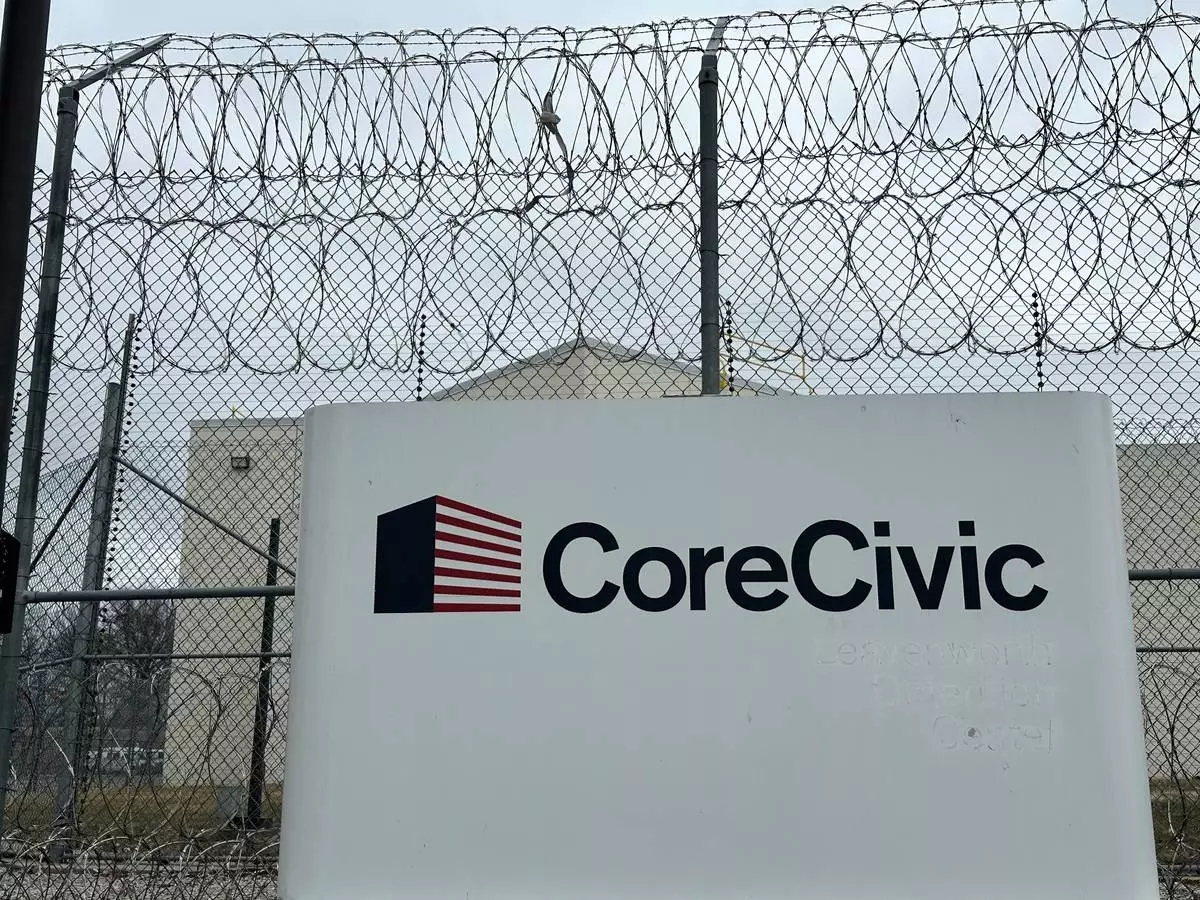
A judge has halted CoreCivic, on Wednesday, June 4, 2025, from housing immigrants facing possible deportation in a shuttered facility that the private prison operator now calls the Midwest Regional Reception Center, in Leavenworth, Kan., pictured Monday, March 3, 2025, unless it can get a permit from frustrated city officials. (AP Photo/Nick Ingram)
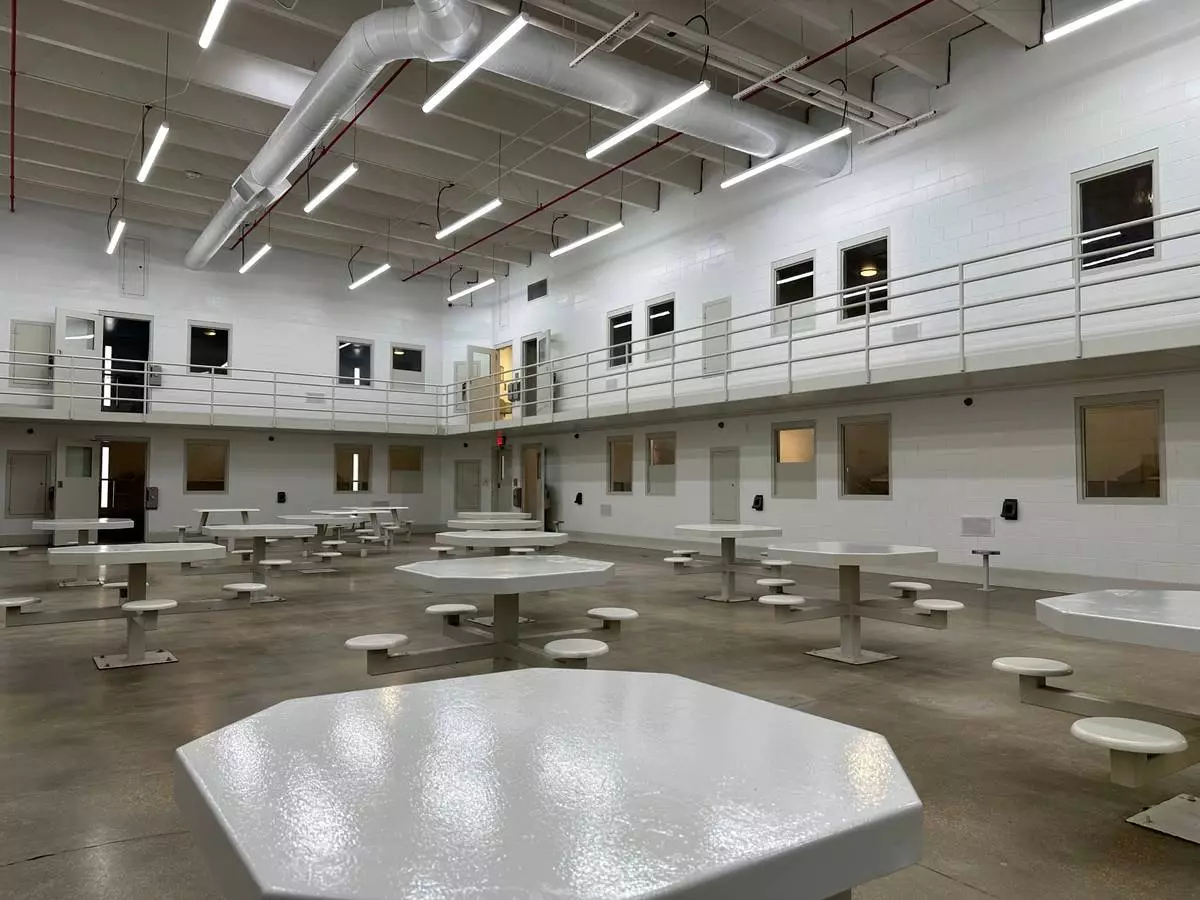
A judge has halted CoreCivic, on Wednesday, June 4, 2025, from housing immigrants facing possible deportation in a shuttered facility that the private prison operator now calls the Midwest Regional Reception Center, in Leavenworth, Kan., pictured Monday, March 3, 2025, unless it can get a permit from frustrated city officials. (AP Photo/Nick Ingram)
BERLIN (AP) — Ukrainian President Volodymyr Zelenskyy on Sunday voiced readiness to drop his country’s bid to join NATO in exchange for Western security guarantees, but rejected the U.S. push for ceding territory to Russia as he held talks with U.S. envoys on ending the war.
Zelenskyy sat down with U.S. President Donald Trump’s special envoy Steve Witkoff and Trump’s son-in-law Jared Kushner. The Ukrainian leader posted pictures of the negotiating table with German Chancellor Friedrich Merz sitting next to him facing the U.S. delegation.
Responding to journalists’ questions in audio clips on a WhatsApp group chat before the talks, Zelenskyy said that since the U.S. and some European nations had rejected Ukraine’s push to join NATO, Kyiv expects the West to offer a set of guarantees similar to those offered to the alliance members.
“These security guarantees are an opportunity to prevent another wave of Russian aggression,” he said. “And this is already a compromise on our part.”
Russian President Vladimir Putin has cast Ukraine's bid to join NATO as a major threat to Moscow's security and a reason for launching the full-scale invasion in February 2022. The Kremlin has demanded tha Ukraine renounce the bid for the alliance membership as part of any prospective peace settlement.
Zelenskyy emphasized that any security assurances would need to be legally binding and supported by the U.S. Congress, adding that he expected an update from his team following a meeting between Ukrainian and U.S. military officials in Stuttgart, Germany.
The U.S. government said in a social media post on Witkoff’s account after the five-hour meeting that “a lot of progress was made.”
Washington has tried for months to navigate the demands of each side as Trump presses for a swift end to Russia’s war and grows increasingly exasperated by delays. The search for possible compromises has run into major obstacles, including control of Ukraine’s eastern Donetsk region, which is mostly occupied by Russian forces.
Putin wants Ukraine to withdraw its forces from the part of the Donetsk region still under its control among the key conditions for peace, a demand rejected by Kyiv.
Zelenskyy said that the U.S. had floated an idea for Ukraine to withdraw from the Donetsk and create a demilitarized free economic zone there, a proposal he rejected as unworkable.
“I do not consider this fair, because who will manage this economic zone?” he said. “If we are talking about some buffer zone along the line of contact, if we are talking about some economic zone and we believe that only a police mission should be there and troops should withdraw, then the question is very simple. If Ukrainian troops withdraw 5–10 kilometers, for example, then why do Russian troops not withdraw deeper into the occupied territories by the same distance?”
Zelenskyy described the issue as “very sensitive” and insisted on a freeze along the line of contact, saying that “today a fair possible option is we stand where we stand.”
Putin's foreign affairs adviser Yuri Ushakov told the business daily Kommersant that Russian police and national guard would stay in parts of the Donetsk region even if they become a demilitarized zone under a prospective peace plan.
Ushakov warned that a search for compromise could take a long time, noting that the U.S. proposals that took into account Russian demands had been “worsened” by alterations proposed by Ukraine and its European allies.
Speaking to Russian state TV in remarks broadcast Sunday, Ushakov said that “the contribution of Ukrainians and Europeans to these documents is unlikely to be constructive," warning that Moscow will “have very strong objections.”
Ushakov added that the territorial issue was actively discussed in Moscow when Witkoff and Kushner met with Putin earlier this month. “The Americans know and understand our position," he said.
Zelenskyy said he spoke with French President Emmanuel Macron on Sunday just before the talks with Trump’s envoys, thanking him on X for his support and adding that “we are coordinating closely and working together for the sake of our shared security.”
Macron vowed on X that “France is, and will remain, at Ukraine’s side to build a robust and lasting peace — one that can guarantee Ukraine’s security and sovereignty, and that of Europe, over the long term.”
Merz, who has spearheaded European efforts to support Ukraine alongside Macron and U.K. Prime Minister Keir Starmer, said Saturday that “the decades of the ‘Pax Americana’ are largely over for us in Europe and for us in Germany as well.”
He warned that Putin's aim is “a fundamental change to the borders in Europe, the restoration of the old Soviet Union within its borders.”
“If Ukraine falls, he won’t stop,” Merz warned on Saturday during a party conference in Munich.
Putin has denied plans to restore the Soviet Union or attack any European allies.
Ukraine’s air force said that Russia overnight launched ballistic missiles and 138 attack drones at Ukraine. The air force said 110 had been intercepted or downed, but missile and drone hits were recorded at six locations.
Zelenskyy said Sunday that hundreds of thousands of families were still without power in the south, east and northeast regions and work was continuing to restore electricity, heat and water to multiple regions following a large-scale attack the previous night.
The Ukrainian president said that in the past week, Russia had launched over 1,500 strike drones, nearly 900 guided aerial bombs and 46 missiles of various types at Ukraine.
Russia’s Defense Ministry said that air defenses downed 235 Ukrainian drones late Saturday and early Sunday.
In the Belgorod region, a drone injured a man and set his house ablaze in the village of Yasnye Zori, regional Gov. Vyacheslav Gladkov said.
Ukrainian drones struck an oil depot in Uryupinsk in the Volgograd region, triggering a fire, according to regional Gov. Andrei Bocharov.
In the Krasnodar region, the Ukrainian drones attacked the town of Afipsky, where an oil refinery is located. Authorities said that explosions shattered windows in residential buildings, but didn’t report any damage to the refinery.
__
Ciobanu reported from Warsaw, Poland.
Follow AP’s coverage of the war in Ukraine at https://apnews.com/hub/russia-ukraine
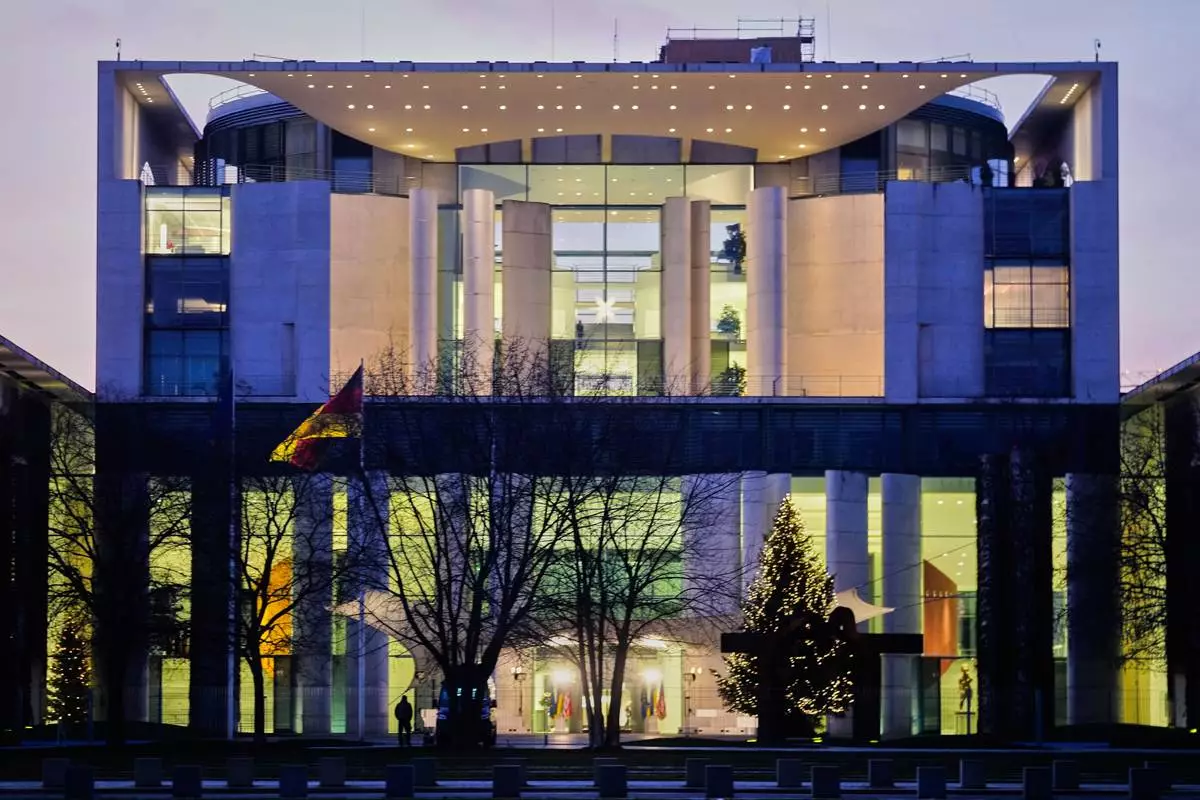
The chancellory is pictured during talks between representatives of the U.S. and Ukraine in Berlin, Germany, Sunday, Dec. 14, 2025. (AP Photo/Markus Schreiber)
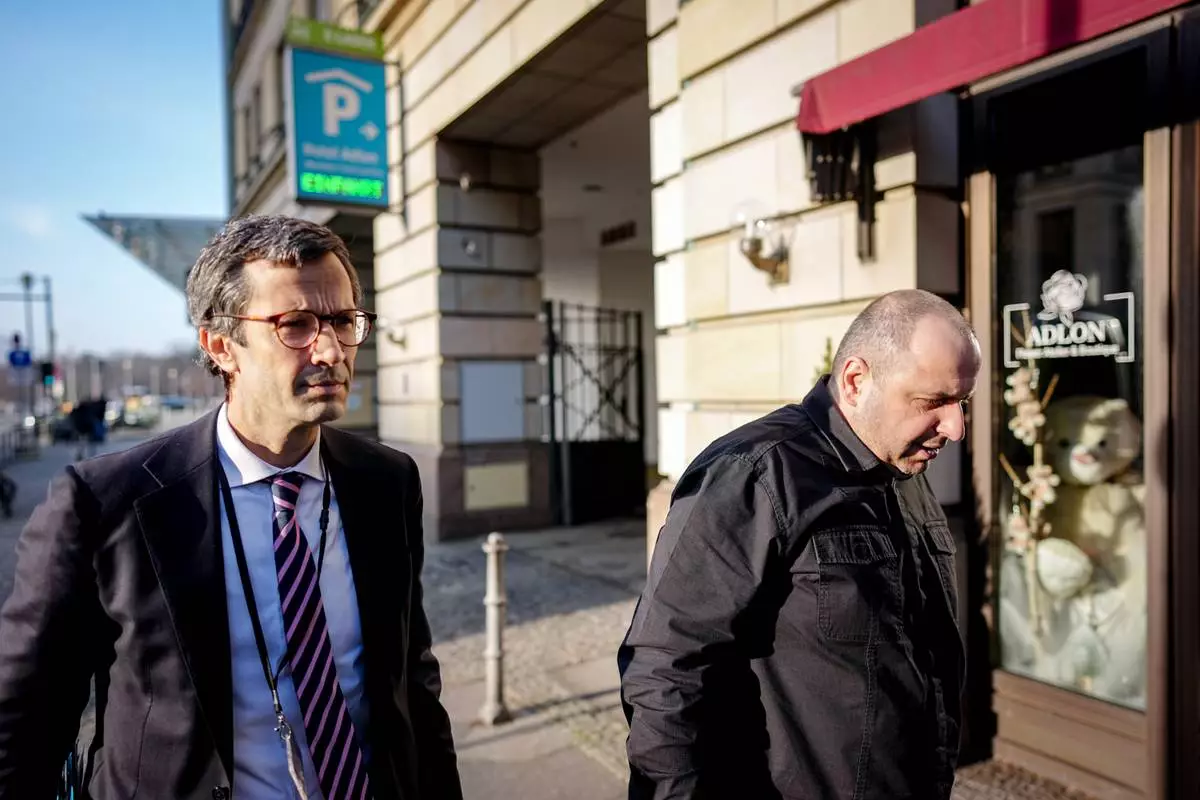
Günter Sautter, left, foreign and security policy advisor to the Federal Chancellor, and former Ukrainian Defense Minister Rustem Umjerow arrive for talks between representatives of the U.S. and Ukraine, at the Hotel Adlon, in Berlin, Sunday, Dec. 14, 2025. (Kay Nietfeld/dpa via AP)
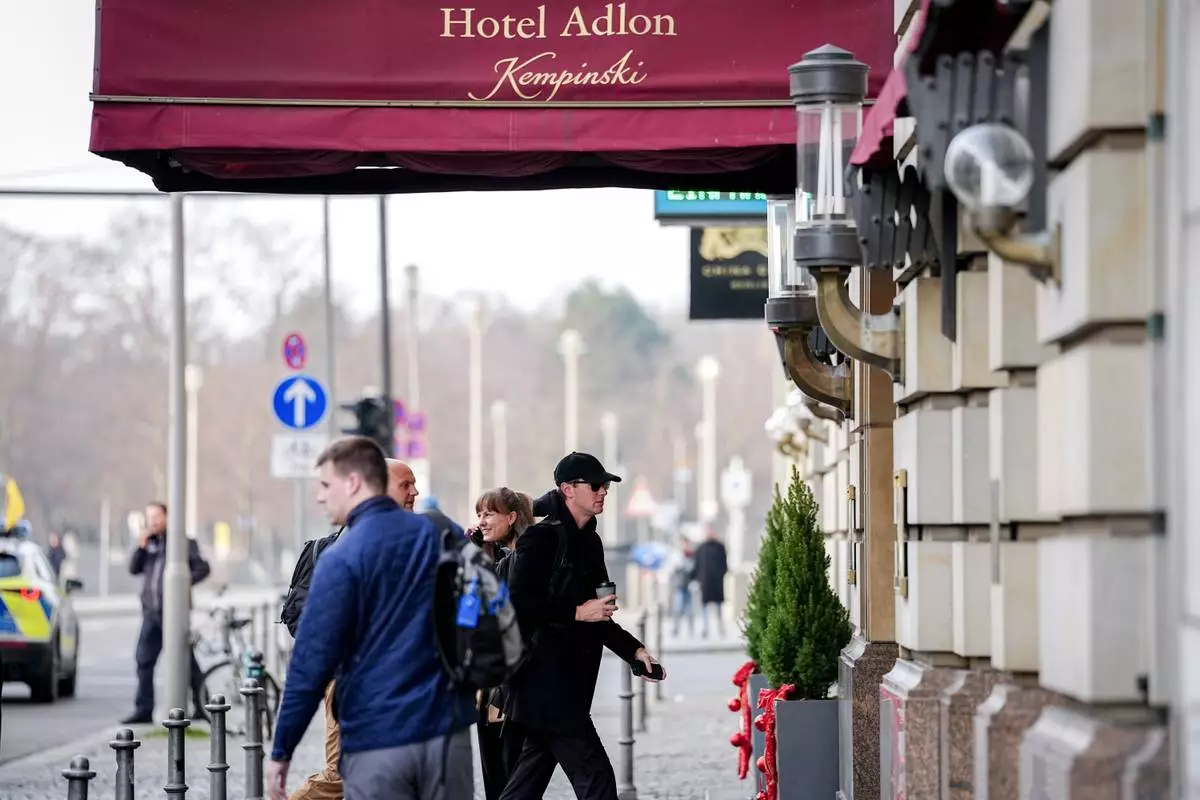
Jared Kushner, entrepreneur and former chief advisor to President Donald Trump, arrives for talks between representatives of the U.S. and Ukraine at the Hotel Adlon, in Berlin, Sunday, Dec. 14, 2025. (Kay Nietfeld/dpa via AP)
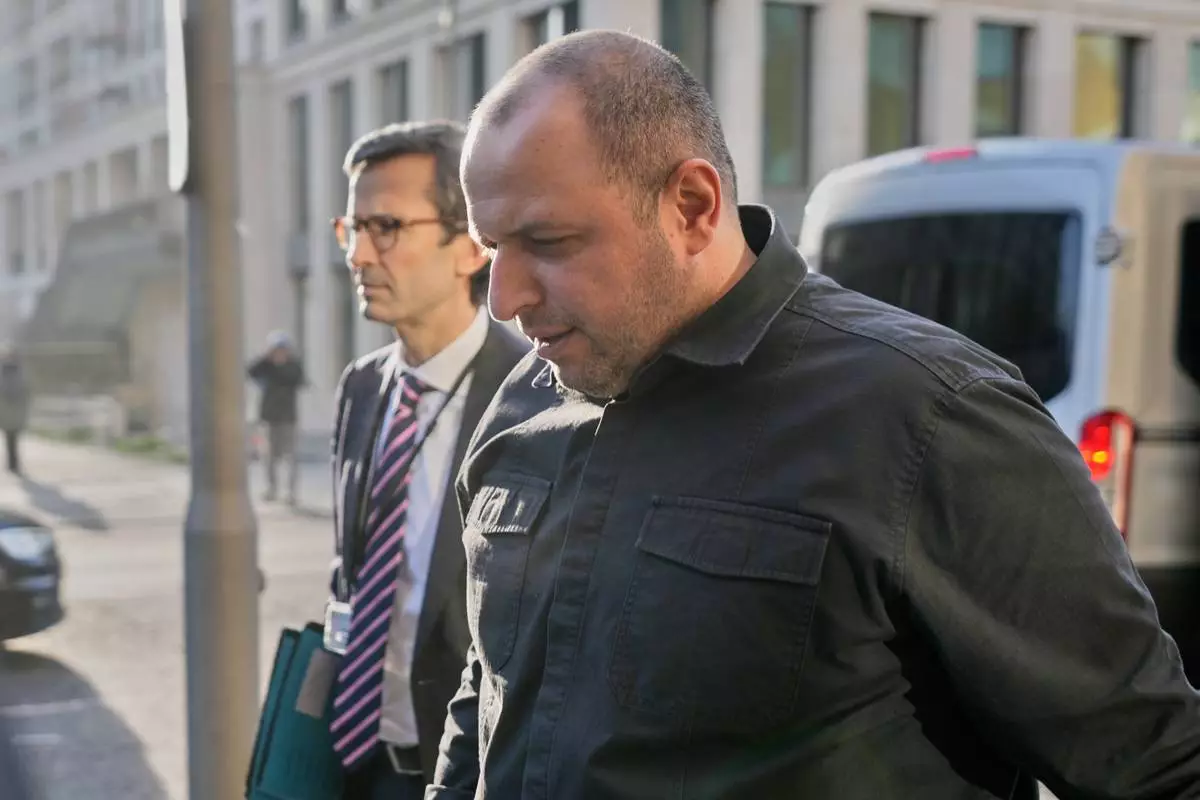
Ukraine's Secretary of National Security Rustem Umerov, right, and Günter Sautter, Foreign and Security Policy Advisor to Chancellor Merz meet in Berlin, Germany, Sunday, Dec. 14, 2025. (AP Photo/Markus Schreiber)
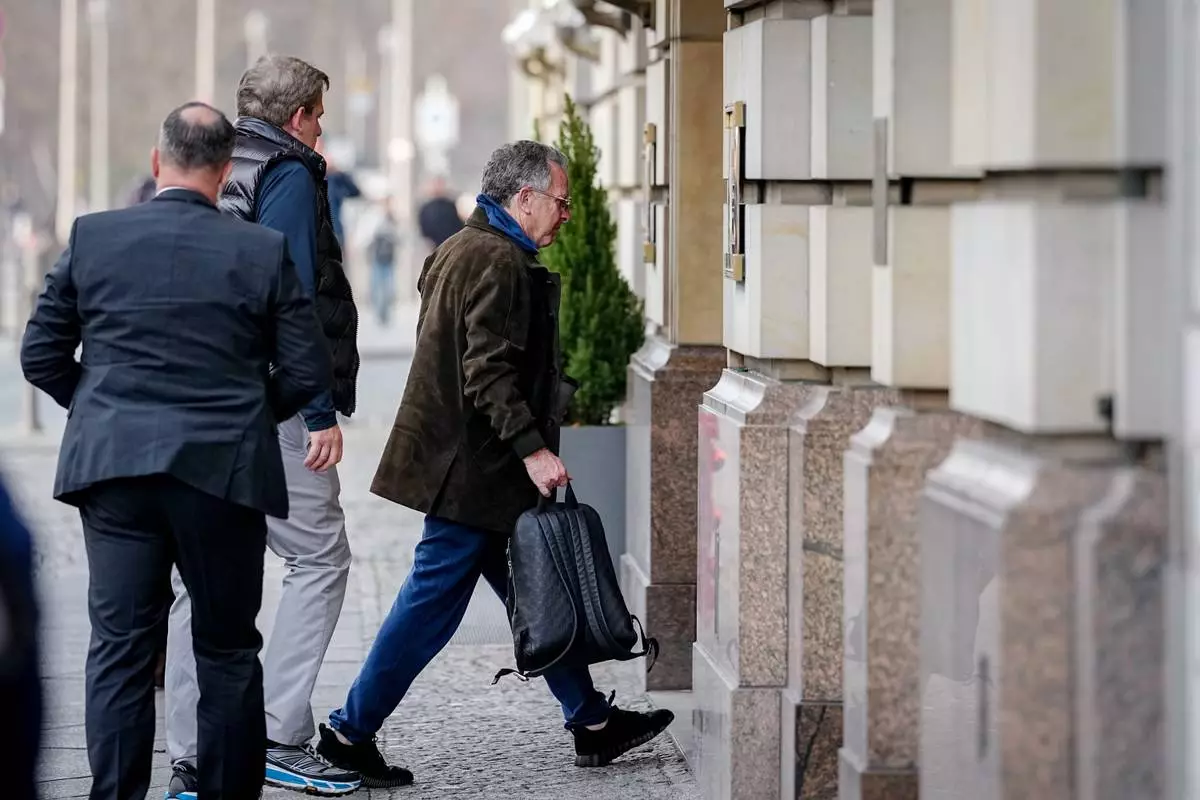
Steve Witkoff, special envoy of the United States, arrives for talks between representatives of the U.S. and Ukraine, at the Hotel Adlon, in Berlin, Sunday, Dec. 14, 2025. (Kay Nietfeld/dpa via AP)
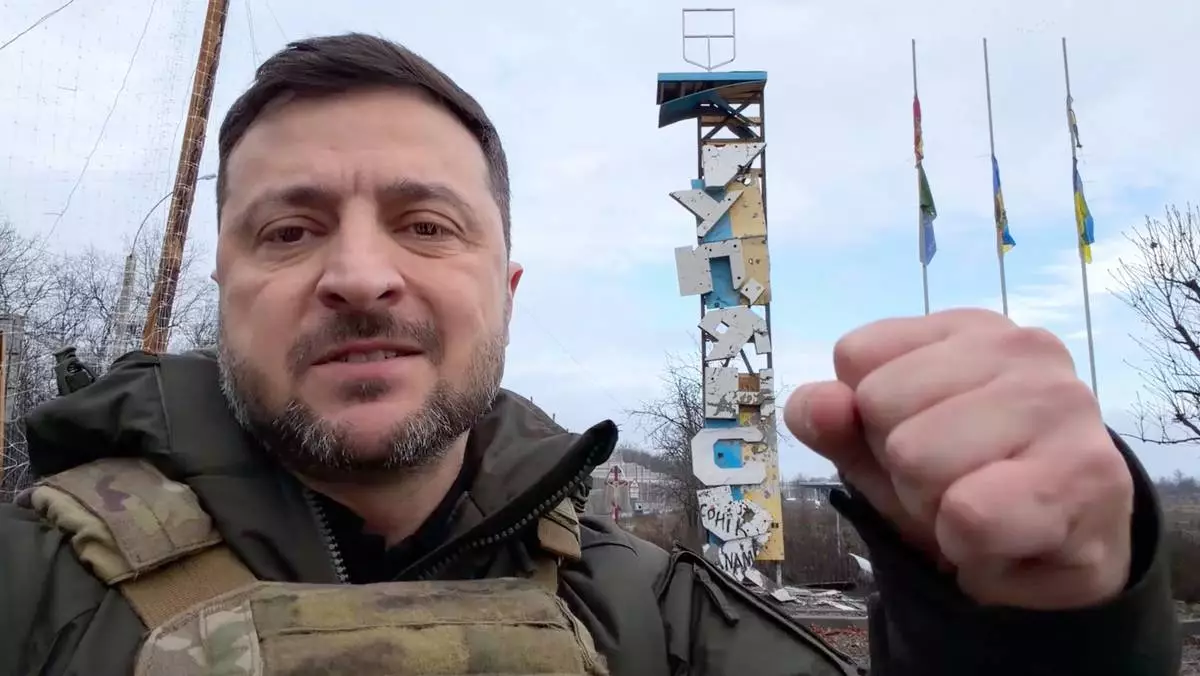
In this grab from a video provided by the Press Service Of The President Of Ukraine on Friday, Dec 12, 2025, Ukraine's President Volodymyr Zelenskyy records a video at the road entering of Kupiansk, Ukraine. (Press Service Of The President Of Ukraine via AP)